

Baby food at 5:47 p.m. can turn a peaceful kitchen into a tiny hostage negotiation. Your baby wants dinner now, you have one sad carrot in the fridge, and the high chair somehow wears more food than your child. Baby meal prep fixes that chaos before it starts.
A few cooking sessions can give you easy meals for weeks and save you money. They also let your baby try new flavours without you cooking from scratch every day. You do not need fancy gadgets, a picture perfect freezer, or the energy of a television chef. You need a simple plan, safe storage, and a few reliable ingredients.
This guide covers batch cooking for babies from 6 to 12 months, from smooth first purees to chunkier meals and finger foods. Ready to make feeding your baby feel less like a daily emergency? Let’s make that freezer earn its keep.
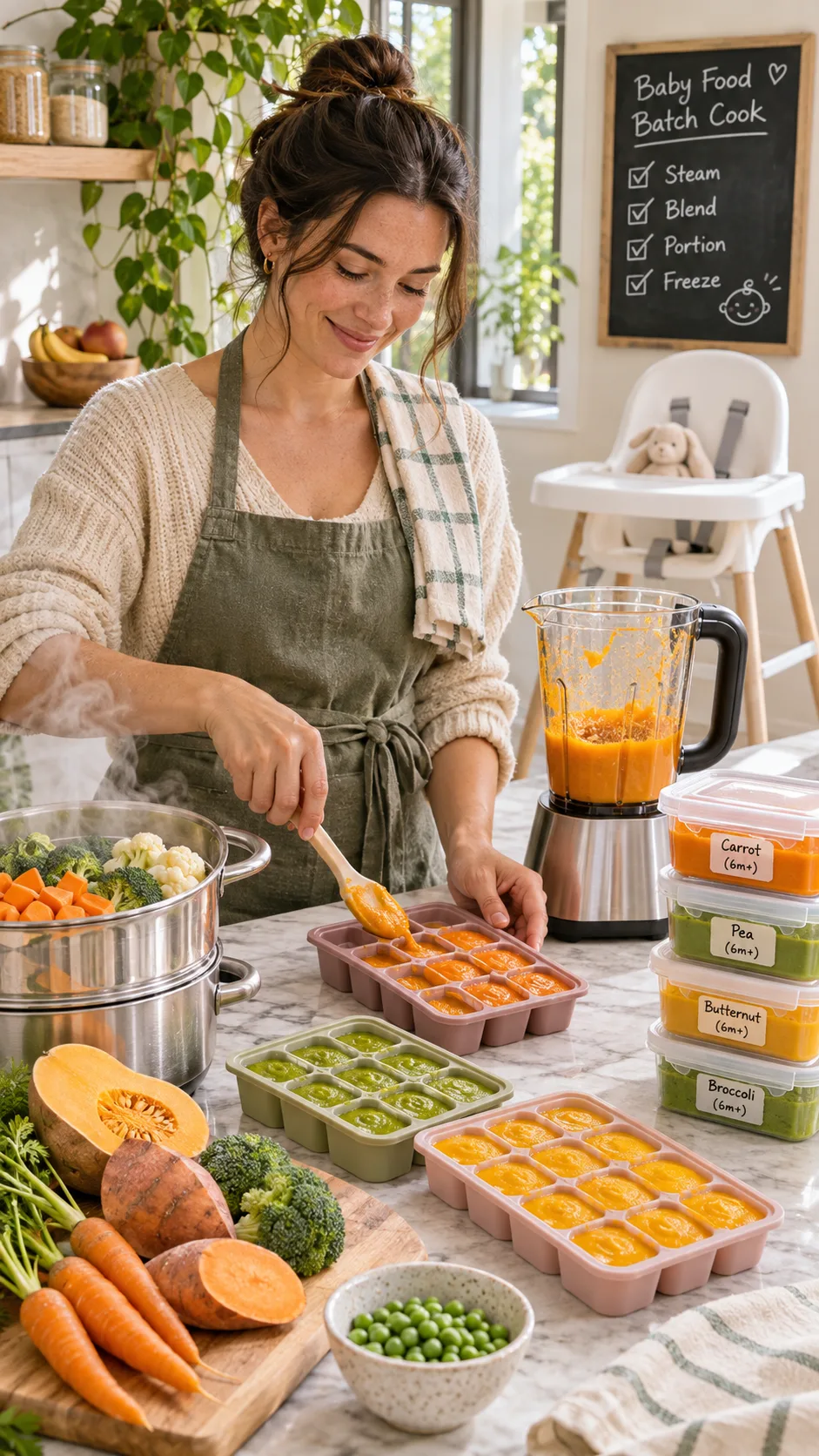
Why baby meal prep makes life so much easier
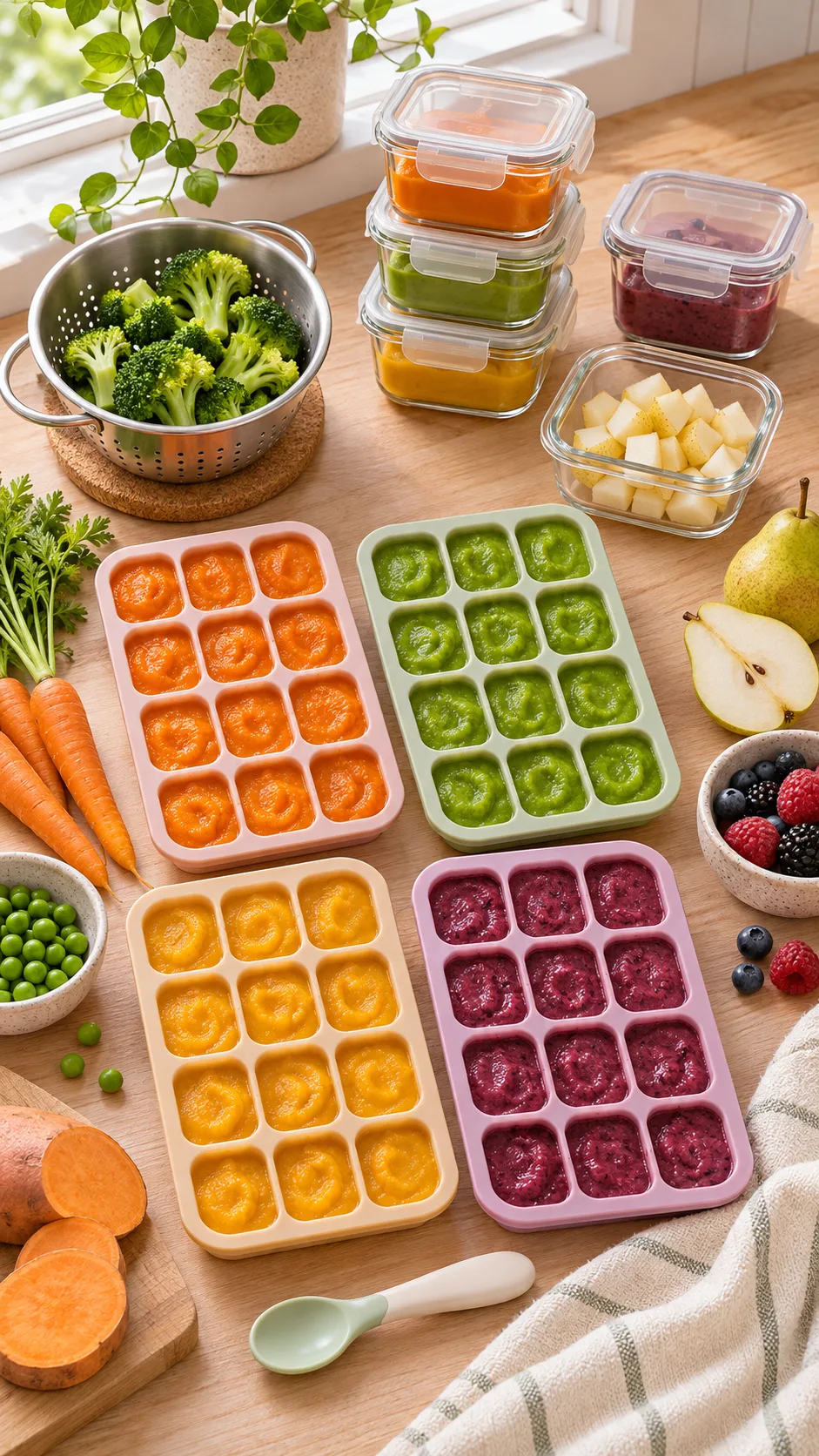
Batch cooking baby food gives you a ready meal when hunger strikes. Instead of scrambling to cook, cool, blend, and clean while your baby loudly files a complaint, you defrost a portion and serve it. That extra breathing room matters.
Meal prep also gives you variety. You can prepare vegetables, fruit, grains, beans, and protein separately, then mix them in different ways. Your baby gets new combinations, and you avoid serving sweet potato for the fifteenth meal in a row. Sweet potato deserves respect, but it does not need a full-time job.
Many babies need several chances to accept a new food. The NHS tells parents to keep offering new tastes and textures without pressure, and a stocked freezer makes that easy. You can try again next week without starting from zero.
Batch cooking can also trim your grocery budget. Buy seasonal produce, use frozen vegetables when they make sense, and cook once instead of buying pricey baby pouches. Frozen peas still count as vegetables, by the way.
- Less daily stress: you always have a baby meal backup.
- More variety: mix and match simple prepared ingredients.
- Less food waste: freeze small portions before ingredients spoil.
- More control: skip added salt, sugar, and unnecessary extras.
- Faster family meals: adapt parts of your own dinner for your baby.
Start with safe baby food basics
Before you fill every freezer tray in sight, set up a safe routine. Babies have developing immune systems, so clean hands, clean equipment, and correct storage matter. You do not need to panic over every crumb, but you do need a dependable system.
Wash, cook, cool, store
Wash your hands before food prep, rinse produce under running water, and clean your blender, chopping board, trays, and utensils well. Cook meat, eggs, fish, beans, and vegetables thoroughly. Then cool the cooked food quickly before you refrigerate or freeze it.
The U.S. Food and Drug Administration recommends that you refrigerate perishable foods within two hours of cooking, or within one hour when the temperature rises above 32°C/90°F. Split large batches into shallow containers so they cool faster. A giant hot pot sitting on the counter for half the evening creates more drama than you need.
Use small airtight containers or silicone freezer trays with lids. Label every batch with the food and date, because orange puree can mean carrot, mango, pumpkin, or your personal kitchen mystery. Use refrigerated baby food within about two days, and aim to use frozen portions within three months for the best quality.
For more practical food safety advice, check the FDA’s safe food handling guidance. Its rules sound strict because bacteria never take a day off.
Reheat without guesswork
Thaw frozen baby food in the fridge overnight, use the microwave’s defrost setting, or warm it gently from frozen. Stir the food well and test the temperature before you serve it. Microwaves create hot spots, and your baby does not need a surprise lava centre.
Serve food with a clean spoon, and throw away any leftovers from your baby’s bowl after the meal. Saliva puts bacteria into the food, so do not put that half-eaten portion back in the fridge. Keep untouched portions separate before you serve.
Foods to avoid during the first year
Babies under 12 months should not eat honey because it can contain spores that cause infant botulism. Avoid unpasteurised milk products, raw or undercooked eggs, meat, shellfish, and fish, and skip drinks with added sugar. Skip whole nuts and hard, round, sticky, or slippery foods that can cause choking.
Do not add salt or stock cubes to baby meals. Babies need very little sodium, and many packaged foods already contain more than enough. The CDC’s infant feeding advice gives a helpful overview of first foods and age-appropriate feeding.
- Skip honey before 12 months.
- Skip whole nuts, popcorn, hard sweets, and chunks of raw apple or carrot.
- Cut whole grapes, cherry tomatoes, blueberries, and sausages safely before you serve them.
- Leave out added salt, sugar, stock cubes, and sugary drinks.
- Avoid unpasteurised dairy and undercooked animal foods.
- Do not use rice drinks as a main drink for babies and toddlers.
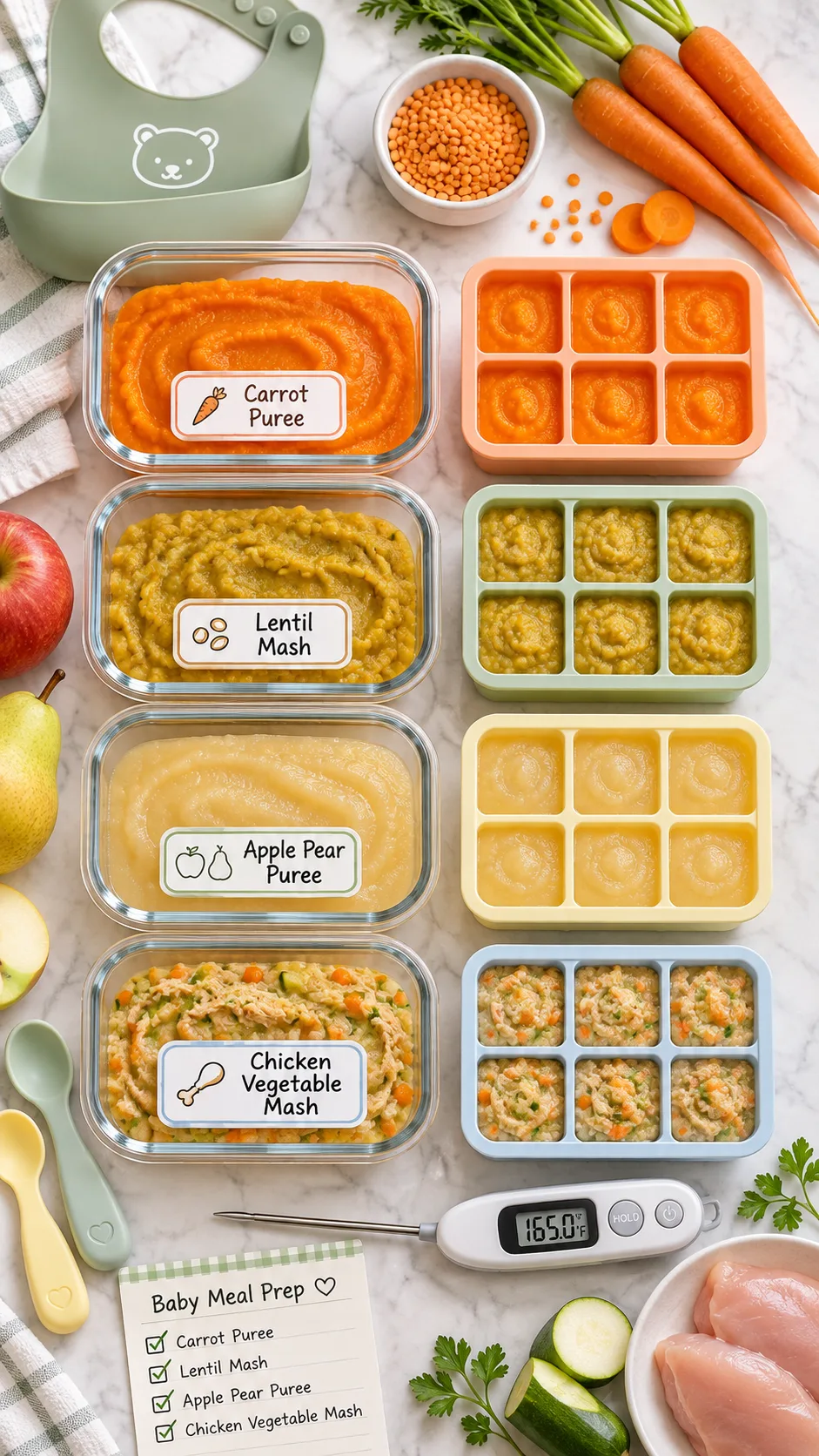
The baby meal prep kit you need
You can make excellent homemade baby food with a saucepan, a fork, and an ice cube tray. A blender helps, but you do not need a cupboard full of gadgets that do one job each. Your kitchen already works harder than most of us give it credit for.
Choose tools that make prep faster and cleaning easier. If a gadget adds six pieces to wash, it may become a very expensive drawer ornament. Simple equipment wins every time.
- Steamer basket or saucepan: cook vegetables, fruit, fish, and chicken.
- Blender, stick blender, or food processor: make smooth purees quickly.
- Fork or potato masher: make thicker, textured meals for later stages.
- Silicone freezer tray: freeze small, flexible portions.
- Small airtight containers: store fridge portions and meals for the road.
- Labels and a marker: track dates and ingredients.
- Sharp knife and sturdy chopping board: prep safely and quickly.
Freeze food in portions that suit your baby’s appetite, but stay flexible. Some babies eat two teaspoons one day and inhale a full bowl the next. Babies treat consistency like a personal challenge.
Batch cooking for 6 to 7 months: smooth first foods
At around six months, many babies show signs that they can start solid foods. They can sit with support, control their head and neck, and bring food to their mouth. Milk still provides most of their nutrition at this stage, so think of solids as practice, exploration, and messy fun.
Start with smooth, soft textures if your baby needs them, then gradually offer thicker purees. You can thin a mash with breast milk, formula, or a little cooled boiled water. Never force a spoonful. Let your baby set the pace.
Best first foods to batch cook
Iron-rich foods deserve a regular spot on the menu from around six months. Babies draw on stored iron during early infancy, and their needs rise as they grow. Meat, fish, eggs, beans, lentils, tofu, fortified infant cereal, and dark green vegetables can all help.
Cook one or two ingredients at a time at first, especially when you introduce common allergens. That approach helps you spot a reaction and learn what your baby likes. Once your baby handles individual foods well, combine them for easy meals.
- Sweet potato puree: steam or roast peeled sweet potato until soft, then blend with water, breast milk, or formula.
- Carrot and lentil puree: cook red lentils and chopped carrots until very soft, then blend into a smooth meal.
- Pea puree: steam frozen peas and blend until smooth. Add a little water if needed.
- Apple and pear puree: peel, core, steam, and blend. Skip the sugar, because fruit brings enough sweetness already.
- Chicken and vegetable puree: cook boneless chicken with carrot, potato, and courgette, then blend thoroughly.
- Avocado mash: mash ripe avocado with a fork just before serving. Avocado does not love the freezer, so make this one fresh.
Freeze smooth purees in small cubes, then move the frozen cubes to a labelled freezer bag or container. One cube often works well for a first taste. Add more cubes as your baby’s appetite grows.
Want a fruit drink for yourself while you prep? This tamarind juice recipe and guide to its benefits makes a refreshing kitchen companion. You deserve something more exciting than reheated tea.
Batch cooking for 8 to 9 months: add texture and more variety
Between eight and nine months, many babies gain confidence with thicker textures. They may mash food with their gums, grab soft pieces, and have strong opinions about the spoon. Your baby does not need teeth to handle many soft foods.
Offer lumpy mashes alongside soft finger foods when your baby seems ready. This stage teaches babies to chew and move food around their mouths. Stay close, sit your baby upright, and keep calm if they gag.
Gagging can look dramatic, but it protects your baby’s airway while they learn. Choking looks different: your baby may struggle to breathe, stay silent, or change colour. Learn infant first aid and choking response before you start finger foods, because confidence helps everyone at the table.
Easy batch meals for 8 to 9 months
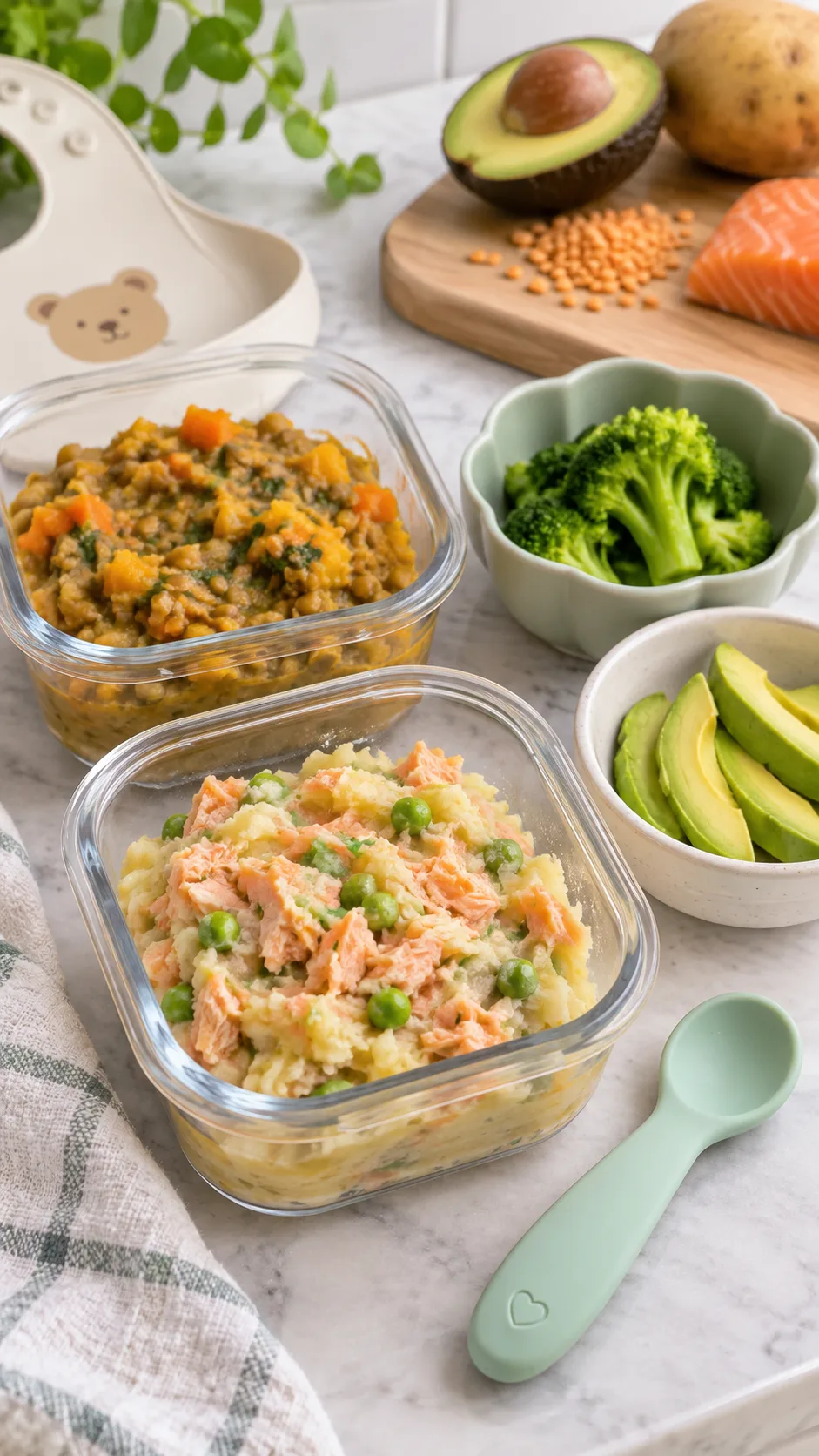
- Chunky lentil and vegetable mash: cook red lentils with pumpkin, carrot, spinach, and onion, then mash instead of blending fully.
- Beef and sweet potato mash: cook minced beef thoroughly with sweet potato and tomatoes, then mash into a soft texture.
- Salmon, potato, and pea mash: bake salmon, remove every bone carefully, and mash with cooked potato and peas.
- Beans and avocado mash: mash cooked black beans or kidney beans with avocado and a little warm water.
- Oatmeal with fruit: cook plain oats until soft, then stir in mashed banana, pear puree, or stewed apple.
- Egg and vegetable scramble: cook egg thoroughly with finely chopped spinach and tomato, then cut or mash it for your baby.
Use herbs and mild spices to build flavour without salt. Cinnamon, cumin, garlic, ginger, basil, parsley, turmeric, and paprika all work in baby meals. Start small, then see what your tiny food critic thinks.
Introduce common allergens such as peanut, egg, dairy, wheat, soy, sesame, fish, and shellfish in age-appropriate forms when your baby feels well. The American Academy of Pediatrics supports early allergen introduction for many babies. Speak with your clinician first if your baby has severe eczema or a known food allergy.
For reliable allergen guidance, visit HealthyChildren.org’s guide to introducing common food allergens. Offer allergen foods earlier in the day, then watch your baby for hives, vomiting, swelling, coughing, or trouble breathing.
Batch cooking for 10 to 12 months: family food, baby style
By 10 to 12 months, many babies enjoy more texture and can join family mealtimes with a few adjustments. They still need close supervision, safe food shapes, and milk feeds, but they can eat versions of many family meals. Dinner shifts from “two separate menus” to “one meal with sensible tweaks.”
Set aside your baby’s portion before you add salt, spicy sauces, or sugar to the main dish. Chop, shred, mash, or soften the food to match your baby’s skills. You can also hand over a loaded spoon and let your baby practise self-feeding.
Make one meal, serve it three ways
Cook a family meal with basic ingredients, then adapt it for your baby. For example, make a vegetable and chicken stew with no stock cube or salt. Blend one portion for a younger baby, mash another for a baby who handles texture, and serve shredded chicken with soft vegetables to an older baby.
- Vegetable pasta sauce: simmer tomatoes, carrot, courgette, lentils, and herbs. Blend some of the sauce, then serve it with tiny soft pasta shapes.
- Chicken and rice bowl: cook chicken, rice, peas, and carrots until soft. Shred the chicken and mash lightly for easier eating.
- Bean and vegetable stew: cook beans with pumpkin, spinach, tomatoes, and mild spices. Mash it, or serve it thick with soft rice.
- Fish cakes: mix cooked flaked fish with mashed potato and peas, shape into small patties, and bake until firm on the outside and soft inside.
- Mini omelette strips: bake well-cooked egg with grated courgette and chopped spinach, then slice into strips your baby can grab.
- Soft porridge: make millet, oat, or maize porridge with milk suited to your baby’s age, then add fruit puree or thinned nut butter.
Cut round foods lengthways into quarters, grate raw hard produce, and cook firm vegetables until they squash easily between your fingers. Spread nut butter thinly on toast fingers or stir it into porridge, and never serve a sticky spoonful. Safe texture matters as much as healthy ingredients.
If constipation shows up as you introduce more solids, offer fluids with meals and add fibre-rich foods such as pear, prunes, peas, beans, and oats. This practical guide to home remedies for constipation in Nigeria shares more everyday ideas. Call your child’s clinician if symptoms persist, your baby seems unwell, or you spot blood.
Your simple weekly baby meal prep plan
You do not need to spend an entire Sunday buried under carrots. Start with one 60 to 90 minute session each week. Cook a few building blocks, freeze them in portions, and combine them differently through the week.
A good baby meal prep routine uses one protein, two vegetables, one fruit, and one grain or starchy food. Choose ingredients your household already eats. Your shopping list should make life easier, not inspire a documentary about obscure superfoods.
A 90 minute batch cooking routine
- Wash and chop produce while you heat water or preheat the oven.
- Steam or roast two vegetables, such as carrot, pumpkin, broccoli, sweet potato, or courgette.
- Cook a protein, such as lentils, chicken, eggs, fish, tofu, or minced beef.
- Cook a simple starch, such as oats, rice, pasta, potato, or millet.
- Stew apples, pears, peaches, or plums for easy fruit portions.
- Blend or mash the food to the texture your baby currently manages.
- Cool the portions quickly, freeze whatever you will not use within two days, and label everything.
Try these mix-and-match combinations through the week:
- Sweet potato + chicken + peas
- Lentils + carrot + spinach
- Rice + salmon + broccoli
- Oats + pear + cinnamon
- Beans + pumpkin + avocado
- Pasta + vegetable sauce + shredded turkey
Keep a tiny note on your fridge or phone listing the foods your baby enjoyed, tolerated, or rejected. That record helps you rotate meals and offer disliked foods again later. One rejected broccoli floret does not mean your child has launched a lifelong anti-broccoli campaign.
Common baby meal prep mistakes to skip
Even the best plan can wobble when you feel tired. That does not make you a bad parent. It means you have met a baby. A few simple habits prevent the most common meal prep problems.
- Making huge batches of one meal: prepare smaller amounts of several foods so your baby gets more variety.
- Keeping every meal perfectly smooth for too long: move to new textures gradually when your baby shows readiness.
- Adding salt for flavour: use herbs, garlic, onion, and mild spices instead.
- Freezing food without labels: date and name every container right away.
- Ignoring choking hazards: change the shape and texture of risky foods before you serve them.
- Pushing “just one more bite”: let your baby decide how much to eat.
- Comparing portions with another baby: appetite changes from day to day, and comparison never improves lunch.
Trust hunger and fullness cues. Your baby may lean forward, open their mouth, or reach for food when hungry. When they finish, they may turn away, close their mouth, or throw food. Yes, the food toss feels personal, but it usually means “all done,” not “I reject your cooking forever.”
When to ask a health professional for help
Talk with your paediatrician, health visitor, or dietitian if your baby struggles with eating, coughs or chokes often, refuses many textures, fails to gain weight as expected, or shows signs of an allergic reaction. Seek urgent medical help for breathing difficulty, facial swelling, repeated vomiting after a food, or a severe rash.
Every baby develops at their own pace, but professional support can make feeding problems feel far less overwhelming. You do not need to troubleshoot every concern alone at 2 a.m. with twelve browser tabs open. Ask early and get clear, personal advice.
Make baby meal prep your future self’s favourite gift
Baby meal prep does not need perfection. Cook a few simple foods, store them safely, offer textures that suit your baby’s age, and repeat. That small routine can turn rushed mealtimes into calmer ones where your baby learns, explores, and gets wonderfully messy.
Start with one batch this week: perhaps lentil and carrot mash, a soft fruit puree, or chicken and sweet potato. Label it, freeze it, and enjoy the relief when your baby gets hungry tomorrow. Your future self will open that freezer and feel like an absolute legend.