

You hit snooze twice, sprint through the shower, grab a biscuit and a sachet of something sweet, and by 10:30am your stomach is filing a formal complaint. Sound familiar? I lived that life for years, and I blamed my “fast metabolism” instead of the real culprit: a breakfast with the staying power of a wet tissue.
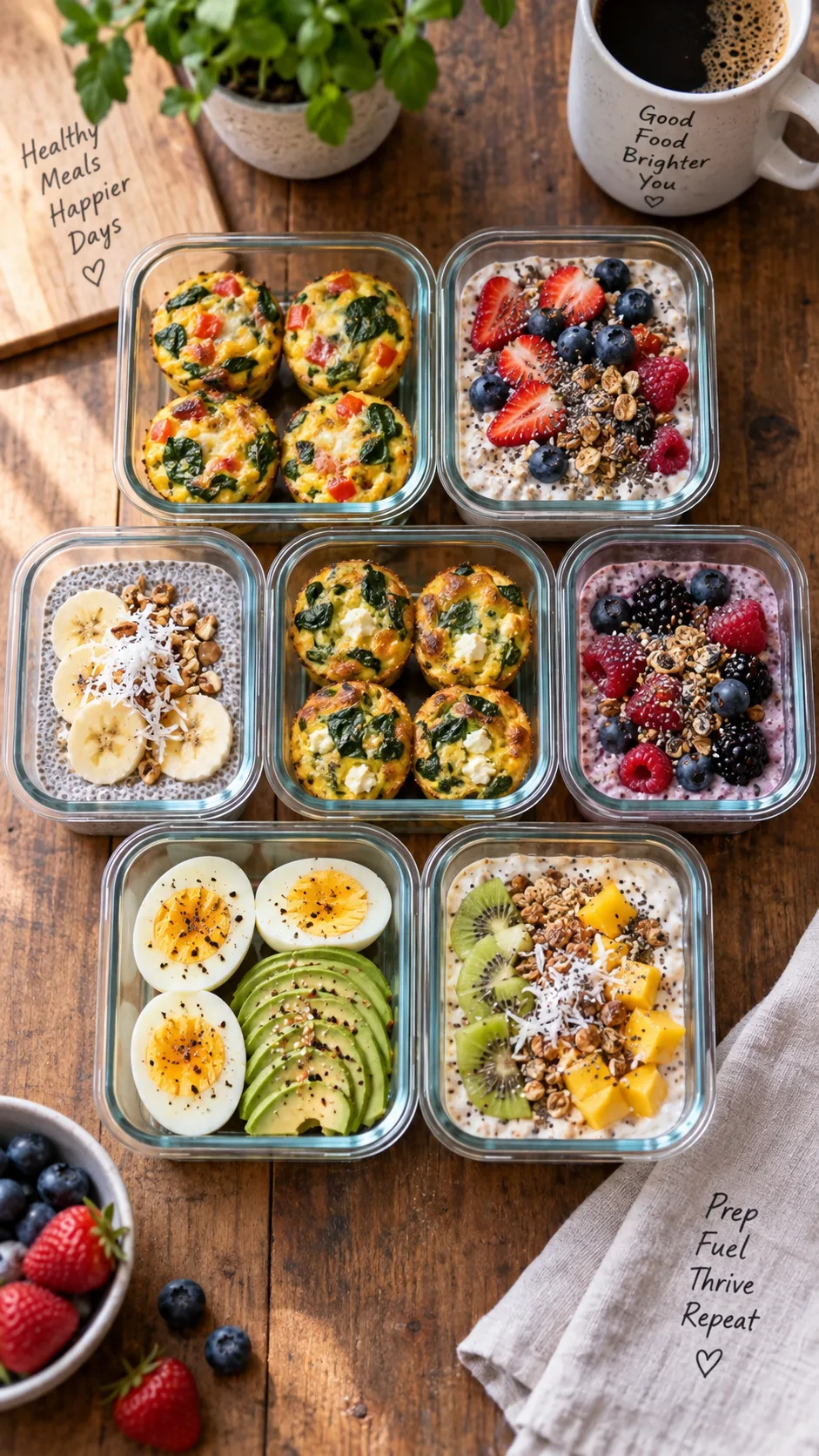
Breakfast meal prep fixes that, but only if you prep the right food. Most make-ahead breakfast ideas floating around online are basically dessert in a jar. This guide gives you 12 that keep you full until lunch, plus the science, the storage rules, and a 90-minute Sunday plan I use myself.
Why your breakfast stops working by 10am
Here is the uncomfortable truth: a bowl of refined cereal, white bread with jam, or a big plate of pap alone hits your bloodstream like a sugar rocket. Your blood sugar spikes, insulin rushes in, and about 90 minutes later you crash harder than your phone battery at 15%.
Your body then screams for more sugar. You answer with chin chin. The cycle repeats. Ever wondered why you eat “healthy” all morning and still raid the vending machine by 11?
Satiety comes down to composition, not volume. Protein and fibre slow digestion and trigger fullness hormones like GLP-1 and peptide YY. Fat slows gastric emptying further. Refined carbs do the opposite.
The fullness formula I use for every single prep
- 25–35g protein, the non-negotiable. Research from the Harvard T.H. Chan School of Public Health consistently ranks protein as the most satiating macronutrient.
- 8–12g fibre from oats, chia, beans, berries, vegetables. Most adults scrape by on 15g a day when they need 25–38g.
- 10–15g fat from nuts, seeds, avocado, eggs, full-fat yoghurt. Fat is a brake pedal, not a villain.
- Something with water and crunch. Vegetables or fruit add bulk without a calorie explosion.
Miss the protein and nothing else matters. FYI, that’s the single change that took me from “hungry at 10” to “genuinely forgot lunch existed until 1pm.”
The 12 make-ahead breakfast ideas (ranked by how long they keep you full)
I’ve tested all of these on real weekday mornings, the chaotic kind with missing car keys and a meeting at 9. They survive reheating, they survive commutes, and they don’t taste like punishment.
Fridge-friendly heavy hitters (3–5 days)
-
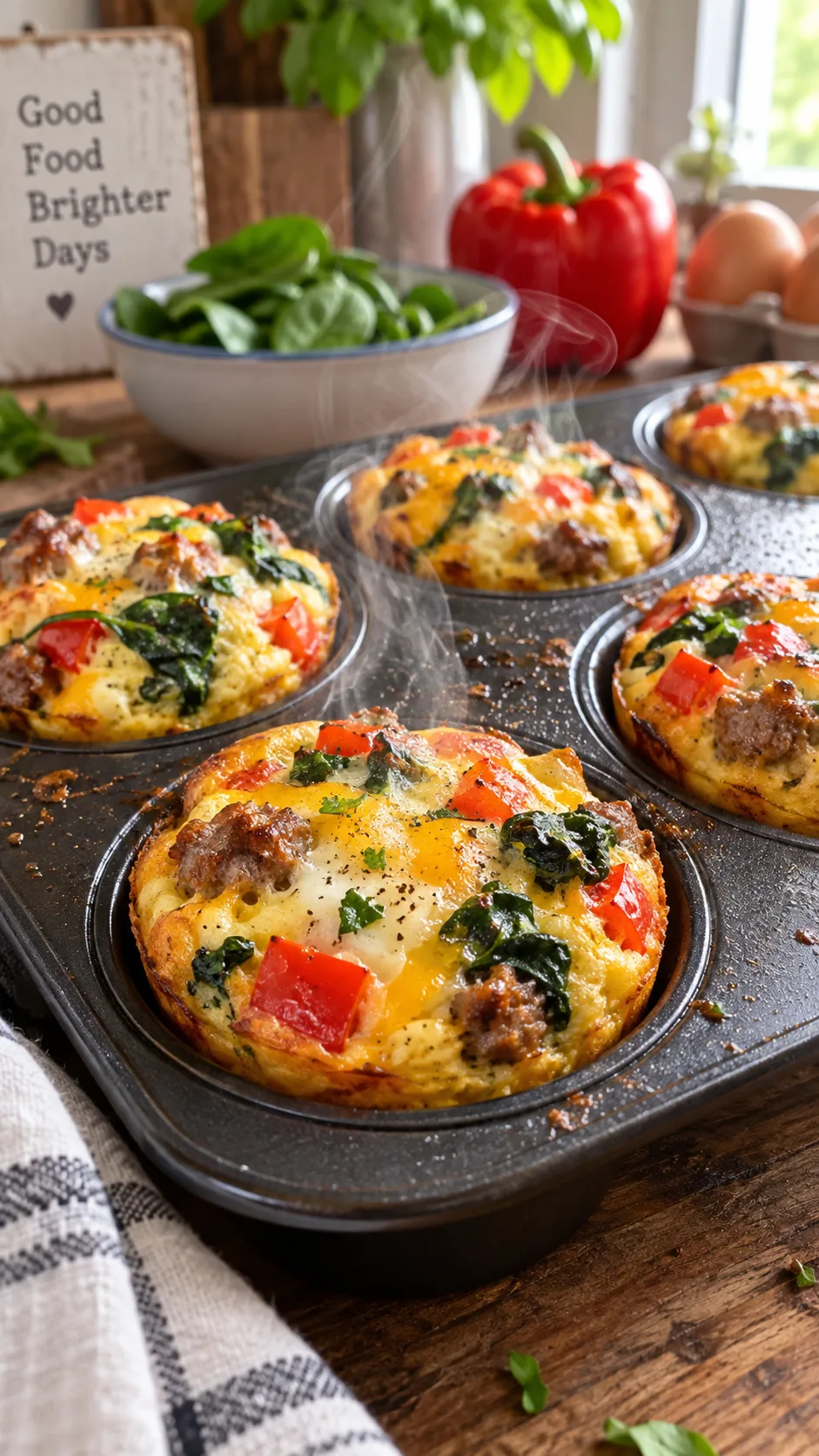
Egg & vegetable muffin cups (~22g protein per 3)
Whisk 12 eggs, fold in chopped peppers, onions, spinach and diced turkey or sausage, then bake in a muffin tin at 180°C for 20 minutes. Three of these with a piece of fruit hold me until lunch every time. They reheat in 40 seconds and they freeze beautifully.Pro tip: grease the tin aggressively. I once lost an entire batch to a non-stick pan that lied to me. :/
-
Greek yoghurt & chia protein jars (~30g protein)
Layer 200g thick Greek yoghurt, 2 tablespoons chia seeds, a handful of berries, and a spoon of peanut butter in a jar. Chia absorbs liquid overnight and turns the whole thing into a spoonable, pudding-thick meal. Regular yoghurt has roughly half the protein of Greek, so read the label, not the marketing. -
Savoury overnight oats (yes, savoury)
Hear me out. Oats, water or milk, a scoop of unflavoured protein, a pinch of salt, and in the morning you top it with a soft-boiled egg, avocado and chilli flakes. It eats like a warm grain bowl. Sweet overnight oats get boring by Wednesday. This version doesn’t. -
Moi moi portions with boiled eggs
Steamed bean pudding is one of the most underrated make-ahead breakfasts on the planet. Beans give you protein AND fibre in one shot, and it holds in the fridge for 4 days. Add a boiled egg and you’re looking at 25g+ protein for very little money. Beans show up repeatedly on lists of Nigerian foods for muscle gain for exactly this reason. -
Breakfast burrito bowls
Scrambled eggs, black beans, sautéed peppers, brown rice, and salsa in a container. Skip the tortilla and the whole thing reheats without going soggy. Add avocado fresh in the morning, because mashed avocado sitting in a fridge for three days turns a sad grey-brown that nobody wants to look at before coffee.
Freezer warriors (1–3 months)
-
Protein pancake stacks
Blend oats, eggs, cottage cheese, banana and baking powder. Cook a huge batch, cool completely, then freeze with parchment paper between each pancake. Toaster in the morning. Cottage cheese is the secret weapon here. It adds casein protein, which digests slowly and keeps you fuller for longer. -
Freezer smoothie packs
Portion frozen spinach, berries, half a banana and a scoop of protein powder into zip bags. Morning-you dumps a bag in the blender with milk and presses one button. Critical rule: drink it with something you chew. Liquid calories register poorly with your hunger signals, so pair it with a boiled egg or you’ll be hungry in an hour. -
Breakfast sausage & sweet potato hash
Roast cubed sweet potato with turkey sausage, onions and paprika. Freeze in flat portions. The sweet potato gives you slow carbs and fibre instead of the white-bread sugar bomb. Air fryer at 180°C for 8 minutes brings it right back to life. -
Akara rounds (batch-fried, frozen)
Fry them Sunday, cool completely, freeze flat, then crisp them up in an air fryer or oven. Bean fritters plus a mug of unsweetened pap give you protein, fibre and comfort in one hit. If you want more homemade Nigerian breakfast inspiration, the Nigerian egg roll recipe also batch-preps surprisingly well for grab-and-go mornings.
Zero-cook, zero-excuse options
-
Boiled egg + cottage cheese + fruit box
Six minutes of effort for the whole week. Boil a dozen eggs Sunday, portion cottage cheese into small containers, wash grapes or slice apples. Roughly 28g of protein and zero cooking on a weekday. This is my emergency default when Sunday prep doesn’t happen. -
Mason jar chia pudding with nuts
3 tablespoons chia, 250ml milk, vanilla, a little honey. Shake, refrigerate, top with almonds. Chia seeds pack about 10g of fibre per ounce, a third of your daily target before you’ve even left the house. -
Peanut butter & banana protein wraps
Spread natural peanut butter on a wholemeal wrap, add banana slices and a sprinkle of chia, roll tight, wrap in foil. These hold for 2 days in the fridge and travel perfectly. Not fancy. Extremely effective.
Which one wins? For pure staying power, the egg muffins and the Greek yoghurt jars beat everything else in my kitchen tests. The smoothie packs come last: convenient, but they empty fastest.
Watch this before your first prep session
Reading about meal prep and watching someone do it hit differently. This walkthrough covers batching technique and container logic better than 1,000 words ever could:
My 90-minute Sunday breakfast prep plan
You don’t need a full day. You need a sequence. Here’s the exact order I follow, and it works because things cook while other things chop.
- Minutes 0–5: Preheat the oven to 180°C. Put a pot of water on for eggs.
- Minutes 5–20: Chop all vegetables at once: peppers, onions, spinach. One cutting board, one wash-up.
- Minutes 20–30: Whisk the egg muffin mix, fill the tin, slide it in the oven. Eggs boil in the background.
- Minutes 30–50: Assemble 5 yoghurt/chia jars. Build 5 freezer smoothie bags. You need no heat for either.
- Minutes 50–70: Pull the muffins, roast the sweet potato hash on the same rack, cool everything on a wire rack.
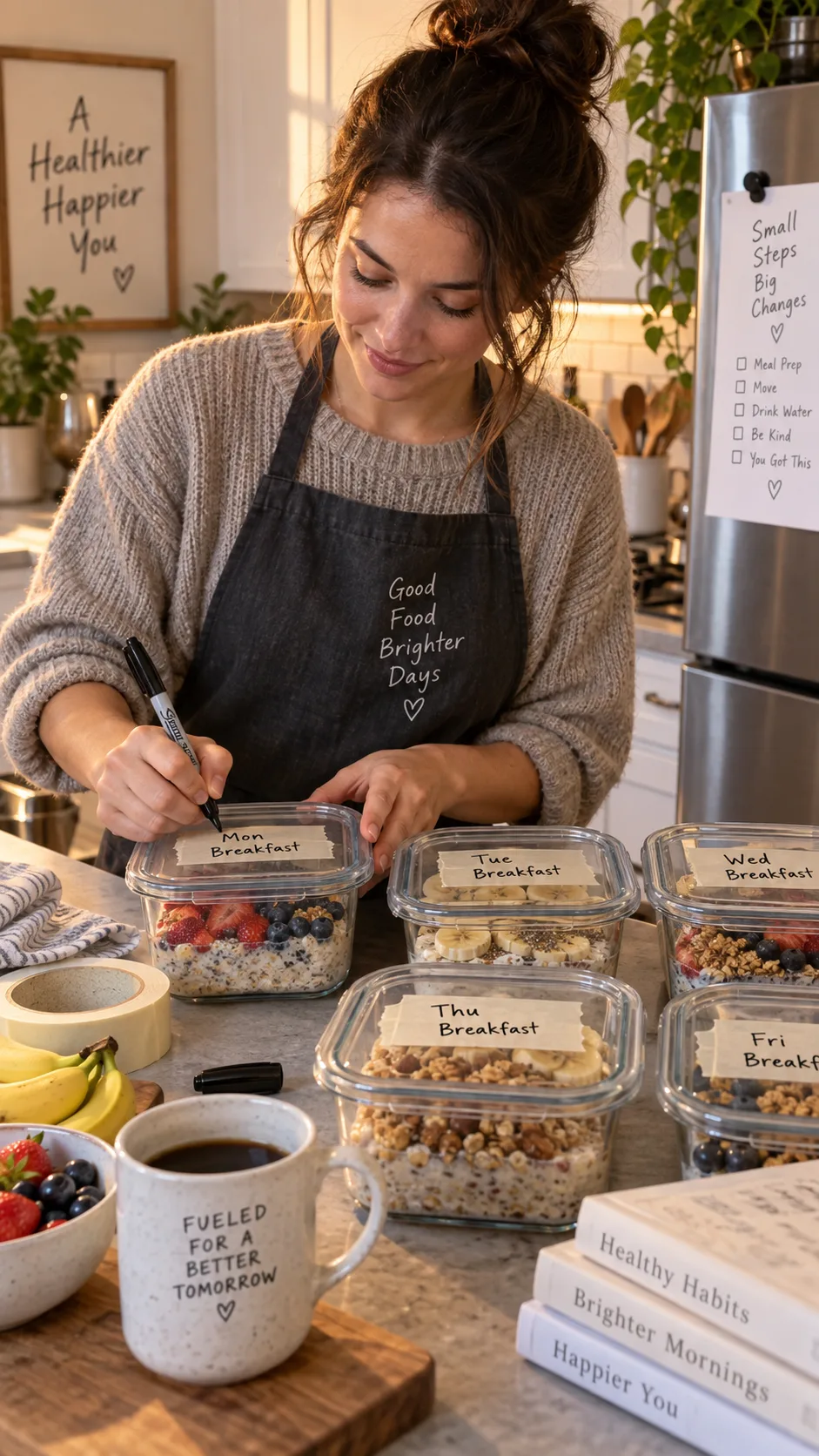
- Minutes 70–90: Portion, label with the date, wash up. Done.
Label everything. Mystery containers are how good food dies. I write the date on masking tape with a marker. It costs almost nothing, it works, and it peels off clean.
Storage rules that keep you safe (and your food tasting good)
Food poisoning ruins more meal prep habits than boredom does. Follow these and you’ll never have a problem.
- Cool food completely before sealing. Trapped steam creates condensation, condensation breeds bacteria. Wire rack, 30 minutes, then lid.
- Refrigerate within 2 hours of cooking, or 1 hour if your kitchen sits above 32°C. The USDA’s cold storage guidelines are the authority here, and they’re free to read.
- Cooked eggs and egg dishes: 3–4 days max in the fridge. No heroics on day 6.
- Reheat to 74°C (165°F): steaming hot throughout, not lukewarm in the middle.
- Glass beats plastic for reheating. No microwave-warped plastic, no lingering smells, no staining from turmeric.
- Freeze flat in portions. Flat packs thaw 3x faster and stack like files.
One more thing: keep wet toppings separate. Nuts, granola and avocado go on in the morning. Sogginess is the number one reason people abandon meal prep by week three.
5 mistakes that sabotage breakfast meal prep
1. Prepping 7 identical breakfasts
You will hate yourself by Thursday. Prep two different options, 3 portions each. Variety keeps you eating the food you made, and eating the food you made is the only thing that works long-term.
2. Calling a smoothie “breakfast”
Blended calories bypass chewing, and chewing matters for your satiety signals. Add something solid. Always.
3. Under-seasoning
Healthy food tastes like cardboard when you’re scared of salt, pepper, and spice. Season properly. If you want a bonus, some spices genuinely support metabolism, and a few of the thermogenic Nigerian foods like ginger and chilli earn their place in egg muffins and hash.
4. Ignoring portion size
“It’s healthy” doesn’t mean “unlimited.” A jar with 4 tablespoons of peanut butter and honey is a 700-calorie dessert wearing a wellness costume. If fat loss is your goal, the Nigerian diet for a flat stomach breaks down how portions interact with the rest of your day.
5. Prepping food you don’t like
Nobody has ever stuck with a breakfast they dread. IMO, this is the whole game. Pick the three ideas on this list you’d genuinely be excited to eat, and ignore the rest.
How much protein do you really need at breakfast?
Aim for 25–35g per meal. Research on muscle protein synthesis and appetite control, summarised well by the Mayo Clinic, points to spreading protein evenly across meals rather than back-loading it all into dinner.
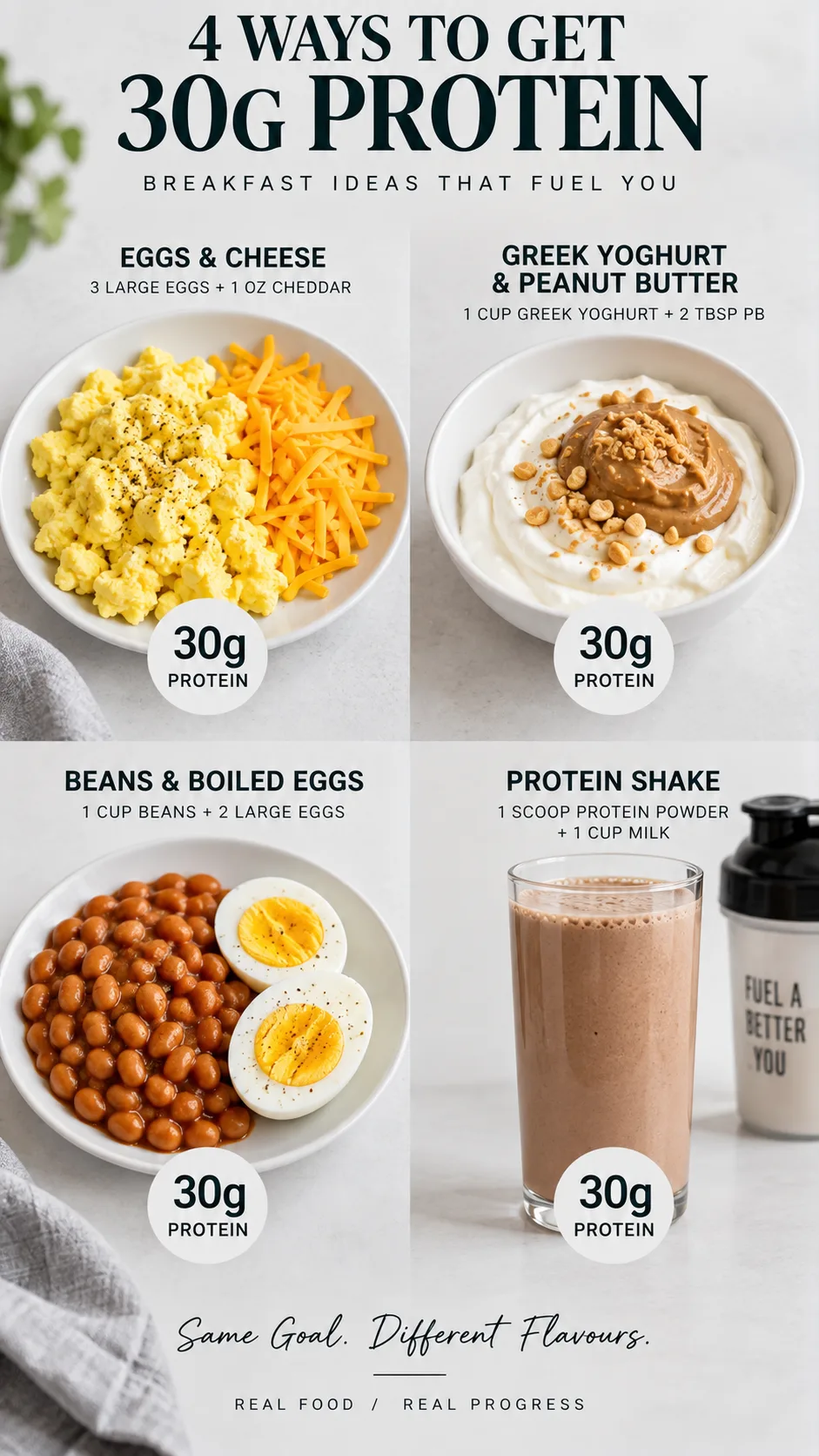
Here’s what 30g looks like in real food:
- 4 large eggs (~24g) + 1 slice cheese (~7g)
- 200g Greek yoghurt (~20g) + 2 tbsp peanut butter (~8g)
- 1 cup cooked beans (~15g) + 2 boiled eggs (~12g)
- 1 scoop whey (~24g) + 250ml milk (~8g)
Notice how much food that is. Most people eat half this much at breakfast and wonder why they’re starving mid-morning.
Quick answers to the questions everyone asks
How long does breakfast meal prep last?
3–4 days in the fridge for cooked dishes, 3 months in the freezer. Overnight oats and chia puddings hold 4–5 days. Cut fruit only lasts 2–3 days before it weeps.
Can I prep for the whole week on Sunday?
Yes, with a split: prep Monday to Wednesday fresh in the fridge, and freeze the Thursday and Friday portions. Move the frozen ones to the fridge Wednesday night. Problem solved.
What if I hate eggs?
Greek yoghurt jars, chia puddings, moi moi, protein pancakes and peanut butter wraps all skip eggs entirely. You’ve still got eight solid options.
Is skipping breakfast fine instead?
For some people, yes. Intermittent fasting works well for plenty of folks. But if you’re skipping breakfast and then demolishing everything in sight at 11am, you’re not fasting. You’re just postponing the chaos. Know which one you are.
The bottom line
Breakfast meal prep works when you build around protein, fibre and fat, and it falls apart when you build around convenience alone. Twelve ideas sit above; you only need two or three that you genuinely enjoy.
Start this Sunday. Set a 90-minute timer, make one batch of egg muffins and five yoghurt jars, and see how Wednesday morning feels compared to last week. That’s the whole experiment.
The best breakfast meal prep is the one still sitting in your fridge on Friday because you actually wanted to eat it. Go build that. 🙂