

Put down the plain rice cake. Step away from the glass of murky green sludge that tastes like lawn clippings. You do not need to suffer to drop body fat.
Years ago, I trapped myself in the miserable cycle of starvation dieting. I drank lukewarm lemon water, chewed on baby carrots until my jaw ached, and went to bed with an angry, rumbling stomach every single night. Guess what happened? I lost three pounds, snapped like a dry twig on day six, and devoured an entire deep-dish pizza in my pajamas.
Starvation diets backfire because biology always wins against sheer willpower. When you understand how your metabolism, hunger hormones, and plate volume interact, you can eat heaps of delicious food and still shed pounds consistently. This nutritional strategy delivers lasting fat loss without making your life miserable.
Why starvation diets always backfire
Why do so many popular crash diets fail within the first month? When you slash your calories to near-famine levels, your brain rings alarm bells. Your hypothalamus does not care about your beach trip; it cares about keeping you alive during a perceived famine.
Your body launches a coordinated hormonal strike against you. First, your fat cells drop their production of leptin, the hormone that tells your brain you feel full. At the exact same time, your stomach ramps up secretion of ghrelin, the hunger hormone that makes you crave calorie-dense, processed junk food.
According to research from the Harvard T.H. Chan School of Public Health, extreme restriction triggers compensatory metabolic slowing that drives rapid weight regain. Your thyroid down-regulates daily energy expenditure. You subconsciously move less, fidget less, and burn fewer calories throughout the day. In short, severe hunger guarantees metabolic revolt.
A successful diet must work with your biology rather than against it. If you want permanent fat loss, you must protect your metabolic rate while eating meals that keep your stomach physically full.
The real secret: welcome to volume eating
Have you ever eaten an entire family-sized bag of potato chips and still felt hungry twenty minutes later? Compare that to eating three large baked potatoes with skin. You could barely finish the third potato before feeling stuffed to the brim.
That contrast demonstrates the power of energy density. Foods with low calorie density carry heavy water and fiber weight. They fill your stomach cavity, trigger stretch receptors, and send clear fullness signals to your brain long before you overshoot your calorie limit.
High-volume eating flips traditional dieting completely on its head. Instead of eating tiny portions of depressing diet food, you pile your plate high with bulky, nutrient-dense ingredients. You consume massive visual portions that satisfy your appetite and your eyes simultaneously.
When you swap dense processed fats and refined starches for water-rich vegetables, lean proteins, and fibrous tubers, you create an effortless caloric deficit. You eat more physical food, yet you consume fewer total calories. This single mental shift transforms weight loss from a torture session into an enjoyable daily routine.
The three pillars of sustainable fat loss
Forget weird food-combining rules or restrictive eating windows that force you to skip brunch with your friends. A sustainable fat loss strategy rests firmly on three daily pillars.
1. High protein intake (your metabolic shield)
Protein reigns supreme among macronutrients for two major reasons: satiety and the thermic effect of food (TEF). Your body burns roughly 20 to 30 percent of protein calories simply digesting and processing the amino acids. In contrast, your gut burns only 0 to 3 percent of fat calories and 5 to 10 percent of carbohydrate calories during digestion.
Protein also preserves your lean muscle mass. When you lose weight without adequate protein, your body strips away muscle alongside fat. You end up as a smaller, softer version of yourself with a slower metabolic engine. Target roughly 0.7 to 1.0 gram of protein per pound of your ideal body weight every day.
Solid daily protein anchors include:
- Skinless chicken breast and tenderloins
- Wild-caught white fish, salmon, and canned tuna
- 0% or 2% plain Greek yogurt and low-fat cottage cheese
- Egg whites combined with whole eggs
- Extra firm tofu, tempeh, and edamame
- High-quality whey or pea protein powder
2. Fermentable and insoluble fiber
Fiber acts like an internal sponge inside your gastrointestinal tract. Soluble fiber absorbs water and forms a thick gel, which slows stomach emptying and flattens post-meal glucose spikes. Insoluble fiber adds physical bulk to keep digestion moving smoothly.
The Centers for Disease Control and Prevention notes that dietary fiber directly curbs appetite while supporting healthy cholesterol levels. Aim for at least 30 to 40 grams of fiber daily from whole-food sources.
If you need structured meal frameworks that automatically hit these high-fiber, high-protein targets, check out The 1200 Calorie Deficit Meal Plan Women Actually Stick To (With Meal Prep Shortcuts) to streamline your grocery shopping.
3. Strategic carbohydrates and healthy fats
Carbohydrates do not make you fat; calorie surpluses make you fat. Carbs fuel intense workouts, support thyroid conversion, and keep your central nervous system running smoothly. The trick lies in choosing slow-digesting complex carbohydrates rather than refined sugars.
Similarly, dietary fat supports healthy hormone production, especially testosterone and estrogen. However, because dietary fat contains 9 calories per gram, which is more than double the 4 calories per gram in protein and carbohydrates, you must measure it with intention. A single unmeasured pour of olive oil can easily add 300 invisible calories to an otherwise lean salad.
Calculate your sustainable deficit (no starvation math)
How many calories should you eat each day? Many fitness apps automatically hand you a brutal 1,200-calorie target regardless of your height, weight, or activity level. For most adults, that target spells disaster within fourteen days.
Instead, follow this simple formula to calculate a reasonable 15 to 20 percent caloric deficit:
- Estimate your baseline maintenance calories: Multiply your current body weight in pounds by 14 (if sedentary) or 16 (if active). A 180-pound moderately active person maintains weight around 2,500 to 2,700 calories.
- Subtract 400 to 500 calories: This steady deficit yields roughly one pound of fat loss per week without triggering severe biological defenses.
- Set your protein floor: Multiply your goal weight by 0.8 grams. Assign those calories first (4 calories per gram of protein).
- Split remaining calories between carbs and fats: Adjust these numbers based entirely on personal preference. Both low-carb and moderate-carb diets yield identical fat loss when calories and protein match, as clinical trials in PubMed demonstrate.
A moderate deficit feels manageable. You maintain high energy for workouts, sleep deeply, and avoid irritability. Steady and slow fat loss always beats rapid crash cycles.
Watch: the science of losing fat without muscle loss
Need visual proof that you can drop body fat while keeping meals satisfying? Watch this breakdown explaining the mechanics of body recomposition and sustainable deficits:
What a realistic full-plate day looks like
Here is what eating this way looks like in daily life. You skip tiny portions, avoid chewing on dry celery, and eliminate hunger after meals.
Breakfast: the anabolic fluff scramble
Whip three egg whites with one whole egg. Sauté two handfuls of baby spinach and half a cup of sliced mushrooms in a nonstick pan with cooking spray. Pour the eggs over the vegetables and cook until fluffy. Top with two tablespoons of salsa and serve alongside one cup of fresh strawberries and a thick slice of toasted sourdough. This breakfast gives you 32 grams of protein and plenty of micronutrients for under 380 calories.
Lunch: the colossal Mediterranean chop bowl
Fill a giant mixing bowl with chopped romaine lettuce and baby kale. Toss in 5 ounces of seasoned grilled chicken breast, half a diced cucumber, cherry tomatoes, pickled red onions, and two tablespoons of light feta cheese. Whisk two teaspoons of olive oil with red wine vinegar, lemon juice, and oregano for your dressing. This salad weighs nearly two pounds, takes twenty minutes to chew, and clocks in under 450 calories.
For more meal inspiration that avoids midday energy slumps, explore our companion guide: The 1200 Calorie Deficit Meal Plan Women Actually Stick To (With Meal Prep Shortcuts).
Afternoon snack: high-protein berry whip
Mix 200 grams of 0% plain Greek yogurt with half a scoop of vanilla whey protein powder and a splash of unsweetened almond milk until silky smooth. Top with a half-cup of thawed frozen blueberries and a sprinkle of cinnamon. You knock out midday sweet cravings while banking another 30 grams of protein.
Dinner: crispy air-fryer feast
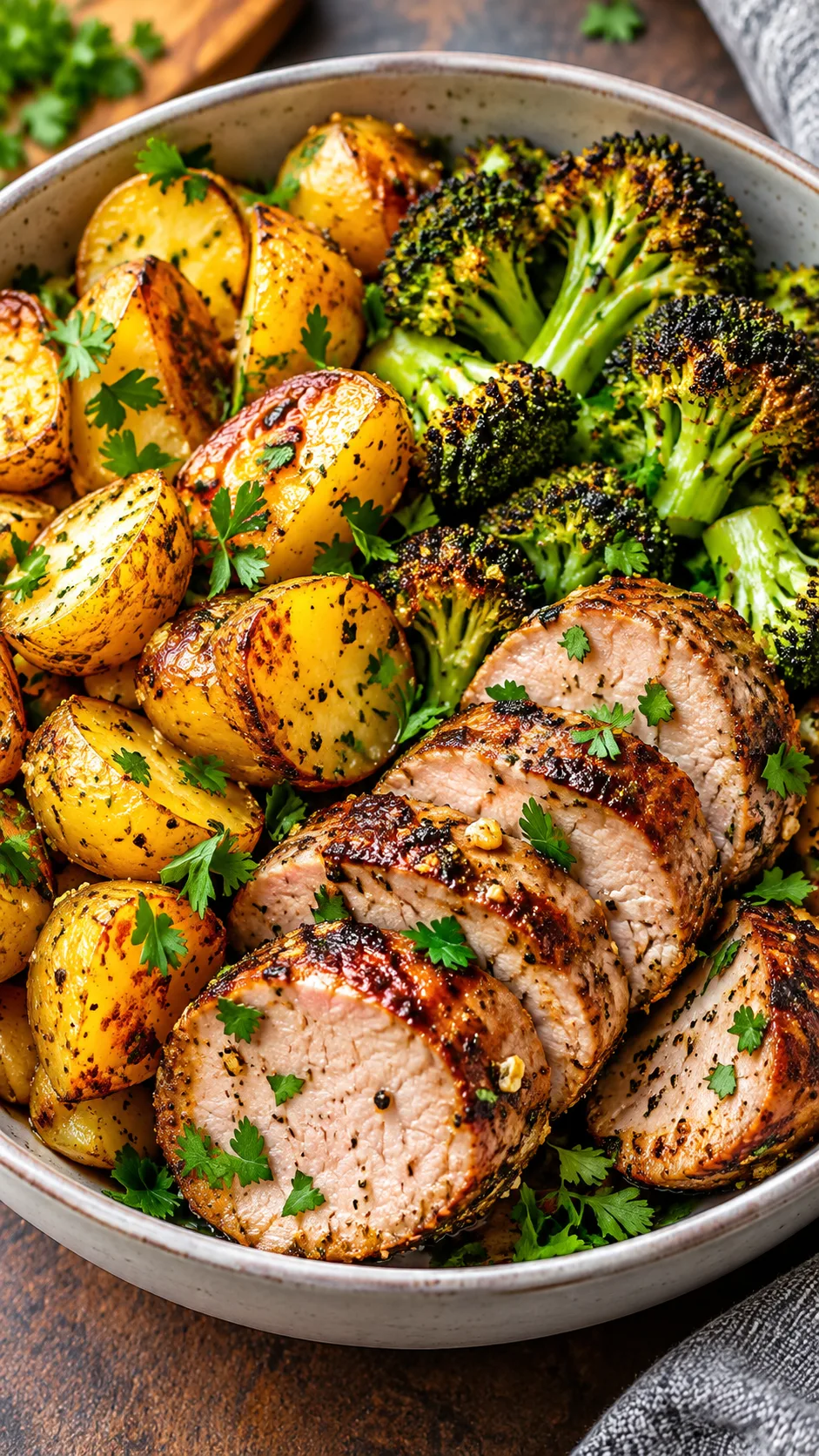
Coat 6 ounces of lean pork tenderloin or white cod with smoked paprika, garlic powder, and sea salt. Toss 250 grams of broccoli florets and 150 grams of cubed red potatoes in garlic salt. Air-fry everything until the potatoes turn golden and the broccoli edges char pleasantly. You finish your day with a massive, warm, satisfying dinner that feels like comfort food.
Four traps that sneakily derail progress
Even when you eat healthy whole foods, simple blind spots can silently stall your fat loss. Watch out for these four common traps.
- Sneaky liquid calories: Fancy coffees, craft sodas, sports drinks, and alcohol deliver hundreds of calories without triggering stomach fullness receptors. Swap them for sparkling water with lime, unsweetened iced tea, or black coffee.
- Eyeballing fats: Peanut butter, nuts, and extra virgin olive oil provide good nutrients, but a single tablespoon contains roughly 100 to 120 calories. Use a digital kitchen scale for two weeks; you will quickly realize how easily one tablespoon turns into three.
- Weekend amnesia: You hit your targets Monday through Friday afternoon, creating a modest 2,000-calorie deficit. Then you hit brunch, cocktails, and pizza all weekend, packing 3,000 extra calories into forty-eight hours. You erase five days of discipline in two nights.
- Neglecting NEAT (non-exercise activity thermogenesis): You spend 45 minutes sweating in the gym, then collapse onto the couch for the remaining 15 hours of your waking day. Prioritize hitting 8,000 to 10,000 daily steps; baseline movement burns more total daily calories than a single hard workout.
The mindset shift that guarantees permanence
Stop viewing your nutrition through a finish-line lens. When you ask yourself, “How long do I have to stay on this diet?”, you set up an inevitable rebound. The moment you quit the behaviors that produced your weight loss, the lost weight returns.
Ask yourself a better question: “Can I eat this exact way for the next five years?” If your answer is no, drop that strategy immediately. Swap extreme restriction for habits you can sustain during stressful work weeks, family holidays, and vacation weekends.
Give yourself permission to include your favorite treats in controlled amounts. Apply the 80/20 rule: pull 80 percent of your daily intake from nutrient-dense whole foods (lean meats, vegetables, fruit, whole grains, healthy fats) and reserve the remaining 20 percent for whatever fun foods you genuinely enjoy. Consistency always beats temporary perfection.
Start today: your immediate action plan
Do not wait until next Monday to reset your habits. You can take immediate, practical steps starting with your very next meal:
- Drink 16 ounces of cool water before your next meal to prime digestion and support stomach fullness.
- Build every plate around lean protein first; place your protein source onto the plate before adding any sides.
- Cover half your plate with colorful vegetables to leverage volume eating automatically.
- Lace up your sneakers and walk for twenty minutes after dinner to clear blood glucose and boost daily energy expenditure.
Fat loss does not demand suffering, starvation, or emotional punishment. Fuel your body with nutritious food, keep your physical plates full, maintain a modest caloric deficit, and let daily consistency handle the rest.