

You’ve probably watched someone on the internet eat a ribeye for breakfast and thought, “Okay, but could I do that for a month?” Fair question. Most carnivore meal plans read like a dare rather than a plan: 4,000 calories of organ meat and not a word about what to do when your energy tanks on day three.
This one’s different. I’ve coached dozens of people through their first 30 days of all-meat eating, and I’ve done it myself twice (once badly, once properly). The version that sticks is boring, cheap, and forgiving. That’s the whole secret.
You can get through this without hating your life by Thursday. The plan below runs four weeks, one week at a time.
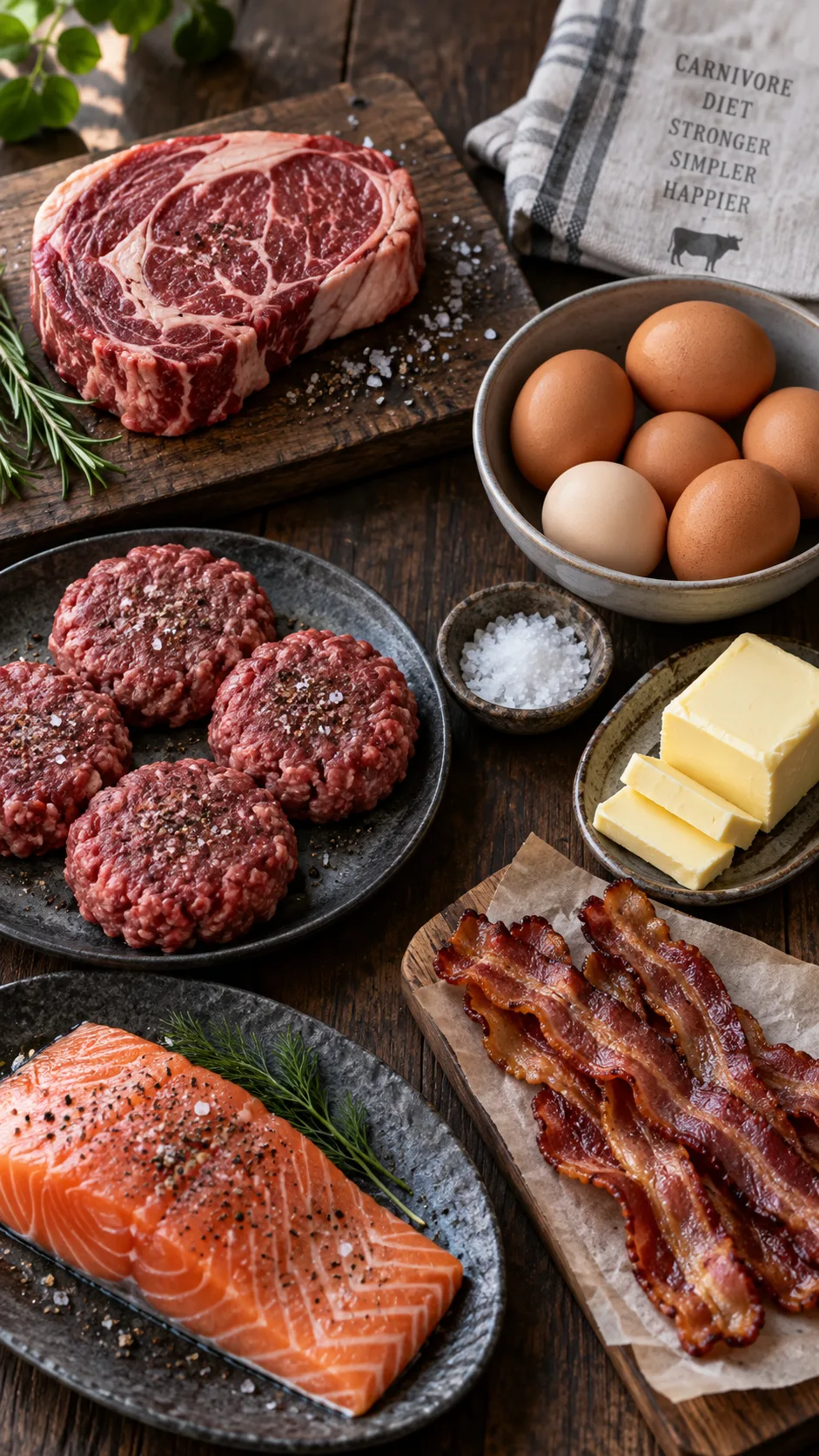
What the carnivore diet is, in plain English
You eat animal foods. You skip plant foods. That’s the entire rulebook, and anyone who makes it more complicated is probably selling you something.
In practice, that means beef, lamb, pork, poultry, fish, eggs, and (depending on how strict you go) butter, hard cheese, and heavy cream. Out goes bread, rice, pasta, beans, fruit, vegetables, seed oils, and every snack in your pantry that comes in a crinkly bag.
It’s basically keto with the training wheels off. If you’ve ever run a low-carb or keto meal plan, you already know 80% of what’s coming. The difference? No carb counting, no macro apps, no measuring cups. You eat meat until you’re full and then you stop.
Why do people bother?
Mostly because the simplicity works. Decision fatigue kills more diets than hunger does. When your only question is “which meat today?”, you don’t burn willpower on food choices at 6pm when you’re tired and cranky.
The research on very low carb eating is genuinely solid for weight loss, blood sugar control, and triglycerides. The peer-reviewed literature on ketogenic diets backs that up. Carnivore specifically has far less long-term data behind it, and I’ll be straight with you about that. The anecdotal reports are loud; the controlled trials are quiet. Know what you’re signing up for.
Before week 1: the setup that prevents most failures
Ever wondered why people quit carnivore on day four? It isn’t cravings. It’s electrolytes and an empty fridge.
Sort these three things first
- Salt, magnesium, potassium. When you drop carbs, your kidneys dump sodium fast. That’s the “keto flu” everyone whines about. Salt your food aggressively, uncomfortably so at first. Take a magnesium glycinate supplement at night.
- Buy 7 days of meat upfront. If you’re improvising in the grocery store on day two, you’ll walk out with a rotisserie chicken and a bag of regret.
- Clear the landmines. Cookies, chips, cereal: get them out of the house. You’re not a monk. Don’t test yourself.
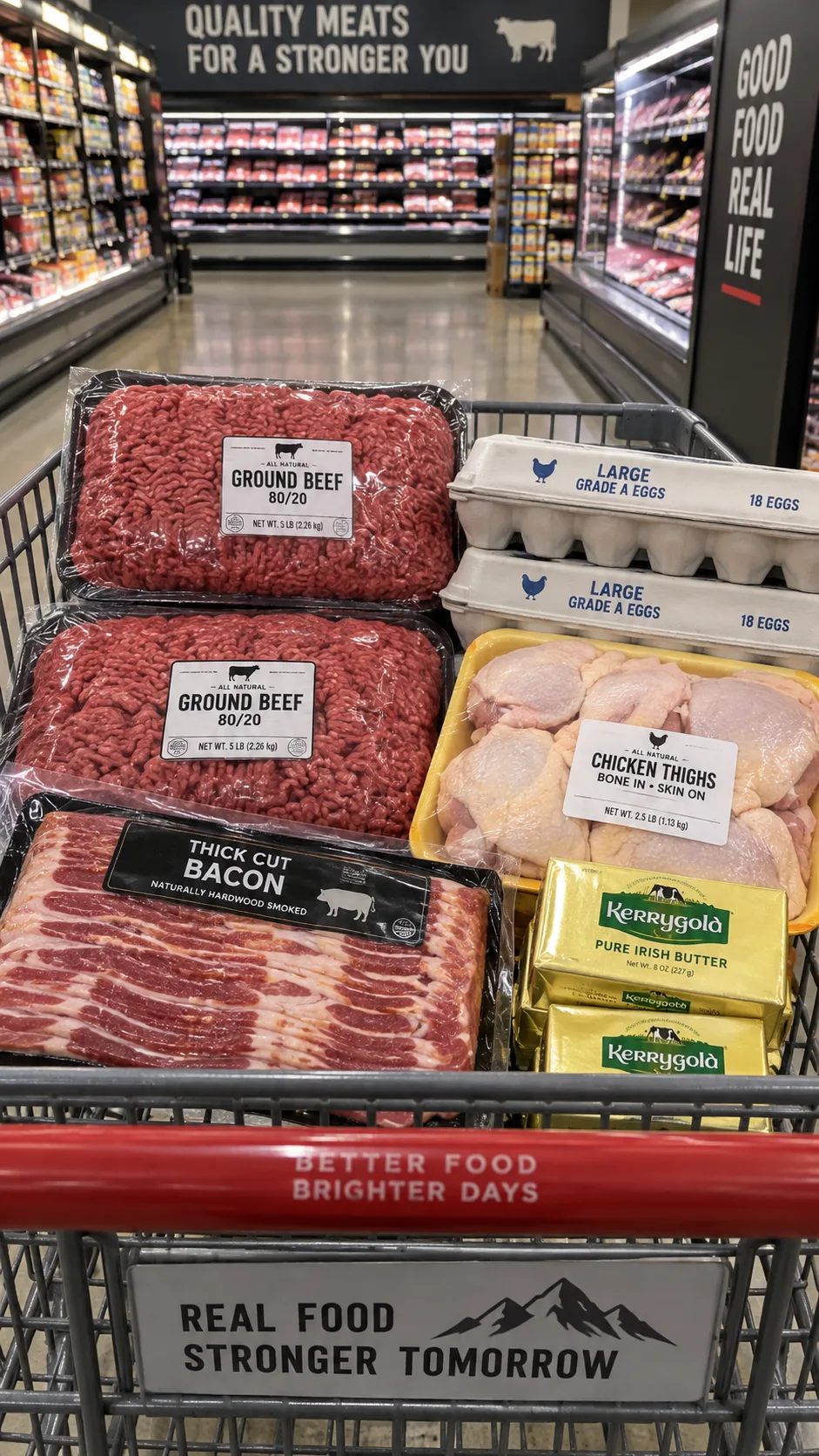
Budget reality check: carnivore doesn’t have to cost a fortune. Ground beef (80/20), eggs, chicken thighs, and pork shoulder are dirt cheap per gram of protein. Ribeye is a treat, not a requirement. I ate ground beef for probably 60% of my first month and felt great.
Week 1: the adaptation week (don’t be a hero)
Your goal for week one: survive and stay fed. Nothing else. No weigh-ins, no fasting experiments, no measuring your ketones with a gadget you bought at 2am.
Your body is switching fuel sources. You’ll feel foggy, maybe irritable, possibly like you’ve got a mild hangover you didn’t earn. That’s normal, and it passes by day 5 or 6 for most people.
Week 1 daily template
- Breakfast: 3 or 4 eggs cooked in butter plus 3 strips of bacon
- Lunch: a 200g to 250g ground beef patty, salted heavily, plus an egg on top if you want one
- Dinner: chicken thighs (skin on) or pork chops, pan-seared in the fat
- If hungry: eat more. Seriously. Another patty, more eggs, a slice of cheese.
- Drink: water with a pinch of salt, plain coffee or tea (black), bone broth
The number one week-one mistake is undereating. People swap a 2,200-calorie diet for 1,100 calories of chicken breast and then wonder why they want to cry. Eat fatty cuts. Eat until you’re genuinely satisfied.
What to expect physically
Frequent bathroom trips (water weight), possible headaches, and some digestive weirdness while your gut adjusts to a high-fat load. Your bowels may go quiet for a couple of days. With almost no fibre going in, less comes out. That’s mechanics, not constipation.
Week 2: finding your rhythm
By now the fog lifts. Most people feel the click somewhere between day 8 and day 12: steady energy, no 3pm crash, an appetite that finally behaves.
Week two is where you add a bit of variety so you don’t burn out on beef. Rotate your proteins. Eat fish twice this week for the omega-3s.
Week 2 sample days
- Day 8: eggs and bacon / ribeye steak / salmon fillet with butter
- Day 9: skip breakfast if you’re not hungry / ground beef and 2 eggs / lamb chops
- Day 10: scrambled eggs in beef tallow / leftover lamb / chicken thighs and pork belly
- Day 11: bacon and eggs / canned sardines (yes, really) / sirloin steak
- Day 12: eggs / burger patties with cheese / slow-cooked pork shoulder
- Day 13: coffee only / big ribeye / shrimp cooked in butter
- Day 14: eggs and sausage / ground beef bowl / roast chicken
Notice something? Meals start disappearing on their own. When protein and fat control your appetite properly, breakfast often becomes optional. Don’t force it, and don’t skip meals just to speed up results either.

Week 3: the boredom wall (and how to smash it)
Week three is where the diet stops being novel and starts being, well, a diet. This is the real dropout zone. Hunger doesn’t get you. Cravings don’t get you. The sheer monotony of chewing another steak does.
The fix is cooking technique, not new ingredients.
Five ways to make the same meat taste different
- Change the fat: butter, tallow, ghee, duck fat, bacon grease. Each one tastes wildly different.
- Change the method: grill it, slow-cook it, braise it, air-fry it, smoke it. A slow-cooked chuck roast tastes nothing like a seared steak.
- Change the cut: short ribs, oxtail, brisket, chicken wings, pork belly. Cheap cuts often win on flavour.
- Change the salt: flaky sea salt sprinkled on at the end makes a bigger difference than it has any right to.
- Add eggs to everything: a runny yolk over ground beef is basically a sauce.
During week three of my first attempt, I nearly quit out of boredom. Then I bought a $30 slow cooker and made an 8-hour beef chuck roast. That roast saved the whole experiment. Sometimes the fix is equipment, not willpower.
Should you add organ meats?
If you can stomach it, yes. Beef liver once a week covers a lot of micronutrient bases: vitamin A, B12, copper, folate. The USDA FoodData Central database shows you just how nutrient-dense it is next to muscle meat.
Can’t handle the taste? Mix 100g of minced liver into 500g of ground beef. You won’t notice it. I promise.
Week 4: locking it in and making it sustainable
Four weeks in, you’ve got real data on yourself. Energy, sleep, digestion, skin, joint pain, waistline: how did they move? This is the week you decide which version of carnivore you’ll live with.
Pick your long-term lane
- Strict carnivore: meat, salt, water. Best for people running it as an elimination protocol for autoimmune or gut issues.
- Standard carnivore: meat, eggs, dairy, some seasoning. Where most people settle. Sustainable and easier to eat around other humans.
- Animal-based: carnivore plus honey, fruit, and the occasional low-toxin plant. Better if you train hard or lift heavy.
- Carnivore-ish (my pick for most people): carnivore 80% of the time, flexible at restaurants and family dinners. Nobody’s calling the police.
Lane four is why people succeed long-term. Rigid perfectionism makes you brittle. You want a way of eating you’ll still follow in March, not a 30-day martyrdom badge.

The full shopping list (print this)
Tier 1: buy every week
- Ground beef, 80/20 (2kg to 3kg)
- Eggs (2 to 3 dozen)
- Bacon or breakfast sausage
- Chicken thighs, skin-on
- Butter (grass-fed if the budget allows)
- Coarse sea salt
Tier 2: rotate in
- Ribeye, sirloin, or chuck roast
- Salmon, sardines, or mackerel
- Pork shoulder or pork belly
- Lamb chops
- Hard cheese (cheddar, parmesan)
- Beef tallow or ghee
Tier 3: optional upgrades
- Beef liver or heart
- Bone broth
- Shrimp or scallops
- Heavy cream (for coffee)
Rough budget: $70 to $110 per person per week if you lean on tier 1. That’s often less than people spend on takeout and snacks. Surprised? Most people are.
Watch this before you start
If you want to hear how a physician frames the carnivore approach, caveats included, this walkthrough covers the practical side well:
Common mistakes that wreck beginners
- Eating lean meat only. Chicken breast and 95/5 beef will leave you starving and miserable. Fat is your fuel now. Aim for roughly 1:1 fat to protein by grams on the plate.
- Ignoring salt. You need more sodium, not less, on very low carb. Most beginners under-salt by half.
- Weighing yourself daily in week one. You’ll drop 2kg to 4kg of water and think you’re a genius, then “gain” it back and panic. Weigh weekly, same time, same conditions.
- Jumping into fasting immediately. Adaptation plus fasting equals a bad time. Wait until week three at the earliest. If it interests you later, the one meal a day approach pairs surprisingly well with carnivore.
- Zero exercise adjustment. Your lifting performance may dip for two weeks. Drop the volume, keep the frequency. It comes back.
- Not telling your doctor. Especially if you take blood pressure meds or diabetes meds, or have kidney issues. Doses often need adjusting fast on a low-carb diet.
Who should skip this (straight talk)
I won’t pretend carnivore suits everyone. It doesn’t.
- Pregnant or breastfeeding? Don’t run an elimination diet right now. Go with a balanced, nutrient-dense approach instead. This guide on losing weight while breastfeeding is a far better starting point.
- History of disordered eating? Restrictive protocols can light that fuse. Talk to a professional first.
- Kidney disease, familial hypercholesterolemia, or gallbladder removed? Get medical clearance. That one’s non-negotiable.
- You love vegetables and feel great? Then why are you here? The Mediterranean approach has the strongest long-term evidence of any diet on earth. Zero shame in that.
One more thing worth knowing: the American Heart Association raises fair questions about saturated fat and long-term very low carb eating. Get your bloodwork done before you start, then again at 90 days. Data beats vibes.

Quick FAQ
Will I lose muscle?
Not if you eat enough protein, and on carnivore you’d have to work hard to get that wrong. Keep lifting. If you’re new to training, a simple beginner gym plan pairs perfectly with this.
What about coffee?
Coffee is a plant. Strict carnivores skip it. In practice, most people drink it black and do fine. I kept mine and never regretted it.
How fast will I lose weight?
Typical range: 1.5kg to 3kg in week one (mostly water), then 0.5kg to 1kg weekly. Faster isn’t better.
Can I season my food?
Salt, always. Pepper and dried herbs are technically plants and practically harmless. If your choice is “seasoned meat forever” versus “quitting in two weeks”, season the meat.
The bottom line
The carnivore meal plan that works isn’t the one with the fanciest cuts or the strictest rules. It’s the one you can repeat on a Tuesday when you’re tired and the kids are shouting.
Week 1: survive and salt everything. Week 2: rotate your proteins. Week 3: fix the boredom with technique. Week 4: choose the version you’ll keep.
Start with one week. Buy the ground beef, the eggs, and the butter, then stop overthinking it. If you want the deeper breakdown of the food rules and the science, my complete carnivore diet beginner’s playbook covers it properly.
Nobody tells you this part: the diet isn’t the hard bit. The win is deciding to stop negotiating with yourself every single day. Go cook a steak.