

You opened the fridge at 3pm, looked at that sad container of dry chicken and plain rice, and quietly shut the door again. We have all done it. I spent two years making the most boring meal prep in the world before I worked out what was really going wrong.
The problem was never the chicken. The problem was how I built the plate. Once I fixed that, my afternoon snack raids stopped almost overnight. Here is exactly what changed.
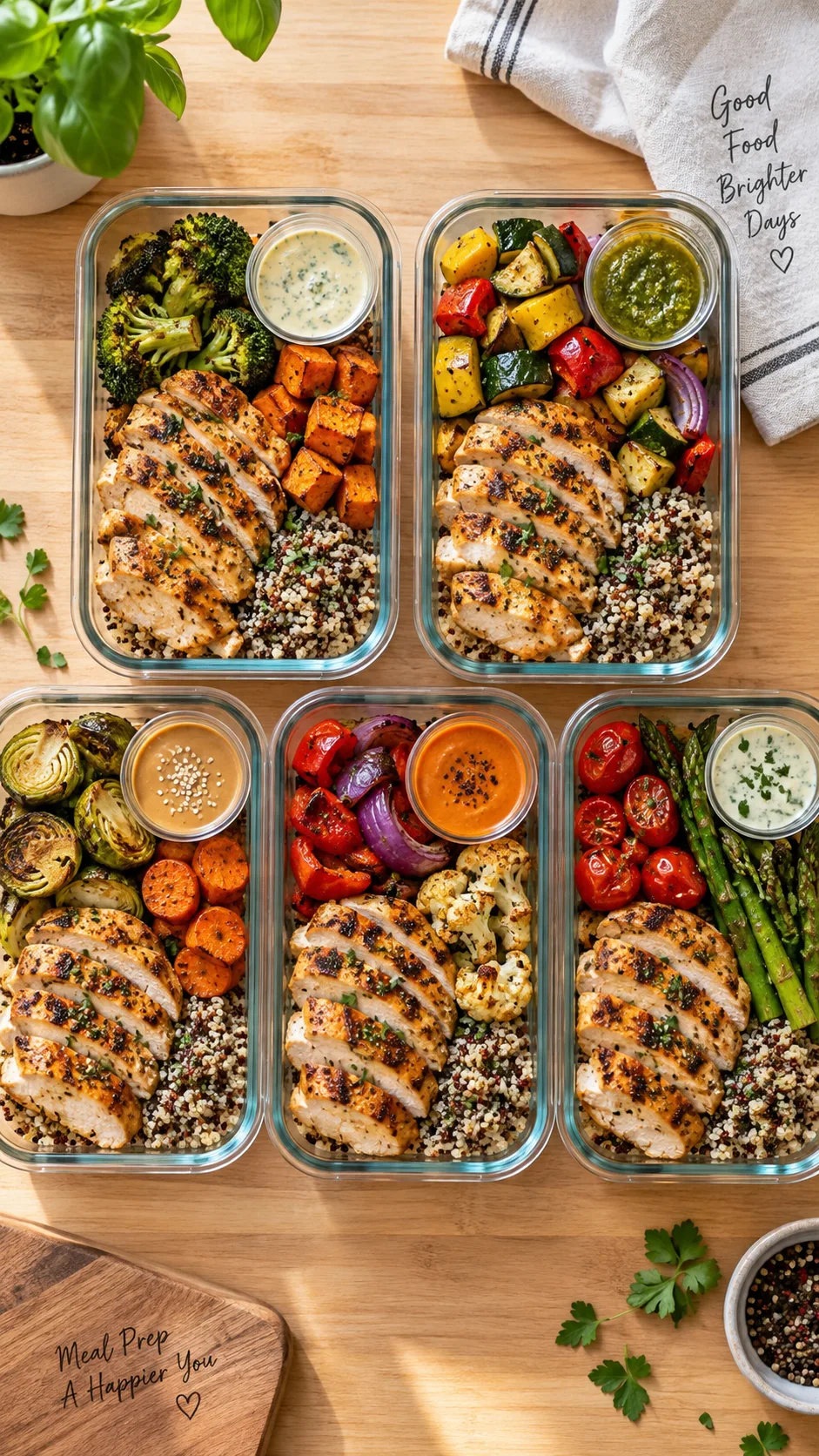
Why most chicken meal prep leaves you starving by 3pm
Here is the uncomfortable truth: most “healthy” meal prep containers hold about 350 calories and roughly nine grams of fiber across the entire week. Then people wonder why they chew through a sleeve of crackers before dinner.
Fullness is not magic. It runs on three levers, and chicken only pulls one of them.
The three levers of satiety
- Protein volume. Protein triggers satiety hormones like GLP-1 and peptide YY. Chicken breast gives you roughly 31g of protein per 100g cooked, according to USDA FoodData Central. That part is easy.
- Fiber and water weight. Fiber slows gastric emptying, which means your stomach stays physically fuller for longer. Harvard’s Nutrition Source recommends 25 to 35g of fiber a day, and most people scrape by on about 15g.
- Fat for staying power. Fat slows digestion and makes food taste like food. Skipping it entirely is why your 2019 diet collapsed. Mine too.
Miss one lever and you will eat again in ninety minutes. Hit all three and you will forget lunch even happened. Ever noticed how a burrito keeps you full for hours but a salad does not? Now you know why.
The 400/30/10 rule I use for every container
I build every prep container around this: minimum 400 calories, minimum 30g protein, minimum 10g fiber. It is not fancy science. It is just the floor below which I know I will get hungry.
Write it on a sticky note and slap it on the fridge. I mean it: mine has been there for three years, it looks disgusting now, and it still works.
Buying and prepping chicken without losing your mind
Chicken breast gets all the attention. IMO it is overrated for meal prep. Breast has almost no intramuscular fat, so it dries out the second you reheat it. Thighs stay juicy on day four.
Cut comparison for meal prep
- Boneless skinless thighs reheat better than anything else, with about 26g protein per 100g. This is my default for anything I plan to eat on Thursday.
- Boneless skinless breast is the leanest option with the highest protein density. Use it for cold food: salads, wraps, anything you never put in a microwave.
- A whole chicken costs the least per pound by a mile. Roast one on Sunday, shred it, and you have five lunches plus bones for stock.
- Ground chicken cooks in eight minutes, drinks up sauce, and freezes perfectly. Criminally underrated.
Food safety, because nobody wants that story
Cook chicken to 165°F (74°C) internal temperature. Not “it looks white.” Buy a $12 instant-read thermometer and stop guessing. The USDA Food Safety and Inspection Service publishes the full temperature chart, and it is worth a bookmark.
Cool cooked chicken quickly, then refrigerate it within two hours. Eat refrigerated cooked chicken within 3 to 4 days. Anything past that goes into the freezer on day two, not day five. I learned this the hard way in 2018 and I would rather you skipped the experience.
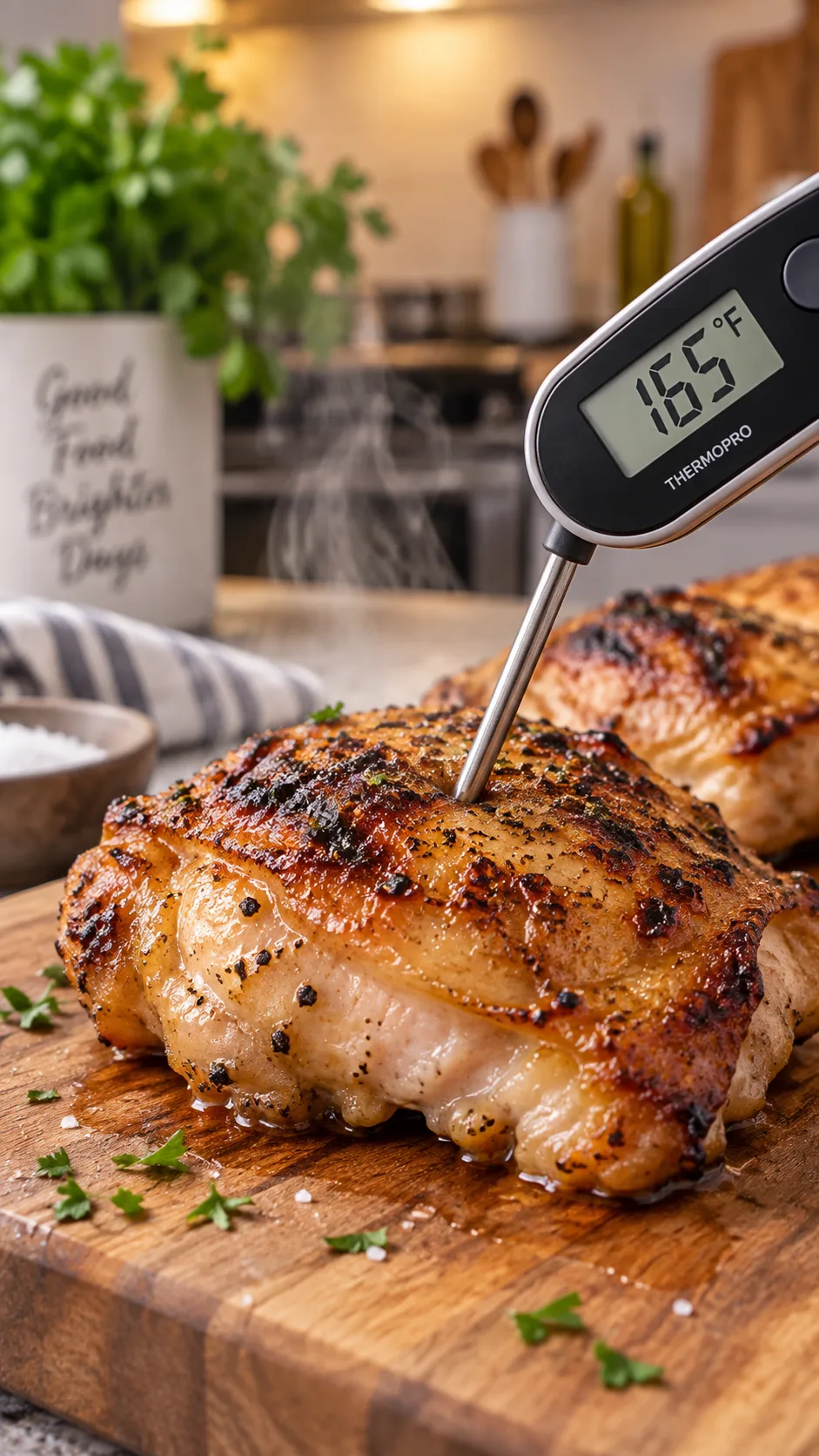
Recipe 1: Sheet pan harissa chicken with chickpeas and sweet potato
This is the recipe that converted three of my coworkers. One pan, forty minutes, and the fiber count borders on absurd.
What you need (4 servings)
- 800g boneless skinless chicken thighs, cut into large chunks
- 2 cans chickpeas (800g total), drained and patted dry
- 2 large sweet potatoes, cubed small
- 1 red onion, thick wedges
- 3 tbsp harissa paste, 2 tbsp olive oil, juice of 1 lemon
- 1 tsp smoked paprika, 1 tsp cumin, salt
Method
- Heat the oven to 425°F / 220°C. High heat matters here, because low heat steams everything into mush.
- Toss the sweet potato and onion with half the oil and spices. Roast them alone for 15 minutes. They need the head start.
- Meanwhile, coat the chicken and chickpeas in harissa, the rest of the oil, and the lemon.
- Add the chicken and chickpeas to the pan. Roast 20 to 25 more minutes, until the chicken hits 165°F and the chickpeas crisp up.
- Divide into four containers. Add a spoon of Greek yogurt when you eat it, not before.
Per serving: about 520 calories, 48g protein, 14g fiber. That fiber number is the whole point. The chickpeas do heavy lifting that rice simply cannot do.
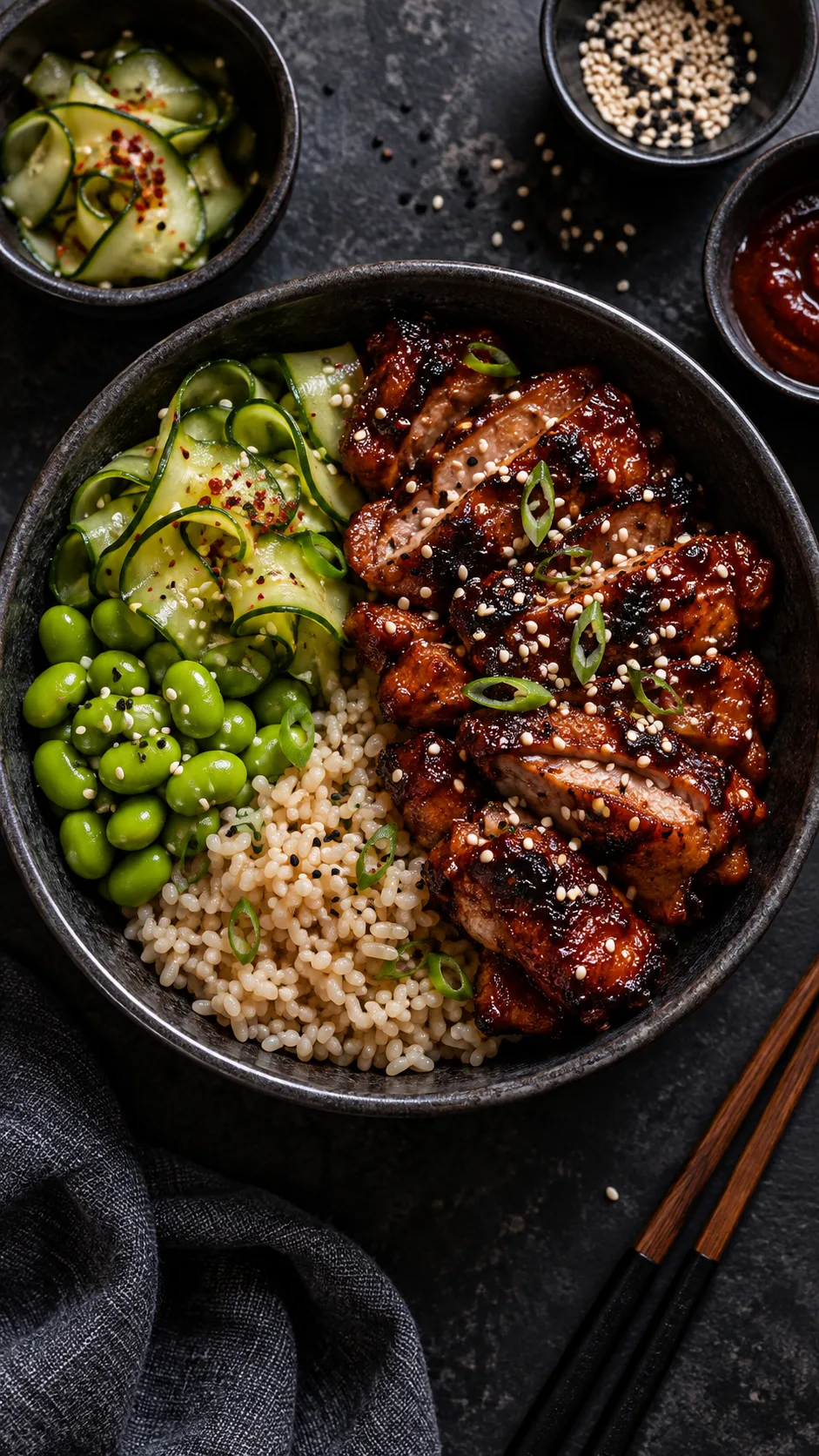
Recipe 2: Korean-style gochujang chicken bowls
Dry meal prep chicken happens because people skip the marinade. Gochujang fixes that for good. It is a fermented chili paste that brings sugar, salt, and umami at the same time.
The marinade (do this Saturday night)
- 3 tbsp gochujang
- 2 tbsp soy sauce
- 1 tbsp honey or maple syrup
- 1 tbsp sesame oil
- 4 cloves garlic, grated
- 1 tbsp grated fresh ginger
- 900g chicken thighs
Marinate overnight. Sear in a hot pan for 5 to 6 minutes per side, or air fry at 400°F for 18 minutes, flipping once. The sugar caramelizes into dark sticky edges that survive four days in the fridge.
Build the bowl
- For the base, use half brown rice and half cauliflower rice. You get the texture without the food coma.
- For vegetables, add quick-pickled cucumber, shredded carrot, and steamed edamame (8g fiber per cup).
- To finish, scatter sesame seeds and sliced scallion, then drizzle on sriracha mayo made with Greek yogurt.
Store the pickled cucumber separately unless you enjoy soggy disappointment.
Recipe 3: The shredded chicken base you should make every Sunday
This one is barely a recipe. It is infrastructure. Cook a big batch of neutral shredded chicken and you unlock five completely different meals from one session at the stove.
Poach it, do not boil it
- Put 1.5kg chicken breast or thighs in a wide pot. Cover with cold water or stock by one inch.
- Add a halved onion, 3 garlic cloves, a bay leaf, and a tablespoon of salt.
- Bring it to a bare simmer: tiny bubbles, never a rolling boil. Boiling seizes the proteins and hands you rubber.
- Simmer 15 minutes for breast, 22 for thighs. Kill the heat and let it sit in the liquid for 10 more minutes.
- Shred with two forks, or run a stand mixer on low for 20 seconds. Yes, the stand mixer trick works.
- Keep the poaching liquid. Pour a few tablespoons back over the stored chicken. This is the best anti-dryness trick I know.
Five meals from one batch
- Monday: Buffalo chicken lettuce wraps with celery and a blue cheese yogurt dip.
- Tuesday: White bean and chicken chili. The beans push fiber past 15g per bowl.
- Wednesday: Chicken, black bean and corn burrito bowls with lime crema.
- Thursday: Curried chicken salad with grapes and toasted almonds on sourdough.
- Friday: Chicken and lentil soup with whatever vegetables are dying in your crisper drawer.
Same chicken, five different flavor profiles. Nobody gets bored, including you.
Recipe 4: Mediterranean chicken and lentil jars
Lentils are the most underrated meal prep ingredient on earth. One cup of cooked lentils gives you 18g protein and 16g fiber. Pair them with chicken and you have a container that holds you for five hours without effort.
Assembly order matters
- On the bottom goes the dressing: lemon, olive oil, oregano, garlic, red wine vinegar.
- Next, cooked green lentils. They soak up the dressing and taste better for it.
- Then cherry tomatoes, cucumber, red onion, and kalamata olives.
- After that, sliced oregano and lemon grilled chicken breast.
- On top, feta and fresh parsley. Keep them dry and far from the dressing.
Shake the jar right before you eat. The dressing travels upward and coats everything without turning your greens into swamp water.
Per jar: about 490 calories, 42g protein, 13g fiber. This is the one I make when I want lunch to feel like a restaurant meal instead of a punishment.
Watch the technique in action
Reading recipes is fine, but watching someone batch-cook chicken efficiently teaches you more in ten minutes than any article can. Here is a solid walkthrough:
Storage rules that save your whole week
You can cook perfect chicken and still ruin it in the container. Here is what roughly 300 Sunday preps taught me.
The non-negotiables
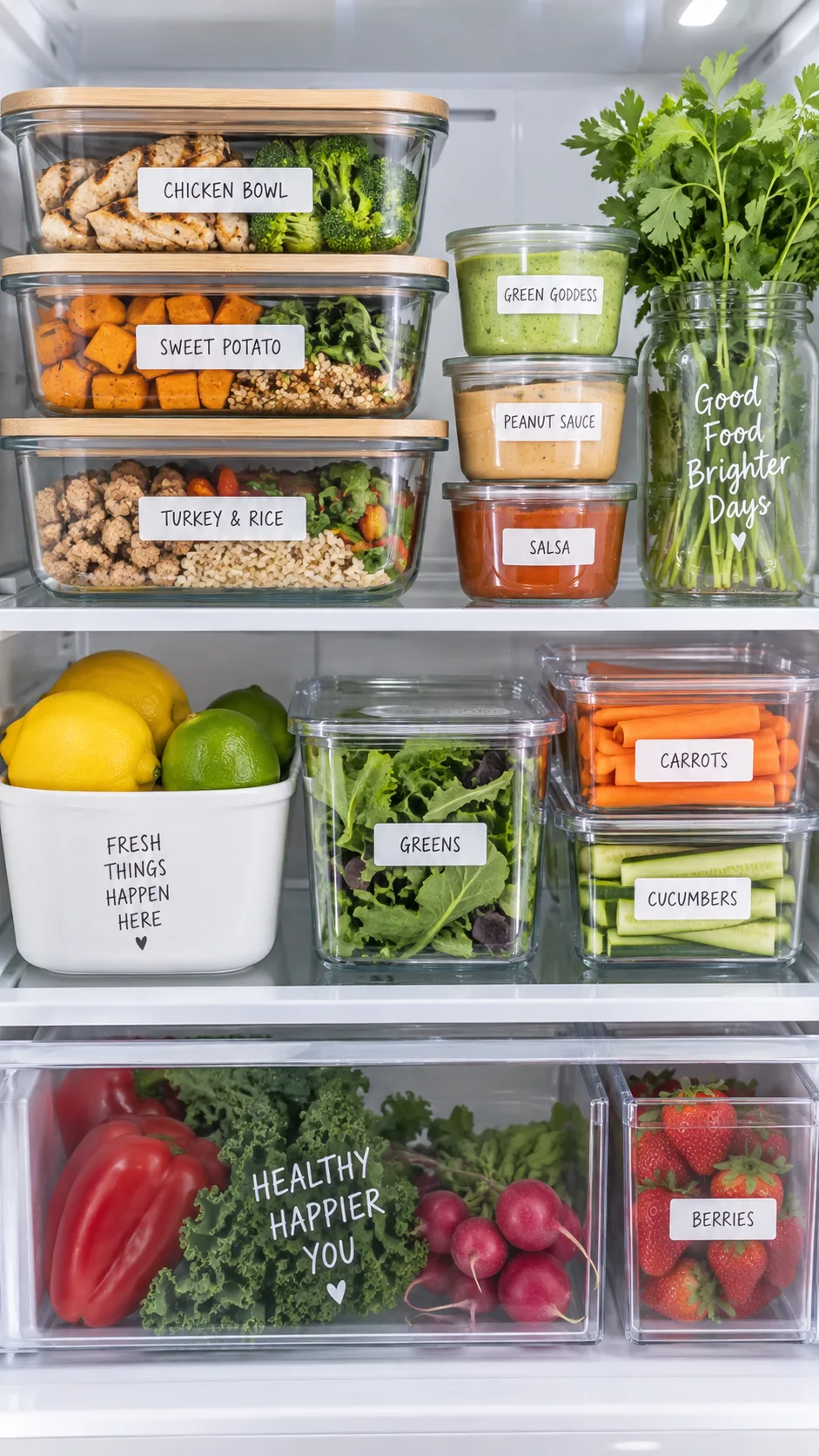
- Glass beats plastic. Glass does not stain, does not hang on to curry smell, and reheats evenly. Worth the upfront cost.
- Cool everything completely before you seal it. Trapped steam becomes condensation, and condensation makes everything soggy by Tuesday.
- Sauce lives in its own pot. Small 2oz containers cost almost nothing and rescue every meal.
- Freeze days 4 and 5 right away. Thursday you will thank Sunday you. Thaw in the fridge overnight.
- Reheat with a splash of water. One tablespoon under the lid, microwave at 70% power. Steam beats blasting.
What freezes well
Saucy dishes freeze beautifully: chili, curry, shredded chicken sitting in stock. Crispy things do not. Roasted potatoes come back sad and mealy, and rice turns strange unless you freeze it hot in a sealed container.
Cooked chicken keeps 2 to 6 months frozen at 0°F, according to FoodSafety.gov. Label everything with a date. “Mystery beige” is not a meal.
Mistakes I made so you do not have to
1. Prepping seven days of identical food
Palate fatigue is real and it lands around Wednesday. Prep three days of one recipe and two of another, or lean on the flexible shredded chicken base. Variety keeps you eating what you cooked, and that is the entire game.
2. Undersalting everything
Cold food tastes blander than hot food. That is sensory science, not opinion. Season your meal prep a little more aggressively than you would season a fresh dinner. Add acid too: lemon, vinegar, pickled onions. Acid wakes up food that has been sitting.
3. Going zero carb and zero fat
I tried this. I lasted eleven days, then ate an entire pizza standing over my sink. Include slow carbs (lentils, sweet potato, barley, beans) and real fats (olive oil, avocado, nuts, tahini). They are not the enemy. They are the reason you stay full.
4. Ignoring plants entirely
Chicken cannot carry fiber, because it has exactly zero. If you skip legumes, whole grains, and a serious volume of vegetables, you built a protein shake with extra steps. Plant-forward eating taught me most of what I know about satiety, and the same principles show up in this easy vegan meal prep guide if you want to see how a fully plant-based week hits the same fullness targets.
Your 90-minute Sunday game plan
Here is the sequence I run. Total active time stays under an hour and a half.
- 0:00. Preheat the oven to 425°F. Put the lentil or grain pot on to boil.
- 0:05. Chop all the vegetables at once. One cutting board, one session.
- 0:20. Sheet pan into the oven. Start the poaching pot for the shredded chicken.
- 0:35. Mix dressings and sauces while everything cooks. Three jars, five minutes.
- 0:50. Pull the sheet pan. Shred the poached chicken. Everything cools on racks.
- 1:15. Portion into containers. Sauce cups separate. Label with dates.
- 1:30. Done. Two containers go straight to the freezer.
Put on a podcast. This has somehow become the most peaceful ninety minutes of my week, which says something concerning about the rest of my week.
Quick answers to things people always ask me
How much chicken per person per week?
Roughly 150 to 200g cooked per meal. For five lunches, buy about 1.2 to 1.4kg raw, since chicken loses around 25% of its weight during cooking.
Can I eat the same chicken cold?
Yes, and it is often better that way. Cold chicken in salads, wraps, and grain bowls sidesteps the reheat-dryness problem completely. FYI, this is why breast works fine cold even though it reheats terribly.
Is meal prepped chicken less nutritious?
Barely. You lose small amounts of heat-sensitive nutrients like B vitamins and the vitamin C in vegetables, but protein, minerals, and fiber survive fine. The nutrition you eat beats the perfect meal you never cooked.
The bottom line
Chicken meal prep fails when you treat the chicken as the whole meal instead of one third of it. Fix the ratios and the rest sorts itself out.
Remember the formula: 400 calories minimum, 30g protein, 10g fiber, real fat, bold seasoning, sauce stored separately. Hit those six things and your containers will hold you until dinner.
Start with one recipe this Sunday. One, not five. The harissa sheet pan takes forty minutes and dirties exactly one pan, which is my favorite kind of cooking. And if you ever want to swap a couple of chicken days for something plant-based, the weekly vegan prep recipes follow the same satiety math and slot into the same rotation.
Your future self, standing in front of the fridge at 3pm on Wednesday, is counting on you right now. Do not let them down with dry chicken and plain rice again.