

Your shoulders are creeping forward. Your upper back is rounding. You catch your reflection and wonder when you turned into a human question mark. Sound familiar? You’re not alone, and the good news is you can fix this.
Rounded shoulders are one of the most common postural problems affecting people who sit at desks, stare at phones, or just exist in modern life. The muscles in your chest get tight, the ones in your upper back get weak, and your body slowly folds in on itself. A handful of targeted exercises can genuinely reverse this, even if you’ve been slouching for years.
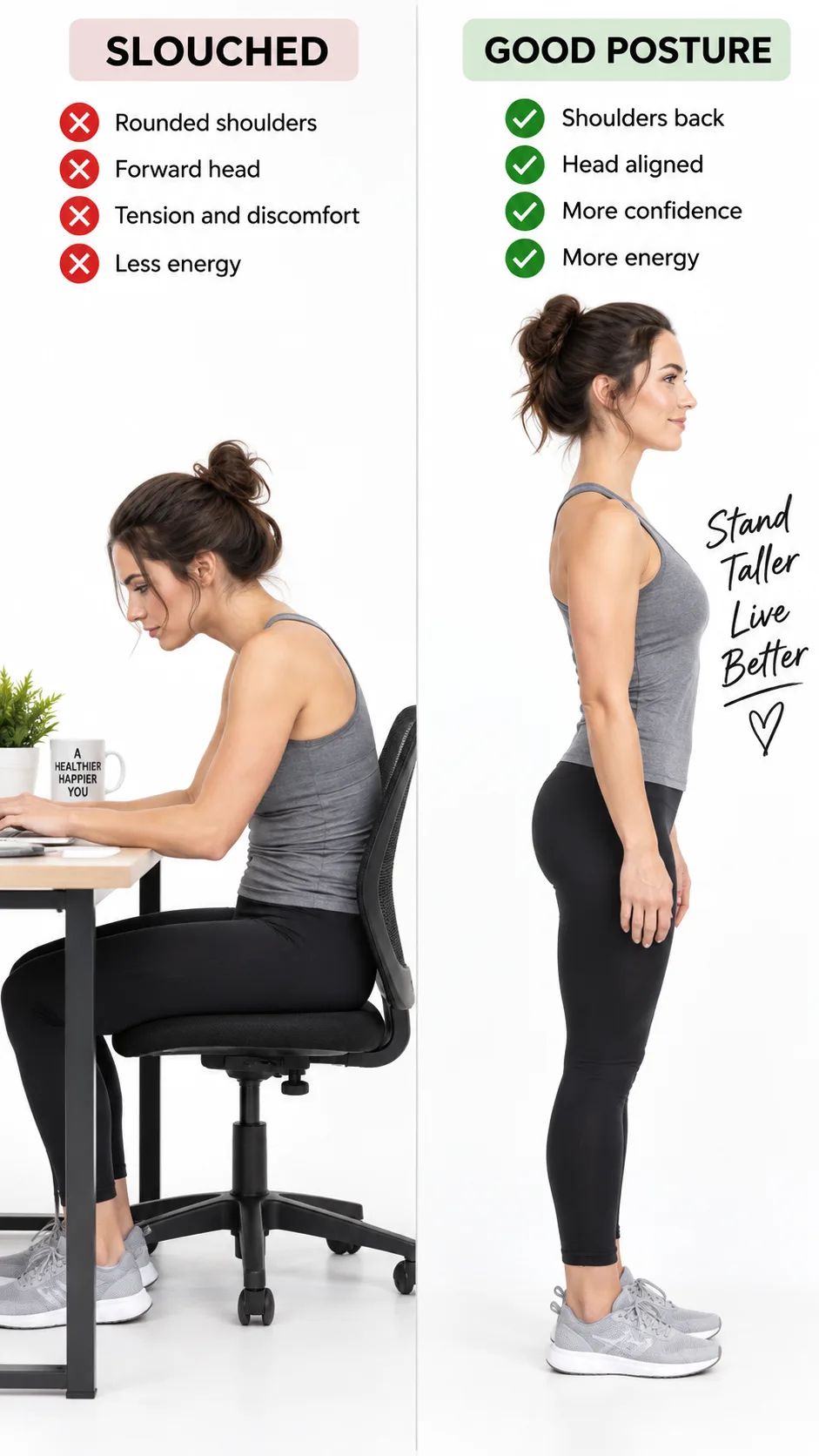
What actually causes rounded shoulders?
Before throwing exercises at a problem, it helps to understand what’s going on. Rounded shoulders happen when your chest muscles (pectorals) become shortened and tight, while your upper back muscles, specifically the rhomboids, lower trapezius, and rear deltoids, become overstretched and weak.
Think of it like a tug-of-war where one side stopped showing up. The chest pulls the shoulders forward, and the back doesn’t have the strength to pull them back. Your body just goes with the path of least resistance.
Common culprits include:
- Hours of sitting hunched at a desk or laptop
- Constantly looking down at your phone (tech neck is real)
- Overdeveloped chest muscles from too much pressing at the gym without balancing with pulls
- Weak core muscles that can’t support an upright posture
- General muscle imbalances that build up over time
This isn’t just an aesthetic issue, either. Research published on PubMed links poor upper body posture to neck pain, shoulder impingement, reduced lung capacity, and headaches. Fixing it is about feeling better, not just looking better.
The 5 best exercises to fix rounded shoulders
These five exercises target the exact muscles responsible for pulling your shoulders back into alignment. You don’t need a gym since most of these work perfectly at home. Do this routine 4-5 times per week and stay consistent. Posture problems don’t appear overnight, and they won’t disappear overnight either.
Exercise 1: Doorway chest stretch
You can’t fix rounded shoulders without first releasing the tight chest muscles that are pulling them forward. This stretch does exactly that, and you literally just need a doorframe.
How to do it:
- Stand in a doorway and place your forearms on either side of the frame at a 90-degree angle
- Step one foot forward and gently lean your body through the doorway
- You should feel a deep stretch across your chest and the fronts of your shoulders
- Hold for 30 seconds, then rest. Do 3 sets
This is the most underrated stretch in existence. I started doing this every morning and felt a difference within a week. Don’t rush through it. Hold the stretch and actually breathe.
Exercise 2: Band pull-aparts
Band pull-aparts directly target the rear deltoids, rhomboids, and middle trapezius, the exact muscles that keep your shoulders retracted and in proper alignment. All you need is a resistance band.
How to do it:
- Hold a resistance band in front of you at shoulder height, hands shoulder-width apart
- Keep your arms straight and pull the band apart by squeezing your shoulder blades together
- Bring the band all the way to your chest, pause for a second, then slowly return
- Do 3 sets of 15-20 reps
The real work happens at the end of the movement. Squeeze your shoulder blades together and hold it. Don’t just flap your arms around. Actually feel them pinching. That’s where the results come from.

Exercise 3: Wall angels
Wall angels look deceptively easy. They’re not. If you have truly rounded shoulders, you’ll feel this immediately, and that’s how you know it’s working.
How to do it:
- Stand with your back flat against a wall, feet about 6 inches from the base
- Press your lower back, upper back, and head into the wall
- Raise your arms to a “goalpost” position (elbows at 90 degrees), keeping everything in contact with the wall
- Slowly slide your arms up above your head, then back down, like making a snow angel on the wall
- Do 3 sets of 10 reps
Your entire back and arms should stay in contact with the wall throughout the movement. If your lower back arches away or your elbows lift off, slow down and work within your range. Healthline’s posture guide lists wall angels among the top exercises for correcting forward shoulder posture, and they’re right.
Exercise 4: Face pulls
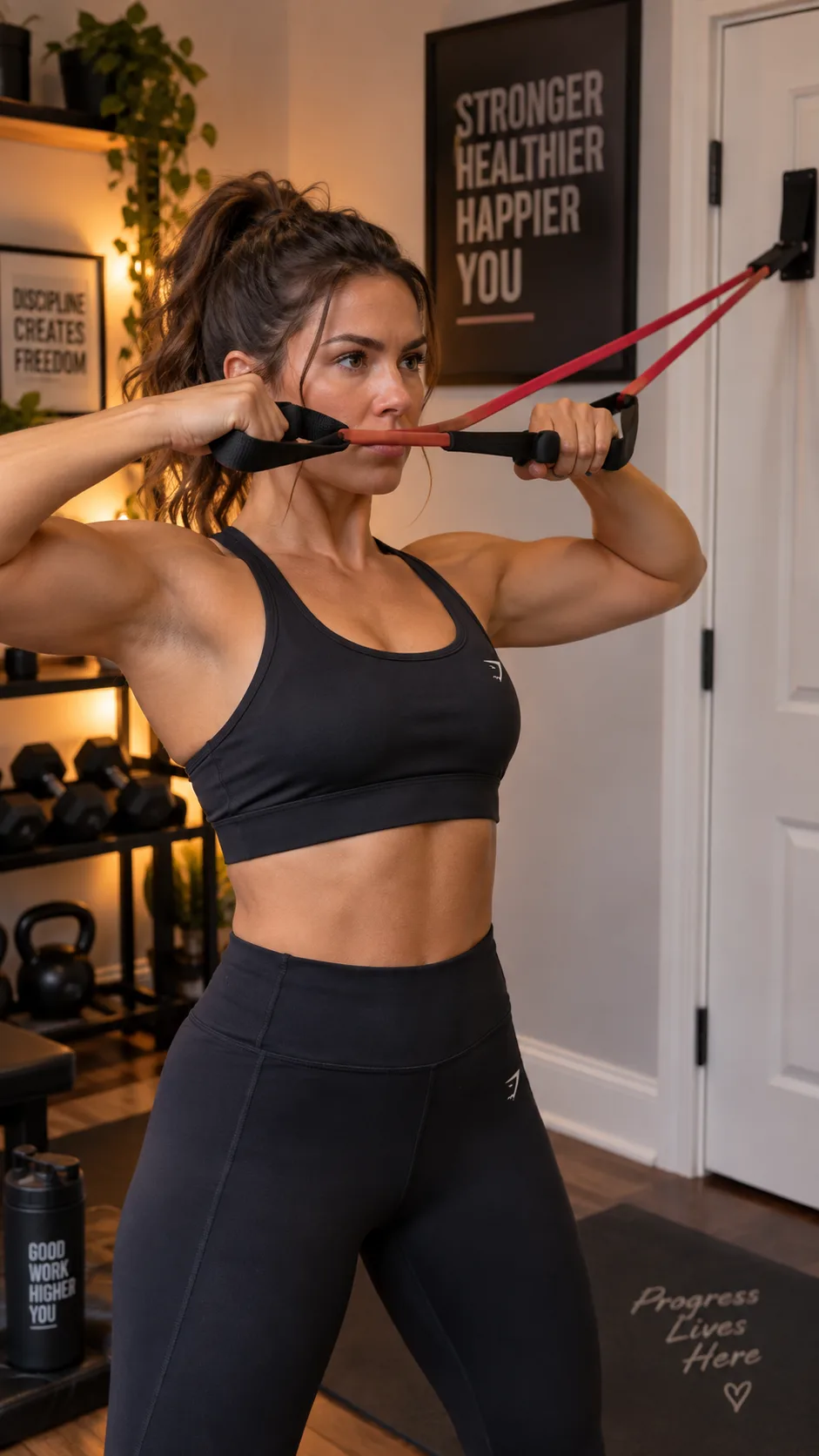
Face pulls are a gym staple for good reason. They hit the rear deltoids and external rotators of the shoulder, which play a massive role in keeping your shoulders back and your posture upright. You can do these with a cable machine or a resistance band anchored at face height.
How to do it:
- Anchor a resistance band at face height (around a door handle or hook)
- Grab both ends and step back until there’s tension in the band
- Pull the band toward your face, separating your hands and flaring your elbows out wide
- Pause when your hands reach your ears, then slowly return to the start
- Do 3 sets of 15 reps
Control the movement on the way back. Don’t let the band snap your arms forward. Slow and deliberate reps beat fast and sloppy every single time.
Exercise 5: Thoracic extension over a foam roller
This one addresses the spinal mobility side of rounded shoulders. When your thoracic spine (mid-back) loses its natural extension, your shoulders have nowhere to go but forward. Mobilising the thoracic spine helps restore the natural curve and gives your shoulders room to sit back properly.
How to do it:
- Place a foam roller horizontally on the floor and sit in front of it
- Lower yourself so the roller sits at your mid-back (not your lower back)
- Support your head with your hands and gently extend over the roller
- Hold for 5-10 seconds, then shift up the roller slightly and repeat
- Work your way up the thoracic spine, spending about 60-90 seconds total
You might hear some cracks and pops. That’s generally fine since it’s just gas releasing from the spinal joints. Spine-Health confirms that thoracic mobility is critical to maintaining good posture and reducing upper back pain. Don’t skip this one.
How long before you see results?
You won’t fix years of poor posture in a week. But most people start noticing improved awareness and reduced tension within 2-4 weeks of consistent training. Structural changes in muscle length and strength take closer to 6-12 weeks of regular work.
The biggest mistake people make is doing the exercises once, feeling great, and then stopping. Consistency beats intensity here. Think of it as reprogramming your muscle memory, and that takes repetition.
While you’re building strength and mobility, it also helps to strengthen your core. A weak core contributes to poor posture more than most people realize. Check out how to build a core that actually shows. A strong midsection makes it much easier to hold yourself upright throughout the day.
And if you’re building a solid lower-body routine alongside your posture work, these tips for preventing workout injuries will help you stay consistent without setbacks.
Tips to speed up your progress
Exercises do most of the heavy lifting, but a few lifestyle changes can seriously accelerate your results:
- Set up your workspace ergonomically — monitor at eye level, back supported, feet flat on the floor
- Take movement breaks every 30-45 minutes if you sit for long periods
- Stay intentional about posture during everyday activities — standing in line, walking, driving
- Balance your gym training — for every pressing exercise, match it with a pulling exercise
- Sleep on your back or side, not your stomach, since stomach sleeping wrecks your neck and shoulder alignment
Also worth noting: Physiopedia’s breakdown of rounded shoulders makes clear that awareness and habit change go hand in hand with targeted exercise. You can’t just train for 20 minutes and then spend 10 hours hunched over a laptop. You have to attack this from both angles.

Your posture is not a lost cause
Rounded shoulders feel permanent, but they really aren’t. Your body is incredibly adaptable, and with the right targeted work, you can genuinely reverse years of poor posture. It just takes consistency and patience.
Start with these five exercises. Stay consistent. Pay attention to how you sit and stand throughout the day. Don’t expect overnight miracles, but do expect real, noticeable changes over the next few months.
Your future self, standing tall with shoulders back and chest open, will thank you for starting today.