

You joined a gym, bought the water bottle, and now you want results. Fair enough. Your first month can feel confusing when every machine looks like it came from a spaceship.
Most beginners do not stall because they lack motivation. They repeat a few common mistakes without realizing it. Fix these nine problems, and your workouts can start moving you forward.
Why your first month at the gym matters
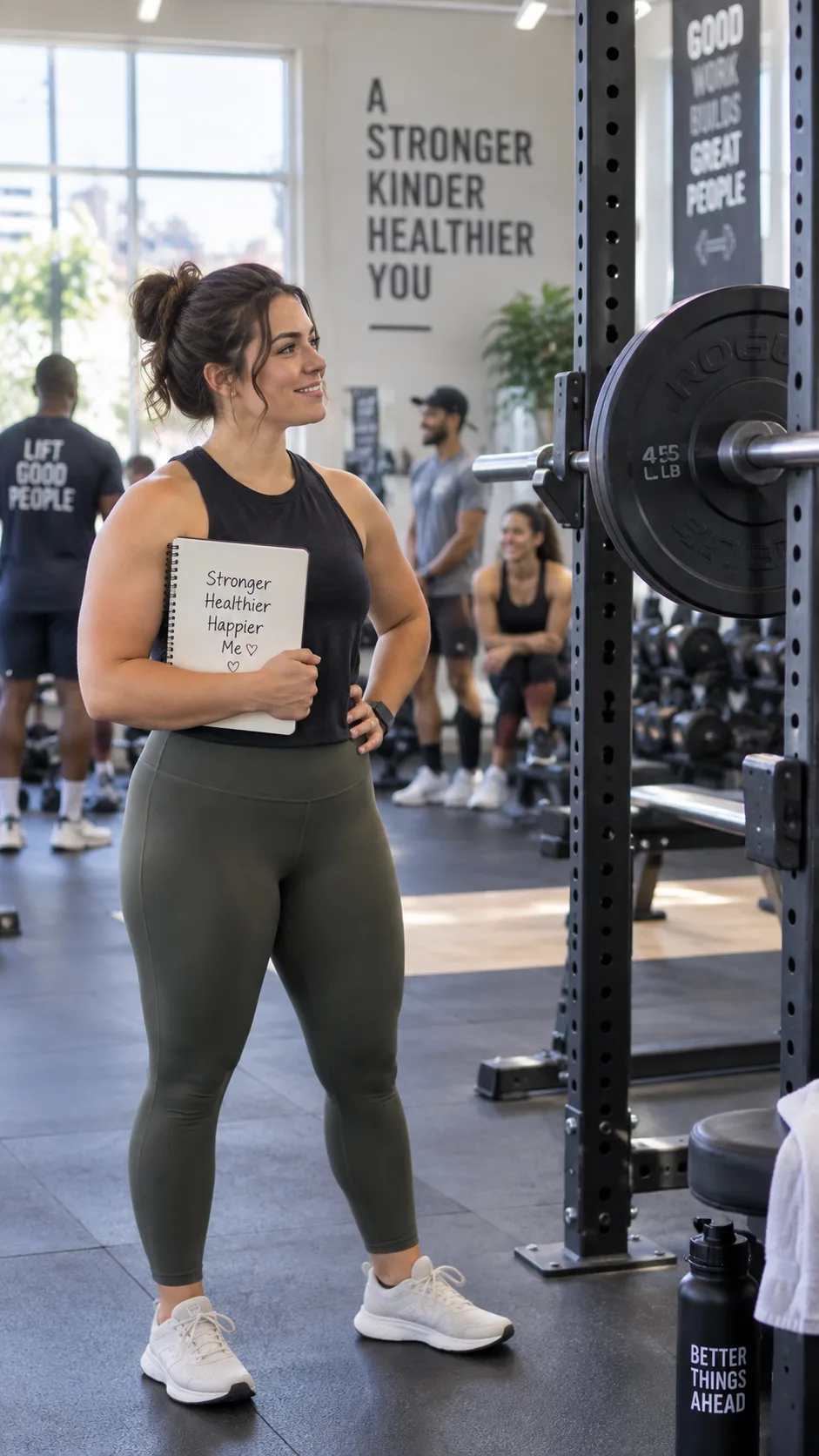
Your first month sets the habits you will carry into later workouts. You learn basic movements, get a sense of your current strength, and find a routine that works with your real schedule. You do not need a perfect plan. You need one you can follow.
Beginners often chase soreness, sweat, and complicated workouts because those things look impressive. Strength training rewards consistency much more than chaos. Nobody builds extra muscle by doing a random cable exercise they saw on social media.
The CDC physical activity guidelines recommend muscle strengthening activities at least two days each week. Start there, learn the basics, and give your body time to adapt.
9 beginner gym mistakes that slow your progress
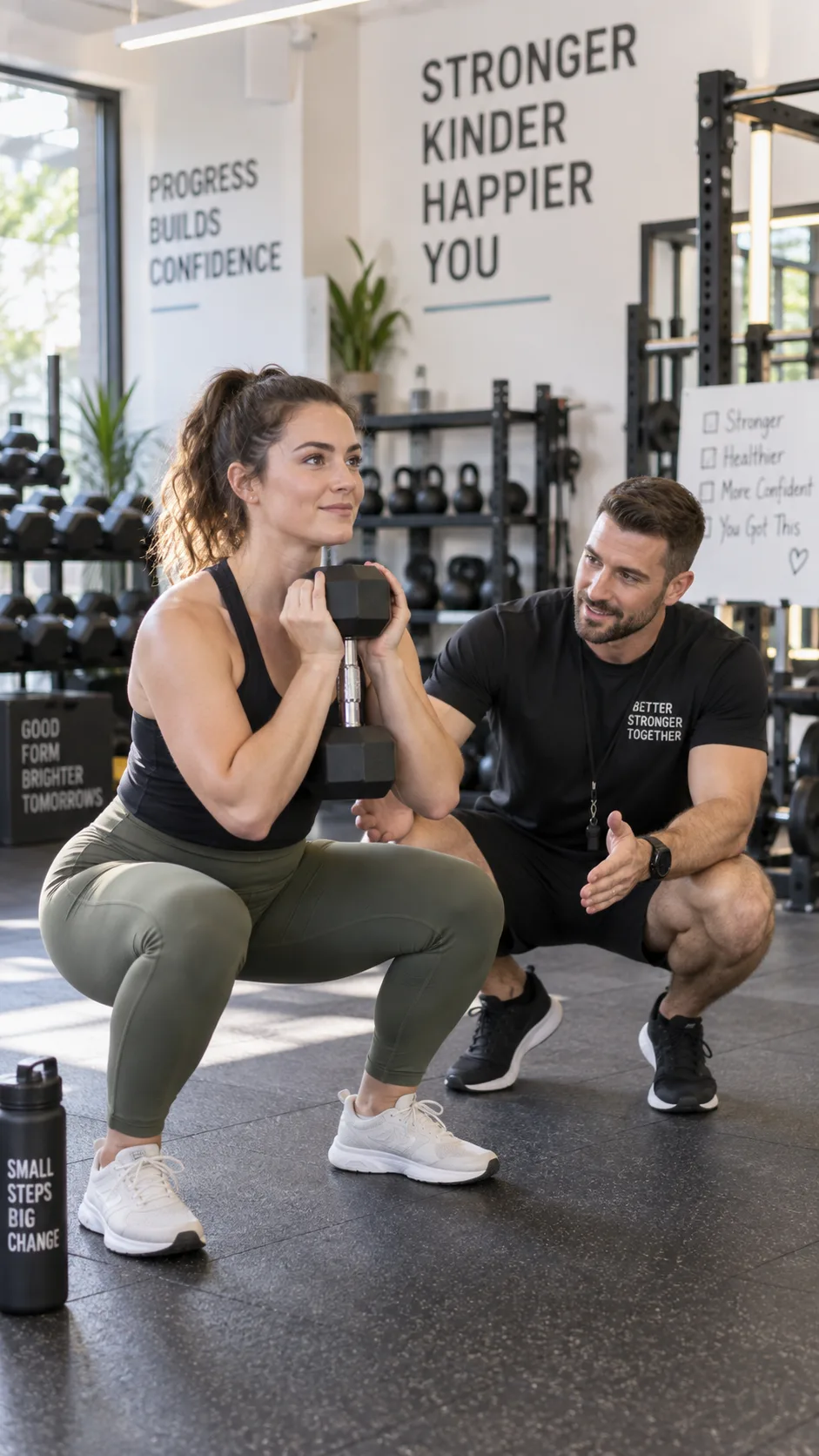
1. You change your workout every session New exercises can feel fun, but constant variety makes progress hard to measure. When you replace your whole routine every workout, you never practice the same lifts long enough to improve. Your muscles cannot give you a clear signal when you keep changing the test. Choose a simple beginner routine and stick with it for at least four to six weeks. Keep your main movements the same, then make small changes when you need them. Repeat the basics until you can do them well. Squat or leg press Romanian deadlift or hip hinge variation Chest press or push-up Row or lat pulldown Overhead press Core exercise such as a plank or dead bug 2. You lift too heavy too soon Everyone wants to load up the bar. Your ego may want a big number, but your joints and technique need a gentler start. Heavy weights and shaky form can turn a beginner strength workout into a game of “what hurts tomorrow?” Choose a weight that lets you control every rep. You should feel challenged near the end of a set, but you should not twist, bounce, or hold your breath through the whole thing. Solid form gives you a base for safe strength gains. The American College of Sports Medicine encourages regular resistance training with sensible progression. Start lighter than your pride wants, then work your way up to heavier weights. 3. You never track your workouts Memory can fool you. After three sets of lunges and a long day at work, you may not remember whether you used 20 pound or 25 pound dumbbells last week. A workout log gives you something concrete to check. Write down the exercise, weight, sets, reps, and a quick note about effort. Use a notes app, a paper notebook, or any app you will open regularly. When you reach the top of your rep range with solid form, add a little weight next time. Progressive overload means gradually asking your body to do more. You can add weight, reps, sets, range of motion, or control. Getting stronger does not require a complicated system. 4. You copy advanced lifters Advanced lifters may train six days a week, do a lot of volume, and build routines around years of experience. Their plans may fit their goals, recovery, and schedules. Your plan for the first month needs to fit yours. Start with two or three full body workouts each week. That schedule gives you time to practice without running yourself into the ground. You can build strength with fewer sessions than social media suggests. Women often hear bad advice about lifting “light” or skipping upper body work. If that sounds familiar, read these muscle-building training mistakes women can avoid for a clearer approach. 5. You train hard but ignore recovery Your workout starts the process, but recovery helps your body respond. Muscles need food, sleep, and time before they can handle another hard session well. When you hammer sore muscles every day, you do not prove toughness. You make the next workout harder. Aim for steady sleep, regular meals, and at least one rest day between hard full body sessions. Walk, stretch lightly, or do easy cardio on rest days if it helps you feel better. Give your body time to recover so you can train with purpose again. The National Heart, Lung, and Blood Institute recommends seven to nine hours of sleep for most adults. Caffeine cannot fix a weak sleep routine. 6. You treat nutrition like an afterthought You do not need a miserable meal plan to see results from the gym. You need enough energy and protein to support your training. If you skip meals all day and tear through a bag of snacks at 10 p.m., your workouts will probably feel rough. Build meals around protein sources you enjoy, such as eggs, Greek yogurt, chicken, fish, tofu, beans, or lean meat. Add fruit, vegetables, carbs, and healthy fats so you have energy to train. Simple meals you eat consistently beat “perfect” meals you make twice. For many active people, a practical target falls around 1.4 to 2.0 grams of protein per kilogram of body weight each day, according to the International Society of Sports Nutrition. Your appetite, goals, and medical needs may change that number, so talk with a registered dietitian if you need personal advice. 7. You skip warmups and practice sets You do not need a 30 minute warmup packed with circus tricks. You do need to get ready for the exercises ahead. A few minutes of easy movement and lighter practice sets can help you focus and find your range of motion. Walk, cycle, or row for five minutes, then do one or two lighter sets before your first big lift. For example, practice bodyweight squats before loaded squats. Ask yourself whether the movement feels smooth today. Raise your body temperature with easy cardio. Move the joints you will use in your workout. Perform lighter sets before your working sets. Save long static stretching for after training if you enjoy it. 8. You avoid asking for help Gym staff, qualified trainers, and experienced friends can save you weeks of confusion. Ask someone how to adjust a machine, set a safety pin, or check your squat stance. Most people remember their awkward first day and will gladly help. Choose reliable sources for education too. Look for certified coaches and established health organizations instead of trusting every loud fitness account. A flashy transformation photo does not prove that someone understands beginner lifting. One coaching session can teach you more than another month of guessing. You learn faster when someone catches a bad habit before it sticks. 9. You expect visible results in two weeks Your body can gain strength quickly in the first month because you learn coordination and improve technique. Visible muscle changes often take longer. That does not mean your plan failed. Track wins beyond the mirror. Did you add five pounds to your leg press? Did you complete more push-ups? Did stairs feel easier this week? Those changes count, and they show that your beginner strength plan is working. Give your routine at least eight to twelve consistent weeks before you judge it. You would not pull a cake from the oven after two minutes and complain that it lacks frosting. Give the process time.
A simple first month gym plan
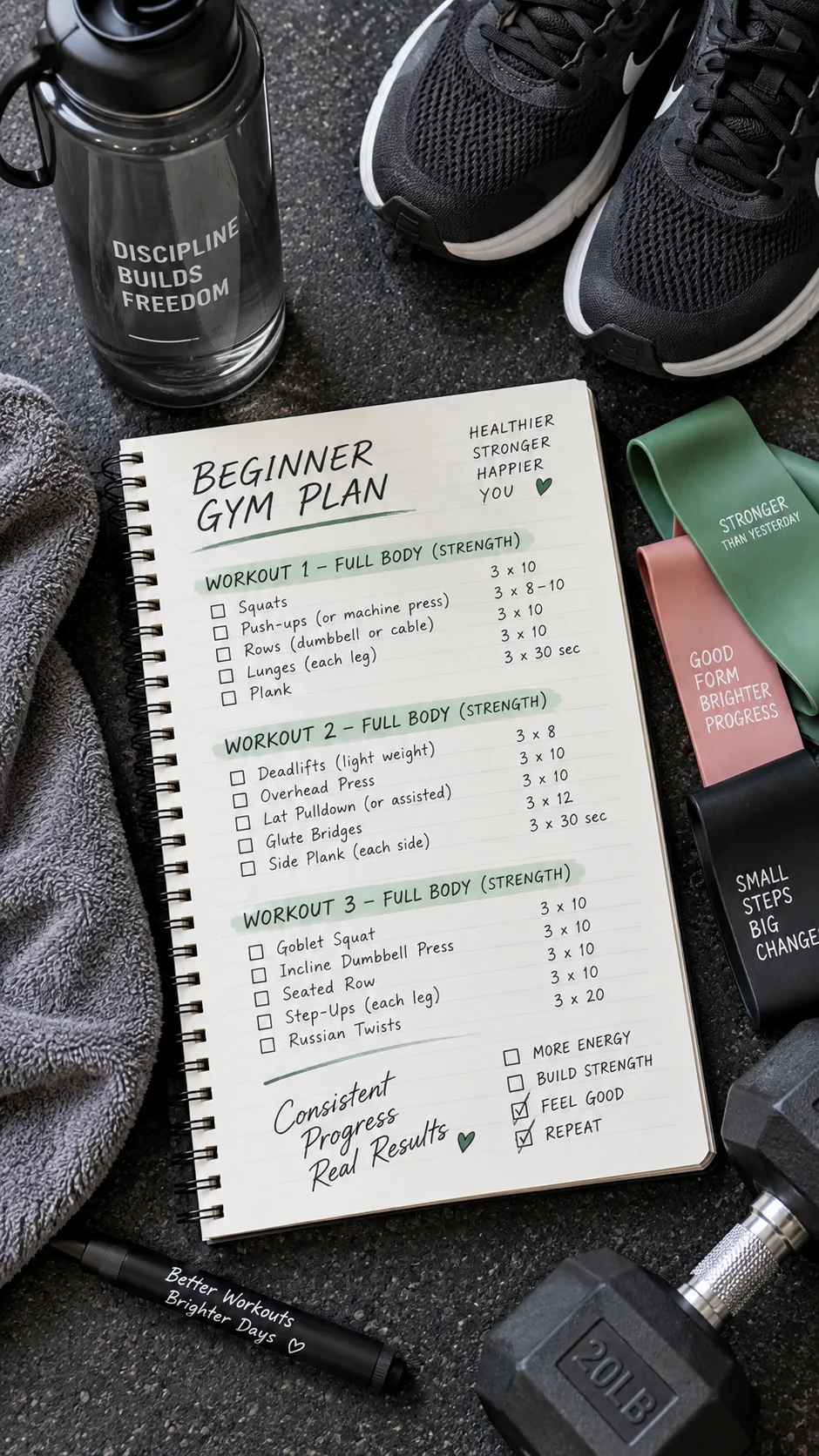
Keep your first month boring in the best way. Train three nonconsecutive days each week, such as Monday, Wednesday, and Friday. Use manageable weights, focus on clean reps, and leave one or two reps in reserve on most sets.
Your basic workout template
- Warm up for five to 10 minutes.
- Choose one lower body push, such as a squat or leg press.
- Choose one hip hinge, such as a Romanian deadlift.
- Perform one push exercise and one pull exercise.
- Add one shoulder or arm movement if you have time.
- Finish with a simple core exercise.
Perform two or three sets of eight to 12 reps for most exercises. Rest for one to two minutes between sets, and take longer rests after demanding compound lifts. Clean reps beat rushed reps every time.
Final gym tips for beginners
Your first month does not need drama, punishment, or a heroic amount of pre-workout. It needs a simple routine, solid technique, gradual progression, enough food, and enough recovery. Track your lifts and let the small wins build.
Show up, practice the basics, and stop chasing perfection. The best beginner workout plan beats the perfect plan that stays in your phone. Your future stronger self will thank you.