

You want to do the splits, but your hamstrings currently feel like rusty garden hoses. Fair enough. You can make real progress toward the splits in 30 days when you train consistently, use sound form, and stop treating pain like a gold medal.
This beginner routine targets the front split: one leg forward, one leg back, with your hips facing forward. You will build range, control, and confidence without turning every session into a fight with the floor.
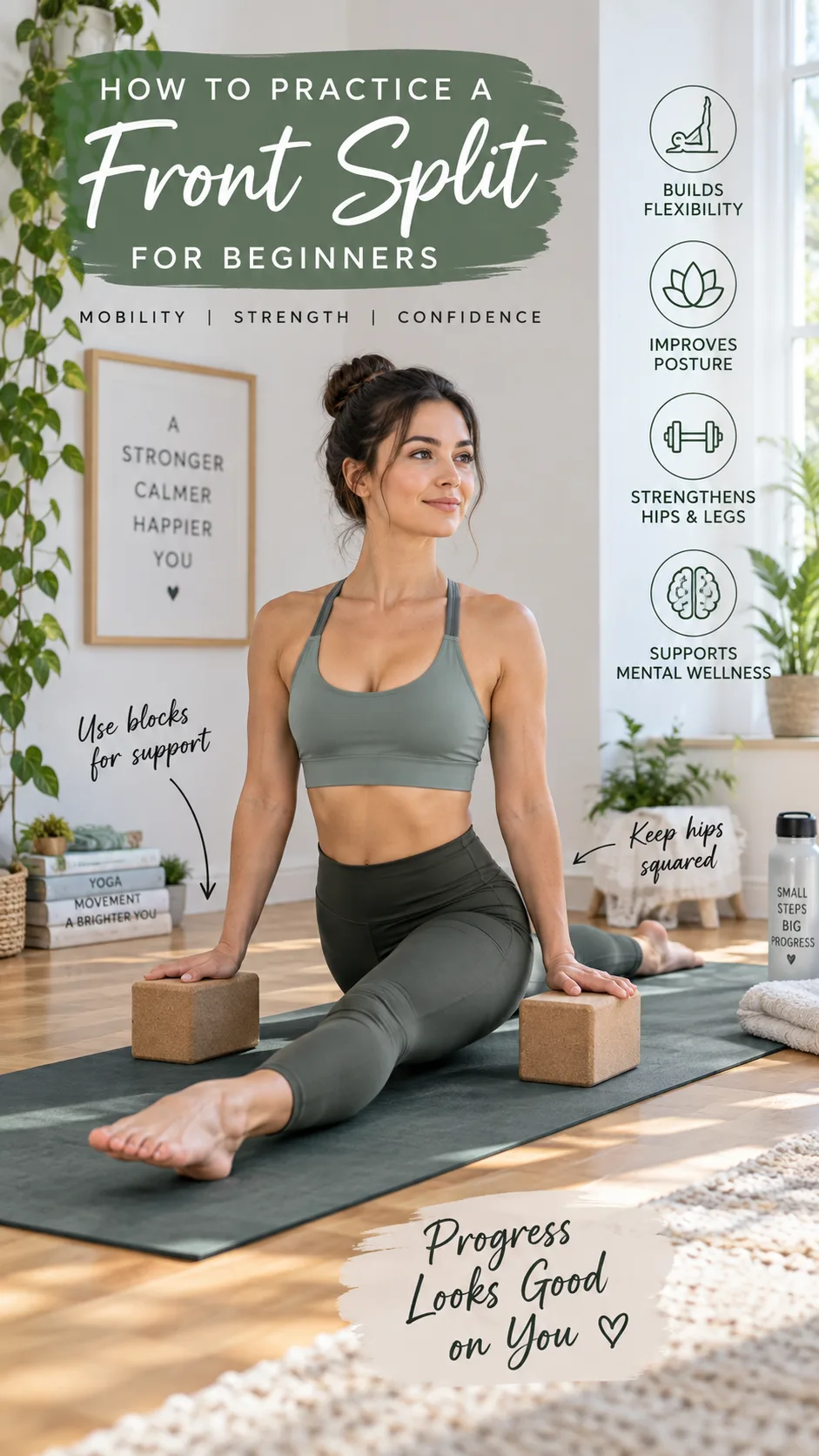
First, can you learn the splits in 30 days?
Maybe. Your starting flexibility, anatomy, training history, sleep, and consistency all affect your result. Some beginners reach the floor within a month. Others need several months before they can hold a comfortable full split.
A slower path does not mean you failed. For these 30 days, aim for measurable progress instead of forcing a finish line. Can you lower your hips by two inches, straighten your front knee, or hold a deeper lunge without shaking? Those changes count.
I learned this the annoying way after I tried to “push through” a tight hamstring. My hamstring objected loudly, and I spent weeks doing less training instead of more. Patience feels dull until it keeps you moving forward.
What you need before you start
- A nonslip surface or yoga mat
- Two yoga blocks, sturdy books, or a chair for support
- Comfortable clothes that let your hips move
- A timer
- Ten to twenty minutes, five or six days each week
You do not need fancy splits training gadgets. Your body needs warmth, steady practice, and a little kindness. Cold muscles rarely reward heroic stretching attempts.
The rules that make a beginner splits routine work
Stretching works best when you give your body a clear, repeatable signal. You do not need to suffer, bounce, or hold your breath while questioning every choice that brought you here.
Warm up before every flexibility session
Never stretch for the splits with cold muscles. Spend five to eight minutes raising your body temperature first. Walk briskly, march in place, do easy squats, or follow a light mobility routine.
Your body responds better after you move. The American College of Sports Medicine’s stretching guidance also recommends regular flexibility work after activity, when your muscles feel warm and ready.
Use intensity, not pain, as your guide
A useful stretch feels strong but manageable. Feel tension in the target muscles, then breathe through it without grimacing like you stepped on a Lego.
- Green light: steady pulling, mild heat, and no sharp sensation
- Yellow light: shaking, pinching, numbness, or joint discomfort; ease off
- Red light: sharp pain, a sudden tearing sensation, or pain that lingers; stop and seek advice from a qualified clinician
The Hospital for Special Surgery explains safe stretching basics clearly: stretch smoothly, avoid bouncing, and never force a painful position. Your nervous system guards you when it senses danger, so aggressive stretching often makes tightness worse. Your body does not enjoy threats.
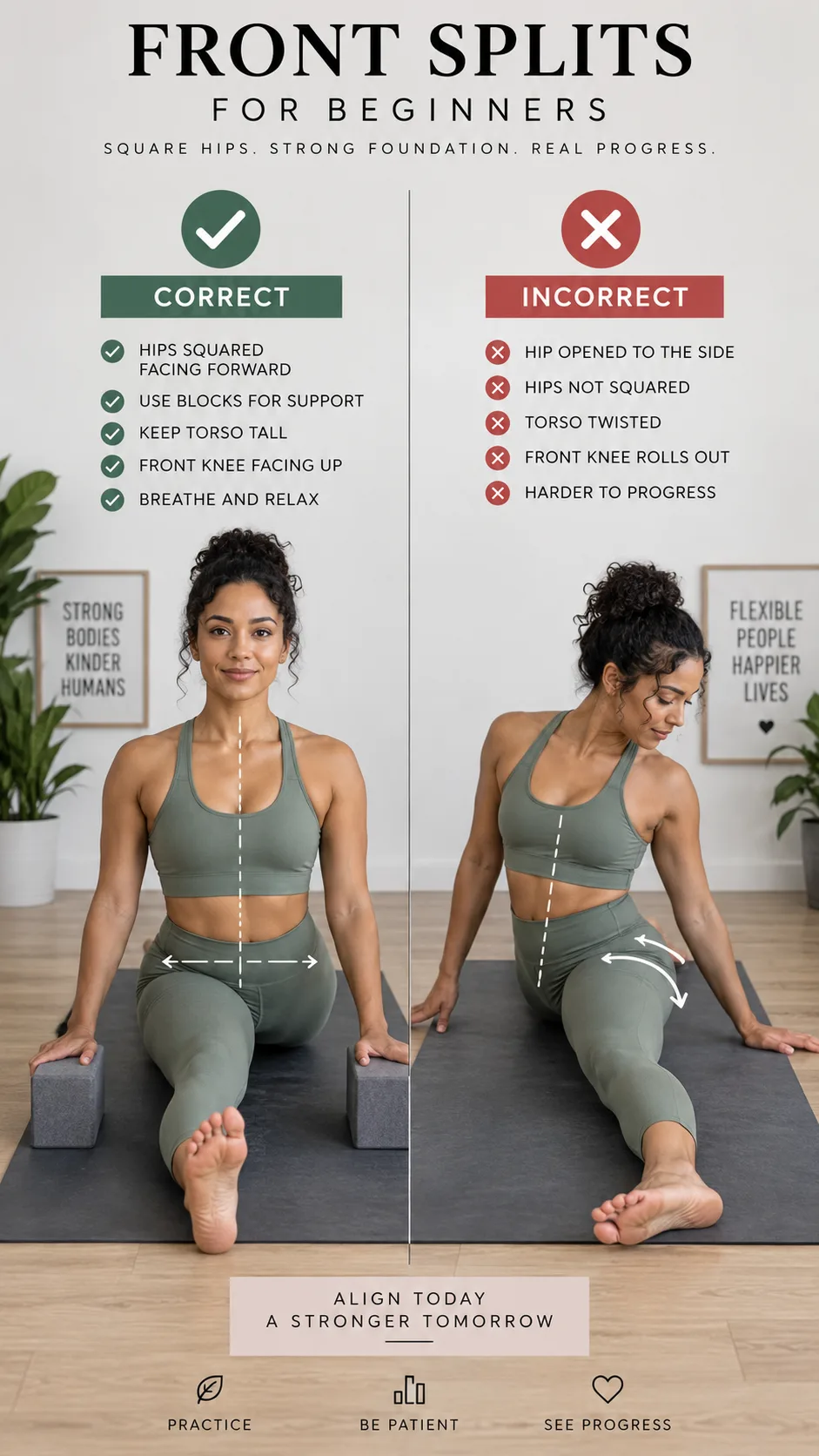
Square your hips for a real front split
Many people reach the floor by turning one hip sideways. That position may look impressive in a photo, but it avoids the real front split challenge. Keep both front hip points facing forward as much as you can.
Put blocks under your hands so you can stay in control. A higher split with square hips beats a lower split with twisted hips every time.
Your 30-day splits challenge plan
Train five days each week, take one active recovery day, and take one full rest day. Each session takes roughly 15 to 20 minutes after your warm up. If you already run, do this routine after an easy run or on a separate day. This walk-to-run plan for beginner 5K runners can help you build your overall routine without doing too much.
Hold each static stretch for 30 to 45 seconds unless the plan tells you otherwise. Work both sides, even if one side behaves like a cooperative angel and the other feels suspiciously tight.
Days 1 to 7: Build your base
During week one, learn the positions and notice where your body feels tight. Most beginners need more work in the hip flexors, hamstrings, glutes, and inner thighs.
- Low lunge: 30 seconds per side. Tuck your pelvis slightly and squeeze the glute on your back leg side.
- Half split: 30 seconds per side. Straighten your front leg, flex your foot, and hinge from your hips.
- Figure four glute stretch: 30 seconds per side. Keep your spine long and pull gently.
- Frog stretch: 30 seconds. Pad your knees and move only as far as your hips allow.
- Supported split hold: 20 seconds per side. Rest your hands on blocks and stop well before pain.
Repeat the circuit twice. Focus on consistency this week, not drama. Take a quick photo or measure the distance between your hips and the floor on day one, because memory likes to lie about progress.
Days 8 to 14: Add active flexibility
Week two teaches your muscles to support the range you want. Active flexibility matters because passive range alone gives you little control when you stand, kick, dance, or move through daily life.
- Reverse lunges: 8 slow reps per side
- Hamstring heel slides: 10 reps per side, using socks on a smooth floor or a towel under your heel
- Low lunge with side bend: 30 seconds per side
- Half split contract relax: press your heel gently down for 5 seconds, relax, then move slightly deeper; repeat 3 times per side
- Supported split hold: 30 seconds per side
Use about 30% effort during contract relax work. Ask your muscles to cooperate instead of making them file an official complaint. Keep your front knee straight only while it feels comfortable.
Days 15 to 21: Go deeper with control
By week three, your body should know the routine. You can spend longer in the split position now, but you still need support and careful alignment.
- World’s greatest stretch: 5 slow reps per side
- Elevated hamstring stretch: 40 seconds per side, with your heel on a low chair or step
- Couch stretch: 30 seconds per side, keeping your ribs stacked over your hips
- Pigeon pose or reclined figure four: 40 seconds per side
- Supported front split: 45 seconds per side, with blocks or a chair under your hands
Check your hips in a mirror or use your phone camera. Does your back hip roll open? Bring your legs a little closer together, squeeze your back glute, and try again. Small form changes can lead to major gains over time.
Days 22 to 30: Test, refine, and recover
The final stretch, yes, the pun had to happen, focuses on quality. Alternate two deeper training days with one lighter mobility day. Your muscles need recovery time so they can adapt.
On deeper days, complete your warm up, then hold each main stretch for 45 to 60 seconds. Finish with two supported split holds per side, each lasting up to 60 seconds.
On lighter days, do low lunges, half splits, glute bridges, and gentle hip circles. Skip the deepest split hold when your hips or hamstrings feel sore. Repeatable training builds progress. One brutal session does not.
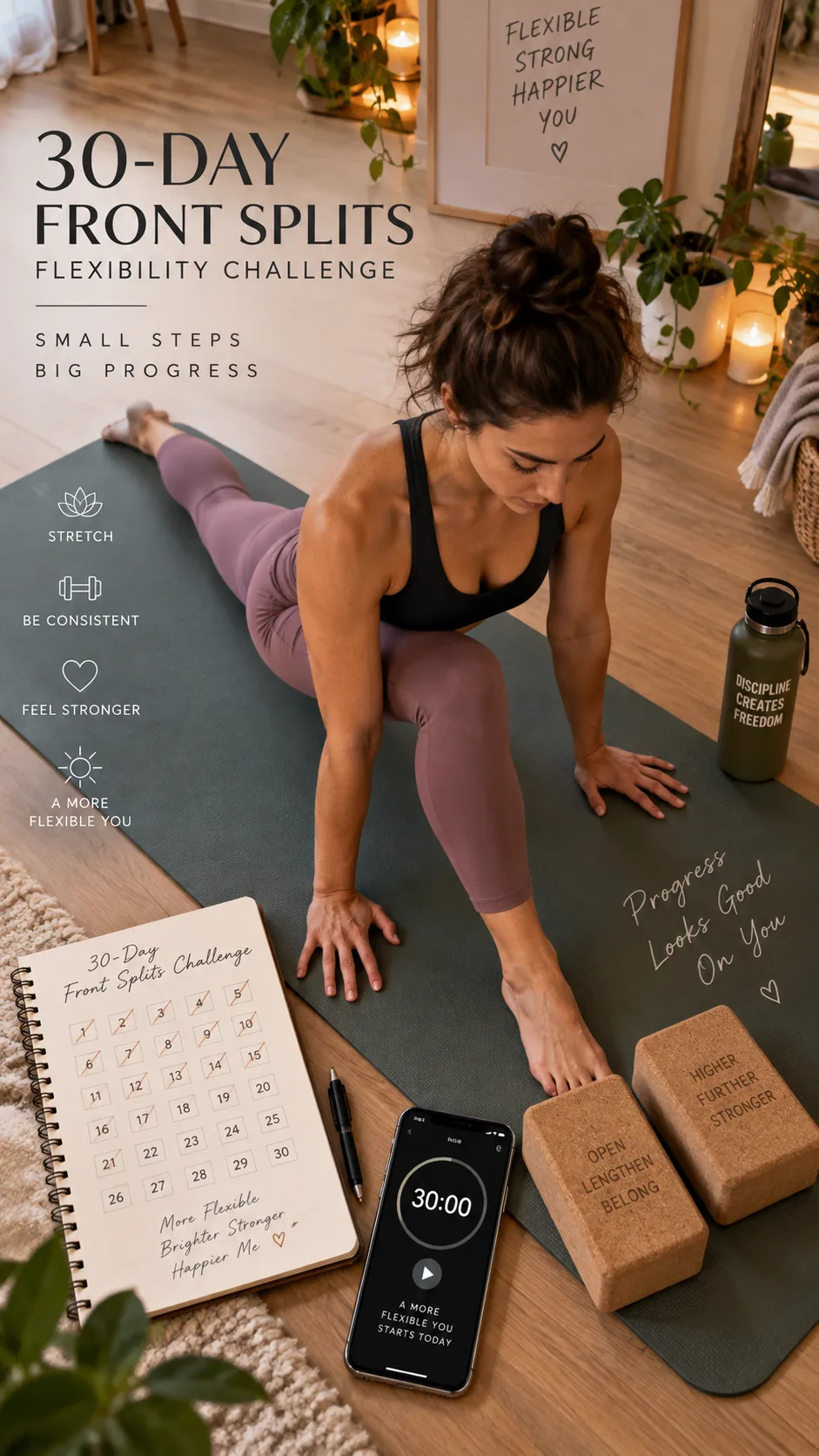
How often should you stretch for the splits?
Most beginners do well with five focused sessions each week. You can add a few gentle mobility moves every day, but save intense, long holds for your planned sessions.
Your muscles do not become more flexible because you punish them daily. They adapt when you combine training stress with recovery, food, hydration, and sleep. It may sound boring. It works.
If running leaves your calves and hip flexors tight, schedule split training after easy runs instead of before speed work. Pair this routine with the beginner walk-to-run plan carefully, and take at least one true recovery day each week.
Common beginner splits mistakes to avoid
These mistakes slow progress far more than naturally tight muscles. Fix them early, and your flexibility work will feel much easier.
- You bounce: Bouncing can trigger a protective muscle contraction. Move slowly into each stretch instead.
- You hold your breath: Slow exhales can help you relax into a position. Try a four second inhale and a six second exhale.
- You force your knees straight: Keep a soft bend when your hamstrings pull too hard. Your knees will straighten with time.
- You ignore hip position: Square hips matter more than touching the floor.
- You train through pain: Pain signals a problem. It does not measure personal weakness or a good stretch.
- You chase a deadline: Your body does not own a calendar, sadly.
When to get professional help
Talk with a physiotherapist, sports medicine professional, or qualified trainer if you feel sharp pain, tingling, numbness, or ongoing joint pain. Seek guidance if you have a recent hip, knee, back, or hamstring injury.
People with hypermobility need extra care too. More range does not always mean more stability, so put strength and control first. The American Academy of Orthopaedic Surgeons offers guidance on staying active while respecting pain and injury signals.
Final thoughts: Your splits start with today’s stretch
A successful 30-day splits challenge does not require perfect genetics or circus level bravery. It asks for warm ups, sensible stretching, square hips, and steady practice.
Track your starting point, follow the plan, and celebrate every small improvement. Do not chase the floor. Teach your body that the floor feels safe. Start with day one, stay patient, and give your flexibility room to surprise you.