

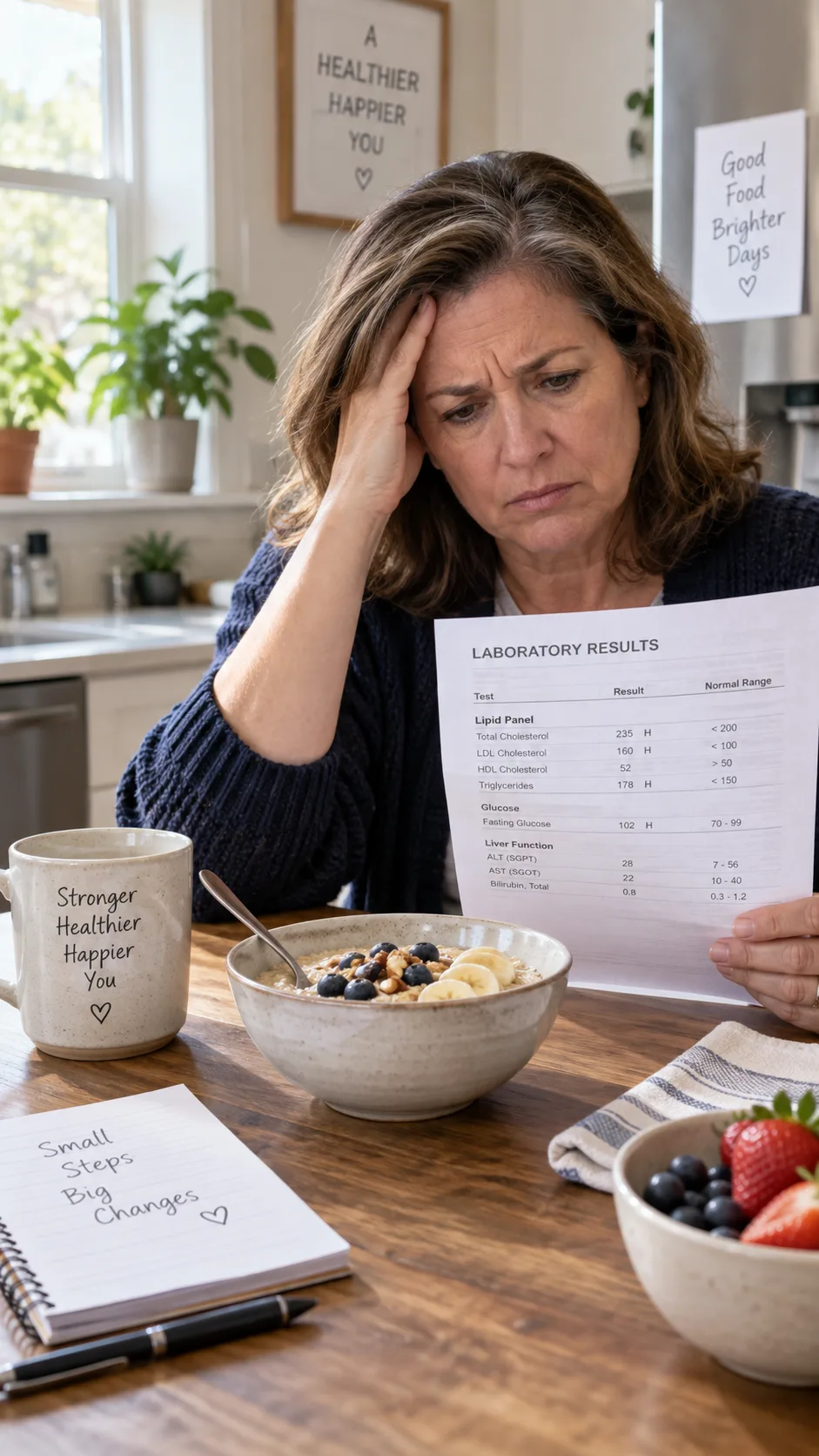
You swapped butter for margarine. You bought the oats. You even started eating salad without complaining about it. Then your lab results came back and your LDL had barely moved. Maybe it went UP. Rude, right?
Here’s the thing nobody tells you: most people who “eat healthy” for cholesterol are making three or four sneaky mistakes that cancel out everything good they’re doing. I’ve watched friends, family members, and my own younger self fall into every single one of these traps.
Let’s fix that. Below are the real diet mistakes keeping your LDL cholesterol stubbornly high, plus what works instead.
First, a quick reality check on what LDL is
LDL stands for low-density lipoprotein. Think of it as a delivery truck hauling cholesterol around your bloodstream. When too many trucks crowd the road, some of them crash into your artery walls and start a traffic pile-up we politely call plaque.
That plaque narrows arteries and eventually causes heart attacks and strokes. So lowering LDL isn’t vanity. It’s plumbing maintenance for the most important pipes you own.
According to the American Heart Association, roughly 2 in 5 American adults have elevated cholesterol. So if your numbers are stubborn, you’ve got a LOT of company.
The number that matters
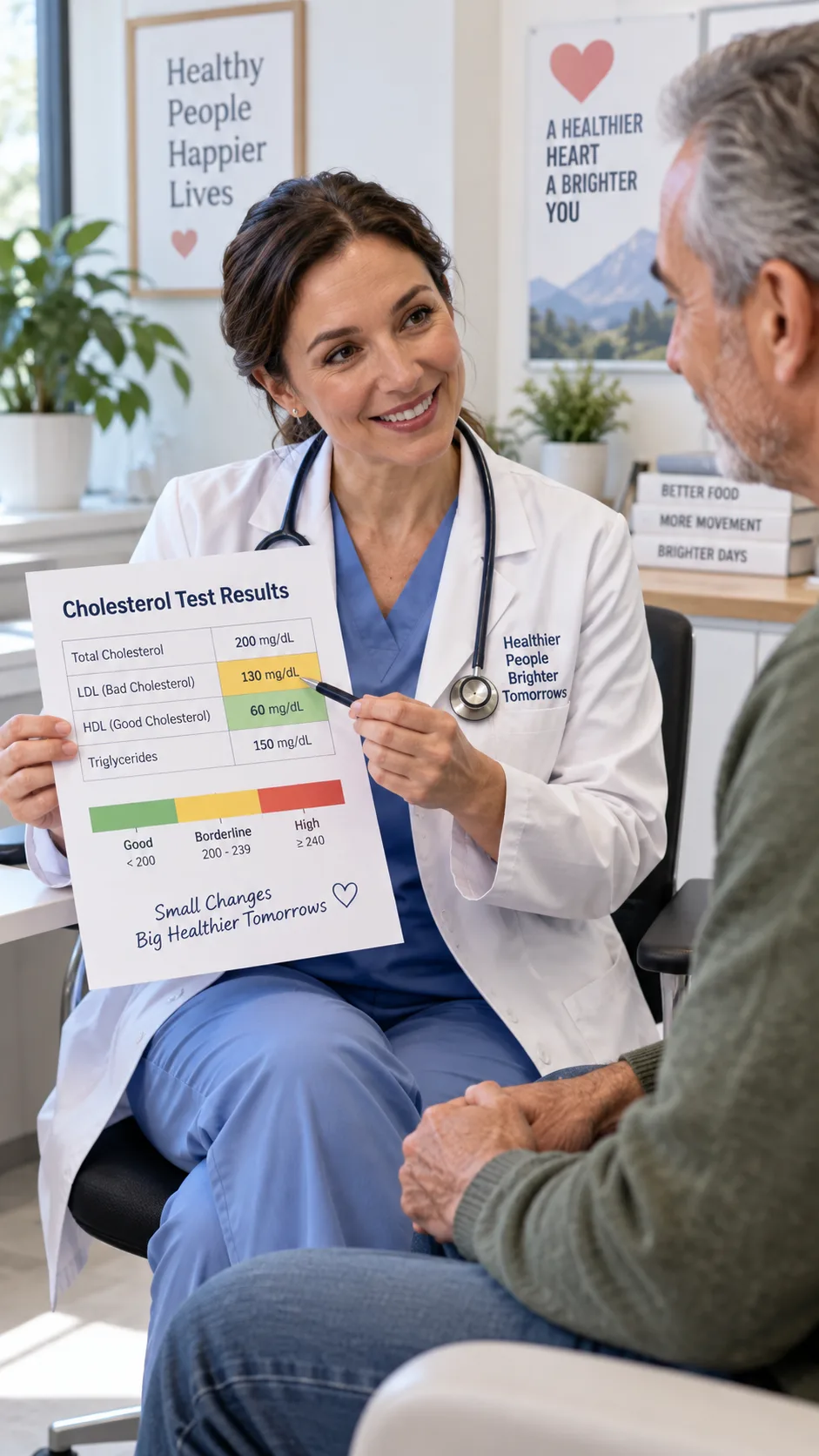
Most doctors want LDL under 100 mg/dL for average-risk adults, and under 70 mg/dL if you’ve already had a cardiac event or you have diabetes. Your total cholesterol number? It’s the least useful figure on the whole panel. Ask about LDL, HDL, triglycerides, and if you can, ApoB. That last one counts the actual number of trucks, not just the cargo.
Mistake #1: You cut dietary cholesterol and ignored saturated fat
This is the big one. For decades, everyone blamed eggs and shrimp. Then the research caught up and showed that dietary cholesterol has a much smaller effect on blood LDL than saturated fat does for most people.
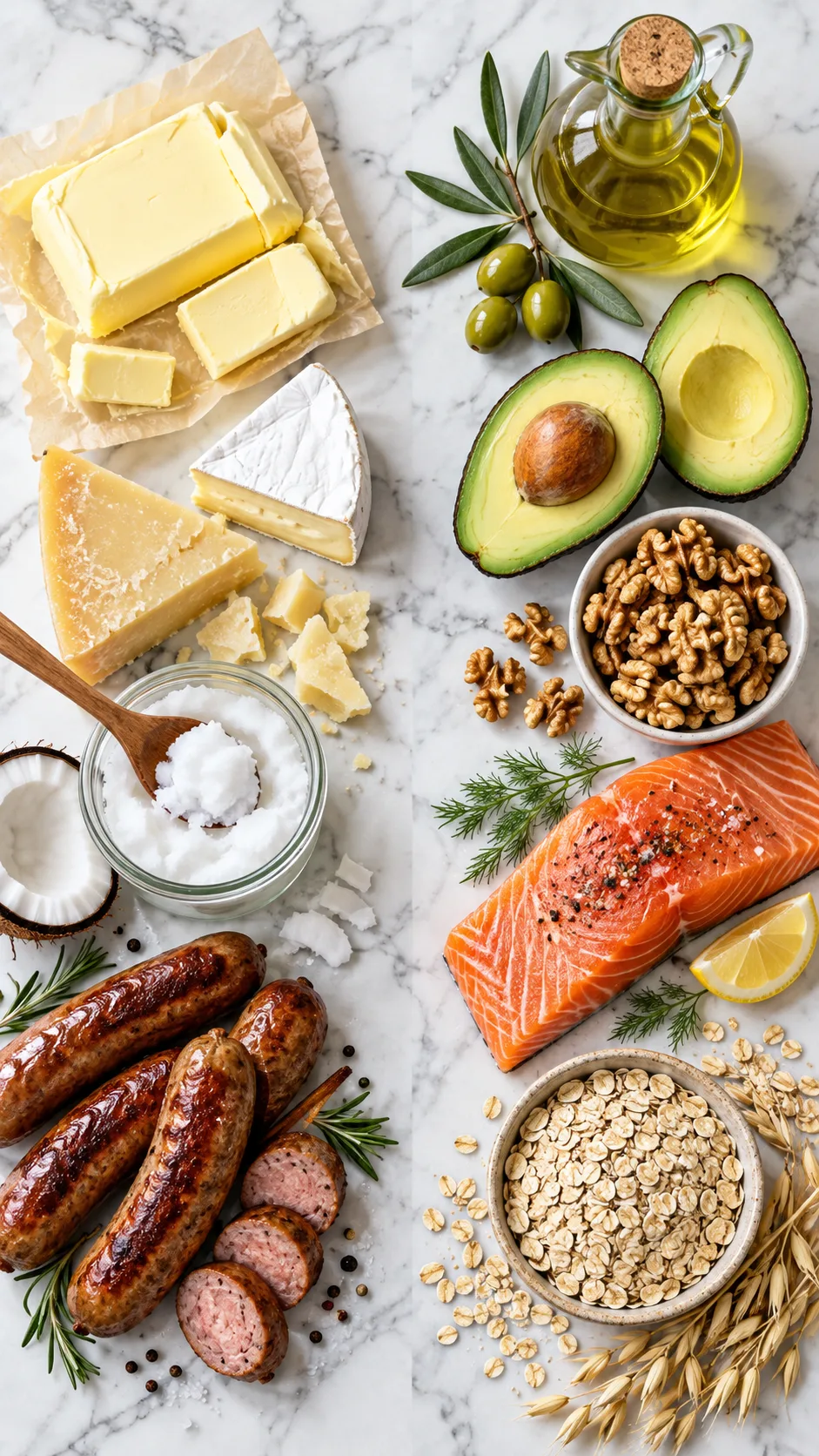
So folks proudly ditched the egg yolks while still eating butter on toast, cheese on everything, coconut oil in their coffee, and a fatty cut of beef four nights a week. Guess what your liver does with all that saturated fat? It makes more cholesterol.
Saturated fat suppresses your LDL receptors, the little vacuum cleaners on your liver cells that pull LDL out of your blood. Fewer working receptors means more LDL hanging around causing trouble.
Where saturated fat hides (the sneaky list)
- Cheese: the #1 source of saturated fat in the average Western diet. Not bacon. Cheese.
- Coconut oil: about 90% saturated. “Natural” doesn’t mean neutral.
- Palm oil: hidden in baked goods, spreads, and a lot of processed snacks.
- Full-fat dairy: cream in coffee adds up faster than you think.
- Fatty cuts of red meat and processed meats: sausage, salami, mince.
- Butter and ghee: including the “grass-fed premium artisanal” kind. Your liver can’t read labels.
The fix: keep saturated fat under about 6% of total calories if your LDL is high. On a 2,000-calorie diet, that’s roughly 13 grams a day. Swap toward olive oil, canola, avocado, nuts, and fatty fish.
Mistake #2: You think “low-fat” means “heart-healthy”
Walk down any supermarket aisle and you’ll see low-fat yogurts, low-fat cookies, low-fat muffins. Ever wondered what manufacturers put in when they take the fat out? Sugar. Lots and lots of sugar.
Excess sugar and refined carbs drive up triglycerides and push down HDL (the good stuff). Worse, they shift your LDL particles toward the small, dense variety, the ones that slip into artery walls most easily. So your LDL number might look fine while your particle quality quietly gets worse.
I once watched a relative eat three “heart-healthy low-fat” granola bars a day and wonder why nothing improved. Those bars had more sugar than a candy bar. FYI, read the back of the pack, not the front.
Better swaps that move the needle
- Plain Greek yogurt + real fruit instead of flavoured low-fat yogurt.
- Steel-cut or rolled oats instead of instant sweetened oatmeal packets.
- Whole fruit instead of fruit juice. The fibre matters enormously.
- Nuts instead of low-fat crackers for your 3pm snack.
Mistake #3: You’re not eating nearly enough soluble fibre
This is the mistake I see most often, and it’s the easiest one to fix. Soluble fibre binds bile acids in your gut and drags them out of your body. Your liver then has to pull cholesterol out of your blood to make more bile. Free LDL reduction, and you don’t need a prescription for it.
The catch? You need roughly 5 to 10 grams of soluble fibre daily to see a meaningful drop, typically 5 to 11 points off LDL. Most people get maybe 2 grams. A sad sprinkle of oats on Tuesday doesn’t count.
Top soluble fibre sources, ranked by practicality
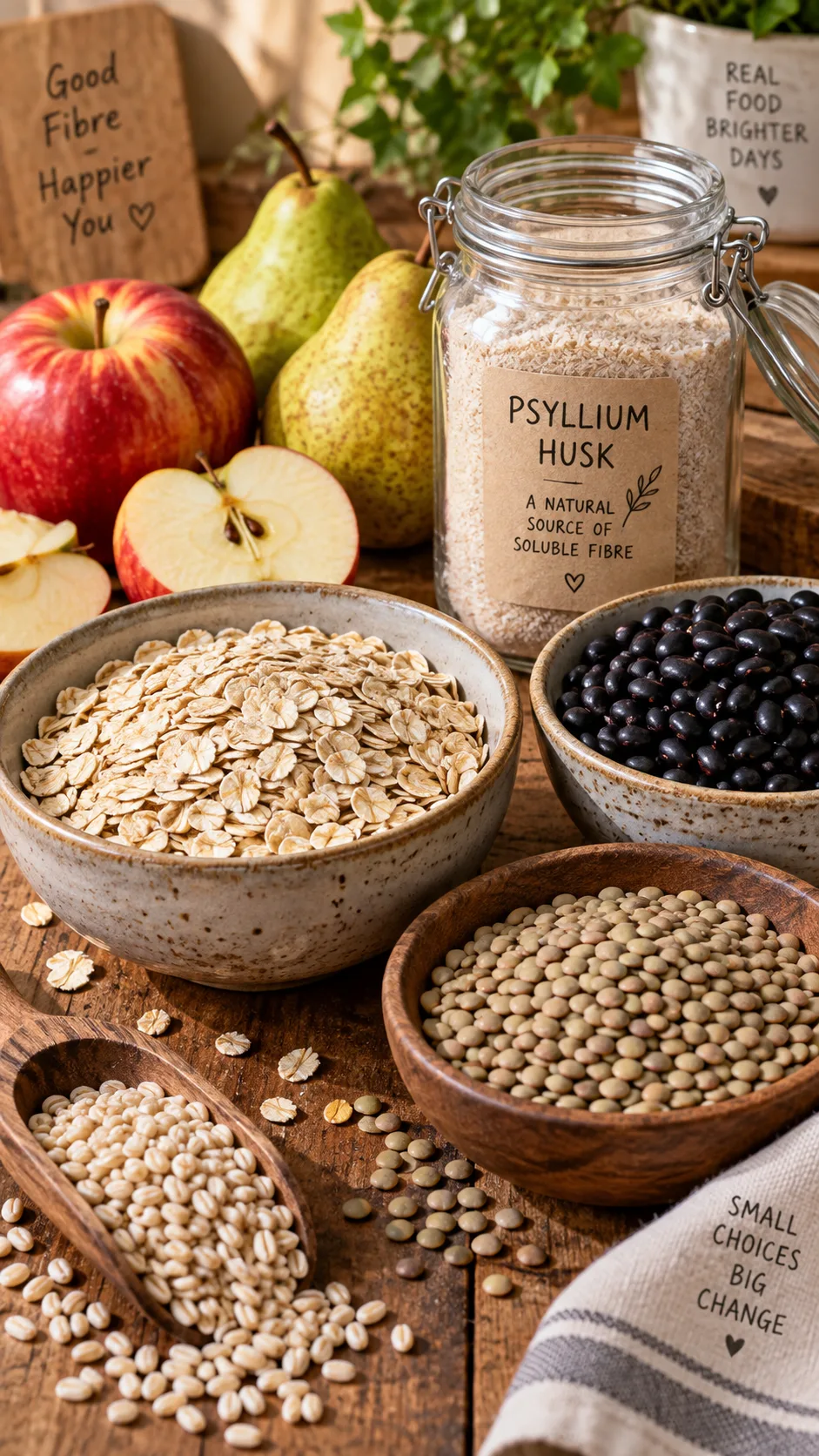
- Oats and oat bran: one cup cooked gives about 2g of beta-glucan.
- Beans and lentils: half a cup delivers 1 to 3g. Cheapest cholesterol medicine on earth.
- Psyllium husk: 1 tablespoon = roughly 3g soluble fibre. Genuinely the MVP.
- Barley: swap it for rice a couple times a week.
- Apples, pears, citrus, and berries: pectin-rich and easy.
- Brussels sprouts, okra, aubergine, and sweet potato: underrated performers.
If you want an eating pattern that does most of this automatically, the Mediterranean diet approach is the closest thing to a cheat code. Beans, olive oil, fish, vegetables, whole grains: it pulls every lever at once.
Mistake #4: You fixed your diet but forgot about trans fats
Most countries have cracked down on artificial trans fats, but they haven’t vanished. Check labels for “partially hydrogenated oil”. That phrase is a red flag no matter how small the print.
Trans fats are uniquely nasty because they raise LDL and lower HDL at the same time. It’s a two-for-one deal nobody asked for. They hide in some imported baked goods, cheap margarines, microwave popcorn, and fried takeaway food cooked in reused oil.
Also worth knowing: US labelling rules let products with under 0.5g per serving claim “0g trans fat.” Eat three servings and you’ve quietly consumed 1.5g. Sneaky.
Mistake #5: You drink your calories (and your alcohol)
Smoothies feel virtuous. Two bananas, mango, honey, juice base: that’s basically a dessert wearing a health halo. The liquid sugar hits your liver fast and turns into triglycerides and VLDL, which becomes, you guessed it, more LDL.
Alcohol is the other blind spot. Beyond one drink a day, alcohol reliably raises triglycerides and adds empty calories that drive weight gain and insulin resistance. Both of those push lipids in the wrong direction.
My honest opinion: if your LDL is stubborn and you drink most nights, try four weeks alcohol-free before you blame your genetics. The results surprise people.
Mistake #6: You’re eating “healthy” portions that aren’t
Extra virgin olive oil is wonderful. It’s also 120 calories a tablespoon, and most people pour three. Nuts lower LDL, sure, but a “handful” for some people means half a jar.
Carrying extra weight, especially around your middle, worsens insulin resistance and raises LDL and triglycerides. Losing just 5 to 10% of body weight can meaningfully improve your lipid panel.
If you genuinely don’t know your calorie ballpark, work it out with a BMR and maintenance calorie calculator before you start guessing. Guesswork is how “healthy eating” quietly becomes a 3,000-calorie day.
Portion reality check
- Olive oil: 1 tablespoon is a proper serving, not a free pour
- Nuts: about 28g (a small cupped palm)
- Avocado: half, not the whole thing, if weight is a concern
- Cheese: a matchbox-sized piece
- Nut butter: 2 tablespoons, level, not “heaped until the knife gives up”
Mistake #7: You added superfoods instead of removing problems
Turmeric lattes, apple cider vinegar shots, green tea by the gallon: people love ADDING things. It feels easier than giving something up. But you cannot out-supplement a diet built on cheese, pastries, and fried food.
That said, some additions genuinely help once the basics are sorted:
- Plant sterols and stanols (2g/day) block cholesterol absorption in the gut and drop LDL 5 to 15%. You’ll find them in fortified spreads and supplements.
- Soy protein (25g/day): tofu, tempeh, edamame, soy milk. Modest but real benefit.
- Almonds and walnuts: trials consistently link them to lower LDL.
- Fatty fish twice weekly: salmon, mackerel, sardines. Great for triglycerides.
- Green tea: mild effect, but a solid swap for sugary drinks. If you’re shopping locally, here’s a guide to the best green tea brands worth buying.
Notice what’s NOT on that list? Garlic pills, coconut oil, and whatever your cousin is selling on WhatsApp.
Mistake #8: You judge progress too fast (or too slow)
Some people retest after ten days and panic. Others avoid testing for three years. Both approaches waste time.
Give any dietary change 8 to 12 weeks before you retest. That’s how long your lipid profile needs to catch up with new habits. And fast properly if your lab asks, though many modern guidelines now accept non-fasting panels for routine screening.
Track what you changed, too. If you overhauled six things at once and your LDL dropped, you’ll never know which lever mattered. Change two or three things, measure, then adjust.
Mistake #9: You assume diet alone can fix everything
Here’s the uncomfortable truth I promised to be honest about. Genetics set the baseline. Roughly 1 in 250 people have familial hypercholesterolemia, an inherited condition where the liver’s LDL receptors simply don’t work properly.
If you eat well, exercise, maintain a healthy weight, and your LDL still sits above 190 mg/dL, that’s a genetics conversation, not a willpower conversation. The NHS guidance on high cholesterol is clear that medication is appropriate and sensible for many people.
Diet typically lowers LDL by 10 to 20%. Statins lower it by 30 to 55%. There’s no moral failure in needing both. I’d rather take a tiny pill than a cardiac event, personally.
Mistake #10: You ignore everything outside the kitchen
Food matters most, but it isn’t the only lever. Ever noticed how your numbers worsen during stressful periods even when you’re eating the same?
- Exercise raises HDL and lowers triglycerides. Aim for 150 minutes weekly. Resistance training helps too.
- Sleep: under 6 hours nightly correlates with worse lipid profiles and higher cortisol.
- Smoking damages HDL function and oxidises LDL. Quitting is the single biggest win available.
- Chronic stress: sustained cortisol raises LDL and blood pressure.
- Untreated thyroid issues: hypothyroidism raises LDL substantially and often goes undiagnosed.
That last one deserves more attention than it gets. If your LDL jumped suddenly and your diet didn’t change, ask for a thyroid panel. The published research on thyroid and lipid metabolism is well established, and it’s an easy thing to rule out.
A simple 7-day reset that works
Want somewhere to start that isn’t overwhelming? Try this for one week:
- Day 1: Swap breakfast for oats + berries + a tablespoon of ground flaxseed.
- Day 2: Replace one meat dinner with beans or lentils.
- Day 3: Cook everything in olive oil. Put the butter away.
- Day 4: Add psyllium husk to a glass of water once daily. Drink plenty of water with it.
- Day 5: Eat fatty fish. Salmon, sardines, mackerel, your pick.
- Day 6: Read every label you touch. Hunt for saturated fat and hydrogenated oils.
- Day 7: Walk 40 minutes and plan next week’s meals.
Then repeat. Boring consistency beats dramatic overhauls every single time. If budget’s the barrier, a structured plan like this affordable family meal plan proves heart-healthy eating doesn’t require a premium grocery budget.
The bottom line on stubborn LDL
If your LDL refuses to budge, you’re probably not failing. You’re aiming at the wrong target. Most people obsess over eggs while drowning in saturated fat, skimp on soluble fibre, and expect results in two weeks.
Focus on these four things and you’ll fix 80% of the problem:
- Slash saturated fat to under 6% of calories
- Get 5 to 10g of soluble fibre EVERY day
- Replace refined carbs and liquid sugar with whole foods
- Retest after 12 weeks and adjust with real data
And if you’ve done all that and your numbers still won’t move? Go see your doctor and talk about genetics and medication. That isn’t giving up. That’s playing the game properly.
Your arteries don’t care how hard you tried. They only care what you did. Pick two changes from this article and start them today, not Monday.
This article is for general information and doesn’t replace personalised medical advice. Always discuss cholesterol treatment decisions with your doctor or a registered dietitian.