

You walked into Aldi for milk and bread. You walked out with a kayak, three scented candles, and a pizza oven. Sound familiar?
Here’s the thing: Aldi can slash your grocery bill, but only if you shop with a plan instead of vibes. I’ve run this exact meal plan for my own household (two adults, one teenager with a bottomless stomach) for over a year now, and it holds up whether you’re feeding 2 people or 5.
No 47-ingredient recipes. No “just grab some saffron.” Just real, cheap, weeknight dinners your family will eat without staging a protest.
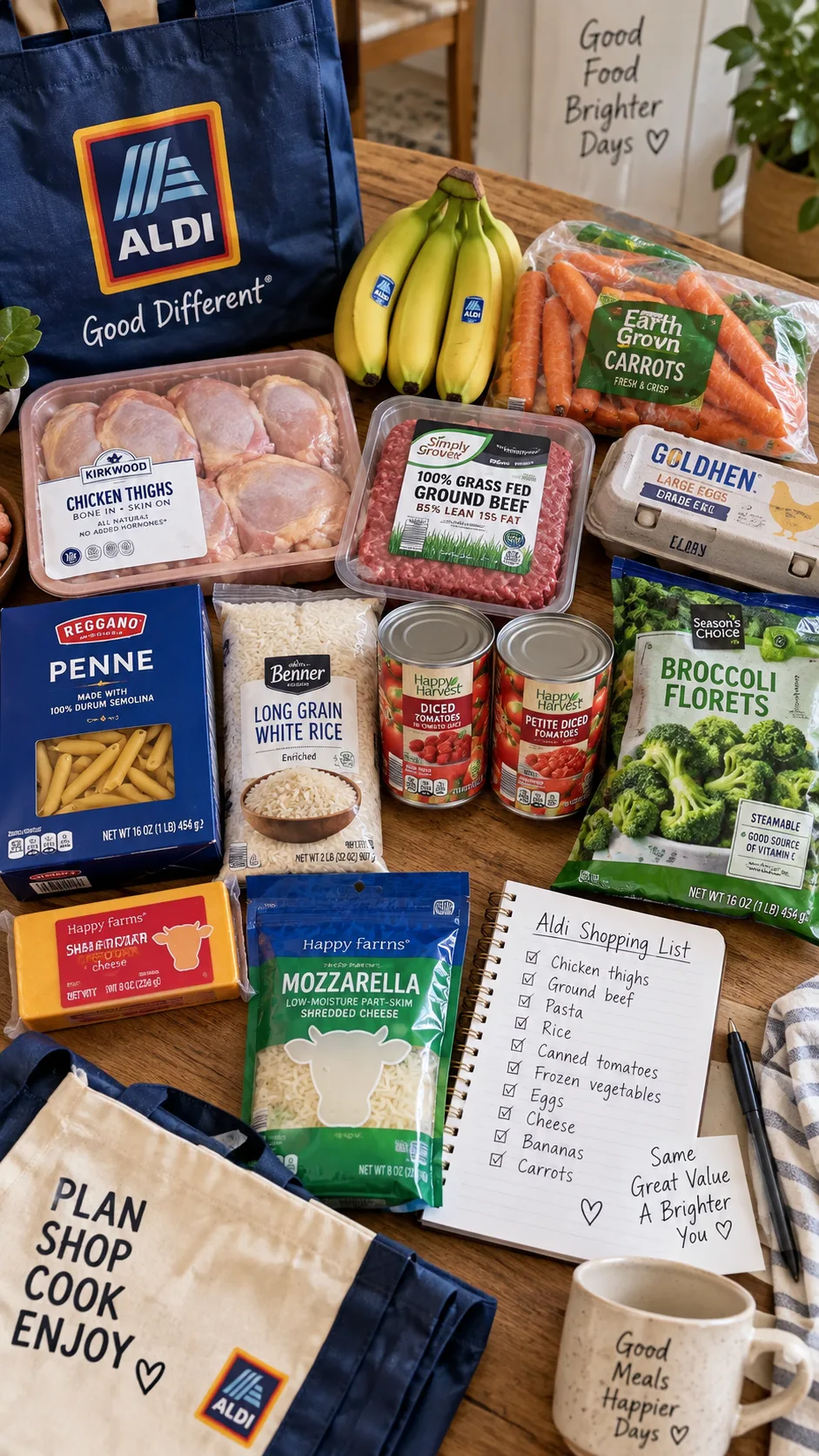
Why Aldi works so well for family meal planning
A typical Aldi store carries about 1,400 to 2,000 products, compared to the 30,000-plus items a conventional supermarket stocks. Fewer choices means faster shopping and way less impulse spending. Decision fatigue is real, friend.
About 90% of what Aldi sells is private label, which is exactly why the prices stay low: you’re not paying for a brand’s Super Bowl ad. Consumer testing outlets like Consumer Reports have repeatedly ranked Aldi near the top for grocery value, and the U.S. Bureau of Labor Statistics data on food-at-home inflation makes it pretty clear why so many families switched.
But here’s what nobody tells you: Aldi only saves you money if you stop treating dinner as a nightly improv show. The plan matters more than the store.
The three rules that make this plan stick
- Repeat ingredients across meals. One bag of onions should show up in four dinners, not one.
- Pick a protein base, then remix it. Ground beef Monday becomes taco filling Wednesday.
- Leave one night blank. Life happens. Plan for chaos and you’ll never feel like you failed.
Your Aldi budget reality check (real numbers for 2, 3, 4 and 5 people)
Let’s talk actual money, because vague promises of “savings” help nobody. These are realistic weekly dinner-only budgets based on my own receipts and current Aldi pricing in most U.S. markets.
- 2 people: $45 to $55 a week for 7 dinners
- 3 people: $60 to $70 a week
- 4 people: $75 to $90 a week
- 5 people: $95 to $110 a week
For context, the USDA’s Thrifty Food Plan puts a family of four’s total monthly grocery cost around $975 to $1,000. Dinners at Aldi on this plan? You’ll land well under that, with room for breakfast and lunch.
FYI, these numbers assume you already own basics like oil, salt, and a few spices. If your pantry is bare, budget an extra $25 for a one-time stock-up.
The Aldi staples list (your non-negotiable cart)
These are the workhorses. Buy them every single trip and you’ll always be four minutes from a decent dinner.
Proteins
- Never Any! chicken thighs or drumsticks: cheaper and more forgiving than breasts
- 85/15 ground beef: the universal dinner solver
- Eggs (18-count): dinner, not just breakfast
- Canned tuna or chickpeas: protein for pennies
- Frozen salmon fillets: splurge-ish, but one bag stretches two meals
Carbs & fillers
- Long-grain white rice (bulk bag)
- Spaghetti, penne, or egg noodles
- Russet or gold potatoes (5 lb bag)
- Corn or flour tortillas
- Sandwich bread or naan
Produce & freezer
- Onions, garlic, carrots, celery: the flavor foundation
- Frozen mixed vegetables, peas, broccoli florets
- Bagged salad or coleslaw mix
- Canned diced tomatoes and tomato paste
- Bananas (seriously, they’re like 25 cents each)
Pro tip from painful experience: buy your Aldi produce for the first half of the week and lean on frozen for the second half. Aldi fresh produce tastes good but has a shorter runway than pricier stores. Don’t ask me how I learned that about a bag of spinach. :/
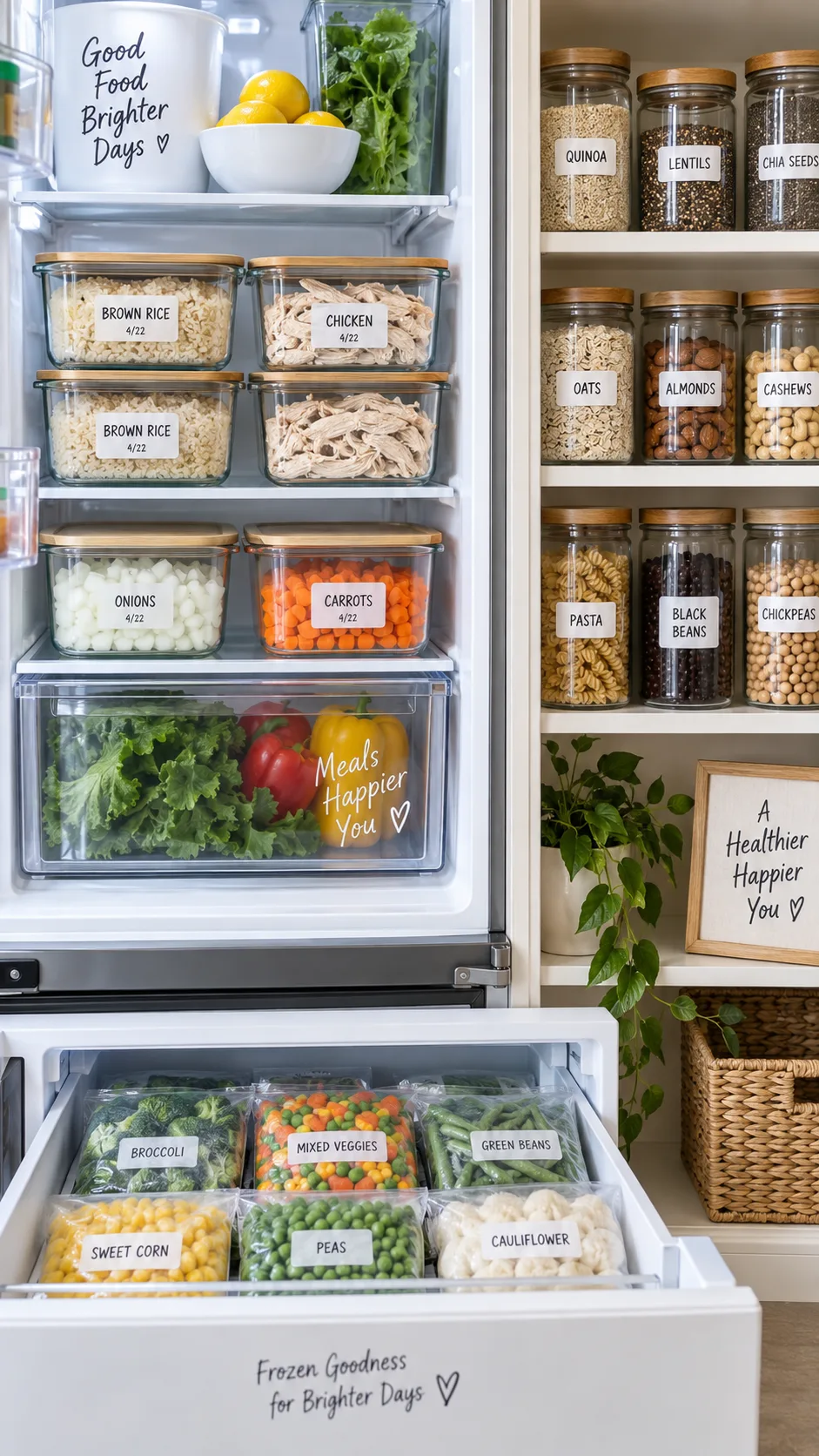
The 7-day Aldi meal plan (scalable from 2 to 5 people)
Here’s the plan. Each dinner takes 35 minutes or less and uses ingredients that overlap on purpose. I’ve noted how to scale portions up or down without recalculating your whole life.
Monday: sheet pan chicken thighs, potatoes & carrots
Toss everything with oil, salt, paprika, and garlic powder. One pan, 425°F, 35 minutes. Cost for 4: roughly $8.
Scaling: 1.5 thighs per adult, 1 per kid. Add a second sheet pan for 5 or more instead of crowding one. Crowded pans steam instead of roast, and soggy potatoes ruin marriages.
Tuesday: loaded beef & rice skillet
Brown ground beef with onion, dump in cooked rice, canned tomatoes, frozen corn, and a fistful of shredded cheese. Done in 20 minutes.
Cost for 4: about $7.50. Make DOUBLE the rice tonight. You’ll thank me Thursday.
Wednesday: pasta with garlic tomato sauce plus whatever veg you’ve got
Aldi’s canned crushed tomatoes plus garlic, olive oil, and a pinch of sugar beat most jarred sauces. Add frozen peas or wilted spinach so you feel like a responsible adult.
Cost for 4: under $5. Yes, really. This is the cheapest night of the week and somehow my family’s favorite. Go figure.
Thursday: egg fried rice (using Tuesday’s rice)
Day-old rice, 4 to 6 eggs, frozen mixed veg, soy sauce, sesame oil if you’re fancy. Twelve minutes, start to plate.
Cost for 4: around $4. Ever wondered why restaurant fried rice tastes better? They use cold, dried-out rice. Fresh rice turns to mush. That’s the whole secret.
Friday: taco night (the non-negotiable)
Ground beef or black beans, tortillas, shredded cheese, coleslaw mix as “slaw topping,” and whatever hot sauce lives in your door. Everyone builds their own.
Cost for 4: about $9. Build-your-own nights cut complaints by roughly 100%, according to my extremely unscientific household survey.
Saturday: soup or chili plus bread
Dump chili: beans, canned tomatoes, leftover ground beef, chili powder, cumin. Simmer 25 minutes. Serve with Aldi’s bakery bread or cornbread mix.
Cost for 4: roughly $7. Freeze half. Future You will send a thank-you note. If you’re into spices, cumin’s benefits are a nice bonus beyond the flavor.
Sunday: flex night
Leftovers, breakfast-for-dinner, or a frozen pizza from the Aldi freezer aisle. This night is intentionally lazy. A meal plan without an escape hatch is just a guilt-delivery system.
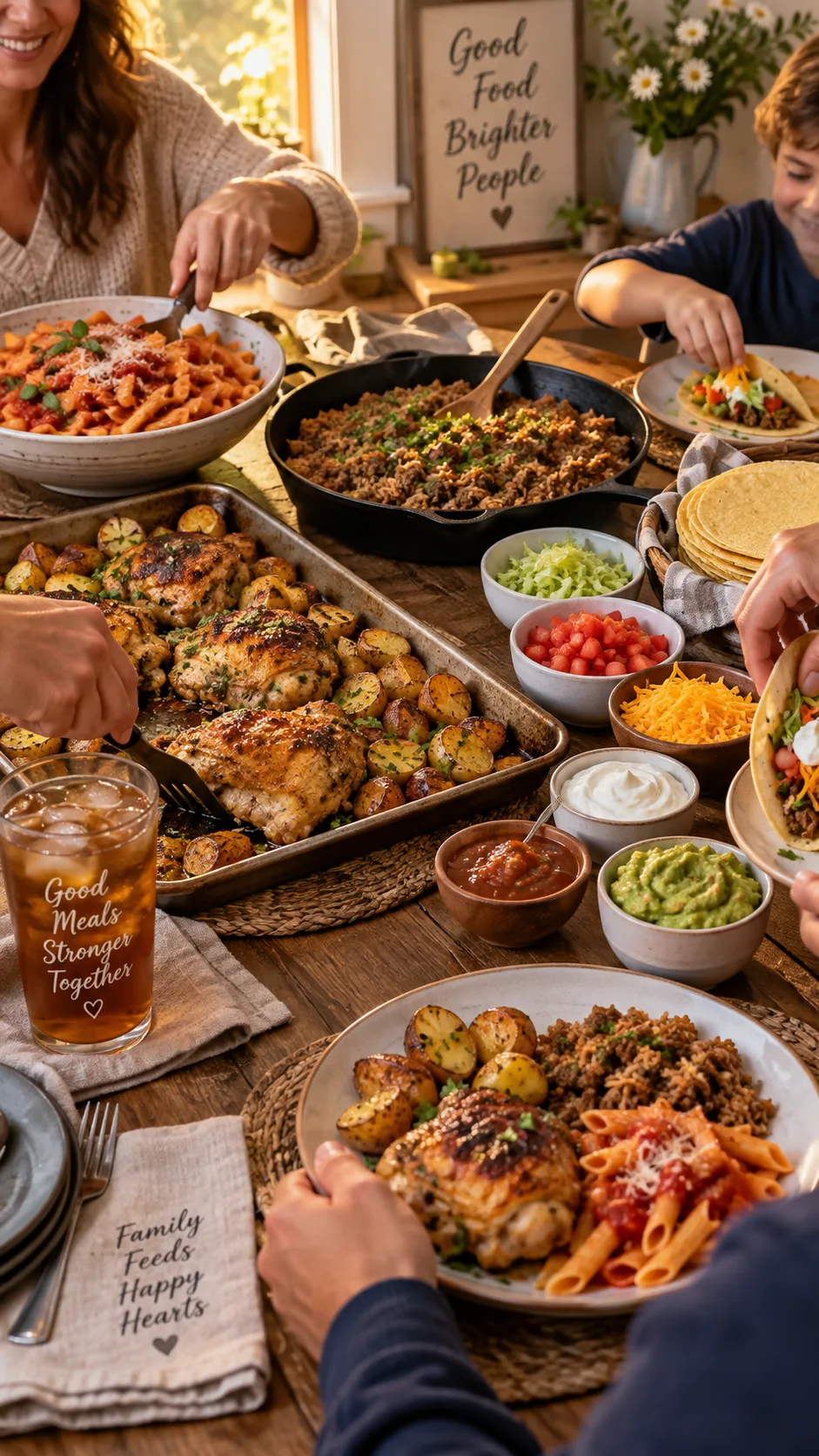
How to scale this plan without blowing the budget
Cooking for 2
Halve the protein, keep the veg the same, and plan for planned leftovers. Two-person households waste the most food per capita, and I’ve watched it happen in my own fridge. Cook full recipes and eat the same thing twice. It’s fine. Nobody’s watching.
Cooking for 3
This is the awkward number. Recipes serve 2, 4, or 6, never 3. My fix: cook for 4 and pack tomorrow’s lunch tonight. You’re not overcooking, you’re meal prepping. Same energy as our lazy cook’s guide to meal prep, just with fewer containers.
Cooking for 4
The plan above is written for you. Follow it as-is and you’ll land around $80 a week.
Cooking for 5 (or a teenager, which counts as two)
- Add a starch, not more meat. An extra cup of rice costs 30 cents. An extra chicken thigh costs $1.20.
- Bulk beans into ground beef. A 50/50 beef-and-bean chili fools almost everyone.
- Serve bread or rolls alongside every soup and pasta night.
- Buy the biggest bag available of rice, potatoes, and frozen veg.
IMO, stretching with carbs and legumes is the single most underrated budget skill. The USDA’s Nutrition.gov meal planning guidance backs this up: plant proteins deliver serious nutrition at a fraction of the cost.
Watch: how real families shop Aldi on a budget
If you’d rather see the cart than read the list, this walkthrough covers a full family grocery haul with prices called out item by item.
The Aldi shopping hacks nobody puts on the sign
- Bring your own bags AND a quarter. You know this. You’ll still forget. Keep a quarter taped inside your wallet.
- Check the red “Special Buy” tags in produce. Markdowns hit hardest on Wednesday mornings in most stores.
- Skip the middle aisle. That’s where the kayak lives. Walk past it. Do not make eye contact with the kayak.
- Use the Twice As Nice Guarantee. Aldi replaces the product AND refunds you if you don’t like something. Almost nobody uses it.
- Compare unit prices, not shelf prices. Aldi’s bigger bags are usually cheaper per ounce, but not always.
- Buy dairy and eggs last. Checkout at Aldi moves fast enough that your cold stuff will be fine.
One more: shop the freezer aisle hard. Frozen vegetables get flash-frozen at peak ripeness and, per research summarized by Harvard Health, often match or beat “fresh” produce that’s spent a week in transit. Cheaper, with zero waste. Hard to argue with that.

Making it stick: the part everyone skips
Most meal plans die by Wednesday. Not because the recipes are bad, but because the SYSTEM is bad. Here’s what keeps a plan alive in a real house with real people.
1. Write the plan where people can see it
Fridge. Whiteboard. Shared phone note. When your kid asks “what’s for dinner” for the ninth time, you point instead of answering. Visibility kills negotiation.
2. Prep two things, not twelve
Sunday, I do exactly two tasks: cook a big pot of rice and chop onions, carrots, and celery into a container. That’s it. Twenty minutes buys me five faster dinners.
3. Rotate on a 3-week cycle
Don’t build 30 unique meals. Build 10 and repeat them. Families don’t want variety nearly as much as food bloggers think they do. Ever noticed how your favorite restaurant hasn’t changed its menu in a decade?
4. Let the plan flex for health goals
Watching portions or running a deficit? Same meals, smaller protein and starch servings, bigger veg pile. The structure in our 1200 calorie deficit meal plan layers neatly over this Aldi framework: one dinner, two portion sizes, and you cook nothing separate.
5. Add one “event” meal a month
Budget eating gets boring if every night is beige. Once a month, cook something with a little ceremony: a big pot of jollof rice, a proper roast, homemade pizza. It costs maybe $15 extra and it resets everyone’s morale.
Common mistakes that wreck an Aldi meal plan
- Shopping hungry. Obvious, universally ignored, permanently expensive.
- Buying “aspirational” produce. That kale isn’t going to cook itself, and you know it.
- Planning 7 brand-new recipes. You’ll burn out by Tuesday. Mix 5 known plus 2 new, max.
- Ignoring your freezer inventory. Check it BEFORE you write the list. I once owned four bags of frozen peas simultaneously.
- Skipping the pantry audit. Five minutes of looking in your own cabinets can cut $15 off a trip.
- Treating Aldi as all-or-nothing. Get 85% there, grab specialty items elsewhere. You’re chasing savings, not purity.
A quick word on nutrition (because cheap shouldn’t mean junk)
Budget dinners get a bad reputation, and sometimes they earn it. But this plan hits a solid nutritional baseline: lean-ish protein every night, vegetables in six of seven meals, and whole-food carbs instead of packaged shortcuts.
A few easy upgrades that cost almost nothing:
- Swap half your white rice for brown or a rice-lentil blend
- Add a handful of frozen spinach to any sauce (nobody tastes it)
- Use Greek yogurt instead of sour cream (cheaper per serving, more protein)
- Keep a bowl of fruit visible; Aldi bananas and apples cost very little
Your family eats well, you spend under $90, and nobody eats cereal for dinner three nights running. That’s the win. 🙂
The bottom line
Aldi doesn’t save you money on its own. A repeatable plan does. Pick a small set of overlapping ingredients, cook 10 meals on rotation, leave yourself one lazy night, and scale with carbs instead of expensive protein.
Start with ONE week. Just one. Write the seven dinners above on your fridge, shop the staples list, and see what your receipt looks like Sunday night. Most people I’ve talked into this cut $40 to $80 off their first month without eating a single sad meal.
The best meal plan is the one still on your fridge in March, not the fanciest one. Now go get your quarter.