

You reach for your toes, your hamstrings protest, and your fingertips stop somewhere near your knees. Sound familiar? You can build flexibility, even if touching your toes now feels wildly out of reach.
Flexibility does not require natural talent, expensive gear, or a high pain tolerance. It takes a simple routine, sound technique, and the patience to keep showing up. Your body responds to steady practice, not one punishing stretch session on a Sunday afternoon.
This beginner stretching guide explains how to improve flexibility safely, ease muscle tightness, and create a routine that fits into everyday life.
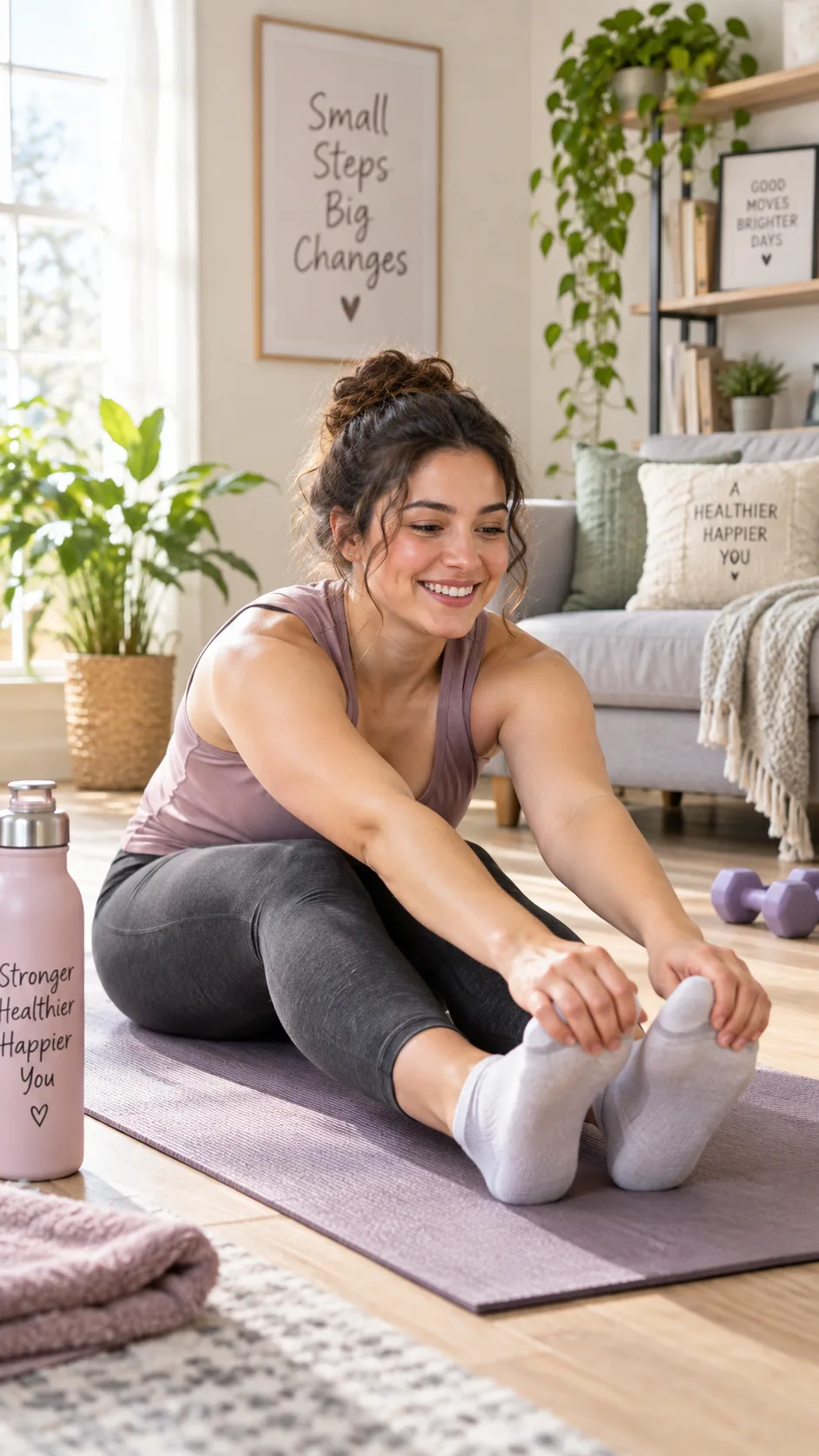
Why you cannot touch your toes yet
People often blame tight hamstrings, and hamstrings often contribute. Your toe touch also relies on your hips, calves, lower back, nervous system, and usual movement patterns. Sitting all day does your body no favors.
Your body guards positions that feel unfamiliar. When your brain notices tension, instability, or a possible threat, it signals your muscles to tighten. Gentle, repeated stretching helps your nervous system learn that these positions are safe.
Flexibility involves more than long muscles
Flexibility means you can move comfortably through a range of motion. You need joints that move well, muscles that can relax, control, and regular practice. You do not need to twist yourself into a pretzel to call yourself flexible.
Aim for comfortable movement, not impressive photos. Better flexibility can make daily tasks easier, whether you tie your shoes or pick up laundry without making a dramatic noise.
The NHS flexibility exercise guidance recommends gentle mobility work and controlled movement. Start with the range you have, not the range someone online says they had on day one.
Ground rules for beginner stretching
Learn a few basics before you push for deeper stretches. Look for mild tension, steady breathing, and controlled movement. Stop if you feel sharp pain, numbness, tingling, or an urge to negotiate with the universe.
- Warm up first: Walk, march, cycle, or move for five to 10 minutes.
- Stretch gently: Feel mild to moderate pulling, never pain.
- Hold still: Keep static stretches calm and skip bouncing.
- Breathe slowly: Exhale as you move a little farther into a stretch.
- Stay consistent: Stretch two to five days each week.
- Work both sides: Give each side of your body equal attention.
The American College of Sports Medicine recommends regular flexibility work. Most beginners benefit from stretches that last about 10 to 30 seconds. Read more in the ACSM physical activity resources.
Do you need to stretch every day? No. Daily gentle mobility can feel good, but three focused sessions each week can still bring progress.
Warm up before you stretch
Cold muscles rarely respond well to hard stretching. Start with a brief warm-up to raise your body temperature and help your joints move more easily. Five minutes can make your stretches feel very different.
- March in place for 60 seconds.
- Circle your shoulders forward and backward 10 times.
- Perform 10 slow bodyweight squats or chair squats.
- Walk around your room for two minutes.
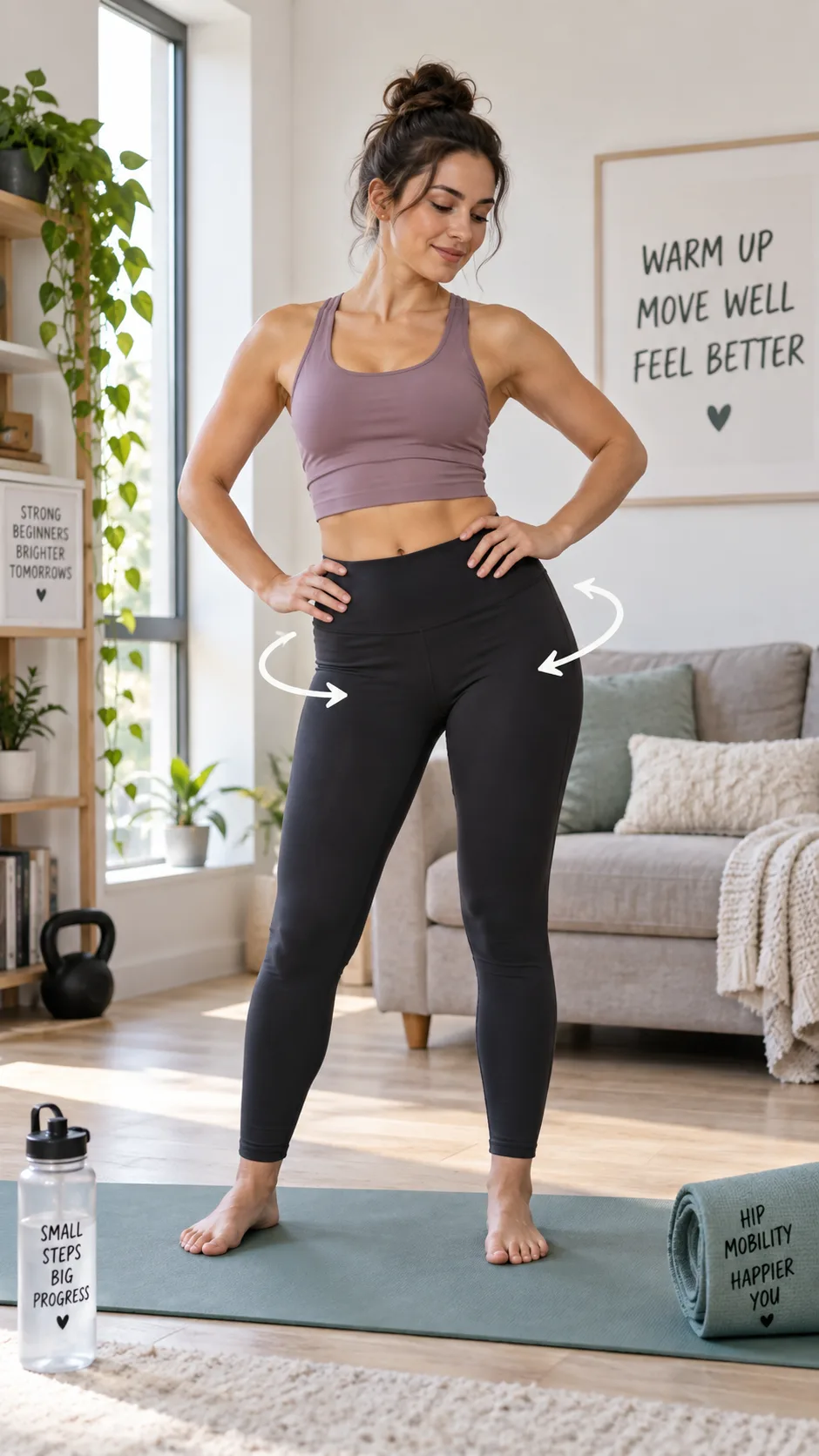
- Do 10 gentle hip circles in each direction.
Hip circles can help when sitting leaves your hips stiff. Try this simple hip circles exercise guide for a quick movement drill before your stretching routine.
Beginner stretches for tight hamstrings and hips
This routine works the areas that often limit a comfortable toe touch: your hamstrings, calves, hips, glutes, and lower back. Move slowly and breathe normally. You should feel challenged, not attacked.
1. Seated hamstring stretch
Sit on the floor with one leg straight and your other knee bent. Reach toward the straight leg while keeping your spine long. Stop when you feel a gentle pull along the back of your thigh. Hold for 20 to 30 seconds, then switch sides.
Keep a small bend in the straight knee if your hamstrings feel especially tight. That bend does not mean you failed. It means you adjusted the stretch to suit your body.
2. Standing calf stretch
Place both hands on a wall and step one foot back. Keep the back heel down and the back knee straight while you bend the front knee. Hold for 20 to 30 seconds on each side.
Tight calves can restrict your toe touch more than you might expect. Your calves connect with the muscles along the backs of your legs, so give them some attention.
3. Half-kneeling hip flexor stretch
Kneel on one knee and place your other foot in front of you. Gently tuck your hips under and shift forward slightly until you feel a stretch at the front of the hip on the kneeling side. Hold for 20 to 30 seconds, then switch sides.
Do not arch your lower back to force more range. Squeeze the glute on the kneeling side instead. That small adjustment often helps you feel the stretch where you want it.
4. Figure-four glute stretch
Lie on your back with both knees bent. Cross one ankle over the opposite thigh, then gently pull the uncrossed leg toward your chest. Hold for 20 to 30 seconds, then switch sides.
This stretch can help if you feel tight around your hips and outer glutes. If you sit often, you may soon see why it belongs in a regular routine.
5. Child’s pose with a side reach
Kneel down, sit your hips toward your heels, and reach your arms forward. Walk both hands a little to the right and hold, then walk them to the left. This movement stretches your back, sides, shoulders, and hips without demanding circus level mobility.
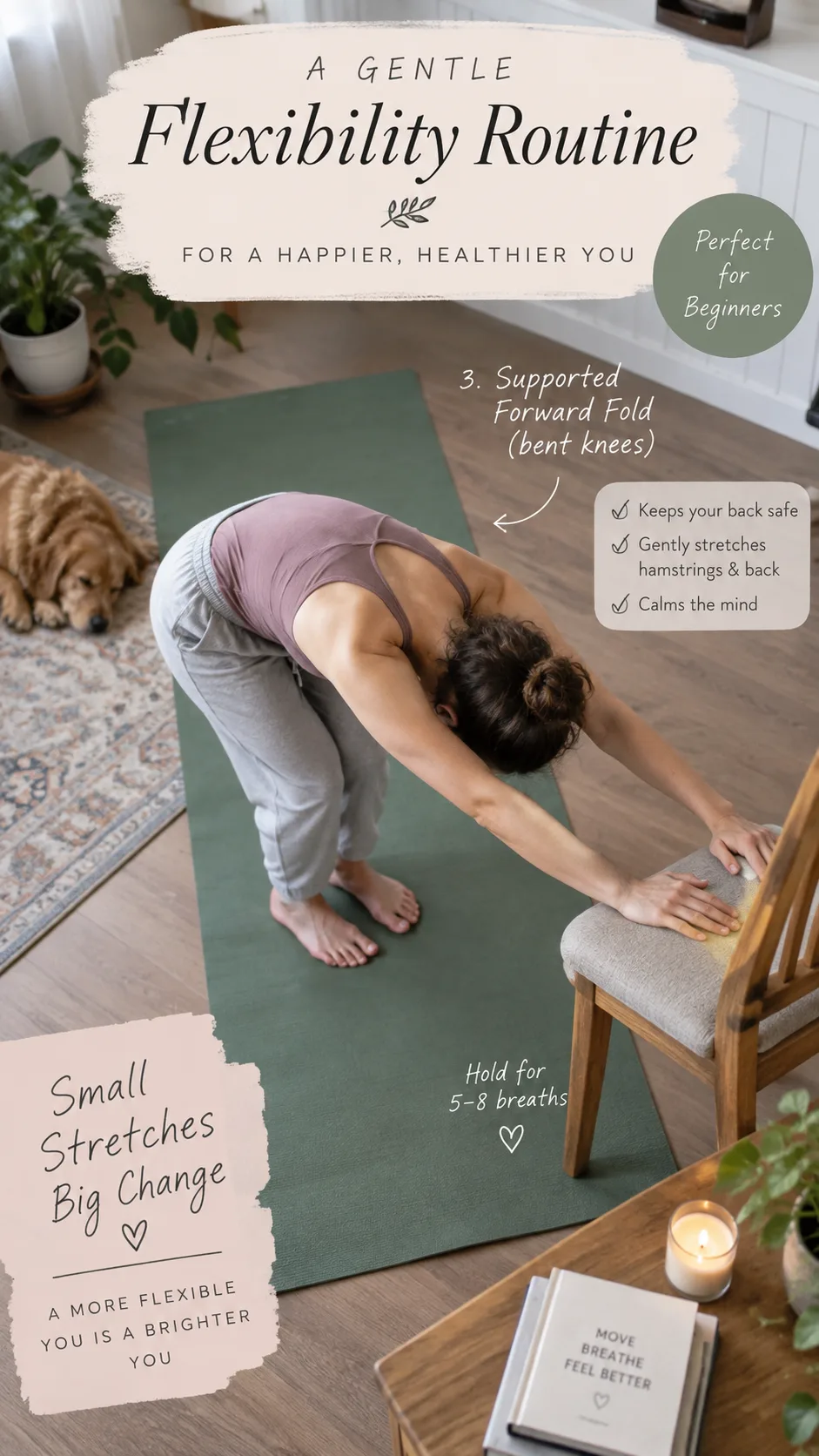
6. Supported forward fold
Stand with your feet hip-width apart and bend your knees generously. Fold forward slowly, rest your hands on your thighs or a chair, and let your head relax. Hold for 20 seconds.
This toe touch variation builds confidence and keeps your lower back from doing all the work. As your hamstrings loosen, straighten your knees a little more over time.
Your 10-minute flexibility routine for beginners
Use this routine three or four times each week. Do it after a walk, workout, or warm shower, when your body already feels ready to move.
- Warm up with marching and hip circles for two minutes.
- Hold the standing calf stretch for 30 seconds per side.
- Hold the half-kneeling hip flexor stretch for 30 seconds per side.
- Hold the seated hamstring stretch for 30 seconds per side.
- Hold the figure-four stretch for 30 seconds per side.
- Finish with a supported forward fold for 30 to 45 seconds.
- Repeat the whole sequence once if you have time.
Consistency matters more than intensity. A calm 10-minute routine that you repeat for six weeks will do more for you than one painful 45-minute session that makes you avoid stretching for good.
How long does it take to get flexible?
Most beginners notice small changes after two to four weeks of regular stretching. You may feel less stiff when you get out of bed, squat with more comfort, or reach lower in a toe touch. Those changes count.
Larger changes usually need more time, especially if you begin with very tight hamstrings or limited hip movement. Give yourself eight to 12 weeks of steady practice before you judge your progress. Your body follows biology, not overnight shipping.
Track your starting point with a simple check. Take a photo or write down where your fingertips reach during a supported forward fold, then check again every two weeks. Daily testing can hide normal progress.
Stretching mistakes that slow your progress
Some people stretch often and still feel stuck because a few common habits get in the way. Change these habits and your routine can work better.
- Forcing the stretch: Pain can make your body guard and tighten.
- Bouncing: Choose slow, controlled holds over jerky movements.
- Holding your breath: Slow breathing can help your muscles relax.
- Ignoring strength: Strong muscles help you control your new range of motion.
- Only stretching once a week: Your body responds better to regular practice.
- Comparing yourself: Your friend’s toe touch says nothing about your progress.
Strength work pairs well with flexibility work. For a balanced place to begin, read this first gym workout guide for beginners. Strong glutes, legs, and core muscles help you control the range that stretching builds.
When to stop and ask for help
Stretching can feel mildly uncomfortable, but sharp pain never belongs in the process. Stop if you feel burning, numbness, tingling, joint pain, dizziness, or pain that continues after your session. Pay attention to those signals.
Talk with a qualified physiotherapist or healthcare professional if you have a recent injury, ongoing back pain, nerve symptoms, joint instability, or a medical condition that affects movement. The CDC explains the wider benefits of regular physical activity, but put your own safety first.
You do not need to earn discomfort to make progress. Smart stretching can feel almost boring sometimes, and boring habits often bring the best results.
Start small, stretch often, and let progress add up
You can become more flexible even if you can barely touch your toes right now. Warm up, use gentle stretches, breathe slowly, and repeat your routine several times each week. Your body learns through steady practice.
Forget perfect form photos and focus on your next 10 minutes. Reach a little farther, move a little easier, and let your toe touch improve one calm session at a time. Your hamstrings may complain now, but they will get the message.