

Your knees should not need a pep talk before every staircase. When they crack, ache, wobble, or give out on stairs, skip the random squats and follow a sensible strengthening plan.
Stairs ask more of your legs than level ground. You need strength, control, and balance with every step. You can often improve knee comfort by strengthening the muscles around the joint, changing how you move, and getting medical advice when symptoms call for it.
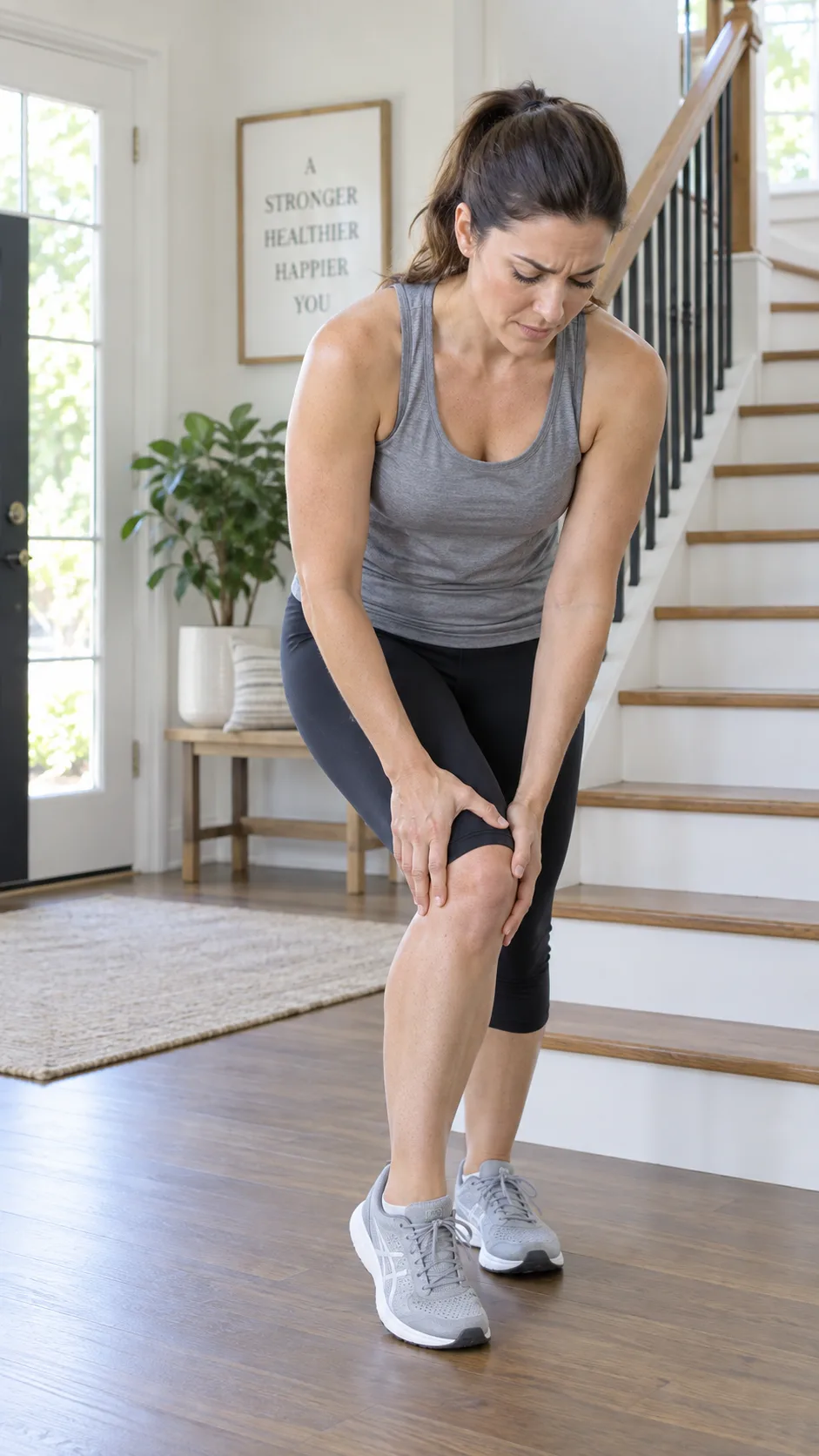
Why your knees crack, ache, or give out on stairs
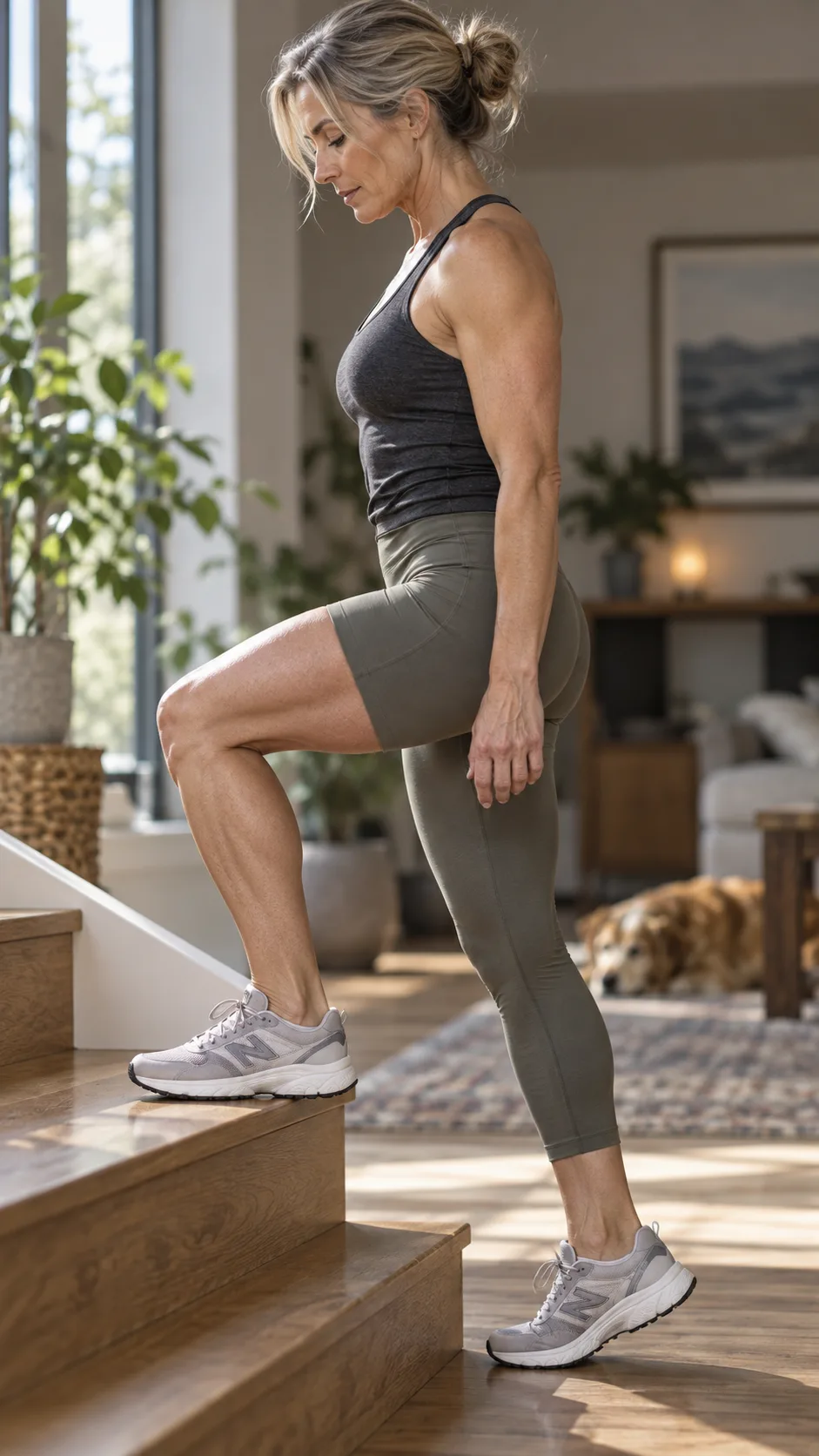
Your knees work alongside your hips, thighs, calves, ankles, and feet whenever you climb a step. If one part of that group does not pull its weight, your knee often takes on more work. Rude, but true.
A crack or pop does not always mean something has gone wrong. Tendons can glide over bone, small gas bubbles can move through joint fluid, and your kneecap can make noise as it moves through its groove.
Pain, swelling, locking, or sudden buckling matter more than noise alone. If your knee cracks without pain, put your attention on strength and better movement instead of worrying about every pop.
Common reasons stairs trigger knee pain
- Weak quadriceps: Your front thigh muscles control knee bending and absorb force as you step down.
- Weak glutes: Your glutes help keep your thigh and knee in line instead of allowing your knee to fall inward.
- Poor kneecap tracking: Your kneecap can irritate nearby tissue when your thigh and hip muscles do not guide it well.
- Overuse: A sudden increase in walking, running, jumping, body weight, or stair climbing can overload the joint.
- Arthritis or past injury: Osteoarthritis, ligament injuries, meniscus tears, and tendon problems can all make stairs painful.
- Foot and ankle weakness: Stiff ankles or flat, unstable feet can change how your knee handles each step.
Going downstairs often hurts more because your quads must slow your body as you lower yourself. That action takes control. You may notice the difference the moment you head down a flight of stairs.
When knee buckling needs a medical check
Do not try to strengthen through repeated buckling. Pain can make your quad briefly stop doing its job, but buckling can also signal a ligament injury, meniscus problem, nerve issue, or serious joint instability.
Make an appointment with a doctor or physiotherapist if symptoms continue for more than a few weeks, interfere with daily life, or return again and again. A clinician can examine your knee, hip, ankle, balance, and walking pattern instead of drawing conclusions from one crunching sound.
Seek urgent care if you cannot bear weight, your knee looks misshapen, major swelling follows an injury, your knee locks in one position, or you develop a fever with a hot, red knee. The NHS guide to knee pain lists other symptoms that call for prompt care.
The best way to strengthen weak knees
You do not need expensive machines or a heroic tolerance for pain. You need regular exercises that train your quads, glutes, hamstrings, calves, and balance. Begin below your pain limit, then build up slowly.
Use a simple rule: mild discomfort during exercise can happen, but sharp pain, catching, swelling, or worse pain the following day means you did too much. Your knees respond better to steady progress than sudden leaps.
Start with these knee strengthening exercises
-
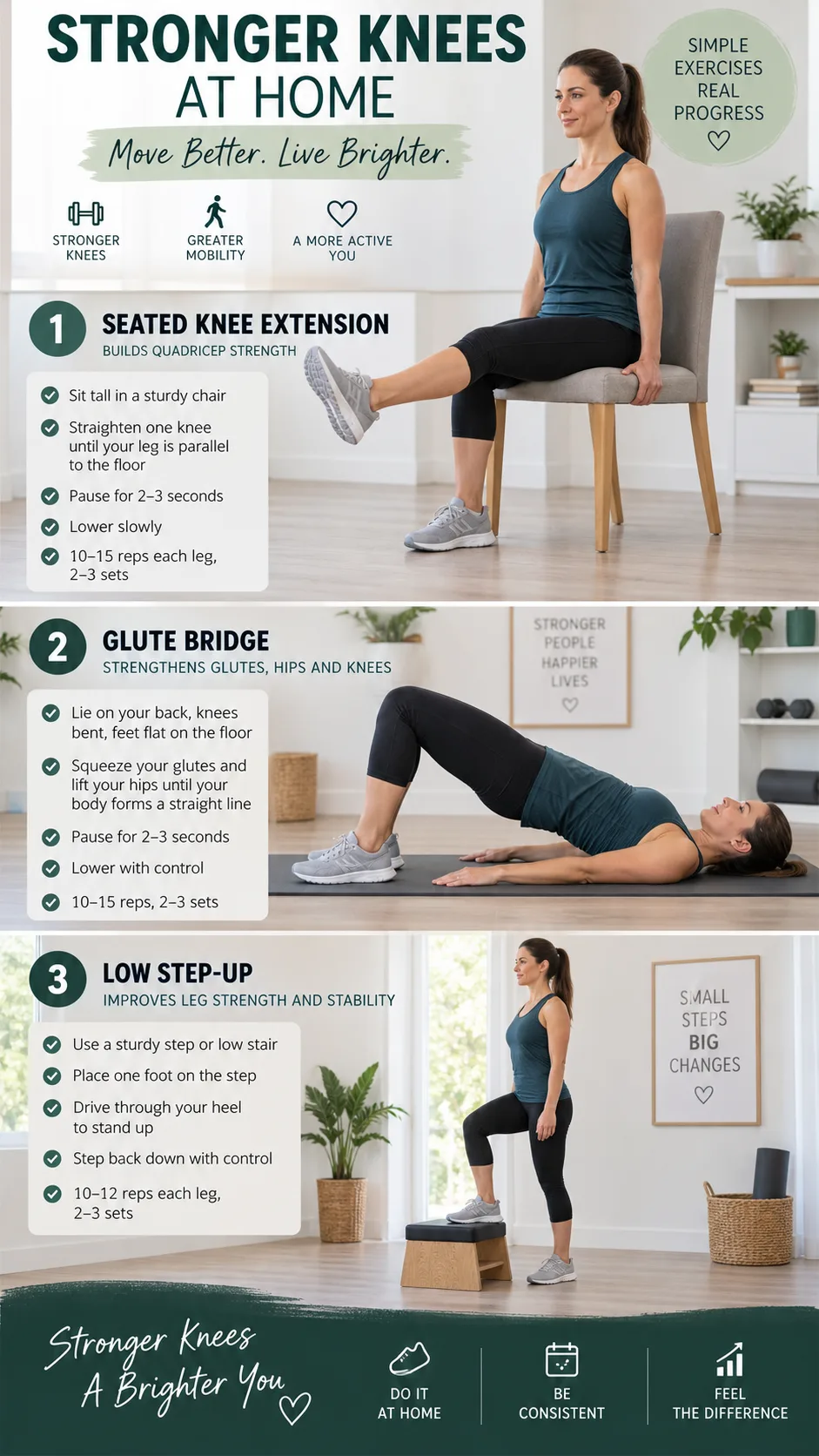
Seated knee extensions
Sit tall in a sturdy chair with both feet on the floor. Slowly straighten one knee until your leg nearly reaches full extension, tighten your thigh for two seconds, then lower with control. Do 8 to 12 reps on each side for 2 to 3 sets. -
Glute bridges
Lie on your back with bent knees and flat feet. Push through your heels, squeeze your glutes, and lift your hips until your body makes a gentle line from your shoulders to your knees. Do 10 to 15 reps for 2 to 3 sets. -
Supported sit-to-stands
Sit near the front of a chair and place your feet beneath your knees. Stand without letting your knees cave inward, then lower yourself slowly into the chair. Use your hands for support at first. Support beats a fall. -
Low step-ups
Use a low, sturdy step and hold a rail or wall when you need support. Step up with one foot, bring the other foot up, then step down slowly. Point your knee in the same direction as your middle toes. -
Calf raises
Stand near a counter for balance. Rise onto your toes, pause briefly, and lower slowly. Strong calves and ankles help you control stairs and reduce the force that travels up to your knee. -
Side-lying leg lifts
Lie on your side with your bottom knee bent and your top leg straight. Lift the top leg slightly behind your body, then lower it slowly. This exercise trains the side glutes that help keep your knee from falling inward.
The American Academy of Orthopaedic Surgeons knee conditioning program offers another exercise reference. Good form matters more than very high rep counts, especially when your knee already feels unstable.
How to make stairs hurt less while you build strength
You do not need to avoid stairs forever, but stop treating every flight as a fitness test. Make the climb easier while your muscles build strength.
- Hold the handrail, especially when your knee feels unreliable.
- Take one step at a time during a painful flare up.
- Lead with your stronger leg when climbing if one side hurts more.
- Lead with your sore leg when descending so your stronger leg controls the lowering.
- Place your whole foot on each step instead of balancing on your toes.
- Slow down and do not twist your body over a planted foot.
Watch your knee as you climb. Does it move inward toward your other leg? Keep it over your second or third toe, and use your hip muscles to hold that position.
Small changes in how you move can make a noticeable difference. You can also work on hip alignment if you notice lower back tightness or a forward pelvic tilt. This guide on anterior pelvic tilt correction exercises can help you identify related areas of weakness.
Build a weekly knee strength routine that you will do
A simple routine beats an ambitious plan that disappears after three days. Train the muscles that support your knees two or three times a week, with at least one rest day between harder sessions.
Your 20-minute starter plan
- Walk gently or march in place for 3 to 5 minutes.
- Complete seated knee extensions for 2 sets of 10 reps per side.
- Complete glute bridges for 2 sets of 12 reps.
- Complete sit-to-stands for 2 sets of 8 to 10 reps.
- Complete calf raises for 2 sets of 12 reps.
- Finish with easy quad, calf, and hip stretches.
After two to three weeks, add a few reps, choose a slightly lower chair, hold light weights, or use a taller step. Change one thing at a time. Give your knees a clear, manageable reason to adapt.
If you want more lower body strength over time, follow a balanced training plan instead of relying on endless cardio. This article on how women can gain muscle with smarter training explains why progressive resistance work helps build strong, capable legs.
Food, body weight, and recovery matter too
Exercise gives your knees a reason to grow stronger, while recovery gives your body what it needs to do that work. Eat enough protein throughout the day, include fruits and vegetables, drink water, and sleep as regularly as your schedule permits.
Extra body weight can increase the load on your knees during walking and stair climbing, so gradual weight loss may reduce symptoms for some people. Crash diets can also strip muscle and leave your knees with less support. That tradeoff does not make sense.
Calcium supports bone health, while protein helps you maintain muscle. You can find practical meal ideas in this list of Nigerian foods rich in calcium, but no single food can repair a knee injury by itself.
Supplements rarely take the place of training, sleep, medical care, and a decent diet. Talk with a clinician or pharmacist before taking pain medicine or supplements, especially if you have ulcers, kidney disease, high blood pressure, or take regular medication.
What to avoid when your knees hurt on stairs
Some habits make it harder for weak knees to improve. Do not push through sharp pain, jump straight into deep squats, or add long runs just because one good day left you feeling invincible.
Do not stop moving completely unless a clinician tells you to rest. Gentle activity often helps joints handle load better than total inactivity. The CDC explains the wider benefits of regular physical activity, including stronger muscles and better function.
Avoid unstable “miracle” exercises that make your knee wobble in every direction. Build control on solid ground first, then move on to harder exercises.
Stronger knees start with small, repeatable steps
Knees that crack, ache, or give out on stairs deserve attention, but they do not always call for fear. Strengthen your quads, glutes, calves, and balance. Use better stair technique. Increase exercise slowly.
Get professional help for swelling, locking, major instability, or pain that does not improve. Start with one short workout this week, use the handrail without embarrassment, and let each steady step build your confidence.