

I used to think home workouts were just what people did when they forgot to renew their gym membership. Then I tried the 3 2 1 workout method, and twelve weeks later, I genuinely could not believe the person staring back at me in the mirror.
No expensive equipment. No crowded locker rooms. No 45-minute commute to lift some metal. Just a simple, structured formula that changed the way I train.

What exactly is the 3 2 1 workout method?
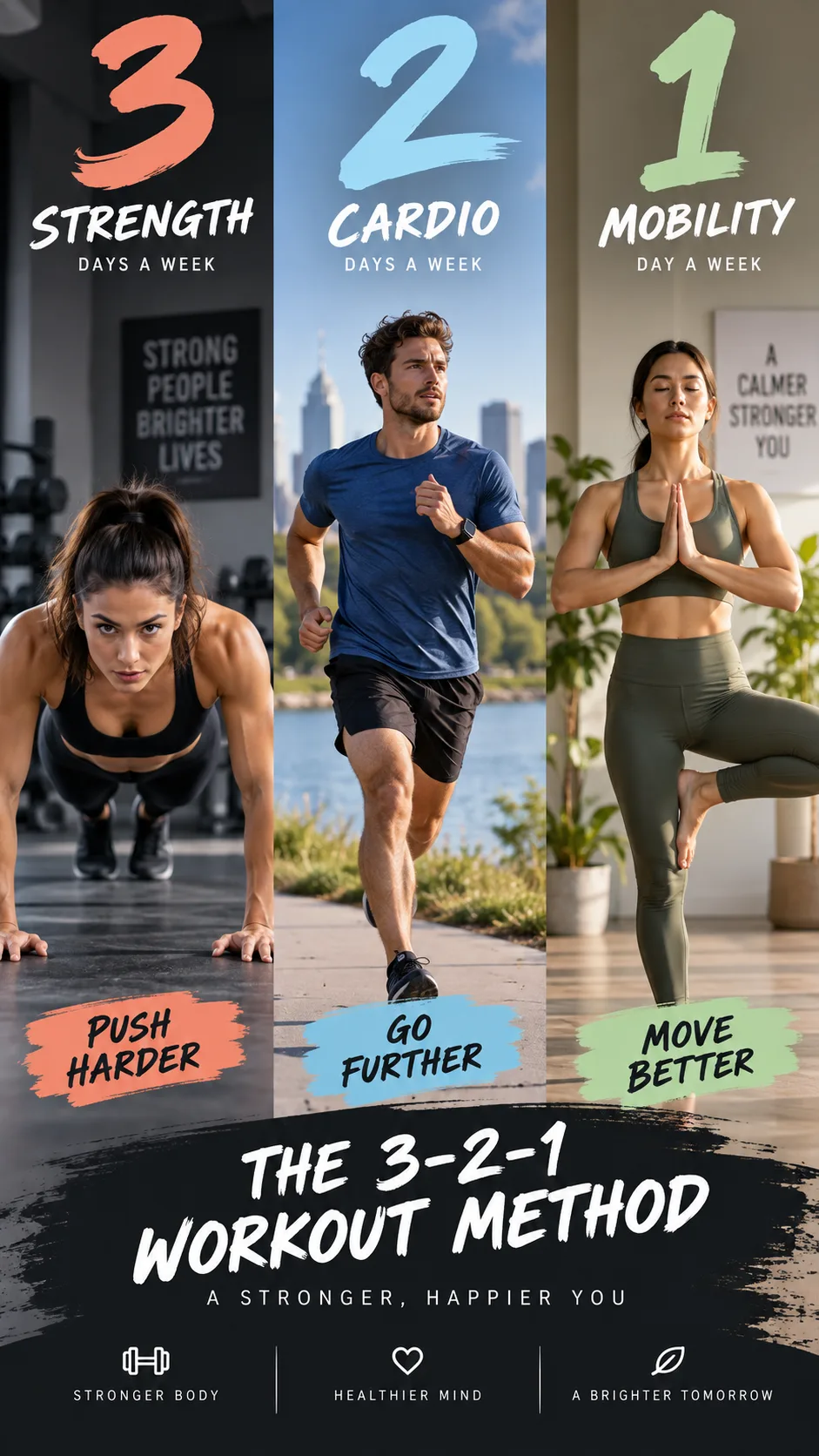
The 3 2 1 method is a structured weekly training split that balances three types of workouts in a specific ratio. It is not some random fitness trend someone invented on TikTok. The formula is simple and grounded in solid exercise science.
Here is the breakdown:
- 3 days of strength training to build muscle and raise your metabolism
- 2 days of cardio to burn fat and improve cardiovascular health
- 1 day of mind-body work such as yoga, stretching, Pilates, or mobility drills
That is six active days with one full rest day. The real power is not in any single session. It comes from how these three components work together across the week.
Why this method works (the science behind it)
Most workout plans fail because they push you hard on one thing, say pure cardio, while completely ignoring the other sides of fitness. The 3 2 1 workout fixes this by covering strength, endurance, and recovery inside one clean weekly structure.
The American College of Sports Medicine says adults need both aerobic and muscle-strengthening activities each week for optimal health outcomes. The 3 2 1 method covers both, automatically.
Strength training builds lean muscle, which raises your resting metabolic rate. Cardio sessions torch calories and strengthen your heart. The mind-body day is where recovery, flexibility, and injury prevention live. Skip it and you will regret it. I learned this the hard way in week four.
My honest 12-week experience with the 3 2 1 method
I started this plan on a Monday in January, because apparently I enjoy making dramatic life changes in cold weather. I had zero gym access, a yoga mat, a pair of resistance bands, and a terrible attitude about burpees.
By week three, something shifted. My energy stopped crashing at 3pm. By week six, I noticed my clothes fitting differently, not just looser, but better. By week twelve, I had lost 4kg, added visible definition to my arms and core, and my resting heart rate had dropped by 8 beats per minute.
The biggest win was not even physical. My sleep improved dramatically, and I stopped stress-eating at night because I actually felt good in my body for the first time in years. No gym machine gave me that.
How to structure your 3 2 1 week (sample schedule)
Here is a simple weekly layout you can start with right now:
- Monday, Strength: Upper body (push-ups, resistance band rows, tricep dips)
- Tuesday, Cardio: 30-minute brisk walk, jog, or HIIT session
- Wednesday, Strength: Lower body (squats, lunges, glute bridges)
- Thursday, Mind-Body: Yoga flow, stretching, or hip circles and mobility work
- Friday, Strength: Full body circuit
- Saturday, Cardio: Dance workout, cycling, or a longer outdoor session
- Sunday, Rest: Completely off. Eat something good. Watch something dumb. Recover.
This is not set in stone. Swap days around to suit your life, just protect the 3-2-1 ratio across the week.
The 3 strength days: what to actually do
Bodyweight strength (no equipment needed)
You do not need a gym to build real strength. Compound bodyweight movements recruit multiple muscle groups at once and drive serious results when you apply progressive overload, which means gradually making exercises harder over time.
Start with these foundational moves:
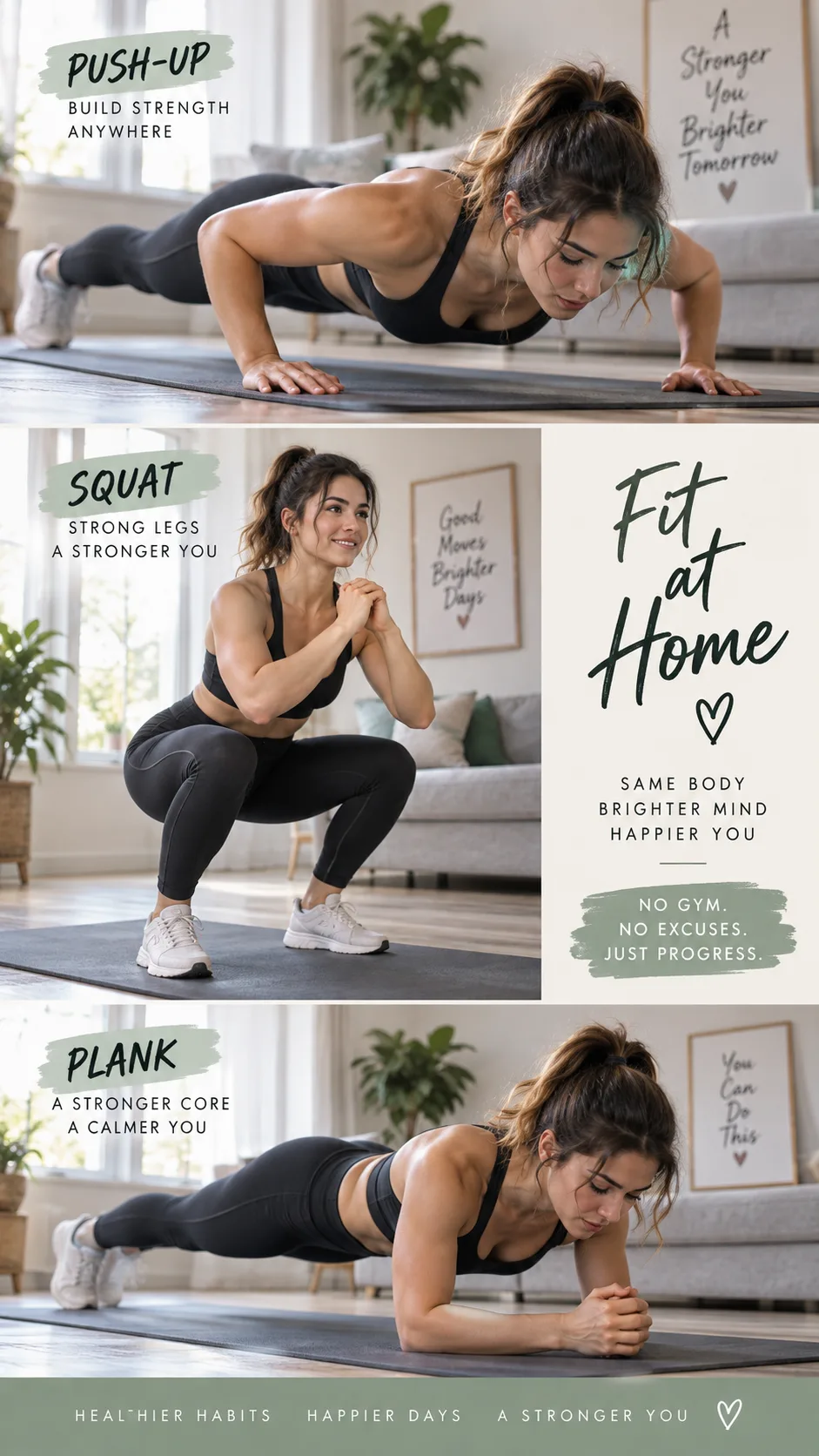
- Push-ups (modify on knees if needed)
- Bodyweight squats and jump squats
- Reverse lunges
- Glute bridges and single-leg variations
- Plank holds and plank shoulder taps
- Pike push-ups for shoulder strength
As you get stronger, increase reps, slow down the tempo, or add resistance bands. If you want a deeper framework for building lean muscle at home, check out this strength training guide for women, which pairs well with this method.
The 2 cardio days: keep it fun, keep it varied
The honest truth about cardio is that the best version is the kind you will actually do. Hate running? Do not run. Love dancing around your kitchen? That counts. Cycling, swimming, jump rope, HIIT videos on YouTube, all of it works.
Research from Healthline confirms that combining cardio with strength training produces better fat loss results than doing either one alone. That is the entire point of this method: you get both every single week.
Aim for 25 to 45 minutes per cardio session. Keep one session at moderate intensity (zone 2 cardio, where you can still hold a conversation) and one at higher intensity if your fitness allows. Alternating the intensity prevents burnout and keeps your body adapting.
The 1 mind-body day: do not skip this
I know this feels like the “boring” day. But skipping your mind-body session is the fastest way to pick up an injury that sidelines you for three weeks. I speak from experience.
This day reduces muscle soreness, improves joint mobility, and lowers cortisol, the stress hormone that works against fat loss. According to the Mayo Clinic, even a single yoga session can meaningfully reduce psychological stress and improve physical recovery.
Options for your mind-body day:
- 20 to 30 minute yoga flow
- Full-body static stretching routine
- Foam rolling and mobility drills
- Pilates core session
- Meditative walking
Fuelling the 3 2 1 method: you can’t out-train a bad diet
Your workouts build the structure, and your food choices fill it in. You do not need to eat perfectly, but you do need to eat intentionally. Protein at every meal is your best ally here, since it supports muscle repair and keeps you fuller for longer.
If you want a practical eating framework to run alongside this training plan, the Nigerian weight loss meal plan offers a genuinely solid starting point, especially if you prefer eating whole, local foods over imported “clean eating” trends.
Hydration matters too. Dehydration kills performance faster than almost anything else. Aim for at least 2 to 3 litres of water daily, and more on training days.
Watch this before you start (great visual breakdown)
Common mistakes to avoid with the 3 2 1 method
- Going too hard too fast. Week one should feel manageable. Build intensity gradually across the 12 weeks.
- Skipping the mind-body day. Recovery is not optional. That is where your results solidify.
- Ignoring progressive overload. If you do the same workout forever, your body adapts and stops changing. Make it harder every 2 to 3 weeks.
- Treating cardio as punishment. Pick activities you genuinely enjoy, or at least tolerate. Suffering is not the goal.
- Undervaluing sleep. Poor sleep tanks workout performance and spikes hunger hormones. Protect your 7 to 8 hours. This part is non-negotiable.
Who the 3 2 1 method is right for
This method works well for beginners and intermediate fitness levels who want structure without overwhelm. If you have been struggling to stay consistent, this ratio gives your week a clear framework. No more standing in your living room on Tuesday wondering what to do.
It also suits people with busy schedules who cannot commit to 90-minute daily sessions. Most of these workouts run 30 to 45 minutes, which fits into a real day. If you can find 35 minutes, you can run this plan.
Advanced athletes may need to scale up the intensity or volume within each session, but the 3 2 1 structure holds up at any fitness level.
What to expect week by week
- Weeks 1-2: Soreness, adjustment, and probably some grumbling. This is normal.
- Weeks 3-4: Energy improves, and movement starts feeling more natural.
- Weeks 5-8: Visible changes begin. Clothes fit differently. Sleep improves.
- Weeks 9-12: Strength gains become noticeable. Cardio feels easier. You start actually enjoying your workouts, which is surprising but true.
Final thoughts: is the 3 2 1 workout method worth it?
After twelve weeks, my honest verdict is yes, without hesitation. The 3 2 1 workout method works because it is balanced, sustainable, and flexible enough to fit real life. It does not demand perfection, just consistency.
You do not need a gym. You do not need fancy equipment. You do not need to suffer through workouts you hate every single day. You just need a plan worth sticking to, and this is that plan.
Start this Monday. Commit to twelve weeks. Check back in with yourself at the end. You might surprise yourself. I certainly did.