

So, you decided to drop bread, cut out sugar, and see how a high-fat diet feels. You probably feel eager and a bit nervous right now. Everyone talks about endless fat-burning energy, but nobody wants to choke down dry chicken breast and plain, raw spinach all week.
Good news: keto never needs to taste like cardboard. If you suffer through your first week, you did something wrong. During my first attempt years ago, I made the classic rookie error. I stripped out every carb without adding enough butter, oil, or salt. By day three, I stared blankly into my pantry, ready to fight my toaster for a slice of sourdough bread.
You can skip that headache. This guide lays out a straightforward plan for your first seven days. You will learn the biological shifts ahead, grab an easy grocery haul, and follow a 7-day meal plan that keeps you full and focused.
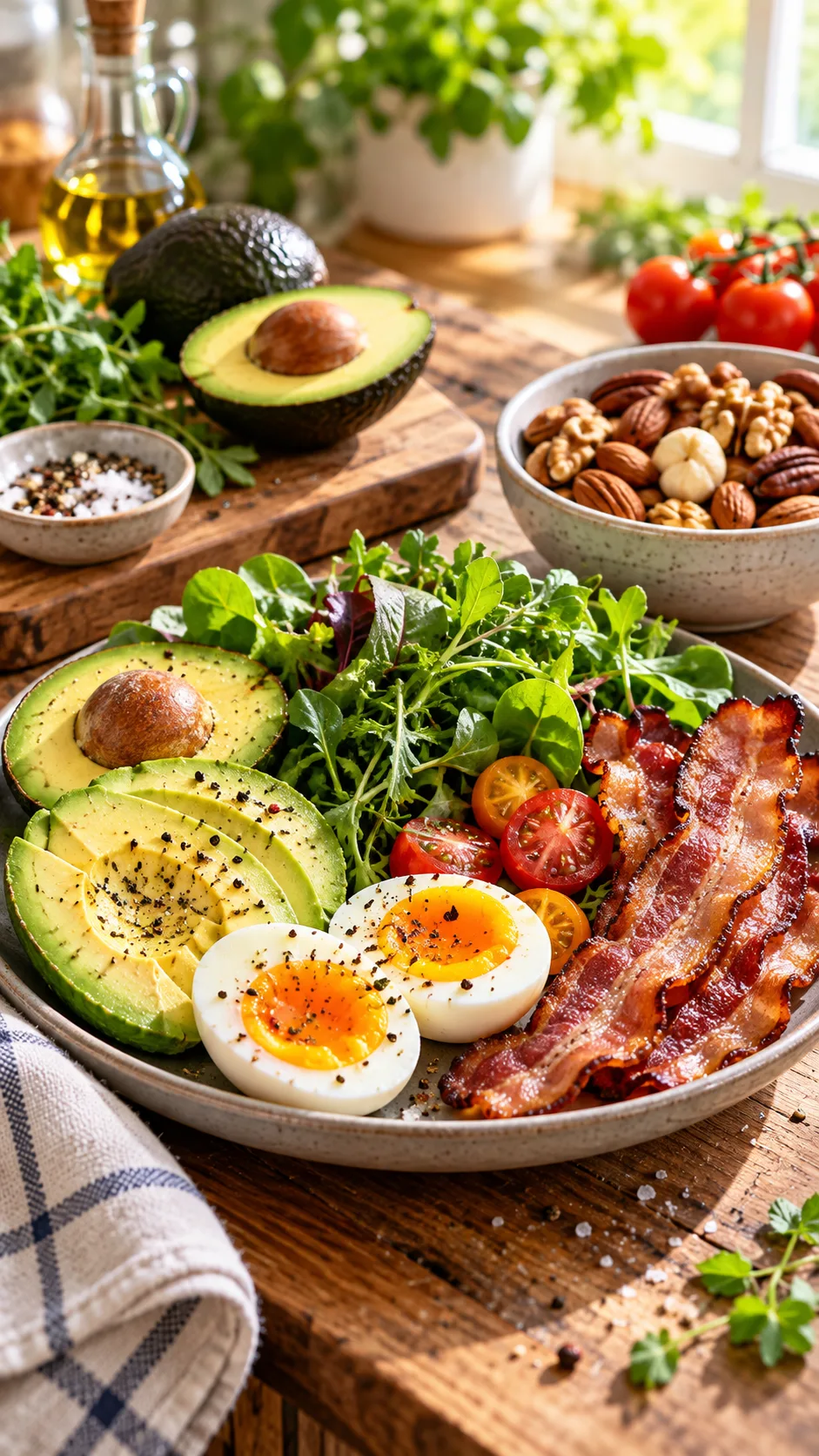
What happens to your body in week one?
Before you crack an egg, consider the biology. Your body operates like a dual-fuel engine. Most people run on glucose from carbohydrates their whole lives. When you eat bread, pasta, fruit, or sweets, your digestive tract converts those carbohydrates into blood glucose, and your pancreas releases insulin to manage it.
When you drop your net carbohydrate intake below 25 grams per day, you flip an internal switch. Your body burns through stored glucose (glycogen) in your liver and muscles within 24 to 48 hours. Once your system clears that reserve, it turns to another fuel source. Your liver begins breaking down dietary fats and stored body fat into fuel molecules called ketones.
The scale often drops fast in the first four days. Muscle tissue stores about three to four grams of water for every gram of glycogen. When you burn stored glycogen, you dump that water weight right along with it. Clinical research indexed by the National Institutes of Health confirms this rapid fluid loss during early carbohydrate restriction.
That initial drop is water rather than pure fat loss, but enjoy the win. Dropping water weight eases joint pressure, flattens a bloated stomach, and gives you quick momentum. If you want a deeper look at the underlying process before you cook, check out our guide on how to start a keto diet for beginners.
The basic rules to keep week one simple
Most people struggle during week one because they make simple things hard. They hunt down obscure sweeteners for complex baking recipes, or they starve on plain chicken. Skip the drama and stick to these four basics:
- Salt your food generously: Lower insulin levels signal your kidneys to release sodium quickly. If you skip salt, you invite headaches, sluggishness, and muscle cramps. Keep the salt shaker handy.
- Keep meals simple: Stick to an easy formula: pick one protein source, one low-carb vegetable, and a good cooking fat. You do not need fancy keto baked goods right now.
- Eat until you feel full: Do not track calories during week one. Your body needs time to adapt to a new fuel source. Slashing calories right now will make you miserable. Focus on keeping net carbs under 25 grams.
- Drink water with electrolytes: Drink plenty of water throughout the day, but do not chug plain tap water by the gallon. Guzzling plain water washes out your remaining minerals faster.
Solid prep makes all the difference. To dodge common traps that trip up new dieters, read our breakdown of the ketogenic diet plan beginners get wrong.
The zero-stress keto grocery list
Never walk into a grocery store without a written list. Supermarket aisles present endless carb-heavy temptations. Stick to the outer perimeter of the store and pick up these staples:
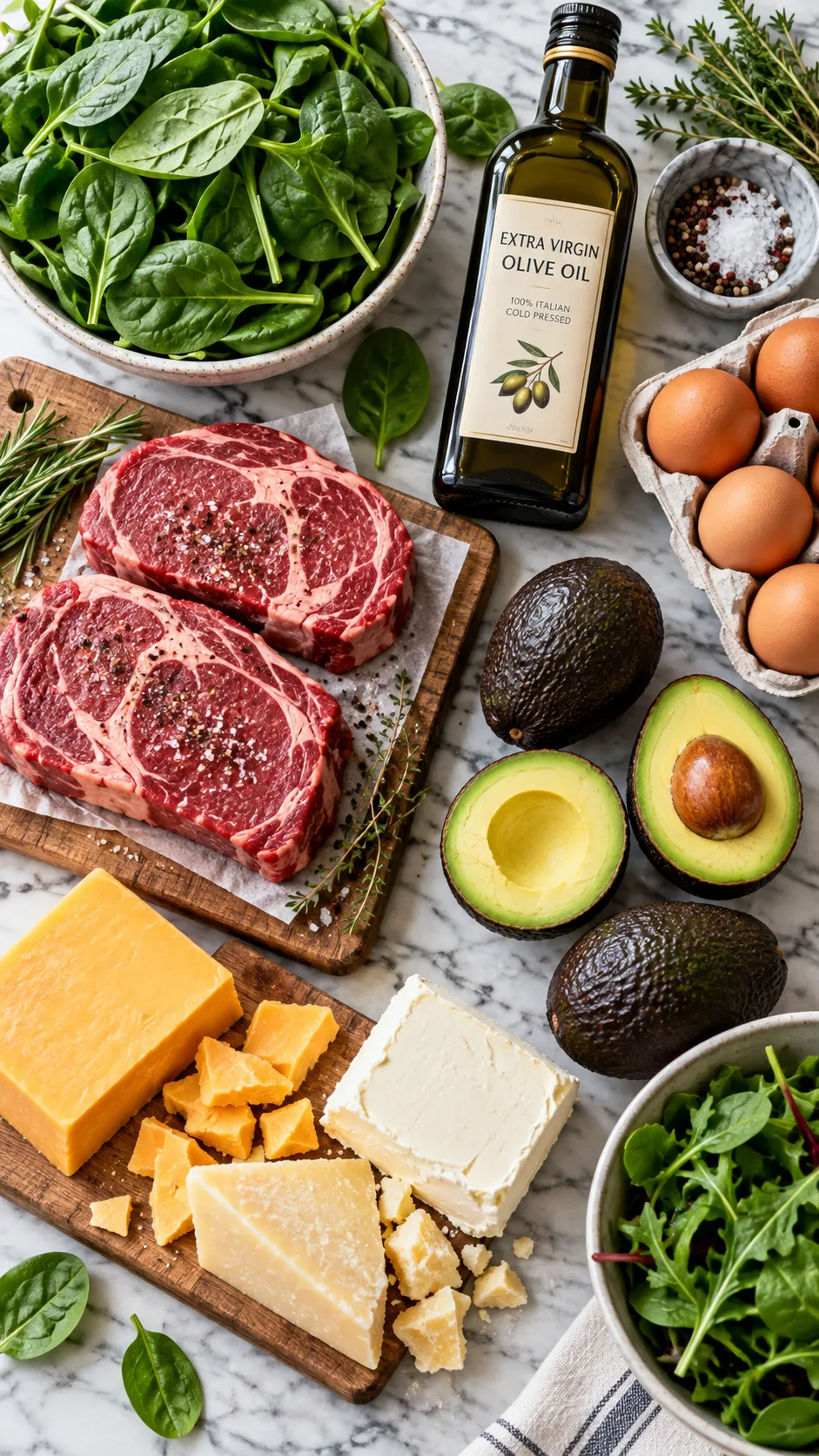
Proteins
- Large eggs (buy two or three cartons)
- Boneless, skin-on chicken thighs (chicken breasts get dry too fast)
- 80/20 or 85/15 ground beef
- Thick-cut bacon
- Salmon fillets or canned tuna in olive oil
- Pork chops or ribeye steaks
Fats and dairy
- Extra virgin olive oil and avocado oil
- Butter or grass-fed ghee
- Heavy whipping cream (for coffee and pan sauces)
- Block cheddar, gouda, or parmesan cheese (pre-shredded cheese uses potato starch to prevent sticking)
- Full-fat cream cheese
Low-carb produce
- Fresh baby spinach and mixed salad greens
- Broccoli florets and cauliflower heads (or frozen riced cauliflower)
- Zucchini
- Avocados (grab four or five)
- Fresh garlic and lemons
Pantry items and seasonings
- Coarse sea salt or pink salt
- Black pepper, garlic powder, onion powder, and smoked paprika
- Bone broth (beef or chicken)
- Unsweetened sparkling water
Your complete 7-day beginner keto meal plan
This plan relies on leftovers. Nobody wants to prepare three separate meals from scratch every day while adjusting to fewer carbs. Cook extra portions at dinner, pack them for lunch tomorrow, and save your energy.
For more prep tactics, browse our guide to easy keto meal prep for the week to build a smooth routine.
Day 1: The transition day
- Breakfast: Scramble three large eggs in a tablespoon of butter. Serve them with two strips of crispy bacon and half a salted avocado.
- Lunch: Turkey and bacon lettuce wraps. Wrap sliced deli turkey, crisp bacon, and cheddar inside romaine lettuce leaves with a spoonful of mayonnaise.
- Dinner: Pan-sear a salmon fillet in olive oil and garlic. Pair it with roasted asparagus tossed in parmesan cheese.
- Snack (Optional): A handful of salted macadamia nuts or pecans.
Day 2: Dialing in fats
- Breakfast: Make a two-egg omelet with baby spinach, sliced mushrooms, and cheddar cheese, cooked in butter.
- Lunch: Flake your leftover salmon over a bowl of mixed greens. Dress the salad with olive oil, lemon juice, and sea salt.
- Dinner: Cook two bunless ground beef patties. Top them with cheddar cheese, bacon, pickles, and mustard, and add a simple side salad.
- Snack (Optional): Celery sticks with full-fat cream cheese.
Day 3: Mid-week momentum
- Breakfast: Pour black coffee with a splash of heavy cream. Eat two hard-boiled eggs seasoned with sea salt and smoked paprika.
- Lunch: Reheat the leftover bacon cheeseburger patties and slice half an avocado on the side.
- Dinner: Roast skin-on chicken thighs with garlic herb butter. Serve them alongside steamed broccoli florets coated in melted butter.
- Snack (Optional): A piece of string cheese or a chunk of aged cheddar.
Day 4: Reaching ketosis
- Breakfast: Scramble three eggs in bacon fat with fresh spinach, then add a spoonful of sour cream.
- Lunch: Reheat the leftover garlic herb chicken thighs and steamed broccoli.
- Dinner: Toss zucchini noodles in a rich ground beef bolognese sauce made with low-sugar marinara, then top it with parmesan.
- Snack (Optional): Warm a mug of bone broth with an extra pinch of sea salt.

Day 5: Steady energy
- Breakfast: Fry two eggs in butter, mash half an avocado over them, and season with red pepper flakes and salt.
- Lunch: Warm up the leftover zucchini noodles and meat sauce.
- Dinner: Sear garlic butter steak bites in a cast-iron skillet. Serve them over cauliflower mash blended with cream cheese, butter, and garlic.
- Snack (Optional): A handful of roasted, salted almonds.
Day 6: The weekend menu
- Breakfast: Whisk two eggs with two ounces of softened cream cheese and cinnamon, then fry the batter in butter for simple keto pancakes.
- Lunch: Mix canned tuna with mayonnaise, diced celery, and salt, then spoon the tuna into romaine boats.
- Dinner: Pan-fry pork chops in butter. Serve them with green beans sautéed alongside garlic and crumbled bacon.
- Snack (Optional): Dip sliced cucumber rounds into sour cream seasoned with dried dill and salt.
Day 7: Getting ready for week two
- Breakfast: Bake a frittata using eggs, breakfast sausage, bell peppers, spinach, and cheddar cheese. Eat a slice today and store the rest for tomorrow.
- Lunch: Reheat the leftover pork chop and green beans.
- Dinner: Slice roast chicken over a salad with hard-boiled eggs, bacon, cheddar cubes, and ranch dressing.
- Snack (Optional): Warm a cup of bone broth with a pat of butter and salt.
Video guide: mastering your keto transition
Need a visual walkthrough to help you lock down the basic rules of keto nutrition? Watching experienced practitioners explain the daily routine can ease your initial transition anxieties. Check out this beginner-friendly breakdown:
How to avoid the keto flu
You probably heard warnings about the “keto flu.” People mention feeling dizzy, cranky, foggy, or nauseous around day three. The truth is simple: keto flu usually comes down to low electrolytes, not a required rite of passage.
When you shed water weight, your body loses three minerals: sodium, potassium, and magnesium. Guidelines from Diet Doctor’s medical team point to mineral replacement as the primary fix for early low-carb fatigue.
You can stay ahead of the issue with three daily habits:
- Drink salty bone broth: Sip one or two mugs of salted chicken or beef broth each afternoon. It restores sodium and calms your stomach quickly.
- Eat potassium-rich foods: Eat half an avocado every day and add spinach to your meals. Avocados offer plenty of potassium without the sugar found in bananas.
- Take magnesium before bed: Take 200 to 400 mg of magnesium glycinate in the evening. It supports your muscles, aids sleep, and stops nighttime leg cramps.
If you keep your sodium intake up during these first seven days, you will dodge most of the fatigue beginners report.

Three rookie mistakes to avoid
New dieters often trip up on clever food marketing. Watch out for these three pitfalls:
1. Leaning on processed snacks
Stores stock plenty of keto cookies, bars, and cereals. Brands fill these snacks with sweeteners like maltitol, corn fiber, and seed oils that can spike your blood sugar like standard treats. Eat whole, recognizable foods during your first month before you experiment with packaged items.
2. Avoiding dietary fat
Old nutritional habits make people shy away from butter, beef, and oils. When people cut carbs while also avoiding fat, they simply starve themselves. Fat serves as your main fuel source now. If you drop carbs without eating enough fat, hunger will drive you back to old habits by midweek.
3. Overlooking restaurant ingredients
Eating out during week one creates avoidable problems. Commercial kitchens thicken sauces with flour, use sugary marinades on meats, and blend pancake batter into omelets to make them fluffy. Cook your meals at home for these first seven days so you know what goes onto your plate.
Frequently asked questions
Can I drink coffee on keto?
Yes. Black coffee contains zero net carbs. You can add one or two tablespoons of heavy cream or unsweetened almond milk. Skip cow milk because lactose adds carbs quickly.
Do I need ketone test strips?
Save your cash. Urine strips lose accuracy within a few weeks as your body learns to burn ketones rather than pass them in urine. Pay attention to how you feel instead. Notice whether your appetite drops, your head clears, or your morning energy picks up.
What if I do not feel hungry at lunch?
Skip the meal if you do not want it. Ketones naturally reduce ghrelin, your primary hunger hormone. If a hearty breakfast keeps you satisfied until late afternoon, wait until your appetite returns before you eat again.
Take it one meal at a time
Shifting away from sugar and starch requires a little patience, consistent meals, and plenty of salt. Do not obsess over tiny mistakes. If you eat a sauce with hidden sugar, do not give up and order pizza. Drink a glass of water and stick to your plan at the next meal.
Clear out the snacks you do not need, pick up your groceries, cook some eggs and bacon tomorrow morning, and let your body adjust. You have what you need to get started.