Yes, you can keep your nasi, your sambal, and your tempe. You don’t need to swap them for sad salads and a lonely boiled chicken breast. You just need a smarter plate.
I’ve watched plenty of people try to “eat clean” by dumping Indonesian food entirely. Three weeks later, they stand in front of a gorengan cart at 4 p.m. with zero shame. Why? They traded joy for willpower, and willpower always loses to the smell of fried tempe.
This Indonesian diet meal plan works the opposite way. It keeps the flavors you love and fixes the ratios. Below you’ll find the principles, a full 7-day plan, swaps for your favorite dishes, and the mistakes that quietly wreck progress.
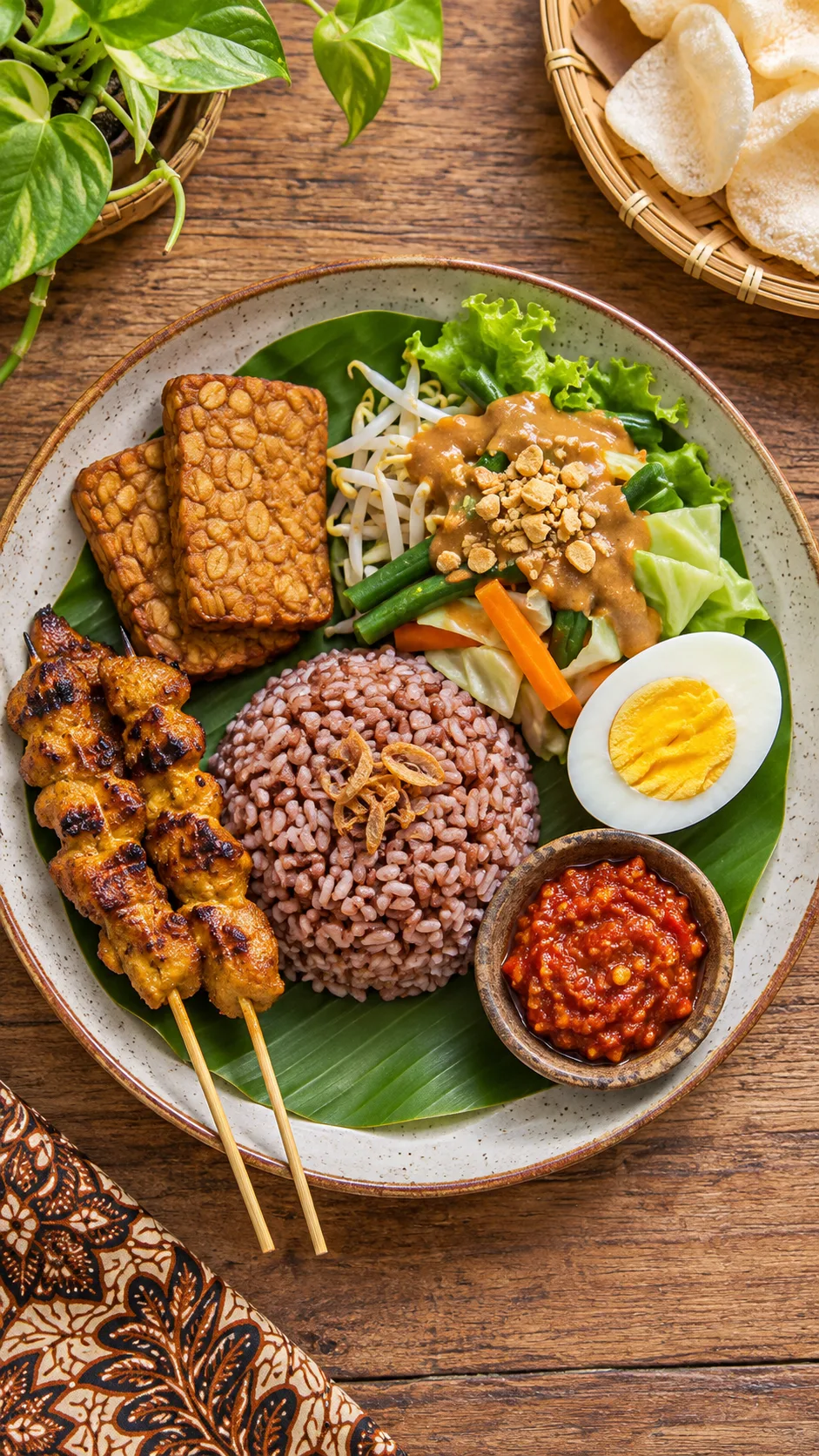
Why Indonesian food can work for weight loss
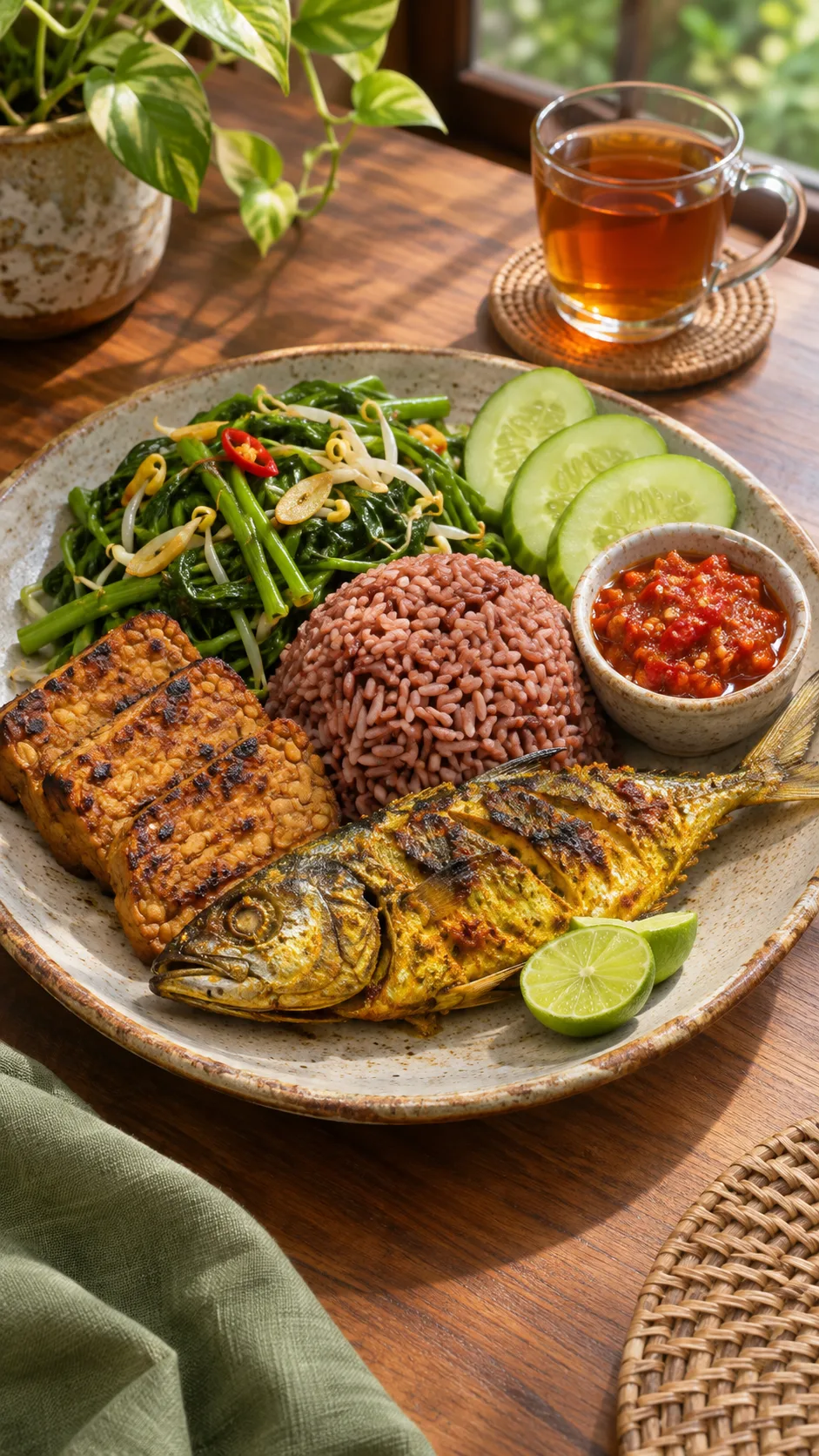
Traditional Indonesian cooking already has a lot going for it. Fermented soy (tempe), fish, eggs, leafy greens, and spices turn up in everyday meals. Those foods give you protein, fiber, and flavor, and together they keep hunger quiet.
The trouble starts with proportions. A typical warung plate piles on rice, adds a little protein, and drowns everything in oil or coconut milk. Vegetables barely appear. That’s the part we fix.
The real culprits (it’s not rice)
People blame rice for everything. IMO, that’s lazy thinking. Rice isn’t the villain; the mountain of it is. A cup of cooked white rice has roughly 200 calories, but most restaurant servings run closer to two cups.
Other repeat offenders include:
- Deep-fried food. Gorengan, ayam goreng, and fried tofu soak up oil fast.
- Sweet drinks. Es teh manis, kopi susu gula aren, and bottled sweet tea add calories without you noticing.
- Dishes heavy with coconut milk. They taste great, but they pack saturated fat and calories.
- Tiny vegetable portions. A few cucumber slices don’t count. Sorry.
The 5 rules behind this meal plan
Learn these rules before you cook anything. They matter more than any single recipe.
- Protein first. Aim for a palm-sized portion of tempe, tofu, fish, egg, or chicken at every meal. Protein keeps you full longer than carbs alone, and Harvard’s Nutrition Source treats it as a central part of a healthy plate.
- Fill half your plate with vegetables. Kangkung, bayam, labu siam, tauge, and buncis all count. Indonesia’s own Isi Piringku guidelines from the Ministry of Health push the same idea.
- Shrink the rice, don’t ban it. Start with about ¾ cup cooked. Swap in brown or red rice when you can, because the extra fiber slows digestion.
- Grill, steam, boil, or pepes. Save deep-frying for a once-a-week treat.
- Drink unsweetened. Water, plain tea, or black coffee do the job. Treat sweet drinks like dessert.
Notice what’s missing? The plan forbids no foods. You can eat what you love under these rules, and that’s why people stick with them.
How many calories do you need?
Most adults who want to lose weight steadily land between 1,500 and 1,800 calories a day. Your height, activity level, age, and sex all shift that number. The sample plan below sits around 1,600 calories, which is a reasonable starting point.
Need a different target? Try our simple 1500 calorie meal plan if you’re smaller or less active. If you move a lot, the 1700 calorie meal plan gives you more room to eat.
FYI, if you have diabetes or kidney problems, or you’re pregnant, talk to a doctor or registered dietitian before you change how you eat. The World Health Organization’s healthy diet guidance also gives a solid baseline for salt, sugar, and fat limits.
The 7-day Indonesian diet meal plan
Treat the portions as approximate, and adjust them up or down based on your hunger and goals. Each day lists one snack option or two, so pick whichever sounds good.
Day 1: Easy start
- Breakfast: Telur dadar (2 eggs) with tomato and shallots, ½ cup red rice, and a cucumber side.
- Lunch: Gado-gado with extra tempe, a boiled egg, and half a lontong. Ask for the peanut sauce on the side.
- Dinner: Pepes ikan, sayur asem, and ¾ cup rice.
- Snack: A banana or a handful of roasted peanuts.
Day 2: Comfort food, smarter
- Breakfast: Bubur ayam with extra shredded chicken, an extra egg, and a light hand with the kerupuk (two pieces, not ten).
- Lunch: Soto ayam (clear broth version) with a boiled egg and ½ cup rice.
- Dinner: Tumis kangkung, tahu bacem, and grilled tempe.
- Snack: Plain yogurt with sliced papaya.
Day 3: Grill night
- Breakfast: Oatmeal with banana and cinnamon, plus a boiled egg on the side.
- Lunch: Nasi campur, built your way: ¾ cup rice, grilled chicken, urap, tempe orek, and sambal.
- Dinner: Ayam bakar with lalapan (raw vegetables), tofu, and sambal terasi.
- Snack: A pear or an orange.
Day 4: Vegetables up front
- Breakfast: Tempe orek with a fried egg (use a teaspoon of oil) and a tomato.
- Lunch: Pecel with tempe, long beans, spinach, and half a portion of rice.
- Dinner: Sayur lodeh with light coconut milk, plus grilled chicken breast.
- Snack: Steamed corn or boiled sweet potato.
Day 5: Fried rice, fixed
- Breakfast: Scrambled eggs with tumis tauge and a slice of whole-grain toast.
- Lunch: Homemade nasi goreng. Use 1 cup cooked rice, 2 eggs, loads of vegetables, and one teaspoon of oil.
- Dinner: Pepes tahu, sup sayur (clear vegetable soup), and a small portion of rice.
- Snack: Cucumber slices with a little sambal, plus a hard-boiled egg.
Day 6: Satay day
- Breakfast: Lontong sayur with tofu and egg, and a light pour of coconut gravy.
- Lunch: Sate ayam (8 to 10 sticks) with lontong and a cucumber and onion side.
- Dinner: Ikan bakar, urap, and ¾ cup rice.
- Snack: A small handful of almonds or kacang rebus.
Day 7: Flex day
- Breakfast: Your favorite Sunday breakfast, with one rule: add a protein and a vegetable.
- Lunch: A small portion of rendang (about 2 or 3 pieces) with ¾ cup rice and a big plate of daun singkong or green beans.
- Dinner: A light soup, like sop ayam bening, with tempe.
- Snack: A small piece of kue you love. Skip the guilt.
Want to watch balanced Indonesian cooking in action? This video makes a good companion while you plan your week.
Smart swaps for your favorite Indonesian foods
This is where the plan earns its keep. You keep the dishes you crave and change how you build and portion them.
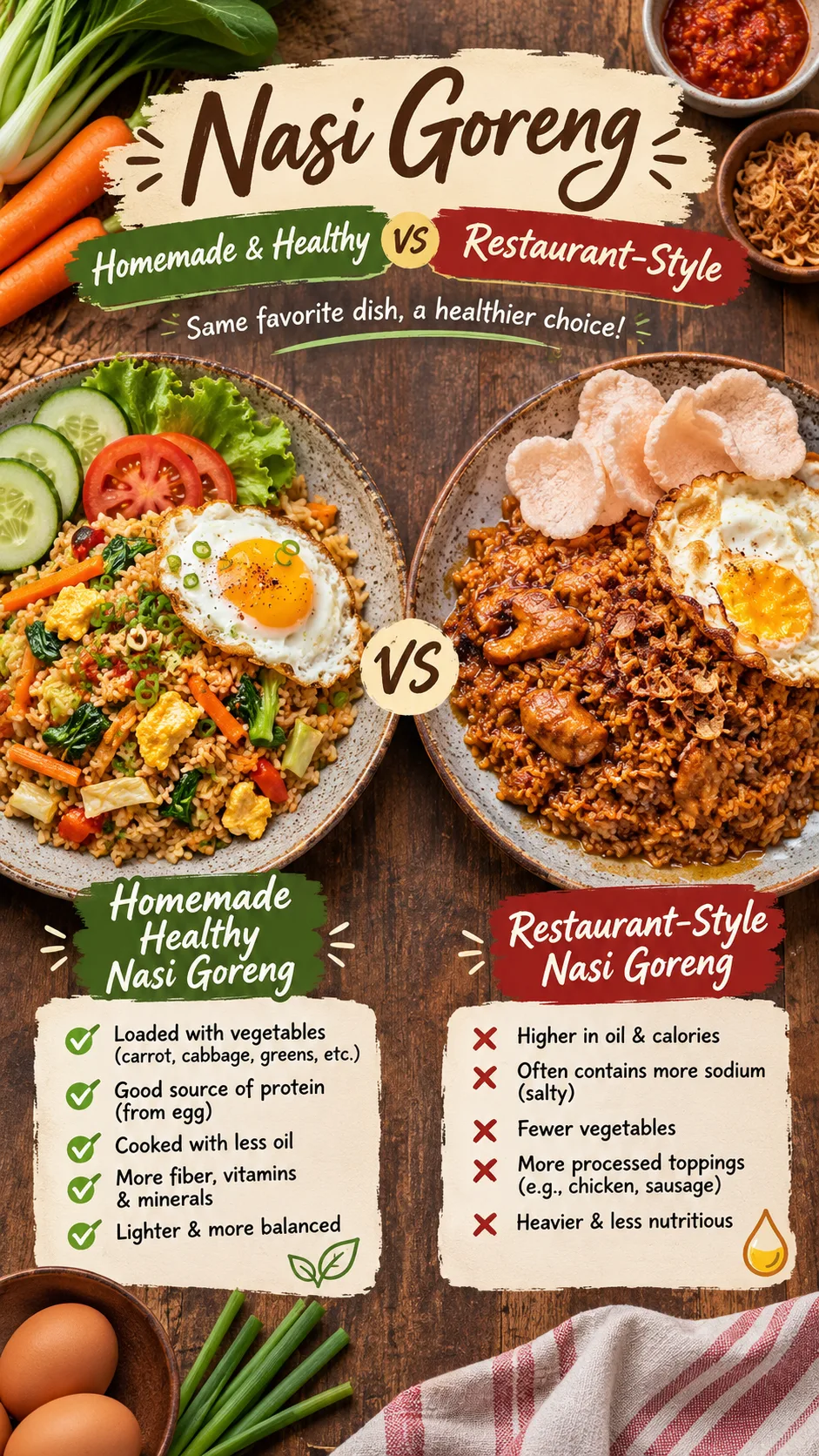
Nasi goreng
Restaurant nasi goreng often swims in oil and sweet soy sauce. At home, cook with one teaspoon of oil, double the vegetables, and add an extra egg. Cold day-old rice works best, so cook a batch the night before.
Rendang
Rendang is rich and dense. Treat it as a flavor accent, not the entire meal. Take two or three pieces, then fill the plate with sayur and a modest scoop of rice.
Gorengan
Gorengan is the 4 p.m. nemesis, and pretending it doesn’t exist won’t help. Pick one or two pieces, eat them slowly, and pair them with cucumber or fruit. You can also make tempe and tahu in an air fryer at home, which saves a surprising amount of oil.
Sambal
Good news: sambal stays. A spoonful of homemade sambal adds big flavor for few calories. Watch the store-bought versions, since some carry a lot of oil and sugar. Check the label.
Kopi susu and es teh manis
Sugary drinks sneak in hundreds of calories without filling you up. Try cutting the sugar in half for a week, then half again. Your taste buds adapt faster than you think. Does your coffee really need five pumps of gula aren? Be honest with yourself.
Why this plan keeps you full
Ever wonder why some diets leave you starving by 10 a.m.? Usually they skimp on protein and fiber. This plan loads both.
The logic is simple:
- Protein slows hunger signals. Tempe delivers a lot of it, with around 18 to 20 grams per 100 grams according to USDA FoodData Central.
- Fiber adds bulk and slows digestion. Vegetables, red rice, beans, and fruit all help.
- Volume matters. Clear soups like sayur bening and sop fill your stomach for very few calories.
- Flavor keeps you satisfied. Spices, herbs, lime, and sambal make plain food taste like real food.
My own experience backs this up. When I cut my rice in half but doubled the vegetables, I felt fuller, not hungrier. The first two days felt weird. By day four, I stopped noticing.
Shopping list on a budget
Indonesian ingredients cost less than most “diet foods,” which is a nice bonus. At the pasar or supermarket, buy:
- Proteins: eggs, tempe, tahu, skinless chicken breast or thigh, mackerel, tilapia, and teri.
- Carbs: brown or red rice, sweet potatoes, corn, and lontong.
- Vegetables: kangkung, bayam, sawi, tauge, buncis, labu siam, wortel, tomato, and cucumber.
- Flavor builders: shallots, garlic, chilies, lime, ginger, lemongrass, and a small amount of kecap manis.
- Snacks: bananas, papaya, peanuts, plain yogurt, and boiled eggs.
Prefer to eat fewer carbs on some days? Our 7-day low carb meal plan shows how to stack protein and vegetables without feeling deprived. Borrow ideas from it and swap in Indonesian flavors.
Meal prep tips for busy weeks
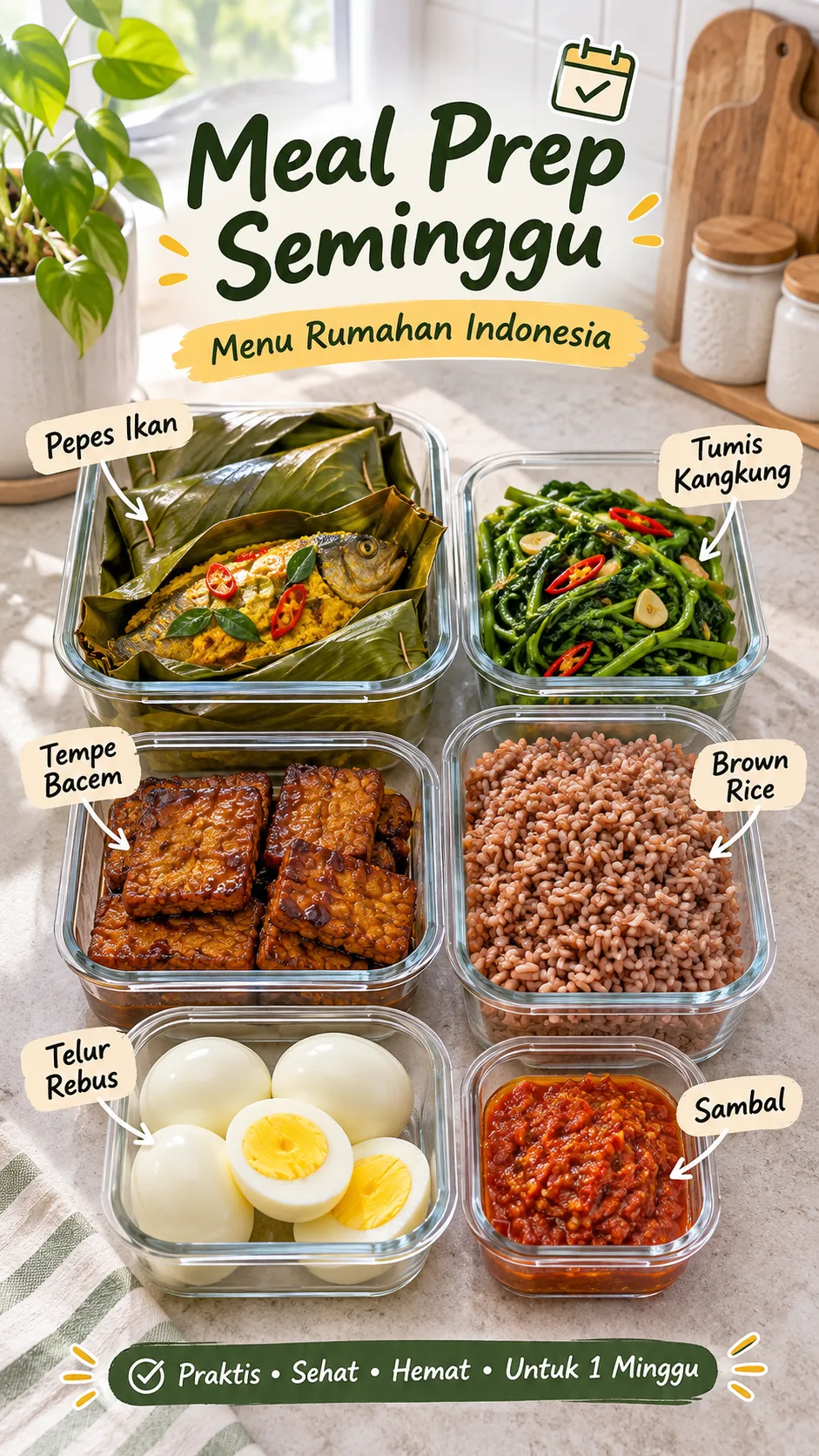
Meal prep doesn’t need a fancy kitchen. A little Sunday effort saves your weekday sanity.
- Cook a big batch of rice and portion it into ¾-cup servings. Freeze the extras.
- Make sambal once and store it in a clean jar in the fridge for the week.
- Boil a dozen eggs for breakfasts and snacks.
- Bake or air-fry tempe and tahu in bulk. They reheat well.
- Wash and chop vegetables ahead of time, so a quick tumis takes ten minutes, not thirty.
Common mistakes that stall progress
Even a good plan fails when small habits creep in. Watch for these.
Eating “healthy” fried food all day
Fried tempe is still fried. It tastes great, and the calories still add up. Rotate your cooking methods instead of leaning on the fryer.
Skipping breakfast, then overeating later
If you skip breakfast and feel fine, great. But if you crash by 11 a.m. and raid the office snack drawer, eat a protein-rich morning meal. Your body doesn’t care about diet trends; it cares whether you feel satisfied.
Ignoring portion sizes at warung and restaurants
You can’t eyeball a warung plate and trust it. Ask for less rice, order extra vegetables, and request sauces on the side. Most vendors say yes without a second thought.
Changing everything too fast
If you overhaul everything on Monday, the plan usually collapses by Thursday. Change one meal at a time. Start with breakfast, then lunch, then dinner. Slow progress still counts as progress.
How to handle eating out and family gatherings
Indonesian social life revolves around food, so you need a strategy. Skip the “I’ll start Monday” trap and use these moves:
- Eat a small protein snack beforehand, like a boiled egg, so you don’t arrive starving.
- Take protein and vegetables first, then add rice.
- Pick one indulgence (maybe the rendang, maybe the kue) and enjoy it fully.
- Say “no thanks” politely to the third helping. Your aunt will survive.
During Ramadan, break your fast with water, dates, and a balanced meal before the sweet treats. Eat protein and vegetables at sahur, too, so you stay full through the day.
What about exercise?
Food does most of the weight loss work, but movement helps you hold on to muscle and feel better. Walk 30 minutes a day and add two short strength sessions a week. That’s all. You don’t need a gym membership to start; bodyweight squats and push-ups at home count.
If building strength matters more to you, pair this approach with higher-protein portions and a bit more total food. Everyone’s needs differ, so adjust slowly and track how you feel.
Frequently asked questions
Can I lose weight eating rice every day?
Yes. Weight loss depends on your overall calorie intake and food quality, not on banning one food. Keep the portion moderate and build the rest of the plate around protein and vegetables.
Is tempe really better than meat?
It isn’t “better,” but it’s a good option. Tempe gives you protein, fiber, and the benefits of fermented food at a low price. Mix it with fish, eggs, and chicken for variety.
How fast will I see results?
Most people aim for around 0.25 to 0.5 kg per week. Faster loss often means muscle loss and burnout. Stay patient and check your progress every two to three weeks, not every morning.
Do I need to count calories?
Not necessarily. The plate method (half vegetables, a quarter protein, a quarter carbs) works well on its own. Counting helps if you plateau or want more precision.
Eat like you, with a better plate
This Indonesian diet meal plan doesn’t ask you to abandon your culture, your family recipes, or your love of sambal. It asks you to rebalance. Eat more protein and more vegetables, shrink the rice portions, drink fewer sugary drinks, and fry less. That’s the whole plan.
Start small. Pick one meal this week, rebuild the plate, and notice how you feel at 3 p.m. Then repeat. If you can enjoy tempe, sayur, and a spoon of sambal on a Tuesday, you can keep this up for the long haul.
So what’s your first swap going to be?