

Morning you wants breakfast. Morning you does not want to chop vegetables, scrub pans, or make big decisions before coffee.
Meal prepping eggs for the week fixes that in about 30 minutes. Cook once, fill your fridge with protein-rich breakfasts, and grab something filling before work, school, or the frantic school-run sprint.
I lean on egg meal prep whenever I have a packed week ahead. A ready-to-eat egg breakfast feels wonderfully convenient when everyone else at the office starts negotiating with a sad vending-machine muffin.
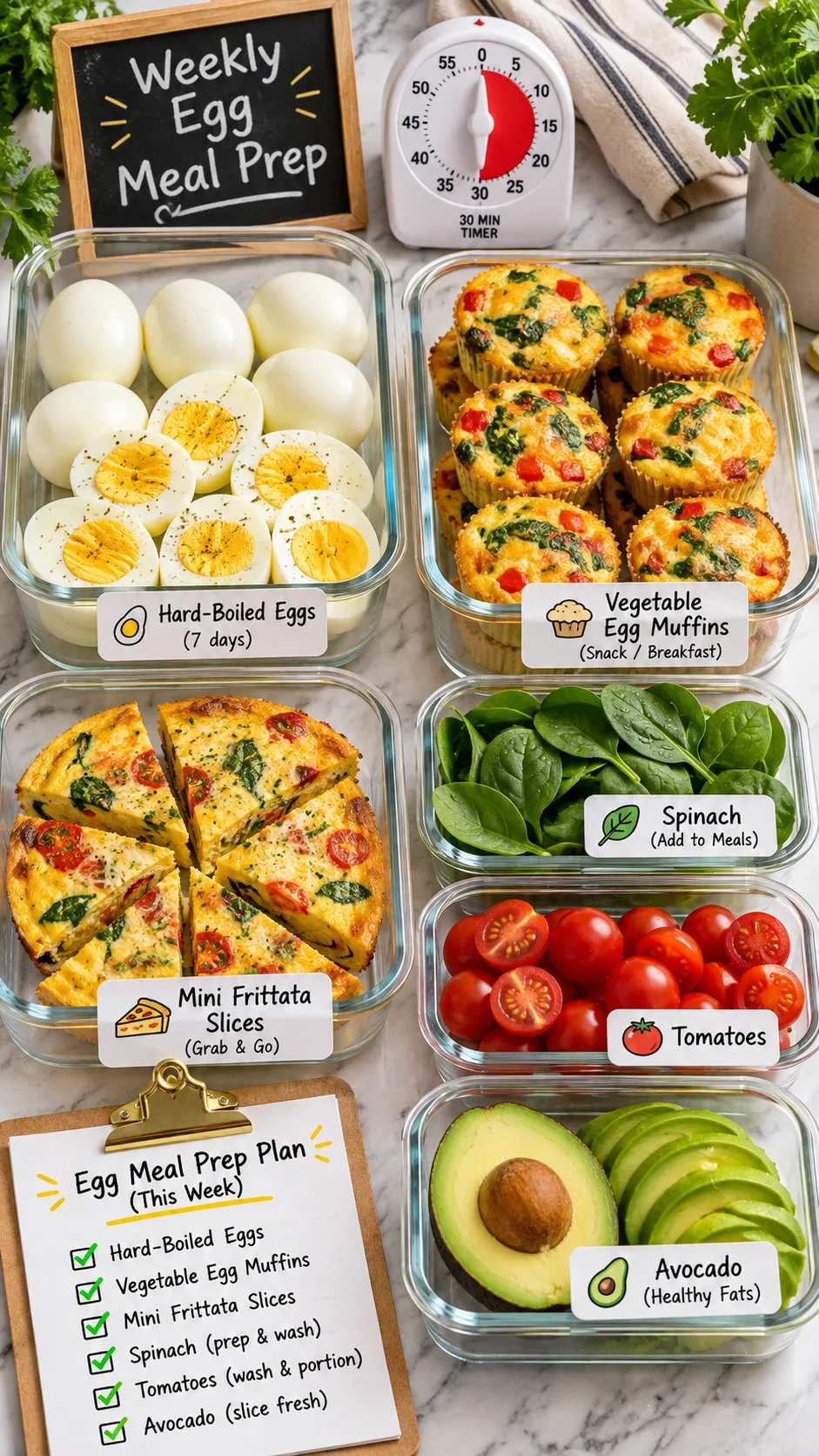
Why meal prep eggs for breakfast?
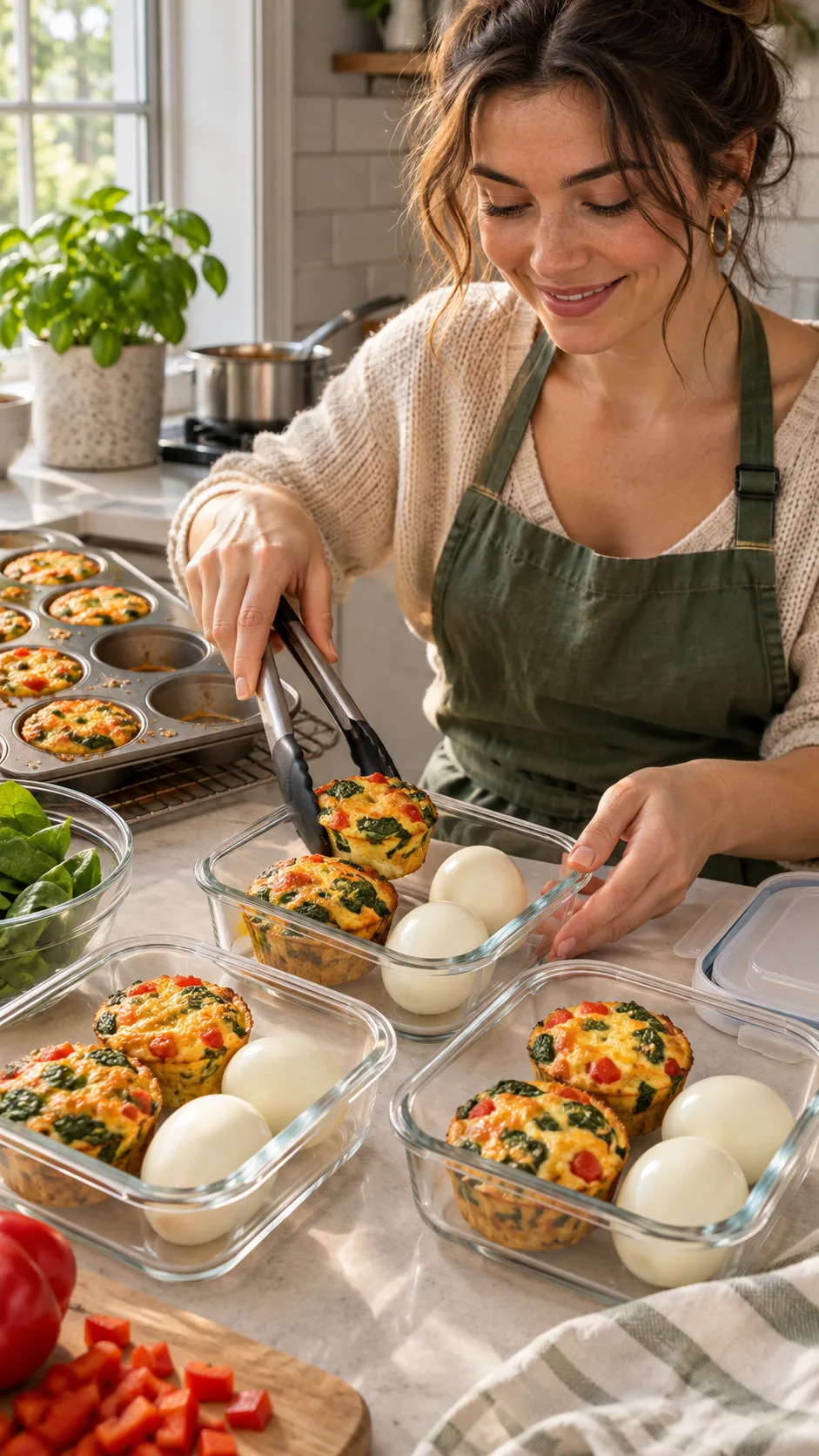
Eggs offer a quick, flexible source of protein, and you can pair them with almost any flavors you enjoy. Boil them, bake them into muffins, scramble them, tuck them into wraps, or build a loaded breakfast bowl around them.
One large egg contains about 6 grams of protein along with choline, vitamin B12, selenium, and vitamin D. Protein can help breakfast keep you full longer, which may head off the midmorning “I need a snack right now” feeling.
Does every breakfast need to resemble a fitness influencer’s plate? No. Make something you enjoy, store it safely, and choose a routine you can keep doing.
- You save time: One prep session covers several rushed weekday breakfasts.
- You save money: Eggs usually cost less than buying breakfast on weekday mornings.
- You control ingredients: You decide on the salt, vegetables, sauces, and portions.
- You waste less food: Use leftover vegetables, herbs, cheese, or cooked meat.
- You stay flexible: Turn a boiled egg into a snack, salad topping, sandwich filling, or breakfast plate.
If you want filling ideas beyond breakfast, check out this guide to healthy diet food that keeps you full. Eggs fit easily into a realistic eating plan because they do not require perfection or a private chef.
The 30 minute egg meal prep plan
You can make several egg breakfasts in one session without turning your kitchen into a cooking-show set. Cook two types of eggs at once: hard-boiled eggs for quick meals and baked egg muffins when you want some variety.
Set out your containers before you start. That small habit keeps the process moving and prevents a familiar meal-prep problem: you finish cooking, then realize you own one container with a missing lid.
What you need
- 12 large eggs
- 1 teaspoon salt, divided
- 1/2 teaspoon black pepper
- 1 teaspoon olive oil or cooking spray
- 1 cup chopped vegetables, such as spinach, bell pepper, onions, mushrooms, or tomatoes
- 1/2 cup shredded cheese, optional
- Optional extras: cooked turkey, chicken, bacon, herbs, chili flakes, salsa, or feta
- A saucepan, muffin tin, mixing bowl, and 4 to 6 airtight containers
Your 30 minute timeline
- Minute 0: Heat your oven to 375°F (190°C). Fill a saucepan with enough water to cover six eggs.
- Minute 2: Put the saucepan over high heat. Grease your muffin tin while the water heats.
- Minute 5: Crack six eggs into a bowl. Add salt, pepper, vegetables, and cheese, then whisk everything well.
- Minute 8: Lower the other six eggs into the boiling water. Cook them for 10 to 12 minutes if you like firm yolks.
- Minute 10: Pour the egg mixture into the muffin cups. Fill each cup about three-quarters full.
- Minute 12: Bake the egg muffins for 16 to 18 minutes, until their centers look set.
- Minute 20: Transfer the boiled eggs to a bowl of cold water. Let them cool while the muffins finish baking.
- Minute 28: Take out the egg muffins. Let them cool for a few minutes, then divide everything among your containers.
You now have six hard-boiled eggs and about six to eight egg muffins for the week.
Pro tip: Chop your vegetables while the water heats. That overlap saves time and keeps the prep session calm.
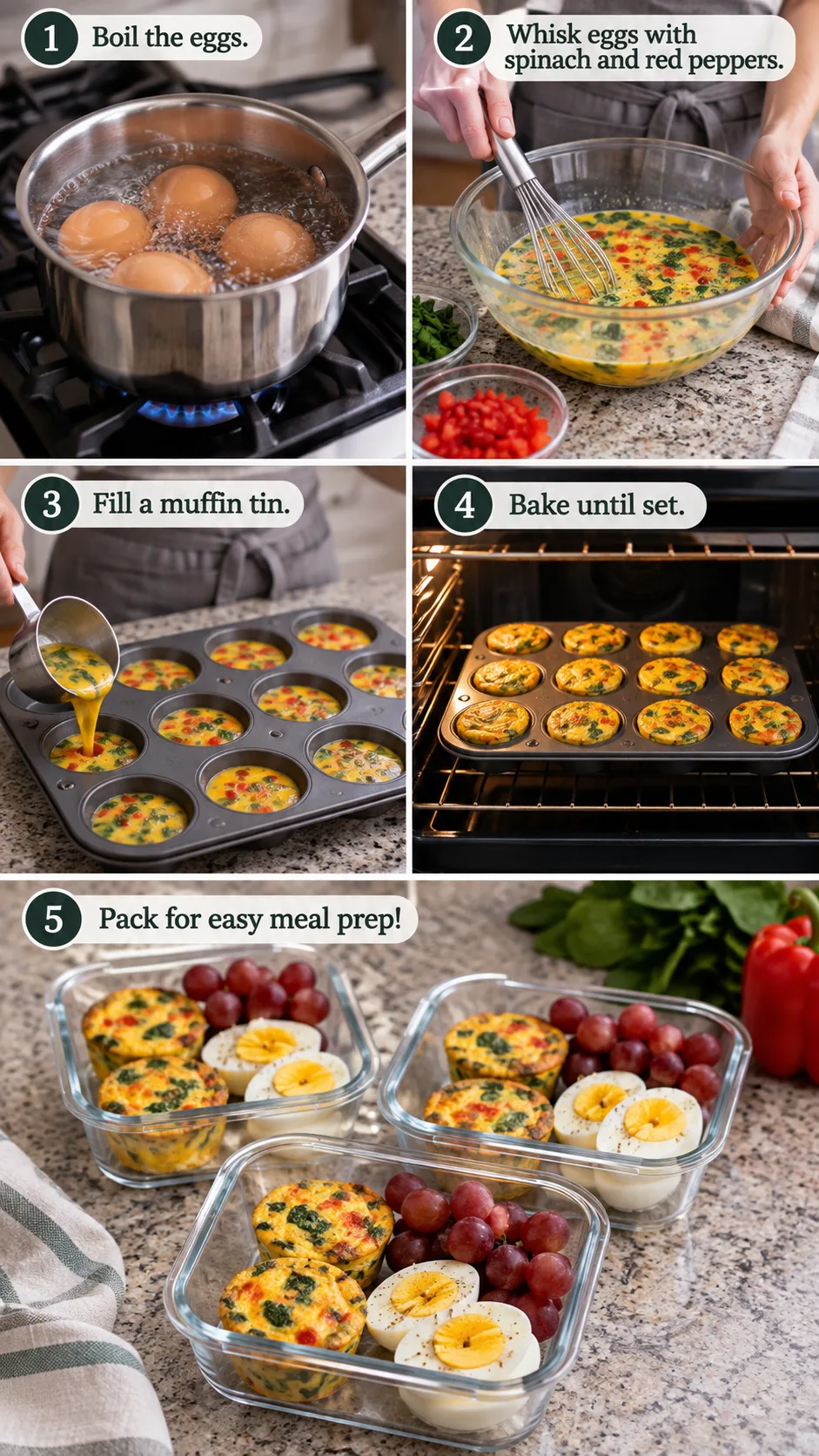
How to make perfect hard-boiled eggs for meal prep
Hard-boiled eggs give you one of the simplest meal-prep wins. Eat them with salt and pepper, slice them over toast, mash them into egg salad, or pair them with fruit for a quick breakfast.
Use eggs that have sat in your fridge for a few days when you can. Older eggs often peel more easily than very fresh ones, though one stubborn shell may still keep you humble.
Reliable stovetop method
- Arrange the eggs in one layer in a saucepan.
- Cover the eggs with cold water by about one inch.
- Bring the water to a full boil over high heat.
- Turn off the heat, cover the pan, and let the eggs sit for 10 to 12 minutes.
- Transfer the eggs to ice water or very cold water for at least 5 minutes.
- Keep the shells on until you want to eat the eggs.
The cold-water bath stops the cooking and helps the shells come away more cleanly. It also helps prevent the gray-green ring around the yolk. That ring will not hurt you, but it can make the egg look like an alien artifact.
Keep hard-boiled eggs in the refrigerator and eat them within one week. The USDA egg safety guidance advises refrigerating cooked eggs, so put them away instead of leaving them on the counter until later.
Should you peel eggs before storing them?
I usually keep hard-boiled eggs in their shells. The shell protects the egg and helps it stay fresh.
Peel them ahead only if rushed mornings tend to win. Put peeled eggs in an airtight container, keep them cold, and eat them within a few days for the best texture.
You can pack a tiny container of everything-bagel seasoning, chili crisp, or hot sauce too. Small changes help breakfast feel less repetitive by Thursday.
Easy baked egg muffins that reheat well
Egg muffins resemble mini crustless quiches. They put vegetables and protein into a handheld breakfast that reheats in less than a minute.
Start with the basic recipe, then switch up the mix-ins each week. A little variety can stop you from opening the fridge on day four and sighing at the same egg situation.
Base egg muffin recipe
Whisk six eggs with 1/4 teaspoon salt, black pepper, and one tablespoon of milk or water. Stir in one cup of chopped vegetables and up to 1/2 cup of cheese, then divide the mixture among six to eight greased muffin cups.
Bake at 375°F (190°C) for 16 to 18 minutes. The centers should look firm, and a knife should come out clean.
Let the muffins cool before you close them in containers. Hot food creates condensation, and condensation leaves your breakfast soggy. Nobody plans ahead for soggy eggs.
Five egg muffin flavor ideas
- Garden veggie: Spinach, red bell pepper, onion, feta, and oregano.
- Southwest: Corn, black beans, jalapeño, cheddar, and salsa on the side.
- Turkey and cheese: Cooked turkey sausage, spinach, cheddar, and black pepper.
- Mediterranean: Tomato, olives, spinach, feta, and dried basil.
- Spicy mushroom: Mushrooms, scallions, mozzarella, chili flakes, and garlic powder.
Cook vegetables that give off a lot of water before you add them. Mushrooms, zucchini, and frozen spinach can leave egg muffins wet unless you sauté them and drain off the extra liquid.
Want a more filling breakfast? Eat two egg muffins with roasted potatoes, whole-grain toast, fruit, or beans. Let your appetite, activity level, and goals shape your portion instead of following a random internet rule.
How long do meal prep eggs last in the fridge?
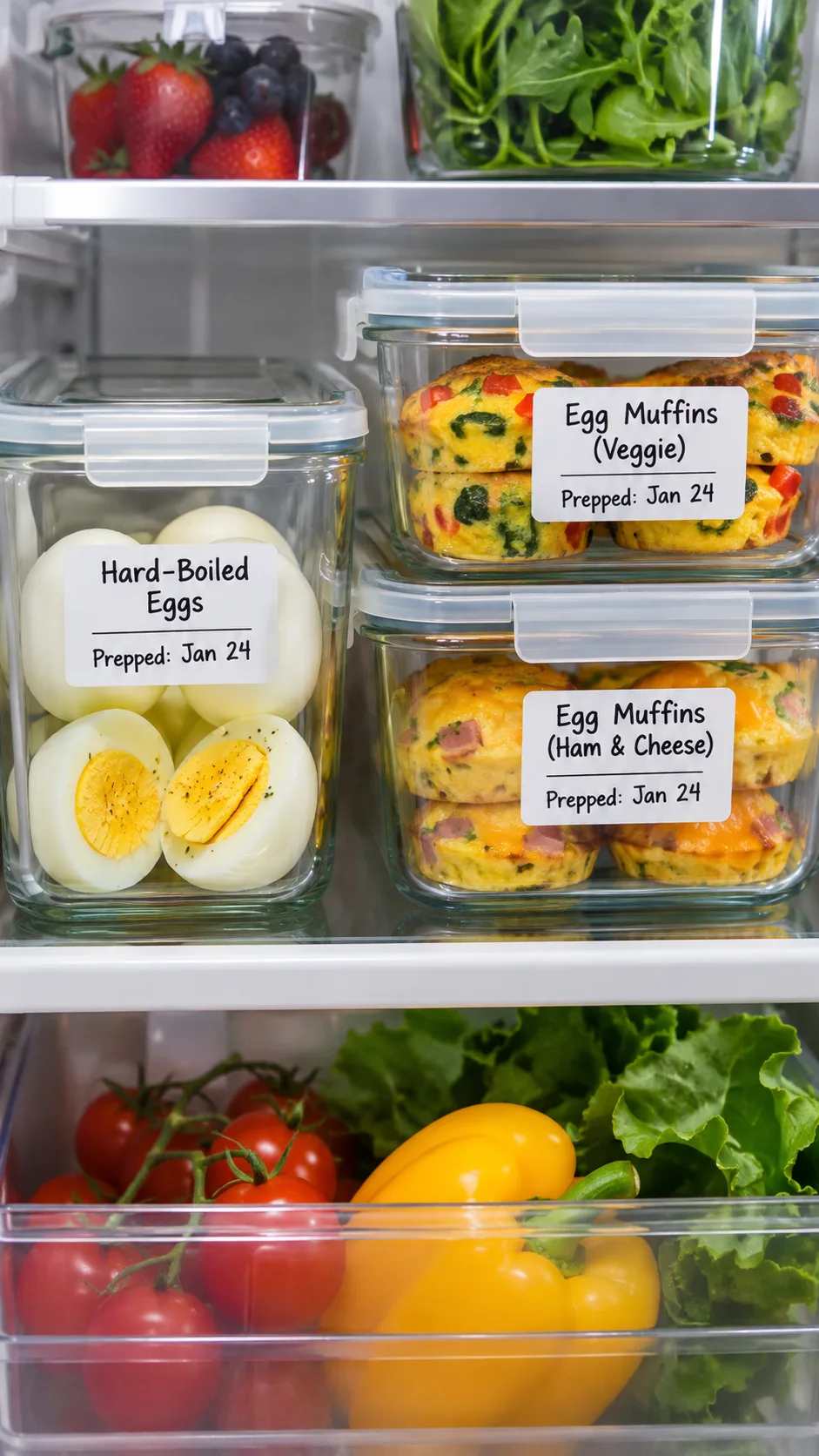
Food safety matters more than a perfect row of Instagram containers. Keep your refrigerator at 40°F (4°C) or below, chill cooked food promptly, and label containers with the prep date.
- Hard-boiled eggs in shells: Eat within 7 days.
- Peeled hard-boiled eggs: Eat within 3 to 4 days for the best quality.
- Egg muffins, frittata slices, and scrambled egg dishes: Eat within 3 to 4 days.
- Frozen egg muffins: Use within 2 to 3 months for the best taste and texture.
The FoodSafety.gov cold storage chart gives useful guidance for leftovers and egg dishes. If you notice an odd smell, a slimy texture, or an unusual color, throw the food away.
Do not taste questionable eggs to investigate them. Your senses can help, but they cannot detect every foodborne germ. Follow the date label and look after your future self.
How to cool and store eggs safely
Put cooked egg dishes in the fridge within two hours. When the room feels very hot, cut that time to one hour.
Use shallow containers so the food cools more quickly. Store containers toward the back of the fridge, where temperatures stay more consistent than they do in the door.
The FDA safe food handling advice tells you to keep cold foods cold and avoid cross-contamination. Wash your hands, clean your prep surface, and keep raw egg residue away from cooked food.
Best ways to reheat meal prep eggs
Eggs need gentle reheating because too much heat can make them rubbery. Use short bursts, then stop when the food feels hot rather than volcanic.
For egg muffins, put one or two muffins on a microwave-safe plate. Loosely cover them with a damp paper towel, microwave for 30 seconds, then add 10-second bursts if needed.
For scrambled eggs or frittata, microwave in 30-second bursts and stir between rounds when you can. A small splash of water can help the eggs hold onto moisture.
Do not microwave hard-boiled eggs in their shells. Steam can build up inside and turn breakfast into a tiny kitchen explosion, which creates far more work than breakfast deserves.
Eat your eggs cold when time gets tight
Cold eggs can work very well. Slice hard-boiled eggs over a salad, tuck egg muffins into a whole-grain pita, or eat them with crunchy vegetables and hummus.
Make a quick egg breakfast box with two boiled eggs, apple slices, cherry tomatoes, cheese, and crackers. That balanced grab-and-go meal beats skipping breakfast and feeling hangry by 10 a.m.
Five make-ahead egg breakfast ideas for the week
Use your prepared eggs in different meals instead of eating the same plate every day. A few sauces and sides can turn one prep session into several distinct breakfasts.
- Egg and avocado toast: Add sliced hard-boiled egg, mashed avocado, chili flakes, and lemon to whole-grain toast.
- Protein breakfast box: Pack two hard-boiled eggs, fruit, cheese, nuts, and whole-grain crackers.
- Egg muffin wrap: Put two warm egg muffins in a tortilla with spinach and salsa.
- Quick egg salad: Mash two boiled eggs with Greek yogurt, mustard, pepper, and chopped celery, then serve on toast.
- Breakfast grain bowl: Add chopped egg muffins to cooked brown rice or quinoa with greens, roasted vegetables, and hot sauce.
If you eat fewer carbs, serve eggs with avocado, sautéed greens, and cheese instead of bread or grains. This practical guide to a ketogenic diet plan for beginners can help you make low-carb meals without making food boring.
If you want heart-conscious choices, pair eggs with vegetables, beans, oats, fruit, and whole grains more often. The American Heart Association shares information on eggs and heart-healthy eating, including why your overall eating pattern matters.
Common egg meal prep mistakes to avoid
Egg meal prep stays easy when you avoid a few common mistakes. People usually run into trouble because they make too much food, store it poorly, or choose flavors they do not enjoy.
You prep seven days of egg muffins
Egg dishes you cook usually taste best during the first three or four days. Make enough egg muffins for Monday through Thursday, then freeze extra portions or rely on hard-boiled eggs later in the week.
Start small if meal prep feels new. Four breakfasts you eat will beat ten breakfasts that slowly turn into fridge decor.
You skip seasoning
Eggs need seasoning. Salt, pepper, garlic powder, smoked paprika, herbs, salsa, mustard, pesto, and hot sauce can change plain eggs fast.
Season eggs lightly while you cook, then add stronger flavors when you eat. That method keeps every meal from tasting the same.
You add too much watery produce
Raw tomatoes, zucchini, mushrooms, and frozen spinach release moisture while they cook. Sauté them first, drain them well, and let them cool before you mix them into eggs.
Drier vegetables make firmer egg muffins and better leftovers. That small step can turn “meal prep I look forward to” into something much more appealing than “why is my breakfast wet?”
You forget a backup breakfast
Keep a few hard-boiled eggs in the fridge even when you make muffins or frittata. They can save busy mornings, missed grocery trips, and weeks when your meal plan vanishes by Tuesday.
A backup plan does not mean you lack discipline. It means you know real life likes surprises.
How to freeze egg muffins for longer storage
Freezing works best for baked egg muffins, mini frittatas, and breakfast burritos. Hard-boiled eggs do not freeze well because their whites become tough and watery after thawing.
- Let egg muffins cool completely after baking.
- Set them on a tray and freeze them for about one hour.
- Move the frozen muffins to a freezer-safe bag or airtight container.
- Write the date and flavor on the container.
- Reheat one muffin at a time in the microwave, starting with 45 seconds.
Freeze portions for busy weeks, travel days, or mornings when you cannot face another takeaway breakfast. For more batch-cooking ideas, see this guide to freezer meal prep done right.
Your simple egg meal prep shopping list
Keep this basic list on your phone, and you can put together a week of breakfasts without overthinking it. Swap ingredients based on your budget, the season, and your own taste.
- 1 dozen eggs
- Leafy greens, such as spinach or kale
- Two colorful vegetables, such as peppers, mushrooms, onions, or tomatoes
- Cheese or feta, optional
- Whole-grain bread, wraps, potatoes, or cooked grains
- Fruit for easy sides
- Avocado, hummus, salsa, or yogurt for flavor and texture
- Airtight containers and freezer bags
Buy ingredients you already enjoy. Meal prep should make life easier, not force you to eat kale because someone online claimed kale fixes everything.
Make breakfast easier starting this week
Meal prepping eggs for the week gives you quick, affordable, protein-rich breakfasts with very little weekday work. Boil a batch of eggs, bake a tray of egg muffins, label your containers, and thank yourself each morning.
Follow safe storage times, choose vegetables that keep their texture, and vary your seasonings so breakfast stays interesting. You do not need a perfect plan. You need one that still works when Monday gets loud.
Set a 30-minute timer, crack those eggs, and give next-week you a delicious head start.