

You don’t need a villa in Greece to eat like you live in one. You need olive oil, a few cans of beans, and a plan that doesn’t make you cry over a spreadsheet.
This beginner Mediterranean meal plan gives you seven days of simple, tasty meals, a short grocery list, and prep tricks that save your weeknights. I’ve cooked this way for years, and I’ll tell you where I stumbled so you can skip those parts.
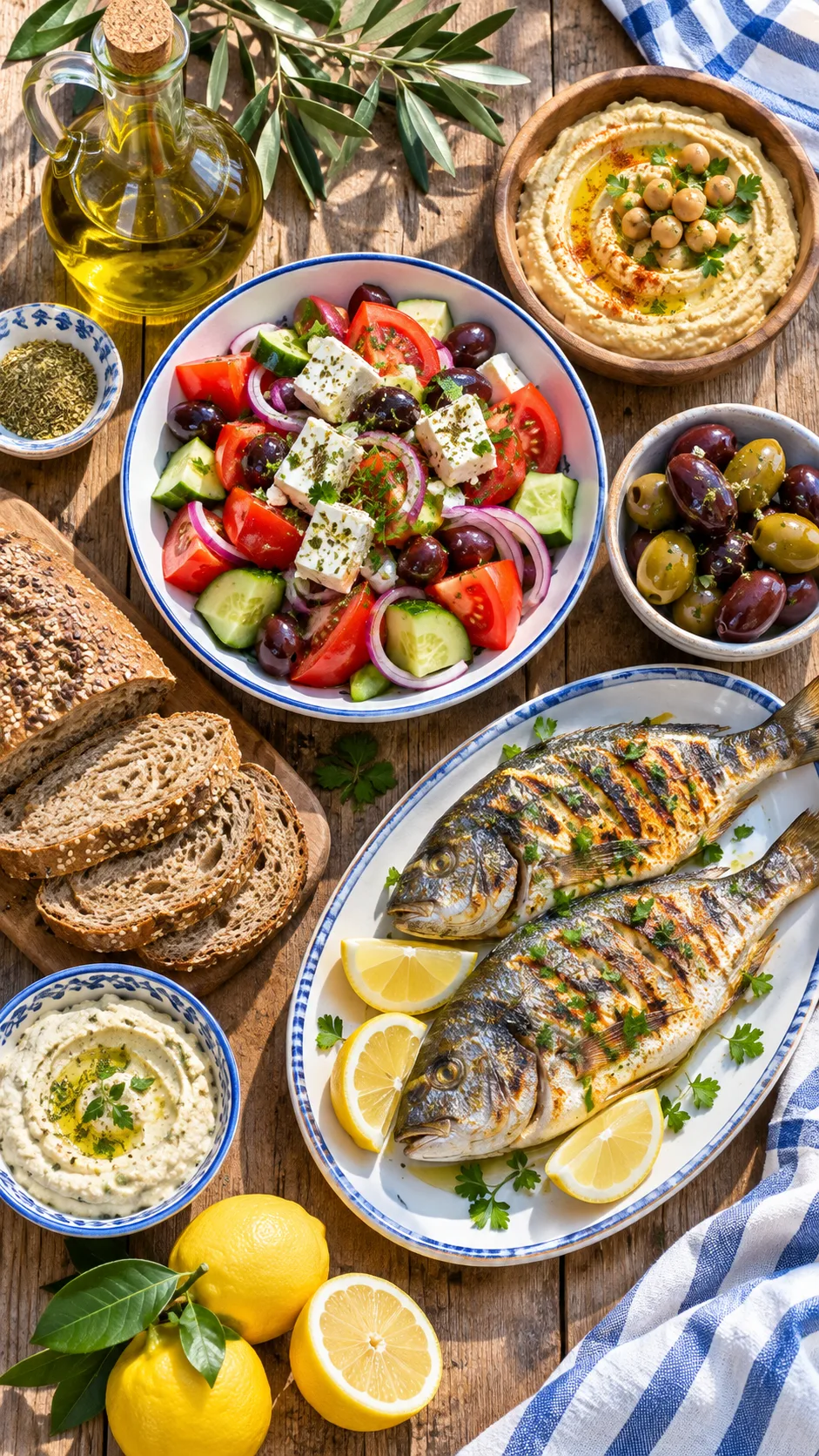
Why the Mediterranean diet beats most trendy plans
Most diets ask you to give up something. The Mediterranean diet asks you to add more: more vegetables, more beans, more olive oil, more flavor. Doesn’t that sound refreshing?
It also has serious science behind it. The PREDIMED trial in the New England Journal of Medicine followed more than 7,000 adults at high cardiovascular risk. Those who ate a Mediterranean-style diet rich in extra-virgin olive oil or nuts had roughly 30% fewer major cardiovascular events than those on a low-fat control diet.
The American Heart Association and the Mayo Clinic both back this style of eating for heart health. Researchers also link it to better blood sugar control and longer, healthier lives.
FYI: I’m not a doctor, and this article doesn’t replace medical advice. If you manage a health condition or take medication, check with your doctor or a registered dietitian before you change how you eat.
What you eat on a Mediterranean diet
Forget memorizing a food pyramid. You just need to know what lands on your plate most often, and what shows up only now and then.
Eat these daily
- Vegetables and fruit: aim for several servings, in as many colors as you can find.
- Whole grains: oats, farro, brown rice, whole wheat pasta, and whole grain bread.
- Legumes: chickpeas, lentils, and white beans.
- Extra-virgin olive oil: your main cooking and dressing fat.
- Nuts and seeds: a small handful works.
- Herbs and spices: oregano, garlic, basil, and lemon zest make everything taste better.
Eat these weekly
- Fish and seafood: at least two times a week, especially salmon, sardines, and trout.
- Poultry, eggs, and yogurt: moderate portions, a few times a week.
- Cheese: feta, ricotta, and parmesan in small amounts.
Eat these rarely
- Red meat: treat it like a special guest, not a roommate.
- Sweets: save them for celebrations, or let fruit handle dessert.
- Highly processed foods: think packaged snacks, sugary drinks, and refined white bread.
That’s the whole framework. You won’t count calories or weigh your chicken, and you won’t feel guilty about bread. In my experience, that alone makes this plan easier to stick with than 90% of the diets out there.
Your Mediterranean pantry: the starter grocery list
Ever stood in the kitchen at 6 p.m. and ordered pizza because nothing in the fridge made sense? A stocked pantry fixes that. Buy these staples once, and you can build most of this week’s meals from them.
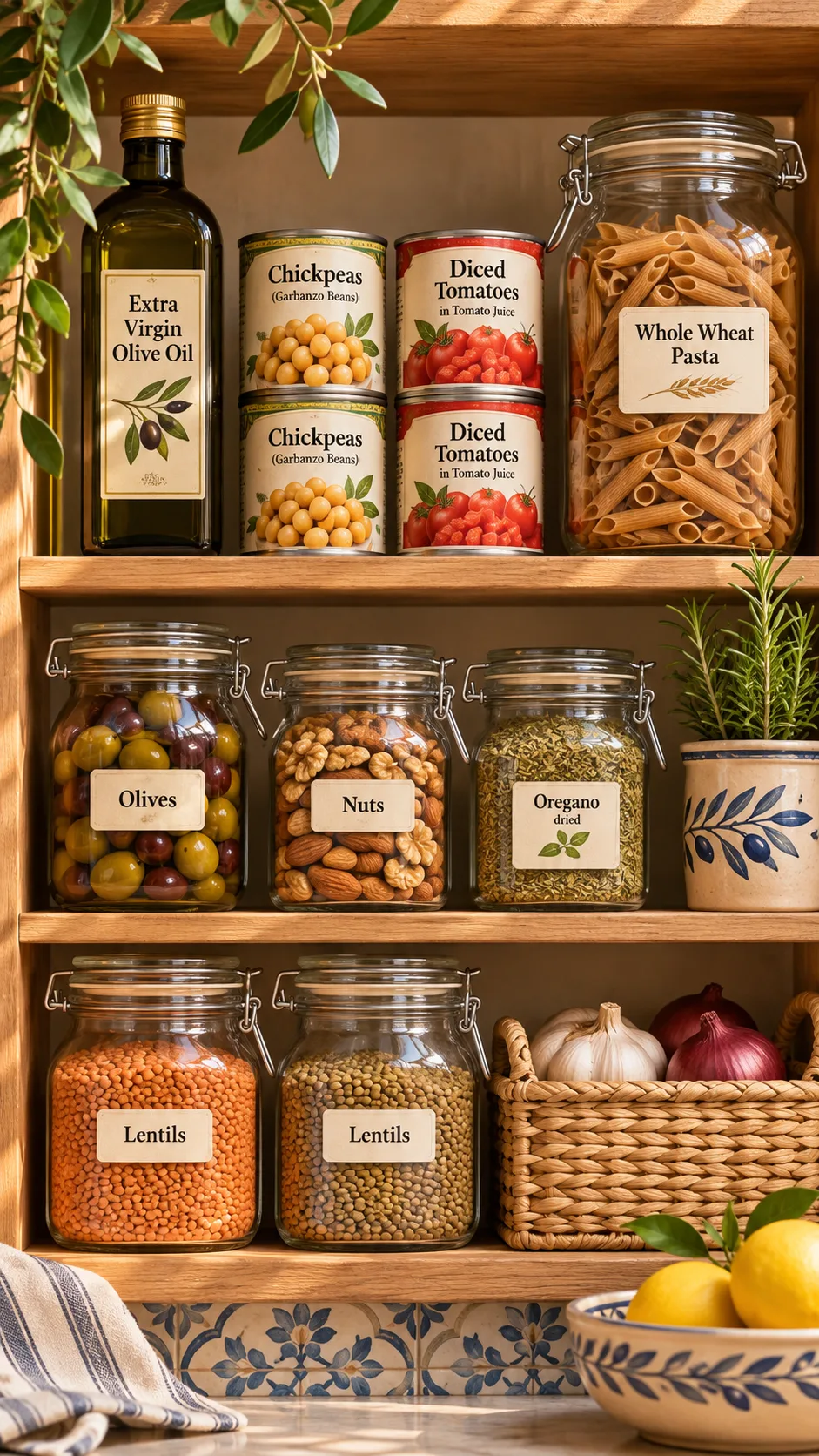
Pantry staples
- Extra-virgin olive oil (buy a good bottle, because you’ll taste it)
- Canned chickpeas, white beans, and lentils
- Canned diced tomatoes and tomato paste
- Whole wheat pasta, farro, and brown rice
- Rolled oats
- Almonds, walnuts, and sunflower seeds
- Olives and capers
- Canned tuna or sardines in olive oil
- Dried oregano, cumin, smoked paprika, and red wine vinegar
Fresh and fridge items
- Spinach, arugula, cucumbers, tomatoes, bell peppers, zucchini, and onions
- Lemons and garlic (buy more than you think you need)
- Plain Greek yogurt and feta cheese
- Eggs
- Salmon fillets and chicken breast or thighs
- Fresh herbs like parsley, basil, and mint
- Berries, apples, and oranges
Pro tip: Buy frozen fish and frozen vegetables without hesitation. They cost less, they keep for months, and they carry the same core nutrients as fresh.
The 7-day beginner Mediterranean meal plan
Here’s the plan. Each day includes breakfast, lunch, dinner, and an optional snack. Swap anything you don’t like, since the pattern matters more than any single recipe.
Portions depend on your hunger, your size, and your goals. Eat until you feel satisfied, not stuffed.
Day 1
- Breakfast: Greek yogurt with berries, walnuts, and a drizzle of honey
- Lunch: Chickpea salad with cucumber, tomato, red onion, and lemon-olive oil dressing
- Dinner: Baked salmon with roasted zucchini and a scoop of farro
- Snack: An apple and a handful of almonds
Day 2
- Breakfast: Oatmeal topped with sliced banana, cinnamon, and chopped pistachios
- Lunch: Leftover salmon over arugula with olives and a squeeze of lemon
- Dinner: Whole wheat pasta with garlic, cherry tomatoes, spinach, and parmesan
- Snack: Hummus with carrot sticks
Day 3
- Breakfast: Two eggs scrambled with spinach and feta, plus whole grain toast
- Lunch: Lentil soup with a side salad
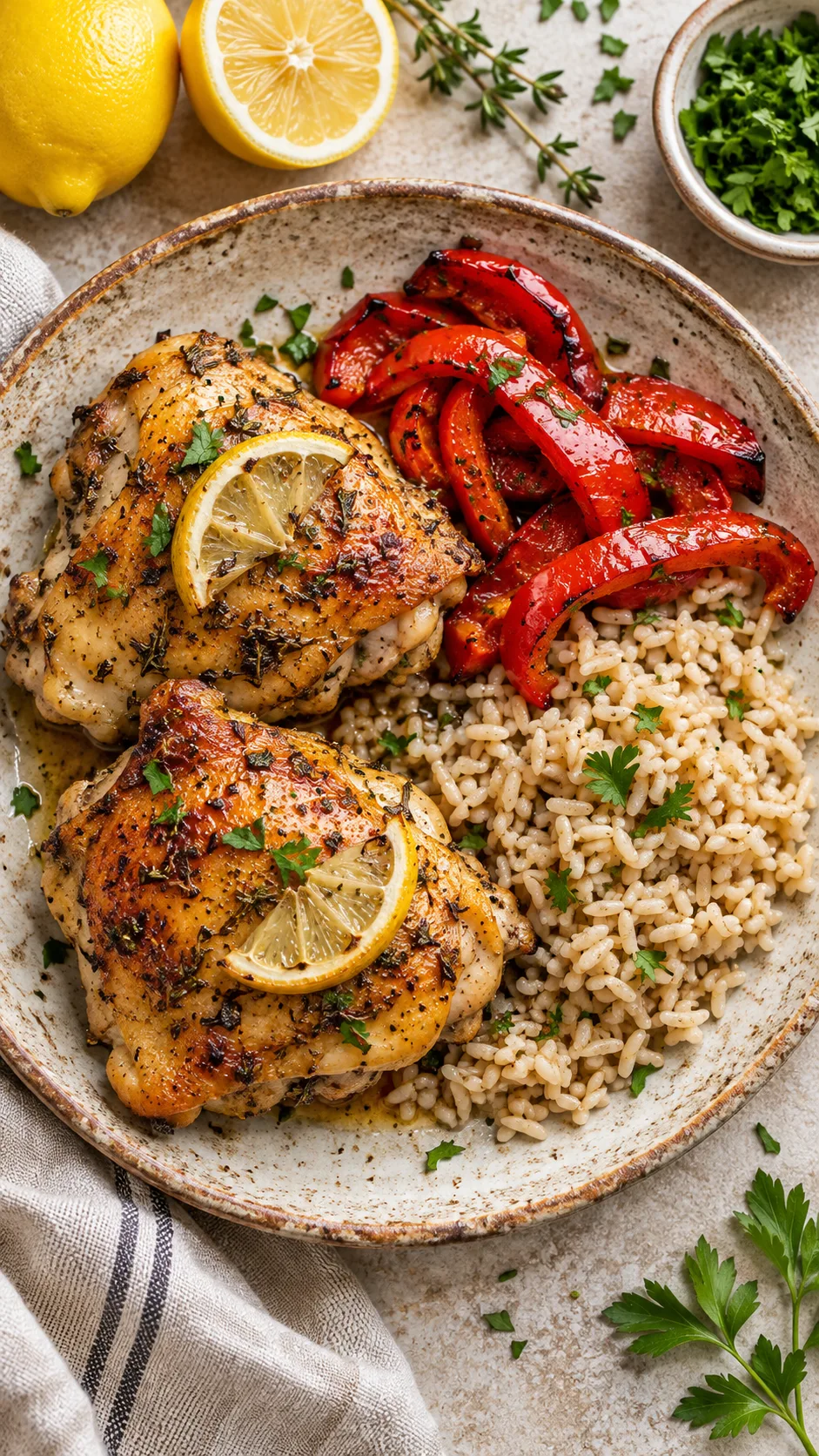
- Dinner: Lemon-herb chicken thighs with roasted peppers and brown rice
- Snack: Orange slices and a few walnuts
Day 4
- Breakfast: Greek yogurt parfait with chopped apple, oats, and cinnamon
- Lunch: Leftover chicken stuffed into a whole wheat pita with cucumber, tomato, and tzatziki
- Dinner: Sheet-pan shrimp with cherry tomatoes, garlic, and white beans
- Snack: A small handful of olives and a few whole grain crackers
Day 5
- Breakfast: Whole grain toast with mashed avocado, tomato, and a drizzle of olive oil
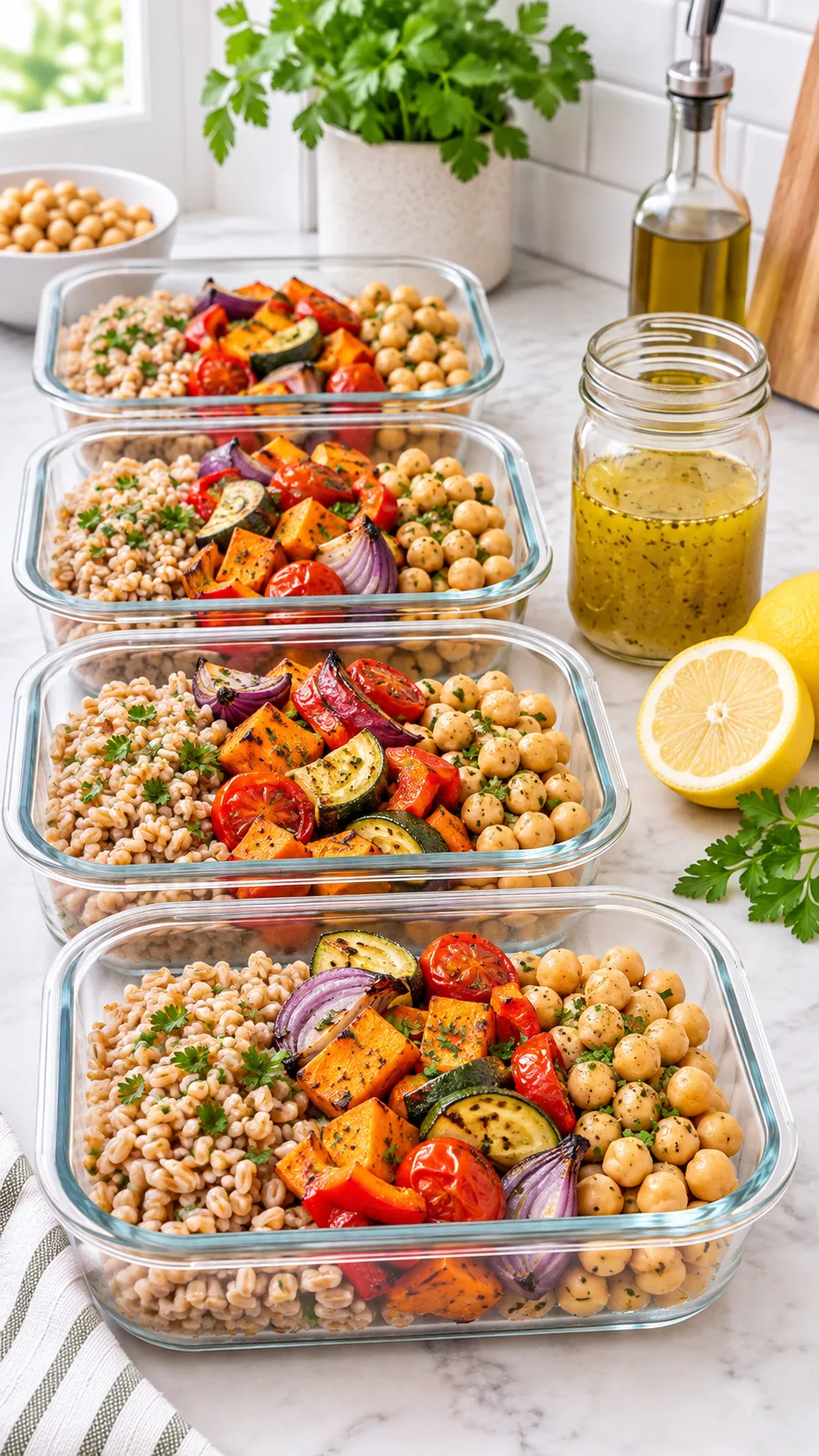
- Lunch: Quinoa or farro bowl with roasted vegetables, chickpeas, and feta
- Dinner: Veggie-loaded shakshuka (eggs poached in spiced tomato sauce) with crusty bread
- Snack: Pear slices with a little ricotta
Day 6
- Breakfast: Smoothie with spinach, frozen berries, Greek yogurt, and a spoonful of almond butter
- Lunch: Tuna and white bean salad with parsley, red onion, and lemon
- Dinner: Grilled fish (cod, trout, or sea bass) with a big Greek salad and roasted potatoes
- Snack: Grapes and a few almonds
Day 7
- Breakfast: Veggie omelet with mushrooms, peppers, and a sprinkle of feta
- Lunch: Leftover shakshuka or a big “clean-out-the-fridge” salad
- Dinner: Homemade whole wheat flatbread pizza with tomato sauce, vegetables, olives, and mozzarella
- Dessert: Fresh figs or strawberries with a dollop of yogurt
Notice the pattern? Dinner often becomes tomorrow’s lunch. That single habit cuts your cooking time nearly in half.
Watch a Mediterranean meal prep in action
Sometimes watching someone chop, roast, and assemble beats reading about it. This video walks through the basics of a Mediterranean-style week in the kitchen.
How to prep this plan in under two hours
I used to cook every single night and resent it by Wednesday. Then I started a Sunday prep session, and my whole week calmed down. Here’s what that looks like.
The Sunday prep checklist
- Cook a big pot of grains. Farro or brown rice keeps for four to five days in the fridge.
- Roast a tray of vegetables. Zucchini, peppers, and onions work for bowls, pitas, and omelets.
- Rinse and portion your beans. Canned chickpeas take about two minutes.
- Mix one jar of dressing. Combine olive oil, lemon juice, garlic, mustard, and oregano, then shake.
- Wash and chop salad ingredients. Store cucumbers and greens separately so they stay crisp.
- Make a batch of lentil soup. Freeze half for a lazy night.
This routine takes about 90 minutes once you find your rhythm. Put on a podcast, and it barely feels like work.
How to eat Mediterranean on a budget
Does eating well cost a fortune? Not here. The backbone of this diet is cheap: beans, lentils, oats, seasonal vegetables, and eggs.
Here’s how to keep your receipt reasonable:
- Lean on legumes. A can of chickpeas costs about the same as a coffee and feeds you twice.
- Buy frozen fish and veggies. You waste less and pay less.
- Choose seasonal produce. Tomatoes in July taste like tomatoes. Tomatoes in January taste like regret.
- Buy olive oil in larger tins. Store it in a cool, dark cupboard.
- Use canned fish. Sardines and tuna deliver omega-3 fats for a few dollars.
Common beginner mistakes (I made most of them)
Mistake 1: Treating it like a pasta-and-pizza diet
Italian restaurant food in the U.S. often looks nothing like traditional Mediterranean eating. Giant bowls of creamy pasta aren’t the point. Vegetables, beans, and fish should lead your plate, with grains playing a supporting role.
Mistake 2: Skimping on olive oil
Many beginners fear the fat. Don’t. Olive oil is the star of this diet, and the PREDIMED research used generous amounts of it. Just measure with a spoon instead of pouring from the bottle like a waterfall.
Mistake 3: Forgetting protein
A plate of salad and bread leaves you hungry in an hour. Add beans, fish, eggs, yogurt, or poultry to every meal. Protein plus fiber keeps you full, which means fewer 3 p.m. cookie raids.
Mistake 4: Going all-in on day one
I once threw out half my pantry on a Monday and felt miserable by Thursday. Change two or three meals first, then build from there. Slow wins this race.
Can you adjust the plan to fit your goals?
Yes, and that flexibility is the secret sauce. The Mediterranean pattern bends without breaking.
- Want to lose weight? Shrink portions of grains and oil slightly, and fill up on vegetables and lean protein. If you want a tighter structure, check out this low calorie meal plan for ideas on staying full.
- Prefer fewer carbs? Swap grains for extra vegetables, nuts, and fish. This 7-day low carb meal plan shows how to do it without feeling restricted.
- Eating plant-based? Lean harder on beans, lentils, tofu, and nuts. The vegan meal plan pairs nicely with Mediterranean flavors.
That said, if you have diabetes, kidney disease, or food allergies, talk to a professional before you adapt anything. Personalized advice beats a generic meal plan every time.
Beyond food: the lifestyle part most people skip
People in Mediterranean countries don’t just eat differently. They also move more, eat slower, and share meals. The Mayo Clinic calls out these habits alongside the food itself.
You can borrow a few of them today:
- Take a 20-minute walk after dinner.
- Sit down at a table, not a desk or couch.
- Eat with family or friends when you can.
- Enjoy a glass of red wine only if you already drink and your doctor agrees. Nobody needs to start drinking for their health. 🙂
Does a walk really matter as much as the olive oil? Probably not on its own, but the habits stack up. Together they turn a diet into a way of life.
Quick answers to common questions
Will I lose weight on a Mediterranean diet?
Many people do, especially when they swap processed foods for whole foods and watch portion sizes. The diet doesn’t promise rapid results, though. It builds steady, sustainable habits.
Is the Mediterranean diet expensive?
Not when you build meals around beans, grains, frozen fish, and seasonal produce. Fresh salmon every night would hurt your wallet, so rotate it with canned fish and eggs.
Can I eat bread and pasta?
Absolutely. Choose whole grain versions most of the time, and pair them with vegetables, beans, or fish. Bread with olive oil beats bread with a pile of processed spreads.
How long until I feel a difference?
Most people notice better energy and digestion within a couple of weeks. Bigger health markers, like cholesterol and blood pressure, take longer. Ask your doctor to check them over time.
Your next step: start with just one week
Here’s the short version. The Mediterranean diet works because it’s flexible, flavorful, and backed by strong research. You stock a simple pantry, prep a few basics on Sunday, and rotate through easy meals built around vegetables, beans, whole grains, fish, and olive oil.
You don’t need perfection, and you don’t need a Greek island. Pick this week’s plan, print the grocery list, and cook the first dinner tonight.
Healthy eating gets easy when it tastes this good. Your future self will thank you, probably over a plate of lemony chickpeas.