

You wake up, look in the mirror, and wonder who swapped your body overnight. Your jeans fit on Tuesday. By Thursday they have declared war. Sound familiar?
Nobody warns you about this at 45: your metabolism did not break. Your hormones changed the rules mid-game and forgot to send the memo. The good news is that food fixes more of this than you would believe.
I have spent years watching women blame themselves for something biology handed them. Let us stop that. This menopausal diet meal plan goes after the exact three villains (bloating, fatigue, and stubborn weight gain) with real food you will want to eat.

Why your body suddenly acts like a stranger
Estrogen does far more than manage your period. It helps regulate where your body stores fat, how sensitive you are to insulin, and even how your gut moves food along. When estrogen drops, all three go haywire.
Your body starts parking fat around your middle instead of your hips. Thanks, evolution. Meanwhile your muscle mass quietly declines, roughly 3-8% per decade after 30, and it speeds up after menopause.
Less muscle means a slower resting metabolism. Slower metabolism plus the same old eating habits equals weight gain. It is math, not moral failure.
The bloating situation
Falling estrogen slows gut motility. Food sits longer, ferments more, and you end up looking six months pregnant after a salad. Rude.
Add fluctuating progesterone, which causes water retention, plus a gut microbiome that is shifting too, and bloating becomes a daily guest. The fix is not eating less. You need to eat differently.
The fatigue trap
Night sweats wreck your sleep. Bad sleep spikes cortisol. High cortisol drives cravings for sugar and refined carbs. You eat them, your blood sugar crashes two hours later, and you are wiped out again by 3pm.
This loop steals more of your energy than anything else in menopause. Break the blood sugar rollercoaster and you break the loop.
The 5 core principles of this meal plan
Understand the logic before you look at the meals. Otherwise you will follow the plan for a week, get bored, and go back to biscuits at 4pm. I have done it.
- Protein at every single meal. Aim for 25-35g per meal, roughly 1.2-1.6g per kg of body weight daily. Protein protects your muscle, keeps you full, and burns more calories during digestion.
- Fibre from plants, not powders. Target 25-30g daily. Fibre feeds good gut bacteria, steadies blood sugar, and helps you poop, which cuts bloating dramatically.
- Healthy fats, unapologetically. Omega-3s calm inflammation and help with brain fog. Olive oil, avocado, oily fish, nuts.
- Slow carbs only. Swap white bread and sugary drinks for oats, sweet potato, beans, and whole grains. Your insulin will thank you.
- Time your eating. Put more of your calories earlier in the day. Heavy late dinners make night sweats and sleep worse.
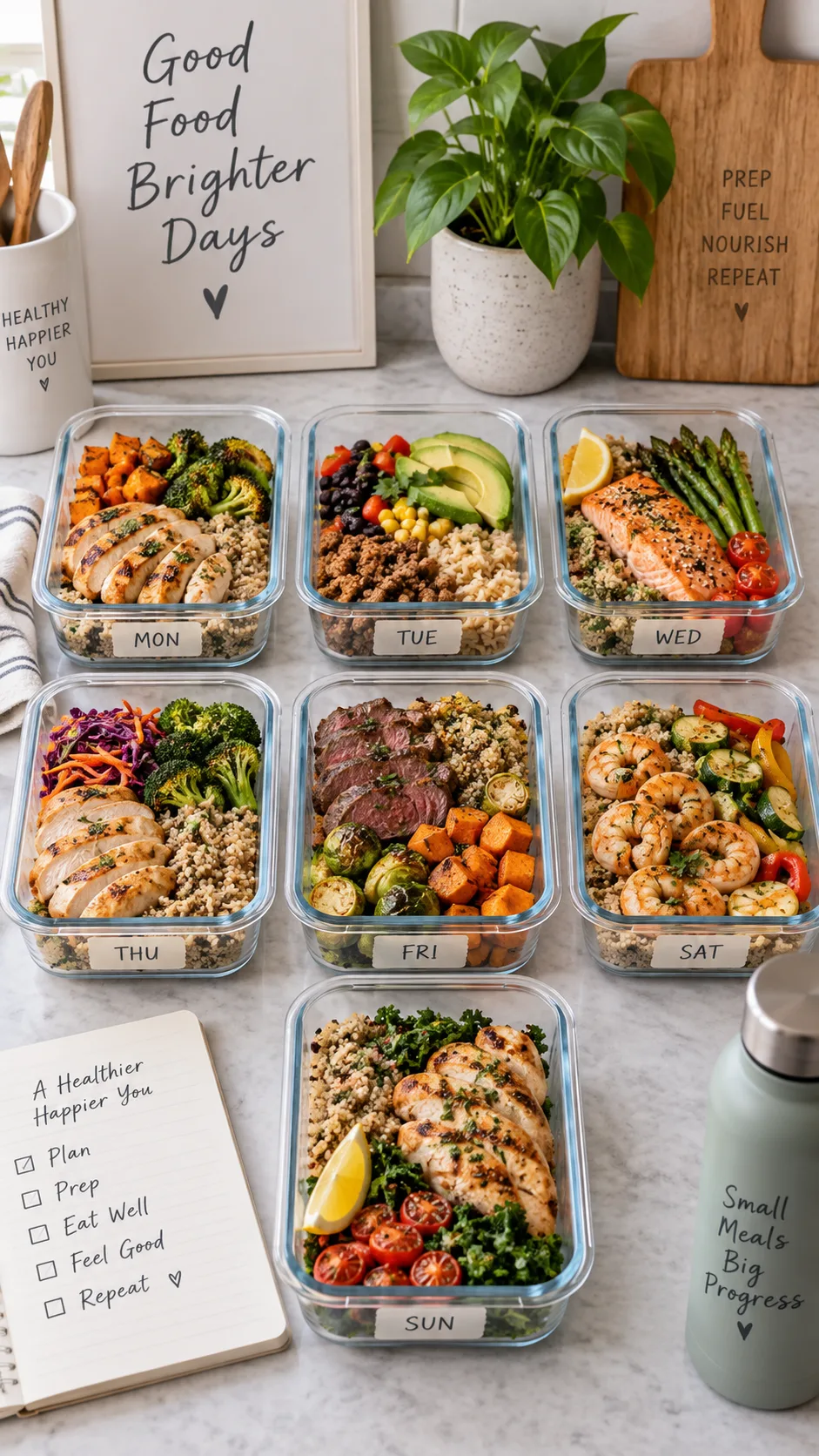
The 7-day menopausal diet meal plan
I built this to be flexible. Swap days around. Repeat favourites. Nobody is grading you.
Day 1: reset day
- Breakfast: Greek yogurt (200g) + 1 tbsp ground flaxseed + handful blueberries + 10 walnuts
- Lunch: Grilled chicken salad with mixed greens, chickpeas, cucumber, olive oil and lemon dressing
- Snack: Apple + 1 tbsp almond butter
- Dinner: Baked salmon, roasted broccoli, half a sweet potato
Day 2: anti-bloat day
- Breakfast: 3-egg omelette with spinach and feta + 1 slice sourdough
- Lunch: Lentil and vegetable soup + side of leafy salad
- Snack: Handful of pumpkin seeds + herbal peppermint tea
- Dinner: Grilled mackerel, sautéed courgette, quinoa (small portion)
Day 3: energy day
- Breakfast: Overnight oats with chia seeds, soy milk, cinnamon, sliced banana
- Lunch: Tuna and white bean salad with red onion and parsley
- Snack: Boiled egg + cherry tomatoes
- Dinner: Stir-fried tofu with mixed peppers, garlic, ginger, brown rice
Day 4: comfort day
- Breakfast: Cottage cheese + pineapple + crushed almonds
- Lunch: Leftover tofu stir-fry or chicken wrap in wholemeal tortilla
- Snack: Dark chocolate (2 squares, 70%+) + a few Brazil nuts
- Dinner: Turkey meatballs in tomato sauce with courgette noodles
Day 5: gut love day
- Breakfast: Kefir smoothie with kefir, spinach, frozen berries, 1 tbsp flaxseed
- Lunch: Roasted vegetable and halloumi salad with pearl barley
- Snack: Carrot sticks + hummus
- Dinner: Prawn and vegetable curry with cauliflower rice
Day 6: flexible day
- Breakfast: Scrambled eggs, smoked salmon, avocado on rye
- Lunch: Big grain bowl with quinoa, black beans, roasted squash, tahini drizzle
- Snack: Greek yogurt + honey drizzle
- Dinner: Roast chicken thigh, green beans, mashed butter beans
Day 7: easy Sunday
- Breakfast: Buckwheat pancakes with berries and yogurt
- Lunch: Frittata with leftover veg + side salad
- Snack: Edamame beans, lightly salted
- Dinner: Beef and vegetable stew with a small portion of wild rice
Notice what is missing? Deprivation. No cabbage soup. No 1,200-calorie misery. Starving yourself during menopause destroys the very muscle that keeps your metabolism running.
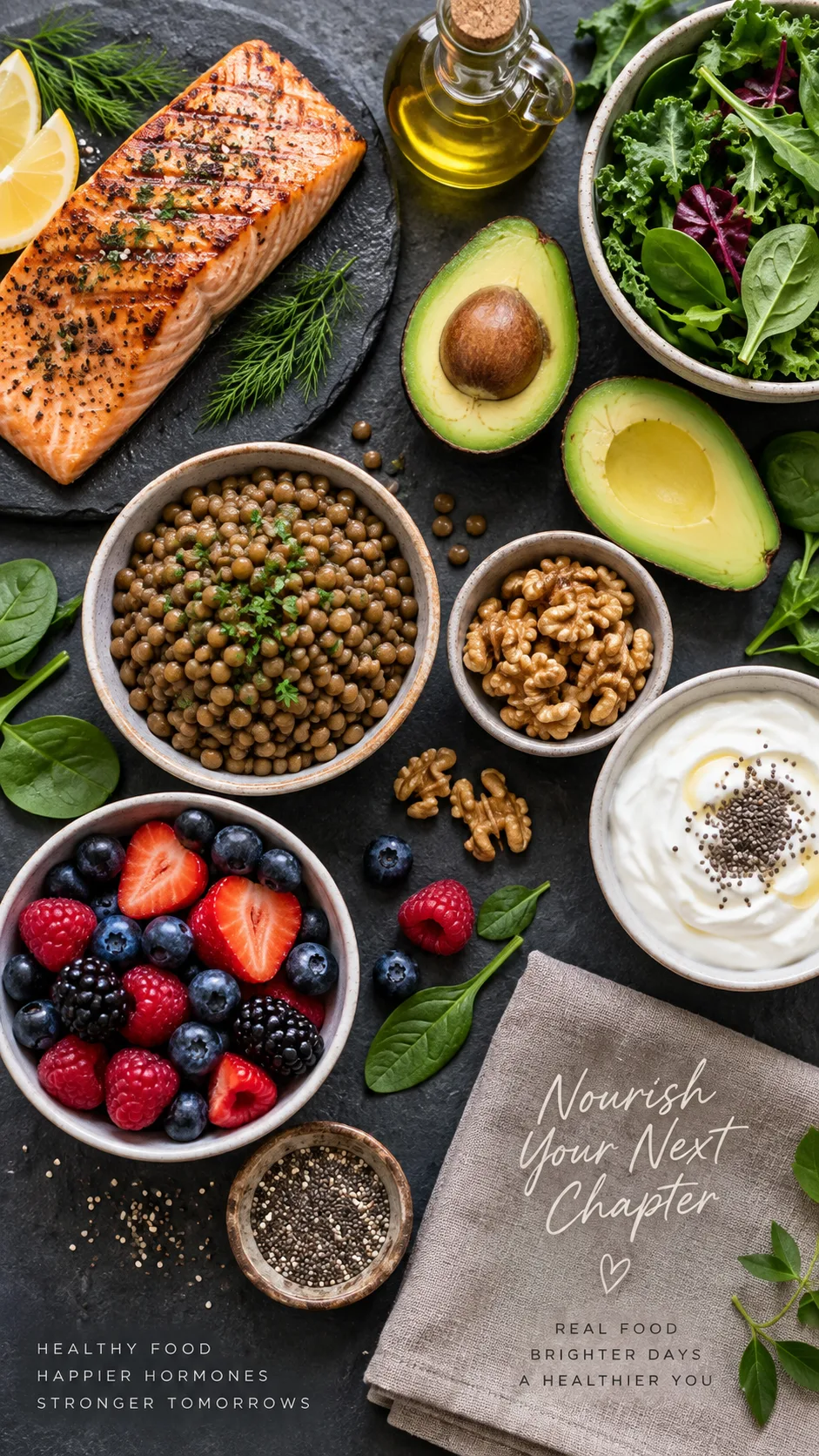
The foods that fight menopause symptoms
Plant estrogens
Plant compounds called isoflavones weakly mimic estrogen in the body. Research from the National Institutes of Health has looked at soy isoflavones for hot flush reduction, and several trials came back with encouraging numbers.
- Soy: tofu, tempeh, edamame, soy milk
- Flaxseed: ground, never whole, because your gut cannot crack whole seeds
- Chickpeas and lentils
- Sesame seeds and tahini
Calcium and vitamin D
Bone density drops fast after menopause, up to 20% in the five to seven years post-menopause. That is not a scare tactic, that is the data.
- Dairy or fortified plant milks
- Tinned sardines, bones included (I know, but they taste great in tomato sauce)
- Leafy greens: kale, pak choi, broccoli
- Fortified cereals and a vitamin D supplement of 10-25mcg daily, especially in winter
Magnesium for sleep and mood
Magnesium helps with sleep quality, muscle cramps, and anxiety. Most women fall short of what they need. Pumpkin seeds, dark chocolate, almonds, spinach, and black beans all deliver.
My honest take? A magnesium glycinate supplement before bed did more for my energy than any expensive “menopause blend” on the shelf. Most of those blends are overpriced multivitamins with better packaging.
Bloating fixes that hold up in real life
Generic “eat more fibre” advice can make bloating worse if you rush it, so here are the specifics.
- Increase fibre gradually. Jumping from 12g to 30g overnight turns your gut into a gas factory. Add 5g per week instead.
- Drink 2 litres of water daily. Fibre without water is basically cement. Dehydration also causes water retention, because your body hoards what it cannot rely on getting.
- Cut ultra-processed foods and excess salt. Sodium drives fluid retention hard. Read the labels on bread, sauces, and soups.
- Eat slowly and chew properly. Swallowed air genuinely bloats you. Put the fork down between bites.
- Test your FODMAP triggers. Onion, garlic, wheat, and certain beans bother some women badly. Remove one at a time for two weeks and track what happens.
- Add fermented foods daily. Kefir, sauerkraut, kimchi, live yogurt. A diverse microbiome produces less gas.
- Walk after meals. Ten minutes. It works shockingly well for gut motility.

What about alcohol, caffeine and sugar?
I am not going to pretend wine does not exist. But you need the reality check.
Alcohol disrupts REM sleep, triggers hot flushes, and adds empty calories your slower metabolism will not forgive. Two glasses on a Friday? Fine. Two glasses every night? That is your fatigue right there.
Caffeine after 2pm interferes with sleep architecture even when you “feel fine”. Set a cut-off time for two weeks and see what changes.
Added sugar fuels the blood sugar rollercoaster directly. The American Heart Association recommends no more than 25g of added sugar daily for women. One flavoured latte can blow past that before lunch.
Why exercise multiplies everything
Diet alone during menopause is like using one windscreen wiper. It technically works, and you still cannot see.
Resistance training twice weekly is non-negotiable. Nothing else rebuilds the muscle you are losing. More muscle means better insulin sensitivity, which means your body stores less fat around your middle.
- Strength training: 2-3 sessions weekly, compound movements such as squats, rows, presses, deadlifts
- Walking: 7,000-10,000 steps daily to keep cortisol in check
- Yoga or stretching: 1-2 sessions for joint health and stress
- Avoid excessive cardio: long grinding cardio sessions spike cortisol and can make belly fat harder to shift
Common mistakes that sabotage progress
Mistake 1: slashing calories too hard
Your body reads aggressive restriction as a threat. Cortisol rises, muscle breaks down, and your metabolism adapts downward. A modest deficit of 300-500 calories beats 1,000 every time.
Mistake 2: skipping breakfast
Some women do well on intermittent fasting. Many menopausal women do not, because fasting can push cortisol higher. If you fast and feel worse, stop. Your own data beats anyone’s dogma.
Mistake 3: fearing carbs completely
Zero-carb approaches often tank energy and sleep in menopausal women. You need smart carbs, not no carbs. Sweet potato at dinner can genuinely improve how you sleep.
Mistake 4: expecting fast results
Bloating improves in 7-14 days. Energy shifts in 2-4 weeks. Body composition takes 8-12 weeks minimum. Anyone promising faster wants your money.
Sample shopping list to make this easy
- Proteins: eggs, chicken thighs, salmon, mackerel, tinned sardines, tofu, Greek yogurt, cottage cheese
- Legumes: lentils, chickpeas, black beans, butter beans, edamame
- Veg: spinach, kale, broccoli, courgette, peppers, carrots, sweet potato
- Fruit: berries, apples, bananas, pineapple
- Fats: extra virgin olive oil, avocado, walnuts, almonds, pumpkin seeds, tahini
- Grains: oats, quinoa, brown rice, sourdough, rye bread
- Extras: ground flaxseed, chia seeds, kefir, dark chocolate 70%+, herbal teas
Maybe you are building meals around a different goal entirely and you want to gain healthy weight rather than lose it. Protein timing and whole-food quality still apply. Our guide on a weight gain diet that builds real muscle uses the same anti-junk-food logic in reverse.
If you cook West African dishes, plenty of these principles map straight onto local foods. This breakdown of Nigerian foods and their nutritional profiles helps you judge portion quality whatever your goal. Your choice of yogurt matters for gut health too, since live cultures beat sugar-loaded versions every time.
When to talk to a professional
Food is powerful. It is not everything. If your symptoms severely disrupt your life, speak to your doctor about HRT and get proper bloodwork done.
Check thyroid function, ferritin, vitamin D, and B12. Sometimes fatigue during menopause has nothing to do with menopause and everything to do with an undiagnosed thyroid problem or iron deficiency. The NHS menopause guidance gives you a solid list of questions to bring to the appointment.
Consider a registered dietitian as well if you have IBS, diabetes, or a history of disordered eating. Generic advice has limits, and yours might need tailoring.

The bottom line
Your body changed. Your approach needs to change with it. Call that strategy, not defeat.
Prioritise protein. Build fibre slowly. Lift heavy things. Sleep like it is your job. Stop punishing yourself with restriction that does not work.
The women I have watched succeed never found a magic food. They stayed consistent with boring fundamentals and gave it twelve weeks instead of twelve days.
Start with one thing tomorrow morning. Add 30g of protein to your breakfast. That is it. Then build from there.
Menopause is not the end of feeling good in your body. It is the part where you finally learn to eat for the body you have now, rather than the one you had at 25.