

You want to gain weight, so someone told you to “just eat more.” Great advice, right up until you’re three doughnuts deep, bloated, and somehow still skinny with a soft belly. I’ve been there. The scale moved, my shirts fit worse, and my arms looked exactly the same.
Nobody warns hardgainers about this: gaining weight and gaining muscle are two completely different projects. One needs calories. The other needs calories, protein, training, and patience. We’re building the second one.
Why the dirty bulk ruins more physiques than it builds
The dirty bulk sells a fantasy: eat whatever you want, lift heavy, wake up jacked. Sounds fun. It mostly makes you fat and tired.
Your body doesn’t turn pizza into biceps by magic. It sends surplus calories toward muscle OR fat, and the ratio depends on your training stimulus, protein intake, sleep, and how aggressive your surplus is. Push calories too hard and fat wins that tug-of-war every single time.
Norwegian researchers ran a well-known study on elite athletes comparing a controlled surplus against ad-lib eating. The controlled group gained more lean mass with barely any fat gain, while the free-for-all group gained plenty of both. You can read the breakdown of that research over at PubMed. Slow beats sloppy.
The real cost of junk calories
- Appetite chaos: Ultra-processed food spikes hunger later, so you overeat on some days and skip meals on others.
- Trash recovery: Low micronutrient intake means worse sleep, worse energy, worse workouts.
- Digestive misery: Bloating, sluggishness, and that heavy “I ate a brick” feeling before training.
- Fat you’ll diet off later: Every extra kilo of fat costs you weeks of cutting. Why volunteer for that?
FYI, I’m not banning ice cream. I eat it weekly. I just refuse to build an entire nutrition strategy on it.
Step 1: Find your real calorie target (stop guessing)
Most skinny people massively overestimate how much they eat. You “eat a lot” on Monday, then have tea and biscuits for lunch on Thursday and forget about it. Your weekly average tells the truth.
Here’s the simple math I give every client:
- Estimate maintenance: Multiply your bodyweight in kilograms by 31 to 35. Very active? Use the higher end.
- Add a lean surplus: Tack on 250 to 400 calories per day. That’s it. Not 1,000.
- Track for 2 weeks: Weigh yourself 4 or 5 mornings a week and average the numbers.
- Adjust: Gaining under 0.25% of bodyweight per week? Add 150 calories. Gaining over 0.75%? Pull 150 back.
A 60kg guy chasing lean gains wants roughly 0.2 to 0.4kg per week. Boring? Absolutely. Effective? Also absolutely. That pace gives your body time to build tissue instead of just storing the extra.
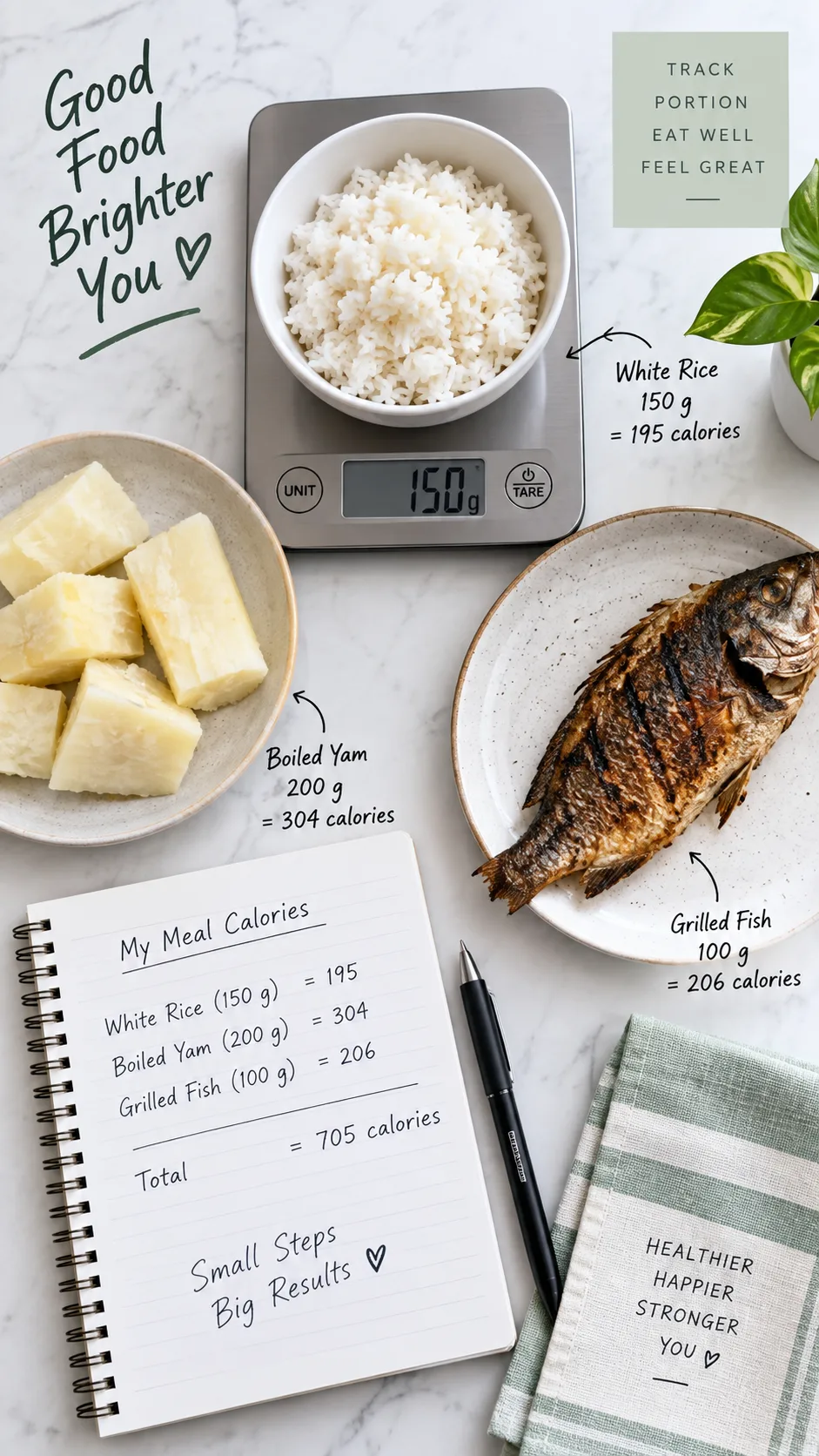
If you eat mostly local dishes and have no clue what’s in them, grab a proper reference. This Nigerian calories guide takes the guesswork out of jollof, eba, moi moi, and everything in between.
Step 2: Nail your protein (this one is non-negotiable)
Ever wondered why some people bulk for six months and look identical, just puffier? Protein. Almost always protein.
The International Society of Sports Nutrition recommends 1.4 to 2.0g of protein per kilogram of bodyweight daily for people building muscle. Their full position stand lives here on the JISSN site, and it’s one of the most cited documents in sports nutrition for good reason.
For a 70kg lifter, that’s roughly 105 to 140g per day. Spread it across 3 to 5 meals, each landing between 25 and 40g. Your muscles respond to repeated protein hits better than one giant dinner.
Protein sources that don’t wreck your budget
- Eggs: 6g each, cheap, versatile, and the yolk carries choline and vitamin D.
- Chicken thighs: more calories than breast, better flavour, still loaded with protein.
- Beef and goat meat: creatine, iron, zinc, B12. Red meat pulls real weight here.
- Titus fish, mackerel, sardines: protein plus omega-3s for recovery.
- Milk: the classic hardgainer hack. Easy calories, easy protein, zero chewing.
- Beans and moi moi: fibre, protein, and slow-release energy.
- Greek yoghurt: high protein, blends into anything.
Struggling to chew through it all? Liquid calories save you. I make my own blend instead of buying overpriced tubs. Here’s my method for making weight gain powder at home using ingredients you can pronounce.
Step 3: Carbs are your training fuel, not the enemy
People selling ketone drinks demonised carbs. Meanwhile, every serious lifter I know eats them by the plateful.
Carbohydrates refill muscle glycogen, which powers your sets and helps you train harder next session. Harder training means a bigger growth signal. Simple chain of events, right?
Aim for 4 to 7g of carbs per kilogram of bodyweight on training days. Build them around these:
- Rice: the undisputed bulking king. Cheap, digestible, endless.
- Yam and sweet potato: dense, filling, potassium-rich.
- Oats: blend them into shakes and stop pretending you enjoy them plain.
- Plantain: especially ripe, especially fried in a bit of coconut oil.
- Garri, eba, fufu, pounded yam: calorie-dense swallows that hardgainers underrate.
- Pasta and bread: fast, convenient, easy to overeat in a good way.
Timing: does it really matter?
Less than Instagram claims. The “anabolic window” isn’t 30 minutes wide. Research puts it closer to several hours. Still, eating a solid carb-and-protein meal within a couple of hours of training helps you recover and train again sooner. Practical beats perfect.
Step 4: Fats, where your easy calories hide
Fat gives you 9 calories per gram versus 4 for protein and carbs. If you struggle to eat enough, fat is your cheat code.
Keep fats at 20 to 30% of total calories, and lean on the good ones:
- Groundnuts and peanut butter: two tablespoons adds about 190 calories without filling you up.
- Avocado: creamy, potassium-heavy, blends into shakes.
- Olive oil: drizzle it on everything after cooking.
- Palm oil (in moderation): traditional, rich in vitamin E, calorie-dense.
- Cashews, almonds, walnuts: snack on them between meals.
- Whole eggs and full-fat milk: stop discarding yolks. They’re the nutritious part.
One tablespoon of oil on your rice adds 120 calories and you won’t even notice it. That’s the whole game: add calories you don’t feel.
Step 5: Build the plate, a real day of eating
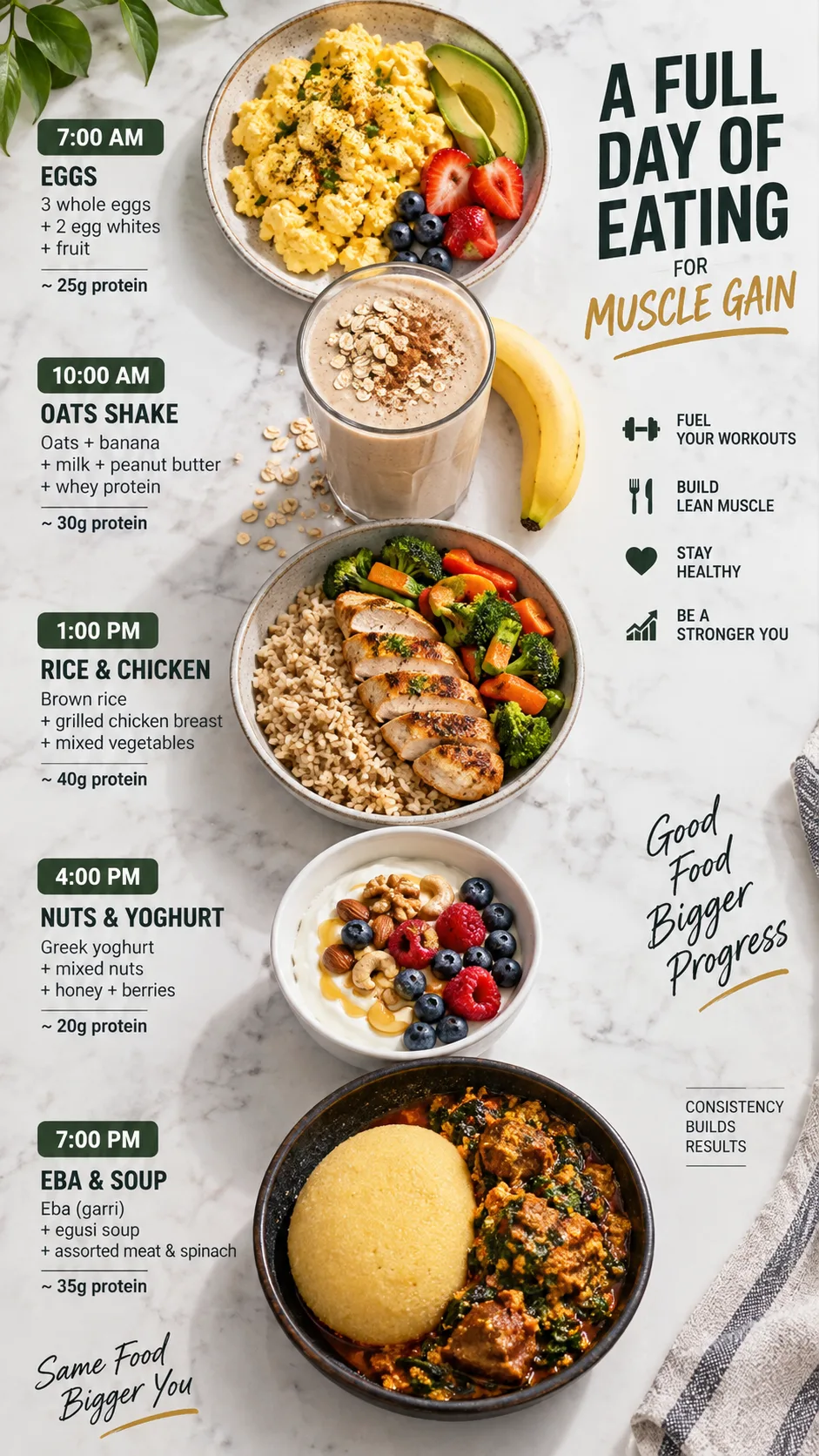
Theory’s nice. Here’s what roughly 3,000 calories with 150g protein looks like for a 70kg lifter who isn’t eating garbage.
Sample day (adjust portions to your numbers)
- Breakfast: 4 whole eggs scrambled in olive oil, 2 slices of bread, 1 large glass of full-fat milk, 1 banana. About 750 cal, 40g protein.
- Mid-morning shake: 300ml milk, 50g oats, 2 tbsp peanut butter, 1 banana, 1 scoop protein. About 700 cal, 40g protein.
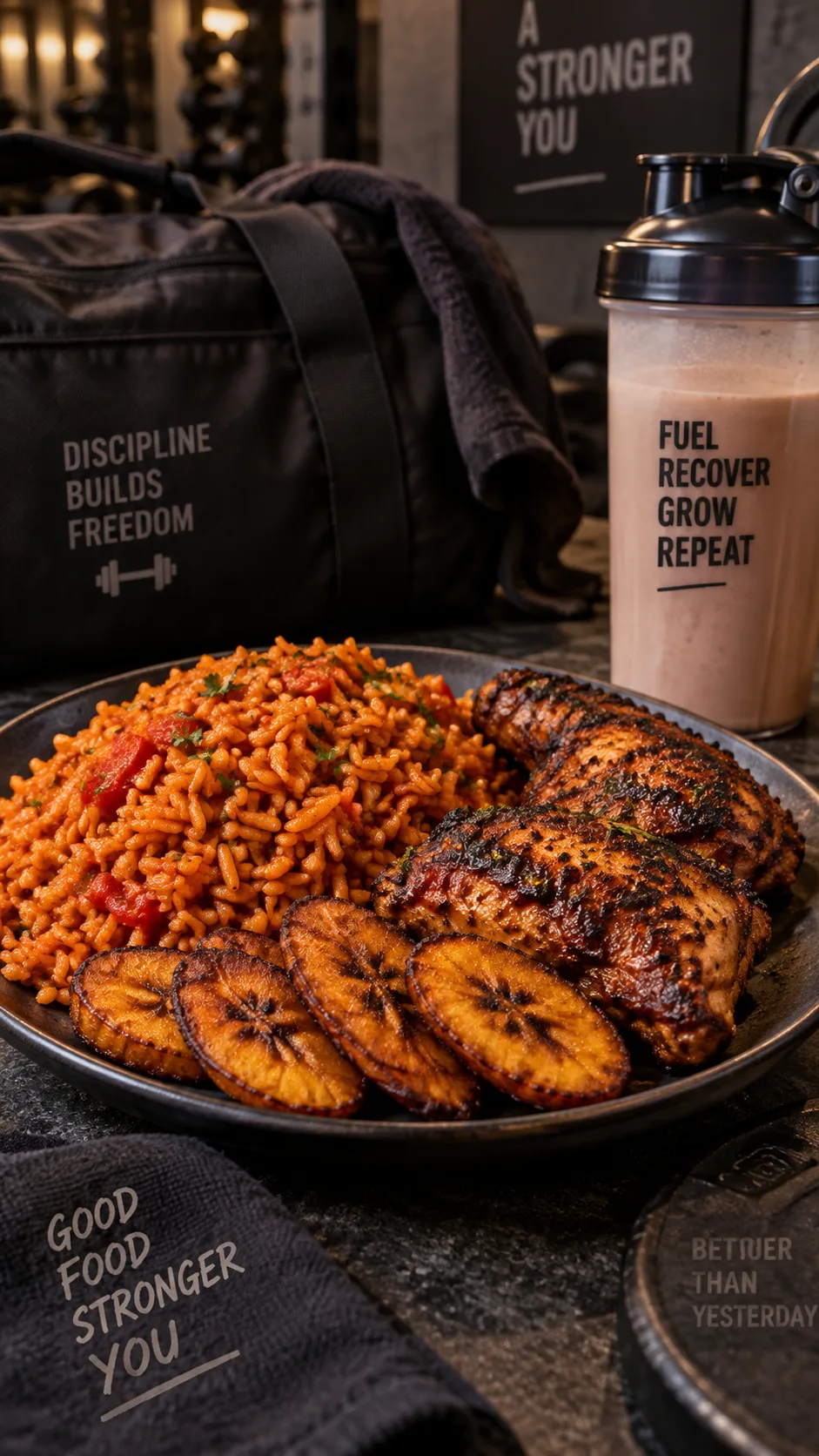
- Lunch: Large plate of jollof rice, 150g chicken thigh, 2 pieces of fried plantain, mixed vegetables. About 850 cal, 45g protein.
- Afternoon snack: Handful of groundnuts plus Greek yoghurt. About 350 cal, 15g protein.
- Dinner: Eba with egusi soup, generous beef and fish, plus a side of beans. About 800 cal, 40g protein.
Notice what’s missing? Fizzy drinks, sweets, and fast food. Notice what’s there? Real food. Your gut, your skin, and your energy levels will thank you in about three weeks.
Want more local options with the numbers attached? This list of 23 best Nigerian foods for healthy weight gain gives you plenty of swaps so you never eat the same thing twice.
Step 6: Without lifting, you’re just gaining weight
Let me be blunt. A calorie surplus without resistance training builds fat. Full stop. The food gives your body materials; training tells it where to put them.
You don’t need a fancy programme. You need progressive overload (adding weight or reps over time) on a handful of big movements.
The lifts you can’t skip
- Squats or leg press: your legs hold your biggest growth potential. Train them.
- Deadlifts or Romanian deadlifts: posterior chain, grip, whole-body strength.
- Bench press or dips: chest, shoulders, triceps in one shot.
- Pull-ups or rows: a wide back makes your waist look smaller. Free optical illusion.
- Overhead press: shoulders that fill out a shirt.
Train 3 to 4 days a week, hit each muscle group twice, and keep most sets 1 to 3 reps shy of failure. Log your lifts. If the numbers don’t climb over a month, something’s broken, and it’s usually sleep or food.
Women reading this: the same rules apply, and no, you won’t get “bulky” by accident. This strength training guide for women lays out a beginner blueprint that pairs perfectly with everything here.
Step 7: The hardgainer problems nobody warns you about
“I get full too fast”
Classic. Your stomach genuinely holds less if you’ve eaten small portions your whole life. Fix it gradually:
- Drink your calories: shakes bypass the fullness signal that solid food triggers.
- Cut fibre slightly around big meals: save the giant salad for later.
- Don’t drink water 20 minutes before eating: it steals stomach space.
- Add oils and nut butters: invisible calories, minimal volume.
- Eat 5 smaller meals instead of 3 heroic ones.
“My weight jumps around daily”
Water, food volume, salt, and sleep swing the scale by 1 to 2kg easily. Track weekly averages, never single days. I once panicked over a 1.5kg overnight “gain.” It was eba and salt. :/
“I’m eating loads and nothing happens”
Two likely culprits. Either you’re not eating as much as you think (track honestly for seven days and brace yourself for a shock) or you’re burning it off with excessive cardio and general fidgeting. Cap cardio at 2 easy sessions a week while bulking.
Step 8: Sleep, stress, and the stuff that multiplies everything
You can eat perfectly and train hard, then torch your progress with five hours of sleep. Sleep restriction pushes weight gain toward fat and away from muscle. The research on this is unpleasantly consistent, and the Sleep Foundation covers the mechanisms well.
Target 7 to 9 hours nightly. Keep the room dark and cool. Put the phone down. Boring advice, massive payoff.
Chronic stress also raises cortisol, which blunts appetite and recovery. Walk daily, manage your workload, and stop doom-scrolling at midnight. Your gains depend on that more than on any supplement.
Step 9: Supplements worth your money (spoiler: there are few)
Ninety percent of the supplement aisle exists to separate you from your money. Three things earn their keep:
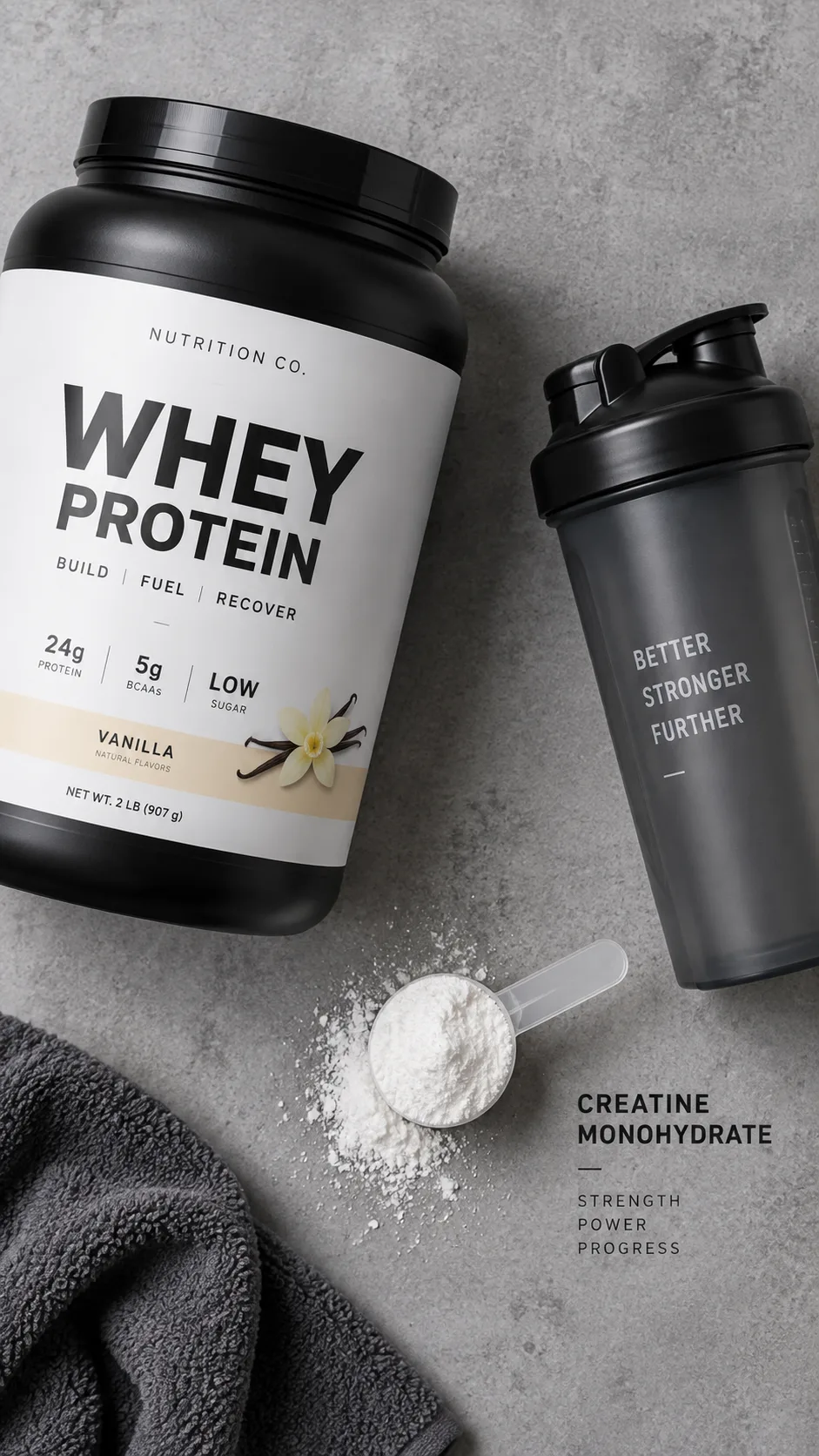
- Creatine monohydrate: 3 to 5g daily, the most researched performance supplement on earth. Examine.com’s creatine page summarises hundreds of studies if you want proof.
- Whey or casein protein: not magic, just convenient protein when you can’t cook.
- Vitamin D: only if you’re deficient, which happens more often than people assume, even in sunny countries.
Skip everything else: mass gainers loaded with sugar, testosterone “boosters,” BCAAs. IMO the money’s better spent on eggs and meat.
Step 10: Track the right things
The scale lies constantly. Use several signals:
- Weekly weight average: the trend matters, not the number.
- Gym logbook: rising weights and reps confirm you’re building, not just storing.
- Waist measurement: if your waist grows faster than your arms, cut 200 calories.
- Monthly photos: same light, same pose, same time of day. Photos catch what mirrors miss.
- Energy and sleep quality: a good bulk feels good. A bad one feels heavy and sluggish.
Give it 12 weeks minimum before you judge results. Muscle grows at roughly 0.5 to 1kg per month for beginners and slower after that. Anyone promising faster is selling something.
The wrap-up
Building muscle without the junk food trap isn’t complicated. It’s just consistent. Set a modest surplus, hit your protein daily, eat real carbs and fats, lift progressively heavier, and sleep like it’s your job.
Quick recap of what matters:
- 250 to 400 calorie surplus, not a 1,000-calorie free-for-all.
- 1.6 to 2.2g protein per kg, spread across the day.
- Whole foods first, treats as a small bonus.
- Progressive resistance training 3 to 4 times weekly.
- 7 to 9 hours of sleep, every single night.
- Track weekly, adjust monthly, judge quarterly.
Start tomorrow morning with four eggs instead of two. Then build from there. In six months you’ll look back at the version of you who thought doughnuts were a bulking strategy and laugh. 🙂