

You just found out you’re pregnant, and suddenly everyone has opinions about your lunch. Your aunt says eat for two. Your coworker says cut the carbs. Some corner of the internet insists one sip of coffee will ruin everything.
Here’s the calmer version. A solid pregnancy diet plan doesn’t demand perfection, expensive superfood powders, or a spreadsheet. It asks for consistency, a short list of nutrients you pay attention to, and enough flexibility to survive the week when only crackers taste acceptable.
So: what your body needs in each trimester, which foods deliver it, and how to eat well when nausea or heartburn or plain exhaustion is running the show.
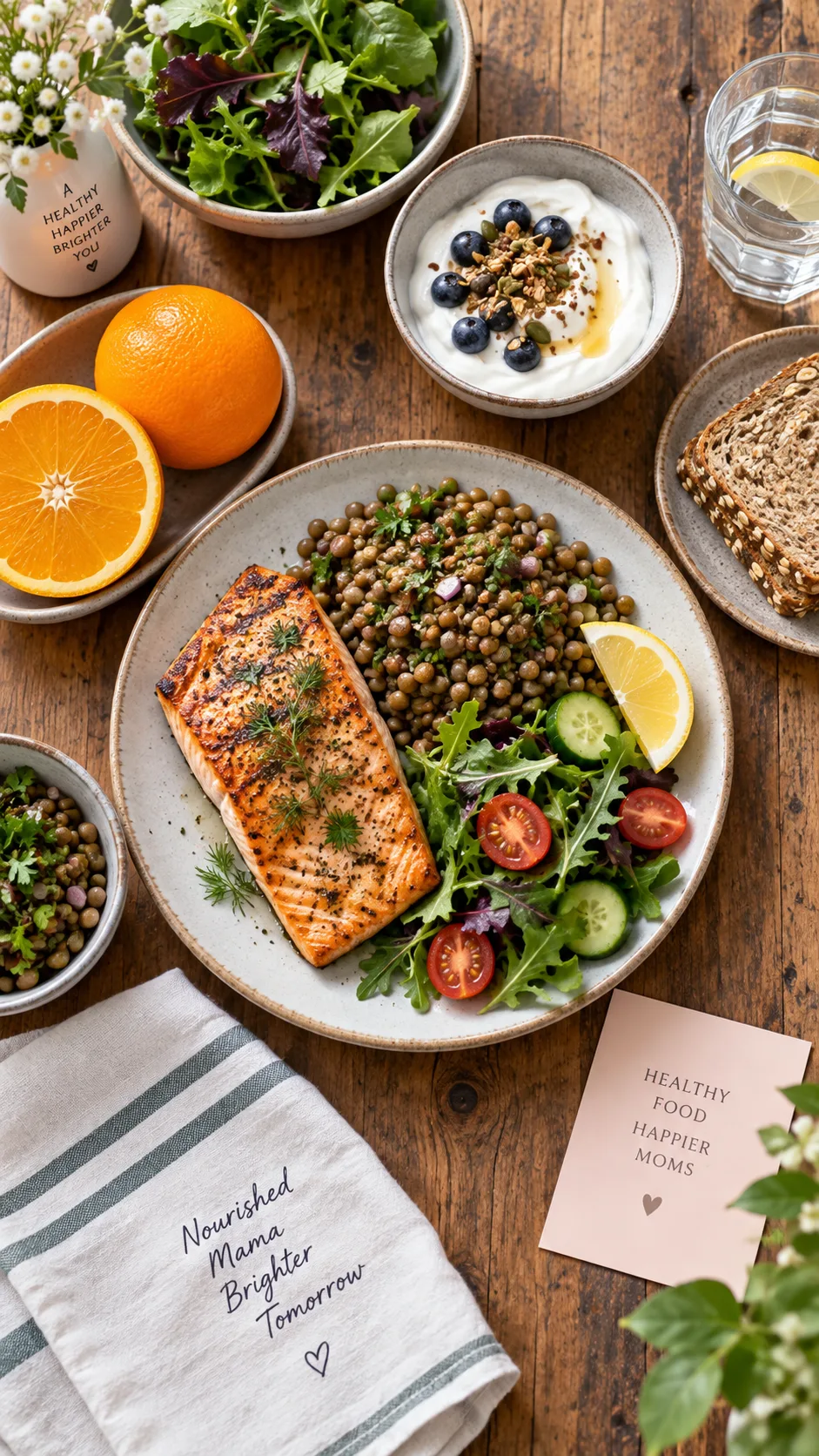
First things first: you’re not eating for two
Sorry to disappoint your grandmother. During the first trimester, your calorie needs barely budge. Your baby is roughly the size of a raspberry, and a raspberry doesn’t need a second dinner.
Here’s the general guidance from the American College of Obstetricians and Gynecologists:
- First trimester: no extra calories needed
- Second trimester: about 340 extra calories per day
- Third trimester: about 450 extra calories per day
Translation: 340 calories looks like a Greek yogurt with berries and a handful of walnuts. It does not look like a large pizza. IMO this single fact saves more pregnant people from unnecessary guilt than any other nutrition tip.
Quality matters far more than quantity. Your baby pulls nutrients straight from your bloodstream, so what you eat becomes the raw material for a brain, a spine, a heart, and roughly 300 bones. Wild, when you sit with it for a second.
The nutrients worth tracking
Forget counting every macro. Watch these seven, and the rest tends to sort itself out.
1. Folate (or folic acid)
Target: 600 mcg daily. Folate builds your baby’s neural tube, the structure that becomes the brain and spinal cord, and it does that work in the first 28 days, often before you even know you’re pregnant.
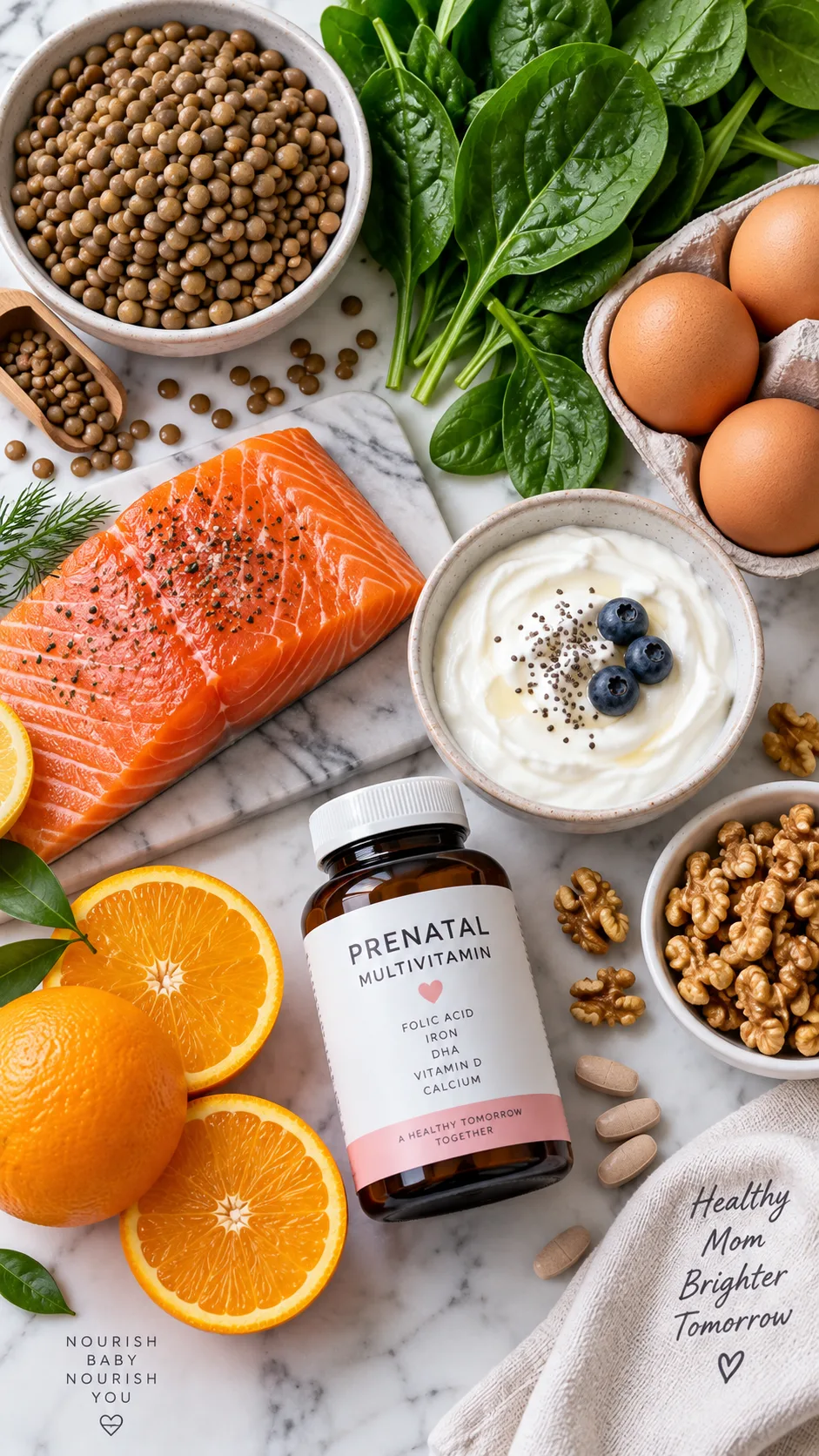
The CDC recommends 400 mcg of folic acid daily for anyone who could become pregnant. Food sources: lentils, spinach, asparagus, fortified cereals, black beans, and oranges.
2. Iron
Target: 27 mg daily. Your blood volume expands by up to 50% during pregnancy. Without enough iron you get anemia, and anemia feels like dragging a sandbag through your entire second trimester.
Pair iron with vitamin C, because the combination dramatically boosts absorption. Squeeze lemon on your spinach. Drink orange juice with your fortified cereal. Simple trick, big payoff.
3. Calcium
Target: 1,000 mg daily. Your baby builds a skeleton from scratch, and if you skimp, your body robs your own bones to supply the demand. Not a fair trade.
Dairy works beautifully, but so do fortified plant milks, tofu, sardines, kale, and tahini.
4. Choline
Target: 450 mg daily. Choline supports brain development and memory formation, yet most prenatal vitamins contain shockingly little. Eggs win here: two whole eggs give you roughly 300 mg.
Keep the yolks. Please. The yolk holds nearly all the choline.
5. DHA (omega-3s)
Target: 200 to 300 mg daily. DHA builds retinas and brain tissue. Low-mercury fish delivers it best: salmon, sardines, anchovies, trout, and herring.
6. Iodine
Target: 220 mcg daily. Iodine drives thyroid function, which drives your baby’s neurological development. Use iodized salt, eat dairy, and add seaweed occasionally.
7. Vitamin D
Target: 600 IU daily, though many practitioners recommend more. Ask your provider for a blood test. Deficiency is extremely common, and you cannot guess your levels.
Trimester one: surviving on toast and ambition
Nobody warns you that “morning sickness” lasts all day and lies about its schedule. Somewhere between 70% and 80% of pregnant people feel nauseated in the first trimester, and during those weeks “eating a balanced diet” often means keeping anything down at all.
So lower the bar on purpose.
What helps
- Eat before you feel hungry. An empty stomach triggers nausea faster than almost anything else. Graze every two hours.
- Keep crackers by your bed. Eat a few before you sit up. It sounds like folk wisdom and it works.
- Separate liquids from solids. Drink 30 minutes before or after meals, not during. A sloshing stomach rebels.
- Try ginger. Real ginger tea, ginger chews, or grated ginger in hot water. Research keeps backing it up for nausea relief.
- Go cold. Cold foods release fewer smells, and smells are the enemy. Yogurt, smoothies, cold noodles, fruit.
- Take your prenatal at night. Swallowing a horse-sized pill on a queasy stomach? Hard pass. Take it before bed with a snack.
Vitamin B6 (about 25 mg, three times daily) plus doxylamine has strong evidence behind it for nausea. Talk to your provider before you start anything. I’m not your doctor, just your well-read friend.
First trimester priorities
- Folate: non-negotiable, since this is the neural tube window
- Hydration: aim for 8 to 10 cups, because dehydration makes nausea and fatigue worse
- Protein: even small amounts steady your blood sugar and calm the queasiness
If you eat plain bagels for three weeks straight, you haven’t failed. You’ve survived. Your prenatal vitamin covers the gaps while your stomach negotiates a truce.
Trimester two: the golden window, so use it
Nausea fades. Energy returns. Food tastes like food again. This is the best stretch of pregnancy and the easiest time to build habits that stick.
Your baby grows fast now, and your appetite finally cooperates. Add those 340 calories, but make them count.
Build every plate like this
- Half the plate: vegetables and fruit, and go for real color variety, not three shades of beige
- A quarter: protein, whether that’s fish, eggs, poultry, beans, lentils, tofu, or lean meat
- A quarter: whole grains or starchy vegetables such as oats, brown rice, quinoa, or sweet potato
- Plus fat: olive oil, avocado, nuts, or seeds, since fat helps you absorb vitamins A, D, E, and K
Vegetables deserve more creativity than steaming. This is where I’ll plug one of my favorites: garden egg, the small white or striped African eggplant. It’s low in calories, high in fiber, and genuinely useful when constipation (hello, third trimester) shows up uninvited.

The iron push starts here
Most providers check your hemoglobin somewhere around weeks 24 to 28, and plenty of people find out they have mild anemia. Get ahead of it.
- Heme iron (absorbs easily): red meat, liver in small amounts, poultry, sardines
- Non-heme iron (needs vitamin C): lentils, beans, tofu, pumpkin seeds, fortified cereal, dark greens
- Skip coffee and tea with iron-rich meals, because tannins block absorption. Wait an hour.
Trimester three: heartburn, tiny stomach, big baby
Your uterus now presses on your stomach like an overenthusiastic roommate. Large meals become physically impossible, and heartburn shows up with a vengeance.
The fix is to change the format, not the nutrition.
Eat small, eat often
Swap three big meals for five or six mini-meals. Each one should carry protein plus fiber plus some fat. Your blood sugar holds steady, your stomach stays comfortable, and your energy stops crashing at 3pm.
Sample rotation:
- Breakfast: oatmeal with chia seeds, walnuts, and berries
- Snack: Greek yogurt and a clementine
- Lunch: lentil soup with whole grain toast and a side salad
- Snack: apple slices with almond butter
- Dinner: baked salmon, roasted sweet potato, sautéed greens with garlic
- Evening: a glass of milk or fortified plant milk with a few dates
Beating heartburn without giving up flavor
- Stop eating two to three hours before you lie down.
- Sleep propped up on extra pillows or a wedge.
- Cut the obvious triggers: fried food, citrus, tomato sauce, chocolate, mint, and carbonated drinks.
- Chew slowly, since rushing swallows air and adds pressure.
Constipation: the unglamorous truth
Progesterone slows your digestion, iron supplements slow it further, and your baby squishes everything. Charming combination.
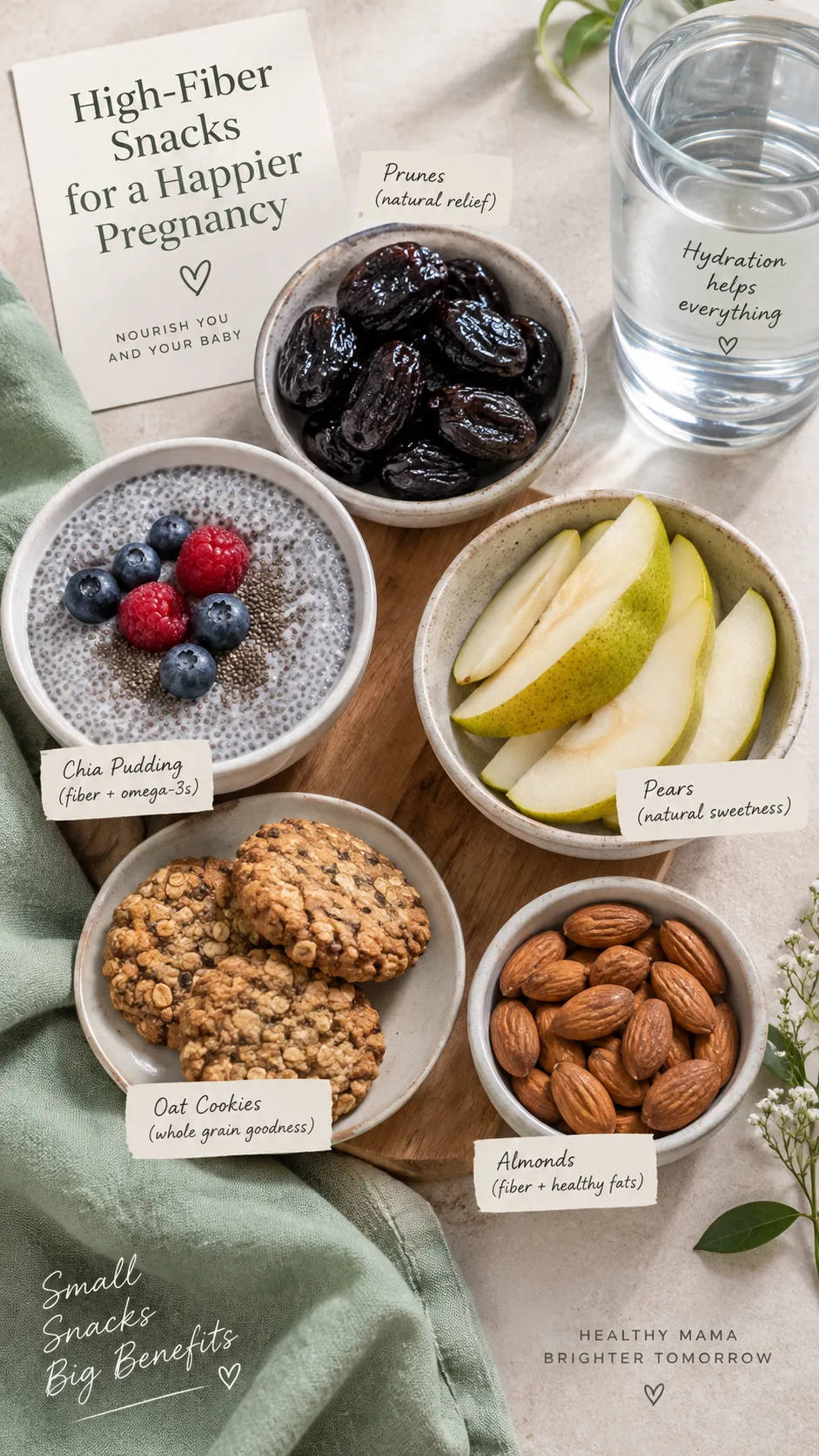
Target 25 to 30 g of fiber daily from prunes, pears, chia seeds, oats, beans, and vegetables. Drink more water than feels reasonable, because fiber without water makes things worse rather than better. Fiber-rich vegetables like garden egg help here too, and they’re mild enough for a sensitive third-trimester stomach.
Foods to skip (and the ones you can stop worrying about)
The avoid-list gets wildly exaggerated online. Here’s the evidence-based version, in line with NHS guidance.
Genuinely avoid
- High-mercury fish: shark, swordfish, king mackerel, bigeye tuna, tilefish, marlin
- Raw or undercooked fish, meat, and eggs (unless the eggs are pasteurized)
- Unpasteurized milk, soft cheeses, and juices, since the listeria risk is real and serious
- Deli meats and pâté unless you heat them until steaming
- Raw sprouts: alfalfa, mung, clover
- Alcohol, because no safe amount has been established
- Liver in large amounts, since excess preformed vitamin A carries risks
Moderate, don’t eliminate
- Caffeine: stay under 200 mg daily, roughly one 12 oz coffee. You can keep your coffee. Breathe.
- Fish overall: eat two or three servings weekly of low-mercury options. Skipping fish entirely costs your baby DHA it needs.
- Added sugar: not forbidden, just not the foundation
Things people panic about unnecessarily
Spicy food won’t hurt your baby. Pineapple won’t induce labor. Cooked sushi rolls are fine. Hard cheeses like cheddar and parmesan are fine. Someone always shares a scary rumor at a baby shower, so check it with your provider instead of Facebook.
Special situations worth planning for
Gestational diabetes
Gestational diabetes affects roughly 6% to 9% of pregnancies, and most people manage it with food alone. The strategy comes down to pairing carbs with protein and fat, spreading carbs evenly across the day, and walking after meals.
Your care team will give you specific numbers and a glucose meter. Follow their plan, because general internet advice can’t replace targets set for you.
Vegetarian and vegan pregnancies
Both work perfectly well with attention to a few nutrients:
- Vitamin B12: supplement, always, no exceptions for vegans
- Iron: legumes, tofu, fortified grains, plus vitamin C at every meal
- DHA: an algae-based supplement
- Choline: soybeans, quinoa, broccoli, or a supplement
- Zinc, iodine, and calcium: read your prenatal label carefully
Multiples
Twins raise your calorie, protein, iron, and folate needs significantly. Your provider should refer you to a dietitian, and please take that referral.
Hydration, weight, and the stuff nobody explains well
Water does heavy lifting during pregnancy. It builds amniotic fluid, supports your expanded blood volume, and keeps constipation, headaches, and even dehydration-driven preterm contractions at bay.
Aim for 8 to 12 cups daily. Milk, herbal tea (check which ones are pregnancy-safe), soups, and watery fruit all count. Bored of plain water? Add cucumber, mint, or frozen berries.
About weight gain
Recommended gain depends on your starting BMI:
- Underweight (BMI under 18.5): 28 to 40 lbs
- Normal weight (18.5 to 24.9): 25 to 35 lbs
- Overweight (25 to 29.9): 15 to 25 lbs
- Obese (30+): 11 to 20 lbs
These are ranges, not verdicts. Gain follows a curve rather than a straight line, and stressing over the scale every week helps nobody. Focus on nutrient density and let your body do its thing.
A realistic week of eating, not a Pinterest fantasy
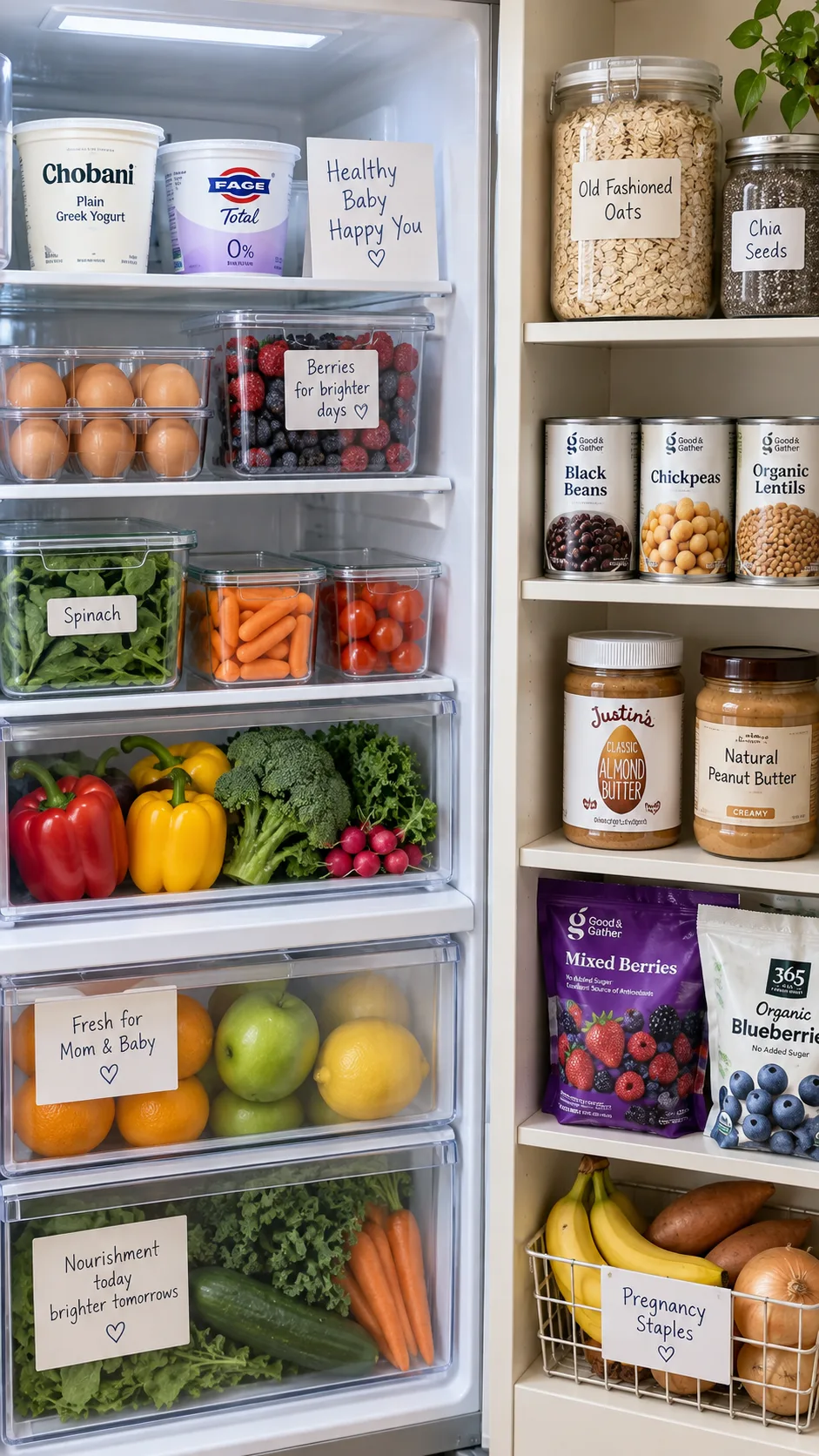
Perfect meal prep sounds lovely until week 32, when standing at the stove for 40 minutes feels like a punishment. Keep these staples on hand:
- Frozen vegetables: just as nutritious as fresh, and zero prep guilt
- Canned beans and lentils: rinse, heat, done
- Canned salmon and sardines: cheap DHA and calcium
- Eggs: choline in its most convenient form
- Frozen berries: smoothies in 90 seconds
- Rolled oats: fiber, iron, and endless variations
- Greek yogurt: protein plus calcium in one tub
- Nuts and nut butters: fat, protein, magnesium
- Vegetables you’ve already roasted and frozen: batch cook once, eat four times
- Rotisserie chicken: no shame whatsoever
FYI: a bowl of oats with yogurt, berries, and walnuts covers protein, fiber, calcium, iron, and omega-3s in one go. That’s the kind of efficiency worth building a routine around.
Don’t skip the prenatal vitamin (but don’t lean on it either)
A prenatal vitamin fills gaps. It doesn’t replace food. Look for one that contains:
- Folate or folic acid: 400 to 800 mcg
- Iron: 27 mg
- Iodine: 150 mcg
- Vitamin D: 600 IU or more
- Choline: whatever it offers, which usually isn’t much, so eat eggs
- DHA: often sold separately, 200 to 300 mg
Skip anything promising “detox,” megadoses of vitamin A, or herbal blends with no pregnancy safety data behind them. The Mayo Clinic has a straightforward breakdown worth reading before you buy.
The bottom line
Good pregnancy nutrition looks boring on paper and works beautifully in practice. Eat protein at every meal. Load up on vegetables and fruit. Choose whole grains. Get your iron, folate, calcium, choline, DHA, iodine, and vitamin D. Drink water. Take your prenatal.
Adjust the format by trimester: tiny frequent snacks when nausea rules, hearty balanced plates during the golden second trimester, and small mini-meals once your stomach loses its real estate.
My honest opinion after watching friends go through this: the people who eat well through pregnancy aren’t the ones with the strictest rules. They’re the ones who keep good food within arm’s reach and forgive themselves on the bad days.
Start with one change this week. Add a vegetable to dinner. Swap your afternoon cookie for yogurt and fruit. Fill a water bottle every morning. Small habits stack up over 40 weeks, and your body is already doing the hardest work. Feed it well.