

You’ve been doing Romanian deadlifts for months. You feel the burn. You’re putting in the work. So why aren’t your glutes actually growing? The answer is almost always the same: your hip hinge is broken, and you don’t even know it.
The RDL is one of the most effective glute-building exercises you can do, but only when you do it right. Most people turn it into a glorified back exercise without realising it. Let’s fix that right now.
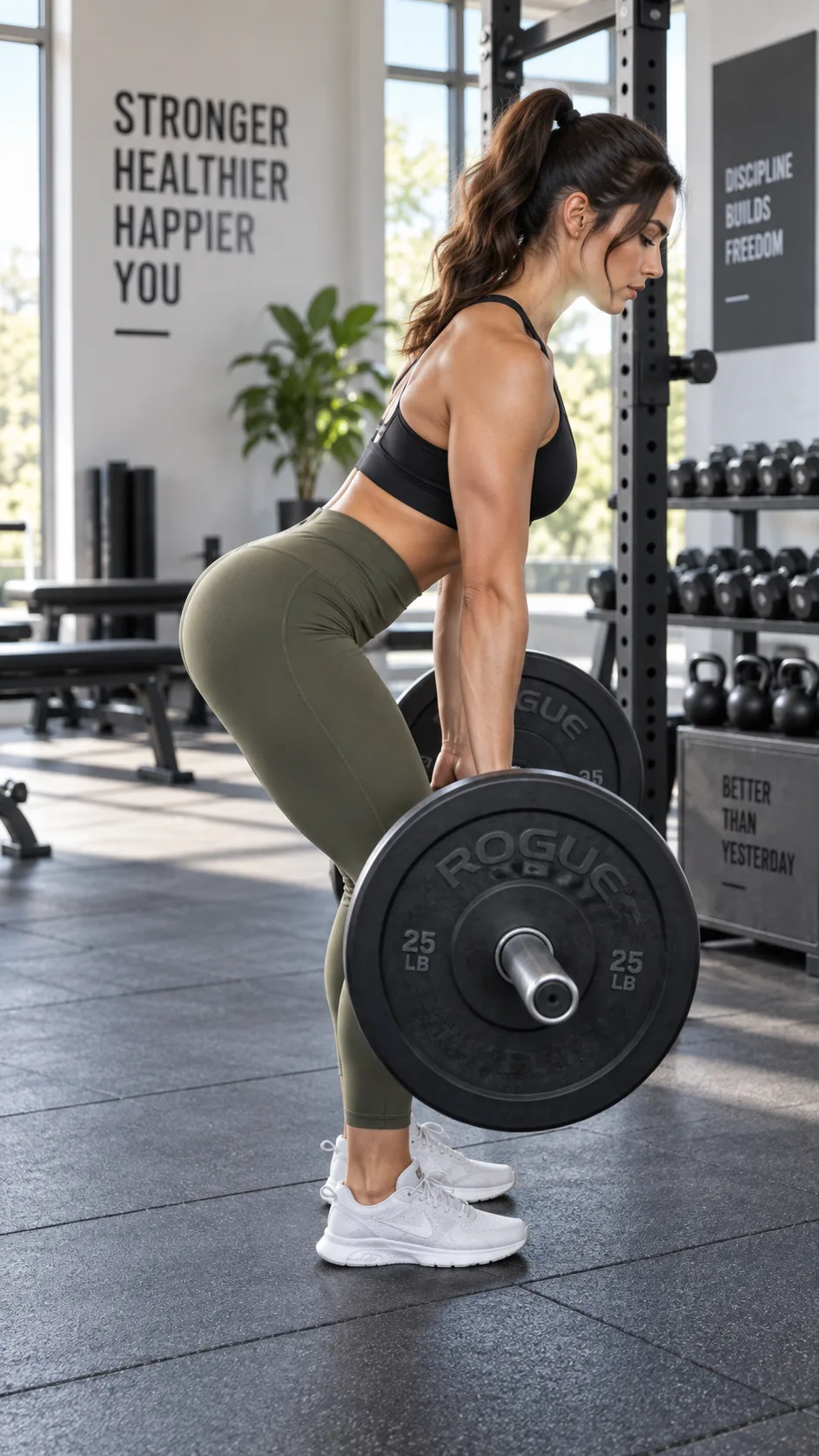
What actually makes an RDL a glute exercise?
The Romanian deadlift is a hip hinge movement, not a squat, not a back extension. The entire point is to load your posterior chain through hip flexion while keeping a neutral spine.
Your glutes act as the primary hip extensors. When you hinge forward correctly and then drive your hips back to standing, your glutes do the heavy lifting. But if your form is off, your lower back and hamstrings steal all the credit.
Ever wondered why some people swear by RDLs for glutes while others say they only feel it in their back? Form is the entire difference. Same exercise, completely different muscles working.
The hip hinge mistake everyone makes
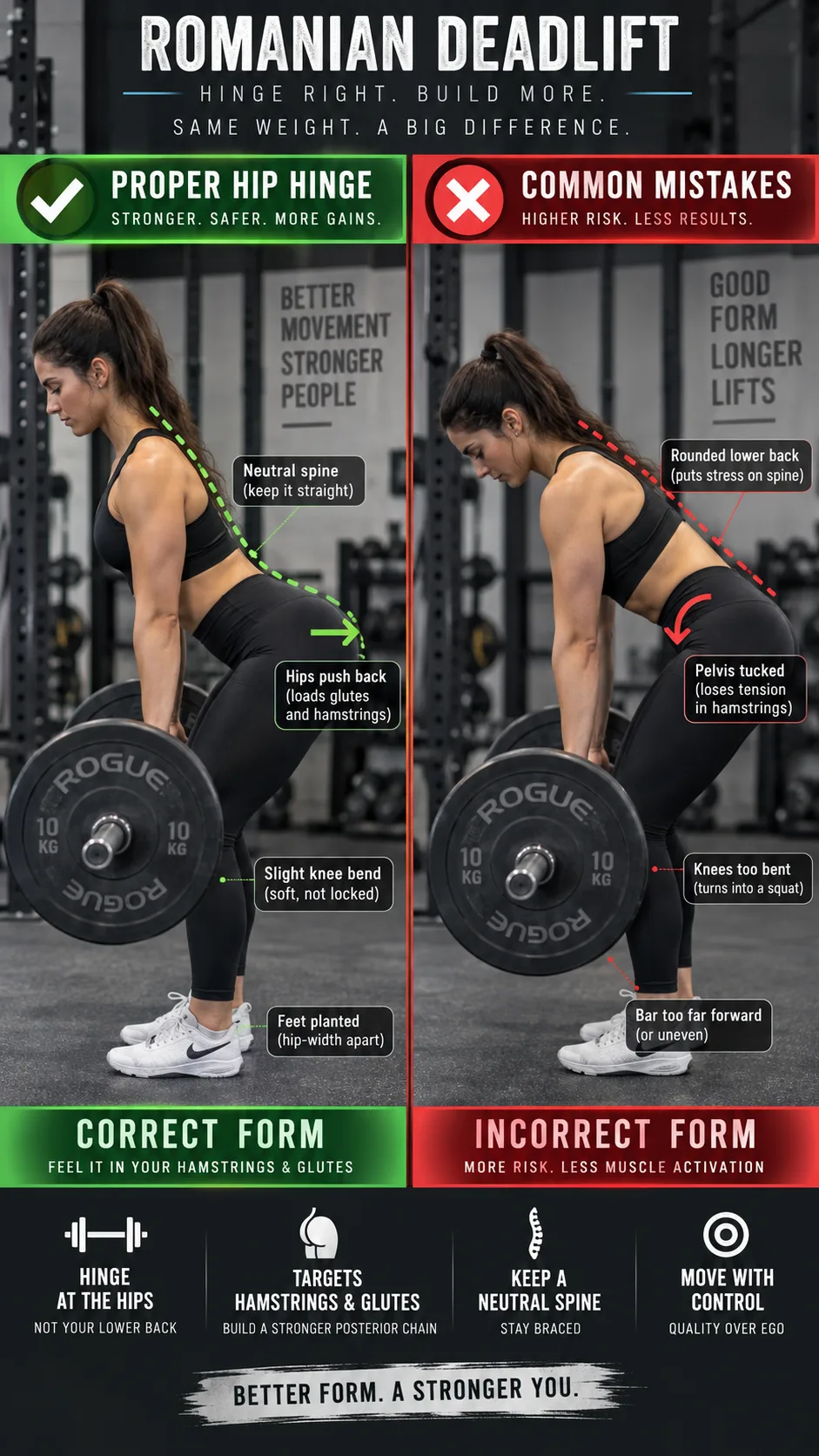
The most common RDL mistake is bending at the spine instead of the hip. People round forward, tuck their tailbone, and essentially fold in half. That’s not a hip hinge. It’s a recipe for a bad back and zero glute activation.
A true hip hinge means your pelvis tilts forward (anterior tilt) as you lower the weight. Your chest stays proud, your lower back stays in its natural arch, and your hips push backward, not your chest downward.
Think of it this way: you’re trying to close a car door with your butt. Push those hips back like there’s a wall behind you. That is the movement pattern you’re after.
Signs your hip hinge is off
- You feel the burn almost entirely in your lower back
- Your lower back rounds as soon as you add weight
- The barbell drifts forward away from your legs during the movement
- Your knees bend more and more as you go heavier (turning it into a squat)
- You don’t feel a stretch in your hamstrings at the bottom
If two or more of those sound familiar, your hip hinge needs work before anything else. No shame. Most gym-goers have never been taught the pattern properly.
How to fix your RDL form step by step
Before you load up the bar, master the movement with your bodyweight or a light dowel rod. Seriously. Ego is expensive in this sport. 🙂
- Stand hip-width apart with a slight bend in your knees. Not a squat, just soft knees.
- Brace your core like you’re about to take a punch. Ribcage down, abs tight.
- Push your hips backward as the first movement. Not chest forward, hips BACK.
- Keep the bar close to your body, almost dragging it down your shins and thighs.
- Maintain a neutral spine throughout. No rounding, no hyperextension.
- Lower until you feel a deep hamstring stretch (typically mid-shin for most people).
- Drive through your heels and squeeze your glutes hard at the top to lock out.
That glute squeeze at the top is non-negotiable. Don’t just stand up. Squeeze your way up. That’s where a big chunk of your glute work happens.
RDL variations that maximise glute activation
Once your hip hinge is solid, you can start playing with variations to target your glutes from different angles and intensities. Not all RDLs are created equal when it comes to glute emphasis.
Single-leg RDL
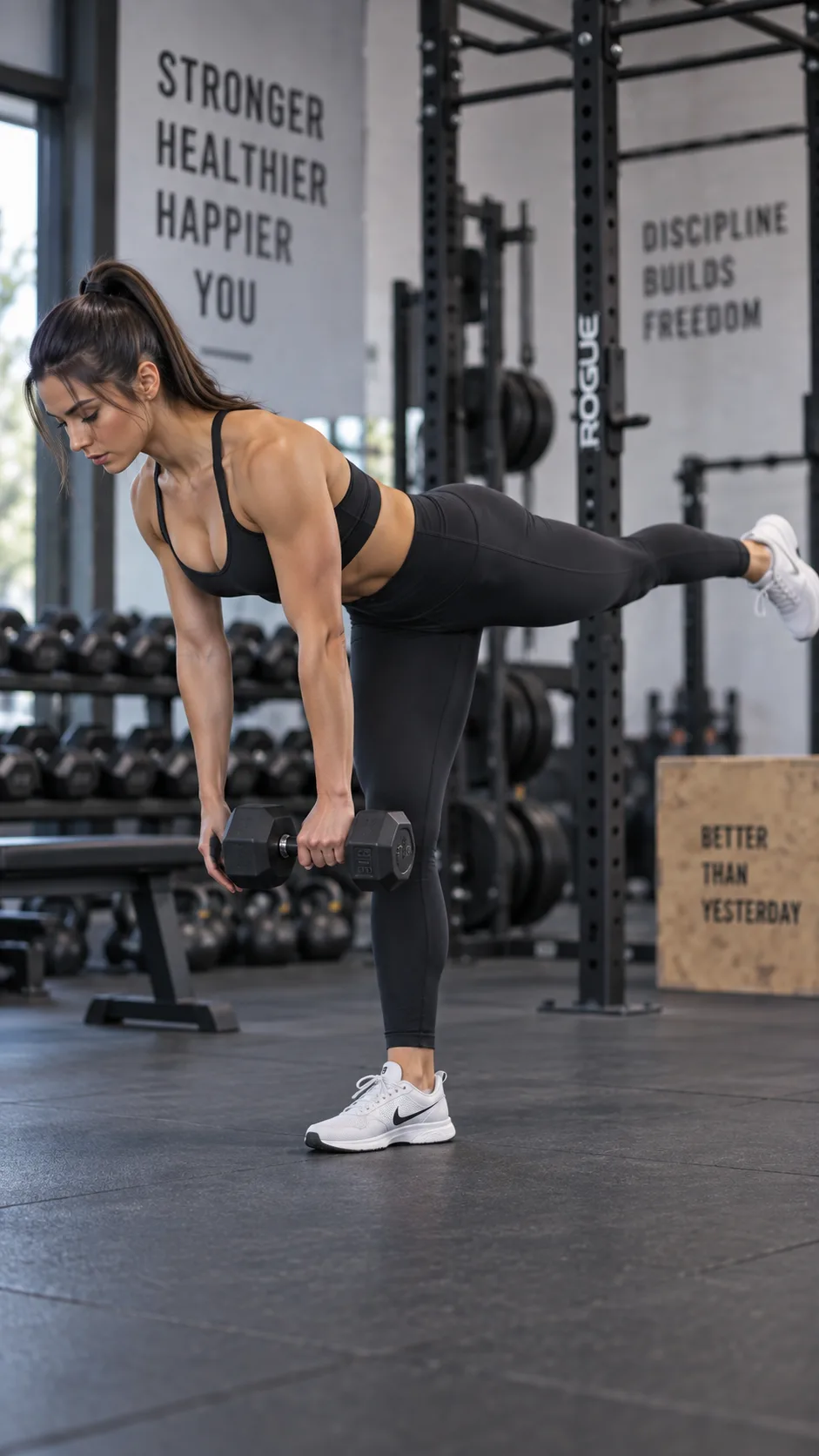
The single-leg Romanian deadlift is arguably the most glute-dominant version of the movement. It forces your glute medius and maximus to stabilise while working through the full hip hinge range. Your balance will be terrible at first. That’s completely normal.
Dumbbell RDL
Dumbbells let you keep the load closer to your centre of gravity and make it easier to feel the movement pattern. Many coaches recommend starting with dumbbell RDLs before progressing to a barbell. According to ACE Fitness, mastering foundational movement patterns with lighter loads dramatically reduces injury risk.
Banded RDL
Adding a resistance band around your hips during the movement increases tension at the top, exactly where your glutes need to work hardest. This is a great tool for building the mind-muscle connection with your glutes.
The mind-muscle connection is not a myth
Research published by the National Institutes of Health backs what experienced lifters already know: consciously thinking about the muscle you’re targeting increases its activation. This isn’t gym-bro folklore. It’s science.
Before each RDL set, place your hands on your glutes and squeeze them deliberately. Hold for two seconds. This wakes the muscle up neurologically before you load it. It sounds weird, but it works.
If you’re someone who struggles to feel their glutes working at all, check out how to grow glutes that actually change your shape. It covers activation strategies that make a massive difference for people who are quad dominant or simply disconnected from their posterior chain.
Programming RDLs for maximum glute growth
Doing RDLs correctly is step one. Programming them intelligently is step two. Here’s what the evidence and experienced coaches actually recommend.
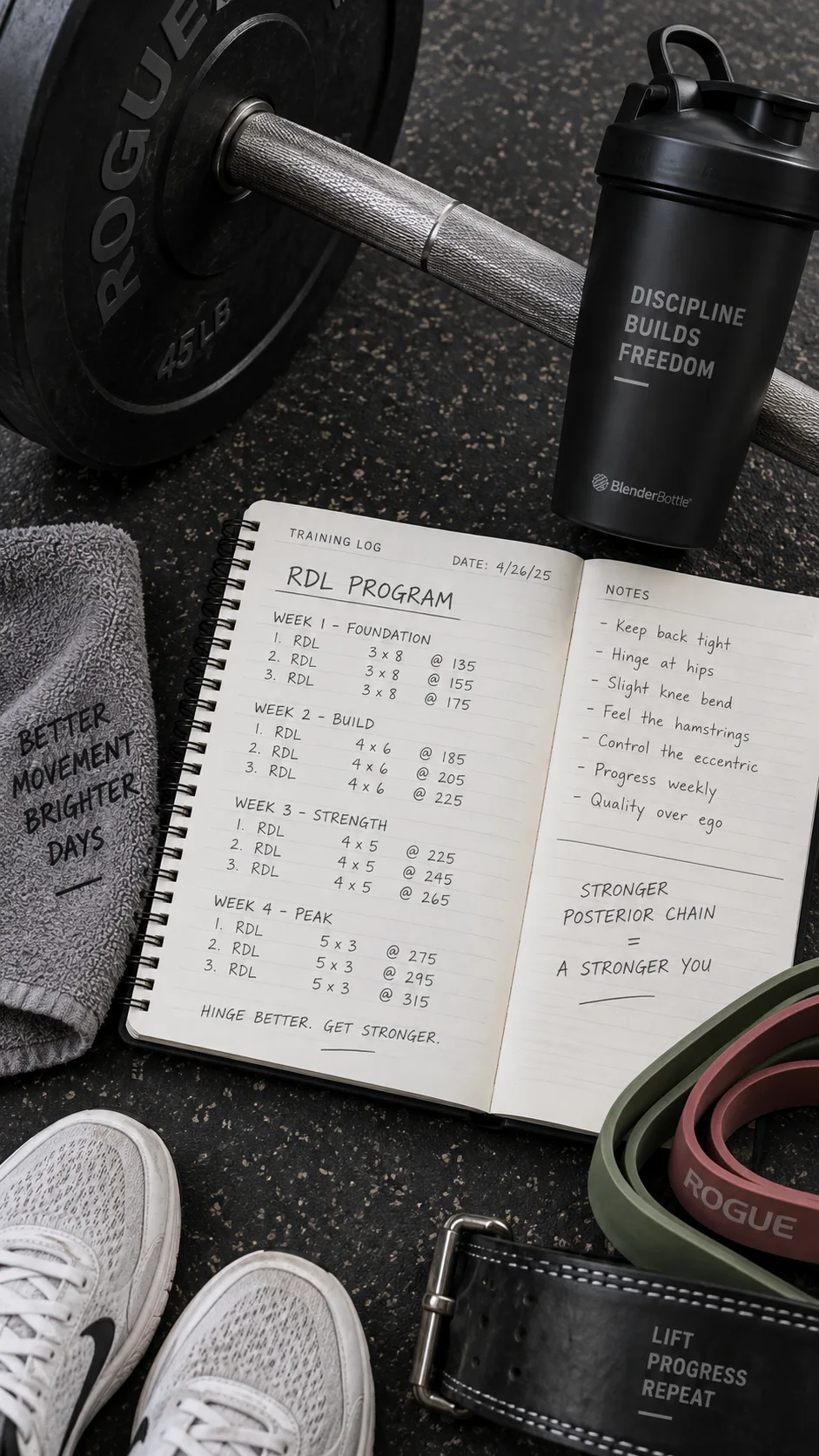
- Frequency: 2x per week works well for most people. Enough stimulus, enough recovery.
- Sets and reps: 3-4 sets of 8-12 reps for hypertrophy (muscle building)
- Tempo: 3-second eccentric (lowering phase) to maximise time under tension
- Load: Choose a weight where the last 2 reps are genuinely hard, but form never breaks
- Rest: 90-120 seconds between sets for hypertrophy-focused training
According to Stronger By Science, the eccentric (lengthening) phase of a lift is particularly important for muscle growth. Don’t rush the descent. That’s where a lot of your gains live.
Common RDL cues that actually help
Good coaching cues can transform how a movement feels. These are the ones that genuinely click for most people when learning the hip hinge for glutes.
- “Push the floor away with your heels” — keeps you grounded and activates the posterior chain
- “Show your logo” — if your shirt has a logo on the chest, aim to show it to the mirror as you hinge
- “Hips to the wall behind you” — promotes the backward hip push everyone struggles with
- “Zipper up your abs” — creates core tension without breath-holding
- “Proud chest, proud lats” — prevents upper back rounding and keeps the bar close
The “hips to the wall” cue is the single most effective one for beginners, in my opinion. It immediately shifts the pattern from bending over to actually hinging at the hip joint.
Why your glutes aren’t growing even with good form
Sometimes form is fine and you’re still not seeing results. In that case, the issue is usually progressive overload or insufficient volume. You need to consistently challenge the muscle over time: more reps, more weight, more sets, across weeks and months.
Glute growth also takes longer than most people expect. We’re talking months of consistent training, not weeks. Patience plus progressive overload plus good form is the actual formula.
If you want a broader blueprint for building a rounder, fuller posterior, take a look at this guide on growing glutes that actually change your shape. It pairs perfectly with getting your RDL form dialled in.
Wrapping it up
The Romanian deadlift is one of the best glute exercises you can do, but only when your hip hinge is actually working. Push your hips back, keep your spine neutral, feel the stretch, and squeeze your glutes hard at the top. That’s the whole game.
Stop letting a broken movement pattern rob you of hard-earned gains. Fix the hinge first, then add the weight. Your glutes will respond, and your lower back will stop filing complaints. :/
Start light, nail the pattern, and build from there. Consistency with correct form will always beat heavy weight with sloppy technique. Every single time.