

You’re doing squats, lunges, hip thrusts, the whole program, and your quads are burning, your lower back is aching, but your glutes? Completely silent. Sound familiar? You’re not alone, and you’re not broken.
This is one of the most common fitness frustrations out there, and it has a name: gluteal amnesia. Your glutes have essentially forgotten how to fire properly. The good news is you can fix it, and you do not need any fancy equipment or a new gym membership.
Why you can’t feel your glutes (the real reason)
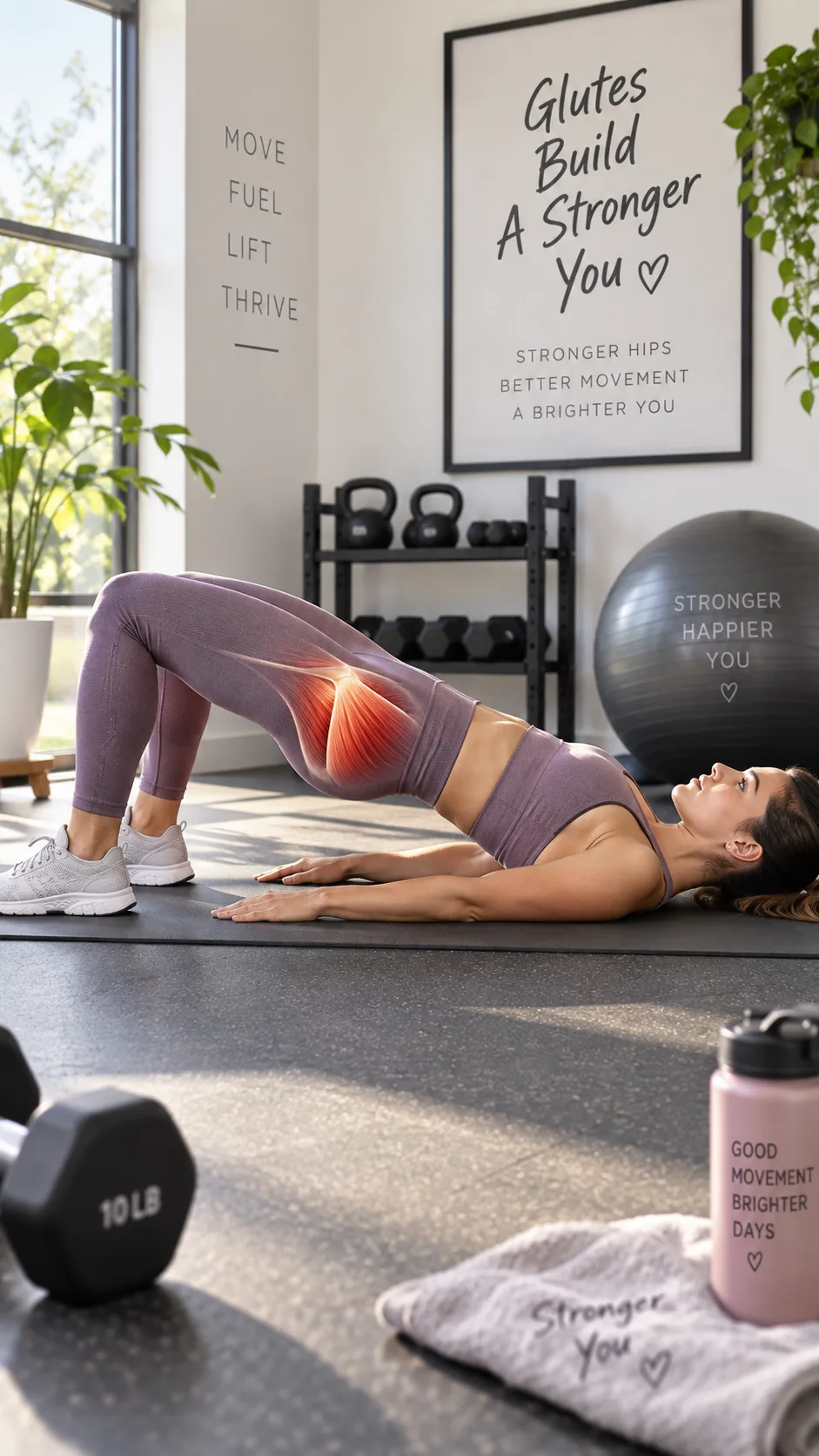
Most people blame their workout. The real culprit is how you live the other 23 hours of your day. Sitting at a desk, on a couch, or in a car keeps your hip flexors tight and shortened for hours on end. When your hip flexors are chronically tight, they pull your pelvis into anterior tilt, and that shuts down your glutes.
Think of it like a tug of war. When your hip flexors are constantly “on,” your glutes learn to stay “off.” Over time, your nervous system stops recruiting your glutes first. Other muscles, your lower back, hamstrings, and quads, pick up the slack. That’s why your back hurts after deadlifts instead of your glutes burning after hip thrusts.
Research published by the National Institutes of Health found that prolonged sitting significantly inhibits glute activation and contributes to lower back pain. Your office job is literally working against your training.
The fix starts before your workout
Here’s something most trainers don’t say loudly enough: glute activation is a pre-workout non-negotiable, not an optional warmup. If you go straight into heavy squats without waking your glutes up first, you’ll keep feeling that same frustrating nothingness in your backside.
The goal is straightforward. Turn your glutes on before you load them. Think of it as sending a “wake up” signal to your nervous system. Once they’re firing, every rep in your actual workout becomes far more effective.
Stretch your hip flexors first
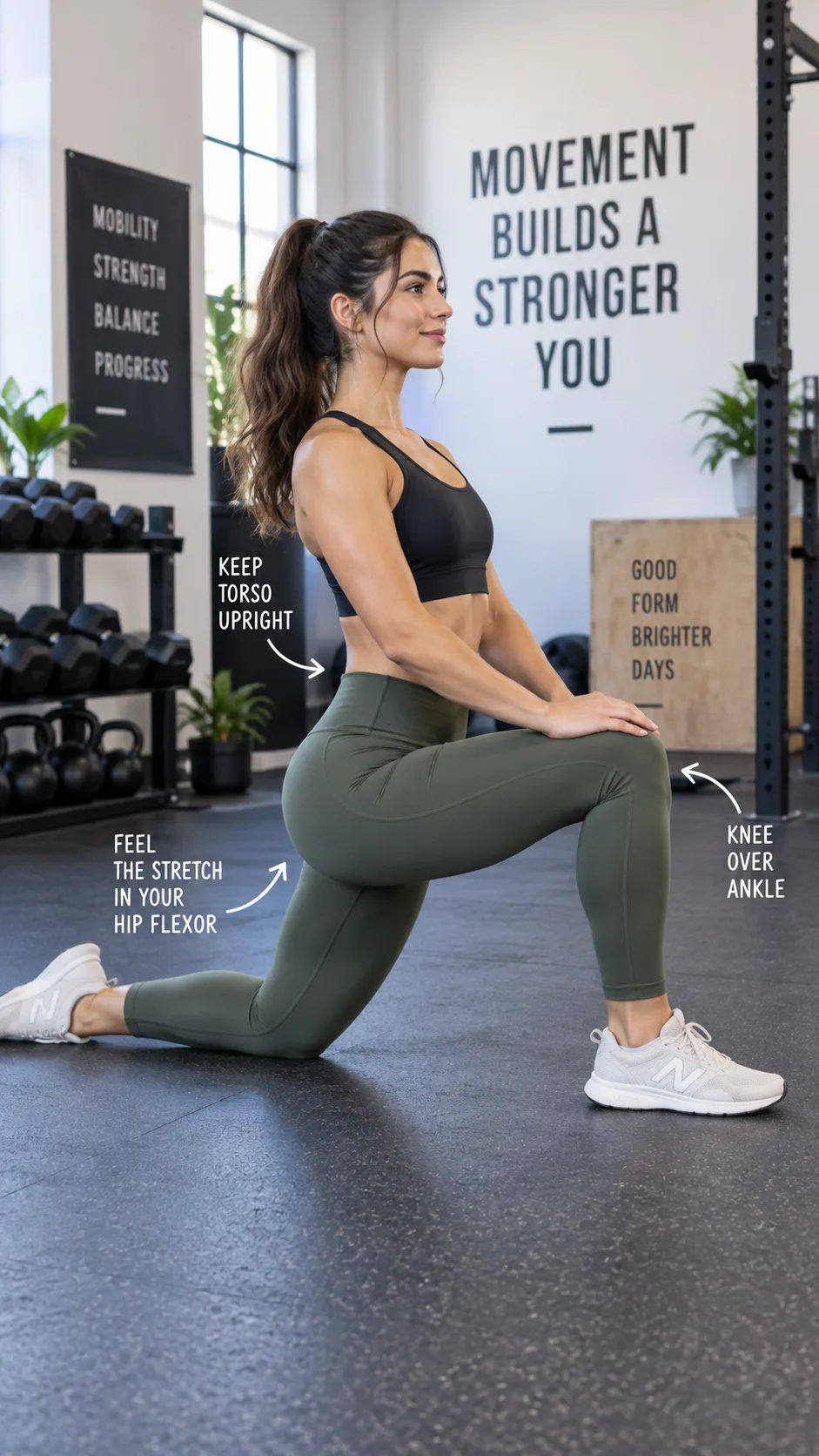
Before any glute activation work, spend 60 to 90 seconds on each side with a deep hip flexor stretch. A kneeling lunge stretch or a couch stretch works well here. You’re releasing the muscle that’s been suppressing your glutes all day.
Don’t rush this part. Most people skip stretching entirely, then wonder why they still can’t feel anything. The hip flexor stretch is the single most underrated step in the entire process.
Best glute activation exercises that actually work
These aren’t random exercises. Each one specifically targets glute activation and the mind-muscle connection. Start light, move slow, and focus hard on squeezing at the top of every rep. If you can’t feel it, slow down even more.
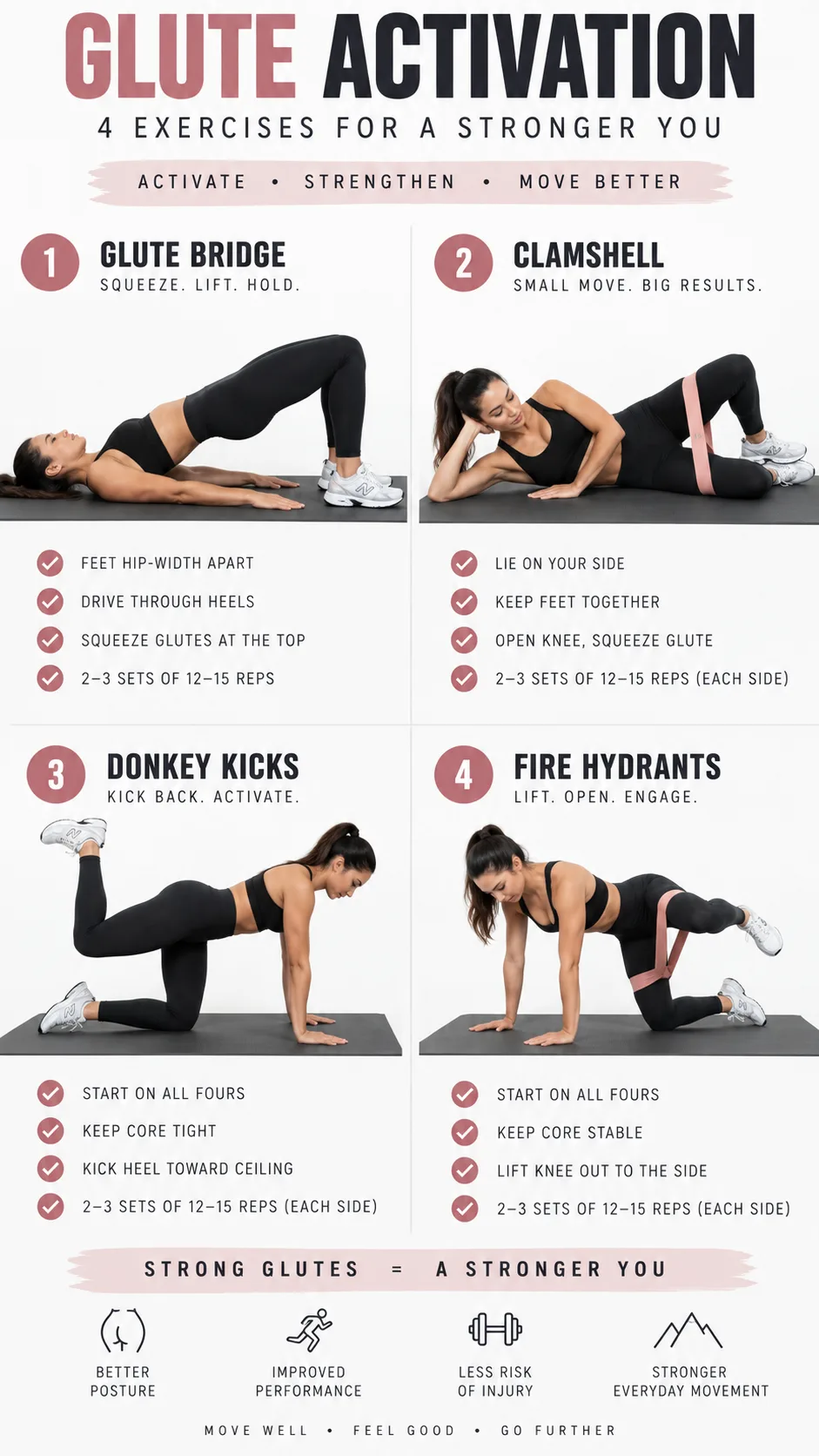
1. Glute bridge (the king of activation)
Lie on your back, knees bent, feet flat on the floor. Drive through your heels, squeeze your glutes hard at the top, and hold for 2 seconds. Do 3 sets of 15 reps, controlled and deliberate. No rushing. There’s a reason this exercise shows up in every rehab and athletic program in existence. It works.
2. Clamshells with a resistance band
Lie on your side with a resistance band just above your knees. Open your knees like a clamshell while keeping your hips stacked and still. This targets your glute medius, the side portion of your glutes that most people completely neglect. Do 15 to 20 reps per side.
3. Donkey kicks
On all fours, keep your knee bent at 90 degrees and kick one leg straight back and up. Squeeze your glute at the top, not your lower back. If your lower back arches, you’re compensating. Bring the range of motion down a bit and reset.
4. Fire hydrants
Still on all fours, lift one knee out to the side (like a dog at a fire hydrant, yes, that’s really what it’s called). This one burns seriously fast. Add a resistance band to make it even more challenging.
- Glute bridge — 3 sets x 15 reps (2-second hold at top)
- Clamshells with band — 3 sets x 15 to 20 reps per side
- Donkey kicks — 3 sets x 12 to 15 reps per side
- Fire hydrants — 3 sets x 12 to 15 reps per side
- Banded squat walks — 3 sets x 10 steps each direction
The mind-muscle connection is everything
You can do all the right exercises and still feel nothing if you’re not intentionally connecting your brain to your glutes. The mind-muscle connection is not a bro-science myth. Neuroscience backs it up. A study from the Journal of Strength and Conditioning Research found that focusing your attention on a specific muscle during exercise significantly increases its activation.
Here’s a practical trick that actually works: put your hand on your glute during activation exercises. Touch creates awareness. Your brain starts firing signals to the muscle you’re physically touching, which improves recruitment noticeably. Sounds simple. It genuinely works.
Program glute activation into every session
Don’t treat glute activation like an occasional add-on. Make it the first 10 minutes of every lower body session, without exception. Consistency is what retrains your nervous system over time.
If you’re building a full structured routine, check out The Only Workout Guide You Need to Build a Routine That Actually Sticks. It walks you through how to program everything properly from warmup to cooldown.
And if you’re short on time, the 3-2-1 Workout Method is a smart way to pack activation, strength, and cardio into one efficient session. Time constraints are not a valid excuse once you’ve tried this approach.
Common mistakes that kill glute activation
- Going too heavy too fast — heavier weights recruit dominant muscles first, which means your quads and back take over before your glutes even show up
- Moving too fast — speed kills the mind-muscle connection; slow every rep down deliberately
- Not squeezing at the top — the squeeze is where the activation happens; skipping it is like ordering food and walking out before it arrives
- Skipping hip flexor stretching — tight hip flexors will sabotage everything; always stretch them first
- Only doing activation on leg days — your glutes need consistent daily work to overcome years of sitting habits
Nutrition and recovery matter too
Your glutes can’t grow or function properly if you’re under-fueling. Protein supports muscle activation, recovery, and growth, and you can’t skip it. Aim for at least 0.7 to 1g of protein per pound of bodyweight daily.
Micronutrients matter here too. Calcium supports proper muscle contraction, and if you’re not getting enough, your muscles, including your glutes, won’t fire efficiently. Check out this list of Nigerian foods rich in calcium if you want to support muscle function through your diet.
According to Healthline’s protein intake guide, adequate daily protein significantly supports muscle repair and neuromuscular function, both of which are important for getting your glutes to finally wake up and do their job.
How long until you actually feel it?
Realistically, most people notice glute activation within 2 to 3 weeks of consistent practice. Some feel it within the first session once they slow down and focus properly. It depends on how long the gluteal amnesia has been building and how consistently you practice activation going forward.
The word that matters most is consistent. One good activation session does not rewire years of poor movement patterns. But 3 to 4 weeks of daily activation work genuinely changes things. Stick with it.
Your glutes are not broken. They just need waking up.
If you’ve been grinding through workouts and feeling nothing in your glutes, the problem isn’t your genetics or your exercises. It’s your activation strategy. Most people jump straight into heavy lifts without ever properly recruiting the muscle they’re trying to train.
Here’s your action plan:
- Stretch your hip flexors before every session
- Run through your glute activation circuit (bridges, clamshells, donkey kicks, fire hydrants)
- Slow down every rep and focus hard on the mind-muscle connection
- Be consistent. Do this 4 to 5 times per week minimum
- Support your training with enough protein and the right nutrients
Your glutes are among the most powerful muscle groups in your body. Once you actually start feeling them work, your performance, posture, and results will all improve. Stop letting your quads have all the fun. Wake those glutes up and make every rep count.