

You survived the operating room, ditched the hospital gown, and finally made it home to your couch. Now hunger sets in, but your mouth, throat, or stomach rejects solid food. You entered that strange post-op phase where chewing a simple slice of toast feels like chewing broken glass.
Most discharge sheets offer dreary advice: eat bland foods. They tell you to sip tepid chicken broth and stomach cold applesauce until you lose your appetite. You deserve real food with real flavor while your body rebuilds injured tissue.
Your cells work overtime right now. White blood cells build brand new tissue scaffolds, reconnect severed blood vessels, and clear away microscopic debris. When you feed that construction site with watery tea and plain gelatin, you drag out your recovery. You can fill your bowl with nutritious, delicious meals that speed up healing and taste great.

Why your body needs soft food after surgery

Anesthesia temporarily shuts down your digestive tract. Narcotic pain medications stop the muscle contractions that push food through your intestines. If you drop a heavy steak into a sleeping stomach, you invite intense nausea, bloating, and vomiting.
Vomiting after an operation puts your incisions in direct danger. Sudden abdominal pressure tears internal stitches. Strong jaw movement rips oral tissue grafts. Violent coughing ruins delicate repairs in your throat. Soft textures remove mechanical stress from your wounds.
Soft textures also save precious metabolic energy. Digestion normally burns large amounts of calories to break down fibrous vegetables, tough meat, and hard starches. Pureed and tender textures bypass that heavy physical labor. Your small intestine absorbs amino acids and micronutrients quickly, sending them straight into your bloodstream where wounds need them.
The U.S. National Library of Medicine notes that transition diets protect healing organs and deliver necessary calories. Starving yourself out of caution only keeps you in bed longer.
The four recovery diet stages
Wait for your surgeon to clear you before moving from liquids to solid purees. Surgical healing follows a clear ladder. Patients who jump ahead often wind up back in clinic with stomach cramps or torn sutures.
- The clear liquid phase: You wake up your digestive tract here. Drink bone broths, clear apple juice, electrolyte solutions, herbal tea, and gelatin. You can use the classic jello trick to satisfy a sweet tooth without distressing your stomach.
- The full liquid phase: Your stomach now tolerates thicker liquids. Pour smooth tomato soup, drinkable yogurt, protein shakes, milk, and strained cream of wheat.
- The pureed phase: Blend food down until you need zero chewing. Eat smooth hummus, pureed root vegetables, whipped cottage cheese, and mashed avocado.
- The soft transition phase: Pick foods that yield to a fork. Add flaky fish, soft scrambled eggs, steamed carrots, tender stews, and mashed bananas to your plate.
Targeted nutrients that rebuild tissue faster
Your body needs physical supplies to build new tissue. When you pack your recovery meals with the right nutrients, incisions close faster, swelling drops, and energy returns.
1. Bioavailable protein
Protein supplies the fundamental building blocks for recovery. Your cells need amino acids like proline, arginine, and glutamine to generate collagen fibers. Collagen forms the physical glue that seals incisions. Aim for 1.2 to 1.5 grams of protein per kilogram of body weight each day during your first few weeks of recovery.
Dairy foods supply dense nutrition with minimal effort. Traditional Greek yogurt delivers twice the protein of standard yogurt, along with live cultures that replenish gut bacteria after heavy courses of antibiotics.
2. Vitamin C and zinc
Vitamin C acts as a necessary partner for the enzymes that link collagen strands together. Without it, new tissue tears easily. Zinc directs cell replication and immune defense. Research from the National Institutes of Health shows that zinc drives tissue repair throughout every stage of wound closure.
3. Anti-inflammatory fats
Keep healthy fats on your plate. Omega-3 fatty acids lower swelling and relieve persistent throbbing around incision lines. Stir extra virgin olive oil, avocado oil, or butter into warm purees. Fats also allow your body to absorb fat-soluble healing compounds like vitamins A and E.
4. Soluble fiber and hydration
Narcotic painkillers cause painful, stubborn constipation. Straining raises blood pressure and puts mechanical stress on surgical sites. Soluble fiber from blended oats, canned pumpkin, and ripe pears pulls water into your stool and keeps digestion comfortable. Drink water, bone broth, and herbal tea throughout the day.
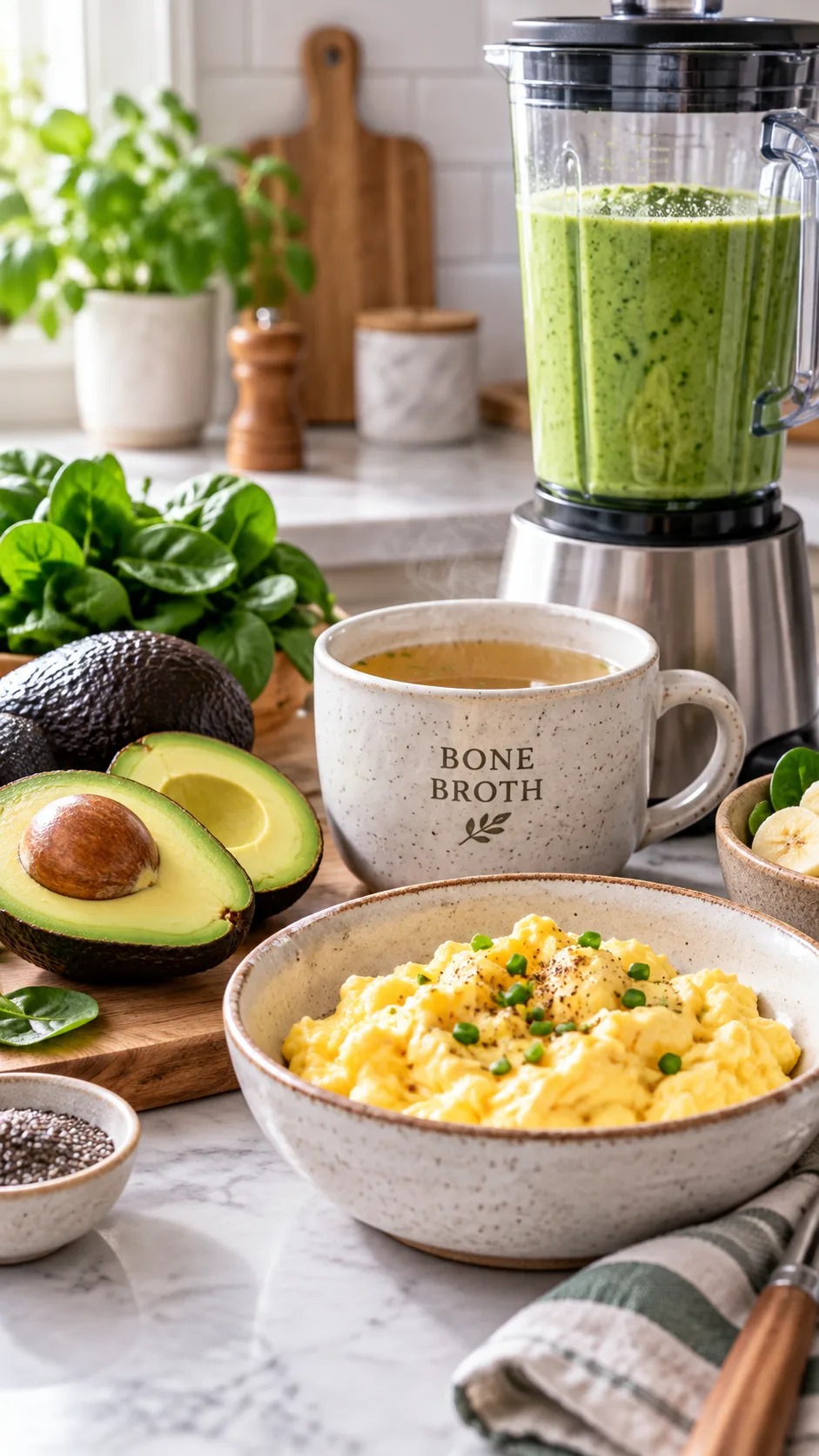
The soft food grocery list
Recycle that generic hospital flyer and take this nutrient-packed shopping list to the grocery store.
Dairy and plant creams
- Full-fat Greek yogurt: Delivers concentrated protein, zinc, and gut-friendly cultures.
- Whole-milk ricotta: Offers a pillowy texture that pairs with honey or basil pesto.
- Cottage cheese: Whirl it in a food processor for a high-protein savory spread.
- Kefir: Coats your stomach with fermented dairy cultures.
- Silken tofu: Blends invisibly into hot soups and fruit smoothies without altering the flavor profile.
Tender protein sources
- Pastured eggs: Whisk them slowly in butter over gentle heat for custardy scrambled eggs.
- Poached salmon: Flake this tender fish with olive oil or homemade mayonnaise.
- Slow-cooked chicken thighs: Simmer them until the meat shreds apart, then mince fine with pan juices.
- Bone broth: Supplies warm fluid rich in natural gelatin.
Soft comfort starches
- Mashed sweet potatoes: Provide vitamin A to support healthy skin regrowth.
- Yukon Gold potatoes: Whip them with cream, butter, and roasted garlic.
- Oatmeal or cream of rice: Simmer grains in whole milk or bone broth for extra calories. Try well-cooked rice alternatives if you want light starches that go down easily.
- Butternut squash puree: Delivers potassium and soothes an irritated throat.
Fruits, vegetables, and fats
- Avocados: Mash them fine with salt and a splash of lime.
- Unsweetened applesauce and cooked pears: Provide soluble pectin to ease digestion.
- Ripe bananas: Blend them into smoothies or freeze and whip them into creamy bowls.
- Pureed pumpkin: Stir it into hot porridge with cinnamon and maple syrup.
7-day recovery meal plan
Fogginess from pain medication makes meal prep difficult. Use this simple daily schedule to guide your week.
-
Day 1: Gentle start
Breakfast: Soft scrambled eggs cooked in butter with mashed avocado.
Lunch: Warm chicken bone broth blended with silken tofu and sea salt.
Dinner: Butternut squash soup swirled with coconut cream.
Snack: Greek yogurt mixed with seedless blueberry preserves.
-
Day 2: Protein focus
Breakfast: Cream of rice cooked in whole milk with cinnamon.
Lunch: Whipped cottage cheese with skinned, pureed ripe peaches.
Dinner: Poached cod flaked into buttery mashed potatoes.
Snack: Chocolate avocado pudding made with cocoa powder and maple syrup.
-
Day 3: Comfort carbs
Breakfast: Pureed oatmeal smoothie with ripe banana and whey protein.
Lunch: Smooth tomato soup with a scoop of whole-milk ricotta.
Dinner: Braised beef minced fine in pan gravy over mashed sweet potatoes.
Snack: Warm cooked apples with cinnamon.
-
Day 4: Tissue repair
Breakfast: Whipped cottage cheese topped with smooth mango puree.
Lunch: Split pea soup simmered in ham broth for extra zinc.
Dinner: Canned salmon mashed with mayonnaise over pureed cauliflower.
Snack: Plain kefir blended with strained strawberries.
-
Day 5: Digestive support
Breakfast: Custardy scrambled eggs with melted mild cheddar.
Lunch: Chicken broth with soft, overcooked pastina pasta.
Dinner: Braised chicken thigh meat pureed with pan gravy and soft carrots.
Snack: Mashed banana stirred into peanut butter powder.
-
Day 6: Broader textures
Breakfast: Pumpkin puree whipped into ricotta cheese with honey.
Lunch: Red lentil soup simmered until completely tender with mild turmeric.
Dinner: Baked white fish flaked under hollandaise sauce with mashed carrots.
Snack: Chilled homemade bone broth gelatin cubes.
-
Day 7: Transition day
Breakfast: Soft poached eggs over creamy polenta with parmesan.
Lunch: Chicken soup with thoroughly softened noodles and vegetables.
Dinner: Tender ground meatloaf mashed into mushroom gravy and potatoes.
Snack: Greek yogurt blended with strained berries.
Recovery kitchen techniques
You do not need professional culinary training to make pureed meals appetizing. Simple kitchen steps transform whole ingredients into comforting dishes. This guide shows how to puree foods to the right consistency:
Foods that derail recovery
A single wrong snack can tear sutures or trigger an infection. Keep these items off your plate until your surgeon discharges you from diet restrictions.
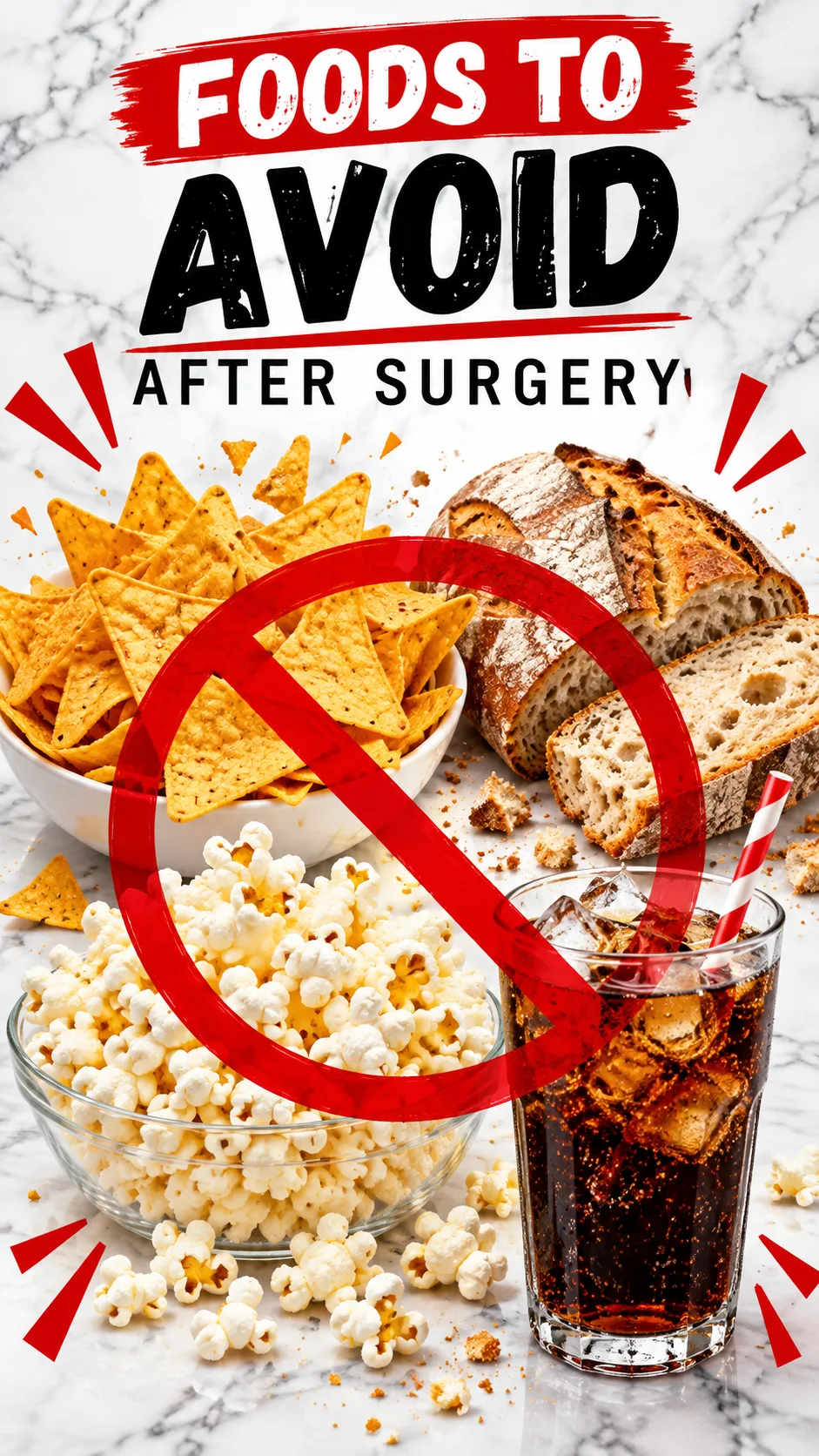
- Crunchy and brittle snacks: Tortilla chips, pretzels, crusty bread, and popcorn jab delicate oral tissues and throat wounds.
- Seeds and hard grains: Berry seeds, sesame seeds, and coarse grains get stuck in open surgical sockets, feeding bacteria.
- Spicy and acidic ingredients: Hot sauce, raw onions, and heavy citrus irritate raw tissues and upset a recovering stomach.
- Carbonated drinks: Seltzer and soda force gas into your gut, stretching your intestines and pulling against abdominal incisions.
- Tough or gummy candy: Chewing sticky candy strains jaw joints and pulls on facial incisions.
Why you must avoid straws
If you had oral surgery or throat procedures, put straws away entirely. Suction creates negative pressure inside your mouth and pulls out the blood clot protecting your wound. That creates a dry socket, exposing raw jawbone and nerve endings to open air. Drink directly from an open mug or use a spoon.
How to make soft food taste good
Pureed food gets unappealing fast if you treat it like tasteless mush. A few simple adjustments keep your meals appetizing throughout the week.
1. Never blend with tap water
Plain water ruins texture and waters down nutrients. Thin your purees with flavorful liquids: rich chicken broth, whole milk, cream, coconut milk, or melted butter. Every bite should deliver substantial nourishment.
2. Add savory seasoning
Flat purees become boring within two days. Build depth with savory boosters: nutritional yeast, grated parmesan, mild white miso, or coconut aminos. These ingredients excite your tastebuds without burning your throat.
3. Check the temperature
Piping hot food increases blood flow to surgical wounds and worsens swelling. Freezing liquids soothe throat pain but can trigger stomach cramps. Serve your purees lukewarm or slightly chilled during your first three days.
The American College of Surgeons points out that patient comfort and proper caloric intake lower hospital readmission rates. Eat plenty of food and give yourself time.
When to return to solid food
Most patients start eating regular meals between day 10 and day 21, depending on the surgical procedure. Jaw operations and bariatric procedures require longer soft food protocols than minor abdominal surgeries.
Look for these indicators before you reintroduce solid food:
- Swelling and redness around your incisions disappear.
- You stop taking prescription pain medications.
- You chew soft foods without facial, throat, or belly discomfort.
- Your bowels move regularly on their own.
- Your surgeon inspects your incisions and clears you for regular meals.
Move forward gradually. Step up from mashed potatoes to soft rice, then to steamed squash, tender ground meat, and eventually crisp vegetables and bread. Give your digestive system two full days to handle each new texture.
Recovery begins on your plate
A soft food diet does not have to feel like a sentence. Every meal supplies the raw materials your body needs to close wounds, reduce inflammation, and restore your energy.
Fill your blender with good ingredients, choose rich proteins, respect your surgical restrictions, and leave the straws in the cupboard. Get plenty of sleep, enjoy these comforting meals, and let your body do its work.