

Your knees creak. Your gut feels like a science experiment. You wake up puffy, tired, and vaguely annoyed at the world before coffee. Sound familiar?
Chronic inflammation does that. And before you roll your eyes at another “wellness” plan that demands you buy $14 turmeric lattes, let me stop you. This anti inflammatory diet plan works because it’s boring in the best way: real food, real portions, zero kale-shaming.
I tried the fancy version first. Lasted nine days. Then I built something I could eat on a Tuesday when work exploded and dinner had to happen in 20 minutes. That’s what you’re getting here.
What inflammation really is (no biology degree required)
Inflammation isn’t the villain. When you slice your thumb chopping onions, your immune system floods the area, swells it up, and fixes the damage. That’s acute inflammation, and it’s your body doing its job beautifully.
The problem is chronic low-grade inflammation, the slow simmer that never switches off. Poor sleep, constant stress, ultra-processed food, and a body that hasn’t moved in days all keep that flame lit.
Researchers link persistent inflammation to heart disease, type 2 diabetes, arthritis, and depression. The Harvard Health team puts it plainly: what you eat every single day either feeds that fire or helps cool it.
The signs most people ignore
- Morning stiffness that takes 30+ minutes to shake off
- Bloating after meals that “shouldn’t” cause it
- Brain fog at 2pm no matter how much you slept
- Skin flare-ups such as eczema, acne, or random redness
- Joint aches that migrate around your body
- Fatigue that coffee no longer touches
Notice two or three of these? Your plate deserves a look. FYI, none of this replaces a doctor, and anyone with an autoimmune condition should loop in a professional first.
Why most anti inflammatory diets fail beginners
Ever downloaded a 30-day anti inflammatory meal plan, read the shopping list, and quietly closed the tab? Same. Here’s where they go wrong.
- They ban everything at once. No gluten, no dairy, no sugar, no nightshades, no caffeine, no joy. Nobody sustains that.
- They cost a fortune. Wild-caught everything, organic everything, six supplements. Your wallet inflames instead.
- They assume you love cooking. Forty-minute recipes, seven days a week. Who has that?
- They skip protein. You end up hungry by 3pm and inhale a vending machine.
- They promise magic. “Cure your arthritis in 14 days!” Then when day 14 arrives, you quit.
The version that sticks does the opposite. It adds more than it subtracts, costs roughly what your normal groceries cost, and keeps prep under 30 minutes. That’s the whole trick.
The foods that cool the fire
Start with what you get to eat, because plans built on deprivation die fast.
Your anti inflammatory MVPs
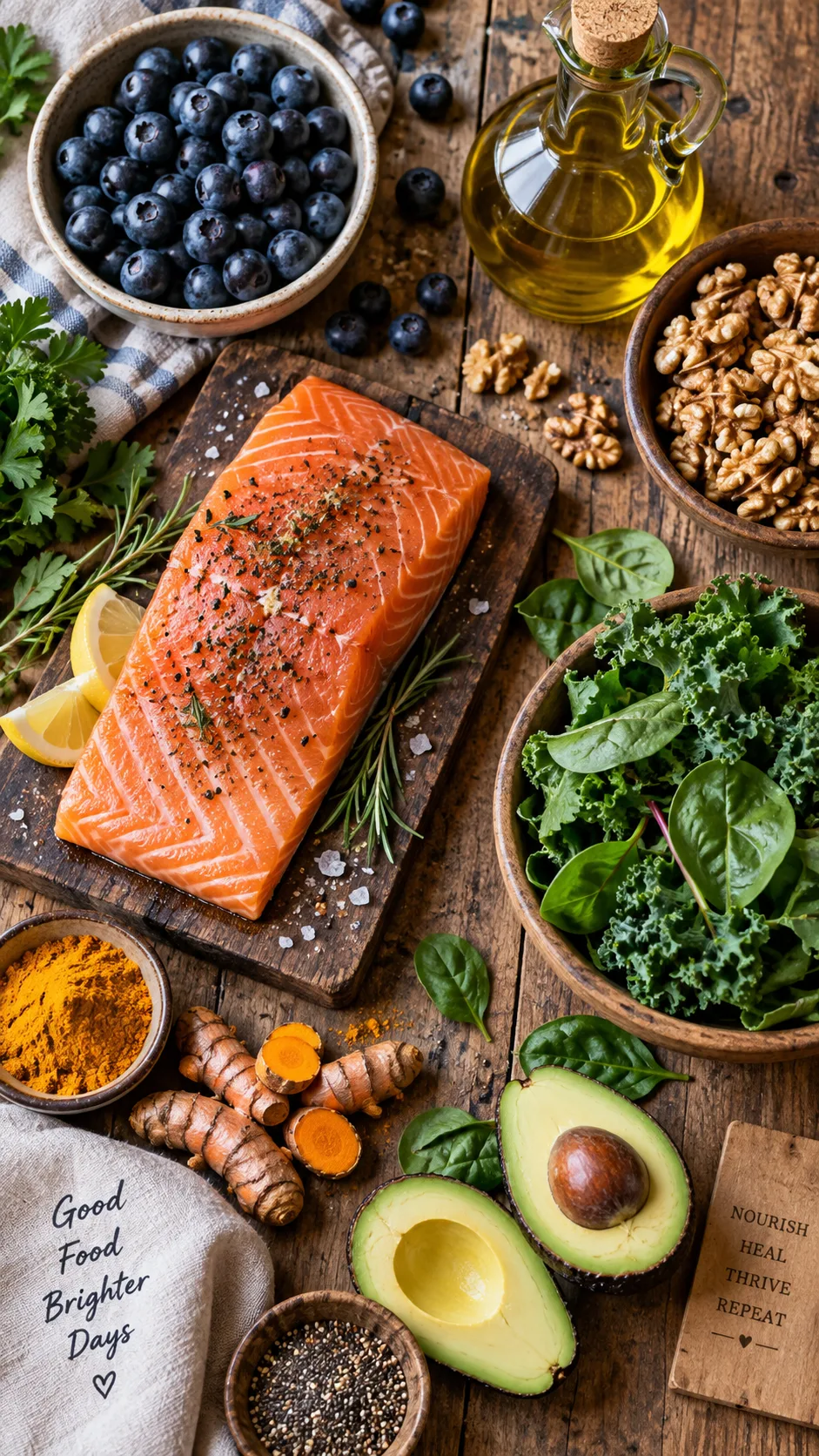
- Fatty fish such as salmon, sardines, mackerel, and herring. Omega-3s are the headliners here. Two to three servings weekly.
- Extra virgin olive oil contains oleocanthal, a compound that acts a bit like ibuprofen. Use it generously, not as a garnish.
- Berries like blueberries, strawberries, and cherries. Anthocyanins do heavy lifting. Frozen counts. Frozen is also cheaper.
- Leafy greens such as spinach, kale, rocket, and Swiss chard. Bonus points if you cook them in olive oil.
- Nuts and seeds including walnuts, almonds, chia, and flax. A small handful, not a bucket.
- Cruciferous veg like broccoli, cauliflower, and Brussels sprouts. Roast them. Please don’t boil them into sadness.
- Turmeric plus black pepper. The pepper boosts curcumin absorption dramatically. Never use one without the other.
- Legumes such as lentils, chickpeas, and black beans. Fibre feeds your gut bacteria, and happy gut bacteria calm inflammation.
- Green tea brings EGCG and antioxidants, plus it replaces your fourth coffee.
- Dark chocolate (70%+). Yes, really. A couple of squares. I’m not a monster.
The stuff that feeds the fire
I won’t tell you to never eat these. I will tell you to notice how often they show up.
- Refined sugar and sugary drinks: the biggest single offender for most people
- Refined carbs like white bread, pastries, and most breakfast cereals
- Ultra-processed meats such as hot dogs and deli slices loaded with nitrates
- Industrial seed oils used in deep-frying, especially when someone reheats them over and over
- Trans fats. Check labels for “partially hydrogenated”
- Excess alcohol. More than a drink or two daily keeps inflammation elevated
See the pattern? It’s basically a list of things that come in crinkly packaging. Convenient, isn’t it?
The 7-day anti inflammatory meal plan
Here’s the plan itself. I built it around repetition: you cook once, eat twice. Fewer decisions, fewer chances to quit.
Day 1
- Breakfast: Greek yoghurt, frozen blueberries, walnuts, drizzle of honey
- Lunch: Big salad with rocket, chickpeas, cucumber, olive oil and lemon, tinned sardines
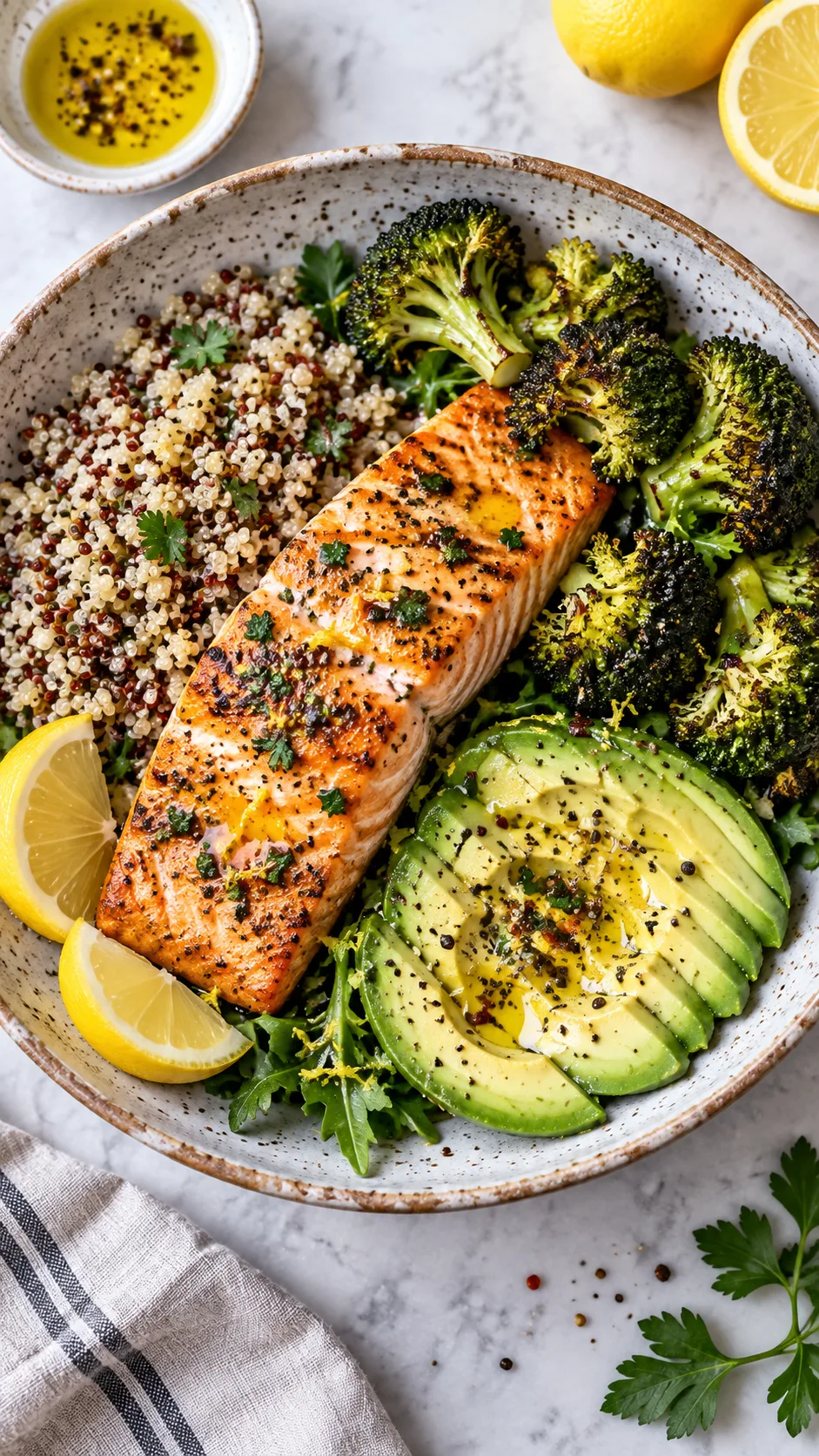
- Dinner: Baked salmon, roasted broccoli, quinoa
- Snack: Apple and almond butter
Day 2
- Breakfast: Overnight oats with chia, cinnamon, sliced banana
- Lunch: Leftover salmon flaked over greens with the same olive oil dressing
- Dinner: Turmeric lentil soup with wholegrain toast
- Snack: Handful of almonds, green tea
Day 3
- Breakfast: Two eggs scrambled in olive oil, spinach, avocado
- Lunch: Leftover lentil soup (told you: cook once, eat twice)
- Dinner: Chicken thighs roasted with peppers, red onion, sweet potato
- Snack: Dark chocolate squares and a few cherries
Day 4
- Breakfast: Smoothie with spinach, frozen berries, flaxseed, unsweetened almond milk, scoop of protein
- Lunch: Leftover roast chicken in a wholegrain wrap with hummus and rocket
- Dinner: Stir-fried prawns, broccoli, ginger, garlic, brown rice
- Snack: Carrot sticks and guacamole
Day 5
- Breakfast: Greek yoghurt, chia, strawberries, pumpkin seeds
- Lunch: Tuna and white bean salad, olive oil, parsley, red onion
- Dinner: Turkey meatballs, courgette noodles, homemade tomato sauce
- Snack: Orange and walnuts
Day 6
- Breakfast: Oats cooked with cinnamon, topped with almond butter and berries
- Lunch: Leftover meatballs over mixed greens
- Dinner: Mackerel fillets, roasted Brussels sprouts, wild rice
- Snack: Green tea and dark chocolate
Day 7: the flexible day
- Breakfast: Whatever’s left in the fridge
- Lunch: Big “clear-out” veg frittata
- Dinner: Eat out. Order something you enjoy. Lean toward grilled over fried and move on with your life.
Worth remembering: Day 7 exists on purpose. Plans without a release valve explode. Build the escape hatch in and you stop calling normal eating a “failure.”
The beginner mistakes I made so you don’t have to
1. I went all-in on supplements
Turmeric capsules, fish oil, collagen, three powders I can’t pronounce. I spent about £90 in month one. Results? Unclear. Food first, supplements later. A salmon fillet beats a capsule most days of the week.
2. I ignored protein
My first attempt was basically a vegetable parade. I was starving by mid-afternoon and demolished a family bag of crisps by Thursday. Protein keeps you full, protects muscle, and stops the 4pm spiral. If that’s your weak point, a structured 7-day high protein meal plan pairs nicely with this approach.
3. I forgot sleep and stress exist
You can eat perfectly and still stay inflamed if you sleep five hours and marinate in cortisol. Research consistently links short sleep to elevated inflammatory markers. Diet is one lever. It isn’t the only one.
4. I tried to be perfect
Perfection lasted eleven days. Consistency at 80% beats perfection at 100% for six days. That’s the entire lesson, and it took me two failed attempts to learn it.
How to shop without going broke
Anti inflammatory eating has a reputation for being expensive. It doesn’t have to be.
- Buy frozen berries and veg. Producers flash-freeze them at peak ripeness, so they often carry more nutrients than “fresh” produce that travelled for a week.
- Tinned fish is your best friend. Sardines and mackerel cost pennies and deliver serious omega-3s.
- Dried lentils and beans cost a fraction of tinned. Soak overnight, cook a big batch, freeze portions.
- Skip “anti-inflammatory” branded products. The label is marketing. Plain turmeric costs a fifth of turmeric “wellness blend.”
- Buy olive oil in bulk tins. Cheaper per litre, and it keeps well in a dark cupboard.
- Whole chickens beat breast fillets on price. Roast one, use it three ways, make stock from the carcass.
My weekly shop for this plan costs about the same as it did before I started. The difference is where the money goes: less on packaged snacks, more on real ingredients.
Watch: anti-inflammatory eating explained simply
If you’d rather hear it than read it, this breakdown covers the science without the sales pitch.
What changes, and when
Let me set honest expectations, because that’s where most plans lie to you.
- Week 1: Energy stabilises. Fewer crashes. You might feel slightly irritable if you cut sugar hard, though that passes.
- Weeks 2 to 3: Bloating drops noticeably. Digestion gets more predictable. Sleep often improves.
- Weeks 4 to 6: Joint stiffness eases for many people. Skin calms. Morning grogginess lifts.
- Months 2 to 3: This is where bloodwork can shift, and markers like CRP may come down. Ask your doctor to test before and after if you want proof.
The Arthritis Foundation notes that dietary changes typically show meaningful results over weeks and months, not days. Anyone promising a 72-hour transformation is selling something.
Making it fit your real life
If you’re time-poor
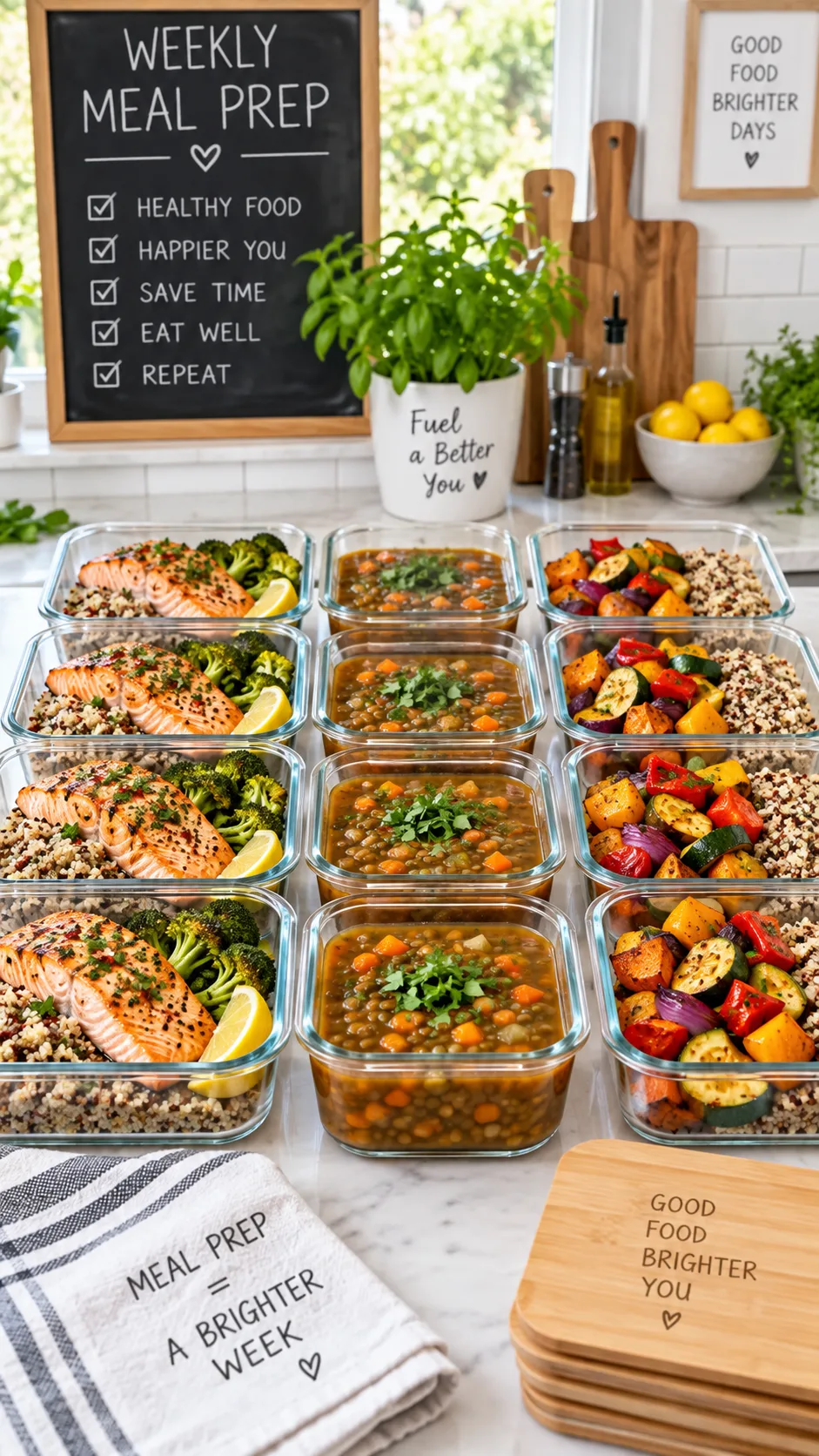
Batch cook twice a week, say Sunday and Wednesday. Roast a tray of vegetables, cook a pot of grains, prep a protein. Assembly beats cooking when you’re knackered.
If you hate fish
Walnuts, flaxseed, chia, and hemp seeds deliver plant-based omega-3s (ALA). Your body converts ALA into EPA and DHA inefficiently, so consider an algae-based supplement. Talk to your GP first.
If you’re also chasing weight loss
Anti inflammatory eating naturally reduces calorie density: fewer processed snacks, more fibre, more protein. If you want a structured calorie target alongside it, the 1500 calorie meal plan layers on top of these food choices without much friction.
If you cook for a family
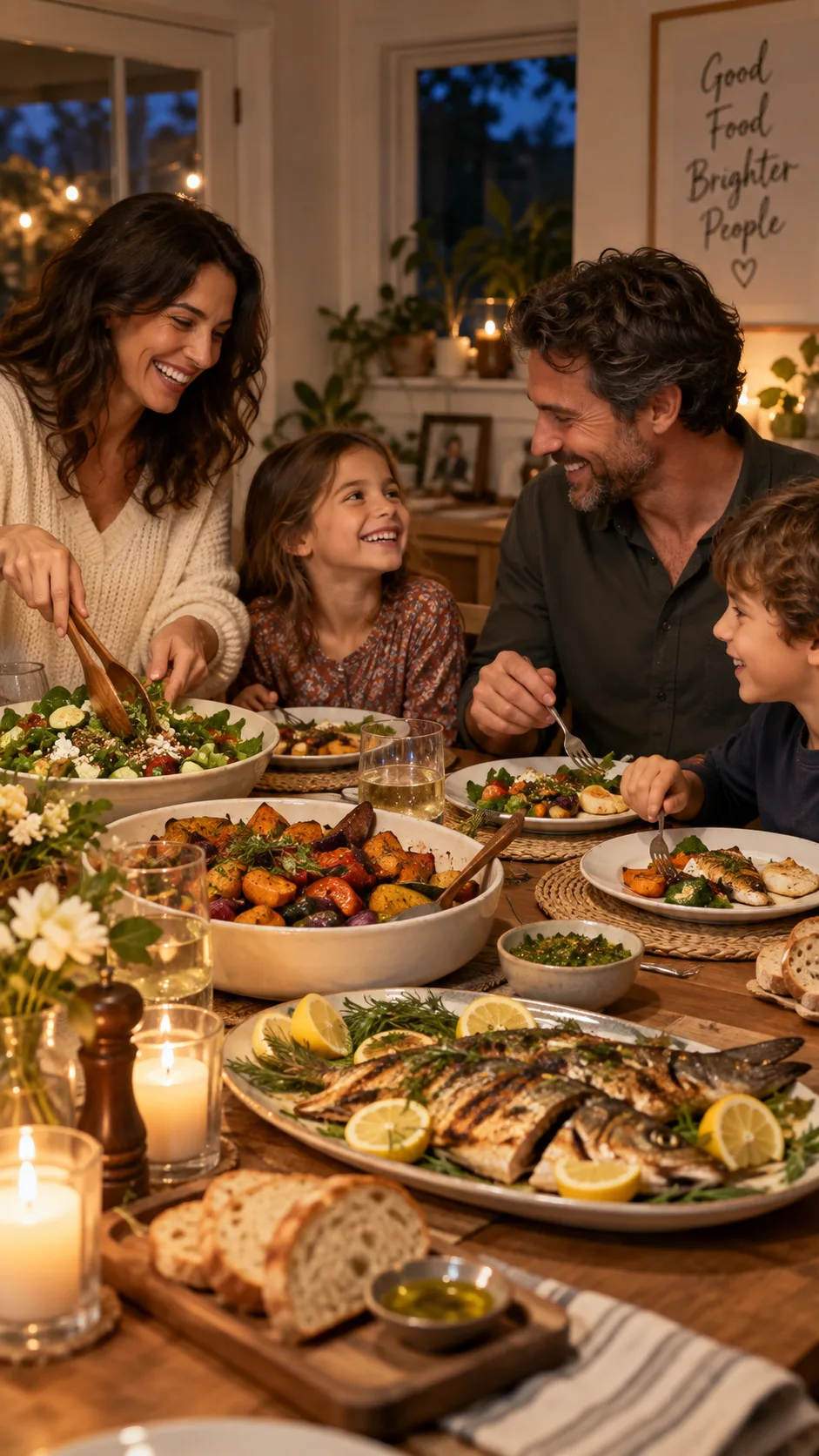
Don’t make two dinners. Ever. Make the anti inflammatory version and put optional extras on the table: bread, cheese, whatever keeps the peace. Nobody needs to know they’re eating “healthy.”
Movement multiplies the effect
Ever wonder why the healthiest people you know eat well AND move? It isn’t a coincidence. Regular moderate exercise lowers inflammatory markers on its own, separate from diet, and the CDC lists reduced chronic disease risk among its core benefits.
You don’t need to train like an athlete. Twenty to thirty minutes of walking most days does real work. If you want to build up gradually, the walk-to-run plan for beginners is the gentlest on-ramp I’ve seen.
One warning from experience: hammering yourself with brutal workouts while eating poorly and sleeping badly raises inflammation. More isn’t always better. IMO, consistency beats intensity every time for this particular goal.
Quick FAQ
Do I have to cut gluten and dairy?
No, not unless you personally react to them. Blanket elimination makes the plan harder and rarely helps people without sensitivities. Test, don’t assume.
Can I still drink coffee?
Yes. Coffee contains polyphenols and isn’t inflammatory for most people. Just watch what you put in it, since three sugars and flavoured syrup undo the benefit.
Is this the same as the Mediterranean diet?
They overlap heavily. The Mediterranean pattern remains the most researched anti inflammatory eating style on the planet. Think of this plan as a beginner-friendly version of it.
How strict do I need to be?
Aim for anti inflammatory choices at 80% of your meals. That’s roughly 17 out of 21 meals a week. The other four won’t ruin anything.
The bottom line
An anti inflammatory diet isn’t a 30-day punishment. It’s a permanent shift toward whole foods, healthy fats, colourful plants, and decent protein, with enough flexibility that real life doesn’t break it.
Start with three changes this week: fatty fish twice, olive oil as your default fat, and berries or greens at two meals a day. That’s it. Add more once those feel automatic.
The plan you follow imperfectly for a year beats the perfect plan you abandon by Friday. Pick one meal to fix tomorrow, cook it, and stop overthinking the rest. Your joints will thank you well before your Instagram does.