

You train hard, sweat through your leggings, and somehow your muscles still look the same. Frustrating, right?
Most women do not struggle to gain muscle because they lack discipline. Their workouts, food, or recovery habits simply never give their bodies a strong enough reason to grow.
Women build muscle when they stick with the basics: lift challenging weights, eat enough protein and calories, recover well, and track your progress. Skip the detox tea, the “toning” nonsense, and the 47 minute ab circuit that leaves you questioning your life choices.
First, clear up what muscle gain means
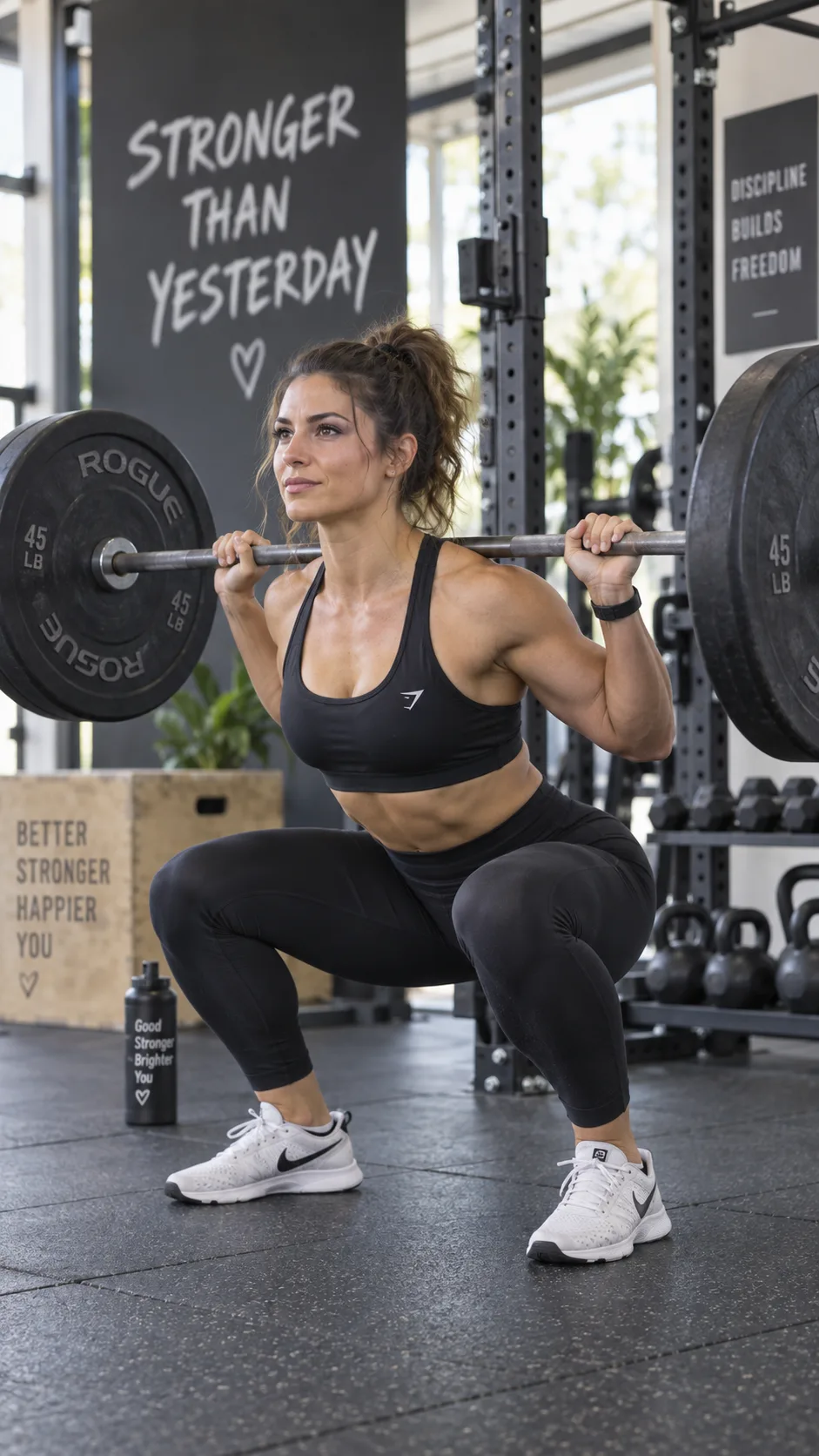
Muscle gain, or hypertrophy, starts when you challenge a muscle and then support its recovery with food and sleep. Your body responds by repairing that muscle and gradually making it stronger and larger.
Women can build a meaningful amount of muscle. Testosterone affects muscle building potential, so many women gain muscle more slowly than many men, but women can still gain strength, shape, and definition. Strong women rarely spend much time wondering whether a grocery bag feels too heavy.
Strength training changes more than your physique. It can support bone health, everyday movement, confidence, athletic performance, and independence as you age. The CDC physical activity guidelines recommend muscle strengthening activity at least two days each week for adults.
Your goal does not need to involve making yourself smaller. You can aim to feel capable, resilient, and proud of what your body can do.
The training mistakes that stop women from building muscle
1. You only lift light weights for endless reps
Light dumbbells belong in a training plan, but they cannot do all the work. If you can knock out 25 reps while chatting about your weekend, your muscles probably need a bigger challenge.
Muscle growth responds to hard effort. You can build muscle with many rep ranges, but most working sets need to come close to technical failure. You stop when another rep would break down your form, not when the playlist changes.
Try working mostly within these rep ranges:
- 5 to 8 reps: Use these for heavier compound lifts such as squats, deadlifts, presses, and rows.
- 8 to 12 reps: This range works well for many muscle gain exercises.
- 12 to 20 reps: Use these for smaller muscle groups and exercises such as lateral raises, glute kickbacks, and leg extensions.
Choose a weight that makes the final two or three reps difficult while you still control every part of the movement. Your muscles respond to tension, not vibes.
2. You never use progressive overload
Your body adapts fast. If you use the same 10 pound dumbbells in every workout forever, your body has little reason to build more muscle.
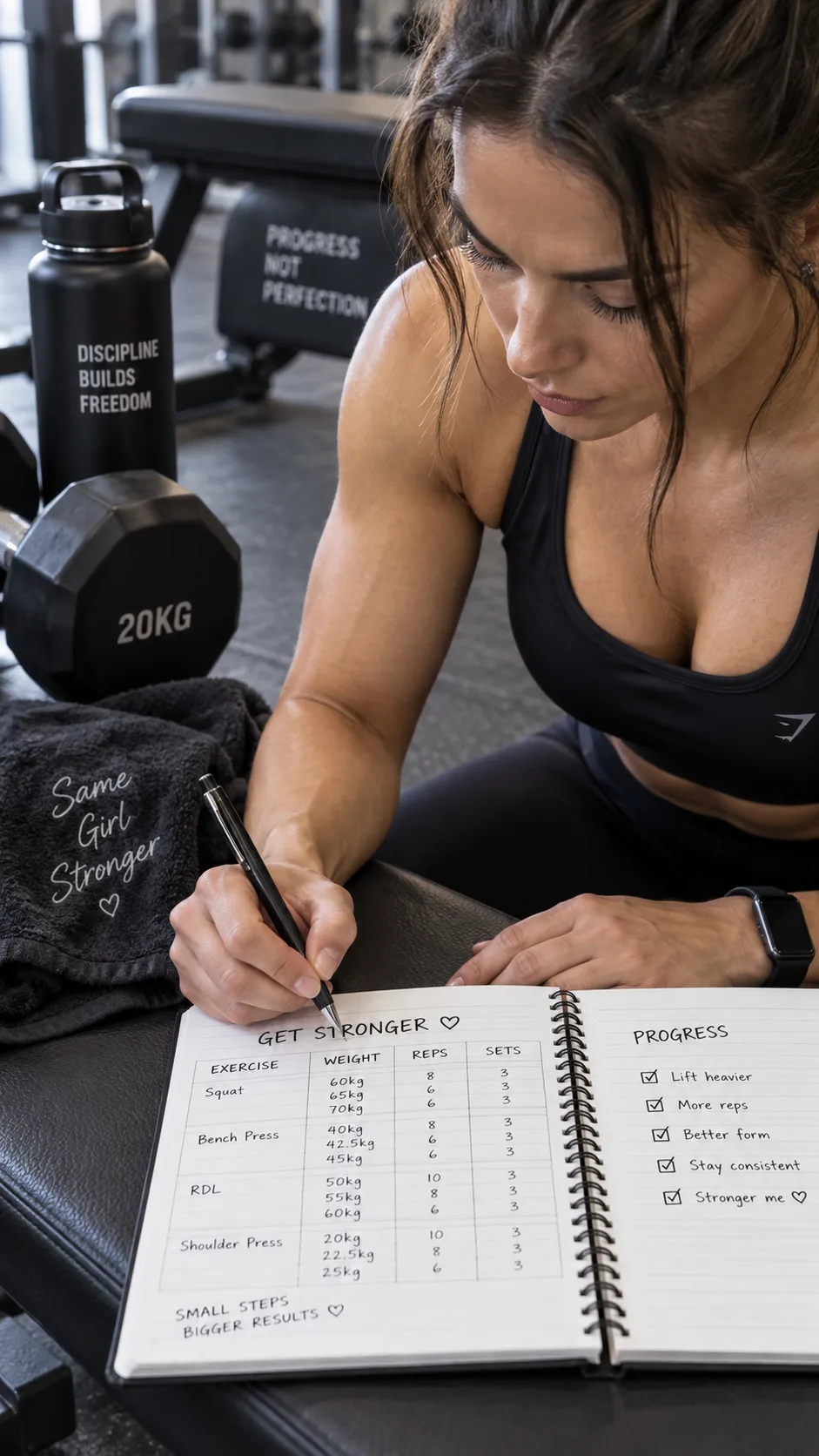
Progressive overload means gradually asking your muscles to do more. Add weight, do more reps, improve your range of motion, add a set, or perform each rep with more control.
- Choose a rep range, such as 8 to 12 reps.
- Pick a weight that lets you complete at least 8 solid reps.
- Work toward 12 reps with that weight across your sets.
- Add a small amount of weight, then repeat the process.
Record your workouts in an app or notebook. After a hard leg day, memory can get unreliable, and “I think I used the blue dumbbells?” does not count as a progression plan.
3. You change your entire routine every week
Workout variety can feel fun, but constant changes make progress hard to track. You cannot get stronger at an exercise when you replace it before your body has time to learn it.
Keep your main lifts for at least six to eight weeks. Rotate accessory exercises when boredom sets in, but give your squat, hip thrust, press, row, and hinge movements time to improve.
You do not need a new workout every Monday. You need a plan that lets you beat last month’s numbers.
4. You avoid compound exercises
Glute kickbacks and biceps curls can help, but compound exercises deserve most of your attention. These movements work several muscles at once, allow you to use more load, and help you get more from your gym time.
Build your program around these movement patterns:
- Squat: Goblet squat, barbell squat, leg press, or split squat.
- Hip hinge: Romanian deadlift, conventional deadlift, or back extension.
- Hip thrust: Barbell hip thrust, glute bridge, or machine hip thrust.
- Push: Push-up, bench press, dumbbell press, or overhead press.
- Pull: Lat pulldown, seated row, dumbbell row, or assisted pull-up.
Start with movements that fit your skill level and available equipment. A well performed goblet squat beats a barbell squat that looks like a folding chair in a windstorm.
5. You do so much cardio that recovery never catches up
Cardio supports heart health, mood, and general fitness. It does not automatically ruin muscle gain, despite what dramatic gym folklore might claim.
Trouble starts when you combine hard lifting with intense daily cardio, too little food, and too little rest. Your body then spends the week trying to keep up with your schedule instead of adapting to your training.
Keep cardio reasonable while you focus on muscle gain. Two or three low or moderate sessions each week often work well. Walking, cycling, incline treadmill work, and easy swimming all fit.
What works for female muscle growth
Train each muscle group more than once per week
Train your major muscle groups about twice each week. That schedule gives you regular practice and enough weekly volume without packing every exercise into one marathon workout.
Many women make solid progress with three or four strength workouts each week. A full body routine works well across three days, while an upper and lower split often suits four days.
If you want a clear place to start, use this simple strength training guide for women to build a routine around the basics. You do not need a “women’s workout” full of tiny pink weights. You need a smart routine that fits your goals.
Use enough weekly sets
Training volume matters. Most beginners can start with roughly 8 to 12 challenging sets for each muscle group every week, then adjust based on recovery and progress.
For example, you might train your glutes with hip thrusts, Romanian deadlifts, squats, and split squats through the week. You might train your back with rows and pulldowns. Simple programming works because you can follow it consistently.
The research on resistance-training volume shows a relationship between weekly sets and muscle growth: more sets can support more growth until recovery starts to suffer. More work does not always produce better results.
Prioritise good form, then push your effort
Good technique keeps the target muscle working and lowers your risk of injury. Learn the movement first, then add enough load to challenge yourself.
Lower the weight with control, use a comfortable full range of motion, and do not rush your reps. You do not need to make every lift look like a slow motion movie, but you should know where your body sits during every rep.
If you feel sharp, sudden, or joint specific pain, stop and speak with a qualified clinician or physiotherapist. Normal muscle effort feels hard. Injury pain needs attention.
Nutrition mistakes that quietly block muscle gain
You eat “healthy” but not enough
Many women accidentally eat too little while trying to gain muscle. They choose nutritious foods, then serve portions that barely cover their training needs. Your body cannot build much new tissue when it keeps searching for enough energy.
For a straightforward route to muscle gain, aim for a small calorie surplus. Add roughly 150 to 300 calories each day, watch your gym performance and body weight for several weeks, then make slow adjustments.
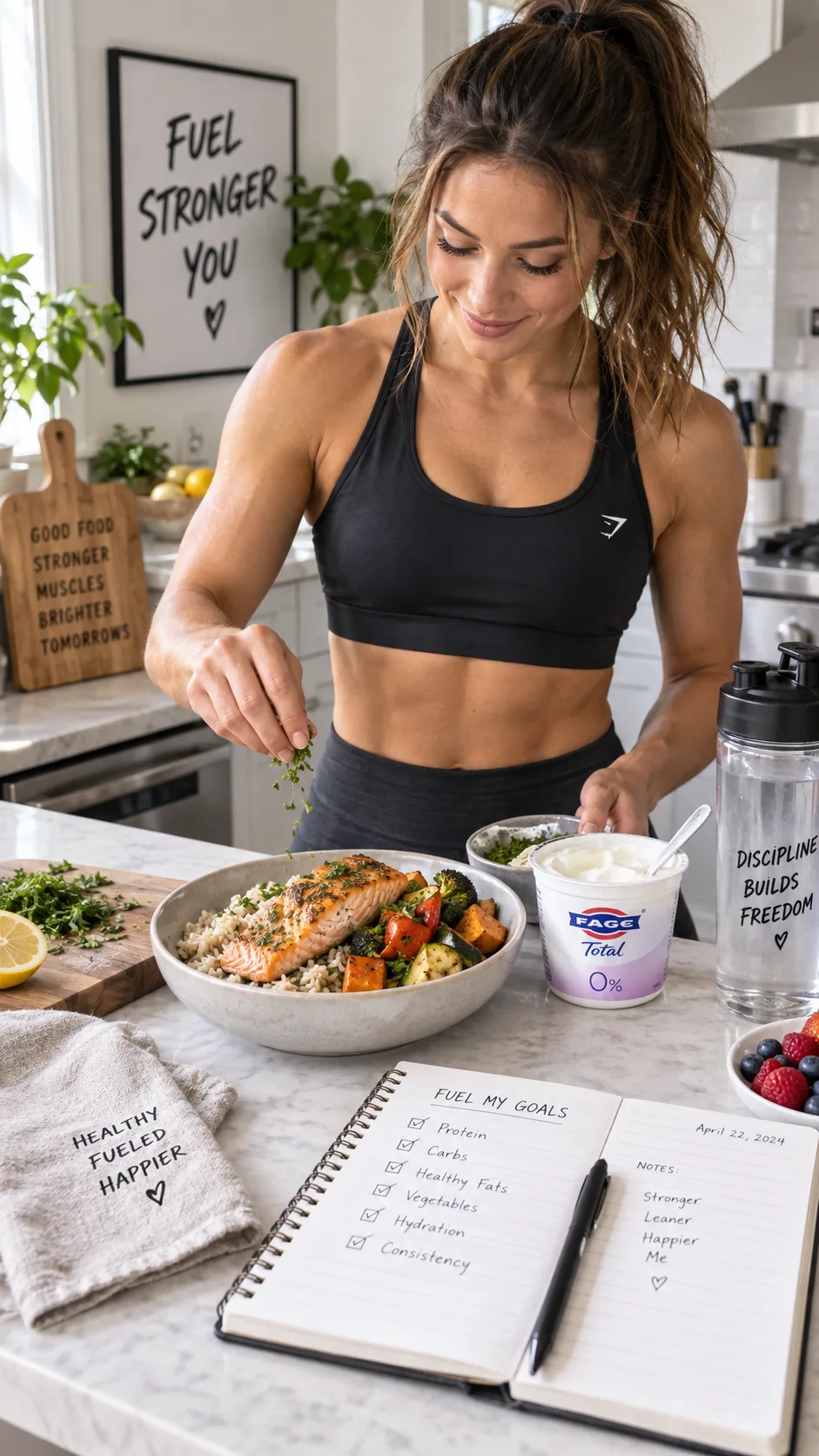
You do not need to eat past the point of comfort. Add energy dense foods you enjoy, such as Greek yogurt, oats, rice, avocado, olive oil, nuts, bagels, or a smoothie with milk and protein powder.
You treat protein like an afterthought
Protein gives your body amino acids for muscle repair and growth. Spread it across three to five meals instead of saving most of it for dinner.
Most active women who want to build muscle do well with 1.4 to 2.0 grams of protein per kilogram of body weight per day. The International Society of Sports Nutrition supports this general range for exercising adults.
Easy protein options include eggs, chicken, fish, lean meat, tofu, tempeh, beans, cottage cheese, Greek yogurt, edamame, and protein shakes. A shake can help when life gets busy. It does not contain magical muscle dust.
You fear carbs
Carbohydrates fuel hard training. When you restrict them heavily, your sessions often feel flat, your recovery slows, and your mood may start demanding a snack.
Eat carbs around training from foods such as fruit, potatoes, rice, oats, pasta, bread, beans, and cereal. You do not need to earn carbs through suffering. You lift weights, and your body uses fuel.
Recovery: The part of muscle growth you cannot skip
Training sends the signal. Recovery lets your body respond. Sleep, rest days, stress management, and enough food all affect your results.
Aim for seven to nine hours of sleep on most nights. The Sleep Foundation explains how sleep supports physical restoration, learning, and overall health.
Give yourself one or two easier days each week. You can walk, stretch, do yoga, or simply rest without guilt. Rest does not erase progress. It protects it.
Watch for signs that your plan demands too much:
- Your strength drops for several workouts in a row.
- You feel constantly sore, exhausted, or unmotivated.
- You struggle to sleep despite feeling tired.
- You lose your appetite or feel unusually irritable.
- Your menstrual cycle changes significantly or disappears.
Talk with a healthcare professional if you notice ongoing menstrual changes, fatigue, injuries, or concerns about food and body image. Smart training includes getting support when your body raises a flag.
A simple 3 day muscle gain workout plan for women
This routine gives beginners a solid foundation. Start with two or three sets for each exercise, rest one to two minutes between sets, and leave one to three reps in reserve on most sets.
Day 1: Full body strength
- Goblet squat: 3 sets of 8 to 12 reps
- Dumbbell Romanian deadlift: 3 sets of 8 to 12 reps
- Dumbbell bench press: 3 sets of 8 to 12 reps
- Seated cable row: 3 sets of 8 to 12 reps
- Plank: 3 sets of 20 to 45 seconds
Day 2: Lower body and glutes
- Hip thrust: 3 sets of 8 to 12 reps
- Reverse lunge: 3 sets of 8 to 10 reps per side
- Leg press: 3 sets of 10 to 15 reps
- Leg curl: 3 sets of 10 to 15 reps
- Calf raise: 2 to 3 sets of 12 to 20 reps
Day 3: Upper body strength
- Lat pulldown: 3 sets of 8 to 12 reps
- Dumbbell shoulder press: 3 sets of 8 to 12 reps
- Single arm dumbbell row: 3 sets of 8 to 12 reps per side
- Incline push-up or chest press: 3 sets of 8 to 12 reps
- Lateral raise: 2 to 3 sets of 12 to 15 reps
- Biceps curl and triceps pressdown: 2 sets of 10 to 15 reps each
Want more detail on exercise choices, form, and progression? Bookmark the strength training blueprint for women and use it with this plan.
Build muscle, not confusion
Women gain muscle by training hard enough, progressing over time, eating enough protein and total food, and treating recovery seriously. You do not need perfect workouts, a restrictive diet, or a new supplement every week.
Start with three consistent strength sessions, track a few lifts, and give the plan at least eight weeks before you judge it. Your body responds to evidence, not panic driven program hopping.
Pick up a weight that challenges you, fuel the work, and keep showing up. Strong looks different on everyone, but confidence always fits.