

You reach for your toes, your hamstrings object, and your fingertips stop somewhere near your kneecaps. Sound familiar? You can improve your flexibility from there. You do not need circus level mobility or a yoga retreat in Bali.
Small, regular sessions improve flexibility. Your body gets more from five or ten focused minutes than one huge stretching session that leaves you walking like a penguin. With steady practice, touching your toes can stop feeling like an extreme sport.

Why you cannot touch your toes yet
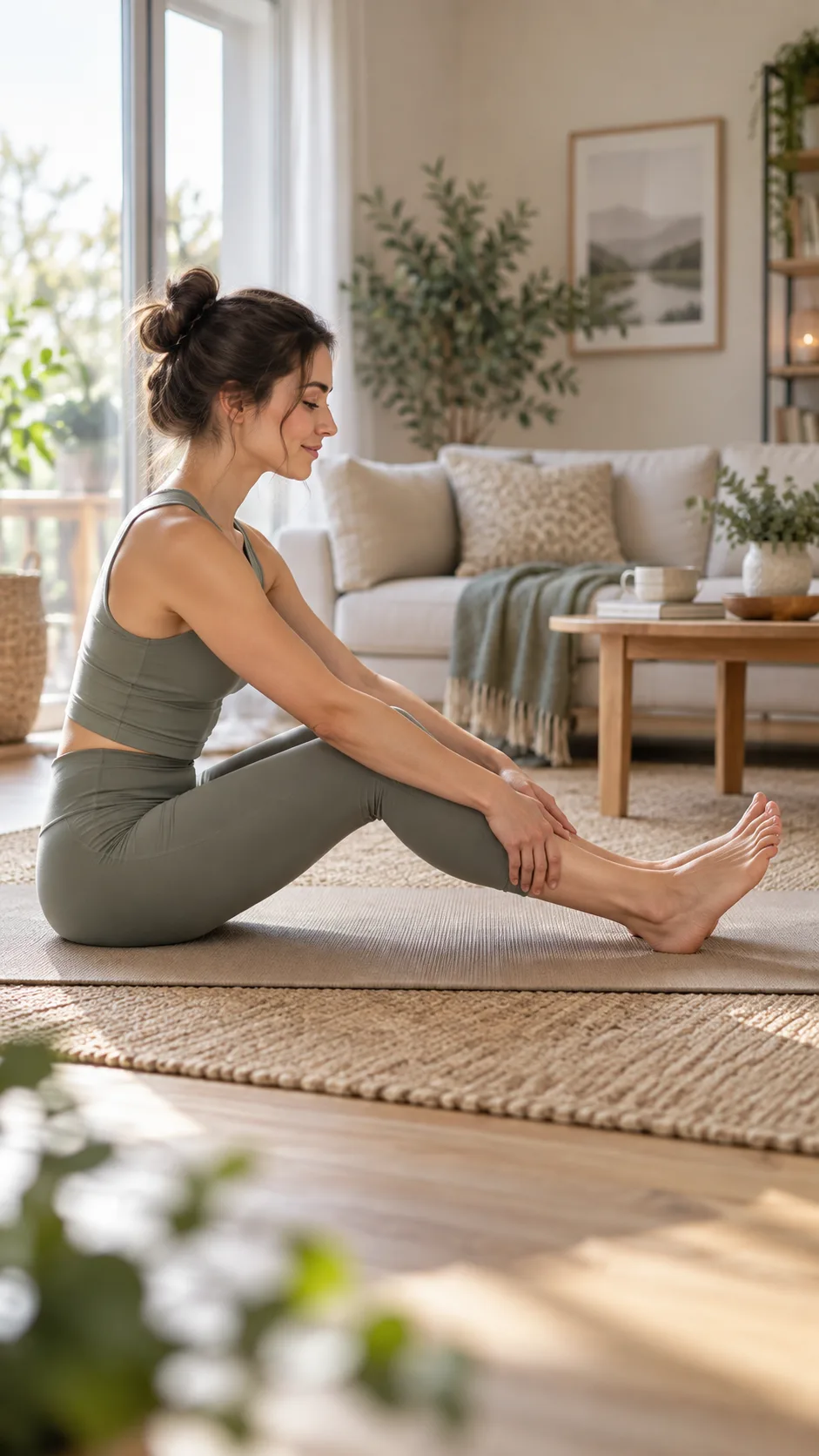
A toe touch asks your hamstrings, calves, hips, lower back, and nervous system to work together. Tight hamstrings often limit your reach, but stiff hips or a nervous system that feels guarded can do the same. Your body may tighten muscles when a range of motion feels unsafe.
Long stretches of sitting can make that feeling stronger. Hours at a desk, in a car, or curled up on the sofa keep your hips and hamstrings in one position for too long. Your body does not punish you. It adapts to what you do often.
Genetics affect flexibility too, so skip comparisons with someone else’s toe touch. Some people fold easily, while others need more time and patience. Your progress matters more than your starting shape.
Do you need straight legs?
No. Bend your knees a little when you stretch, especially at first. Bent knees help you tip from your hips instead of pulling your lower back into a position it dislikes.
As your hamstrings loosen and you gain control, you can slowly straighten your legs. Treat straight knees as an option for later, not a rule carved into a stone tablet.
The rules that make stretching work
You do not need to stretch until you grimace, sweat, or see your ancestors. Aim for a gentle sensation that tells your body, “We can handle this.” Feel mild tension, but stop for sharp pain, tingling, numbness, or joint pinching.
The American College of Sports Medicine’s physical activity guidance recommends regular flexibility work alongside strength and aerobic exercise. Consistency gives your muscles and nervous system more useful feedback than an occasional marathon stretching session.
- Warm up first. Walk around, march in place, or make easy hip circles for two to five minutes.
- Breathe slowly. Exhale as you ease into a stretch, and relax your jaw and shoulders.
- Hold static stretches for 20 to 30 seconds. Repeat a stretch two or three times when it feels good.
- Move gently on most days. Five sessions each week beat one random Sunday session.
- Stop before pain. Pain does not earn extra flexibility points.
Use dynamic movements before workouts, then use longer static holds after activity or in a separate flexibility session. The Hospital for Special Surgery’s stretching advice also recommends gradual movement and controlled form. Your body responds well when you give it calm, predictable practice.
Your 10 minute beginner flexibility routine
Try this routine five days each week for four weeks. You need a little floor space, a chair, and perhaps a towel or yoga strap. Start gently enough that you want to return tomorrow.
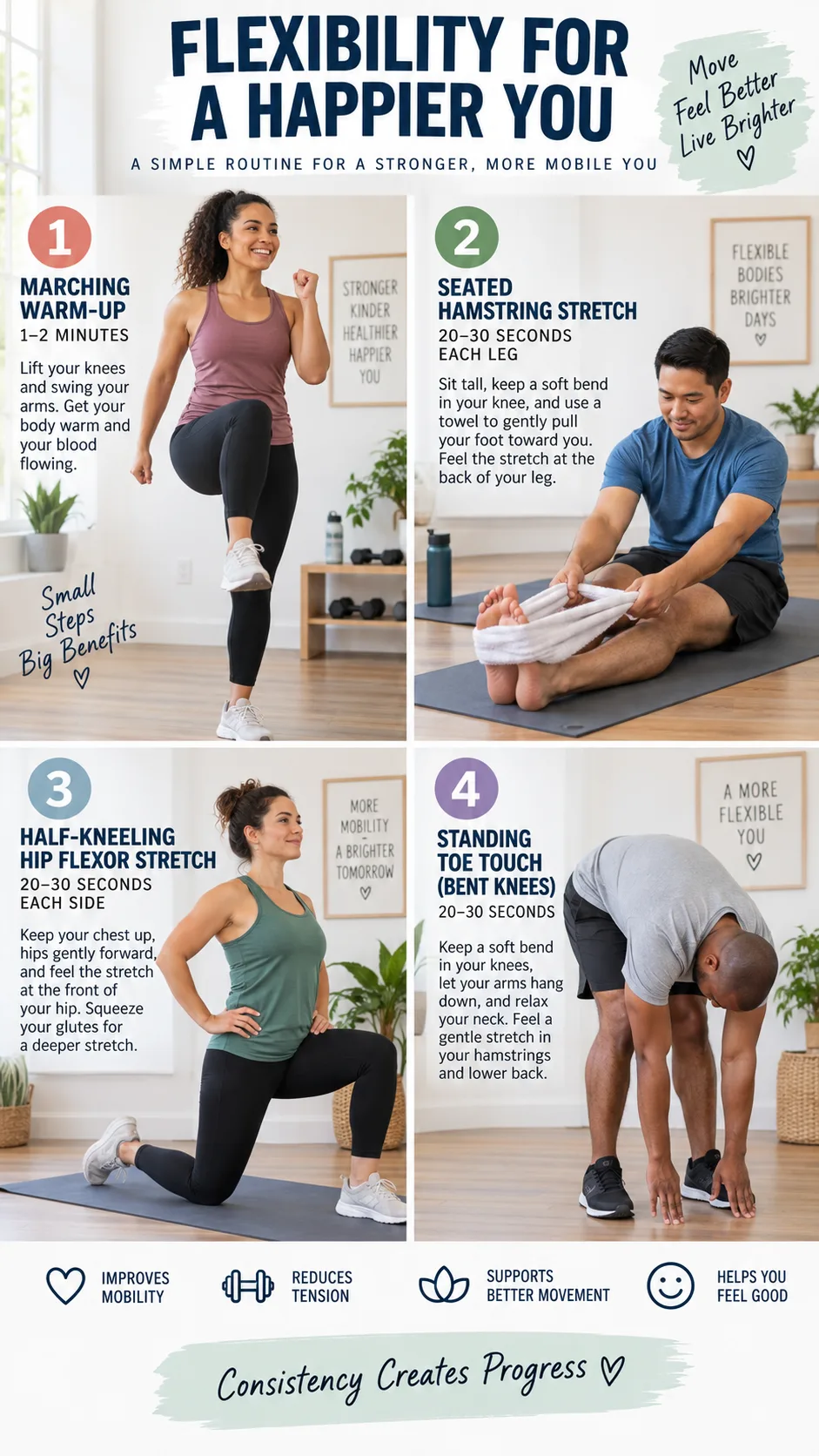
1. March and swing your legs: 60 seconds
March in place with relaxed arms, then add gentle leg swings forward and back while you hold a wall or chair. Keep each swing small and controlled. This warmup increases blood flow and gets your hips moving after sitting.
2. Seated hamstring stretch: 2 minutes
Sit near the front edge of a chair and put one heel on the floor with your toes up. Keep a slight bend in that knee, sit tall, and lean forward from your hips until you feel your hamstring stretch. Hold for 20 to 30 seconds, then switch sides.
Do not round your back to chase your toes. Move your chest forward instead, as if you want someone to read the logo on your shirt. That small adjustment often changes the stretch for the better.
3. Calf stretch against a wall: 2 minutes
Put both hands on a wall, step one foot back, and press the back heel toward the floor. Keep your back leg straight to stretch the upper calf, then bend it slightly to reach the deeper calf muscles. Hold each position for 20 seconds on each side.
Tight calves can affect the whole back of your legs. If your toe touch still feels stubborn after regular hamstring work, your calves may contribute to the problem.
4. Half kneeling hip flexor stretch: 2 minutes
Kneel with one knee down and one foot forward. Gently tuck your pelvis under, as if you want to bring your belt buckle toward your ribs. Keep your torso tall and squeeze the glute on the kneeling side. Hold for 20 to 30 seconds, then switch sides.
Avoid a huge forward lunge with an arch in your back. That position can turn a hip stretch into a lower back complaint. Small adjustments work better here.
5. Supported forward fold: 2 minutes
Stand with your feet about hip width apart and bend your knees generously. Rest your hands on your thighs, a chair seat, or yoga blocks, then fold forward from your hips. Relax your head and hold for 20 to 30 seconds.
Each week, lower your hand support a little or straighten your knees slightly. That counts as progress. You do not need to touch the floor to get more flexible. You only need to move a little beyond your current comfort zone.
6. Gentle hip circles: 1 minute
Stand tall, put your hands on your hips, and make slow circles with your pelvis in both directions. Keep the motion smooth and comfortable. Add our hip circles exercise guide if your hips feel stiff after a day of sitting.
Watch your form before chasing range
A good toe touch starts at your hips, not your lower back. Think “hips back” before you think “hands down.” Your spine can round naturally near the bottom of the movement, but do not force it there.
Try this check: place your hands in the crease where your thighs meet your hips, then push that crease backward as you fold. You will feel your hamstrings engage quickly. This hip hinge also helps you squat, deadlift, and lift everyday objects with better control.
Use a mirror or record one set on your phone if you struggle to feel the difference. You do not need a polished video. A ten second clip can show whether you fold from your hips or collapse through your back. Most beginners spot something useful on the first replay.
A simple four week plan to touch your toes
Follow the routine above, then use this progression to keep improving your toe touch. Keep each session short enough that daily life does not crowd it out. Your future self will appreciate the simple plan.
- Week 1: Complete the 10 minute routine five times. Bend your knees as much as you need and focus on relaxed breathing.
- Week 2: Add one extra 20 second hamstring stretch on each side. Lower your support during the forward fold if your body feels comfortable.
- Week 3: Add two sets of eight slow hip hinges after your warmup. Practice a standing toe touch for 20 seconds at the end.
- Week 4: Keep the same routine and check your reach once or twice. Notice your hand position, knee bend, and comfort instead of fixating on the floor.
Take a quick baseline photo or write down where your fingers reach on day one. Maybe you reach your knees, shins, or ankles. That record gives you evidence when your brain says, “Nothing changed.” Brains say that often, even when they have no proof.
Build strength so your new flexibility stays with you
Stretching helps, but strength helps your body feel steady in a new range of motion. Strong glutes, hamstrings, core muscles, and hips can make forward bending feel safer and more controlled. You do not need heavy weights to begin.
Add two or three of these exercises twice each week: glute bridges, bodyweight hip hinges, split squats, calf raises, and dead bugs. Use slow repetitions and clean form. If you want a full beginner routine, this first gym workout guide for beginners can help you build a simple weekly plan.
Movement outside your routine matters too. The CDC physical activity guidelines encourage adults to stay active through the week, and regular walking can ease stiffness after long periods of sitting. Take a short walk, stand between tasks, or do a few hip hinges while the kettle boils.
Common flexibility mistakes to skip
- You hold your breath: Slow exhales can help you relax into a stretch instead of bracing against it.
- You bounce aggressively: Controlled movement treats your muscles and joints better than frantic bouncing.
- You stretch cold: Start with a short warmup, especially before deeper hamstring work.
- You force straight knees: Bend them and improve your position gradually.
- You only stretch once a week: Frequent short sessions build better flexibility habits.
- You ignore sharp pain: Stop and seek advice from a qualified clinician or physical therapist if pain continues.
Seek professional help sooner if you feel numbness, weakness, shooting pain, major swelling, or symptoms after an injury. A physical therapist can assess your movement limits and give you a plan that fits your body. Good training includes knowing when to ask for help.
How long does it take to become more flexible?
Many beginners notice a small change within two to four weeks when they practice consistently. Bigger changes often take several months, especially if you sit often or start with very tight hamstrings. Your body responds best to steady practice, not rushed deadlines.
Do not judge success only by whether your fingers reach your toes. Notice easier shoe tying, less stiffness after sitting, smoother squats, and more comfort during walks. Those changes show up in daily life.
Start where you are, then repeat
You can improve flexibility even if you can barely touch your toes right now. Warm up, stretch gently, fold from your hips, strengthen the muscles around your hips and legs, and repeat the plan most days. Ten calm minutes can do more than one painful, random hour.
Start today with bent knees and no ego. Your toes will stay put, and patient practice will bring your hands closer week by week.