

You clicked on this because someone at work lost 15 pounds eating bacon and you want in. Fair enough. But you also heard about the “keto flu,” the mysterious electrolytes, and that one guy who quit after four days because he missed bread too much.
Here’s the deal: starting a keto diet isn’t complicated, most people just explain it badly. I’m going to fix that. By the end of this, you’ll know what to eat, what to skip, and how to avoid the two mistakes that sink 90% of beginners.
What the keto diet really is (the 60-second version)
Your body runs on two main fuels: glucose (from carbs) and fat. Feed it carbs, it burns carbs. Cut the carbs low enough, and your liver starts turning fat into ketones, an alternative fuel your brain and muscles happily accept.
That metabolic state is called ketosis. It’s not a hack, a trend, or a scam. It’s a normal human backup system that kept our ancestors alive between mammoth kills.
The ketogenic diet started in the 1920s as a medical treatment for epilepsy at Johns Hopkins. Weight loss was the side effect that made it famous. Ever wondered why doctors were prescribing bacon a century ago? Now you know.
The macro split you need
Forget the fancy calculators for now. Here’s the standard beginner breakdown:
- Fat: 70% to 75% of daily calories, your main fuel source
- Protein: 20% to 25%, enough to protect your muscle
- Carbs: 5% to 10%, roughly 20 to 30g net carbs per day
Net carbs = total carbs minus fiber minus sugar alcohols. Fiber doesn’t spike your blood sugar, so it doesn’t count against you. FYI, that’s why avocados and leafy greens are basically free real estate.
Day one: the only 3 things you need to do
Most beginner guides hand you a 47-step checklist and then wonder why you gave up. We’re skipping that. Here’s your first day:
- Clear out the obvious carbs. Bread, pasta, rice, cereal, soda, juice, candy. If it’s in your house at 11pm, you’ll eat it. I have tested this theory extensively.
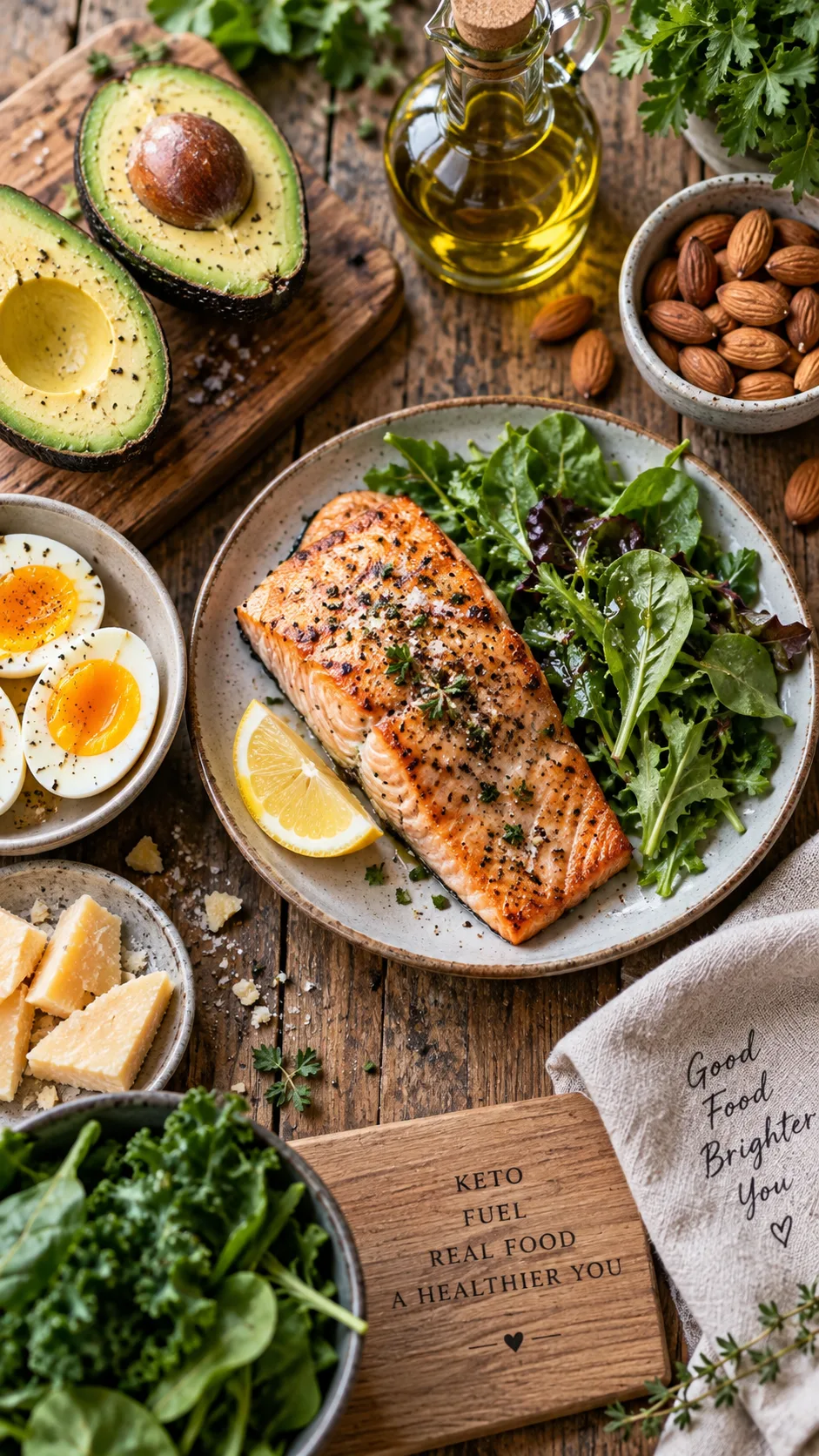
- Buy one week of keto staples. Eggs, butter, olive oil, chicken thighs, ground beef, spinach, avocados, cheese, salt. Done.
- Start salting your food aggressively. This one habit prevents most keto flu misery. More on that shortly.
Notice what’s NOT on that list? Tracking apps, ketone test strips, exogenous ketone powders, MCT oil. You can add those later. Complexity is the enemy of consistency.

The keto food list: eat this, skip that
Green light foods (eat freely)
- Meat and poultry: beef, pork, chicken, lamb, turkey. Fattier cuts are your friend.
- Fish and seafood: salmon, sardines, mackerel, shrimp, tuna
- Eggs: whole eggs, always. The yolk is the good part.
- Fats and oils: butter, ghee, olive oil, coconut oil, avocado oil
- Low-carb veg: spinach, kale, broccoli, cauliflower, zucchini, asparagus, peppers
- Dairy: heavy cream, hard cheeses, full-fat Greek yogurt (in moderation)
- Nuts and seeds: almonds, pecans, macadamias, chia, flax
- Avocado: the unofficial mascot of keto
Red light foods (skip these)
- All grains: bread, pasta, rice, oats, corn, quinoa
- Sugar in every disguise: honey, agave, maple syrup, “natural cane juice”
- Most fruit: bananas, grapes, mangoes, apples (berries in small amounts are fine)
- Starchy veg: potatoes, sweet potatoes, yams, peas
- Legumes: beans, lentils, chickpeas
- Beer and sweet cocktails: sorry, liquid bread is still bread
The sneaky middle ground
These trip up beginners constantly. Check the label, always.
- Salad dressings. Many are loaded with sugar.
- BBQ sauce and ketchup. Basically sugar with tomato flavoring.
- “Low-fat” anything. They replace the fat with sugar.
- Flavored yogurt. A dessert wearing a health costume.
- Protein bars. The majority are candy bars with better marketing.
The keto flu: what it is and how to dodge it
Days 2 through 5 are when people quit. Headache, fatigue, brain fog, irritability, muscle cramps. Everyone calls it the “keto flu” and assumes their body is detoxing or whatever.
It isn’t. It’s dehydration and an electrolyte crash. When you cut carbs, your insulin drops, and your kidneys flush out sodium and water fast. Potassium and magnesium go out with the sodium. That’s your headache right there.
Your anti-keto-flu protocol
- Sodium: 4,000 to 5,000mg daily. Yes, really. Salt your food. Drink a cup of broth. Most keto beginners are wildly under-salted.
- Potassium: 3,000 to 4,000mg daily. Avocado, spinach, salmon, mushrooms.
- Magnesium: 300 to 400mg daily. A supplement is easiest: magnesium glycinate or citrate.
- Water: drink to thirst, not to a number. Chugging a gallon while ignoring salt makes things worse.
Follow this and most people skip the keto flu entirely. I’ve coached friends through their first week, and the ones who salted everything felt fine by day three. The ones who “didn’t want to overdo the sodium” texted me from the couch.

“But won’t I be hungry all the time?”
Here’s the genuinely surprising part: most people report LESS hunger on keto, not more. And there’s real science behind it, not just vibes.
Fat and protein trigger satiety hormones like cholecystokinin and peptide YY. Stable blood sugar also means no 3pm crash sending you sprinting toward the vending machine. Research published in Obesity Reviews found that people in ketosis reported reduced appetite compared to their baseline. Ever wondered why keto folks casually skip breakfast? That’s why.
If you ARE hungry, you’re probably doing one of these
- Not eating enough fat. The classic beginner error. People cut carbs AND fat, then wonder why they’re miserable. Add the butter. Add the olive oil.
- Under-eating protein. Aim for roughly 0.7 to 1g per pound of lean body mass.
- Snacking on nuts. A “handful” of almonds is never a handful. Nobody has ever eaten 12 almonds.
- Confusing thirst for hunger. Drink some salted water first, then reassess.
A realistic first week of keto meals
You don’t need recipes with 18 ingredients. You need repeatable meals you’ll cook after a long day.
Breakfast options
- 3 eggs scrambled in butter plus half an avocado
- Bacon and eggs (the cliché exists for a reason)
- Full-fat Greek yogurt with a small handful of raspberries and chia seeds
- Nothing. Seriously, if you’re not hungry, don’t eat. That’s a feature.
Lunch options
- Big spinach salad with grilled chicken thighs, olive oil and vinegar
- Tuna mixed with mayo, celery, and black pepper, scooped with cucumber slices
- Leftover dinner. Always cook extra. Always.
Dinner options
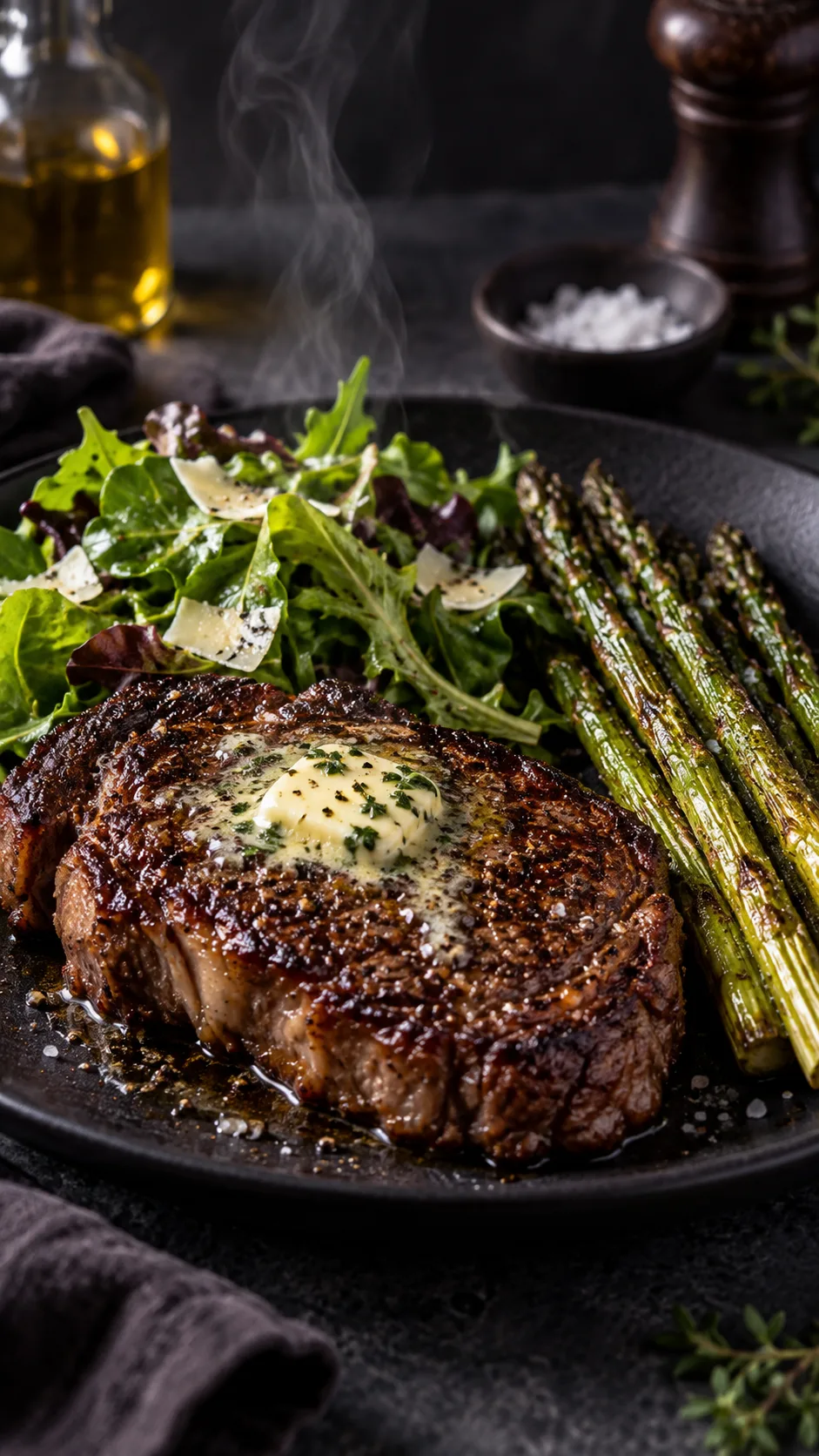
- Salmon with roasted asparagus in butter
- Ground beef stir-fry with peppers, zucchini, and soy sauce
- Pork chops with cauliflower mash (butter and cream, no apologies)
- Steak and a side salad. The world’s easiest keto dinner.
If you live outside the US or Europe and think these ingredients don’t translate to your kitchen, they do. Check out this practical keto diet guide for Nigeria for local food swaps and a regional meal plan that holds up in real life.
7 beginner mistakes that wreck your first month
- Fearing fat. Decades of low-fat messaging live rent-free in your head. Keto doesn’t work without fat. Evict that thought.
- Eating too much protein, or panicking about it. Excess protein can nudge blood sugar up, but the “protein kicks you out of ketosis” fear is massively overblown for most people.
- Ignoring hidden carbs. Sauces, marinades, “sugar-free” gum, and that splash of oat milk in your coffee add up fast.
- Going all-in on keto junk food. Keto cookies, keto ice cream, keto bread. They exist, they’re technically compliant, and they’ll stall your progress and your willpower.
- Weighing yourself daily and panicking. You’ll drop 4 to 8 pounds of water in week one. Then it slows. That’s normal, not failure.
- Quitting during the adaptation window. Full fat-adaptation takes 3 to 6 weeks, not 3 days. Judge keto at week six, not day four.
- Doing it in total isolation. Tell someone. Accountability beats motivation every single time.
Should you test for ketosis? (my honest opinion)
IMO, beginners obsess over testing way too early. You’ve got three options:
- Urine strips (about $10): cheap, fun for week one, increasingly inaccurate as you adapt. Good for a quick “yes, it’s working” confidence boost.
- Breath meters (about $100 to $200): reusable, decent accuracy, no needles.
- Blood ketone meters (about $40 plus strips): the gold standard. Also the one that requires poking your finger.
My take: skip testing for the first two weeks. Your body gives you free feedback: reduced hunger, steadier energy, and that faintly metallic “keto breath.” Trust those signals first. If you’re still curious at week three, grab a blood meter.
Exercise on keto: what changes and what doesn’t
Your first two weeks of workouts might feel like running through wet sand. That’s temporary. Your muscles are switching fuel sources, and glycogen is running low.
Low-intensity work gets better on keto. Walking, hiking, easy jogging, steady cycling: fat is a fantastic fuel for all of that. If you’re building an endurance base, this is a great time to start a walk-to-run program since the intensity stays low.
High-intensity work takes longer to bounce back. Heavy lifting, sprints, HIIT. Expect a dip for 3 or 4 weeks, then a return to normal. If you’re brand new to the weight room, pair keto with a structured beginner gym workout plan so you’re not guessing at both nutrition AND training at once.
Quick tip for lifters: bump your sodium before training. A pinch of salt in water 20 minutes pre-workout fixes most of the “why do I feel weak” complaints.

Who should NOT start keto (real talk)
Keto isn’t a universal prescription, and anyone who tells you otherwise is selling something. Talk to a doctor before starting if any of these apply:
- You take insulin or diabetes medication. Your dosing will likely need adjusting, and fast.
- You’re pregnant or breastfeeding.
- You have kidney disease, liver disease, or pancreatitis.
- You’ve had your gallbladder removed. Fat digestion gets trickier, which you can manage, but plan for it.
- You have a history of disordered eating. Restrictive diets can be a real trigger.
- You take blood pressure medication. Keto often lowers BP on its own.
The American Diabetes Association accepts low-carb approaches for blood sugar management, but medication adjustments genuinely require supervision. Don’t freestyle that part.
How long should you stay on keto?
There’s no expiration date, but there’s also no medal for suffering. Some people run keto for years and feel great. Others use it for 3 to 6 months to lose weight, then shift to a moderate low-carb approach.
Ask yourself three questions at the 12-week mark:
- Is my energy better than before?
- Am I hitting the goals I started for?
- Can I honestly see myself eating this way in a year?
Three yeses? Keep going. Two? Tweak something. Zero? Keto might not be your tool, and that’s completely fine. The best diet is the one you don’t have to white-knuckle.
Your first-week action plan (save this)
- Days 1 and 2: clear the carbs, shop the staples, start salting everything.
- Days 3 and 4: peak keto-flu window. Double down on sodium and magnesium. Go easy on workouts.
- Days 5 through 7: energy stabilizes. Hunger drops noticeably. Resist weighing yourself every hour.
- Week 2: build 5 go-to meals you can cook on autopilot.
- Weeks 3 through 6: fat adaptation kicks in. Workout performance returns. NOW you judge results.
The bottom line
Starting keto comes down to three things: cut carbs to 20 to 30g net, eat enough fat, and take your electrolytes seriously. Everything else (the testing strips, the MCT powders, the 40-ingredient fat bomb recipes) is optional noise you can explore later.
You won’t feel lost if you keep your food list short and your meals repeatable. You won’t feel hungry if you stop being scared of butter. And you won’t quit in week one if you salt your food like you mean it.
Give it six weeks before you judge it. That’s the deal. Not six days, not six meals. Six weeks. Your body needs that long to finish switching fuel tanks.
Now go buy some eggs. Your future self is already annoyed you didn’t start last month.