

Your doctor said the words “your LDL is high,” handed you a photocopied sheet from 1997, and sent you home with the culinary enthusiasm of a wet paper towel. Steamed broccoli. Plain oatmeal. Skinless chicken breast that tastes like regret.
Ignore that sheet. You can drop your LDL cholesterol without eating like a Victorian orphan. I’ve watched friends and family go through this exact panic, and I’ve been through it myself. The food that moves the numbers happens to be good food. Really good.
So let’s fix your numbers and your dinner at the same time. Deal?
First, what is LDL doing in there?
Think of cholesterol as delivery trucks driving around your bloodstream. LDL is the truck that drops cholesterol off at your artery walls. HDL is the truck that picks it back up and hauls it to the liver for disposal.
Too many drop-offs and not enough pickups? Plaque builds up, arteries narrow, and your cardiologist buys a new boat.
The American Heart Association puts optimal LDL under 100 mg/dL for most adults, and under 70 mg/dL if you’ve already had a cardiac event. Nobody says this clearly enough, though: your LDL number responds to food faster than you’d think. Twelve weeks of real dietary change can shift it noticeably.
The dietary cholesterol myth (yes, eggs are mostly fine)
For decades everyone blamed eggs. Shrimp too. It turns out dietary cholesterol has a surprisingly small effect on most people’s blood cholesterol. The 2015 Dietary Guidelines for Americans quietly dropped the 300mg daily limit.
The real villains are saturated fat and trans fat. Those two interfere with your liver’s LDL receptors, so your blood clears LDL more slowly. That’s the mechanism.
Your morning eggs aren’t the problem. The butter-drenched croissant and the processed sausage sitting next to them? That’s a different conversation.
The 5 foods that genuinely move your LDL
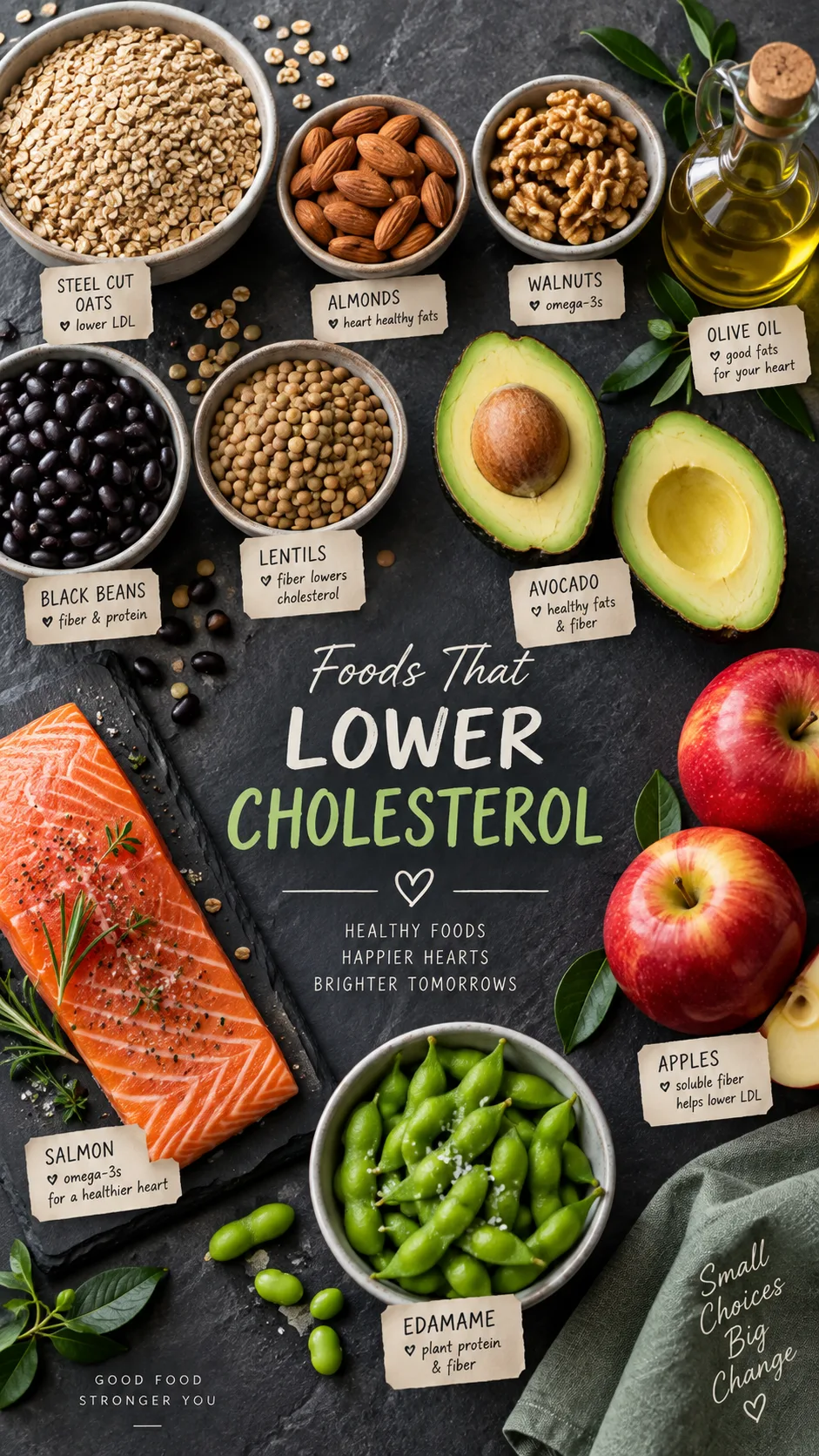
Forget the 47-item “heart healthy” list. Five categories do most of the heavy lifting. Nutrition researchers call this combination a “portfolio diet,” and studies show it can cut LDL by up to 30%, roughly comparable to a starter dose of statins.
- Soluble fiber (5 to 10g daily): Oats, barley, beans, lentils, apples, psyllium husk. Soluble fiber binds bile acids in your gut and drags them out. Your liver then pulls LDL from your blood to make more bile. Clever, right?
- Plant sterols and stanols (2g daily): These compete with cholesterol for absorption in your intestine. You’ll find them in fortified spreads, some orange juices, nuts, and seeds. Expect a 5% to 15% LDL reduction from this alone.
- Nuts (a small handful, around 45g daily): Almonds, walnuts, pistachios. A meta-analysis of 25 trials found consistent LDL drops. They also keep you full, so you walk past the vending machine.
- Soy protein (25g daily): Tofu, tempeh, edamame, soy milk. Modest on its own, but it stacks well with everything else.
- Unsaturated fats: Olive oil, avocado, fatty fish, seeds. These need to replace saturated fat rather than pile on top of it. That distinction matters enormously.
Notice what’s missing? Suffering. Nowhere on that list does it say “eat sad food.”
What you need to cut (the honest list)
I won’t tell you to eliminate everything you enjoy. That approach collapses within eleven days. But a few things genuinely need to shrink.
Saturated fat: aim under 6% of daily calories
On a 2,000-calorie diet, that’s roughly 13 grams per day. For perspective, one fast-food cheeseburger can blow through most of it.
- Fatty cuts of red meat: ribeye, 80/20 ground beef, processed bacon and sausage
- Full-fat dairy: butter, cream, heavy cheese portions
- Coconut oil and palm oil: yes, despite the wellness-influencer hype, coconut oil runs about 90% saturated fat
- Baked goods with shortening: pastries, commercial cookies, pie crusts
Trans fats: zero, and I mean zero
The FDA banned artificial trans fats in the US food supply in 2018, but “partially hydrogenated oil” still sneaks into imported products and some baked goods. Read the labels. Trans fat raises LDL and lowers HDL at the same time, which is an impressively terrible combination.
Refined carbs and added sugar
Most people miss this one entirely: excess sugar and refined starch raise triglycerides and create small, dense LDL particles, the especially dangerous kind. So the “low fat, high white bread” approach from the 90s made some people worse, not better.
If you want a deeper breakdown of the sneaky habits sabotaging your numbers, this guide on high cholesterol diet mistakes covers the ones that trip up almost everyone.
A 7-day low cholesterol meal plan you’ll want to eat
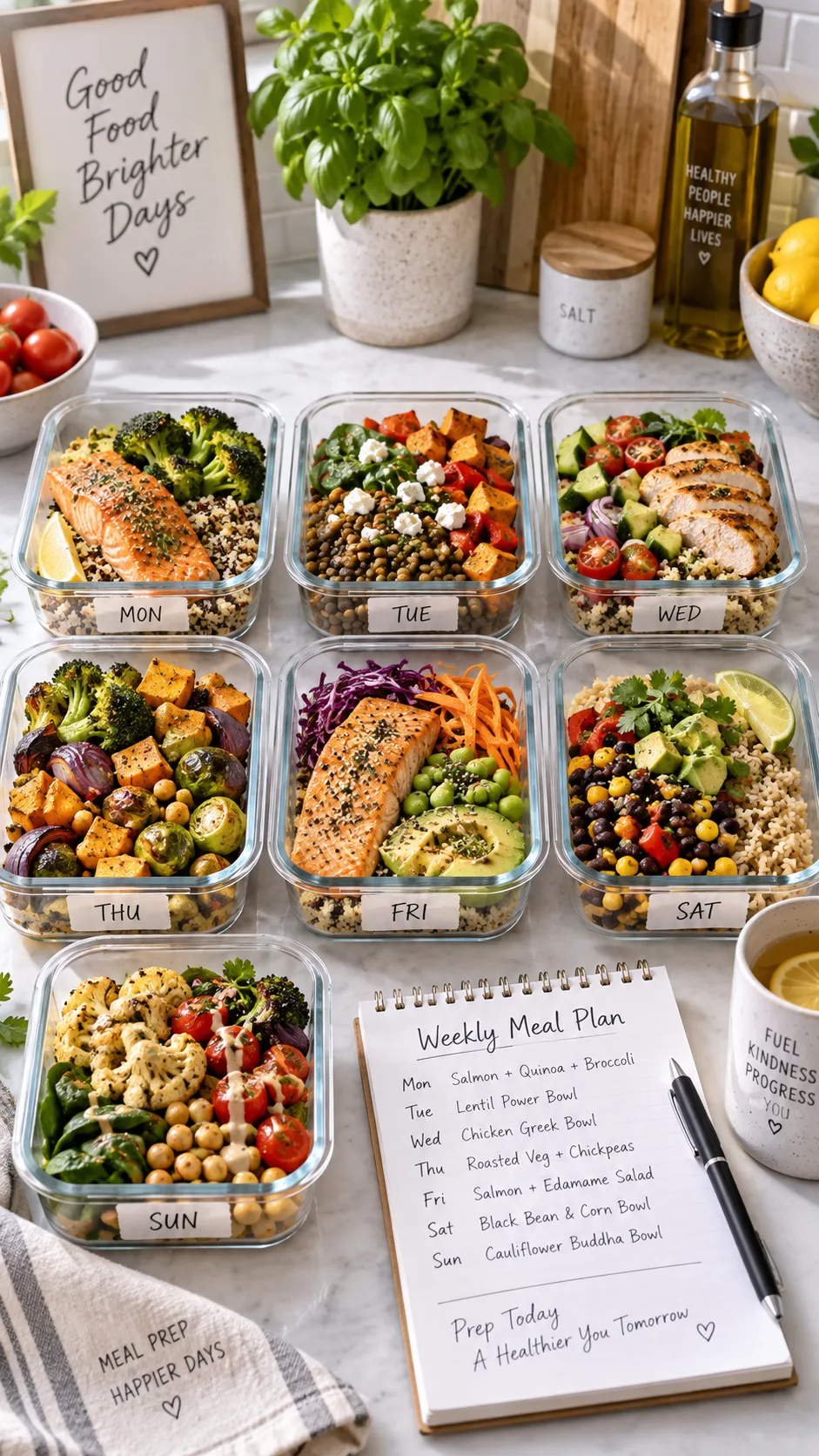
Every meal here follows the portfolio principles. None of them taste like punishment. I’ve eaten versions of all of these and my wife still speaks to me, so consider that a quality endorsement.
Day 1
- Breakfast: Steel-cut oats with walnuts, cinnamon, sliced pear, and a splash of soy milk
- Lunch: Mediterranean chickpea bowl with cucumber, cherry tomatoes, red onion, parsley, lemon and olive oil dressing, crumbled feta
- Dinner: Miso-glazed salmon, garlic sautéed spinach, brown rice
- Snack: Apple with almond butter
Day 2
- Breakfast: Two eggs scrambled in olive oil, avocado toast on 100% whole grain bread, tomato slices
- Lunch: Lentil soup with a chunk of crusty sourdough
- Dinner: Chicken thighs (skin off) braised with white beans, rosemary, and tomatoes
- Snack: Pistachios, small handful
Day 3
- Breakfast: Greek yogurt (low-fat) with ground flaxseed, blueberries, drizzle of honey
- Lunch: Leftover white bean chicken braise over barley
- Dinner: Black bean and sweet potato tacos, corn tortillas, avocado crema, pickled onions
- Snack: Edamame with sea salt
Day 4
- Breakfast: Overnight oats with chia, almond milk, banana, peanut butter
- Lunch: Tuna salad made with mashed avocado instead of mayo, on whole grain
- Dinner: Tofu stir-fry with broccoli, peppers, cashews, ginger-garlic sauce over brown rice
- Snack: Orange and a few almonds
Day 5
- Breakfast: Smoothie with soy milk, spinach, frozen berries, oats, flaxseed
- Lunch: Big salad with grilled chicken, walnuts, apple, mixed greens, balsamic vinaigrette
- Dinner: Spaghetti with lentil bolognese and a side of roasted zucchini
- Snack: Hummus and carrot sticks
Day 6
- Breakfast: Whole grain toast with mashed avocado, poached egg, chili flakes
- Lunch: Quinoa tabbouleh with chickpeas and lots of herbs
- Dinner: Grilled mackerel or sardines, roasted potatoes with olive oil and paprika, green salad
- Snack: Dark chocolate (70%+) square and a few walnuts
Day 7
- Breakfast: Barley porridge with almonds, dried figs, cardamom
- Lunch: Falafel wrap with tahini, lettuce, tomato, pickles
- Dinner: Sheet pan shrimp with olive oil, cherry tomatoes, olives, feta, served with whole wheat couscous
- Snack: Greek yogurt with berries
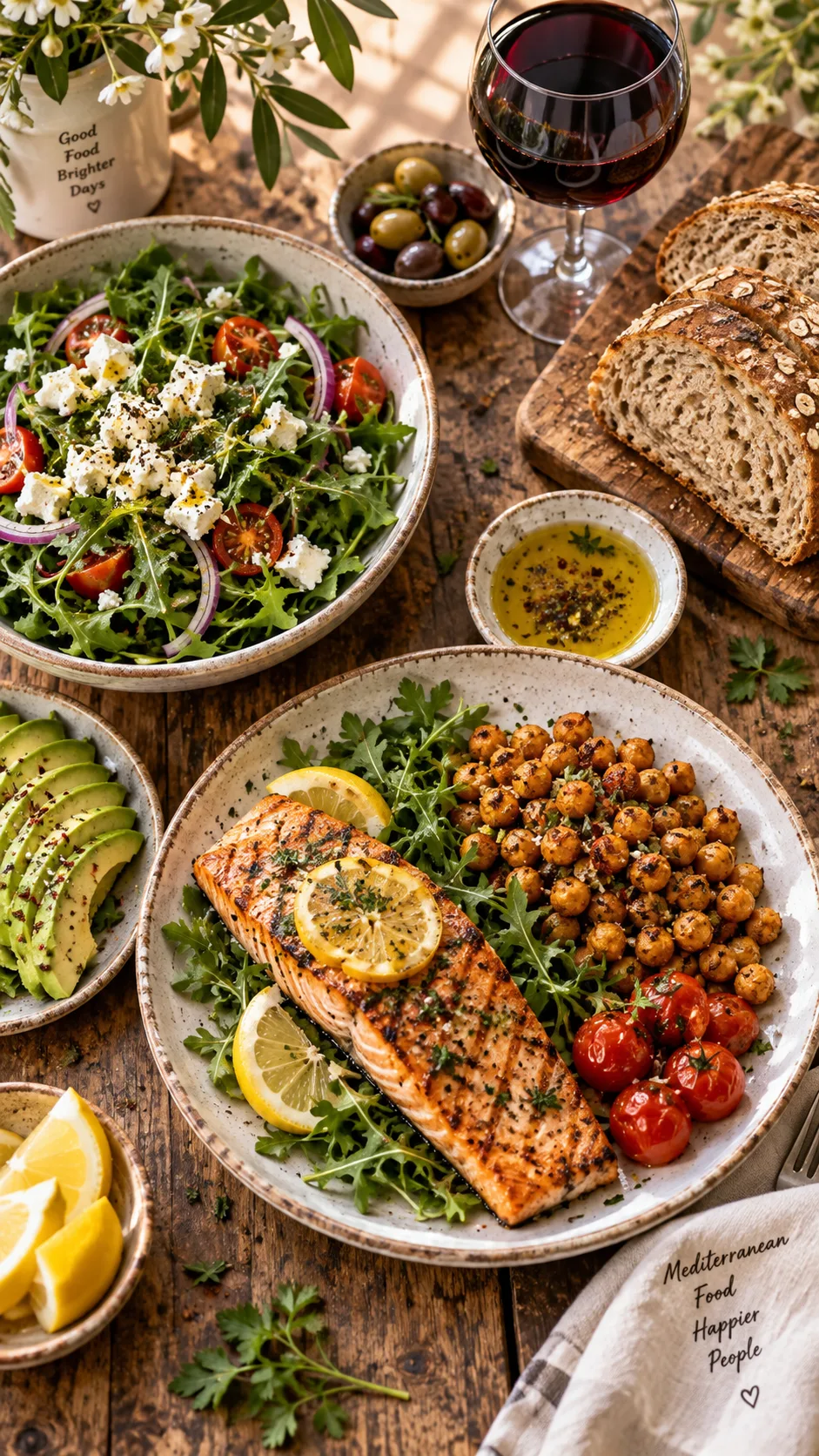
Tell me honestly: does any of that sound like deprivation? That’s Mediterranean eating, and researchers have studied it more than any other heart-protective way of eating. The PREDIMED trial followed over 7,400 people and found a significant drop in cardiovascular events. That’s not a tiny pilot study, and it’s not a supplement company brochure.
The swaps that do 80% of the work
You don’t need to gut your kitchen. You need about nine swaps. Seriously.
- Butter → extra virgin olive oil for cooking and finishing
- Ground beef (80/20) → 93/7 lean beef, ground turkey, or lentils
- White bread → 100% whole grain (check the first ingredient, not the brown color)
- Sugary cereal → steel-cut oats or overnight oats
- Chips → nuts or roasted chickpeas
- Mayo → mashed avocado, hummus, or Greek yogurt
- Cream-based sauces → tomato, olive oil, or tahini based
- Whole milk → soy milk (soy specifically has cholesterol-lowering evidence behind it)
- Red meat 5x a week → red meat once or twice a week, fish two or three times a week
Do those consistently and you’ve handled the majority of the dietary battle. You don’t need a calorie counting app, though if portion control is also your goal, a structured approach like a 1500 calorie meal plan pairs nicely with these swaps.
Watch this before you change anything
Sometimes you want a doctor walking through the mechanism instead of a blog post. This one’s worth twelve minutes of your life.
Food isn’t the only lever (sorry)
I’d love to tell you that oatmeal fixes everything. It doesn’t. A few other factors carry real weight.
Movement changes your HDL
Diet mostly moves LDL. Exercise mostly moves HDL and triglycerides. Aim for 150 minutes of moderate activity a week. Brisk walking counts, so you can skip the CrossFit membership and the personality transplant that comes with it.
Weight loss amplifies everything
Losing even 5% to 10% of your body weight improves LDL, triglycerides, and blood pressure together. If that’s part of your plan, a sustainable calorie deficit meal plan beats crash dieting every single time, and crash diets tend to rebound your numbers right back anyway.
Genetics sometimes wins
Here’s the part nobody likes: roughly 1 in 250 people have familial hypercholesterolemia, a genetic condition where LDL stays sky-high no matter how you eat. If your LDL sits above 190 mg/dL, or heart disease hits your relatives young, ask a doctor about screening. Diet alone won’t cover it there, and that isn’t a personal failure.
The National Heart, Lung, and Blood Institute keeps solid, non-alarmist resources on this if you want to read further.
Mistakes I see constantly
- Buying anything labeled “low fat.” Manufacturers replace the fat with sugar. You’ve traded one problem for a worse one.
- Going low-fat across the board. Your body needs unsaturated fats. Cut them and your HDL drops too.
- Testing too soon. Give it 8 to 12 weeks before you retest. Two weeks of oatmeal proves nothing.
- Ignoring alcohol. More than a drink or two daily pushes triglycerides up fast.
- Obsessing over shrimp and eggs while eating processed meat five days a week. Check your priorities, friend.
- Quitting statins without telling your doctor because a YouTube video said so. Please don’t. Diet and medication work together, not in competition.

Your realistic 12-week game plan
- Weeks 1 and 2: Change breakfast only. Oats, flaxseed, fruit. One meal, nothing else.
- Weeks 3 and 4: Swap your cooking fat to olive oil and add fish twice a week.
- Weeks 5 and 6: Work beans or lentils into four meals per week.
- Weeks 7 and 8: Replace your usual snack with nuts. Add a daily walk.
- Weeks 9 through 12: Tighten the saturated fat, hold everything else steady, then retest your lipid panel.
Why stagger it? Because changing fourteen things on a Monday is how people quit by Thursday. One habit at a time sticks.
The bottom line
Lowering LDL has nothing to do with boiled vegetables and quiet suffering. You want more soluble fiber, more plants, more good fats, less saturated fat, and consistency over perfection.
The Mediterranean-style approach works because people enjoy it enough to keep doing it for years. Adherence beats optimization. Always has.
So pick one thing from this article. Start tomorrow morning. Then book that follow-up blood test for twelve weeks out and let the numbers do the talking.
Your arteries don’t care how enthusiastic you were in week one. They care what you’re still doing in month six.
This article is for general information and doesn’t replace personalized medical advice. Talk to your doctor or a registered dietitian before making major dietary changes, especially if you take medication.