

You hit 1,800 calories, pack in chicken breast, skip carbs, and still feel hungry, tired, and irritated by 3 p.m. Sound familiar? You do not need more food rules. You need a high protein 1800 calorie meal plan that fits your body, training, schedule, and sanity.
Most women do not struggle with an 1800 calorie meal plan because they lack discipline. Generic plans often treat protein like magic, vegetables like punishment, and carbs like the enemy. Your body needs all three.
A solid 1800 calorie high protein meal plan can help you lose fat or maintain your weight while you keep muscle, fuel workouts, and manage hunger. It should leave room for food you enjoy, because nobody wants to chew dry turkey forever and call it a lifestyle.
Why 1,800 calories works for some women and flops for others
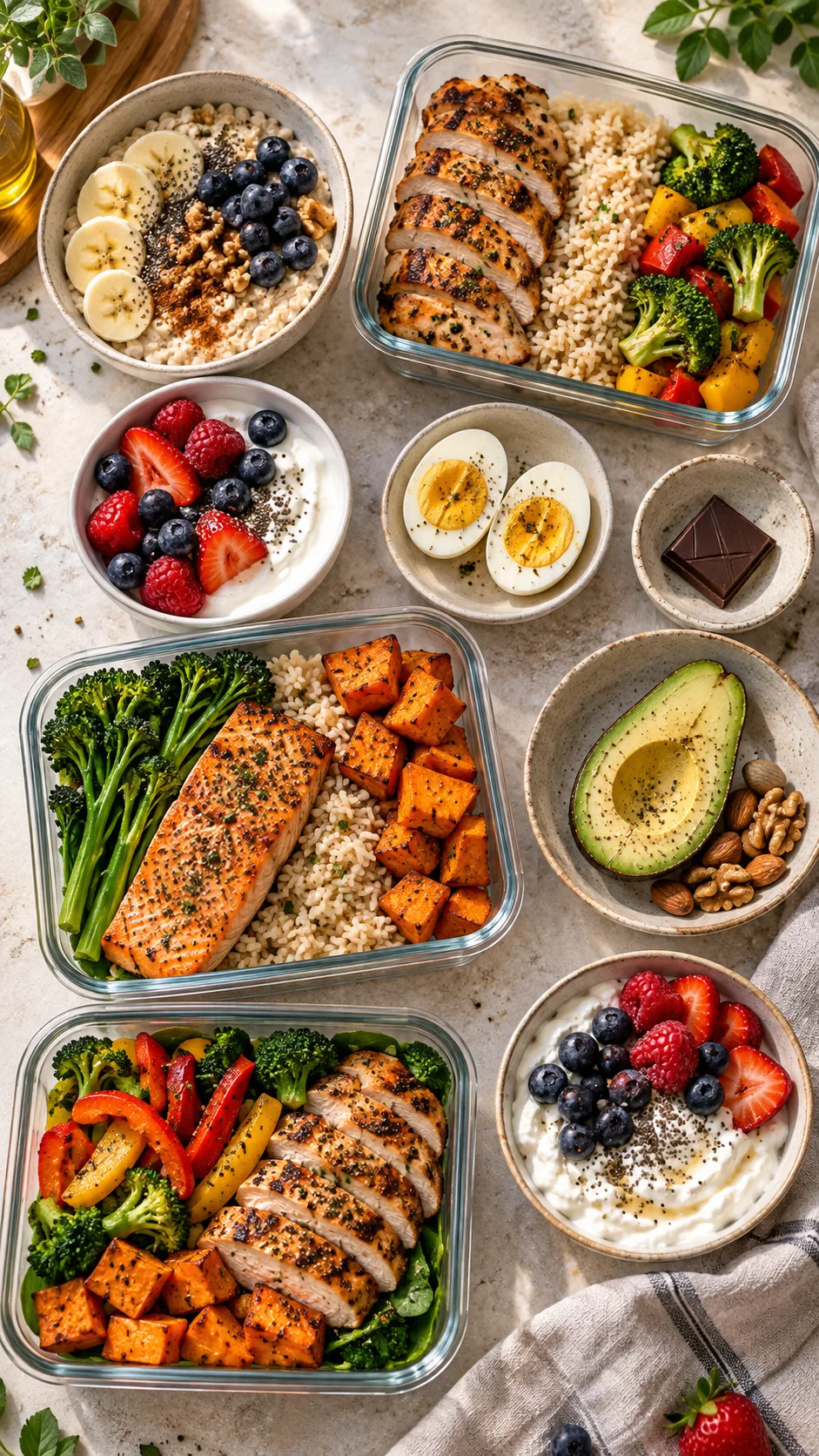
Calories matter, but no calorie target exists in a vacuum. Your height, current weight, age, daily movement, training routine, sleep, stress, menstrual cycle, and health history all shape your energy needs.
For one woman, 1,800 calories creates a gentle deficit. For another, 1,800 calories maintains her weight nicely. For a very active woman, 1,800 calories may leave her short on fuel and grumpy enough to argue with a lamp.
Treat this number as a starting point, not a moral grade. Track your energy, hunger, strength, mood, cycle regularity, digestion, and weight trend for at least two to four weeks before you make big changes.
The Dietary Guidelines for Americans give broad nutrition advice, but a website cannot calculate your personal needs. Talk with a registered dietitian if you manage a medical condition, feel anxious around food, miss periods, or want a plan tailored to you.
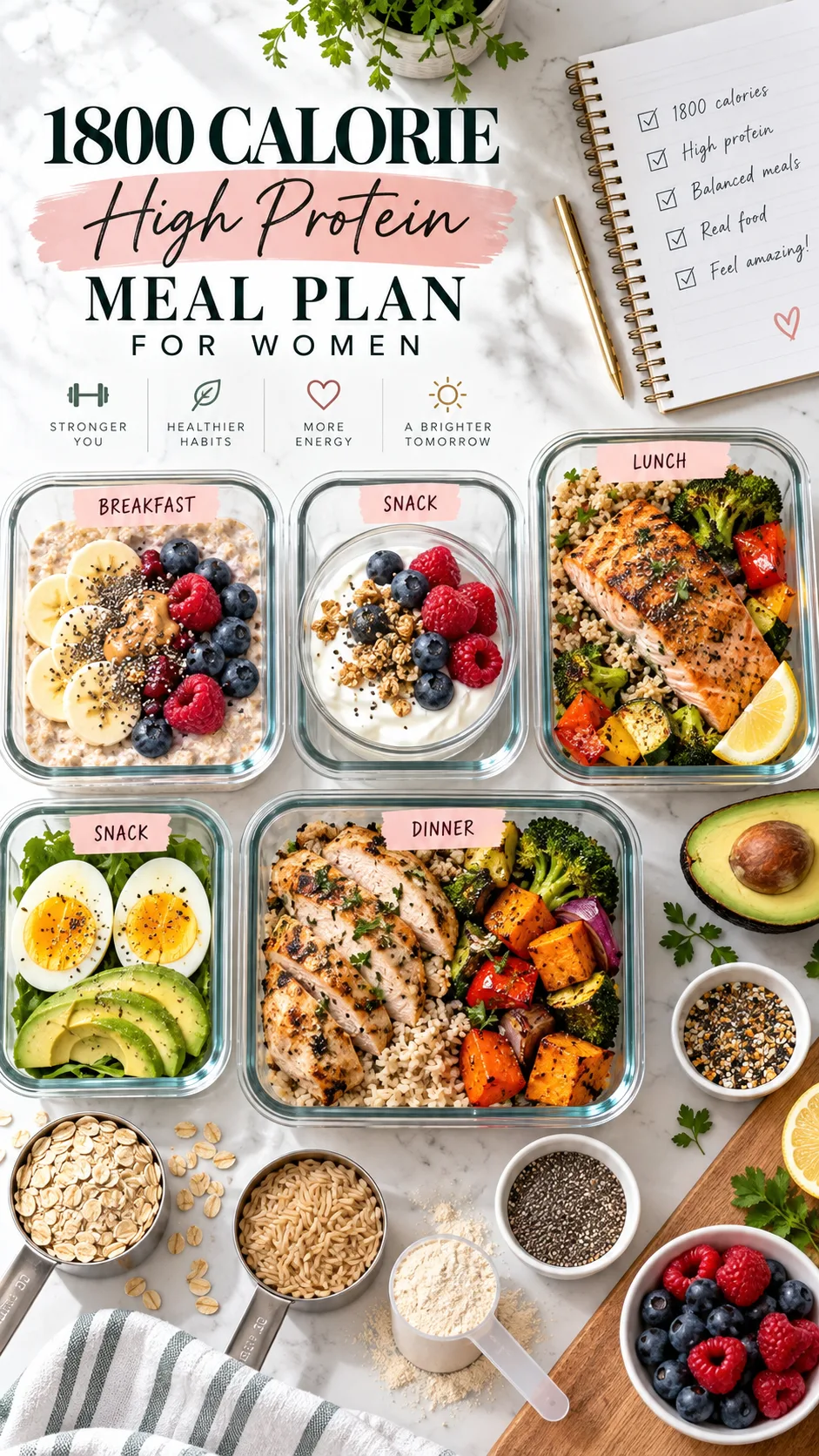
The biggest mistake: Chasing protein while forgetting everything else
Women often hear “eat more protein” and turn every meal into a bleak stack of protein bars, egg whites, and plain tuna. Protein helps with muscle repair, fullness, and body composition, but it cannot replace fibre, fats, carbohydrates, vitamins, or enjoyment.
A high protein diet should feel balanced, not strange. You can build muscle and lose fat without cutting fruit, rice, potatoes, bread, or the occasional piece of chocolate.
How much protein should you aim for?
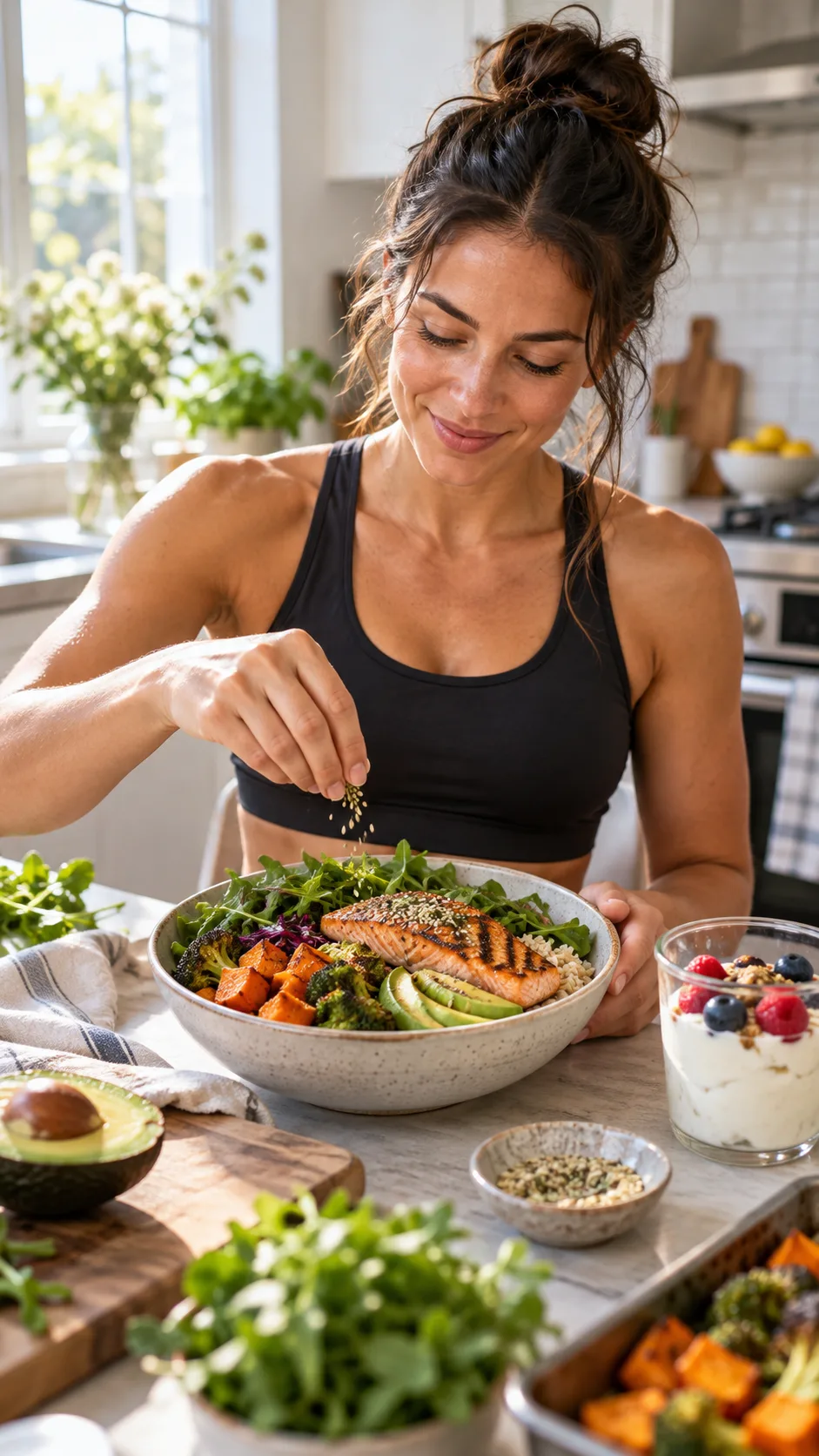
Many active women do well with 100 to 140 grams of protein per day on an 1,800 calorie plan. Your ideal intake depends on your body size, activity, goals, and total calorie intake.
Research from the International Society of Sports Nutrition supports about 1.4 to 2.0 grams of protein per kilogram of body weight for most adults who exercise. You do not need to memorize that formula unless numbers bring you joy, which makes you stronger than I am.
Start with 25 to 35 grams of protein at each main meal. Add a protein rich snack when your meals fall short. This approach spreads protein through the day and helps meals keep you full.
Do not put all your protein in dinner
Many women have toast or coffee for breakfast, a small salad for lunch, then try to eat 80 grams of protein at dinner. That pattern leaves you hungry all day and makes evening cravings feel overwhelming.
Give breakfast and lunch real protein instead. Greek yogurt, eggs, cottage cheese, tofu, chicken, fish, lean beef, tempeh, edamame, lentils, and protein powder can all help.
- Breakfast: Aim for 25 to 30 grams of protein.
- Lunch: Aim for 30 to 35 grams.
- Dinner: Aim for 30 to 40 grams.
- Snack: Add 15 to 25 grams when you need it.
The macro split that makes an 1800 calorie meal plan feel easier
You do not need perfect macros to make progress. You need enough protein, fibre, fats, and carbs to support the life you live.
Try this balanced example for a high protein 1800 calorie meal plan:
- Protein: 125 grams, or about 500 calories
- Carbohydrates: 190 grams, or about 760 calories
- Fat: 60 grams, or about 540 calories
That comes to roughly 1,800 calories, with some normal variation from food labels. Labels cannot give you perfect precision. Portions and ingredients vary.
Carbs fuel training, walking, brain function, and daily energy. Fats support hormones, nutrient absorption, and satisfaction after meals. Fibre helps digestion and fullness, so include fruit, vegetables, beans, whole grains, nuts, seeds, and potatoes with the skin if you like them.
The American Heart Association recommends unsaturated fats from foods such as olive oil, avocado, nuts, seeds, and fatty fish. You do not need to fear dietary fat, but measure extras that pack a lot of calories if fat loss sits on your goal list.
What women commonly get wrong on a high protein diet
They eat “healthy” foods without watching calorie density
Nut butter, olive oil, granola, cheese, trail mix, avocado, and dressings provide nutrients, but they can raise your calorie intake fast. A few generous pours and handfuls can push an 1,800 calorie meal plan to 2,300 calories without adding much fullness.
You do not need to ban these foods. Measure them for a couple of weeks so you learn what one serving looks like. After that, you can judge portions with more confidence when life gets busy.
They ignore fibre and feel ravenous
Protein helps, but protein alone cannot fix hunger. Build meals around foods with plenty of volume, such as berries, apples, leafy greens, broccoli, zucchini, carrots, mushrooms, beans, potatoes, and air popped popcorn.
Most women benefit from about 25 grams of fibre or more each day. Increase fibre slowly and drink enough fluids. The National Institute of Diabetes and Digestive and Kidney Diseases offers practical advice on fibre, fluids, and digestive health.
They copy a fitness influencer’s menu exactly
Your favorite fitness creator may eat oats at 5 a.m., chicken and rice six times a week, and a suspicious amount of cottage cheese. Good for her. You need meals that fit your culture, budget, family, cooking skills, and taste.
Swap foods within the same category instead of quitting the plan because you hate one ingredient. Choose turkey instead of chicken, tofu instead of fish, potatoes instead of rice, or skyr instead of Greek yogurt.
They forget to strength train
High protein supports your body, but strength training gives your muscles a reason to adapt. If you want a leaner, stronger body, pair this meal plan with progressive resistance training.
Start with the basics in this strength training guide for women, then build consistency before you chase complicated workout splits. You do not need a gym full of intimidating machines or a neon tub of pre workout to make progress.
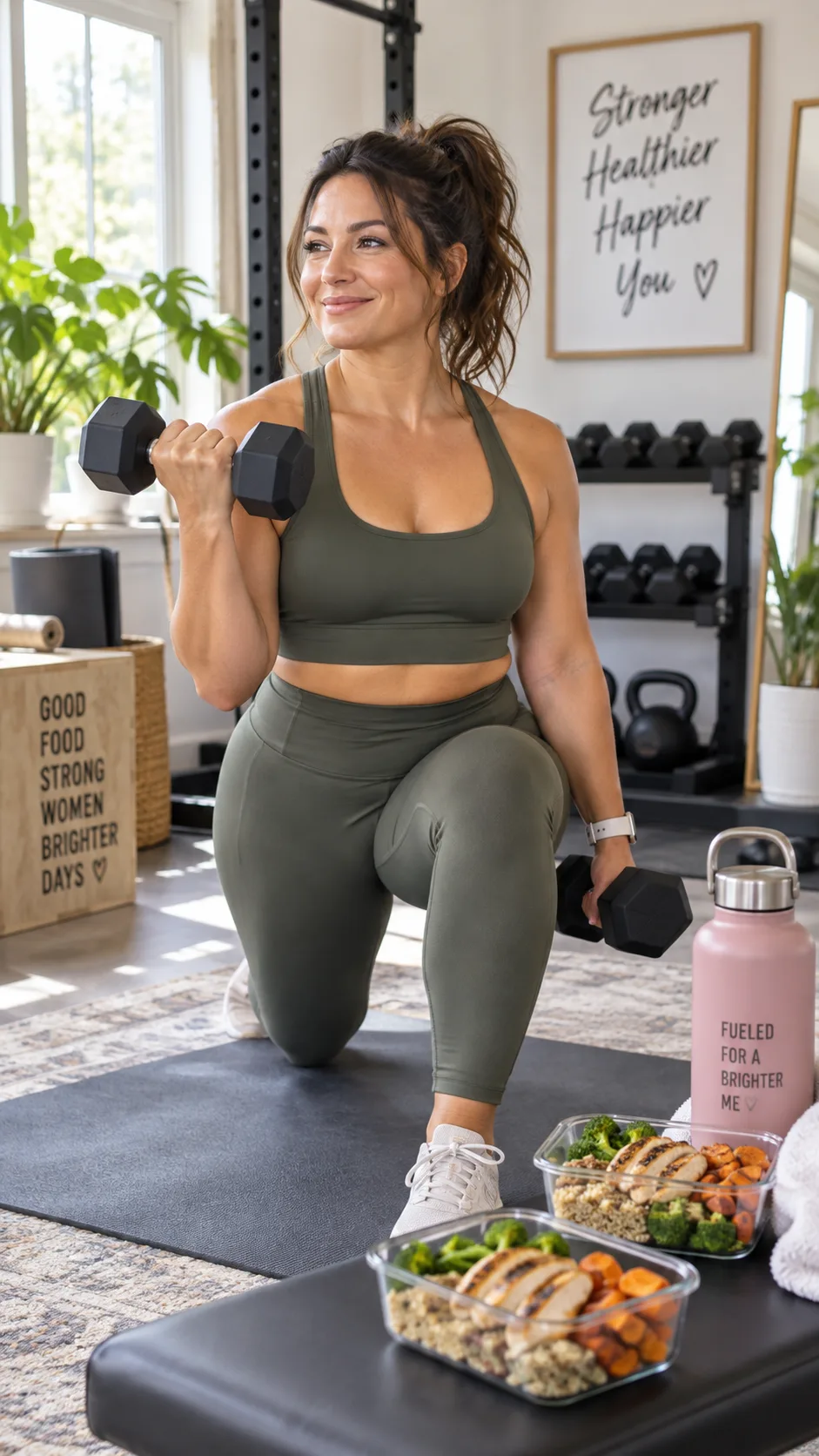
A realistic high protein 1800 calorie meal plan for women
This sample day provides roughly 1,800 calories and around 130 grams of protein. Adjust portions for your hunger, activity, and goals. Use it as a flexible template, not a food prison.
Breakfast: Greek yogurt protein oats
- 170 grams plain nonfat Greek yogurt
- 40 grams rolled oats
- 1 scoop whey or plant protein powder
- 100 grams berries
- 1 teaspoon chia seeds
Approximate nutrition: 430 calories, 45 grams protein. This breakfast gives you protein, filling carbs, fibre, and a little fat without asking you to fry eggs before sunrise.
Lunch: Chicken, rice, and crunchy veg bowl
- 120 grams chicken breast or chicken thigh, cooked
- 150 grams rice, cooked
- 2 cups chopped salad vegetables
- 1 tablespoon light vinaigrette or 2 teaspoons olive oil and lemon
- 1 small orange or kiwi
Approximate nutrition: 500 calories, 40 grams protein. Rice can carry you through the afternoon, while vegetables and fruit add volume and fibre.
Snack: Cottage cheese, apple, and almonds
- 170 grams low fat cottage cheese
- 1 medium apple
- 10 almonds
Approximate nutrition: 290 calories, 23 grams protein. This snack can help when late afternoon hunger starts making a lot of noise.
Dinner: Salmon, potatoes, and greens
- 115 grams salmon fillet
- 250 grams roasted baby potatoes
- 2 cups broccoli, green beans, or asparagus
- 1 teaspoon olive oil for roasting or dressing
Approximate nutrition: 550 calories, 30 grams protein. Salmon gives you protein and omega 3 fats, while potatoes provide satisfying carbs that many women avoid for no good reason.
Optional flexible swap
Want something sweet after dinner? Replace some almonds or reduce the rice portion a little, then add one or two squares of dark chocolate. A sustainable meal plan makes room for flexibility. Rigid eating often ends with you standing in front of the pantry at 10 p.m. and asking crackers to solve your problems.
Easy protein swaps so you do not eat chicken forever
Variety makes high protein eating easier and gives you a broader mix of nutrients. Use these swaps to keep meals in a similar calorie and protein range.
- Chicken breast: Swap with turkey breast, shrimp, tuna, extra lean beef, pork tenderloin, tofu, tempeh, or seitan.
- Greek yogurt: Swap with skyr, cottage cheese, soy yogurt with protein powder, or a ready to drink protein shake.
- Rice: Swap with potatoes, quinoa, whole grain pasta, tortillas, beans, lentils, or sourdough bread.
- Salmon: Swap with white fish plus avocado, lean meat plus olive oil, or tofu plus sesame seeds.
- Protein powder: Swap with eggs, egg whites, cottage cheese, edamame, or an extra serving of meat or fish.
Plant based eaters can reach high protein targets too. Try tofu stir fry with edamame, lentil pasta with soy based meatballs, or a smoothie with soy milk and pea protein.
Meal prep shortcuts that keep this plan realistic
You do not need to cook every meal on Sunday or line up color coded containers like a meal prep influencer. You only need to make the next good choice easier than opening the takeaway app.
I like component prep: cook two proteins, one carb, and a tray of vegetables. Mix them together in different ways during the week so lunch does not feel like Groundhog Day with broccoli.
- Buy rotisserie chicken, bagged salad, microwave rice, and frozen vegetables for busy weeks.
- Keep Greek yogurt, cottage cheese, eggs, tuna packets, and protein shakes for quick protein backups.
- Cook a batch of chicken, turkey chili, tofu, or lean beef mince.
- Roast potatoes and vegetables on one tray with seasoning and a little olive oil.
- Portion nuts, cheese, oil, and dressing before hunger takes over.
If you want a lower calorie option for another phase of your goals, check out this 1200 calorie deficit meal plan with meal prep shortcuts. Treat 1,200 calories with care, though. Many active women need more fuel than that plan provides.
How to tell whether your 1800 calorie plan works
Do not judge your plan after three days. Your scale can move up because of sodium, digestion, hormones, muscle soreness, travel, and your cycle, even when your habits stay consistent.
Watch trends instead. Weigh yourself under similar conditions a few times each week if scale data helps you, then compare weekly averages instead of reacting to one random Tuesday.
Pay attention to signs beyond the scale:
- More even energy between meals
- Fewer intense cravings and less evening grazing
- Better workout performance or maintained strength
- Comfortable digestion and regular bowel movements
- Clothes that fit differently over time
- More confidence around food choices
If fat loss remains your goal and your average weight and measurements stay the same after three to four consistent weeks, change one variable. Lower calories a little, walk more each day, review weekend portions, or measure liquid calories and cooking oils more closely.
If you feel exhausted, constantly hungry, cold, dizzy, fixated on food, or you lose your period, do not cut calories further. Talk with a qualified healthcare professional or registered dietitian and give your body the care it needs.
The bottom line: High protein should make life easier
The best high protein 1800 calorie meal plan does not demand perfection. It gives you roughly 100 to 140 grams of protein, plenty of fibre rich foods, satisfying carbs, healthy fats, and room for meals you enjoy.
Build each meal around protein, add plants and carbs, measure extras that pack a lot of calories, and repeat simple meals often. Pair that consistency with strength training, sleep, and patience.
You do not need to eat like a bodybuilder getting ready for a photo shoot. You need a plan that helps you feel strong enough to live your life and do it again tomorrow. That matters far more than a flawless spreadsheet.