

You probably woke up from surgery expecting total relief. The surgeon promised that removing that cranky, stone-filled organ would end your upper-abdominal misery forever. Yet here you sit, three weeks or three months later, unbuttoning your pants because your abdomen feels like a basketball ready to explode.
Did anyone warn you about this? Probably not. Most hospital discharge papers give you insulting advice like “eat a regular diet as tolerated.” Then you eat half an avocado or a slice of toast with butter, and your digestive tract stages a violent revolt. You scramble for the restroom while sharp gas pains radiate into your ribcage.
I know that specific frustration intimately. After my own cholecystectomy, a single tablespoon of salad dressing triggered two days of painful bloating and emergency sprints down the hallway. Doctors often downplay post-cholecystectomy symptoms, but you do not have to live on plain white rice forever. You just need a practical eating plan that respects your new, reshuffled digestive anatomy.
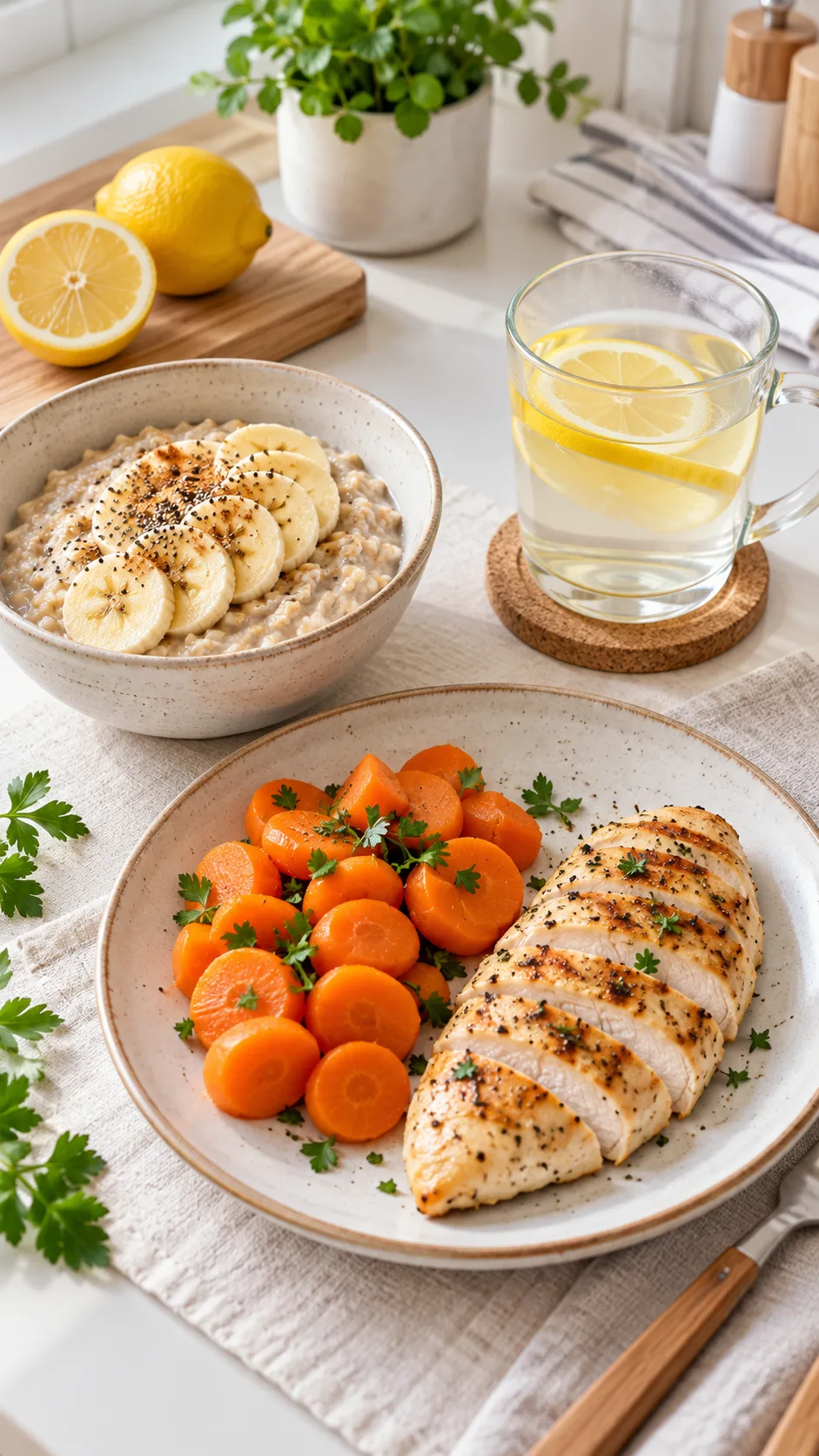
Why your gut throws a tantrum (the biology nobody explained)
Why do you still experience agony even though the diseased organ sits in medical waste? To fix the problem, you must understand your liver’s new daily routine.
Your gallbladder worked as a dedicated storage tank. Your liver makes bile, the soapy green liquid that digests dietary fats. Before surgery, your gallbladder concentrated this bile and held it until you swallowed a fatty meal. When pizza hit your stomach, the gallbladder squeezed a concentrated jet of bile directly into your small intestine to break down those oils.
Now? You lost the reservoir, not the bile factory. Your liver still manufactures bile 24 hours a day, but it has nowhere to store it. Instead, bile continuously drips down your common bile duct, drop by drop, straight into your small intestine. Day and night, that harsh fluid trickles into your digestive tract whether you eat food or not.
This steady trickle causes two distinct problems:
- The bile acid flush: When you consume a high-fat meal, your liver cannot squirt enough concentrated bile on demand. Unabsorbed fat travels into your colon, where bacteria feast on it. The bacteria ferment the fat into noxious gas and pull pints of water into your bowel. That leads straight to urgent diarrhea and intense cramping.
- The empty-stomach burn: When you go hours without food, raw bile pools in your empty upper digestive tract. It can backwash into your stomach, irritating the mucosal lining, triggering acid reflux, nausea, and sharp bloating.
Researchers at the National Library of Medicine report that roughly 10% to 40% of patients experience Post-Cholecystectomy Syndrome (PCS). Your persistent bloating is neither imaginary nor your fault. Your intestines simply cannot handle your old routine right now.
The 5 dietary traps that upset your post-op stomach
Many patients sabotage their recovery with innocent habits. Medical websites often publish generic nutrition rules that backfire once you lose a gallbladder. Watch out for these five common mistakes.
1. Trusting the “healthy fat” myth
Wellness influencers love pouring olive oil over everything and snacking on whole avocados. Your digestive tract does not care whether fat comes from cold-pressed olive oil or deep-fried fast food. Fat is fat. If you dump 25 grams of fat into your stomach at once, you overwhelm your steady trickle of bile, no matter how clean the ingredients look.
2. Overloading on insoluble fiber too soon
If someone told you to eat massive raw kale salads and bran muffins to regulate your bowels, stop immediately. Insoluble fiber scrapes against an already irritated, bile-burned intestinal wall. It accelerates gut transit, traps air pockets, and creates severe abdominal pressure. If you struggle with severe bloating, review our guide on the post-surgery gallbladder diet that keeps you full without the pain to balance your meals properly.
3. Eating only one or two large meals a day
Intermittent fasting helps many conditions, but it causes chaos when you lack a gallbladder. Your liver releases bile around the clock. If you skip breakfast and lunch, that raw bile irritates your stomach lining for hours. Then, when you eat a huge 1,000-calorie dinner, your liver cannot supply enough bile to digest it. You hit your body with both extremes on the same day.
4. Overlooking hidden dairy fats
You might skip whole milk, but cheese hides everywhere. Even a sprinkle of parmesan or a splash of half-and-half in your morning coffee carries dense butterfat. Dairy fats demand heavy bile breakdown, and casein proteins slow stomach emptying, trapping bile gas high in your abdomen.
5. Guzzling ice water with meals
Drinking 24 ounces of ice water while eating lunch dilutes your stomach acid and bile. It rushes partially digested fats straight into your colon before your digestive enzymes can do their job.
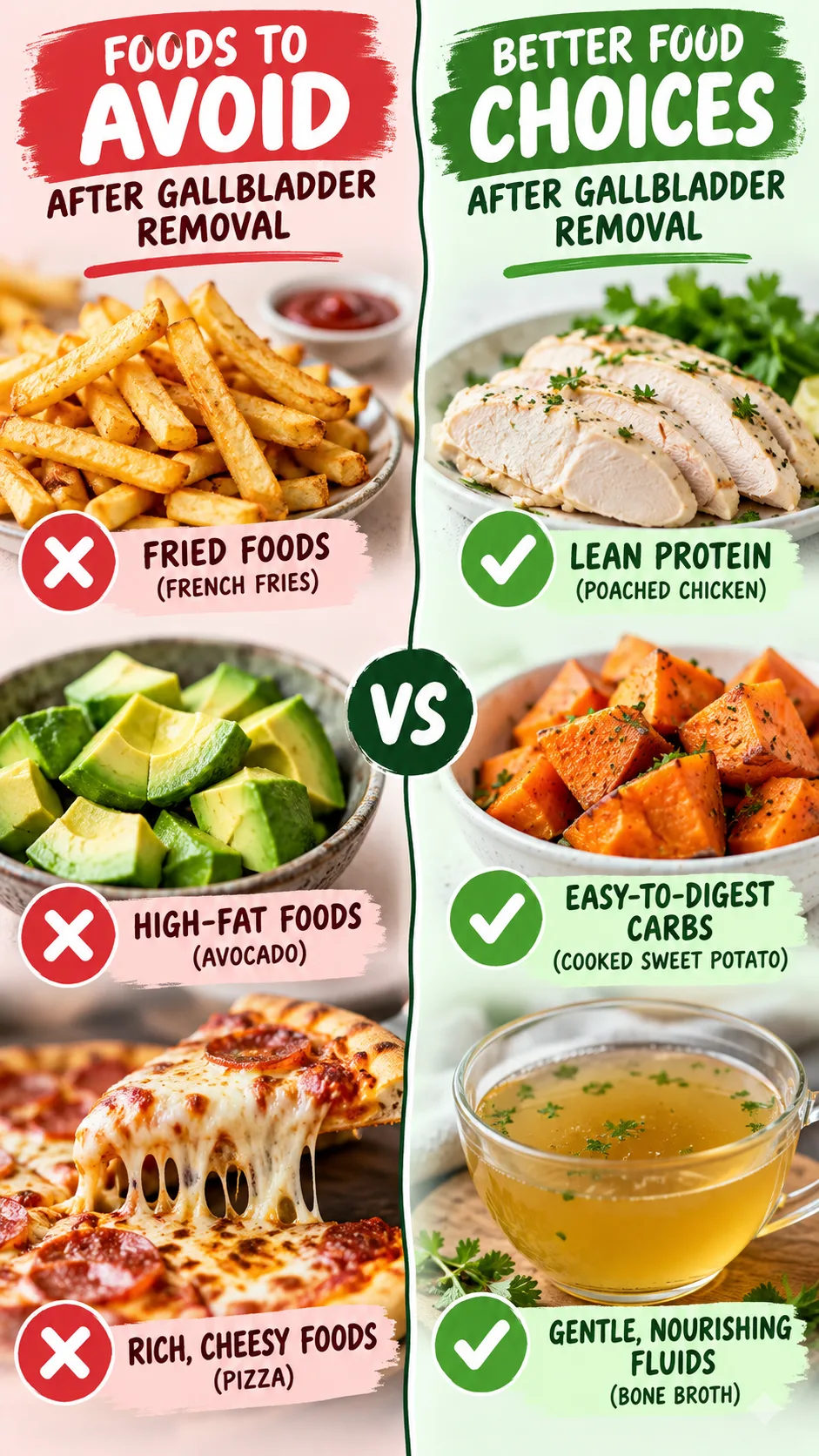
The 3-phase gallbladder recovery diet
Give your digestive system time to adjust. Your bile duct takes weeks or months to dilate and compensate for the missing gallbladder. Follow this systematic three-phase recovery plan to soothe your gut and rebuild digestive capacity.
Phase 1: The bile reset (weeks 1 to 3 post-flare)
Phase 1 gives your gut a break. Focus on soaking up excess bile and lightening your intestinal workload. Keep your total fat intake under 3 to 5 grams per meal.
- Eat soluble fiber: Soluble fiber dissolves in water and creates a gentle gel. This gel acts like a sponge, binding excess bile acids and carrying them safely through your colon. Base your meals on well-cooked oatmeal, white rice, peeled potatoes, and canned pure pumpkin.
- Choose lean proteins: Skinless chicken breast, canned light tuna in water, egg whites, and nonfat plain Greek yogurt give you amino acids without straining your liver.
- Cook all vegetables thoroughly: Steamed carrots, peeled zucchini, and soft squash digest easily. Skip raw vegetable platters for now.
Phase 2: Controlled reintroduction (weeks 4 to 8)
Once your sharp gas pains and urgent bathroom visits stop, train your digestive system to handle small amounts of fat again. Raise your fat intake gradually to 8 to 10 grams per meal.
Introduce fats one item at a time. Add one teaspoon of olive oil to your steamed vegetables on Monday, then monitor your body for 48 hours. If you feel no bloat or cramping, keep that teaspoon in your daily meals. Next, try one tablespoon of almond butter or a quarter of a small avocado. Never test two new fats on the same day.
Phase 3: Long-term maintenance (month 2 and beyond)
In Phase 3, you build a sustainable routine. Most people without a gallbladder feel best when they limit fat to 12 to 15 grams per meal. You can eat almost anything again (even restaurant meals) if you spread your fat intake across four or five smaller meals instead of two huge feasts.
Safe foods vs. pain triggers: the post-op cheat sheet
Stop wondering what might trigger your next flare. Keep this list on your phone or stick it on your fridge before your next grocery run.
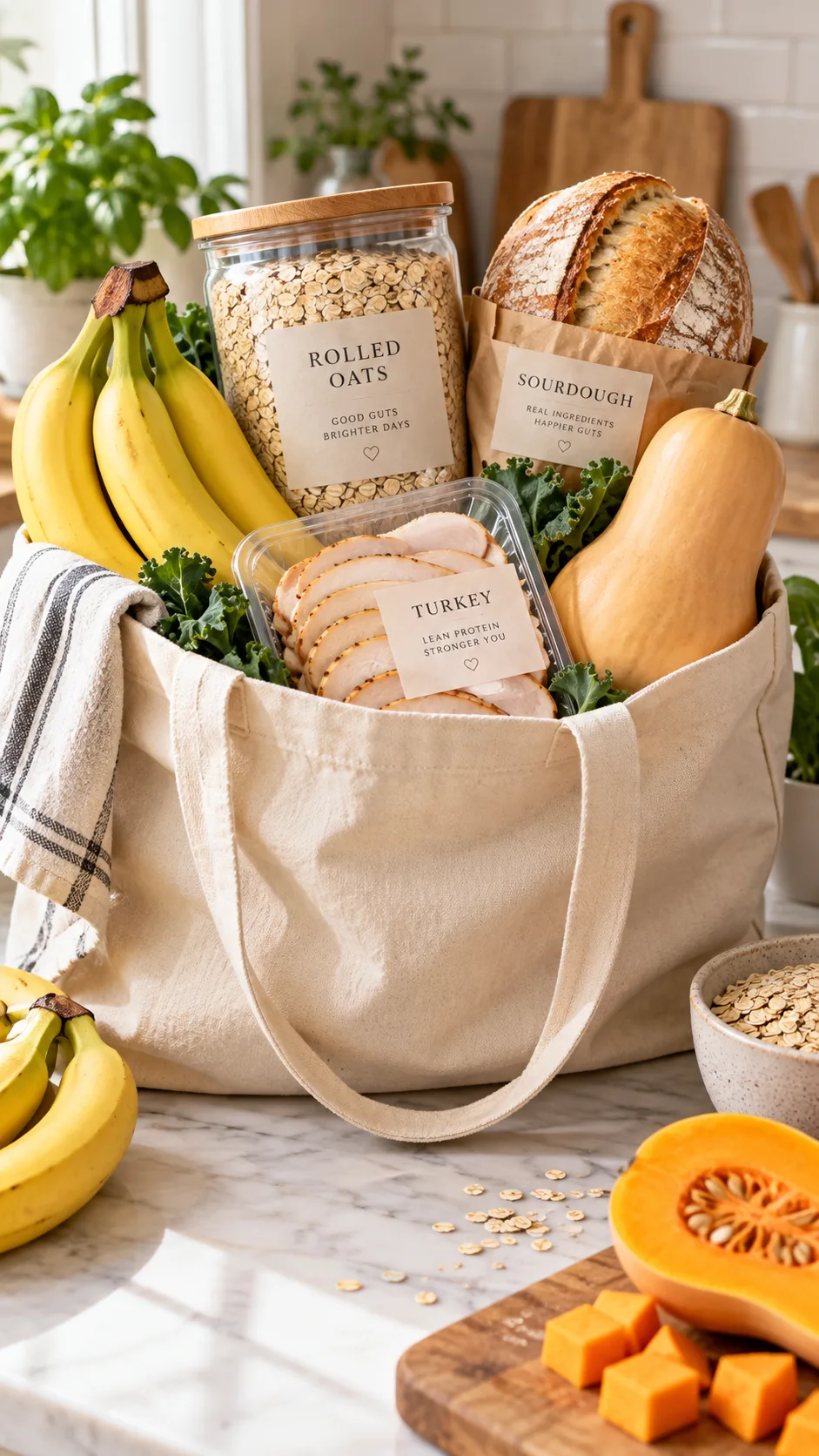
The green light list (bile soothers)
- Grains & Starches: Old-fashioned rolled oats, white rice, sourdough bread, baked sweet potatoes (skins removed), quinoa, rice noodles.
- Proteins: Skinless turkey and chicken breast, cod, tilapia, egg whites, low-fat cottage cheese, tofu.
- Vegetables (Cooked): Carrots, zucchini, peeled cucumbers, spinach, green beans, beets, butternut squash.
- Fruits: Ripe bananas, unsweetened applesauce, blueberries, melons, canned peaches in water.
- Liquids: Warm ginger tea, peppermint tea, bone broth, room-temperature water.
The red light list (gas and flare triggers)
- Fried & Greasy Foods: French fries, potato chips, bacon, sausage, fried chicken, pastries.
- Heavy Dairy: Whole milk, heavy cream, cheddar cheese, brie, standard ice cream.
- Gas-Producing Produce: Raw broccoli, raw cabbage, Brussels sprouts, raw onions, garlic-heavy sauces. Notice how certain cultural meals trigger intense swelling? Check our breakdown of foods that trigger intense bloating to see how high-fructose and fibrous ingredients drive abdominal distension.
- Irritating Beverages: Black coffee on an empty stomach, carbonated soda, energy drinks, cocktails with sugary mixers.
Do your digestive problems flare alongside hormonal shifts? Many women notice worse gallbladder-related symptoms during perimenopause or before their period. If your bloating aligns with hot flashes or cycle changes, read our targeted menopausal meal plan to steady your digestion.
The 7-day anti-bloat meal plan that tastes delicious
Nobody wants to eat dry turkey slices and plain white rice every day. This complete 7-day meal plan caps fat safely, maximizes soluble fiber, and delivers great flavor without inflating your belly.
Day 1
- Breakfast: Warm rolled oats made with water, half a sliced banana, a dash of cinnamon, and one scoop of plain egg-white protein powder.
- Mid-Morning Snack: Two plain rice cakes spread with two tablespoons of nonfat Greek yogurt and a sprinkle of blueberries.
- Lunch: Sliced roast turkey breast on toasted sourdough bread with Dijon mustard, cucumber slices, and a cup of pureed carrot soup.
- Afternoon Snack: Half a cup of unsweetened applesauce with three plain saltine crackers.
- Dinner: Baked cod fillet seasoned with herbs, served over fluffy white jasmine rice and steamed zucchini coins.
Day 2
- Breakfast: Smoothie made with 1 cup unsweetened almond milk, half a frozen banana, 1 cup baby spinach, and collagen peptides.
- Mid-Morning Snack: One hard-boiled egg white with a dash of sea salt and sliced cantaloupe.
- Lunch: Shredded chicken breast mixed with a teaspoon of light mayonnaise, stuffed inside a soft pita pocket with baby greens.
- Afternoon Snack: Low-fat cottage cheese (quarter cup) mixed with soft diced peaches.
- Dinner: Extra-lean ground turkey (99% fat-free) simmered in a plain, low-acid tomato passata over boiled penne pasta.
Day 3
- Breakfast: Two scrambled egg whites with baby spinach, alongside one slice of lightly toasted sourdough bread with fruit jam.
- Mid-Morning Snack: Steamed sweet potato cubes sprinkled with cinnamon.
- Lunch: Quinoa bowl topped with diced grilled chicken, steamed green beans, and a drizzle of low-sodium soy sauce.
- Afternoon Snack: Rice pudding made with white rice, skim milk, and vanilla extract.
- Dinner: Poached salmon (small 3-ounce portion to test fat tolerance) alongside mashed peeled russet potatoes and steamed carrots.
Day 4
- Breakfast: Warm cream of rice cereal made with unsweetened oat milk, topped with stewed blueberries.
- Mid-Morning Snack: One small ripe banana and two plain graham crackers.
- Lunch: Broth-based chicken noodle soup packed with soft carrots, celery, and shredded skinless poultry.
- Afternoon Snack: Sliced peeled cucumber with a tablespoon of fat-free tzatziki dip.
- Dinner: Grilled lean pork tenderloin medallion with baked acorn squash puree and steamed white rice.
Day 5
- Breakfast: Overnight oats soaked in skim milk, layered with unsweetened applesauce and a light sprinkle of chia seeds.
- Mid-Morning Snack: Two slices of lean deli turkey rolled around crisp cucumber spears.
- Lunch: Warm bowl of white rice, cubed firm tofu, steamed baby bok choy, and a mild ginger broth.
- Afternoon Snack: Baked apple slices dusted with nutmeg.
- Dinner: White fish tacos using soft corn tortillas, grilled tilapia, shredded butter lettuce, and a squeeze of fresh lime juice.
Day 6
- Breakfast: Toasted English muffin spread with two tablespoons of fat-free ricotta cheese and sliced fresh strawberries.
- Mid-Morning Snack: A half cup of warm bone broth sipped from a mug.
- Lunch: Cold pasta salad using rotini, diced chicken breast, cherry tomatoes, and a light herb vinaigrette (keep oil strictly under 1 teaspoon).
- Afternoon Snack: One ripe pear, peeled and sliced.
- Dinner: Lean flank steak (trimmed of all visible edge fat, small 3-ounce portion), a large baked potato with fat-free Greek yogurt, and steamed green beans.
Day 7
- Breakfast: Egg-white omelet filled with finely diced mushrooms and zucchini, served with one slice of dry white toast.
- Mid-Morning Snack: Watermelon wedges (1 cup).
- Lunch: Extra-lean turkey-burger patty served open-faced on a bun with sliced butter lettuce, tomato, and baked sweet potato wedges.
- Afternoon Snack: Saltine crackers with a smear of fat-free cottage cheese.
- Dinner: Simple chicken risotto made with arborio rice, chicken bone broth, and finely grated zucchini.
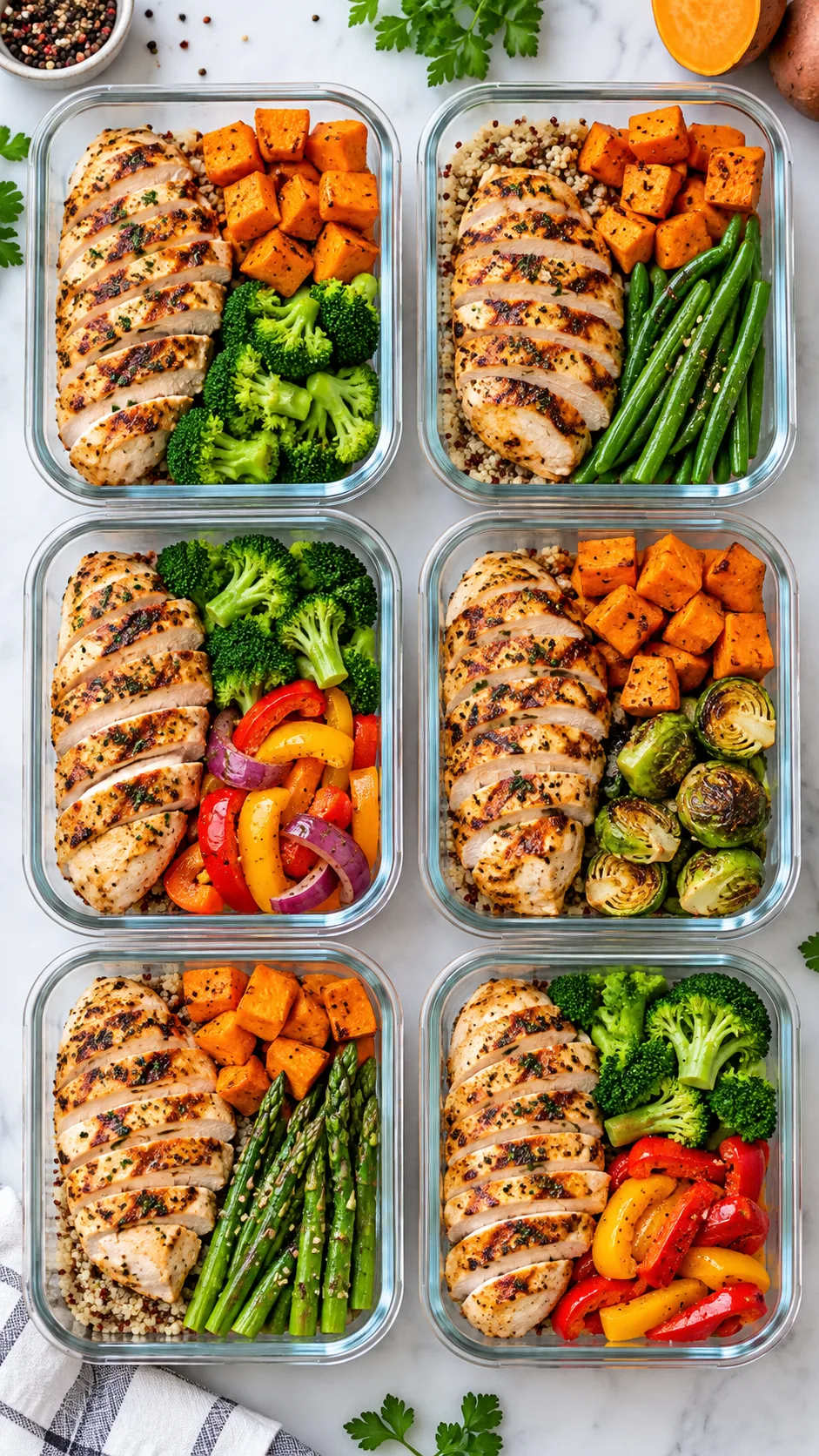
Smart supplements and practical remedies
Dietary changes solve most digestive issues after surgery, but targeted tools help eliminate stubborn remaining symptoms. Talk to your gastroenterologist about these three strategies.
1. Take psyllium husk daily (the best natural bile binder)
If you remember only one tip from this guide, buy plain psyllium husk powder. Psyllium is a soluble fiber that turns into a thick gel in your gut. It binds free bile acids circulating through your intestines and removes them naturally.
Mix one level teaspoon of psyllium husk in eight ounces of water right before your largest meal of the day, or drink it before bed. It acts like an internal sponge. Many patients find that psyllium stops morning diarrhea and persistent bloating within 72 hours. Clinicians at the Mayo Clinic frequently recommend soluble fiber supplements as a primary treatment for loose stools after gallbladder surgery.
2. Cautiously test ox bile and digestive enzymes
Does taking animal bile make sense when bile already leaks into your gut? In specific cases, yes. If your stools float, look pale or yellow, and smell foul, your liver might not release enough bile right when you swallow dietary fat.
A digestive enzyme supplement with low-dose ox bile (around 100 mg to 125 mg) helps emulsify fats in your stomach. Take it with the first bite of a meal that contains moderate fat. Note this warning: if you deal with burning acid reflux or watery diarrhea, avoid ox bile. It will worsen bile acid malabsorption. Adjust your daily diet first before trying digestive enzymes.
3. Ask your doctor about bile acid sequestrants
If you cut dietary fats, eat plenty of soluble fiber, and still rush to the toilet multiple times a day, your liver produces more bile than your intestines can reabsorb. You are dealing with bile acid malabsorption (BAM).
Speak with your gastroenterologist about prescription bile acid binders like cholestyramine, colesevelam, or colestipol. These medications bind bile acids directly inside your intestinal tract. They often turn severe, chronic diarrhea into normal bowel movements within a day or two. Do not hesitate to discuss this option when simple, proven medications can solve the underlying issue.
Daily habits for long-term digestive peace
Living well without a gallbladder requires small changes in how you eat. Build these four habits into your day:
- Chew your food until it liquefies: Digestion begins in your mouth with chewing and salivary enzymes. The more you break down food before swallowing, the less work your stomach and liver must handle later.
- Separate liquids from meals: Stop drinking water 15 minutes before you eat, and wait 45 minutes after meals before drinking again. This gives your digestive acids and bile room to work at full strength.
- Walk for 10 minutes after eating: A short stroll stimulates bowel movement and keeps gas moving forward so it does not build painful pressure under your ribs.
- Stay upright after dinner: Remain sitting or standing for at least three hours after your evening meal. Without a gallbladder valve to regulate bile flow, gravity is your best shield against bile backing up into your stomach.
Take back control of your digestion today
Removing an organ changes your digestion, but you do not have to live with stomach cramps, painful gas, and frantic trips to the bathroom. Your body simply needs an eating plan that fits your new anatomy.
Start tomorrow morning with a warm bowl of plain oatmeal and a glass of room-temperature water. Cut back on greasy foods, keep your mealtime fats near 10 grams, and let soluble fiber absorb the excess bile. Within days, your gut will calm down, your waistline will flatten out, and you can enjoy your meals again.