

You ate the “healthy” lunch. You washed the container. And ninety minutes later you stood in front of the snack drawer like a raccoon with a gym membership. Sound familiar?
Your willpower isn’t broken. Your lunch just didn’t have enough protein. Most “healthy” meal prep is a carb salad wearing a trench coat, and your stomach knows it.
I’ve prepped meals every Sunday for the better part of eight years: through bulking phases, cutting phases, and one deeply regrettable “sad chicken and rice” era. This guide covers what works in practice, meaning real fullness, real flavor, and food you’ll still want to eat on Thursday.
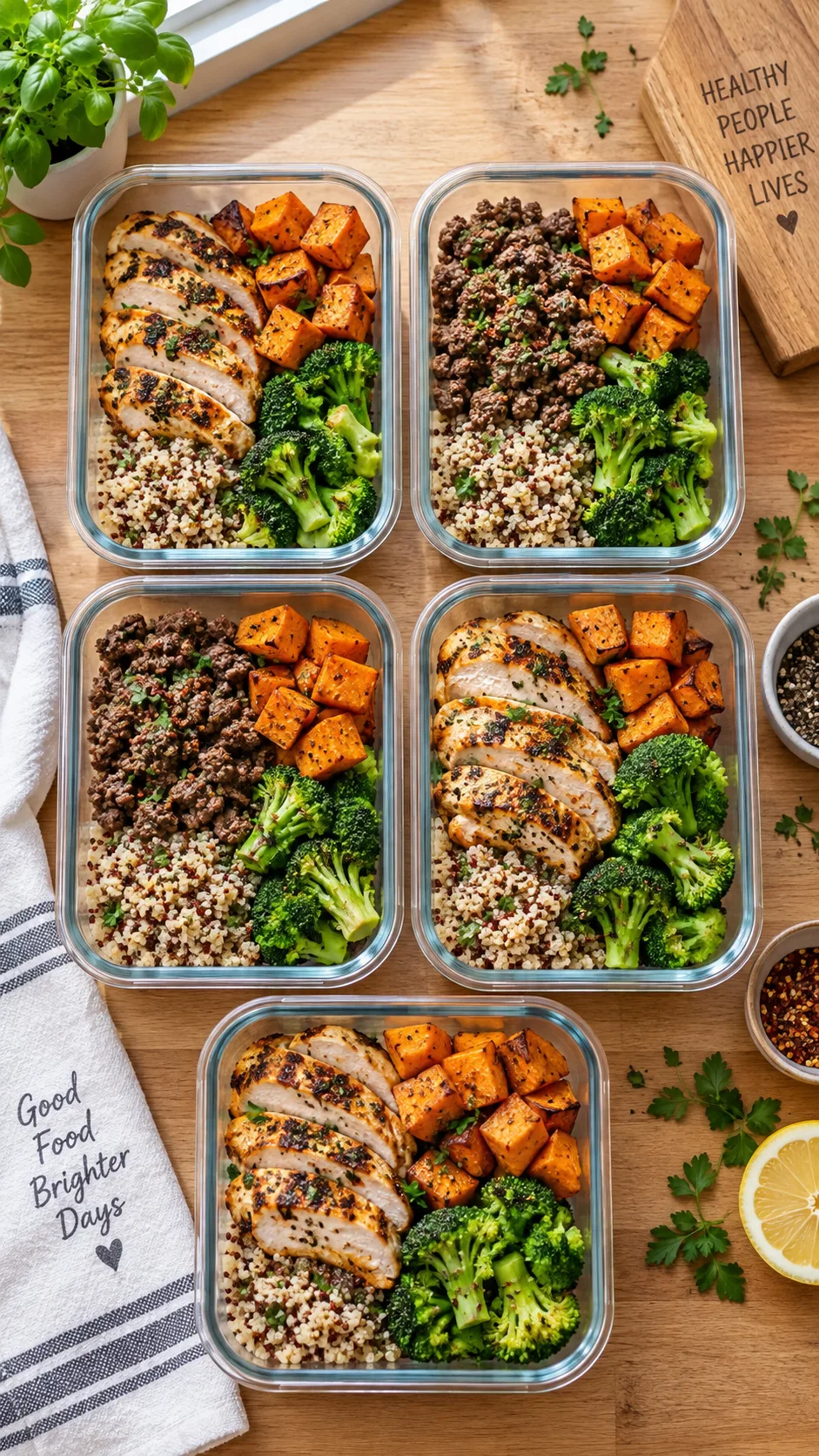
Why protein keeps you full (the boring science, made quick)
Protein wins the fullness game for a few reasons, and none of them involve magic. It triggers satiety hormones like GLP-1, peptide YY, and cholecystokinin, the chemical messengers that tell your brain “we’re good here.”
Protein also costs your body energy just to digest. That’s the thermic effect of food (TEF): you burn roughly 20% to 30% of protein calories during digestion, versus 5% to 10% for carbs and 0% to 3% for fat. Free calorie burn for eating steak? I’ll take it.
Then there’s gastric emptying, which protein slows down. Food hangs around in your stomach longer, so hunger shows up later. Harvard’s Nutrition Source covers the fundamentals well if you want the deeper reading.
How much protein do you need?
The RDA of 0.8g per kg of bodyweight is the bare minimum to avoid deficiency, not the optimal number for feeling full and holding onto muscle. Research on active people and dieters consistently lands higher.
- General health: 1.2g to 1.6g per kg of bodyweight
- Fat loss while keeping muscle: 1.6g to 2.2g per kg
- Serious strength training: 1.6g to 2.4g per kg
- Per meal target: 30g to 40g of protein, 3 or 4 times a day
For a 75kg (165lb) person aiming at fat loss, that’s roughly 120g to 165g per day. Sounds like a lot until you realize one chicken breast covers 40g of it. I check the USDA FoodData Central database for real numbers instead of guessing.
The satiety formula: protein alone isn’t enough
This is where most people mess it up. They chug a protein shake, feel hungry an hour later, and declare the whole protein thing a scam. But a liquid shake with zero fiber and zero volume isn’t a meal. It’s a beverage with ambitions.
My rule for every prepped container follows a simple formula:
- 30g to 40g protein, the anchor of the meal
- 8g to 12g fiber from vegetables, legumes, or whole grains for bulk
- 10g to 15g fat, which slows digestion, carries flavor, and keeps food edible
- Volume, meaning physical stomach-stretching food rather than a compressed nutrient puck
- Real flavor, because you won’t eat what you hate
Miss any one of those and you’ll be hungry by 3pm. Miss the last one and you’ll order takeout by Wednesday. Ask me how I know.
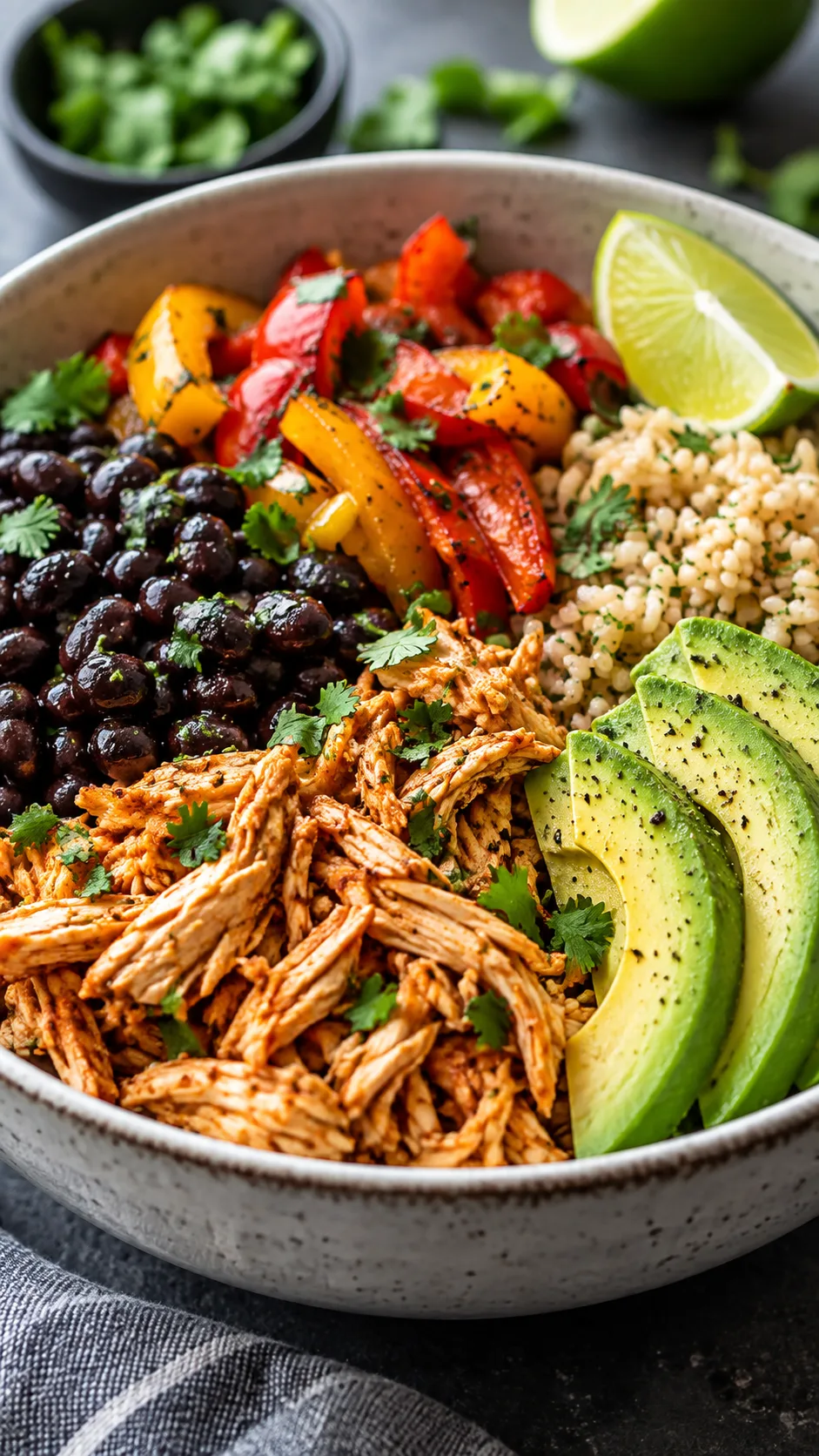
The best high protein foods for meal prep, ranked by reality
Not every protein source survives five days in a fridge. Some reheat beautifully. Others turn into rubber. Here’s my honest tier list after years of trial and, frankly, a lot of error.
Tier 1: prep these without hesitation
- Chicken thighs (26g per 100g cooked): more forgiving than breast, and they reheat without drying out. My number one pick.
- Ground beef, 90/10 (26g per 100g): huge flavor, freezes perfectly, goes with anything
- Greek yogurt, 0% or 2% (10g per 100g): zero cooking required, instant 20g in a single cup
- Lentils and black beans (9g per 100g cooked): fiber AND protein in one ingredient
- Cottage cheese (11g per 100g): slow-digesting casein, and underrated
- Hard-boiled eggs (6g each): the original grab and go protein
- Extra-firm tofu (17g per 100g, pressed): soaks up any marinade you throw at it
Tier 2: solid, with caveats
- Chicken breast (31g per 100g): the leanest option, but it overcooks in seconds. Brine it or regret it.
- Salmon (25g per 100g): great macros, but eat it within 2 days and expect side-eye at the office microwave
- Pork tenderloin (26g per 100g): cheap, lean, reheats decently
- Shrimp (24g per 100g): cook it just barely, or you’ll be chewing erasers
Tier 3: handle with care
- Steak reheats poorly. Slice it thin and eat it cold over salad instead.
- Breaded anything goes soggy by day two. Every time.
- Scrambled eggs weep in the fridge. Frittatas and egg bites hold up far better.
Want a deeper rotation of recipes built around these? My full breakdown of high protein meal prep recipes has the tested versions with exact macros.
The Sunday system: prep 5 days in under 2 hours
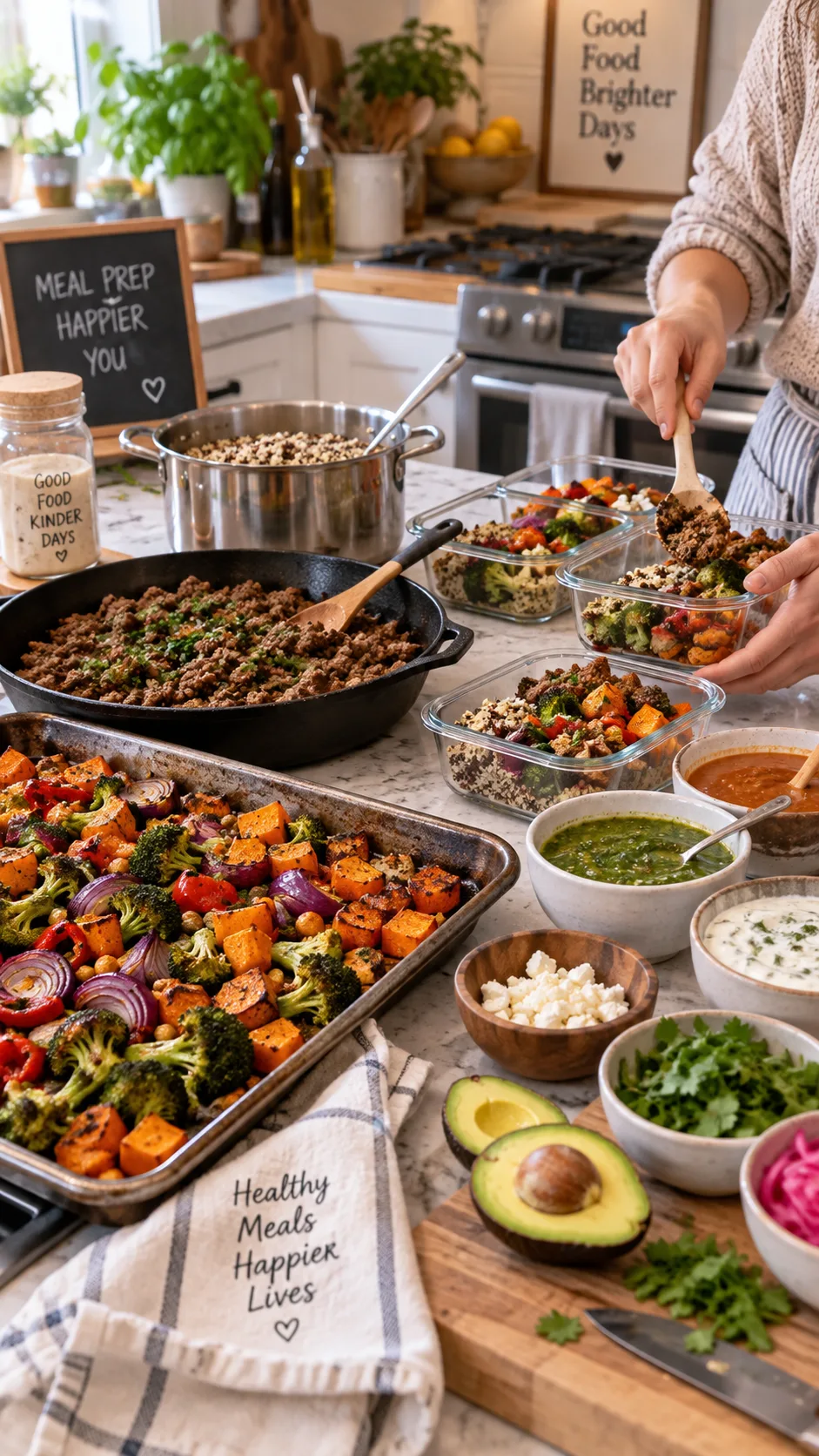
I don’t cook five separate meals. That’s how people burn out by week three. I cook components and assemble them differently: same ingredients, different personality.
Step 1: pick two proteins (not five)
Two proteins give you variety without chaos. Pair one “neutral” protein with one “bold” protein. For example, shredded chicken thighs plus taco-seasoned ground beef.
Cook 1kg (2.2lb) of each. That’s roughly 10 portions of 30g to 40g protein. Ground beef especially earns its keep here, and my ground beef meal prep guide covers the budget math on it.
Step 2: roast one giant tray of vegetables
Broccoli, bell peppers, red onion, zucchini. Olive oil, salt, pepper, 220°C / 425°F for 25 minutes. That’s it. Roasted vegetables hold their texture all week. Steamed ones turn to mush by Tuesday.
Step 3: cook one carb base
Rice, quinoa, roasted potatoes, or pasta. Pick ONE. Cook a big batch, portion it out, move on with your life.
One tip that really pays off: cool and refrigerate your rice or potatoes and you form resistant starch, a type of fiber that feeds gut bacteria and blunts the blood sugar spike. Cold-then-reheated rice beats fresh rice for fullness. Science being weirdly convenient for once.
Step 4: make two sauces
Everyone skips this step, and that’s why their meal prep fails. Sauce is the difference between “meal prep” and “punishment.”
- Greek yogurt ranch: yogurt, garlic powder, dill, lemon, salt (bonus protein)
- Peanut-lime: peanut butter, soy sauce, lime, chili flakes, hot water to thin
- Chimichurri: parsley, garlic, red wine vinegar, olive oil, oregano
- Spicy yogurt-sriracha: two ingredients, embarrassingly good
7 high protein meal prep ideas that taste good
Every one of these has survived my personal five-day test. Meaning: I still wanted to eat it on Friday. That’s a higher bar than it sounds.
- Chipotle-style burrito bowls (42g protein): seasoned ground beef or chicken, black beans, cilantro-lime rice, fajita peppers, corn. Keep the avocado and yogurt crema separate until serving.
- Greek chicken and orzo bowls (44g): oregano-lemon chicken thighs, orzo, cucumber, cherry tomatoes, red onion, feta, tzatziki. It tastes better cold on day three. I don’t make the rules.
- Teriyaki salmon and rice (38g): salmon, jasmine rice, edamame, shredded carrot, sesame seeds. Eat it within 48 hours and use a sauce with real ginger.
- Buffalo chicken crunch salad (46g): shredded chicken tossed in buffalo sauce, chopped romaine, celery, shredded cheddar, Greek yogurt blue cheese dressing. The dressing goes in a separate pot, always.
- Beef and broccoli stir-fry (40g): thin-sliced flank steak, broccoli, garlic-ginger-soy sauce, rice. Slightly undercook the broccoli so reheating finishes the job.
- Lentil and feta power bowls (28g): green lentils, roasted sweet potato, spinach, feta, tahini-lemon dressing. No meat, but plenty of fiber, so the fullness lasts. More like this lives in my vegetarian meal prep ideas.
- Egg and cottage cheese breakfast bites (24g per 3): eggs, cottage cheese, spinach, ham, baked in a muffin tin. Ten minutes of work, five breakfasts done.
Need the morning meals sorted separately? My high protein breakfast meal prep guide covers the overnight oats and egg bite territory in detail.
Watch: how the component prep method works
Seeing someone do it beats reading about it. This walkthrough shows the mix and match component approach in real time:
Food safety: the part nobody wants to read (read it anyway)
You know what ruins a great meal prep week? Food poisoning. Follow these and you’ll never have that particular Tuesday.
- The 4-day rule: cooked proteins last 3 to 4 days in the fridge, per FoodSafety.gov. For days 5 through 7, freeze them on Sunday and thaw as needed.
- Cool fast, then seal: get food out of the 4°C to 60°C (40°F to 140°F) danger zone within two hours. Spread it on a sheet pan to speed cooling.
- Reheat to 74°C / 165°F. Not “warm-ish.” Hot.
- Never refreeze thawed raw meat without cooking it first.
- Label everything with the date. Your Wednesday brain will not remember.
Freezing opens up a lot more options here. Half my Sunday prep goes straight into the freezer, and I break the whole system down in my freezer meal prep guide.
Common mistakes that sabotage your protein prep
Mistake 1: under-seasoning everything
Cold food mutes flavor. Season your prep about 20% more aggressively than you would for a fresh-cooked meal. Acid helps too, since a squeeze of lemon or a splash of vinegar wakes up day-four chicken like nothing else.
Mistake 2: eating the same thing five days straight
Flavor fatigue is real, and it’s the number one reason people quit. Two proteins, two sauces, and you’ve got variety without extra cooking. Swapping just the sauce changes the entire meal.
Mistake 3: skipping the fiber
Protein plus fiber beats protein alone every time. Most adults eat around 15g of fiber daily when they should hit 25g to 38g. Beans, lentils, and vegetables do double duty here.
Mistake 4: prepping 21 meals on day one
Ambition is lovely. Burnout is not. Start with lunches only: five meals, one protein, one carb, one vegetable. Nail that for two weeks before you expand. The beginner’s meal prep blueprint walks through exactly how to scale up.
Mistake 5: bad containers
Cheap plastic stains, warps, and leaks. Glass containers with locking lids cost more once and then last years. Get compartment containers so your sauce doesn’t soak your rice into porridge.
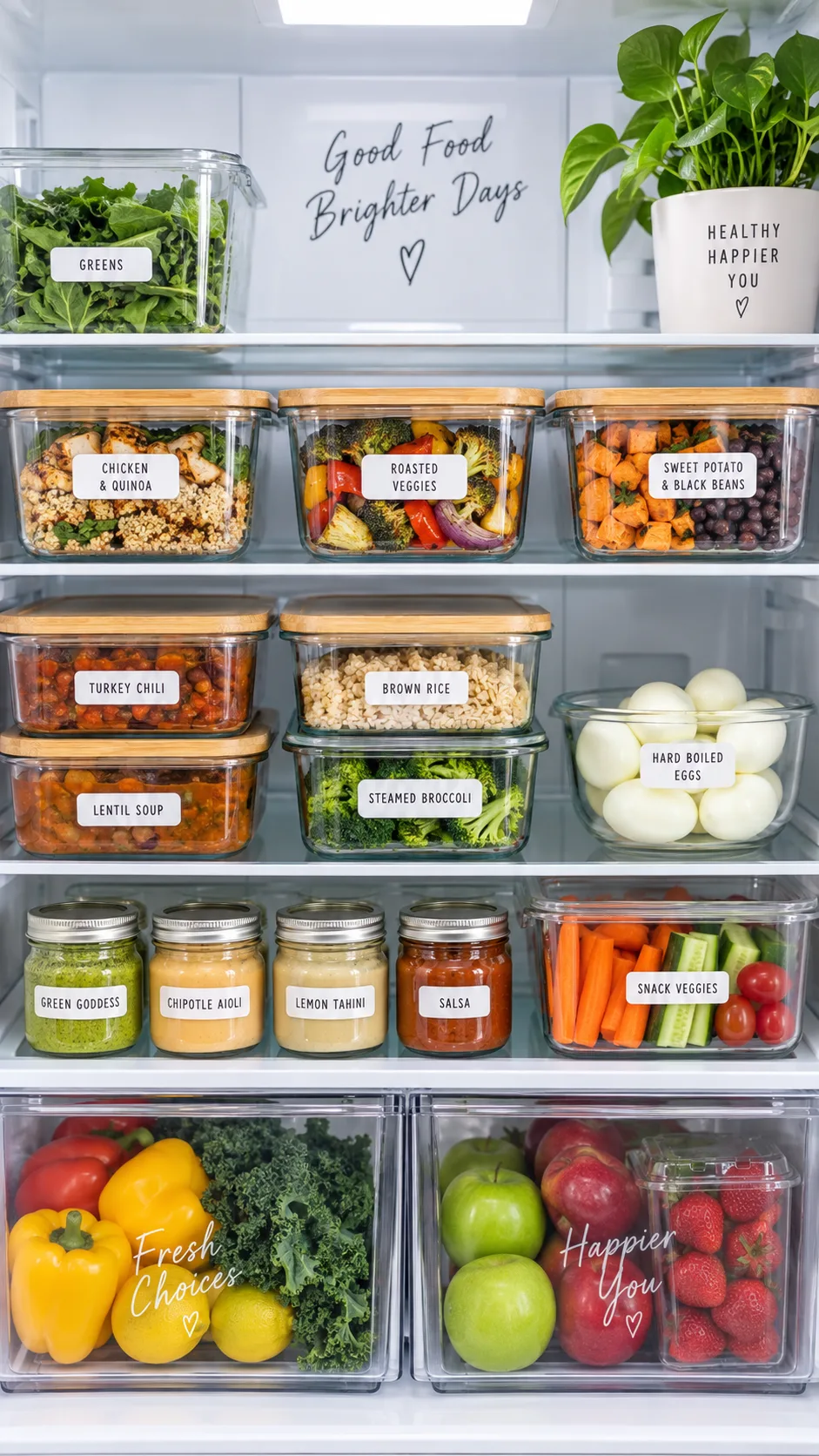
Quick protein wins when you’re out of time
Some weeks you won’t prep. That’s fine. Keep these in rotation so you’re never stuck:
- Rotisserie chicken: shred it and you’ve got 4 days of protein for 3 minutes of work
- Canned tuna or salmon: 25g per can, zero cooking
- Cottage cheese with everything bagel seasoning: weirdly addictive, 25g per cup
- Greek yogurt with berries and nuts: 25g in 30 seconds
- Frozen edamame: 17g per cup. Microwave, salt, done.
- Pre-cooked lentil pouches: 18g, shelf-stable, no soaking
For snack-sized protein that bridges the gap between meals, my list of meal prep snacks that keep you full is worth bookmarking.
A realistic weekly plan (copy this)
Sunday, 90 minutes:
- Preheat the oven. Season and roast 1kg chicken thighs (35 min) and one tray of vegetables (25 min) at the same time.
- While those cook, brown 1kg ground beef with taco seasoning in a skillet.
- Simmer rice or quinoa in a pot. Boil 8 eggs in another.
- Mix two sauces in jars (5 minutes total).
- Portion into containers. Label them. Freeze days 5 through 7.
The result: 10 lunches, 8 protein-heavy snacks, roughly 40g of protein per meal, and about €35 to €45 of groceries. Compare that to five takeout lunches at €12 each. The math isn’t subtle.
Final thoughts: full beats fancy
Eight years of Sunday prepping taught me one thing above all: the best high protein meal prep isn’t the most Instagrammable one. It’s the one you’ll finish eating.
Hit 30g to 40g of protein per meal. Add fiber and fat. Make a sauce. Cool your rice. Label your containers. That’s the whole system.
Start this Sunday with two proteins and one tray of vegetables. Don’t build the perfect plan. Build the one you’ll repeat next week. Your 3pm self will thank you, and your snack drawer will finally get a rest.