

You’ve probably started a workout routine at least three times this year alone. You go hard for two weeks, then life happens, and suddenly the gym bag collects dust in the corner. Sound familiar?
Building a workout routine that actually sticks isn’t about willpower or waking up at 5 AM every day. It’s about building something that fits your life, not some fitness influencer’s curated feed.
Why most workout routines fail (and it’s not your fault)
Most fitness programs are designed to look impressive, not to be sustainable. They pack in too many sessions per week, demand unrealistic recovery times, and offer zero flexibility. You quit because the plan was broken from the start, not because you were.
Research from the American Psychological Association confirms that people abandon exercise routines most often because of time pressure, lack of enjoyment, and poor goal-setting. If it’s not fun and realistic, you’re done.
The fix isn’t grinding harder. The fix is building smarter. Every decision you make about your routine should answer one question: “Can I actually do this consistently for the next 90 days?”
Step 1: Set goals that don’t make you cringe
Vague goals like “get fit” or “lose weight” are basically useless. They give you no direction and no way to track progress. You need specific, measurable targets that actually mean something to you.
Use the SMART goal framework
- Specific: “I want to do 3 full push-ups unassisted” beats “I want to get stronger”
- Measurable: Track reps, weights, or workout frequency
- Achievable: Stretch yourself but stay realistic
- Relevant: Your goal should connect to something you genuinely care about
- Time-bound: Set a deadline, whether that’s 6 weeks, 12 weeks, or whatever makes sense for you
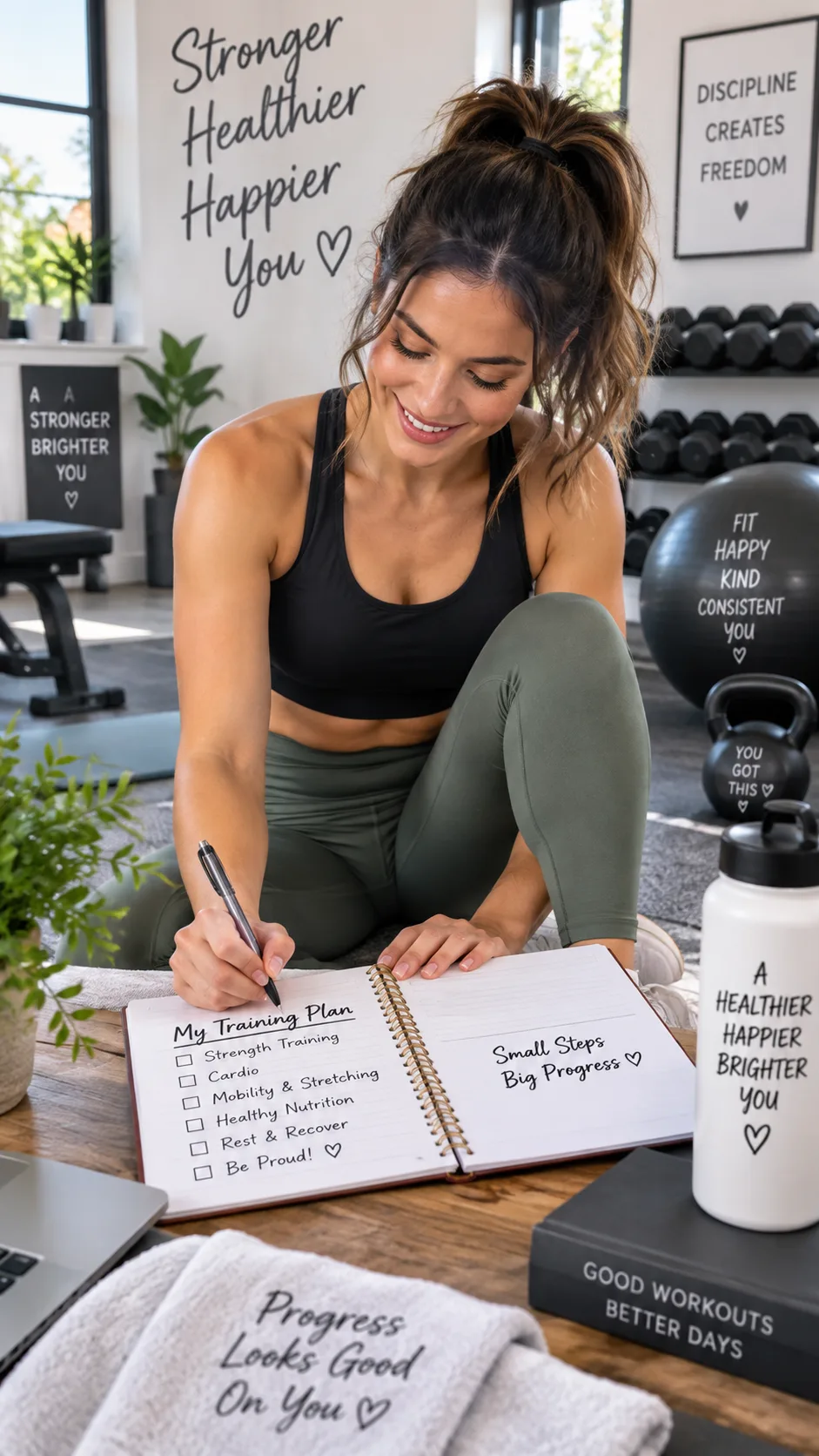
Writing your goals down physically makes you significantly more likely to follow through. Don’t treat this step as optional. It isn’t.
Step 2: Choose the right workout frequency for your life
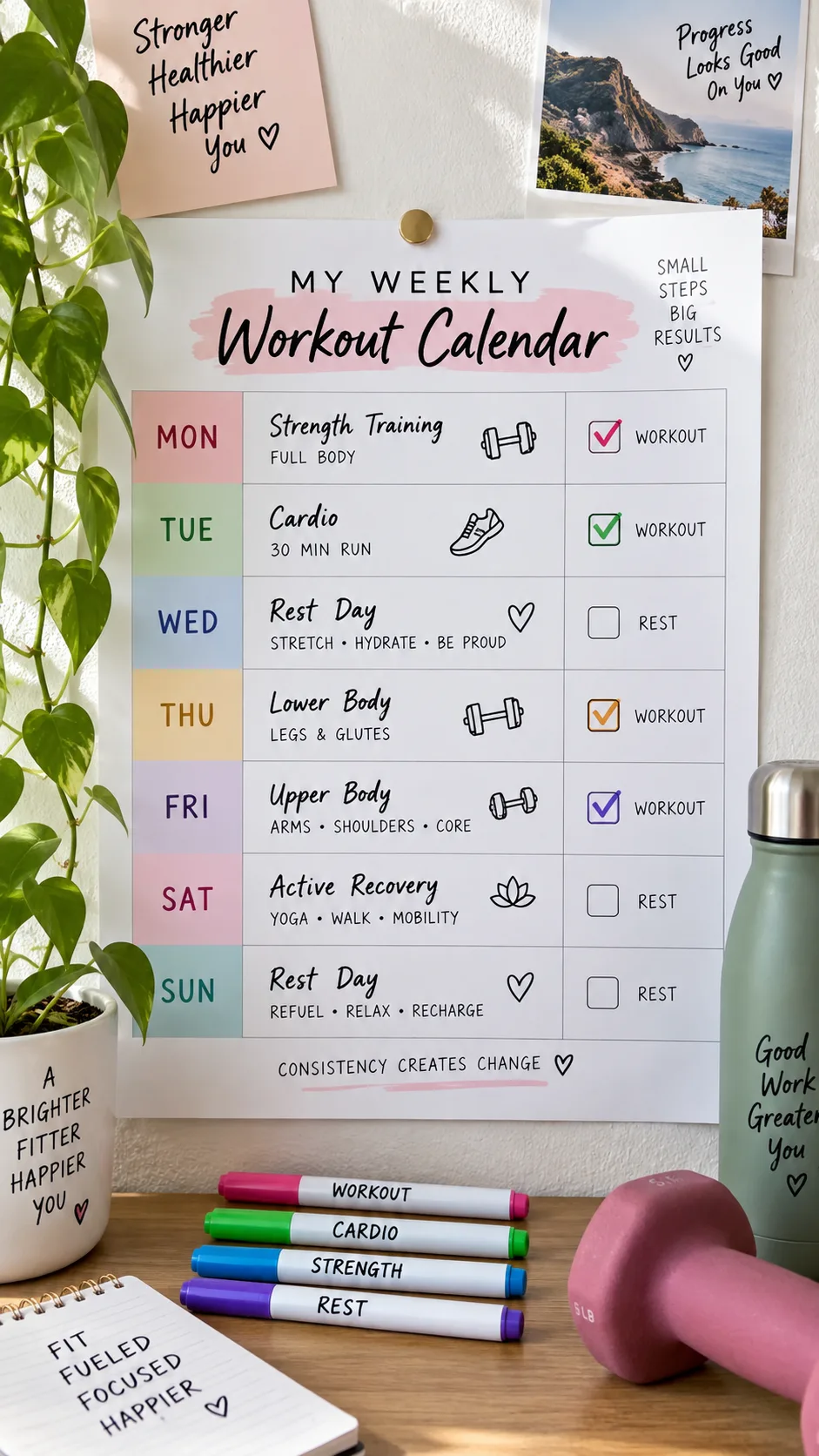
The best workout schedule is the one you’ll actually show up for. A six-day-a-week plan sounds great until Wednesday hits and you’re running on empty after work. Start with 3 days a week and build from there.
A full body workout plan done 3 days a week builds real strength and gives your body time to recover. Recovery is where muscles grow, so don’t skip it.
Sample weekly structures
- Beginner (3 days): Monday, Wednesday, Friday, full body workouts
- Intermediate (4 days): Upper/lower split, Mon, Tue, Thu, Fri
- Advanced (5 days): Push/pull/legs with dedicated arm or core days
Pick the structure that matches where you are right now, not where you want to be in six months. Move to higher frequency once showing up consistently stops feeling like a battle.
Step 3: Pick exercises you don’t completely hate
Your workout should include movements you don’t dread. If you hate running, you don’t have to run. Hate burpees? Skip them. There are hundreds of ways to get your heart rate up and build strength.
What matters most is that your routine covers these four training pillars:
- Strength training: Squats, deadlifts, push-ups, rows
- Cardiovascular work: Walking, cycling, jump rope, dancing (yes, dancing counts)
- Flexibility and mobility: Stretching, yoga, foam rolling
- Core stability: Planks, dead bugs, bird-dogs
According to the World Health Organization, adults need at least 150 to 300 minutes of moderate-intensity activity per week. That works out to roughly 30 minutes a day, five days a week, which is completely manageable once you stop trying to do everything at once.
Step 4: Build progression into your routine from day one
Doing the same workout at the same weight forever is the fastest way to stop seeing results. Your body adapts, that’s literally what it does. Progressive overload is the principle that keeps your gains coming week after week.
How to apply progressive overload
- Add more reps: complete 3 sets of 10 before moving to 3 sets of 12
- Increase weight: small jumps of 2.5 to 5kg add up fast
- Reduce rest time: shorter rest periods make the same workout harder
- Improve exercise form: better technique means deeper muscle engagement
- Add volume: more sets over time as your capacity grows
You don’t need to change everything every week. Even one small improvement per session keeps you moving in the right direction. Small wins compound into significant results.

Step 5: Sort out your nutrition (because you can’t out-train a bad diet)
Ever wonder why you train hard but the scale barely moves? Nine times out of ten, the kitchen is the problem. You don’t need a complicated meal plan. You need consistent, sensible eating habits that support your training.
Start by understanding your calorie baseline. Use a BMR calculator to find out how many calories your body needs each day. Then adjust based on your goal: eat slightly less to lose fat, slightly more to build muscle.
Core nutrition principles for people building workout routines:
- Eat enough protein: aim for 1.6 to 2.2g per kg of body weight daily
- Don’t cut carbohydrates: they fuel your workouts
- Stay hydrated: dehydration tanks performance fast
- Eat fibre-rich foods for digestion and satiety
If you want practical, high-fibre local food options, check out this list of Nigerian foods rich in fibre, easy to work into daily meals without overhauling your entire diet.
Step 6: Make recovery non-negotiable
Rest days aren’t lazy days. They’re growth days. Muscles repair and grow during recovery, not during the workout itself. Skipping rest is like planting seeds and never watering them.
According to research published in the Journal of Human Kinetics, inadequate recovery leads to overtraining syndrome, which tanks performance, raises injury risk, and wrecks motivation. Don’t learn that lesson the hard way.
Your recovery toolkit
- Sleep: 7 to 9 hours every night, no exceptions
- Active recovery: light walking, stretching, or mobility work on rest days
- Foam rolling: breaks up muscle tightness and improves circulation
- Nutrition timing: eat protein within 2 hours after your workout
If lower back tension keeps holding your workouts back, look into anterior pelvic tilt correction exercises. They’ve helped a lot of people fix nagging back pain without needing a physiotherapist.
Step 7: Track your progress like a pro
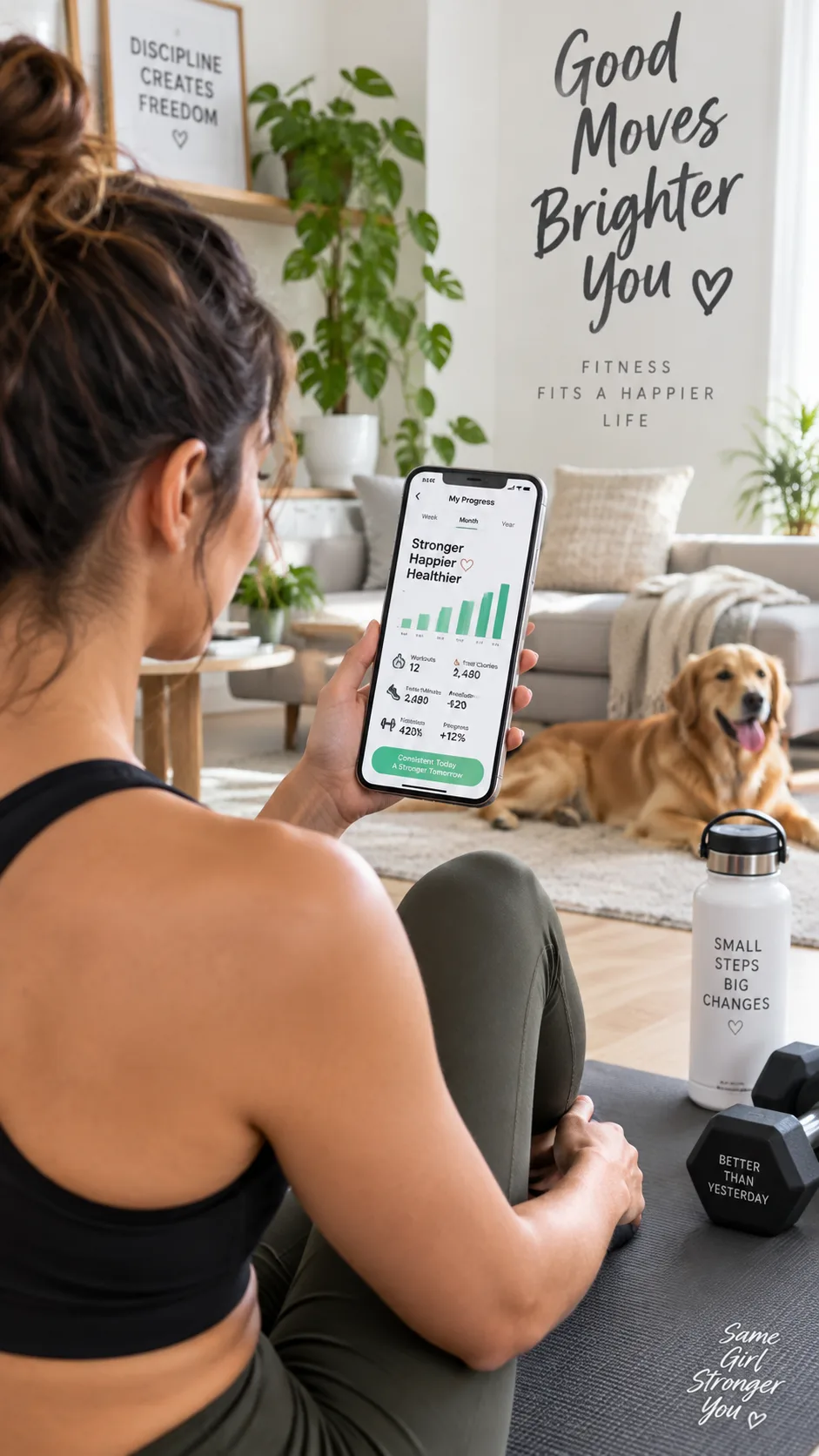
What gets measured gets managed. Keeping a workout log, even a simple one, keeps you accountable and shows you how far you’ve come on the days when everything feels hard. Looking back at your week-one numbers is genuinely motivating.
Track these metrics every week:
- Exercises performed and weights used
- Number of reps and sets completed
- Energy levels and mood after your workout
- Body measurements or progress photos every 4 weeks
Progress photos beat the scale almost every time. Muscle weighs more than fat, so the scale often lies while your mirror tells the truth.
The mindset shift that changes everything
Building a workout routine that sticks has very little to do with motivation. Motivation fades. Habits stay. The goal is to make exercise feel as automatic as brushing your teeth, and that only happens through repetition and consistency over time.
Stack your workout onto an existing habit. Go to the gym right after work, or do your home workout immediately after your morning coffee. Habit stacking, popularised by James Clear in Atomic Habits, is one of the most effective behavioral strategies for locking in new routines.
Give yourself permission to have bad days without quitting entirely. Miss one session? Show up for the next one. People who stay consistent aren’t superhuman. They just refuse to let one bad day turn into two.
Quick summary: your workout routine checklist
- Set specific, time-bound goals you genuinely care about
- Choose a realistic training frequency, starting with 3 days a week
- Pick exercises you don’t hate, covering strength, cardio, and mobility
- Apply progressive overload consistently every week
- Eat to support your training with protein, carbs, and enough water
- Protect your recovery, because sleep and rest days are non-negotiable
- Track progress and give yourself credit for small wins along the way
Building a workout routine that sticks isn’t a mystery. It’s a series of small, smart decisions made consistently over time. Stop chasing the perfect plan and start executing a good enough plan today.
Your only job right now: pick your three workout days this week, write them down, and show up. Everything else follows from there.