
You want to know whether you can gain height after puberty, and you may hope a few stretches against a wall will deliver dramatic results by Friday. Fair enough. Your body just does not follow social media promises.
Exercise cannot make your leg or spine bones longer after your growth plates close. It can improve your posture, ease stiffness, strengthen your back, and help you stand at your full natural height. That change can make a noticeable difference.
This guide lays out a realistic routine for standing taller, explains what changes after puberty, and helps you avoid wasting money on “height increase” gadgets that belong in a comedy sketch.
Can you really grow taller after puberty?

Your long bones grow through areas called growth plates. Hormones drive growth at those plates during puberty, and the plates close over time. Once they close, stretches, hanging exercises, yoga, supplements, and wishful thinking cannot reopen them.
The National Library of Medicine explains growth plate development in more detail, but the practical point stays simple: your genetics and growth plates determine your maximum skeletal height.
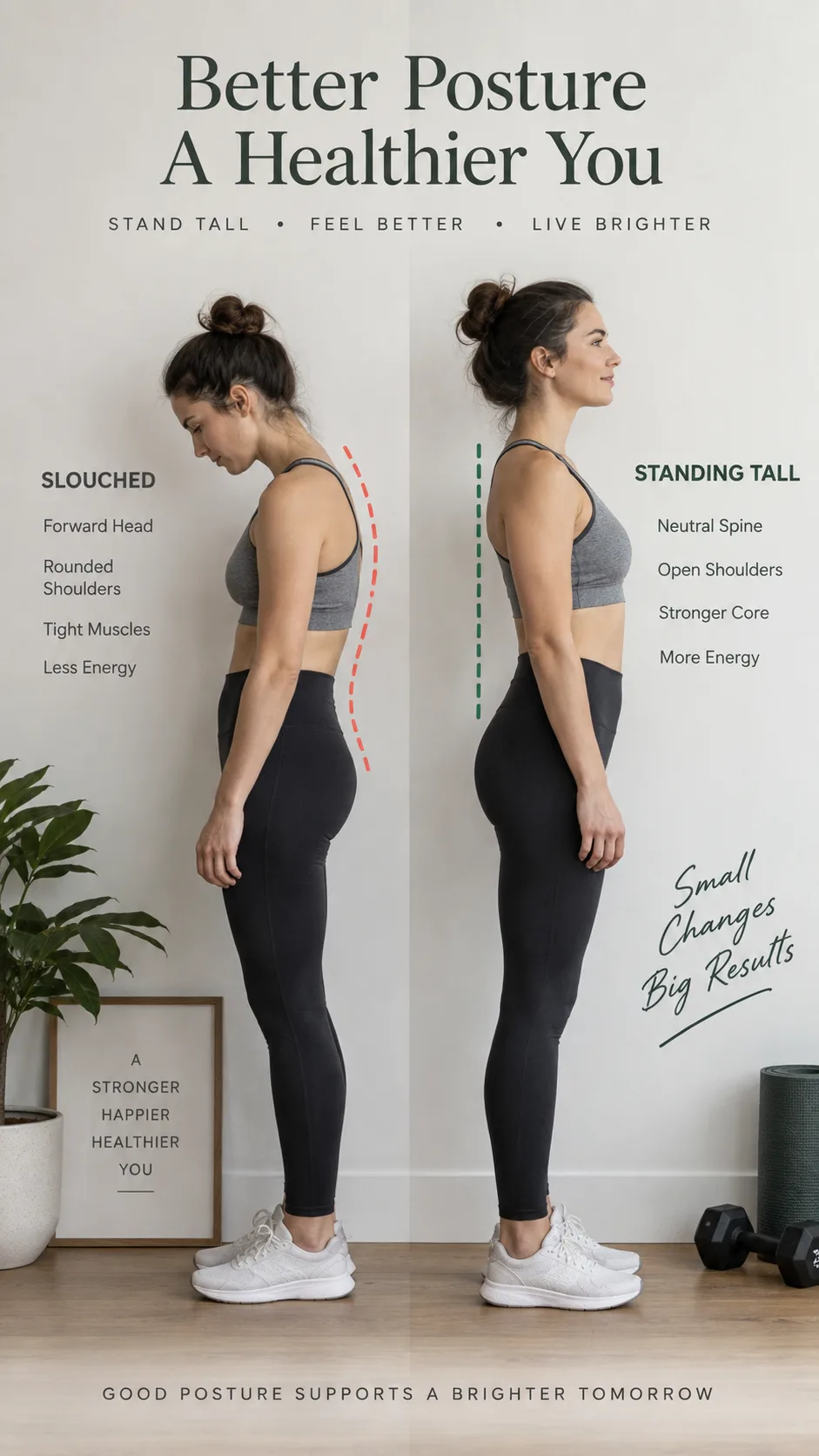
That does not mean you should stop reading and sulk in a doorway. Many people lose visible height through slouching, rounded shoulders, a forward head position, tight hips, and weak upper back muscles. You can work on all of those.
What can exercise change?
A well planned routine can help you stand taller, move better, and look more confident. It can ease the muscle tightness that leaves your spine feeling compressed after hours at a desk or bent over a phone.
You may measure a small difference in height at different times of day because your spinal discs hold more fluid after sleep and lose some during daily activity. Normal spinal compression causes that shift. It does not come from bone growth.
If you still grow, exercise supports your health, but it cannot push you beyond your genetic height range. Sleep, enough food, and medical care matter much more than doing 500 toe touches before breakfast.
First: Find out whether you may still be growing
“After puberty” covers a wide age range. Some teens finish puberty while their growth plates still allow a little growth, while many adults have reached their final skeletal height. A doctor can assess your growth pattern and discuss whether testing makes sense.
Talk with a qualified clinician if you stopped growing much earlier than expected, puberty started unusually early or late, or you worry about a hormone or nutrition issue. A clinician may review your family growth pattern and medical history, then order a bone age X ray when it fits your situation.
Do not buy “height growth” pills online. These products rarely offer solid evidence, and some contain ingredients that differ from their labels. Your wallet deserves better.
The best routine for posture and alignment
This routine will not add inches to your bones, but it works on the issues that often make people look shorter: a stiff chest, a weak upper back, tight hip flexors, weak glutes, and poor core control. Do it three to five days each week for at least eight weeks.
Move slowly and breathe steadily. Stop any exercise that causes sharp pain, tingling, numbness, dizziness, or pain that travels down an arm or leg.
1. Wall posture reset
Start with a wall posture reset so you can feel good alignment before you try to maintain it. Stand with your back near a wall, place your feet about two inches forward, and let your hips and upper back touch the wall.
Gently draw your chin back without tilting your head upward. Keep a small natural curve in your lower back. Do not press your whole spine against the wall like you owe it money.
- Hold the position for 30 to 45 seconds.
- Breathe slowly through your nose.
- Repeat 3 times.
This drill helps your nervous system recognize a taller, more stacked position. Use it before work, school, gym sessions, or an event where you want to look sharp.
2. Chin tucks for forward head posture
Your head weighs more than a bowling ball, so holding it forward all day puts extra demand on your neck and upper back. Chin tucks help you improve neck position without forcing your neck into an exaggerated pose.
- Stand against a wall or sit upright in a chair.
- Look straight ahead.
- Slide your chin straight backward, as if you want to make a gentle double chin.
- Hold for 5 seconds and relax.
- Complete 10 repetitions for 2 or 3 sets.
Relax your jaw and keep your eyes level. Move your chin backward, not downward.
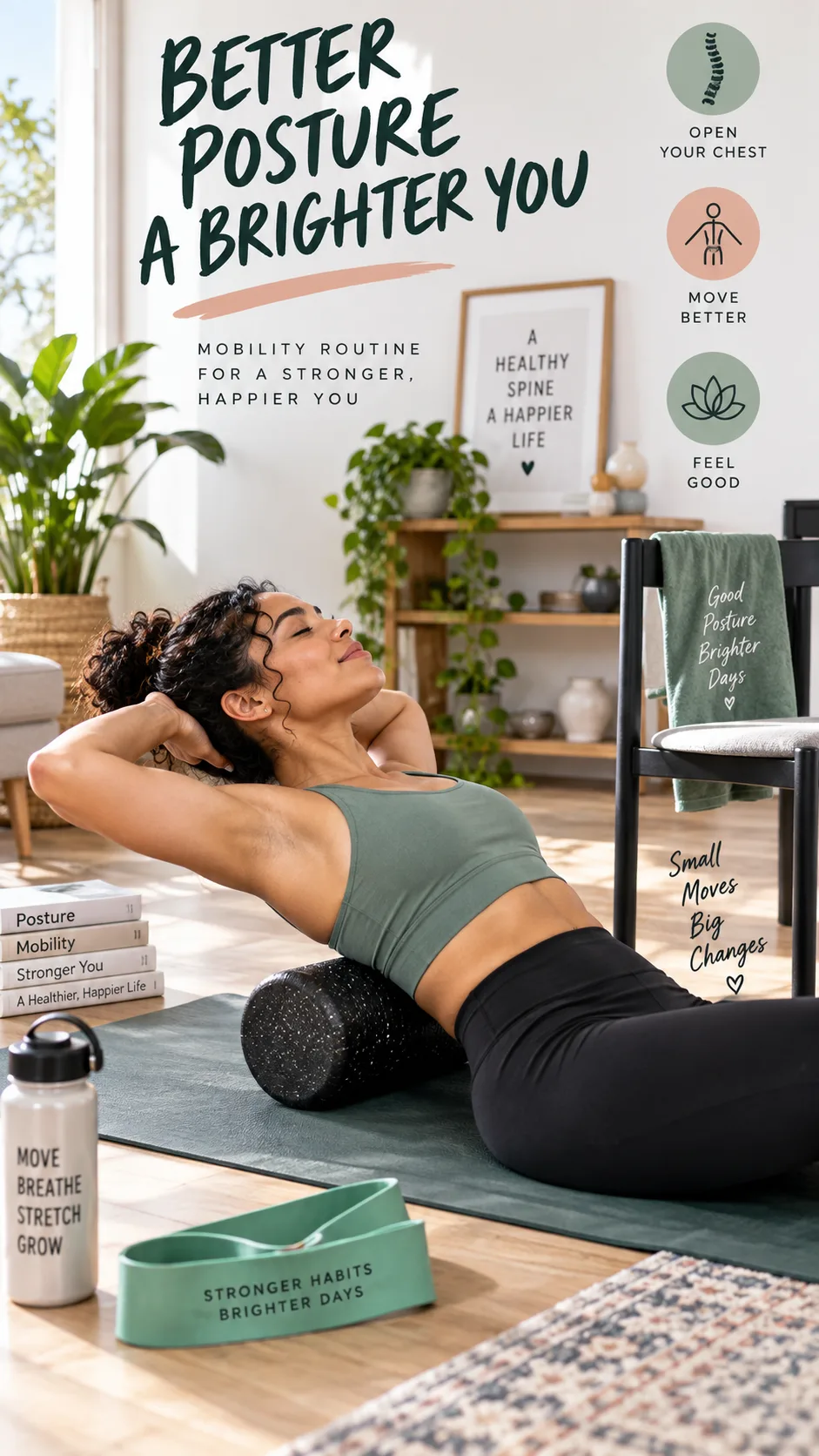
3. Thoracic extensions for a more upright upper back
Your thoracic spine runs through your upper and middle back. Long sitting sessions often pull it into a rounded position, especially when your phone turns into an emotional support rectangle.
Use a foam roller or the back of a sturdy chair for this exercise. Support your head with your hands and extend gently over the support without pulling on your neck.
- Place the foam roller across your upper back.
- Keep your hips on the floor and control your ribs.
- Lean back gently over the roller.
- Exhale, return to neutral, and repeat 8 to 10 times.
This movement can help your upper back move more freely, so upright posture feels easier. Do not force a huge backbend. Your spine prefers patience to drama.
If you want to build back mobility gradually, check out this safe backbend progression for beginners. It focuses on control instead of reckless flexibility tricks.
4. Doorway chest stretch
Tight chest muscles can pull your shoulders forward and make your upper body fold inward. The doorway stretch gives those muscles more room while upper back training builds the strength you need.
- Place your forearms on each side of a doorway.
- Step one foot forward.
- Lean forward until you feel a mild stretch across your chest.
- Hold for 20 to 30 seconds.
- Repeat 2 or 3 times.
Keep the stretch comfortable. You should feel tension, not the feeling that your shoulders have filed a formal complaint.
5. Band pull aparts for upper back strength
Mobility helps, but strength stops your posture from disappearing as soon as you sit down. Band pull aparts train the muscles between and around your shoulder blades.
- Hold a light resistance band at shoulder height.
- Keep a soft bend in your elbows.
- Pull the band apart until your arms form a straight line.
- Gently squeeze your shoulder blades together.
- Return slowly and complete 12 to 15 repetitions for 3 sets.
Do not shrug your shoulders toward your ears. Think about a long neck and broad collarbones.
6. Hip flexor stretch and glute bridge
Tight hip flexors and inactive glutes can tip your pelvis forward and deepen your lower back arch. That pattern can make upright standing feel awkward, even when you try to correct it.
Start with a kneeling hip flexor stretch. Kneel with one knee down, tuck your pelvis slightly, squeeze the glute on the kneeling side, and shift forward a little. Hold each side for 30 seconds and complete 2 rounds.
Then follow with glute bridges:
- Lie on your back with bent knees and feet flat.
- Press through your heels.
- Squeeze your glutes and lift your hips.
- Pause for 2 seconds at the top.
- Lower with control for 12 to 15 repetitions across 3 sets.
For a closer look at stubborn hip tightness, read what helps tight hip flexors and psoas discomfort. You need movement and strength, not endless aggressive stretching.
7. Dead bugs for core control
Your core does more than help you chase visible abs. It helps your ribs, pelvis, and spine work together when you stand, walk, lift, and reach.
- Lie on your back with your arms toward the ceiling and knees bent at 90 degrees.
- Gently flatten your lower back toward the floor.
- Lower your right arm and left leg slowly.
- Return to the start and switch sides.
- Complete 8 to 10 controlled repetitions per side.
Move only as far as you can without arching your lower back. Good form matters more than a high rep count.
Can hanging make you taller?
Dead hangs feel good for many people because they stretch the shoulders, hands, and upper body. They can also leave you feeling temporarily longer after sitting or training.
Hanging does not permanently lengthen your spine or legs after your growth plates close. You can still include it in your routine if your shoulders handle it well.
- Hang from a stable pull up bar with both hands.
- Keep your shoulders gently active instead of letting them collapse upward.
- Hold for 10 to 30 seconds.
- Complete 2 to 4 sets.
Skip hanging or speak with a physiotherapist first if you have shoulder instability, a recent shoulder injury, severe neck pain, or nerve symptoms. Your grip work should build confidence, not give you a new orthopedic hobby.
Nutrition and sleep still matter for height potential
If you still have growth potential, your body needs enough energy and nutrients to use it. Restrictive diets, long term undereating, and poor sleep can interfere with healthy development.
Build meals around protein, calcium rich foods, fruits, vegetables, whole grains, and healthy fats. You can find practical meal ideas in this Nigerian protein diet guide, especially if you want affordable protein options.
Vitamin D supports bone health because it helps your body absorb calcium. Food, sunlight exposure, and medical advice can all help. This list of Nigerian foods rich in vitamin D offers useful options.
The CDC sleep guidance recommends 8 to 10 hours for teenagers and at least 7 hours for adults. Sleep will not turn an adult into a basketball center, but it supports recovery, training, posture, and general health.
Height increase myths to ignore
The internet loves a shortcut, especially when that shortcut asks for your card details. Put these claims in the fantasy drawer.
- “Stretching adds 3 inches permanently.” Stretching improves flexibility and posture, not adult bone length.
- “Supplements reopen growth plates.” No credible supplement can do that.
- “Inversion tables make you permanently taller.” They may change how you feel for a while, but they cannot create lasting height growth.
- “One exercise unlocks hidden height.” Your body has no secret height button.
- “You can fix scoliosis with random online stretches.” Scoliosis needs an individual medical assessment and guidance.
The American Academy of Pediatrics supports age-appropriate strength training when people use good technique and receive supervision. Strength training does not stunt growth when you use proper form, sensible loads, and enough recovery.
A simple weekly plan to stand taller
You do not need a two hour routine. Consistency matters because your posture reflects what you practice each day.
- Monday: Wall posture reset, chin tucks, band pull aparts, glute bridges.
- Tuesday: Walk, swim, cycle, or play a sport for 30 minutes.
- Wednesday: Thoracic extensions, doorway stretch, hip flexor stretch, dead bugs.
- Thursday: Rest or take an easy walk.
- Friday: Repeat Monday’s strength and posture session.
- Saturday: Do a full body workout, yoga session, or recreational activity.
- Sunday: Do light mobility work and prepare for a steady sleep schedule.
Take a posture photo from the front and side every four weeks. Wear similar clothes, use similar lighting, and relax naturally. You will notice changes more easily than you will by checking your reflection every six minutes.
When you should see a doctor
Book a medical appointment if you have unexplained height loss, persistent back pain, a visible spinal curve, numbness, weakness, or sudden posture changes. Adults who lose more than a small amount of height over time need an evaluation because bone and spinal conditions can contribute.
See a clinician if you worry about delayed growth, early puberty, or a child’s growth pattern. Early support gives you more options than internet guesswork.
The bottom line on growing taller after puberty
You cannot make closed growth plates produce longer bones naturally. You can improve your posture, strengthen the muscles that hold you upright, increase mobility, and show your full natural height with more confidence.
Follow the routine, sleep enough, eat well, and stop chasing miracle claims. Stand tall because you trained your body to support you, not because a sketchy ad promised you three inches by Tuesday.