

You know that 3pm moment when your brain starts screaming for a cookie, a Snickers, or honestly anything with sugar in it? I used to lose that fight daily. Then I started eating something my grandmother swore by, plain unglamorous gelatin, and the screaming got a lot quieter.
No, this isn’t a magic powder that melts belly fat while you nap. Sorry. But gelatin does something genuinely useful for appetite, digestion, and bloating, and most people have never tried it properly.
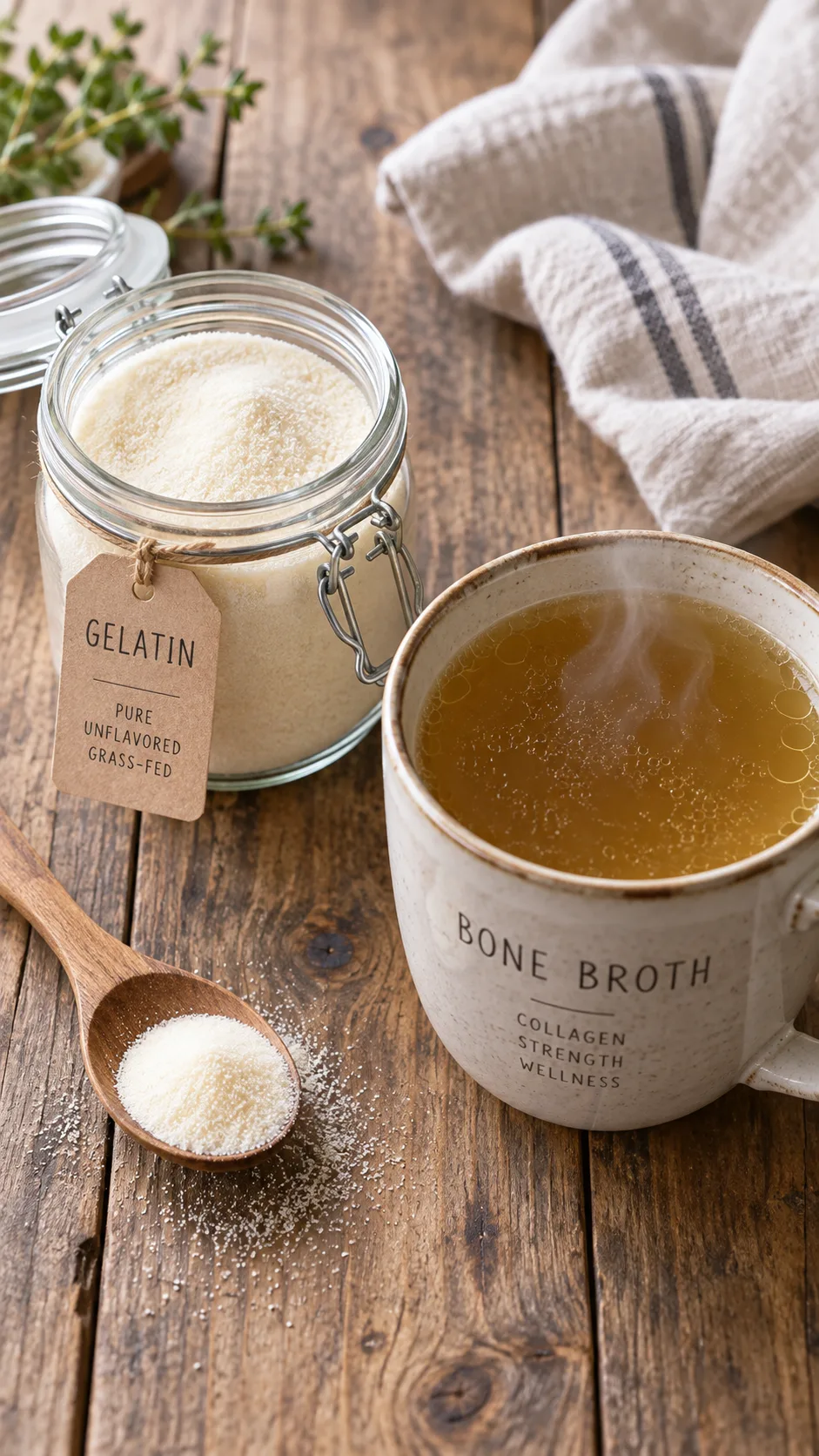
What the “gelatin diet trick” really means
The whole thing fits in one sentence: you eat 10 to 20 grams of gelatin or collagen protein before or with meals, especially breakfast and the meal right before your worst craving window. That’s it. No 30-day cleanse, no subscription box.
Gelatin is cooked collagen, the protein that makes bone broth turn jiggly in the fridge. It’s roughly 85 to 90% pure protein, has almost zero carbs, zero sugar, and barely any fat. When you eat it, three useful things happen.
- It slows gastric emptying. Gelatin forms a gel-like texture in your stomach, so food hangs around longer. Longer food equals longer fullness.
- It’s protein your brain notices. Protein triggers satiety hormones like GLP-1, PYY, and CCK. Those are the same pathways that fancy weight-loss drugs hijack.
- It supports your gut lining. Glycine and glutamine, two amino acids gelatin carries plenty of, feed the cells that line your intestines.
Ever wondered why bone broth turned into a $2 billion industry out of nowhere? This is why. People felt something. They just couldn’t explain it.
Does gelatin really flatten your stomach?
Let me be straight with you, because I hate articles that overpromise. Gelatin does not spot-reduce belly fat. Nothing does. Anyone who tells you otherwise is selling something.
But “flat stomach” and “less belly fat” are two different problems. Most people who feel puffy at 8pm aren’t carrying an extra kilo of fat since morning. They’re bloated. And that’s where gelatin earns its keep.
The bloating angle
Gelatin’s glycine helps your stomach produce adequate gastric acid and supports the mucosal lining. Better digestion upstream means less fermentation, less gas, and less of that “I look four months pregnant” feeling after dinner.
Researchers have looked at collagen peptides for gut barrier support in peer-reviewed clinical literature, and a 2022 study found collagen supplementation reduced bloating in a majority of healthy women with mild digestive symptoms. Small studies, yes. But the mechanism makes sense and the downside is basically zero.
The fat loss angle (the honest version)
Gelatin helps you lose fat the boring way: by making you eat less without white-knuckling it. A classic study from the University of Washington found that raising protein to 30% of calories led participants to spontaneously eat about 441 fewer calories per day, with no portion control and no counting.
Gelatin is one of the cheapest, easiest ways to bump protein. A single scoop adds 10 to 20g for about 40 to 70 calories. That’s the whole hack.

Why gelatin quiets sugar cravings (the science bit)
This is the part that surprised me most. I expected the fullness. I didn’t expect the cravings to settle down.
1. Glycine works directly on your brain
Glycine makes up about one-third of gelatin’s amino acid profile. It also works as an inhibitory neurotransmitter, meaning it calms things down. Researchers have studied glycine for sleep quality and for reducing anxiety-driven behaviour.
Why does that matter for sugar? Because a huge chunk of sugar cravings aren’t hunger at all. They’re stress, boredom, and bad sleep wearing a hunger costume. Poor sleep alone raises ghrelin and tanks leptin, which is a fancy way of saying tired people want donuts.
2. It steadies blood sugar
Eating protein before carbs blunts the glucose spike from that meal. Less spike means less crash. Less crash means you’re not hunting the vending machine at 3:30pm like a raccoon. Gelatin taken 15 to 20 minutes before a carb-heavy meal works especially well here.
3. Glycine feeds liver detox pathways
Glycine is a main substrate for glutathione production and phase II liver conjugation. A liver that’s coping well handles blood sugar regulation better. The effect is indirect, but it stacks.
My honest take: after about ten days of a scoop in my morning coffee, my evening “I need something sweet” ritual stopped being urgent. Not gone. Just negotiable. That’s a massive difference.
Gelatin vs. collagen peptides: which one do you need?
People mix these up constantly, and store shelves don’t help. Here’s the clean breakdown.
- Gelatin (unflavoured, grass-fed): Gels when cold. Great for gummies, puddings, thickening sauces. Only dissolves in hot liquid. Slightly more filling because of the gel structure.
- Collagen peptides (hydrolysed collagen): Same protein, broken into smaller pieces. Dissolves in cold, hot, anything. Doesn’t gel. Easier to digest for sensitive stomachs. Best for coffee, smoothies, water.
- Bone broth: The whole-food version. Delicious, hydrating, full of minerals, though you need a LOT of it to hit a meaningful protein dose.
My recommendation? Collagen peptides for daily convenience, plain gelatin for the satiety trick (the gelling matters) and homemade gummies. I keep both. Yes, my kitchen cupboard looks unhinged.

The exact protocol, step by step
Here’s the routine I landed on after a lot of trial, error, and one genuinely disgusting attempt at gelatin in orange juice. Learn from my suffering.
Step 1: Start small (days 1 to 5)
Take 10g once daily, with breakfast. Mix collagen peptides into coffee, tea, or a smoothie. Some people get mild digestive grumbling in week one, and starting low prevents that.
Step 2: Add the pre-meal dose (days 6 to 14)
Add a second 10g dose 20 minutes before your biggest or most problematic meal. For most people that’s dinner. For me it was lunch, because my lunches used to be a sandwich and a prayer.
Step 3: Deploy the craving killer (ongoing)
Keep homemade gelatin gummies in the fridge for the craving window. When the sugar voice starts, eat two or three. They’re chewy, sweet-ish, and they satisfy the ritual without the 30g of sugar.
Daily dose cheat sheet
- Minimum effective dose: 10g per day
- Sweet spot for appetite control: 20g per day, split into two doses
- Upper end used in studies: 25 to 30g per day (skin, joint, gut research)
- Best timing: Morning plus 20 minutes pre-meal
- Time to notice changes: Cravings 7 to 14 days, bloating 2 to 4 weeks, skin and nails 8 to 12 weeks
One important caveat: gelatin is an incomplete protein because it runs low in tryptophan. Do NOT replace your chicken, fish, eggs, or beans with it. Treat it as a bonus layer on top of a solid diet, not a swap.
3 gelatin recipes that don’t taste like punishment
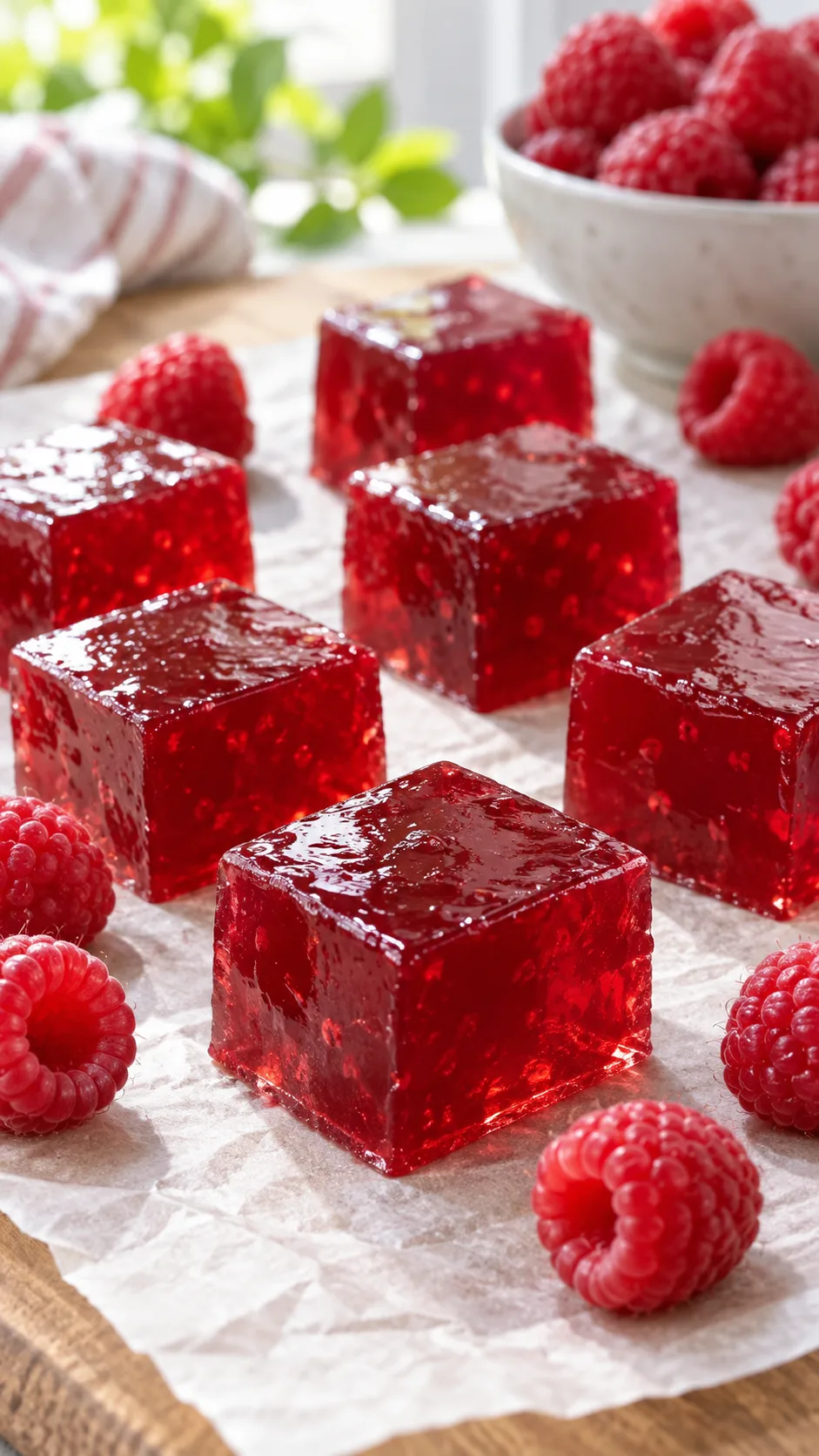
1. The 5-minute craving-killer gummies
These are the MVP. Genuinely.
- 1 cup unsweetened tart cherry or berry juice
- 3 tbsp unflavoured grass-fed gelatin
- 1 tbsp lemon juice
- Optional: 1 tsp raw honey or a few drops of stevia
Method: Warm half the juice, sprinkle gelatin over the cold half and let it “bloom” for 3 minutes. Whisk the warm juice in until it fully dissolves. Pour into a silicone mould or small dish, chill 2 hours, cut into squares. They keep in the fridge for up to a week.
2. Collagen coffee (the zero-effort option)
One scoop of collagen peptides stirred into your morning coffee. It’s tasteless. You will not notice it. This alone gives you about 90% of the results for 5% of the effort. Add a splash of cream and you’ve got a genuinely filling start.
3. Overnight gelatin pudding
Whisk 2 tbsp gelatin into 1 cup hot milk (dairy or coconut), add cocoa powder, vanilla, and your sweetener of choice. Chill overnight. It’s basically panna cotta with a protein résumé. Perfect for people who need dessert to feel human, and a smarter swap than reaching for a bowl of homemade ice cream every night.
Watch this before you buy anything
If you’d rather see someone walk through the differences and make the stuff on camera, this breakdown is worth ten minutes of your time.
The mistakes that wreck this whole thing
I made most of these. Consider this your shortcut.
Mistake 1: Using flavoured jello packets
A standard box of flavoured gelatin dessert carries about 19g of sugar per serving and roughly 1.6g of real gelatin. You’d need an absurd amount to hit a useful dose, and you’d swallow a sugar bomb doing it. That’s the exact opposite of curbing cravings. Buy unflavoured, unsweetened gelatin.
Mistake 2: Dumping powder into boiling liquid
You’ll get clumps. Horrible, rubbery clumps. Always bloom gelatin in cold liquid first for 3 to 5 minutes, then add heat. Collagen peptides skip this step entirely.
Mistake 3: Expecting it to beat a bad diet
Gelatin isn’t going to rescue a daily diet of refined carbs and soda. It amplifies a decent foundation. It doesn’t build one. If sugar is genuinely everywhere in your meals, start by auditing what’s on your plate. This list of foods that don’t contain sugar is a solid place to begin.
Mistake 4: Quitting on day 4
Appetite changes take one to two weeks. Bloating improvements take longer. Give it 30 days before you judge it. FYI, most supplements people write off as “useless” got abandoned before they had a chance.
Mistake 5: Skipping fibre and water
Loading protein without water or fibre is a recipe for constipation. Drink up, eat your vegetables, and if things do get sluggish, there are plenty of simple home remedies worth knowing.
Who should skip this
Gelatin is safe for most people, and the European Food Safety Authority treats it as a standard food ingredient. Still, common sense applies.
- Kidney disease: Talk to your doctor before adding any concentrated protein.
- Pregnancy or breastfeeding: Generally fine as food, but check with your provider on supplement doses.
- Beef or fish allergies: Gelatin comes from bovine, porcine, or marine sources. Read the label.
- Histamine intolerance: Collagen and long-simmered broths can trigger symptoms in sensitive people.
- Vegetarians and vegans: Gelatin is an animal product. Agar-agar gels but gives you no protein or amino acid benefit.
One more thing worth checking: buy from a brand that does third-party testing. The NIH Office of Dietary Supplements has good general guidance on evaluating supplement quality, and it costs nothing to read.
How to stack gelatin with the rest of your routine
Gelatin works best as one piece of a system. Here’s how I’d layer it.
- Anchor protein at every meal. Aim for 25 to 35g per meal from real food first.
- Add gelatin as the top-up. Morning coffee and pre-dinner. Done.
- Prep so you don’t improvise. Hungry people make terrible decisions. A bit of weekly lunch prep removes the entire problem.
- Walk after meals. Ten minutes after dinner meaningfully lowers the glucose curve.
- Protect your sleep. Glycine helps here too: a 10g dose an hour before bed improves sleep quality for a lot of people.
- Lift something heavy twice a week. Protein without resistance training is half a plan.

What realistically happens in 30 days
Let me set expectations honestly, because this is where most articles go off the rails.
- Week 1: Slightly fuller after meals. Possibly some mild digestive adjustment. Cravings mostly unchanged.
- Week 2: Sugar cravings noticeably softer. You start forgetting about dessert. Snack frequency drops.
- Week 3: Less evening bloating. Clothes sit better even if the scale hasn’t moved much.
- Week 4: Smaller portions feel normal. If you’re in a calorie deficit, the scale reflects it, realistically 0.5 to 1kg per week, not 10.
Anyone promising a flat stomach in 7 days is lying to you and probably has an affiliate link. IMO the real win here isn’t the scale. It’s the mental quiet. Not negotiating with yourself about biscuits twelve times a day changes your whole week.
Frequently asked questions
Can I take gelatin on an empty stomach?
Yes, and pre-meal on a mostly empty stomach is arguably the best timing for appetite control. Some people find it sits heavily. If that’s you, take it with food instead.
Does gelatin break a fast?
Technically yes, since it’s protein and calories. If you’re fasting for autophagy, save it for your eating window. If you’re fasting for appetite control, it’s a reasonable trade off.
Is collagen better than whey for weight loss?
Whey is a complete protein and better for building muscle. Collagen does more for your gut lining, your skin, and that gel-based fullness effect. Use both if you can. They solve different problems.
Will it help my skin too?
Multiple randomised controlled trials show collagen peptides improve skin elasticity and hydration after 8 to 12 weeks. It’s one of the better-evidenced cosmetic supplements, which is a low bar, but still.
The bottom line
Gelatin isn’t a miracle. It’s a cheap, high-protein, low-calorie tool that makes eating less feel easier and makes your gut behave better. That combination quietly handles the bloated stomach and the sugar cravings, the two things that sabotage most people.
Start with 10g in your morning coffee tomorrow. Add a pre-dinner dose next week. Keep gummies in the fridge for emergencies. Give it a full month before you decide.
The best diet trick isn’t the one with the flashiest before-and-after photo. It’s the one you’ll still be doing in six months. Gelatin in your coffee takes four seconds. That’s about as sustainable as it gets.
This article is for general information and isn’t medical advice. Chat with your doctor or a registered dietitian before starting any new supplement, especially if you have a health condition or take medication.