

Raise your hand if you ever tried bulking, only to look six months pregnant after four days. You wanted round delts, defined hamstrings, and a lifted glute shelf. Instead, you got stomach cramps, a puffy face, and pants that would not button over your hips.
Most female bulking guides offer awful advice. They take traditional bodybuilding protocols (written for 220-pound men taking performance enhancers) and shrink the numbers down slightly. Then they tell you to chug peanut butter and banana milkshakes until your stomach hurts.
You do not need to feel like an overinflated parade float to build solid muscle. When you structure a caloric surplus properly, you feed muscle tissue without wrecking your digestive tract. We can fix your strategy, protect your digestion, and build your physique properly.
Why Most Female Bulks Turn Into Bloat Disasters
Why does traditional bulking make your stomach swell like a balloon? You rarely gain real body fat during the first two weeks. Instead, you face severe digestive distress and sluggish gut transit.
First, women often jump into an aggressive surplus too quickly. If your body maintains weight on 1,800 calories, jumping straight to 2,500 calories overwhelms your digestive enzymes. Your stomach lacks the acid and enzyme output to process that sudden influx of food. Undigested food moves into your colon, where bacteria ferment it and generate massive gas clouds.
Second, fitness culture convinces lifters that clean eating requires endless roughage. You decide to bulk, so you eat massive bowls of raw kale, piles of broccoli, and giant bowls of oatmeal. You spike your daily fiber from 15 grams to 55 grams overnight. That sudden jump paralyzes your gut motility. If you struggle with stubborn distension, review these common flat stomach diet plan mistakes to see how excessive fiber wrecks gut comfort.
Third, female hormone fluctuations alter water balance. High estrogen increases sodium sensitivity, while progesterone relaxes smooth muscle tissues, including your intestinal walls. Sluggish intestines combined with double-sized meals produce an instant food baby. Successful bulking works with your physiology rather than fighting it.
The Math: Setting Up Your Lean Bulking Surplus
Building dense skeletal muscle requires energy, but female physiology synthesizes new lean tissue at a specific pace. Natural lifters cannot force-feed muscle growth beyond their biological rate of protein synthesis. Any calories above that cap go directly into fat storage.
1. The Surplus Sweet Spot
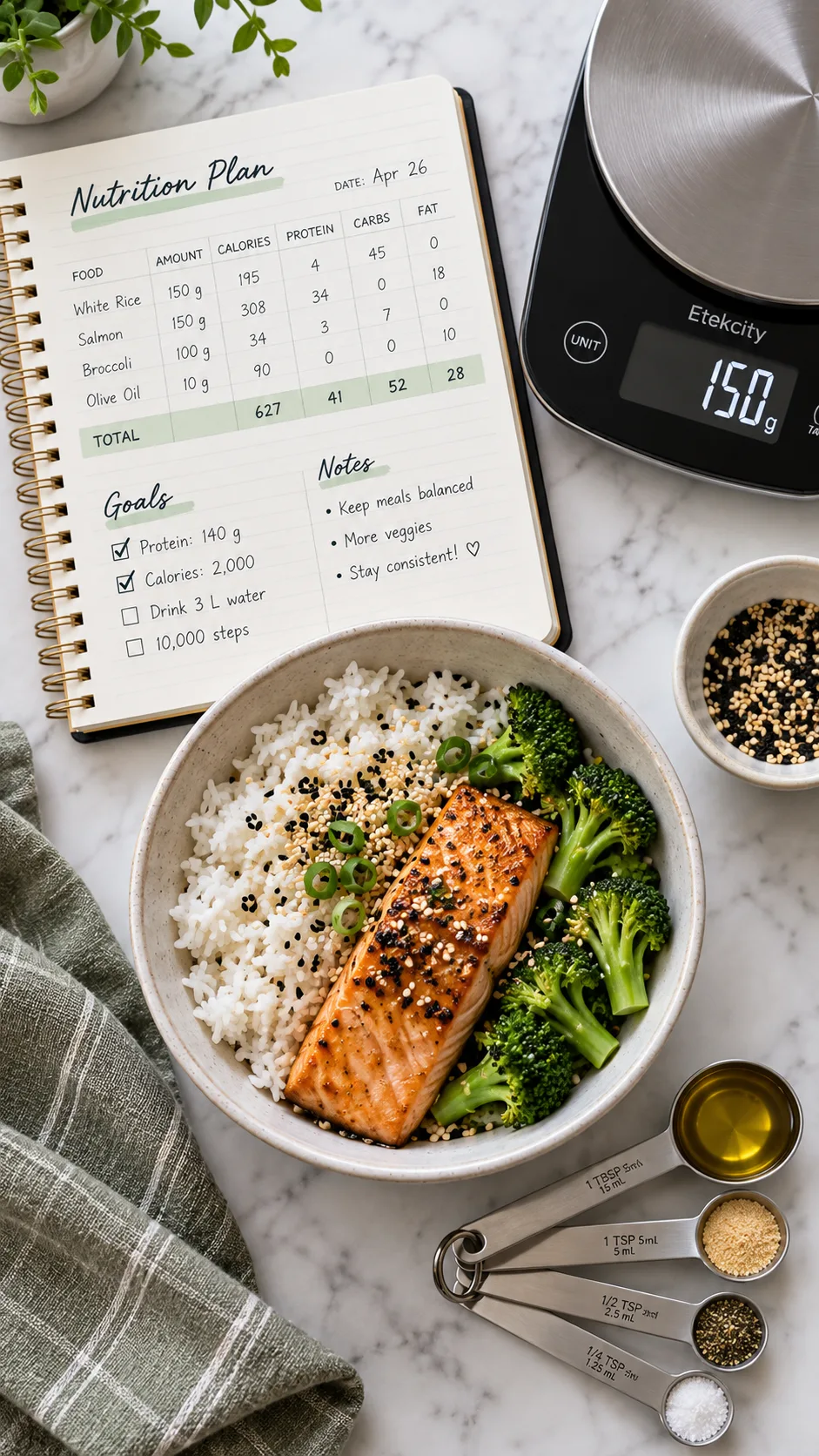
Ditch the 500-calorie surplus. Unless you are an absolute beginner lifting weights for the first time, an aggressive surplus produces rapid fat accumulation and unnecessary inflammation. Target a controlled surplus of 150 to 250 calories per day above your total daily energy expenditure (TDEE).
This modest surplus supplies plenty of energy for heavy resistance training and muscle repair. It also spares your digestive tract from mechanical overload. If your maintenance sits at 2,000 calories, set your bulking target between 2,150 and 2,250 calories.
2. Protein: Precision Over Excess
Protein builds muscle, but stuffing yourself with endless dry chicken breasts will only slow your digestion. The International Society of Sports Nutrition (ISSN) recommends consuming between 1.6 and 2.2 grams of protein per kilogram of body weight (roughly 0.8 to 1.0 grams per pound) for muscle growth.
If you weigh 140 pounds (63.5 kg), set your daily protein intake around 125 to 140 grams. Eating more than 1.2 grams per pound during a surplus provides zero extra muscle-building benefit. Extra protein simply crowds out the carbohydrates that fuel your heavy training sessions.
3. Carbohydrates: The Performance Engine
Carbohydrates drive gym performance. They replenish intramuscular glycogen stores, support high training volume, and maintain thyroid function. Allocate 45% to 55% of your total calories to carbohydrates.
Do not fear fast-digesting starches. When you need extra calories without gastrointestinal drag, refined starches work exceptionally well. White rice and cream of rice restock glycogen quickly and clear the stomach without causing painful fermentation.
4. Fats: Hormone Stability
Never drop your dietary fats too low during a growth phase. Healthy fats keep your menstrual cycle regular and support steroid hormone production. Allocate 20% to 25% of your total calories to dietary fats (typically 0.35 to 0.45 grams per pound of body weight).
| Macronutrient | Daily Target | Purpose |
|---|---|---|
| Protein | 0.8 to 1.0g per lb of body weight | Maximizes muscle protein synthesis |
| Fats | 0.35 to 0.45g per lb of body weight | Maintains menstrual health and hormone production |
| Carbohydrates | Remaining daily calories | Drives gym performance and muscle fullness |
Gut-Friendly Food Swaps for a Flat Midsection
Building muscle without a distended stomach requires smart ingredient selection. Choose calorie-dense foods that leave your stomach quickly. When food sits in your digestive tract for four hours, you spend the entire afternoon feeling heavy and sluggish.
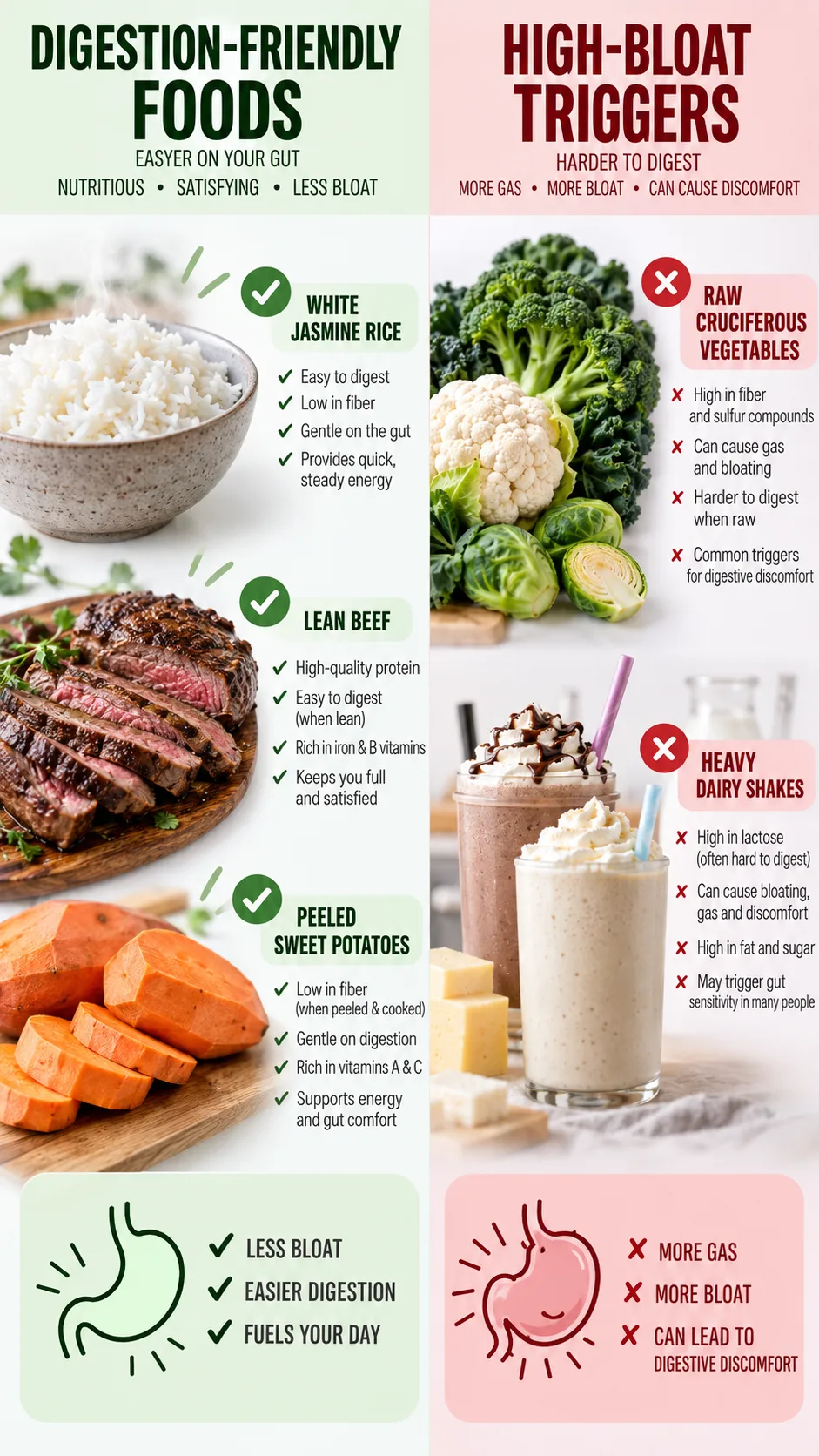
Pay attention to the physical structure of your carb sources. Brown rice and steel-cut oats carry tough, insoluble fiber coats. In contrast, white jasmine rice and peeled potatoes enter the bloodstream quickly without provoking intestinal cramps. Make these strategic adjustments:
- Swap raw cruciferous salads for steamed zucchini or baby spinach: Raw broccoli, kale, and cauliflower contain raffinose, a complex sugar that gut bacteria ferment heavily. Steamed, low-FODMAP vegetables provide essential vitamins and minerals without expanding your waistline.
- Swap standard whey concentrate for whey protein isolate or beef protein: Whey concentrate contains trace lactose and milk fats that trigger stomach distress for many women. Whey isolate filters those sugars out and digests much faster.
- Swap bulky whole grains for white jasmine rice or cream of rice: Bulky whole grains fill your stomach too early and trap air. Cream of rice digests cleanly and provides immediate energy for workouts.
- Swap carbonated seltzers and sodas for still water with electrolytes: Swallowing dissolved carbon dioxide physically distends your stomach. Stick to flat water to keep your midsection flat.
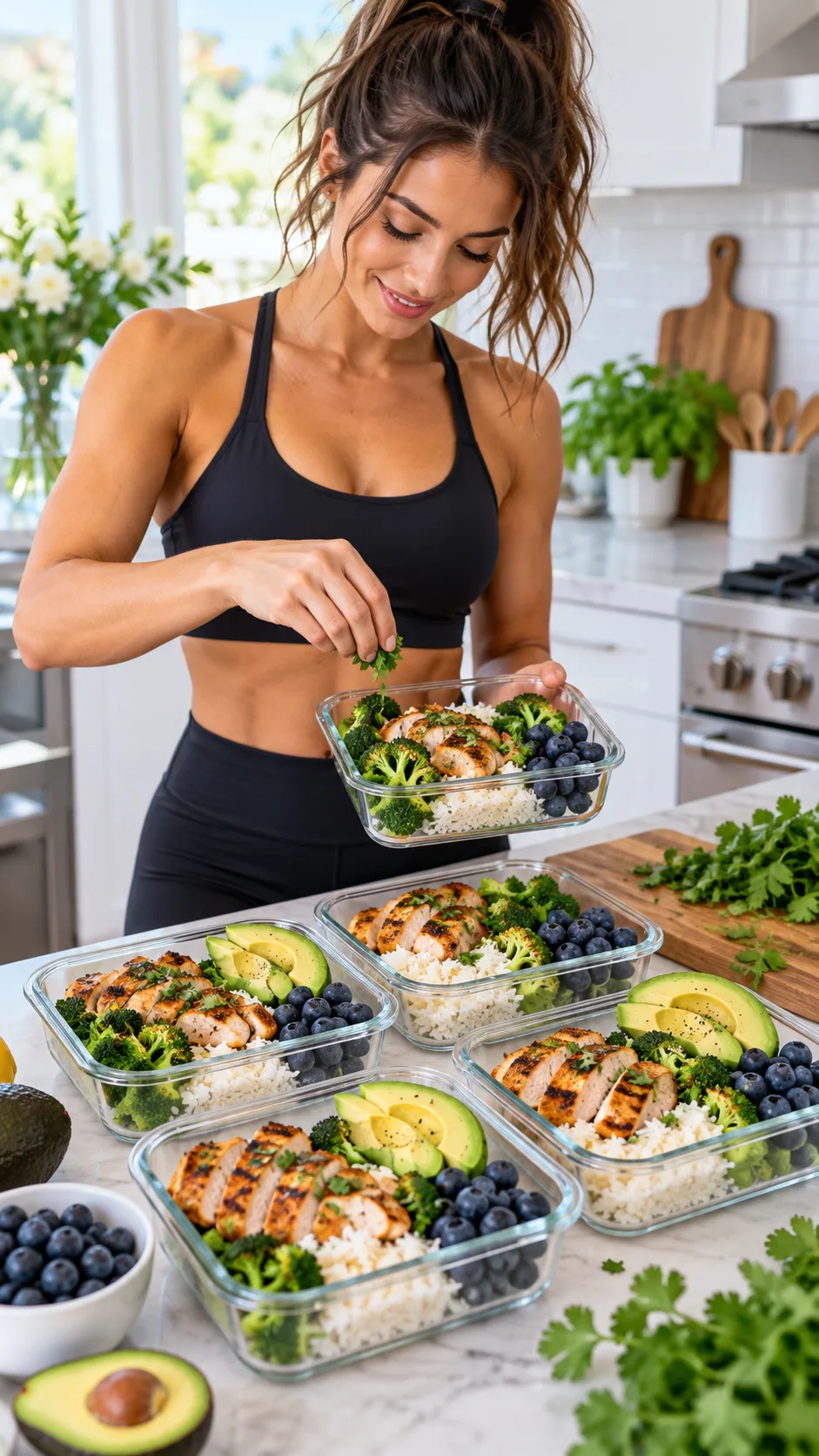
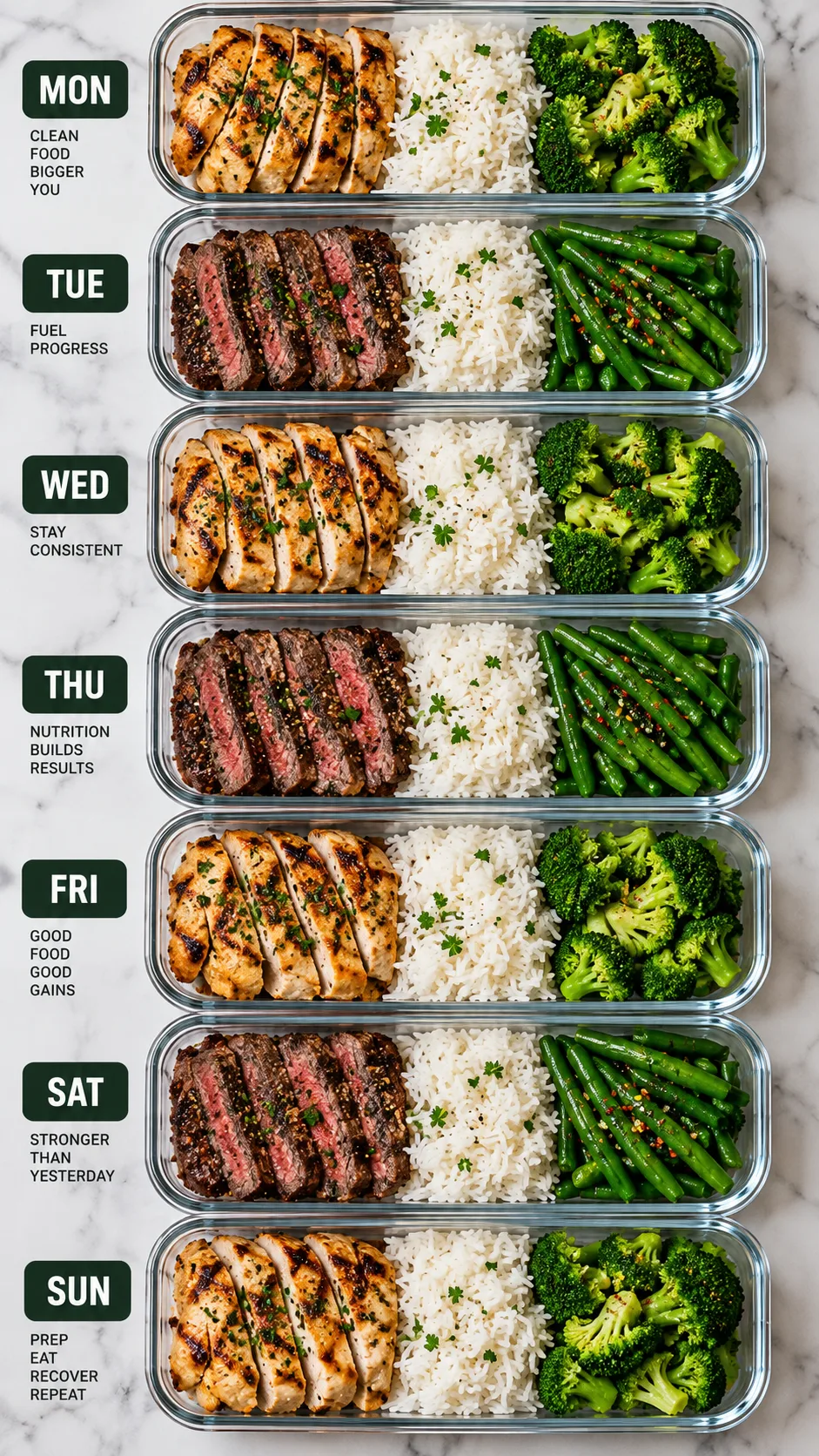
If you prepare meals ahead of time, try these high-protein meal prep recipes that digest easily so you avoid cooking from scratch every single day.
The 7-Day Anti-Bloat Female Bulking Meal Plan (~2,200 Calories)
This digestion-friendly meal plan supports lean muscle growth for a 135 to 145-pound woman. The template provides roughly 2,200 calories, 135 to 140g protein, 260 to 275g carbohydrates, and 60 to 65g fat. Scale the portions up or down to fit your personal baseline.
Day 1: Upper Body Power Day
- Breakfast (8:00 AM): 60g cream of rice cooked in water, stirred with 1 scoop (30g) vanilla whey isolate, 80g fresh blueberries, and 15g smooth almond butter.
- Lunch (12:30 PM): 120g grilled chicken tenderloins, 180g cooked jasmine rice, and 100g roasted zucchini seasoned with 1 tsp extra virgin olive oil and salt.
- Pre-Workout Fuel (3:30 PM): 2 plain rice cakes topped with 1 medium sliced banana and 15g pure maple syrup.
- Post-Workout Dinner (6:30 PM): 130g lean (93/7) ground beef, 220g baked sweet potato (skin peeled), and 100g baby spinach sautéed in 1 tsp avocado oil.
- Evening Snack (9:00 PM): 150g low-fat lactose-free Greek yogurt topped with 1 diced golden kiwi and 10g crushed walnuts.
Day 2: Glute & Hamstring Focus
- Breakfast: 2 whole eggs and 100ml liquid egg whites scrambled with baby spinach, paired with 2 slices of sourdough toast and 30g mashed avocado.
- Lunch: 130g baked salmon fillet, 180g cooked white basmati rice, and 80g steamed asparagus spears with fresh lemon juice.
- Pre-Workout Fuel: 40g quick oats cooked soft, stirred with 1 scoop unflavored collagen peptides and 1 tsp raw honey.
- Post-Workout Dinner: 130g grilled turkey cutlets, 200g boiled Yukon Gold potatoes mashed with 1 tsp butter, and 100g steamed carrots.
- Evening Snack: 1 slice toasted sourdough bread spread with 1 tbsp creamy sunflower seed butter and sliced strawberries.
Day 3: Active Recovery & Mobility
- Breakfast: Digestion smoothie: 1 scoop whey isolate, 150ml unsweetened almond milk, 1 frozen banana, 1 cup baby spinach, 1 tbsp chia seeds, and fresh grated ginger.
- Lunch: 130g shredded chicken breast, 180g cooked quinoa (rinsed before boiling), and 100g roasted yellow squash with 1 tsp olive oil.
- Afternoon Snack: 2 hard-boiled eggs with sea salt, 1 peeled orange, and 15g raw pumpkin seeds.
- Dinner: 140g baked cod fillet, 200g jasmine rice cooked in chicken bone broth, and 80g green beans sautéed in garlic oil.
- Evening Snack: 150g lactose-free cottage cheese topped with 80g canned peaches (drained).
Day 4: Quad & Calves Hypertrophy
- Breakfast: 65g rolled oats soaked overnight in warm water with 1 tbsp lemon juice, cooked soft, and stirred with 1 scoop chocolate whey isolate and 15g cashew butter.
- Lunch: 130g lean ground turkey (93/7), 200g white rice, 90g steamed baby carrots, and 2 tbsp coconut aminos.
- Pre-Workout Fuel: 1 ripe banana mashed with 20g honey, spread across 2 plain rice cakes.
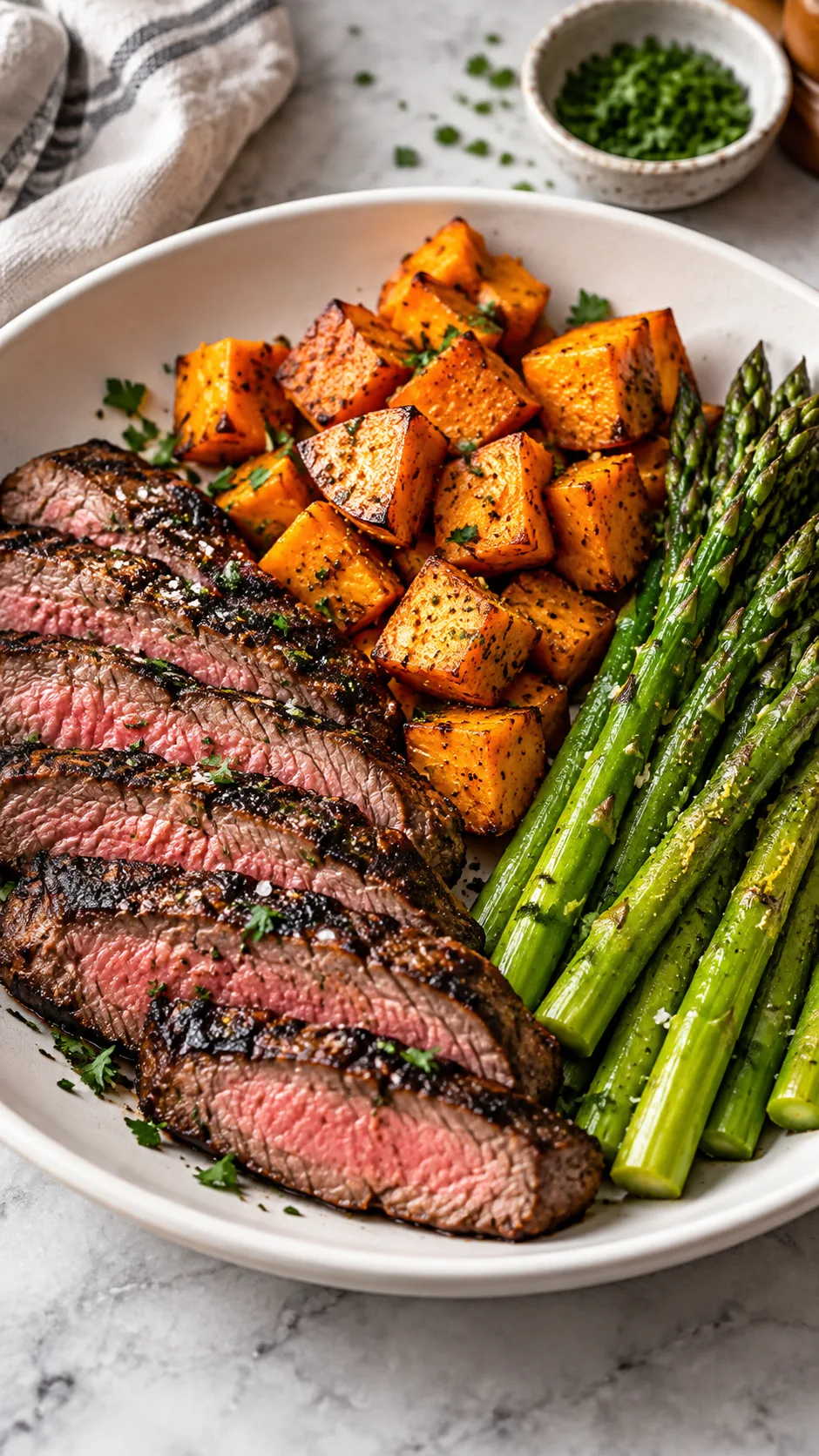
- Post-Workout Dinner: 140g grilled flank steak, 220g baked white potato (peeled) topped with 1 tbsp light sour cream, and 100g steamed zucchini.
- Evening Snack: 1 cup warm lactose-free milk mixed with 1 scoop micellar casein, paired with 2 oat cookies.
Day 5: Shoulder & Back Sculpt
- Breakfast: Protein pancakes: 1 ripe banana, 2 eggs, 30g oat flour, and 1 scoop vanilla whey isolate cooked in a pan, topped with 80g raspberries.
- Lunch: 130g canned chunk light tuna in water, mixed with 15g olive oil mayonnaise, served over 190g cooked jasmine rice and sliced cucumbers.
- Pre-Workout Fuel: 50g cream of rice cooked with 1 tsp raw honey and sea salt.
- Post-Workout Dinner: 135g pan-seared chicken breast, 200g roasted kabocha squash or peeled sweet potato, and 80g baby spinach wilted in 1 tsp olive oil.
- Evening Snack: 150g lactose-free Greek yogurt mixed with 10g dark chocolate chips and 1 diced kiwi.
Day 6: Lower Body Accessory & Volume
- Breakfast: 3 scrambled eggs (1 whole egg and 2 whites), 2 slices toasted sourdough bread, and 1 cup fresh cantaloupe.
- Lunch: 130g lean ground beef patty, 190g white basmati rice, and 90g roasted peeled bell peppers.
- Pre-Workout Fuel: 30g pitted Medjool dates stuffed with 10g raw almond butter.
- Post-Workout Dinner: 140g baked salmon fillet, 200g boiled red potatoes (skin peeled), and 80g steamed green beans with lemon juice.
- Evening Snack: 40g puffed rice cereal with unsweetened almond milk and 1 scoop chocolate whey isolate.
Day 7: Full Rest & Glycogen Replenishment
- Breakfast: 60g cream of rice, 1 scoop vanilla whey isolate, 1 tbsp pure maple syrup, and 15g macadamia nut butter.
- Lunch: 130g pulled chicken breast, 180g white rice simmered in chicken bone broth, and 100g steamed zucchini slices.
- Afternoon Snack: 2 soft-boiled eggs, 1 peeled apple, and 12 raw almonds.
- Dinner: 140g sirloin steak, 220g roasted butternut squash cubes, and baby spinach dressed with 1 tsp extra virgin olive oil and lemon juice.
- Evening Snack: 150g lactose-free cottage cheese with fresh blueberries and 1 tsp honey.
Training & Digestion Hacks to Keep Your Waistline Tight
Your food choices solve only half of the puzzle. What you do before, during, and after eating dictates whether your body delivers nutrients straight into muscle cells or traps gas in your colon.
1. Master the 10-Minute Post-Meal Walk
Never collapse on the couch right after eating a large meal. Walk outside at a steady pace for 10 minutes. A study in Sports Medicine confirms that light walking after meals speeds up stomach emptying and flattens post-meal blood sugar spikes. Walking stimulates natural muscle contractions in the gut, pushing air pockets through your tract before they stretch your midsection.
2. Space Your Liquids Wisely
Stop drinking huge glasses of ice water during meals. Flooding your stomach with cold liquid dilutes gastric acid and digestive enzymes. Drink most of your fluids between meals. Limit mealtime liquid intake to 4 to 6 ounces of room-temperature water so your stomach acid can work efficiently.
3. Use Natural Digestive Accelerators
Eat foods rich in natural protein-digesting enzymes. Golden kiwi contains actinidain, an enzyme that speeds up protein breakdown in the stomach. Papaya supplies papain, and fresh pineapple contains bromelain. Eating one kiwi with your evening meal noticeably improves morning digestion.
You can also take supplemental digestive enzymes alongside your largest meals. Look for formulas containing protease, amylase, and lipase to help your pancreas break down higher volumes of food.
4. Keep Sodium and Water Predictable
A sudden three-pound jump on the scale after dining out does not reflect three pounds of body fat or muscle. You simply triggered an osmotic fluid shift from a large dose of restaurant sodium. Keep your sodium levels steady by salting your home-cooked meals consistently with sea salt. Steady mineral levels prevent the fluid swings that puff up your face and waistline.
How to Track Real Progress (Without Losing Your Mind)
Stepping on the scale every single morning can shake your confidence. Weight jumps around constantly due to stored glycogen, digestive mass, and monthly cycle shifts. When your body stores 1 gram of glycogen in muscle tissue, it pulls in roughly 3 grams of water with it. Full muscles look great, but that water pushes the scale higher.
- Weigh yourself three mornings per week and take the average: Compare weekly averages instead of stressing over daily changes. Target a gain of 0.5 to 1.0 pound per month if you already have training experience. Beginners can aim for 1.5 to 2.0 pounds per month.
- Measure your waist circumference weekly: Check your waist measurement directly at your belly button every Sunday morning before breakfast. If your gym lifts rise while your waist measurement stays within half an inch over several months, you are building clean muscle rather than body fat.
- Log your workout performance: True progress shows up on the barbell. When your hip thrusts, squats, Romanian deadlifts, and overhead presses gain weight and reps over an 8 to 12-week block, your surplus is doing its job.
- Take standardized photos: Take front, side, and back photos every two to four weeks in consistent morning lighting. Visual comparisons reveal shifts in muscle shape that bathroom scales hide.
Frequently Asked Questions About Female Bulking
Will eating white rice make me gain belly fat instead of muscle?
No. Insulin stores carbohydrates as body fat only when you take in excessive total calories. Fast-digesting starches like white rice refill glycogen rapidly while moving through your digestive tract with ease. Total caloric balance determines fat storage, not the speed of your carbohydrate source.
What should I do if my stomach still feels bloated on this plan?
Check for personal food sensitivities. Dairy proteins and gluten can trigger subtle inflammation in sensitive lifters. Swap sourdough bread for baked white potatoes, and switch Greek yogurt to an egg-white protein powder. Give your digestive system two full weeks to adapt to any adjustments before making more changes.
How long should my lean bulking phase last?
Keep your muscle-building phase going for at least 16 to 24 continuous weeks. Natural muscle protein synthesis takes time in female trainees. Cutting a bulk short after four weeks builds almost no muscle and wastes your time. Stay consistent, keep the surplus modest, and let progressive overload do the work.
Build Muscle on Your Own Terms
You do not need to trade away a flat stomach to build an athletic physique. Drop the 800-calorie surplus, cut out the massive trays of raw vegetables, and stop forcing down heavy dairy shakes. Traditional bulking advice causes needless discomfort for female lifters.
Maintain a tight 200-calorie surplus, eat easily digestible starches, hit your daily protein requirements, and push your gym sets with real intensity. That approach builds lasting muscle tissue while keeping you energetic, light, and bloat-free every day.