

You ate clean all week. You swapped rice for salad, drank the tea, skipped the puff-puff at your cousin’s birthday. And yet, by 6pm your stomach looks like you swallowed a football. Rude, right?
Here’s the annoying truth: most “flat stomach” diet plans cause bloating. Not because you lack discipline, but because the advice floating around Instagram treats your gut like a machine instead of a living, gas-producing, slightly dramatic organ.
I’ve coached enough people through this to spot the pattern in about five minutes of conversation. Let me walk you through the mistakes I see over and over, plus exactly what to do instead.

First, let’s clear something up: bloating is not belly fat
This confuses almost everyone, so let’s settle it early. Belly fat sits there consistently. It looks roughly the same at 7am and 7pm. You can pinch it.
Bloating behaves like a moody flatmate. You wake up flat, and by mid-afternoon your waistband declares war. That’s gas, fluid retention, or food physically sitting in your digestive tract, not fat you gained in nine hours.
Why does this matter? Because if you attack bloating with fat-loss tactics (harder dieting, more cardio, fewer meals), you usually make the bloating WORSE. Ever wondered why your stomach got puffier the stricter you got? Now you know.
According to Harvard Health, bloating affects a huge chunk of otherwise healthy adults and usually traces back to diet, gut bacteria, or digestive speed rather than body composition.
Mistake 1: you cut calories so aggressively your digestion slowed down
The classic. You want a flat stomach by Saturday, so you drop to 900 calories and live on cucumber and regret.
Your body does not applaud this. Severe restriction slows gut motility, meaning food moves through you more slowly. Slow transit equals fermentation. Fermentation equals gas. Gas equals, well, you know the rest.
Crash dieting also tanks your electrolytes, which messes with fluid balance. So you feel starved and puffy at the same time. Fantastic combination.
What to do instead
- Aim for a modest deficit of roughly 300 to 500 calories below maintenance, not 1,200.
- Eat enough protein (around 1.6g per kg of bodyweight) to protect muscle while you lose fat.
- Keep meal timing regular. Your gut loves a routine more than your calendar does.
If you want a realistic structure built around foods you already eat, this Nigerian weight loss meal plan guide lays out proper portions without the starvation nonsense.
Mistake 2: you went from 8g of fibre to 40g overnight
Ah, the fibre enthusiasm phase. Monday you discover fibre is good. Tuesday you’re eating beans, oats, chia, broccoli, and three apples.
Wednesday? You look six months pregnant.
Your gut bacteria need weeks to adapt to a higher fibre load. Dump it all in at once and those bacteria throw a fermentation party in your colon. The gas has to go somewhere, and it isn’t polite about the exit route.
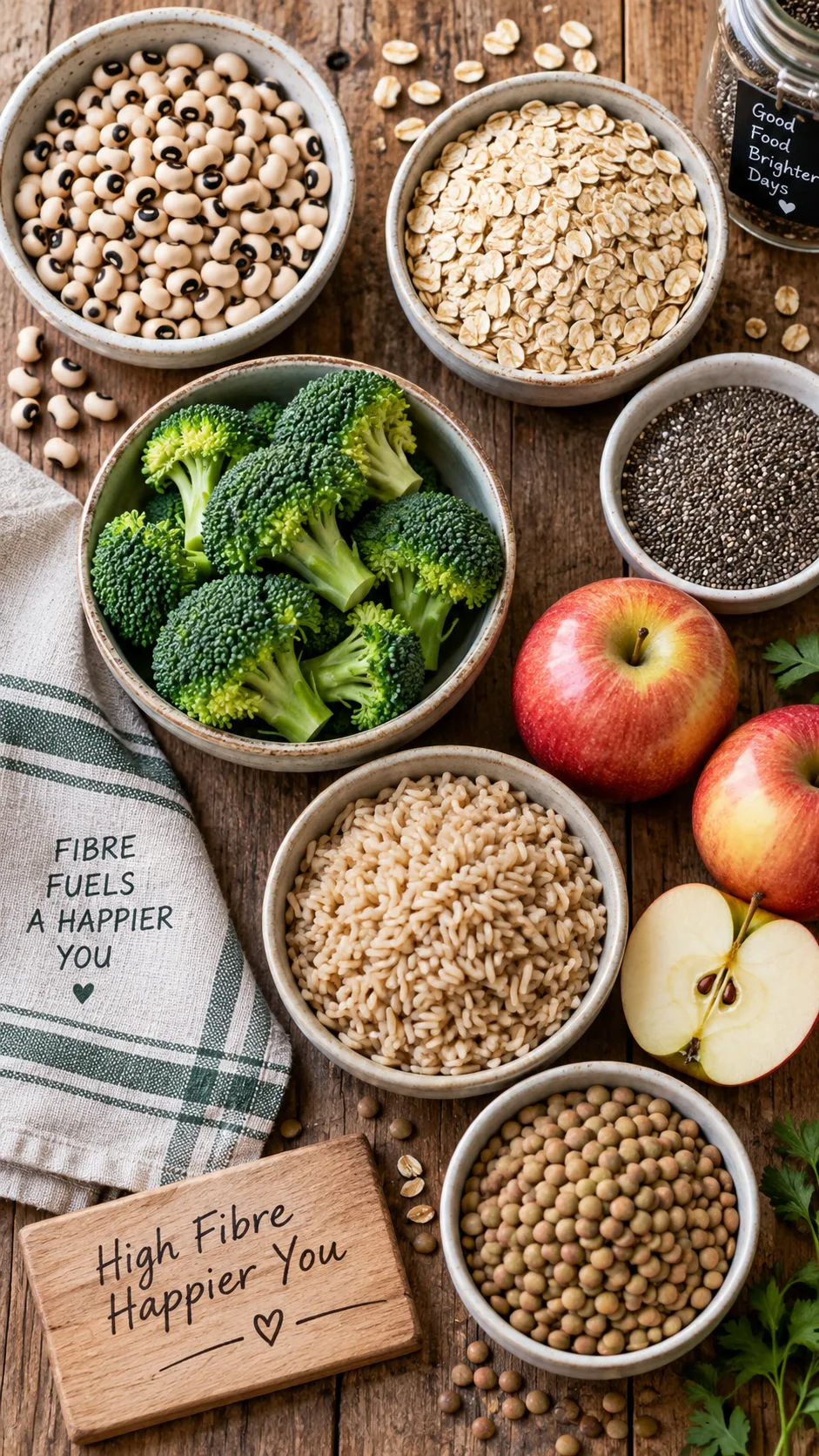
The smarter fibre ramp-up
- Add 5g of fibre per week, not 30g per day. Slow and boring wins.
- Drink more water as you add fibre. Fibre without fluid behaves like cement.
- Favour soluble fibre first (oats, carrots, ripe bananas, psyllium). It treats you more gently than raw cruciferous vegetables do.
- Soak and rinse your beans properly. Discard the soaking water. It removes a good chunk of the gas-causing oligosaccharides.
FYI, beans aren’t the enemy. Poorly prepared beans eaten in a mountain-sized portion by someone who hasn’t touched fibre in a month? That’s the enemy.
Mistake 3: you’re relying on “detox” and slimming teas
I’ll say this plainly: most slimming teas work as laxatives. Senna, cascara, and friends irritate your bowel into emptying itself. You lose water weight, your stomach looks flatter for a day, and you feel validated.
Then the rebound bloating arrives. Your gut gets irritated, your electrolytes swing, and long-term senna use can genuinely reduce your bowel’s natural motility. The National Center for Complementary and Integrative Health found no solid evidence that detox regimens remove toxins or produce lasting weight loss.
Real green tea, though? Different story. It contains catechins and modest caffeine that gently support metabolism, and it does not sabotage your bowel to do it. If you want the legit version, check these green tea brands worth buying in Nigeria instead of whatever “14-day flat tummy” sachet your WhatsApp group is pushing.
Mistake 4: your “diet” foods are packed with sugar alcohols
Sugar-free gum. Protein bars. Zero-sugar yoghurt. Keto biscuits. They all share a secret ingredient: sugar alcohols such as sorbitol, mannitol, xylitol, and maltitol.
Your small intestine absorbs these poorly. They travel down to your colon, pull water in, ferment, and produce gas. Manufacturers literally have to print laxative warnings on some of them.
I once had a client eating four “high-protein, low-sugar” bars a day and wondering why her stomach felt like a balloon by lunchtime. We swapped three of them for boiled eggs and grilled chicken. Bloating gone in four days. No magic involved.
Watch out for these on labels
- Maltitol, the worst offender in my experience
- Sorbitol, which also hides in sugar-free mints and some fruit juices
- Inulin or chicory root fibre, marketed as healthy, brutal in large doses
- Erythritol, generally gentler, though it still causes trouble above roughly 30g
Mistake 5: you eat like someone’s timing you
Be honest. How long does lunch take you? Six minutes? While scrolling? Standing at the kitchen counter?
Fast eating means swallowing air (aerophagia, if you want the fancy term). That air has two possible exits, and neither feels glamorous in an open-plan office.
Rushed eating also means poor chewing. Larger food particles reach your gut, your bacteria get more material to ferment, and gas production climbs.

Fixes that take zero extra effort
- Put your phone face-down. Distracted eating doubles your speed.
- Chew until the food loses texture, roughly 15 to 20 chews per mouthful.
- Put the cutlery down between bites. Feels silly, works brilliantly.
- Skip fizzy drinks with meals. You’re literally drinking gas and hoping for a flat stomach.
- Ditch the straw. Straws deliver a bonus serving of air.
Mistake 6: you cut water because you think it makes you bloated
This one drives me mad. People retain fluid, panic, and drink LESS water. That’s like bailing water out of a boat by drilling another hole.
When you underdrink, your body clings to sodium and water like a nervous hoarder. Dehydration causes fluid retention, not the other way round.
The real culprit is usually sodium. Seasoning cubes, canned foods, instant noodles, processed meat, takeaway: they stack up fast. Every extra gram of sodium drags water along with it.
The sodium and potassium balance
You don’t need a no-salt diet. You need more potassium to balance the sodium. Potassium helps your kidneys flush excess sodium out.
- Potassium-rich picks: plantain, avocado, spinach, ugu, sweet potato, watermelon, coconut water, beans
- Target: roughly 2.5 to 3.5 litres of total fluid daily for most adults, more if you train or live somewhere hot
- Quick win: halve your seasoning cubes and replace the flavour with garlic, ginger, thyme, and pepper
Ginger deserves special mention here. It speeds up gastric emptying, which directly reduces that “food is just sitting there” feeling. Turmeric helps too. Here’s a breakdown of turmeric’s benefits and where to buy the real thing if you want to add it properly rather than sprinkling pretend powder on everything.
Mistake 7: you’re doing 300 crunches and calling it a flat stomach plan
Spot reduction isn’t a thing. I’m sorry. You cannot burn fat from a specific body part by working the muscle underneath it. If that worked, gum chewers would have chiselled jawlines and no cheeks.
Worse, endless crunches with poor breathing can push your abdominal wall outward over time. Some people look MORE distended after months of aggressive ab training with bad mechanics.
Train the whole body instead
- Compound lifts (squats, deadlifts, rows, presses) burn more calories and build the muscle that keeps your metabolism honest.
- Proper core work (planks, dead bugs, Pallof presses) teaches your deep core to hold tension inward instead of pushing out.
- Daily walking of 8,000 to 10,000 steps. Underrated, free, and genuinely better for gut motility.
And if your lower body sessions feel like nothing’s working, sort your technique out first. Two of the most common culprits: dodgy Bulgarian split squat form and glutes that never switch on, which I covered in this guide on how to activate your glutes properly.
Mistake 8: you ignore FODMAPs because you’ve never heard of them
FODMAPs are short-chain carbohydrates that some people struggle to absorb. They ferment rapidly in the gut and produce a LOT of gas.
Here’s the cruel irony: the healthiest-sounding foods are often the highest in FODMAPs. Onions, garlic, apples, watermelon, cauliflower, beans, wheat, milk. So you “eat clean” and your stomach revolts.
Researchers at Monash University developed the low-FODMAP protocol, and it helps around 70% of people with IBS-type bloating. But read this part twice: it’s a short-term diagnostic tool, not a forever diet.
How to use it properly
- Elimination (2 to 6 weeks): Remove high-FODMAP foods and track symptoms daily.
- Reintroduction (6 to 8 weeks): Add ONE group back at a time. Wait three days. Note what happens.
- Personalisation: Keep the foods you tolerate. Limit only the ones that genuinely wreck you.
Please do this with a dietitian if you can. Long-term FODMAP restriction starves your beneficial gut bacteria, which creates a new problem entirely.
Meanwhile, if you’re trying to reduce fermentable carb load generally, this list of low-carb foods available in Nigeria gives you plenty of low-bloat options.
Mistake 9: you diet perfectly and sleep terribly
Your gut runs on a circadian rhythm. Motility, enzyme release, and your microbiome composition all shift across the day.
Wreck your sleep and you wreck digestion. Poor sleep raises cortisol, and elevated cortisol slows gastric emptying and increases fluid retention. Over time it also drives visceral fat storage, the deep abdominal fat that pushes your belly outward.
Stress works the same way through the gut-brain axis. Ever noticed your stomach bloats worse during a deadline week? That’s not coincidence. Your gut has its own nervous system and it listens to your mood.
Non-negotiables
- 7 to 9 hours of sleep. A consistent bedtime beats total hours, honestly.
- Stop eating 2 to 3 hours before bed. Lying down with a full stomach slows everything.
- Five minutes of slow diaphragmatic breathing. It shifts you into “rest and digest” mode. Sounds woo-woo, works reliably.
- A 10-minute walk after dinner. The single best anti-bloat habit I know.
Struggling to stay consistent at all? Start here: how to motivate yourself to work out when your couch is winning.
Mistake 10: the Monday to Friday saint, Saturday sinner cycle
Five days of extreme restriction. Then Saturday arrives and you demolish jollof rice, small chops, fried plantain, and enough Coke to float a boat.
Your digestive system, now used to tiny portions of plain food, gets slammed with fat, salt, sugar, and volume. The resulting bloat can last 48 to 72 hours, which means you spend Sunday and Monday recovering, then start again. Forever.

Nobody’s asking you to give up jollof. I’m not a monster. Just eat reasonably all week so the weekend doesn’t feel like a jailbreak, and if you’re cooking it yourself, at least control the oil with a solid jollof rice ingredient list.
The 7-day de-bloat reset (do this instead)
Want something concrete? Here’s the protocol I give clients. It isn’t glamorous and it works.
- Days 1 and 2: Cut carbonated drinks, sugar alcohols, and chewing gum completely. Drink 2.5 to 3L of water. Walk 10 minutes after every meal.
- Days 3 and 4: Reduce added salt by half. Add one potassium-rich food per meal. Keep portions moderate and eat until you’re about 80% full.
- Day 5: Slow your eating deliberately. 20 minutes minimum per meal, phone away, cutlery down between bites.
- Days 6 and 7: Add fermented foods (yoghurt, kefir) IF you tolerate dairy. Add ginger tea after dinner. Prioritise 8 hours of sleep.
- Throughout: Keep a simple food and symptom log. Patterns show up faster than you expect.
Most people notice a real difference by day 4. Nothing mystical happened. You just stopped doing the things that were inflating you.
When bloating is a medical issue
I’d be irresponsible if I ended without this. Persistent bloating sometimes signals something that a diet plan can’t fix.
See a doctor if you experience:
- Bloating alongside unexplained weight loss
- Blood in your stool or persistent changes in bowel habits
- Severe or worsening abdominal pain
- Bloating that doesn’t resolve at all, day or night, for weeks
- Difficulty swallowing, vomiting, or fever alongside the bloating
The NIDDK lists conditions like coeliac disease, SIBO, gastroparesis, and IBS as common underlying causes. Post-menopausal women in particular should never ignore persistent, unexplained bloating, because it’s a recognised early symptom of ovarian cancer. Get it checked. It costs you one appointment.
The bottom line
A flat stomach diet plan fails when it treats bloating and body fat as the same problem. They aren’t.
Fix the bloating with slower eating, gradual fibre increases, better hydration, sodium balance, real sleep, and honest food tracking. Fix the body fat with a moderate calorie deficit, decent protein, strength training, and patience measured in months, not days.
Stop punishing your gut for problems your diet plan created. Your stomach isn’t broken. Your approach probably is. Start with ONE mistake from this list, fix it this week, and see what happens.
Your move: pick the mistake that stung the most reading this. That’s the one to fix first.