

Your glutes are not growing. You’ve been doing the reps, putting in the time, and yet nothing is changing. Sound familiar? I spent months spinning my wheels before I realized the problem wasn’t my effort. It was my form on cable kickbacks.
Once I fixed that, everything changed. And I’m going to show you exactly how to do the same, even if you’re working out at home.
Why cable kickbacks deserve a spot in your glute routine
The cable kickback isolates the gluteus maximus like almost nothing else. Unlike squats or lunges that spread the load across your quads and hamstrings, kickbacks put the glutes front and center. That targeted tension is exactly what drives muscle growth.
Research from the National Library of Medicine confirms that glute isolation exercises produce significantly higher glute activation than compound movements alone. If you’re skipping kickbacks, you’re leaving serious gains on the table.
If you haven’t already, check out this guide on how to grow glutes that actually change your shape. It gives you the full picture of building a results-driven routine before you zero in on isolation work.
Can you really do cable kickbacks at home?
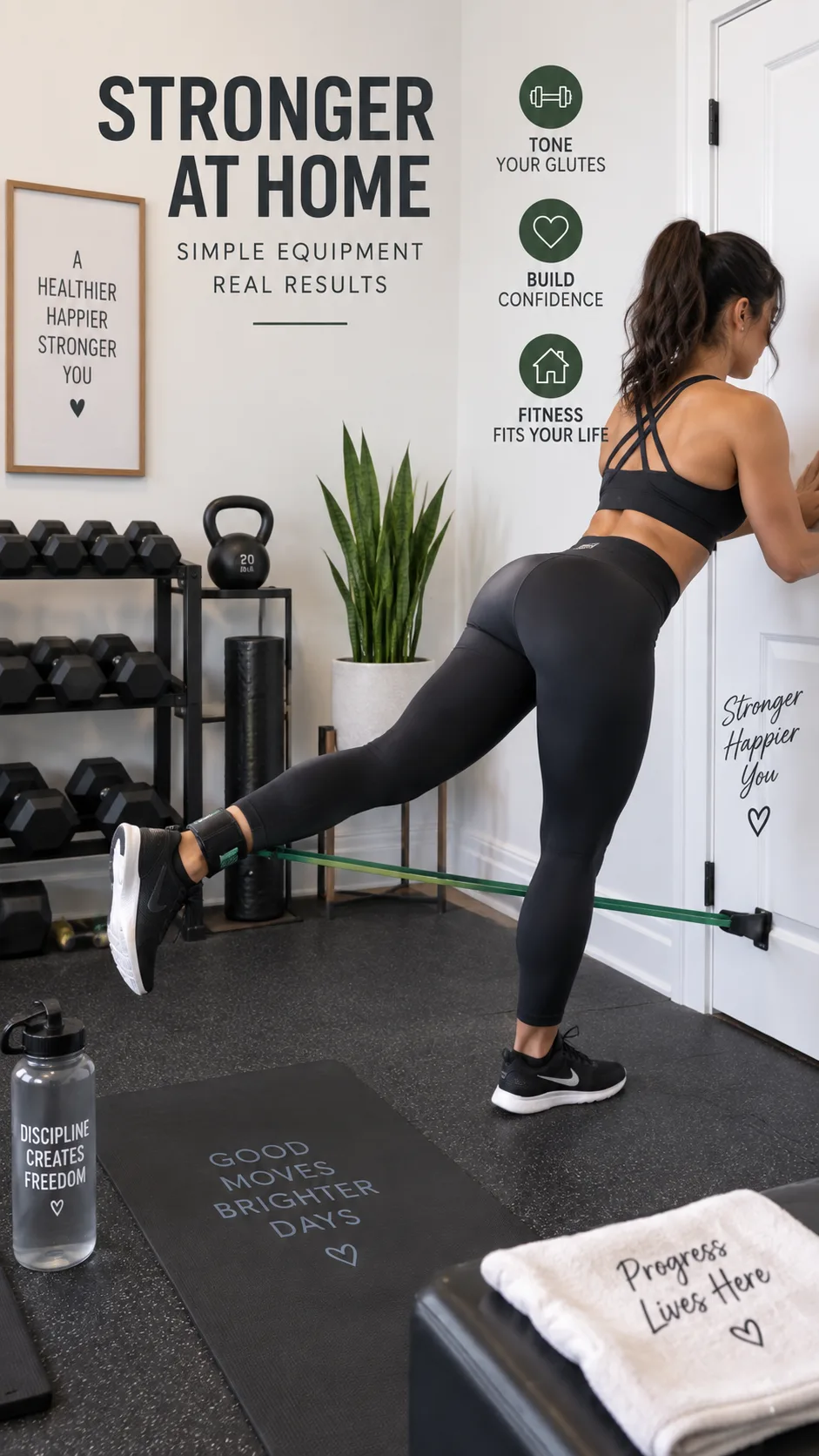
Yes, and you don’t need a full cable machine to make it work. Resistance band cable machines (the compact, wall-mounted or door-anchor versions) have made this exercise completely accessible at home. Even a heavy-duty resistance loop band anchored low does the job.
What matters most is constant tension throughout the movement. That’s the whole reason cables beat bodyweight kickbacks. The resistance doesn’t disappear at the top of the rep the way it does with gravity-based exercises. This is what most people are missing when they do donkey kicks and wonder why their glutes aren’t responding.
The form mistakes that were killing my progress
I’ll be brutally honest here. I was doing cable kickbacks wrong for months. Not a little wrong, embarrassingly wrong. Here’s what I was doing, and what I see most people doing too:
Mistake 1: Kicking too high
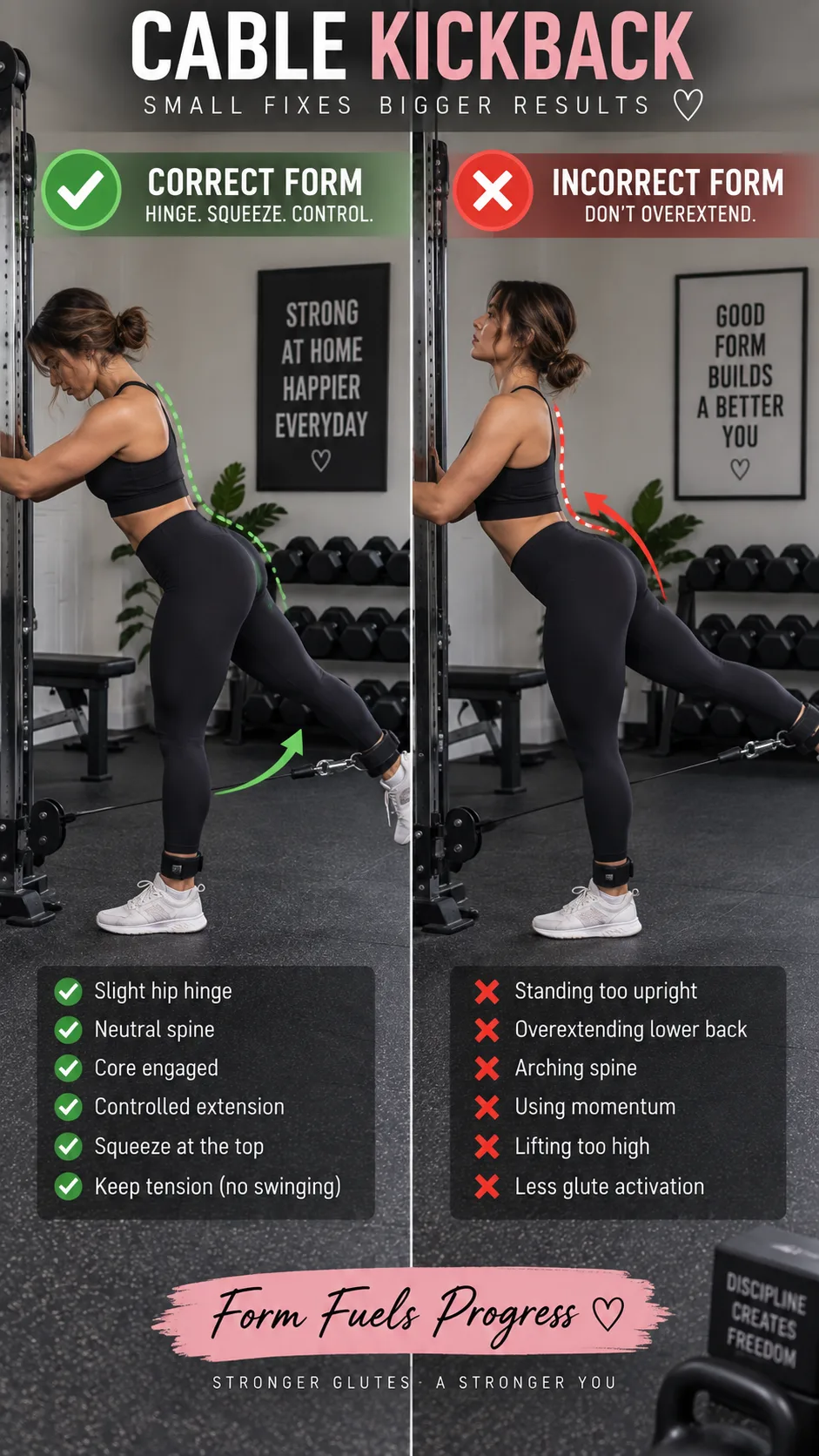
More range doesn’t mean more gains. When you swing your leg above hip height, your lower back takes over and your glutes switch off. Hip height is your ceiling. Full stop.
Mistake 2: Using momentum
Swinging the leg back fast feels productive. It isn’t. Momentum removes tension from the muscle and turns a glute exercise into a coordination drill. Slow down and control every inch of the movement.
Mistake 3: Not hinging forward
Standing straight upright during a cable kickback nearly eliminates glute activation. You need to hinge slightly at the hips, keeping your torso at roughly a 45-degree angle. This positions the glute to do the actual work.
Mistake 4: Forgetting the squeeze
At the top of every rep, squeeze your glute hard for one to two seconds. This is the peak contraction point, and skipping it means skipping the most effective part of the movement. Don’t rush past it.
The correct cable kickback form, step by step
Here’s exactly how to do a cable kickback at home with proper form. Follow this and you’ll feel the difference on your very first set.
- Anchor the band or cable low at ankle height or lower. Attach it to your ankle using a cuff or loop it securely.
- Face the anchor point and grip something stable, like a wall, chair, or the machine frame.
- Hinge forward slightly at the hips, think 30 to 45 degrees. Keep your back flat, not rounded.
- Engage your core before you move anywhere. This protects your lower back.
- Drive the working leg back and up in a controlled motion and stop at hip height.
- Squeeze the glute hard at the top for one to two seconds. Don’t skip this.
- Lower the leg slowly, taking two to three seconds on the way down. That eccentric phase matters.
- Reset and repeat with no momentum and no bouncing. Clean reps only.
How to actually feel your glutes working
If you’re not feeling the burn specifically in your glutes, you’ve landed in the club nobody wants to join. This is usually a mind-muscle connection problem. Your brain isn’t recruiting the right muscle, so other muscles pick up the slack.
Before your kickback sets, spend two to three minutes on glute activation work. Banded clamshells, glute bridges, or even just standing and squeezing each glute for ten seconds helps wake the muscle up. We go deep on this in our guide on how to activate glutes so every rep actually works, and it’s worth reading before your next session.
According to ACE Fitness, the mind-muscle connection significantly increases muscle activation during isolation exercises. So it’s not just gym lore. Real evidence backs it up.
Programming cable kickbacks into your home workouts
How often should you do cable kickbacks? Here’s what actually works based on experience and exercise science:
- Frequency: 2 to 3 times per week as part of a lower body or glute-focused session
- Sets and reps: 3 to 4 sets of 12 to 15 reps per leg for hypertrophy
- Tempo: 2 seconds up, 1 to 2 second hold, 3 seconds down
- Rest: 60 to 90 seconds between sets
- Progression: Increase band resistance or reps weekly. Progressive overload is non-negotiable.
Don’t neglect your compound movements either. Cable kickbacks work best when you pair them with exercises like RDLs and squats. If your hip hinge mechanics need work, this article on RDL form for glutes is going to be your best friend.
Equipment options for home cable kickbacks
Not everyone has a cable machine at home, and that’s fine. Here are the best alternatives that still deliver real resistance:
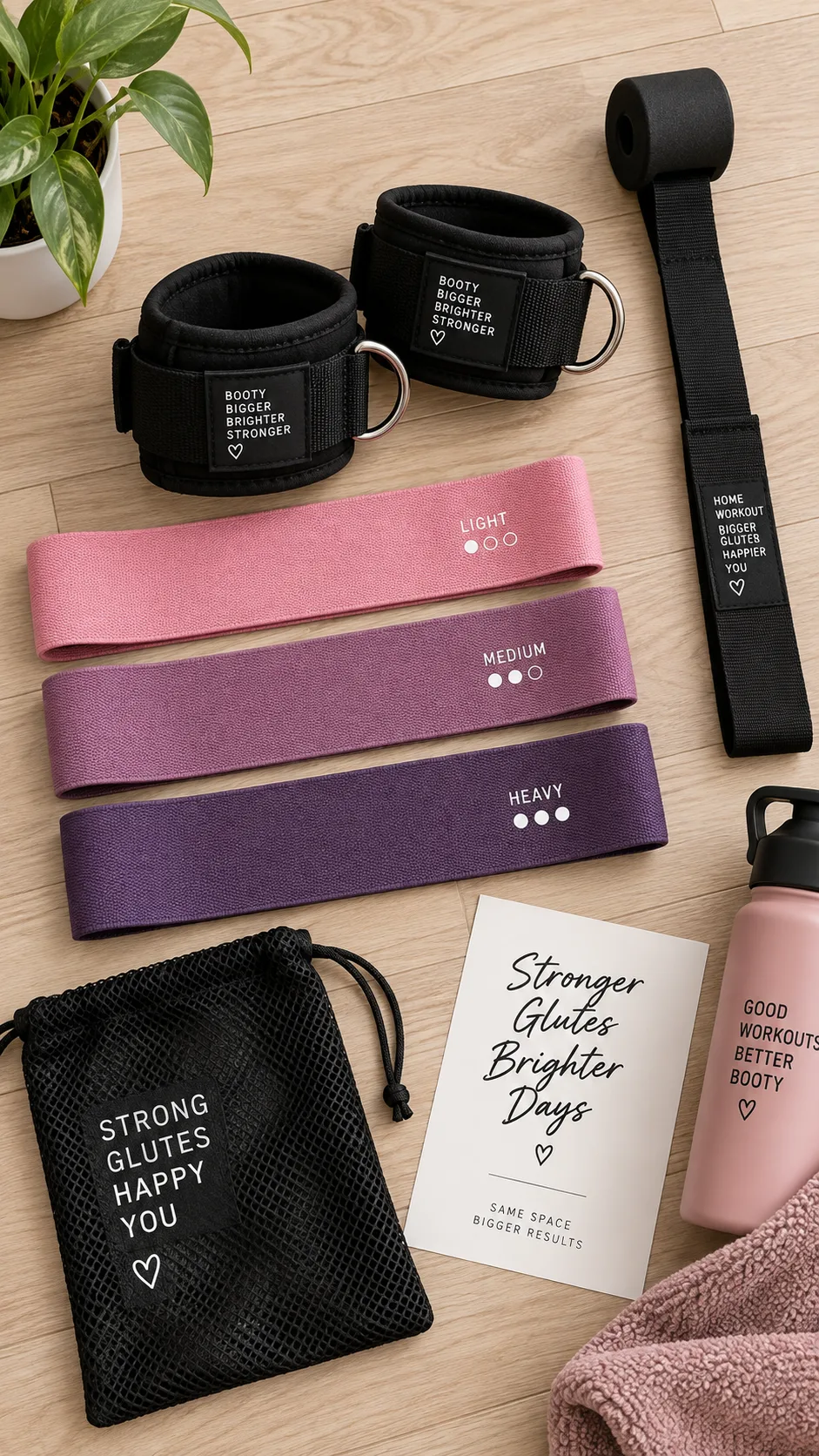
- Compact cable machine (like the Bells of Steel or REP Fitness versions): best results, closest to the gym experience
- Door anchor resistance bands: budget-friendly and surprisingly effective with heavy bands
- Ankle resistance bands with handles: versatile and great for travel workouts
- Pulley system attachments for power racks: ideal if you already have a home rack setup
The door anchor and heavy resistance loop band combo is the best starting point for most people. It costs under $30 and delivers real tension throughout the movement. According to Healthline, resistance bands activate the glutes comparably to cable machines when you maintain proper tension and form.
Common questions about cable kickbacks
Are cable kickbacks better than donkey kicks?
With consistent resistance applied throughout the movement, yes. Bodyweight donkey kicks lose tension at the top. Cables and bands maintain it. That constant load is what drives muscle growth more effectively.
Should I feel cable kickbacks in my hamstrings?
A little co-activation is normal, but if your hamstrings are doing most of the work, your form needs adjusting. Check your hip hinge position and focus on initiating the movement from the glute, not the back of the knee.
How long before I see glute growth from kickbacks?
With consistent training, proper form, and adequate protein intake, most people notice meaningful changes in 6 to 12 weeks. Genetics play a role, but your form and progressive overload matter far more than most people realize.
The bottom line on cable kickbacks at home
Cable kickbacks genuinely changed my glute training, not because I discovered some secret exercise, but because I finally did them correctly. The fix was never the exercise itself. The fix was the form.
Here’s what to take away from this:
- Hinge at the hips and stop standing upright during kickbacks
- Control the movement and ditch the momentum for good
- Squeeze at the top, every single rep
- Activate before you train and wake up the glutes before you load them
- Use progressive overload and increase resistance over time, always
Your glutes respond to tension, control, and consistency, not just more reps of the same bad habits. Fix your form, feel the difference, and give your glutes the stimulus they’ve been waiting for.
Now stop reading and go do a set. The glutes don’t grow themselves.