

It was 11:47pm on a Tuesday. I stood in front of my fridge eating cold jollof rice straight from the container with a serving spoon, wondering why I’d done this again after a full dinner. Not hungry. Just wired, tired, and weirdly hollow.
If you’ve ever done that, you already know: stress eating isn’t a willpower problem. It’s a hormone problem with a snack habit attached. And the thing that finally broke the cycle for me wasn’t another restrictive plan. It was learning how to stop yanking my cortisol around like a yo-yo all day.
So here’s what worked, what’s marketing nonsense, and the exact eating plan I still use.

First, let’s kill the “cortisol detox” myth (sorry)
Here’s the uncomfortable truth I owe you up front, because I’d rather be honest than sell you a fantasy: you cannot “detox” cortisol. It’s not a toxin. Your adrenal glands make it on purpose, and if you truly had none of it, you’d be in a hospital bed, not on TikTok.
Cortisol wakes you up in the morning. It regulates blood sugar, blood pressure, inflammation, and your sleep-wake rhythm. You want cortisol. What you don’t want is cortisol spiking at random times, staying elevated at night, and crashing at 3pm when you need it most.
So when I say “cortisol detox diet plan,” I’m using the phrase everyone searches for. What I’m really describing is a way of eating that stops feeding the stress-hunger loop. Slightly less catchy. Much more real.
FYI, “adrenal fatigue” isn’t a recognised medical diagnosis either. The Endocrine Society has been pretty blunt about that. Real adrenal insufficiency exists, it’s serious, and it needs a doctor, not a smoothie.
Why stress makes you eat (the actual mechanism)
Ever wondered why stress never makes you crave steamed broccoli? There’s a reason, and it’s almost funny how predictable your body is.
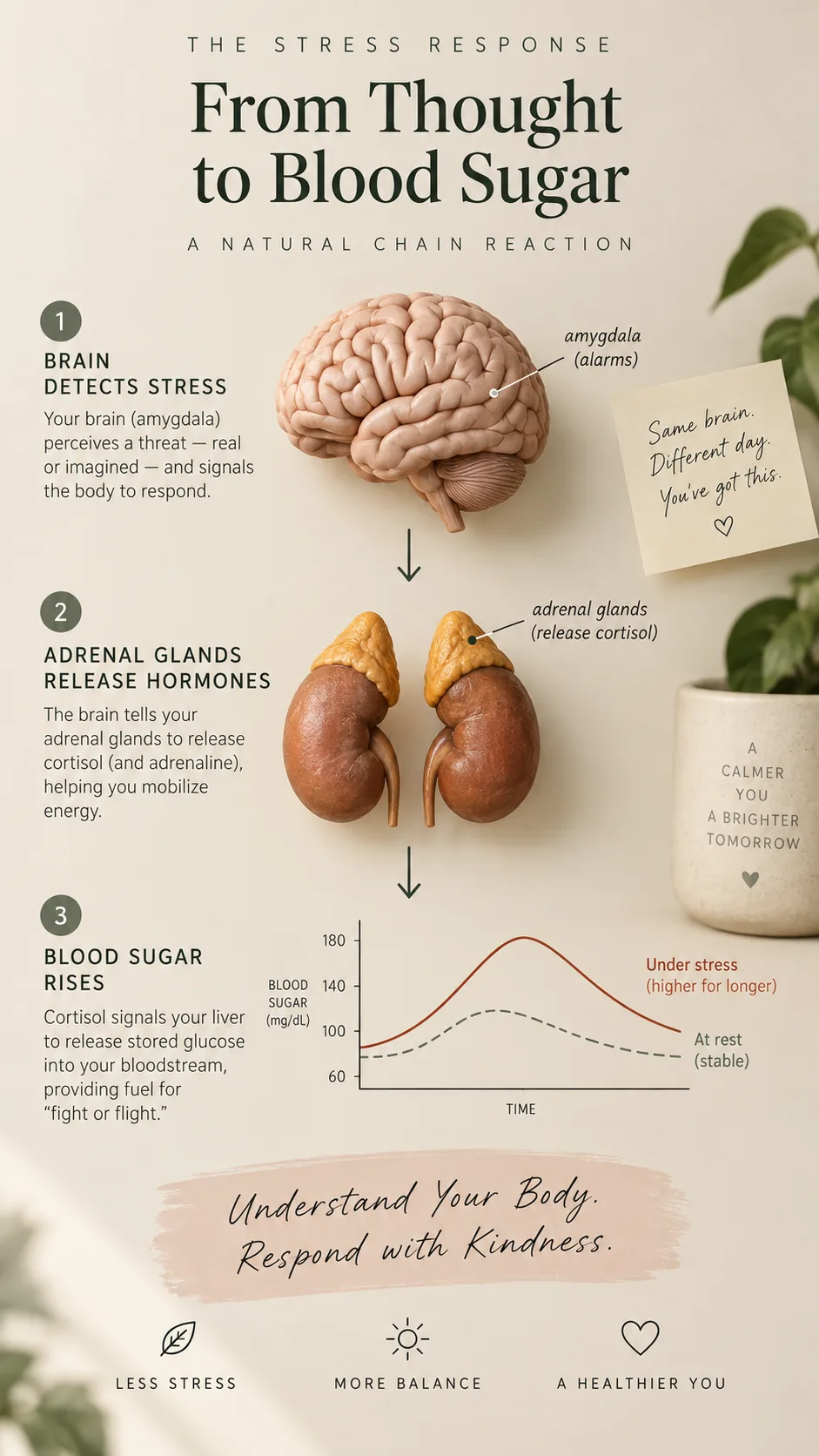
When you’re stressed, your brain fires off a chain reaction along what scientists call the HPA axis (hypothalamus to pituitary to adrenals). Adrenaline hits first for the short sharp panic. Cortisol comes second, and cortisol hangs around.
Here’s what elevated cortisol does to your appetite:
- Raises blood sugar by telling your liver to dump glucose. Insulin then rises to clean it up, and the crash makes you hungry again
- Boosts reward-seeking behaviour. Your brain specifically hunts for fat plus sugar plus salt combos because they blunt the stress response
- Increases ghrelin (the hunger hormone) while dulling leptin signalling (the “I’m full” hormone)
- Pushes fat storage toward the abdomen. Visceral fat cells carry more cortisol receptors than fat elsewhere
Translation: stress literally rewires your appetite toward pastries. Your late-night chin-chin raid isn’t a character flaw. It’s biochemistry with terrible timing. :/
The part nobody tells you
The food itself becomes part of the problem. High-sugar, ultra-processed food creates a blood sugar rollercoaster, and your body reads every glucose crash as a mild stress event, which raises cortisol, which makes you crave more sugar.
That’s the loop. You’re not weak. You’re stuck in a feedback circuit. And feedback circuits break with structure, not shame.
My rock bottom: six months of “healthy” eating that did nothing
I want to be straight with you about my own experience, because I wasted a lot of time.
For about six months I did everything the internet told me. Low calorie. Intermittent fasting until 2pm. Black coffee for breakfast. Two workouts a day whenever I felt “behind.” I lost maybe 3kg and gained an anxiety twitch in my left eye.
Then a nutritionist friend asked me one question that rearranged my brain: “How much of your day are you spending in a fasted, caffeinated, sleep-deprived state, and what do you think that does to your stress hormones?”
Oh. I had built a lifestyle that was chemically identical to being chased. No wonder I ate the fridge at midnight.
The cortisol-friendly eating framework (what I actually do)
This isn’t a 7-day cleanse. There’s no lemon water ritual. It’s five principles I follow about 80% of the time, and the 80% is the part that matters.
1. Eat protein within 90 minutes of waking
Your cortisol naturally peaks in the first 30 to 45 minutes after you wake up. That’s normal and healthy, and it has a name: the cortisol awakening response. The problem is stacking a huge coffee on top of it with zero food.
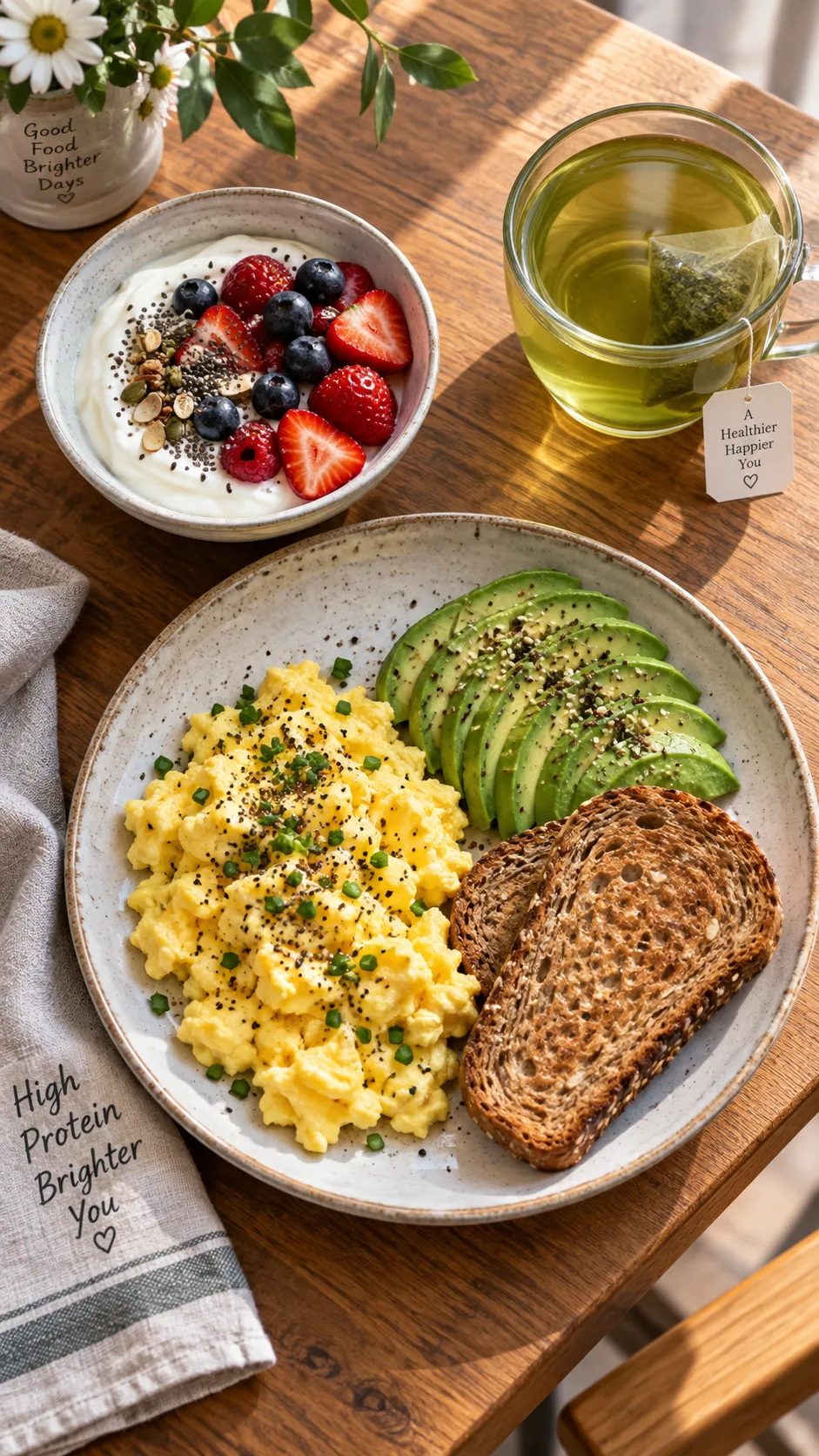
I aim for 30 to 40g of protein at breakfast. Eggs, Greek yoghurt, leftover chicken, moi moi, whatever. The difference in my 4pm cravings showed up within about five days. Not subtle. Obvious.
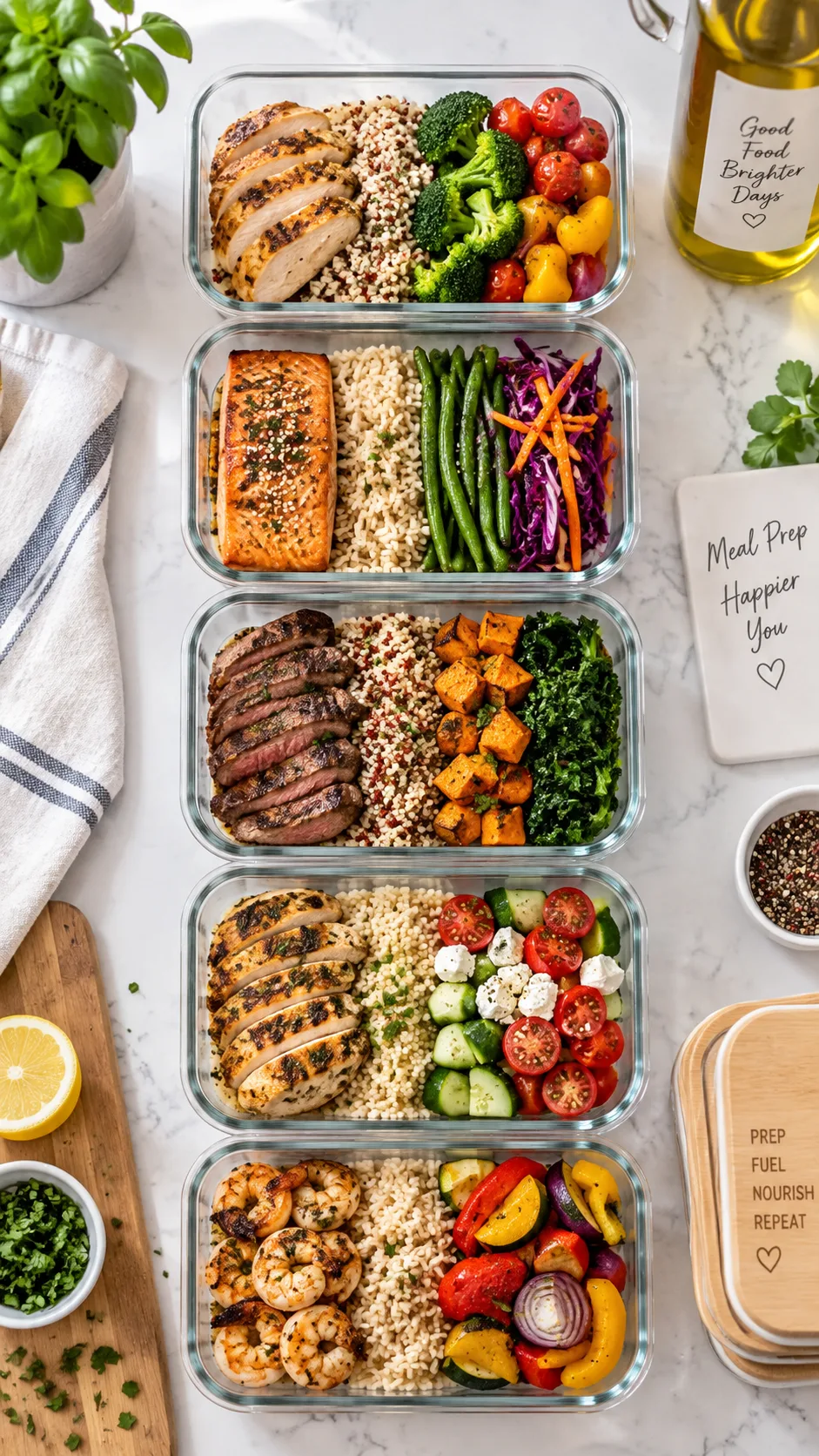
If planning ahead is your weak spot, batch-cooking genuinely solves it. I lean hard on high protein meal prep recipes so my future stressed self doesn’t have to make decisions.
2. Never eat naked carbs
“Naked carbs” means carbohydrates eaten alone. White bread by itself. A banana on the run. Garri with sugar. These spike glucose fast and crash it faster.
Always pair carbs with protein, fat, or fibre. Same food, completely different blood sugar curve:
- Bread alone becomes bread with eggs and avocado
- Banana alone becomes banana with peanut butter
- Rice alone becomes rice with beans, fish, and vegetables
- Biscuits with tea become nuts with tea
It costs you nothing. It changes everything. And it beats cutting carbs entirely, which, for me, raised cortisol and made me insufferable to be around.
3. Cap caffeine at two cups, all before noon
This one hurt. Caffeine raises cortisol directly, and its half-life runs roughly 5 to 6 hours, so your 4pm coffee is still measurably in your system at 10pm.
I switched my afternoon cup to green tea. The L-theanine in green tea takes the jagged edge off caffeine and gives you a calmer kind of alert. If you’re in Nigeria and want options that aren’t overpriced nonsense, there’s a decent rundown of the best green tea brands for weight loss worth skimming.
4. Eat every 3 to 5 hours (yes, really)
I know fasting is having a moment. I’m not anti-fasting. But if you’re already stressed, under-slept, and prone to binge eating at night, long fasts often make it worse. Going 16 hours without food is itself a mild stressor.
When I moved to three real meals plus one snack, my night eating dropped by maybe 80%. That’s the single biggest change on this list.
5. Front-load your calories
Big breakfast, solid lunch, moderate dinner. Most stress eaters do the exact opposite: they barely eat all day, then take in 70% of their food after 7pm and call themselves undisciplined.
You weren’t undisciplined. You were in calorie debt and your body came to collect.
The foods that genuinely help (and why)
No single food “detoxes” cortisol. But some foods support the systems that regulate it. Here’s what earns a permanent spot in my trolley:
- Fatty fish (mackerel, sardines, salmon). Omega-3s blunted the cortisol response to stress in controlled trials. Cheap tinned sardines count. Nobody’s judging.
- Dark leafy greens (ugu, spinach, kale). Magnesium plays a direct role in HPA axis regulation, and a lot of us are running low.
- Eggs. Complete protein, choline, B vitamins, cheap, fast. The GOAT.
- Beans and lentils. Slow carbs plus fibre plus protein. Blood sugar barely notices.
- Fermented foods (yoghurt, kefir, kimchi). The gut-brain axis is real, and gut bacteria influence stress signalling.
- Berries and citrus. Vitamin C concentrates in the adrenal glands and gets depleted under stress.
- Avocado, olive oil, nuts. Fat slows gastric emptying, which flattens glucose spikes.
- Dark chocolate (70%+). Studies link it to reduced cortisol markers. You’re welcome.
On the other side sits the stuff that quietly makes everything worse: ultra-processed snacks, sugary drinks, refined flour. If you want a Nigeria-specific breakdown with practical swaps, the guide on foods that make you fat in Nigeria covers it without the usual guilt-tripping.
My actual 7-day structure
This is a template, not a rigid meal plan. Adjust portions to your body, your budget, your local market.
Breakfast options (rotate)
- 3 eggs + sautéed spinach + one slice whole grain bread + avocado
- Greek yoghurt + berries + walnuts + chia seeds
- Moi moi + boiled egg + orange
- Oats cooked in milk + peanut butter + banana
Lunch options
- Grilled chicken + brown rice + mixed vegetables
- Beans + plantain (boiled, not fried) + palm oil stew + leafy greens
- Tuna salad with olive oil, tomatoes, cucumber, whole grain pita
- Vegetable soup (efo riro) with fish + small swallow portion
Dinner options
- Baked mackerel + roasted vegetables + sweet potato
- Stir-fried beef + broccoli + a modest portion of rice
- Pepper soup with plenty of protein + steamed vegetables
- Omelette with vegetables + side salad (yes, eggs for dinner, it’s fine)
Snacks (pick one or two)
- Handful of almonds or groundnuts
- Boiled egg + apple
- Greek yoghurt
- Two squares of dark chocolate with green tea
The non-negotiable rule: before you eat something, ask “does this have protein OR fibre OR fat attached?” If the answer is no, add one. That’s the whole plan in a sentence.
The non-food stuff that mattered more than I expected
Here’s where I have to be honest: the diet was maybe 60% of my result. The other 40% had nothing to do with food at all.
Sleep is the actual boss
One night of restricted sleep measurably raises next-day cortisol and ghrelin. Research from the Sleep Foundation consistently links short sleep with increased appetite and weight gain. You cannot out-meal-prep a 5-hour night. I’ve tried. Repeatedly.
Stop training like you’re angry at yourself
Exercise lowers baseline cortisol over the long run, but intense exercise raises it in the moment. If you’re already fried, six HIIT sessions a week is pouring petrol on a fire.
I swapped two of my hard sessions for easy zone-2 work, mostly walking and slow jogging. If you’re starting from zero, a gentle walk-to-run plan treats your nervous system far better than sprinting into an injury. Strength training two to three times a week rounds it out nicely.
Ten minutes of nothing
I resisted breathwork for years because it felt like a personality I didn’t want. Then I tried physiological sighs: double inhale through the nose, long slow exhale through the mouth, repeated for two minutes.
It works because a long exhale activates the parasympathetic nervous system. It’s free, it takes 120 seconds, and it has stopped me walking to the fridge more times than I can count.
The 4-question pause that broke my habit
Behaviour change needs a circuit breaker, not just better groceries. Whenever I catch myself drifting kitchen-ward with no real hunger, I run these four questions:
- When did I last eat actual protein? If it’s been 6+ hours, that’s real hunger. Go eat properly.
- Am I thirsty? Mild dehydration mimics hunger surprisingly well. Drink a full glass, wait ten minutes.
- What am I avoiding right now? Nine times out of ten there’s an email, a conversation, or a task I don’t want to face.
- Will I be glad I did this in 20 minutes? Sometimes the honest answer is yes, and that’s fine. Eat it without the guilt spiral.
Notice that none of these say “don’t eat.” Restriction creates rebound. Awareness creates change. IMO that distinction is the whole ballgame.
Red flags: when it’s not just stress
I’m a person who fixed his own eating habits, not your doctor. Some symptoms need actual medical testing, not a meal plan.
See a doctor if you have:
- Unexplained weight gain concentrated in the face and abdomen with thin limbs
- Purple or reddish stretch marks appearing quickly
- Muscle weakness, especially in the thighs and shoulders
- Persistent high blood pressure at a young age
- Severe fatigue, dizziness on standing, salt cravings, darkened skin
These can point to Cushing’s syndrome or adrenal insufficiency. Both are real, diagnosable, and treatable. The NIDDK has a solid plain-English overview. And if your eating feels genuinely out of control rather than just stress-driven, please talk to a professional. That’s strength, not failure.
What changed after 90 days
I’ll give you the honest scorecard, not the transformation-photo version.
- Night eating: from 4 to 5 nights a week down to maybe 2 nights a month
- Afternoon crash: basically gone, which still surprises me
- Weight: down about 6kg, slowly, without tracking a single calorie
- Sleep: falling asleep in 10 to 15 minutes instead of 45
- Mood: fewer 5pm rage moments over trivial things
The weight was almost the least interesting part. The real win was that food stopped being the loudest voice in my head.
The bottom line
You can’t detox cortisol, and anyone selling you a supplement that claims to is selling you an expensive placebo with good branding. But you absolutely CAN stop provoking your stress hormones fourteen times a day.
Here’s the whole plan compressed:
- Protein at breakfast, within 90 minutes of waking
- Never eat carbs alone. Always pair them
- Caffeine before noon only, two cups max
- Eat every 3 to 5 hours, front-load your day
- Sleep 7 to 8 hours like it’s a prescription, because it basically is
- Move gently more often, brutally less often
- Pause and ask the four questions before you snack
Start with ONE of those this week. Not all seven, because that’s just a new source of stress wearing a health costume. Pick the breakfast protein one. It’s the easiest, and it pays off fastest.
And the next time you find yourself standing in front of an open fridge at midnight, don’t call yourself weak. Ask what your body is really asking for. Usually it’s food you skipped, sleep you didn’t get, or a feeling you didn’t want to sit with.
Feed the real need, and the cravings quiet down on their own. 🙂