

Your doctor said two words, “blood pressure,” and now you’re here, scrolling, wondering if life without salt is even worth living. Relax. The DASH diet doesn’t ask you to eat sad steamed broccoli in a dark room.
It asks you to eat real food, mostly plants, with enough flavor that you finish the plate. And it works. Researchers have ranked DASH among the best overall diets year after year, and the science backs the hype.
So let’s break down what you eat, what you skip, and why your arteries will send you a thank-you card.
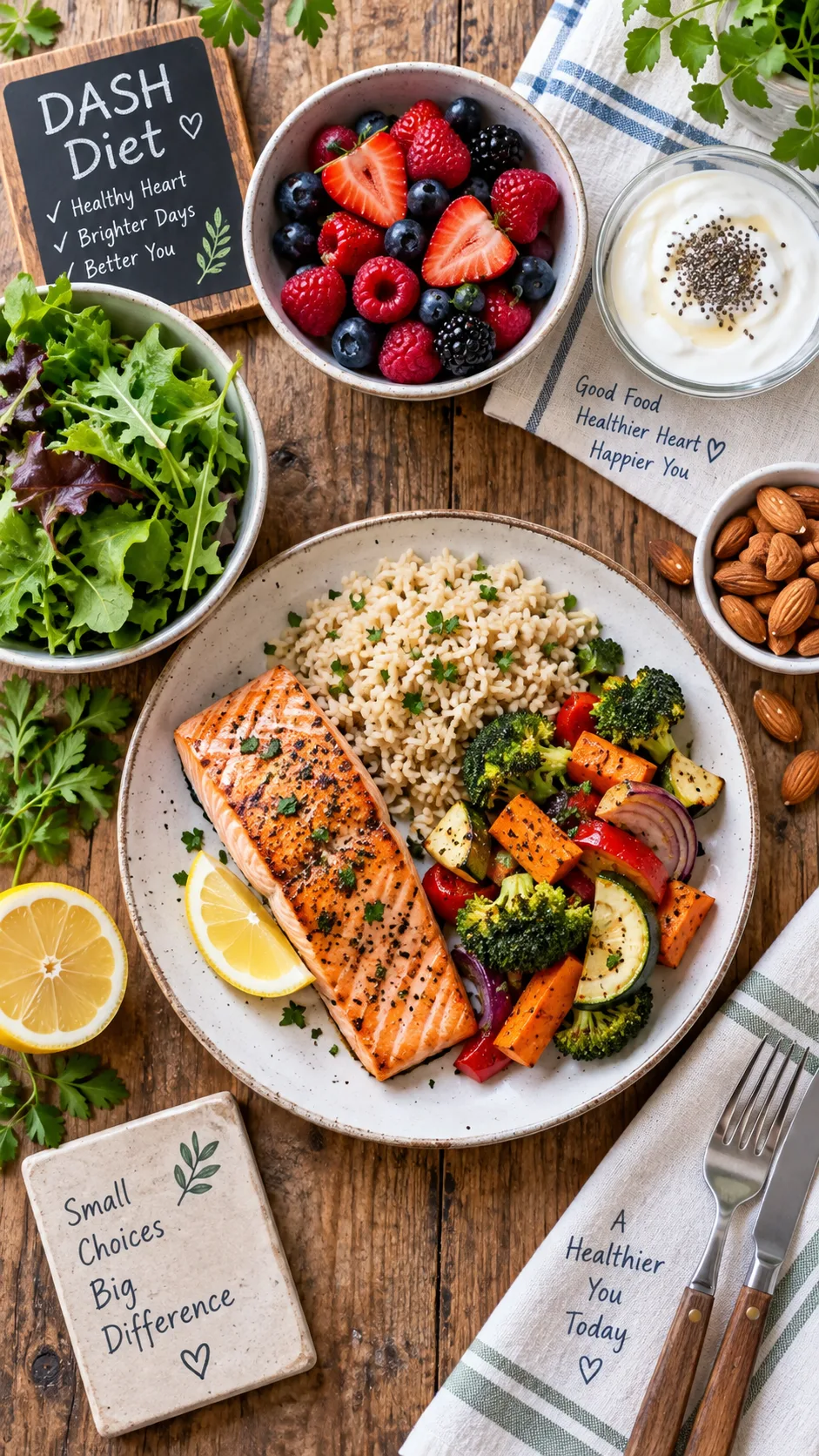
What is the DASH diet, really?
DASH stands for Dietary Approaches to Stop Hypertension. Catchy, right? Nutrition scientists clearly didn’t hire a marketing team.
The National Heart, Lung, and Blood Institute (NHLBI) developed it in the 1990s after funding studies to find out whether food alone could lower blood pressure. Spoiler: it could. Dramatically.
Here’s the part that surprises people. DASH isn’t a weight-loss diet by design. It’s an eating pattern built around nutrients that relax your blood vessels: potassium, calcium, magnesium, and fiber. Weight loss just tends to happen as a side effect, because whole food fills you up.
The original research (and why it still matters)
The original DASH trial, published in the New England Journal of Medicine in 1997, fed participants controlled meals for eight weeks. No exercise changes. No weight loss required. Just food.
The results? Systolic blood pressure dropped by an average of 5.5 mmHg across all participants, and by 11.4 mmHg in people who already had hypertension. That’s comparable to what some single blood pressure medications achieve.
A follow-up study (DASH-Sodium) then layered in salt reduction and pushed the numbers even further. So no, this isn’t a wellness influencer’s Tuesday idea. It’s four decades of peer-reviewed work.
Why DASH works: the boring science made fun
Ever wondered why your blood pressure creeps up in the first place? Think of your arteries as garden hoses. Squeeze them, and pressure spikes. Certain nutrients help them stay relaxed and wide open.
1. Potassium fights sodium
Sodium pulls water into your bloodstream, raising volume and pressure. Potassium helps your kidneys flush that sodium out. Most people eat way too much sodium and nowhere near enough potassium.
DASH flips that ratio. Bananas, sweet potatoes, spinach, beans, avocados: they all load you up on potassium without you thinking about it.
2. Magnesium and calcium relax blood vessels
Both minerals play a direct role in how smooth muscle in your artery walls contracts and relaxes. Leafy greens, nuts, seeds, and low-fat dairy deliver them in generous amounts.
3. Fiber does the heavy lifting
Fiber slows digestion, steadies blood sugar, feeds your gut bacteria, and lowers LDL cholesterol. DASH delivers roughly 30 grams of fiber a day, nearly double the American average. Your gut microbiome throws a party.
4. Less saturated fat, better arteries
DASH caps saturated fat without banning it. You still get cheese, still get red meat occasionally. You just stop treating bacon as a food group.
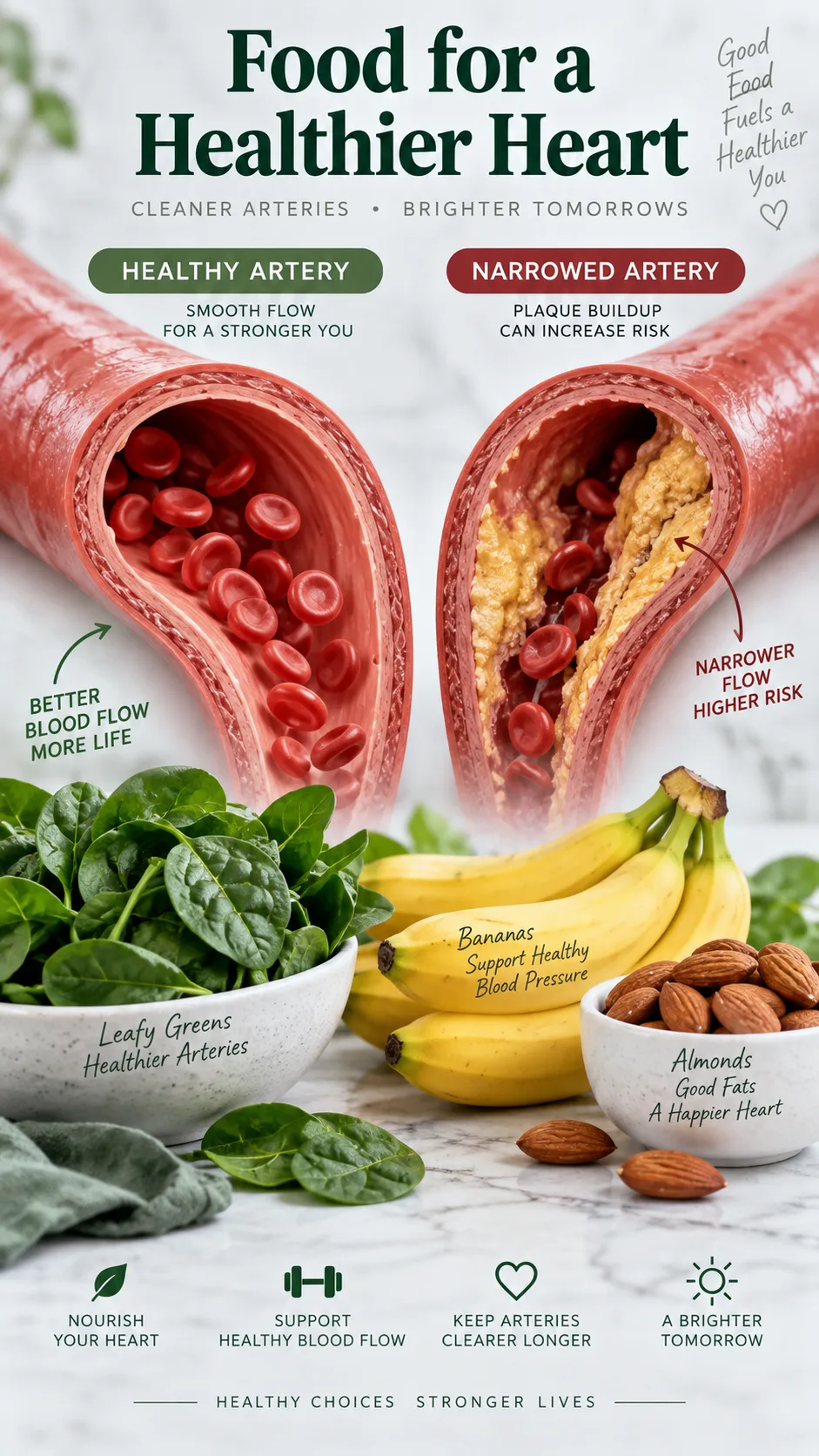
What to eat on DASH: your daily blueprint
The NHLBI builds DASH around daily and weekly servings. Here’s the standard 2,000-calorie version. Adjust up or down depending on your size and activity level.
- Vegetables: 4 to 5 servings daily. One serving = 1 cup raw leafy greens or ½ cup cooked veg.
- Fruits: 4 to 5 servings daily. One medium apple, ½ cup berries, or a small banana.
- Whole grains: 6 to 8 servings daily. One slice of bread, ½ cup cooked brown rice, oats, quinoa, or whole wheat pasta.
- Low-fat or fat-free dairy: 2 to 3 servings daily. Milk, plain Greek yogurt, cottage cheese.
- Lean meat, poultry, and fish: 6 or fewer 1-oz servings daily. Yes, meat stays on the menu.
- Nuts, seeds, and legumes: 4 to 5 servings per WEEK. Almonds, lentils, chickpeas, sunflower seeds.
- Fats and oils: 2 to 3 servings daily. Olive oil, soft margarine, avocado.
- Sweets: 5 or fewer per week. Not zero. Breathe.
Look at that list again. Notice anything missing? There’s no “forbidden” column. DASH runs on proportions, not prohibitions, which is exactly why people stick with it longer than the latest 30-day elimination trend.
The sodium question
DASH comes in two strengths:
- Standard DASH: up to 2,300 mg sodium per day (roughly 1 teaspoon of salt).
- Lower-sodium DASH: up to 1,500 mg per day, recommended for people with existing hypertension, adults over 51, Black adults, and anyone with diabetes or chronic kidney disease.
Here’s the kicker most beginners miss: about 70% of your sodium doesn’t come from the salt shaker. It hides in bread, deli meat, canned soup, sauces, restaurant meals, and (I’m sorry to report) your favorite rotisserie chicken.

What to skip (or seriously cut back on)
I’m not going to pretend this part is fun. But knowing the usual suspects makes shopping ten times easier.
- Processed and cured meats: bacon, salami, hot dogs, deli turkey. Sodium bombs, all of them.
- Canned soups and instant noodles: a single can can blow past 1,200 mg sodium.
- Sugary drinks: soda, sweetened iced tea, energy drinks, those 600-calorie coffee milkshakes pretending to be coffee.
- Refined grains: white bread, white rice, most breakfast cereals.
- Fried fast food: saturated fat and sodium in one convenient package.
- Full-fat dairy in large amounts: cut back, don’t eliminate.
- Excess alcohol: the American Heart Association caps it at one drink daily for women, two for men.
- Salty snacks: chips, pretzels, salted nuts, crackers.
Notice I said “cut back,” not “never again.” Eliminate everything you love and you’ll quit by week three. Then you’ll eat an entire pizza out of spite. I’ve watched it happen, to a friend, obviously.
My honest take after coaching people through this
I’ve helped a lot of people start DASH, and the pattern never changes. Week one, everything tastes bland. Week two, people complain. Week three, something clicks.
Your taste buds recalibrate faster than you’d believe. After about 10 to 14 days of lower sodium, food you used to love starts tasting aggressively salty. One guy I worked with tried his old favorite canned chili after three weeks and described it as “drinking seawater.” He never went back.
So if you’re in the bland phase right now, hang on. Your palate is rewiring itself. That’s not motivational fluff, it’s documented sensory adaptation.
The one mistake almost everyone makes
They try to change everything on Monday. All eight food groups. Perfect portions. Meal-prepped Tupperware towers.
Then Wednesday happens, work explodes, and they order takeout and declare the whole thing a failure. Pick one swap per week instead. Week one: switch white rice to brown. Week two: add a vegetable to dinner. Week three: kill the soda. Slow beats perfect every single time.
A sample DASH day (that doesn’t taste like cardboard)
Let me show you what an actual day looks like. No exotic ingredients, no $19 superfood powders.
Breakfast
- Rolled oats cooked with low-fat milk
- Half a sliced banana plus a handful of blueberries
- A tablespoon of unsalted walnuts
- Black coffee or unsweetened tea
Lunch
- Big spinach salad with chickpeas, cherry tomatoes, cucumber, red onion
- Grilled chicken breast (about 3 oz)
- Olive oil, lemon juice, and cracked pepper dressing
- One whole-grain roll
Snack
- Plain Greek yogurt with a drizzle of honey
- Or an apple with a spoon of unsalted almond butter
Dinner
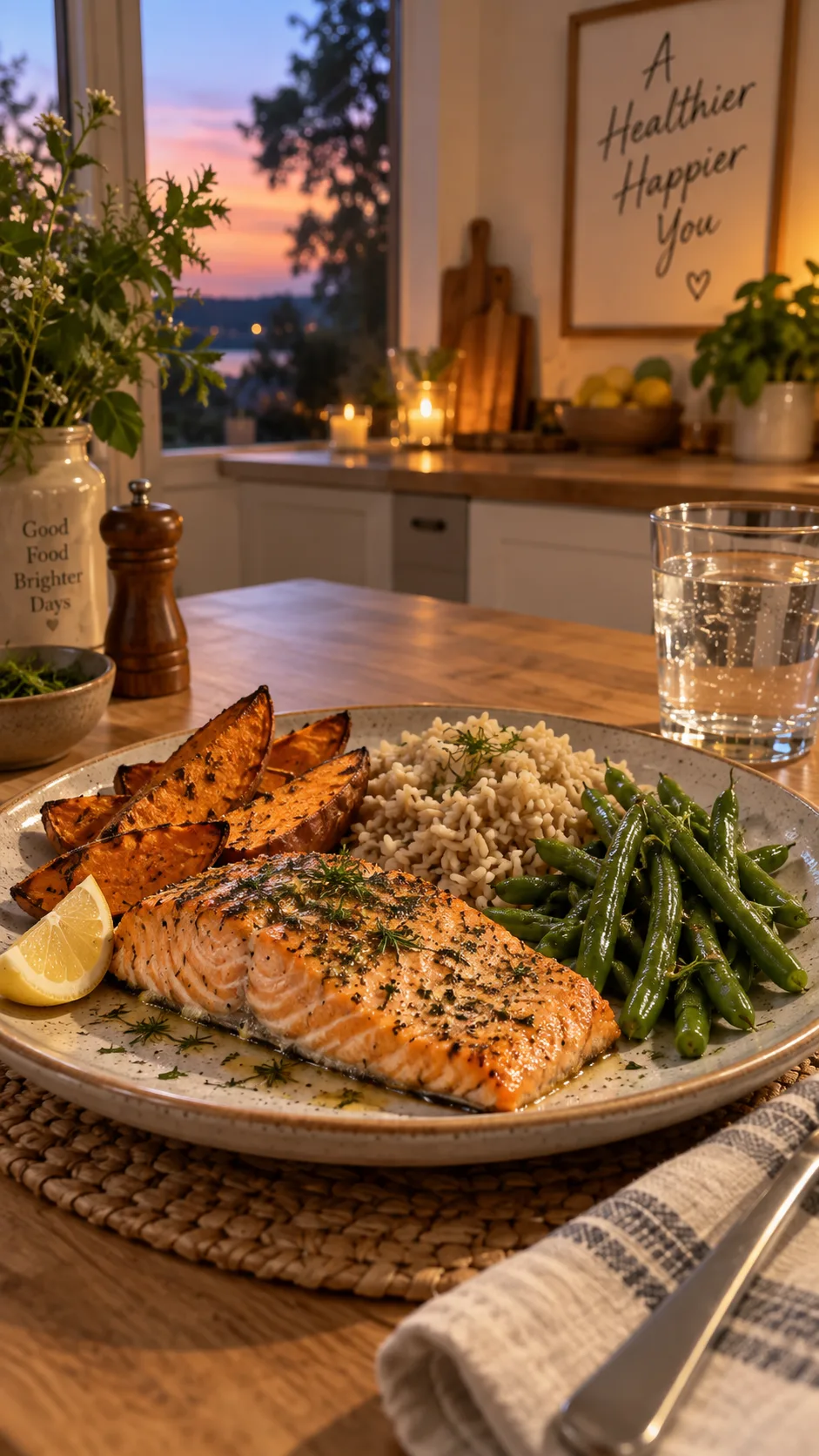
- Baked salmon rubbed with garlic, paprika, and dill
- Roasted sweet potato
- Steamed green beans with a squeeze of lemon
- Side of brown rice
Optional evening treat
- A square or two of dark chocolate. You’ve earned it.
Does that read like punishment? I didn’t think so.
How to make low-sodium food taste good
This is where most beginners quit, so pay attention. Salt isn’t flavor. Salt is a flavor amplifier. You can amplify food a dozen other ways.
- Acid. Lemon juice, lime, and vinegar brighten food instantly. This is the single biggest trick.
- Heat. Chili flakes, cayenne, fresh jalapeño, black pepper.
- Aromatics. Garlic, onion, ginger, shallots. Build every dish on these.
- Fresh herbs. Add them at the END of cooking, not the start.
- Umami boosters. Mushrooms, tomato paste, nutritional yeast, a splash of low-sodium soy.
- Browning. Roast and sear your vegetables. Caramelization creates flavor salt can’t fake.
- Toasted spices. Dry-toast cumin or coriander for 30 seconds before using. Game changer.
One more thing: check your spice blends. A lot of “seasoning” mixes are mostly salt wearing a costume.
DASH vs. other popular diets
People always ask how DASH stacks up. Fair question.
DASH vs. Mediterranean
They’re cousins. Both put plants, whole grains, fish, and olive oil at the center. The Mediterranean diet leans harder into fats and olive oil and stays looser on structure, while DASH gives you explicit serving counts and a hard sodium target. If you like numbers and structure, choose DASH. If you like vibes and flexibility, go Mediterranean.
DASH vs. keto
Complete opposites. Keto slashes carbs and leans on fat. DASH welcomes whole grains and fruit while limiting saturated fat. Keto can drop weight fast, but DASH has decades of cardiovascular outcome data behind it. Different tools, different jobs.
DASH vs. low-sodium-only diets
Cutting salt alone helps a bit. Cutting salt AND adding potassium-rich whole food helps a LOT. The DASH-Sodium trial proved the combination beats either approach alone. Addition matters as much as subtraction.
Who should try DASH?
- Anyone with high blood pressure or prehypertension
- People with a family history of heart disease or stroke
- Anyone managing type 2 diabetes (DASH improves insulin sensitivity)
- People with high LDL cholesterol
- Anyone who just wants a sustainable, non-gimmicky way to eat
Talk to your doctor first if you have kidney disease. DASH is high in potassium, and impaired kidneys can’t clear it efficiently. Same goes if you take potassium-sparing diuretics or ACE inhibitors. This is a genuine medical caveat, not a legal disclaimer.
Stack it with movement for double the effect
Want to know the fastest way to make DASH work harder? Move your body. Diet plus exercise beats diet alone for blood pressure, consistently, in trial after trial.
The CDC recommends 150 minutes of moderate aerobic activity weekly. That’s a 30-minute brisk walk five days a week. Nothing heroic.
If you want somewhere easy to start, a structured walk-to-run plan costs you nothing and builds real cardiovascular fitness in weeks. Your blood pressure responds to it fast.
Your first week: a simple starter plan
- Day 1: Read three nutrition labels in your pantry. Just look. Prepare to be horrified.
- Day 2: Add one vegetable serving to lunch and dinner.
- Day 3: Swap one refined grain for a whole grain.
- Day 4: Replace one sugary drink with water or unsweetened tea.
- Day 5: Cook one dinner with zero added salt. Use lemon, garlic, and herbs instead.
- Day 6: Buy unsalted nuts and keep them where the chips used to live.
- Day 7: Plan next week’s dinners. Five is enough. Leave two nights flexible.
Seven small moves. No willpower crisis required.
Common beginner questions
Will I lose weight on DASH?
Probably, if you watch portions. DASH wasn’t designed for weight loss, but high-fiber, high-volume food naturally cuts calorie intake. Most people lose slowly and keep it off, which is the boring answer nobody wants but everybody needs.
How fast does blood pressure drop?
Some people see changes within two weeks. Most see meaningful results by six to eight weeks. Track it at home with a validated cuff and bring the log to your doctor.
Can I still eat out?
Yes. Ask for sauces on the side, skip the bread basket, choose grilled over fried, and order a side of vegetables instead of fries. Restaurant sodium runs high, so don’t make eating out an everyday habit.
Do I need supplements?
No. DASH gives you potassium, magnesium, and calcium through food, which your body absorbs better anyway. Save your money.
The bottom line
DASH works because it isn’t a diet in the miserable, countdown-to-cheat-day sense. It’s a template (more plants, more whole grains, more potassium, less sodium, less added sugar, less saturated fat) that you can run for the rest of your life without resenting it.
The research is strong. The food is genuinely good. And the rules are simple enough to explain to a stranger in an elevator.
So here’s my challenge: pick ONE thing from this article and do it today. Not Monday. Today. Your arteries don’t care about your start date. They care about your average.
Now go put lemon on something.