

You swallowed the hype, bought thirty dollars worth of organic celery, and choked down murky green swamp water for three straight days. You expected a flat stomach, endless energy, and glowing skin. Instead, you look five months pregnant, your jeans dig mercilessly into your waistline, and your gut sounds like a storm drain. Sound familiar?
Do not panic; you did not break your metabolism. You simply fell victim to the great wellness paradox: the very detox protocols that promise to flatten your stomach often inflate your belly like a Thanksgiving parade float. I lived through this exact humiliation five years ago when I attempted a five-day raw juice cleanse before a friend’s beach wedding, only to spend the entire weekend unbuttoning my shorts under a towel.
Why do these cleanses backfire so miserably? In this guide, we expose the exact detox diet mistakes creating painful abdominal distension, unpack the digestive science behind the bloat, and outline what you should do instead to achieve a genuinely comfortable, flat stomach.

Why Your “Cleanse” Makes You Swell

First, let us settle an essential truth. Your body already owns an exceptional, heavy-duty detoxification system: your liver, your kidneys, your lungs, and your digestive tract. No crushed dandelion root or cayenne pepper concoction can replace these vital organs.
When you suddenly swap whole meals for extreme detox concoctions, you inflict massive physiological shock on your gastrointestinal tract. Your gut microbiome houses trillions of microbial organisms that adapt to your usual eating patterns. Sudden, dramatic dietary shifts trigger rapid bacterial fermentation, fluid shifts, and muscle spasms along your intestinal wall.
Medical researchers continually confirm this biological reality. As writers at Harvard Health Publishing note, commercially marketed detox diets rarely offer any clinical benefit because healthy human organs constantly filter and neutralize bodily waste without outside help.
When you disrupt this delicate natural ecosystem with aggressive cleanses, your digestive tract rebels. Fluid rushes into your intestines, gas collects in your colon, and your intestinal transit grinds to a sudden halt. The result? Pure abdominal distension.
6 Toxic “Detox” Diet Mistakes Wrecking Your Gut
If you feel swollen, heavy, and full of trapped gas during your cleanse, you likely commit one of these six classic detox diet mistakes. Let us break down why they ruin your gut and how they trigger relentless bloating.
1. Chugging Massive Quantities of Raw Cruciferous Veggies
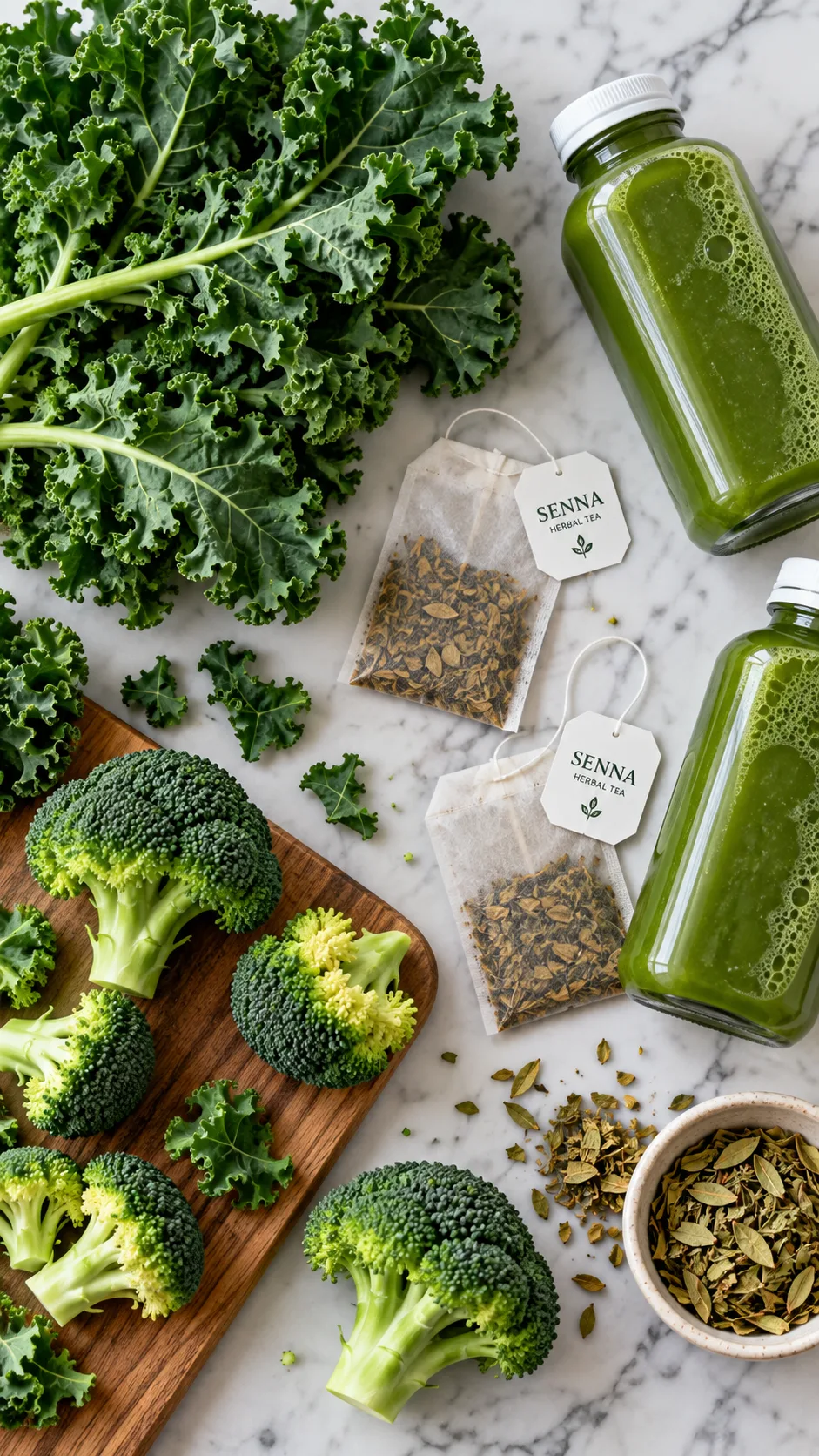
You decided to reset your health, so you dumped mounds of raw kale, spinach, broccoli, and cabbage into your blender. You drink the thick green paste every morning, believing you do your body a massive favor. In reality, you send your intestines into digestive purgatory.
Cruciferous vegetables pack dense amounts of an indigestible complex carbohydrate called raffinose. Humans lack the enzyme necessary to break down raffinose in the small intestine. Consequently, these vegetables travel completely untouched into your large intestine, where resident colon bacteria enthusiastically ferment them.
This rapid bacterial fermentation produces massive clouds of hydrogen, methane, and carbon dioxide gas. Raw cruciferous greens also contain tough, insoluble cellulose walls that batter sensitive intestinal linings. If you already struggle with digestion, drinking raw brassica smoothies is like throwing kerosene onto a bonfire.
2. Drowning in Liquid Sugar (The Juice Cleanse Trap)
Commercial juice cleanses market themselves as pure liquid gold, promising to flush out metabolic waste. Yet, when manufacturing facilities press whole fruits and vegetables into juice, machines strip away all beneficial structural fiber. You receive a concentrated bottle of pure, rapid simple sugars: primarily fructose.
Your small intestine can only absorb a finite amount of free fructose at one time. When high concentrations of liquid fructose overwhelm your gut transporters, unabsorbed fructose travels straight into your colon. Scientists call this fructose malabsorption.
Once inside the colon, fructose exerts an osmotic effect: it draws large volumes of water from your bloodstream directly into the intestinal lumen. Simultaneously, hungry colonic bacteria feast on this unexpected sugar windfall, producing intense gas, painful cramping, and watery, gurgling distension.
3. Overdosing on Herbal Laxative “Teas”
Have you ever examined the ingredient label on those popular “Skinny Detox Teas”? Most formulas hide a powerful botanical stimulant called senna leaf. While marketers disguise senna as a gentle botanical cleanser, pharmacologists classify it as an anthraquinone stimulant laxative.
Senna irritates your intestinal lining directly, triggering aggressive, violent peristaltic contractions that force your colon to empty its contents prematurely. While you might temporarily drop water weight on the scale, you damage your digestive tract in the process.
Repeated use of stimulant laxatives paralyzes your natural bowel motility. Your colon loses its normal tone, leading to severe rebound constipation as soon as you stop sipping the brew. Waste sits stagnant in your lower gut for days, fermenting and generating stubborn, unyielding bloat. Genuine gut health never requires chemically induced diarrhea.
4. Slugging Giant Fiber Powders Without Enough Water
Many detox regimens instruct participants to drink heaping tablespoons of psyllium husk or acacia powder to “scrub the colon walls.” Fiber supports normal digestion, but suddenly megadosing supplemental fiber creates a recipe for internal disaster.
Soluble fiber absorbs colossal amounts of water. If you abruptly jump from eating fifteen grams of fiber a day to forty grams via powders without simultaneously drinking gallons of fluids, that fiber behaves like fast-drying concrete inside your intestinal tract. It slows transit time, blocks normal gas expulsion, and turns your abdomen into an unyielding, painful balloon.
If you want real results without this painful mistake, explore our breakdown on flat belly diet mistakes that cause chronic stomach swelling.
5. Slashing Calories to Starvation Levels
Most extreme detox protocols cut your daily caloric intake down to 500 to 800 calories per day. You might believe this drastic deficit forces your body to burn fat and flatten your midsection, but it paralyzes your gastrointestinal mechanics instead.
Severe calorie restriction shuts down your Migrating Motor Complex (MMC). The MMC acts as your digestive tract’s internal housekeeping crew; between meals, cyclic electrical waves sweep leftover food debris, mucus, and errant bacteria out of your small intestine and down into your colon. When you starve yourself or sip liquids constantly throughout the day, your MMC never activates.
Without these regular cleansing waves, bacteria linger in the small intestine, multiplying and fermenting whatever particles they find. This condition mimics small intestinal bacterial overgrowth (SIBO), leaving your upper abdomen painfully stretched tight every single afternoon.
6. Relying on Artificial “Clean” Sweeteners and Protein Powders
Many commercial detox shakes remove real sugar and replace it with zero-calorie sugar alcohols like sorbitol, xylitol, erythritol, and maltitol. Beverage creators label these products “guilt-free” and “keto-friendly,” but your digestive tract considers them absolute chaos.
Your digestive tract cannot fully absorb sugar alcohols. They pass directly to your large intestine, where bacteria rapidly ferment them into massive pockets of gas while pulling water into your stool. Even a small scoop of “detox” protein powder containing artificial sweeteners can double your waist circumference within two hours.
The True Physiology of Post-Detox Bloating
To fix the bloat, you must understand the exact biological mechanisms behind abdominal distension. Bloating does not happen because your body holds onto mysterious “poisons”; it happens because you upset the precise fluid and microbial balance within your gut.
A comprehensive review from the National Institutes of Health confirms that no clinical evidence supports the use of commercial cleanses for toxin elimination or sustainable weight management. In fact, clinical trials prove that extreme dietary fluctuations trigger stress responses, increasing gut permeability and starting inflammatory cascades.
When you stress your body with starvation or aggressive cleanses, your adrenal glands flood your bloodstream with cortisol. High systemic cortisol slows down your natural digestive enzyme production, weakens your stomach acid secretion, and impairs gut barrier function. We explore this hormone connection extensively in our guide to the cortisol detox diet plan.
Without sufficient hydrochloric acid and digestive enzymes, even simple foods enter your intestines half-digested. Your resident bacteria then perform the job your stomach acid failed to finish, generating massive quantities of gaseous byproducts that stretch your intestinal walls.

What to Do Instead: The Sustainable De-Bloat Blueprint
You can throw out the expensive cleanse teas and chalky green powders. If you want a comfortable, visibly flatter stomach, you must work WITH your biology instead of fighting it. Follow this strategic blueprint to soothe your digestive tract and eliminate bloat for good.
- Cook and Puree Your Vegetables: Stop eating massive bowls of cold, raw roughage. Heat breaks down tough plant cell walls and denatures complex starches before food ever touches your tongue. Steam your zucchini, roast your carrots, and sauté your spinach in healthy fats. Your intestines will absorb the nutrients with zero fermentation distress.
- Support Your Real Detox Organs with Targeted Nutrients: Clinical specialists at Johns Hopkins Medicine note that healthy liver function relies on adequate dietary protein, essential minerals, and balanced hydration. Feed Phase II liver detoxification by consuming real dietary sulfur compounds found in cooked garlic, onions, pasture-raised eggs, and tender poultry.
- Hydrate with Balanced Electrolytes: Guzzling gallons of plain tap water flushes vital electrolytes out of your system, paradoxically encouraging your cells to retain extracellular water. Add a pinch of unrefined sea salt and a squeeze of fresh lemon juice to your water. This mineral balance encourages proper cellular hydration and stimulates healthy gastric acid secretion.
- Protect the Migrating Motor Complex: Give your gut a break between meals. Allow three to four hours between eating windows without snacking or sipping juices. This quiet fasting period triggers the MMC waves, sweeping bacteria, food remnants, and trapped gas out of your digestive system naturally.
- Incorporate Natural Prokinetic Herbs: Skip synthetic laxatives and choose gentle, evidence-based digestive aids instead. Steep fresh ginger root in boiling water or chew on a small spoonful of fennel seeds after your meals. Fresh ginger stimulates gastric emptying and speeds intestinal transit time without irritating your gut lining.
For more strategies on stripping away stubborn waistline puffiness, check out our companion piece on the flat stomach diet plan.
The 3-Day Gut Reset That Flattens Your Stomach
Forget starvation cleanses. If you want to reset your digestion after a period of overindulgence (or recover from a botched detox), use this three-day, gut-soothing meal framework. These meals focus on minimal fermentability, warm temperatures, and effortless digestibility.
Day 1: Calming the Fire
- Morning: Warm mug of pasture-raised bone broth seasoned with a pinch of sea salt, grated fresh ginger, and lemon juice.
- Lunch: Tender, poached chicken breast served over warm, soft-cooked white basmati rice with steamed peeled zucchini.
- Afternoon: Cup of warm peppermint tea or steeped chamomile blossoms.
- Dinner: Pan-seared wild salmon fillet paired with thoroughly mashed sweet potato and well-cooked green beans.
Day 2: Restoring Motility
- Morning: Scrambled eggs cooked in a teaspoon of ghee, paired with half a cup of warm blueberries stewed with cinnamon.
- Lunch: Ground turkey simmered with peeled carrots, fresh oregano, and bone broth, served over plain white rice.
- Afternoon: Warm ginger tea with a teaspoon of raw honey.
- Dinner: Slow-cooked beef pot roast with soft parsnips and roasted kabocha squash.
Day 3: Rebuilding Microbial Harmony
- Morning: Warm white rice porridge (congee) made with savory chicken broth, topped with soft-boiled eggs and green scallion tips.
- Lunch: Pan-seared cod or white fish with puréed butternut squash and steamed, tender spinach.
- Afternoon: Fennel seed tea brewed with boiling water.
- Dinner: Herb-roasted chicken thighs with oven-baked pumpkin slices and steamed, peeled asparagus tips.
Common Bloat-Triggering Ingredients vs. Soothing Swaps
Use this quick reference guide to swap out aggressive detox favorites for ingredients that soothe your gut lining while promoting natural elimination:
- Ditch: Raw kale and broccoli smoothies.
Swap for: Warm pureed butternut squash or cooked carrot soups. - Ditch: High-fructose bottled fruit juices.
Swap for: Mineral water infused with fresh cucumber slices, fresh mint, and lime juice. - Ditch: Senna-based slimming teas.
Swap for: Freshly sliced ginger root tea with a squeeze of fresh lemon. - Ditch: Psyllium husk megadoses.
Swap for: Stewed peeled apples (rich in gentle pectin) or soaked chia seeds in small, measured amounts. - Ditch: Sugar-free “clean” protein shakes sweetened with erythritol.
Swap for: Hydrolyzed collagen peptides dissolved into warm bone broth or herbal tea.
Frequently Asked Questions About Detox Bloating
How long does detox bloating typically last?
If you stop the offending cleanse immediately, your acute bloating should subside within 24 to 72 hours. Rehydrate with electrolyte-rich liquids, switch to soft, easily digestible cooked foods, and allow your natural bowel motility to restore its normal rhythm.
Why does plain water sometimes make my stomach swell up?
If you drink enormous quantities of plain water on an empty stomach during a cleanse, you dilute your natural gastric acids and disrupt sodium balances in your gut lumen. Sip room-temperature water steadily throughout the day rather than chugging liters at once, and always include balanced dietary minerals.
Can a juice cleanse cause permanent gut damage?
No, a short juice cleanse will not cause permanent damage to a healthy digestive tract. However, repeated cycles of starvation and laxative abuse disrupt your gut microbiome diversity, weaken your mucosal barrier, and train your intestines to become sluggish over time.
Final Thoughts: Ditch the Cleanse, Heal the Gut
The human body does not need an aggressive, punitive detox protocol to maintain peak health. Your liver, kidneys, skin, and lungs run twenty-four hours a day, filtering waste without any help from overpriced juice bottles or dehydrating teas.
When you stop torturing your digestive tract with raw fiber shocks, concentrated fructose bombs, and harsh laxatives, your intestines finally calm down. Feed your body warm, nourishing, easily digestible foods. Give your digestive system time to rest between meals, hydrate intelligently, and let your internal organs do the remarkable work they were born to do.
Step away from the blender, ditch the swamp water, and give your gut the gentle, nourishing rest it deserves. Your flat, comfortable, pain-free belly will thank you tomorrow.