

You know that 10:37am moment? The one where your stomach starts growling loud enough that your coworker glances over? Yeah, that’s your breakfast filing a complaint.
Here’s the thing: most breakfasts fail us because they’re basically dessert with a respectable job title. Cereal, toast with jam, a granola bar that’s 70% sugar — they spike your blood sugar, then drop you like a bad habit. Protein fixes that. And when you prep it ahead, you remove the only real excuse you have left: “I didn’t have time.”
I’ve been prepping breakfasts for about six years now, mostly because I’m useless before coffee and I refuse to make decisions at 6am. This guide covers what actually works — the recipes, the numbers, the storage rules, and the mistakes I made so you don’t have to.
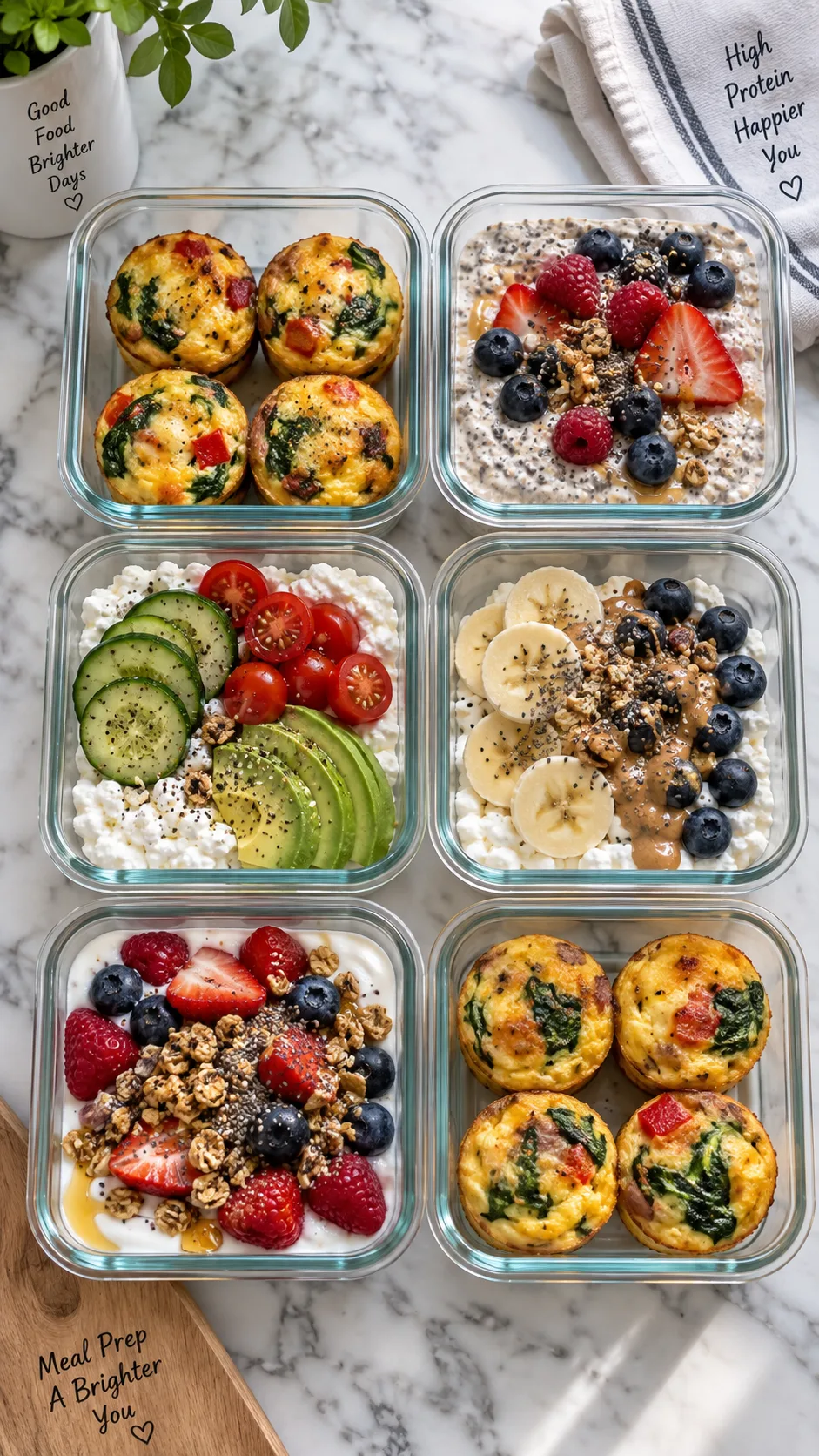
Why Protein at Breakfast Actually Matters (The Science, Minus the Lecture)
Protein is the slowest macronutrient to digest. It hangs around in your stomach, takes its sweet time, and keeps you physically full for hours. Carbs? They’re out the door before you’ve finished your coffee.
But it goes deeper than that. Protein triggers the release of satiety hormones like GLP-1 and peptide YY while lowering ghrelin — the hormone that makes you raid the office biscuit tin. Research published via the National Library of Medicine has repeatedly linked higher-protein breakfasts to reduced appetite and lower calorie intake later in the day.
The 30-Gram Rule
Most people eat a protein-starved breakfast and then slam 60g at dinner. That’s backwards. Your body uses protein far better when you spread it across the day.
Aim for 25–35g of protein at breakfast. That’s the sweet spot where the fullness effect really kicks in. Below 20g? You’re basically eating a snack and calling it a meal.
- 3 large eggs = ~18g protein
- 1 cup Greek yogurt (plain, 0%) = ~20-23g
- 1 cup cottage cheese = ~25g
- 1 scoop whey protein = ~24g
- 100g smoked salmon = ~18g
- 1/2 cup cooked lentils = ~9g
See the pattern? You almost always need to combine two sources to hit 30g. Three eggs alone won’t get you there. Three eggs plus a scoop of cottage cheese folded in? Now we’re talking.
The Golden Rules of Breakfast Meal Prep
Before the recipes, let’s talk strategy. Because I’ve thrown out a LOT of sad, soggy prep over the years, and I’d rather you didn’t repeat my greatest hits.
- Prep 4 days, not 7. Day 6 egg muffins taste like regret. Do a Sunday batch and a Wednesday top-up.
- Keep wet and dry separate. Granola goes in a small jar on the side, not on top of the yogurt. Trust me.
- Pick TWO recipes per week, max. Variety sounds nice until you’re four hours deep in the kitchen on a Sunday.
- Buy the containers first. Glass, 400–500ml, with proper leak-proof lids. Cheap plastic warps and you’ll hate life.
- Season aggressively. Cold food tastes blander than hot food. Salt more than feels right.
- Freeze half the batch immediately. Future You will send a thank-you card.
Rule five is the one everyone skips and everyone regrets. Ever wondered why your meal prep tastes like cardboard by Wednesday? Under-seasoning. Every time.
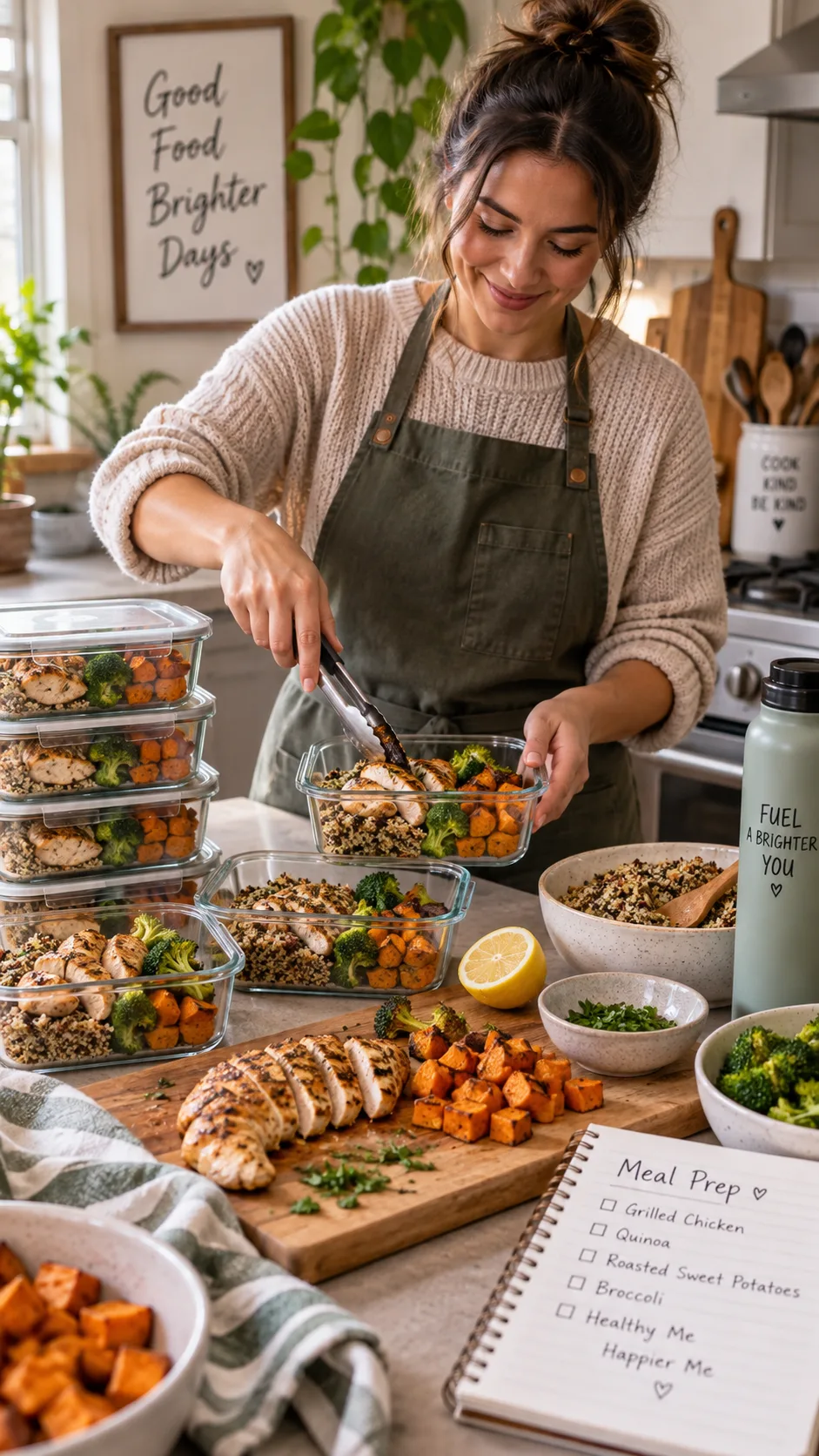
Egg-Based Preps: The Reliable Workhorses
1. Loaded Egg Muffins (Around 22g Protein for Three)
These are the entry drug of breakfast meal prep. Whisk eggs, throw in stuff, bake in a muffin tin, done.
My base ratio: 10 eggs + 100g cottage cheese + 200g cooked fillings + salt and pepper. Bake at 180°C (350°F) for 20–22 minutes. Makes 12.
Fillings that genuinely work: chopped ham and spring onion, feta and spinach (squeeze the spinach DRY), chorizo and red pepper, smoked salmon and dill. Fillings that don’t: raw mushrooms and courgette. They release water and you get egg soup. Ask me how I know. :/
The cottage cheese is my non-negotiable tip. It stops them going rubbery in the fridge and adds protein. Nobody can detect it once baked.
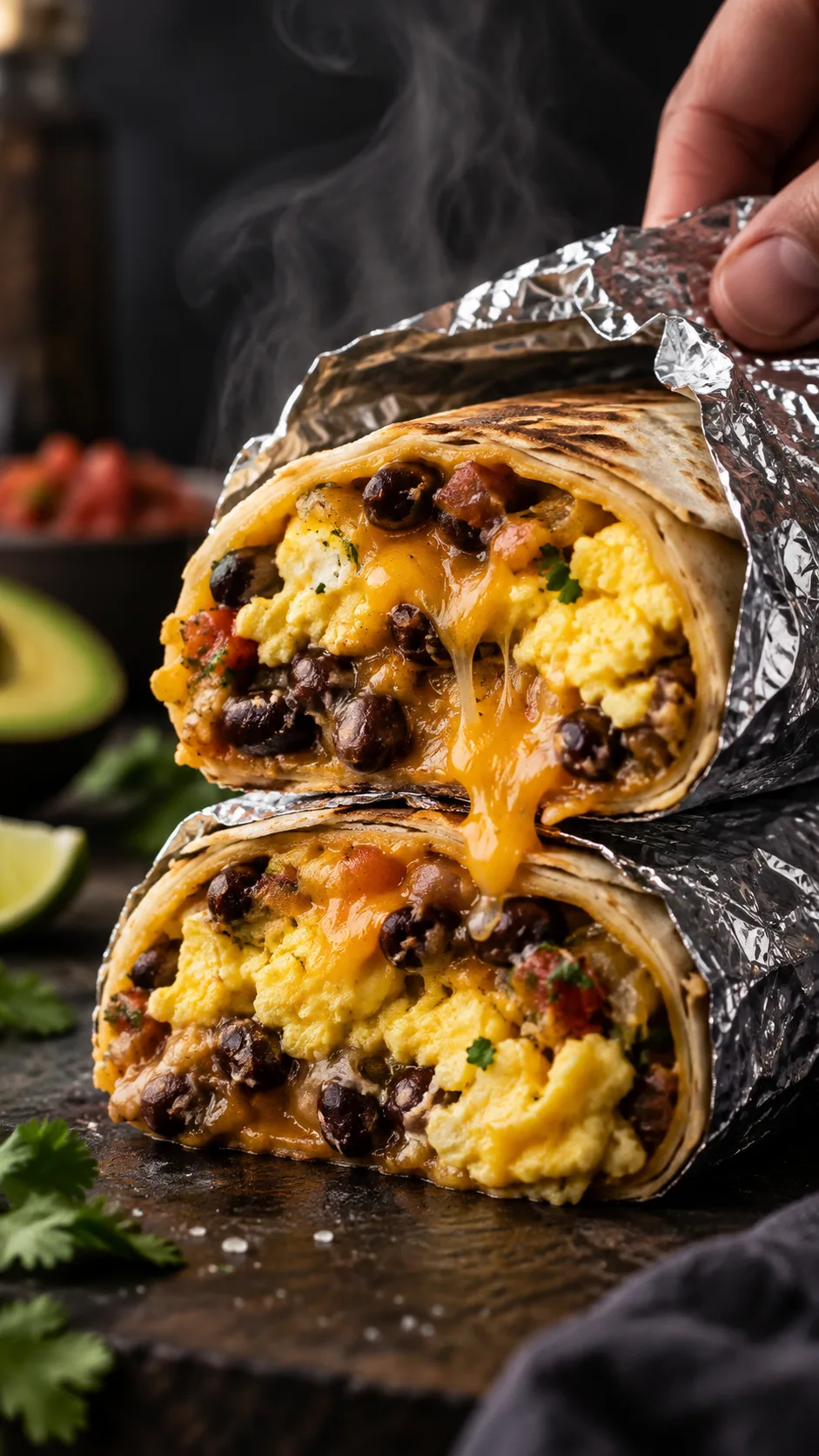
2. Freezer Breakfast Burritos (35–40g Protein Each)
This is the heavyweight champion. Scrambled eggs, black beans, shredded chicken or turkey sausage, a bit of cheese, wrapped in a large tortilla, then foil, then freezer bag.
The critical step: let the filling cool COMPLETELY before you wrap. Warm filling = steam = ice crystals = soggy tortilla. Reheat from frozen in the microwave for 2 minutes, flip, another 90 seconds.
These keep for three months and cost about £1.20 each to make. A shop-bought equivalent runs you five quid and has half the protein. Do that maths.
3. Sheet Pan Frittata Squares (25g per Slice)
Same idea as egg muffins but you’re not scrubbing twelve muffin cups afterwards. Line a baking tray, pour in 12 whisked eggs with your fillings, bake 25 minutes, cut into squares.
Add cooked quinoa or diced potato to the mix for staying power. I like mine with roasted broccoli, cheddar and a scandalous amount of black pepper.
No-Cook Preps for People Who Hate Cooking
Not everyone wants to spend Sunday afternoon in an apron. Fair enough. These require assembly, not cooking.
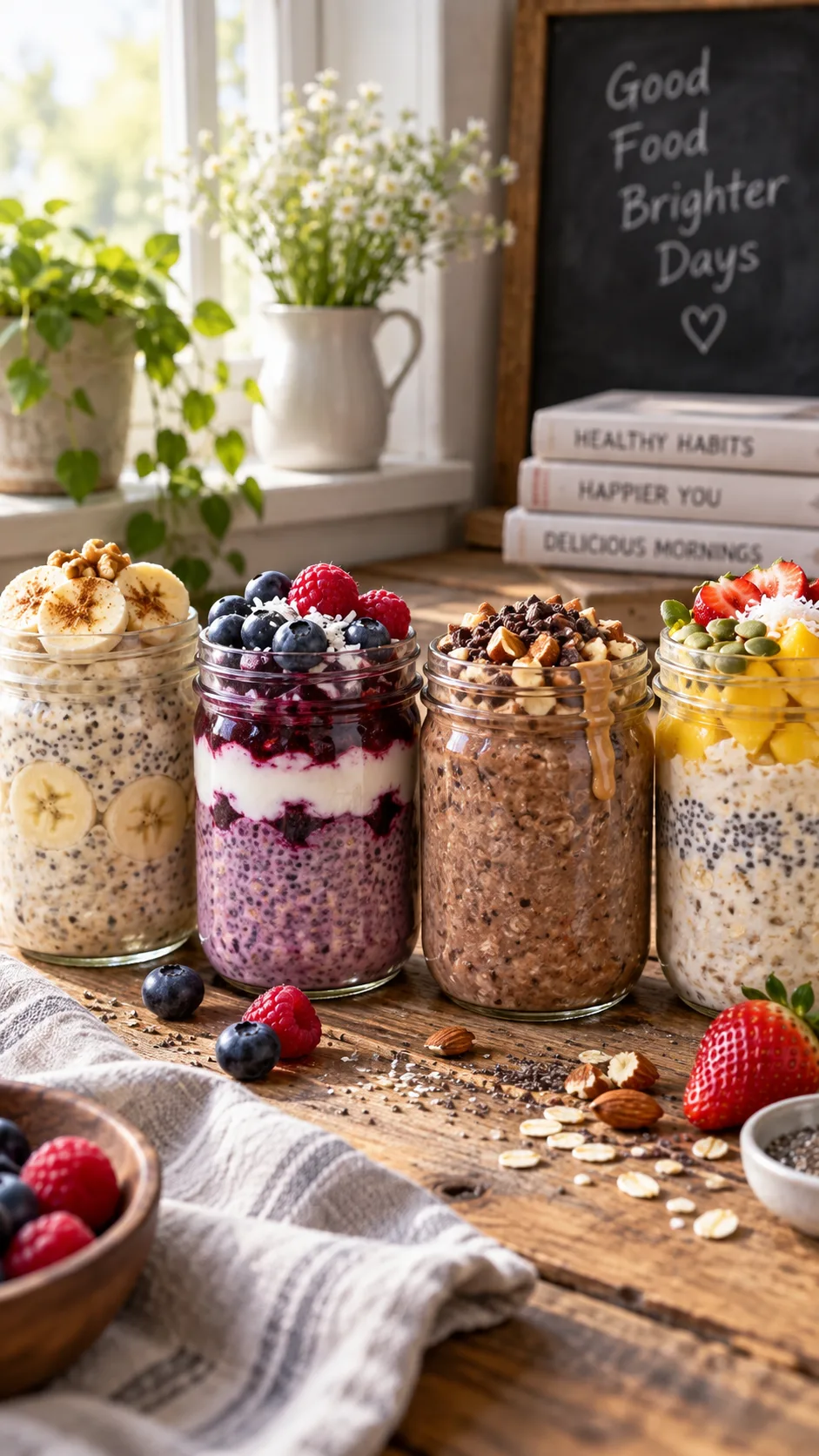
4. Protein Overnight Oats (30g+)
The mistake most people make: they use plain oats and milk, hit maybe 10g protein, then wonder why they’re starving by 10am.
My formula per jar:
- 40g rolled oats
- 150g Greek yogurt (0% or 5%)
- 1 scoop protein powder (vanilla is the safest bet)
- 100ml milk of choice
- 1 tbsp chia seeds
- Pinch of salt (yes, really — it makes everything taste better)
That lands around 32g of protein. Layer the fruit on top the morning you eat it, not on Sunday, unless you enjoy grey banana slices.
5. Cottage Cheese Breakfast Bowls (28g)
Cottage cheese had a rough few decades and is now having its moment. Honestly? Deserved. It’s one of the highest-protein, lowest-effort foods in the entire dairy aisle.
Savoury version: cottage cheese, cherry tomatoes, cucumber, everything bagel seasoning, drizzle of olive oil. Sweet version: cottage cheese, berries, honey, toasted almonds. Blend it first if the texture bothers you — it turns silky and nobody will know.
6. Chia Protein Pudding (26g)
Chia seeds absorb up to 10x their weight in liquid, which means they turn into a thick pudding overnight and sit in your stomach like a friendly brick.
Ratio: 3 tbsp chia + 250ml milk + 1 scoop protein powder + cocoa or vanilla. Stir, wait 10 minutes, stir AGAIN (this prevents clumping), then fridge overnight. Keeps five days.
Grab-and-Go Options for Chaotic Mornings
7. High Protein Baked Oatmeal Bars
These slice into portable squares. Oats, eggs, protein powder, mashed banana, nut butter, baking powder. Bake 25 minutes, cut into 9.
Each bar hits about 15g protein — so eat two, or pair one with a yogurt. They freeze beautifully and survive a handbag.
8. Savoury Protein Muffins
Think cheese scone, but with Greek yogurt and extra eggs doing the heavy lifting. Add cooked bacon bits or sun-dried tomatoes. Around 12g each.
9. Pre-Portioned Smoothie Bags
Freeze bags of fruit, spinach and oats. In the morning, dump one in the blender with milk and protein powder. Total morning effort: 90 seconds.
Pro tip from painful experience: add half a frozen banana and a tablespoon of nut butter to every bag. Without fat, smoothies leave you hungry in an hour. FYI, a smoothie is a drink, not a meal, unless you build it properly.
Watch This Before Your First Prep Session
If you’re a visual learner, this walkthrough covers batch technique and timing far better than I can describe in text:
The 60-Minute Sunday Blueprint
Here’s exactly how I run a session. One hour, four days of breakfasts, minimal chaos.
- 0:00 — Oven on. 180°C. Get it heating while you work.
- 0:02 — Whisk 12 eggs with cottage cheese, salt and pepper. Pour into a lined tray.
- 0:08 — Add fillings, slide into the oven. Set a 25-minute timer.
- 0:10 — Assemble 4 overnight oat jars. Assembly line style: oats in all four, then yogurt in all four, then protein, then milk.
- 0:25 — Portion cottage cheese into two containers. Prep toppings separately.
- 0:33 — Frittata out. Cool on the counter for 20 minutes. Do NOT lid it warm.
- 0:35 — Wash up while everything cools. This is the part everyone skips, and it’s why they quit by week three.
- 0:55 — Portion and label. Masking tape and a marker. Date everything.
That’s it. Under an hour. If you want a full week-long system rather than just breakfast, my guide to healthy meal prep for the week walks through lunches and dinners with the same approach.
Storage, Safety and How Long Things Actually Last
Food safety isn’t glamorous, but neither is food poisoning on a Tuesday. The USDA recommends cooling cooked food to fridge temperature within two hours and eating refrigerated leftovers within 3–4 days.
| Item | Fridge | Freezer |
|---|---|---|
| Egg muffins / frittata | 4 days | 2 months |
| Overnight oats | 4–5 days | Not recommended |
| Chia pudding | 5 days | 1 month |
| Breakfast burritos | 3 days | 3 months |
| Baked oat bars | 5 days | 3 months |
The golden storage rule: never lid warm food. Trapped steam creates condensation, condensation breeds bacteria, and your egg muffins turn into a wet sponge. Cool first, lid second.
Mistakes I Made So You Don’t Have To
Prepping Seven Days of the Same Thing
My first attempt was 14 identical egg muffins. By Thursday I was hiding them under the salad drawer. Two recipes minimum, four days maximum.
Ignoring Fat and Fibre
Protein alone isn’t a magic spell. Fat slows digestion further, and fibre adds bulk. A 30g protein breakfast with zero fat will still leave you rummaging by 11am.
Add avocado, nuts, seeds, olive oil, or whole eggs instead of egg whites. The American Heart Association has plenty on choosing the right fats if you want to go deeper.
Buying Terrible Protein Powder
If it tastes like chalk mixed with disappointment, you won’t use it. Buy a small tub first. Test it. Then commit.
Treating Breakfast Like an Isolated Meal
Your breakfast sets the tone for the whole day. If you’re already prepping lunch, batch the ingredients together — roast one big tray of veg, cook one big pot of grains. My high protein meal prep recipes guide overlaps heavily with these breakfast ingredients on purpose.
Budget Breakdown: What This Actually Costs
People assume high protein means expensive. It doesn’t, if you shop smart.
- Eggs — roughly 25p per 6g of protein. Unbeatable.
- Cottage cheese — cheapest protein per gram in most supermarkets.
- Tinned tuna and beans — criminally underrated at breakfast.
- Own-brand Greek yogurt — nearly identical macros to the fancy stuff.
- Frozen spinach and berries — half the price, same nutrition, zero waste.
My typical week of prepped breakfasts costs about £12–15 for 5 days. One café breakfast sandwich costs £6. IMO that’s the most persuasive argument in this entire article.
Quick Answers to Things People Always Ask
Can I eat the same breakfast every day?
Sure, if you genuinely enjoy it. Just rotate the toppings so your taste buds don’t stage a protest.
What if I’m not hungry in the morning?
Then don’t force it. Prep something portable and eat it at 10am instead. Meal prep is about removing decisions, not adding rules.
Do I need protein powder?
No. Eggs, dairy, fish, beans and tofu all get you there. Powder is convenience, not a requirement.
What about plant-based options?
Tofu scramble, soy yogurt, lentils, edamame and seitan all work brilliantly. Soy yogurt is the only plant yogurt that matches dairy on protein — check labels, because coconut and almond versions are usually under 2g.
The Bottom Line
Here’s what actually matters, stripped down:
- Hit 25–35g of protein at breakfast. Combine two sources.
- Add fat and fibre — protein alone won’t carry you to lunch.
- Prep 4 days, not 7. Freeze the overflow.
- Cool completely before lidding. Non-negotiable.
- Pick two recipes and get genuinely good at them before expanding.
You don’t need a colour-coded spreadsheet or 30 matching containers. You need one hour on a Sunday and a willingness to eat the same frittata three times. If you want more make-ahead options, my breakfast meal prep for the week guide has another dozen ideas to rotate in.
Start this Sunday. Pick one recipe from this list — just one. Make it, eat it Monday, and notice how you feel at 10:37am. That silence from your stomach? That’s the whole point. 🙂