

You know the container. The one shoved in the back of your fridge with limp spinach, three cherry tomatoes, and a dressing you forgot to pack. By Wednesday you pretend it isn’t there and order a burrito the size of your forearm. Sound familiar?
I’ve done this more times than I want to admit. The problem was never willpower. It was the food. Sad salads don’t keep anyone full, and hunger beats discipline every single time.
So let’s fix it. This guide walks you through building a week of meals that satisfy you, taste good on day four, and don’t chain you to the stove for your entire Sunday.
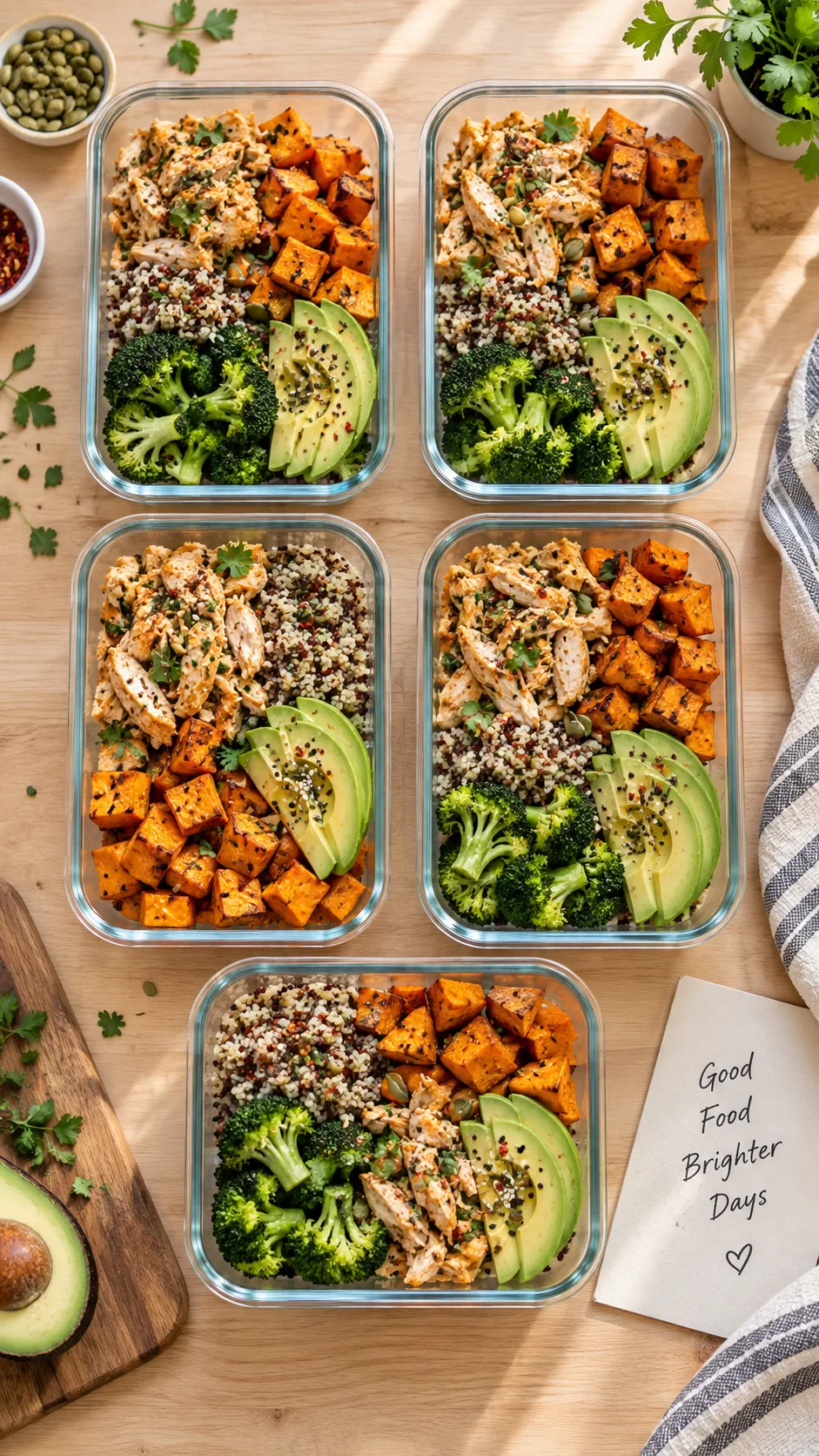
Why your meal prep keeps failing (it’s not you)
Most people build meal prep around calories. That’s backwards. Build it around satiety instead, meaning the feeling of being full and staying full.
A 400-calorie salad and a 400-calorie chicken-and-rice bowl hit your body completely differently. One leaves you raiding the office snack drawer by 2pm. The other carries you to dinner without drama.
Ever wonder why some meals vanish from your stomach in an hour? Usually three things are missing:
- Protein, the most filling macronutrient by a wide margin
- Fiber, which slows digestion, feeds your gut bacteria, and keeps blood sugar steady
- Fat, which adds flavor and slows everything down (yes, fat is allowed)
The research backs this up hard. A well-known study published in the New England Journal of Medicine tracked over 120,000 people and found that foods like yogurt, nuts, and vegetables correlated with less weight gain over time, while refined carbs did the opposite. Your grandma was right about real food.
The satiety math that changed my prep
Here’s the rule I use now, and it’s embarrassingly simple:
- 30g or more of protein per meal. This is the anchor, and I don’t negotiate on it.
- 8 to 10g of fiber per meal from veggies, beans, whole grains, or berries.
- A real fat source such as olive oil, avocado, nuts, or full-fat dairy.
- Volume. The meal should look like food on the plate, not a garnish.
Hit all four and hunger stops being a boss fight. In my experience that’s the entire secret, and everything after it is just recipes.
The 90-minute Sunday that feeds you all week
I used to spend four hours prepping. Four. Then I’d eat the same dry chicken breast five days straight and hate my life by Thursday.
Now I do 90 minutes, tops. The trick is prepping components rather than finished meals. You cook building blocks, then you assemble different combinations during the week.
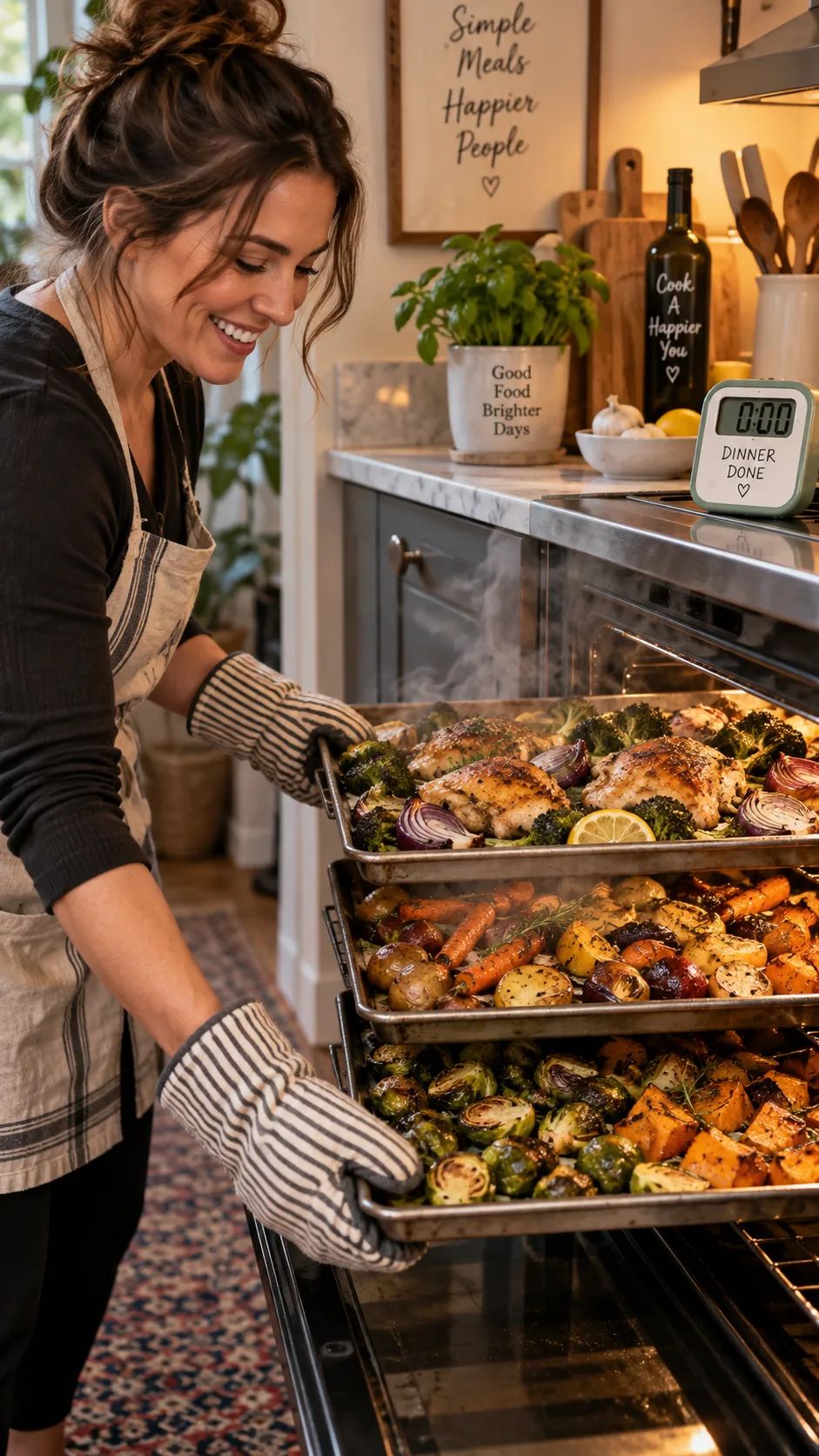
The component method, step by step
- Start the carbs first. Rice, quinoa, and potatoes take the longest, so get them going before anything else.
- Load two sheet pans, one with protein and one with vegetables. Set the oven to 425°F and roast while the grains cook.
- Cook one “wet” protein on the stovetop: a chili, a curry, or a turkey bolognese. This becomes your flavor rescue when you get bored.
- Chop the raw stuff last. Cucumber, peppers, cabbage. Crunch matters more than you think.
- Make two sauces. Everyone skips this step, and that’s why their food tastes like cardboard.
That’s the whole thing. Everything overlaps, so you’re never standing around watching a pot. If you want a fuller walkthrough of the workflow, this beginner’s blueprint for meal prep for the week breaks down the timing in more detail.
Sauces: the difference between meal prep and meal punishment
I will die on this hill. Sauce is not optional. The same chicken and rice turns into four different meals depending on what you pour over it.
My rotation, each one made in under five minutes:
- Garlic yogurt sauce: Greek yogurt, lemon, minced garlic, salt, olive oil. It sneaks in extra protein too.
- Peanut lime: peanut butter, lime juice, soy sauce, hot water, chili flakes.
- Chimichurri: parsley, olive oil, red wine vinegar, garlic, oregano.
- Honey mustard tahini: tahini, dijon, honey, water, apple cider vinegar.
Store them in small jars. They hold up for 5 to 7 days without any trouble. Your Thursday self will thank you.
Build-your-own bowls that don’t get boring
The bowl format wins because it bends. Same containers, different personality each day.
Pick one item from each column and you have more than 100 combinations without thinking hard:
Column 1: protein (aim for 30 to 40g)
- Shredded chicken thighs (juicier than breast, fight me)
- Ground turkey or beef, 93/7
- Baked salmon or frozen cod fillets
- Hard-boiled eggs or a baked egg loaf
- Black beans, chickpeas, or lentils
- Extra-firm tofu, pressed and roasted until the edges crisp
Column 2: carbs (the ones that fill you up)
- Roasted sweet potato or baby potatoes
- Jasmine rice, quinoa, farro, or barley
- Whole wheat couscous
- Roasted butternut squash
Quick note on potatoes: they score highest on the Satiety Index, a research scale developed at the University of Sydney that measures how full foods make you feel. Boiled potatoes beat everything else the researchers tested, including brown rice and whole grain bread. Not what the low-carb internet wants you to hear.
Column 3: veg (go heavy, seriously)
- Roasted broccoli, cauliflower, Brussels sprouts
- Bell peppers and red onion
- Zucchini (roast it hot and fast or it turns to mush)
- Shredded cabbage or raw slaw mix for crunch
- Spinach wilted into whatever’s hot
Column 4: the finisher
- Avocado or a drizzle of good olive oil
- Feta, parmesan, or crumbled goat cheese
- Toasted nuts or seeds
- Pickled red onion (game changer, takes 10 minutes)
- Fresh herbs: cilantro, parsley, mint
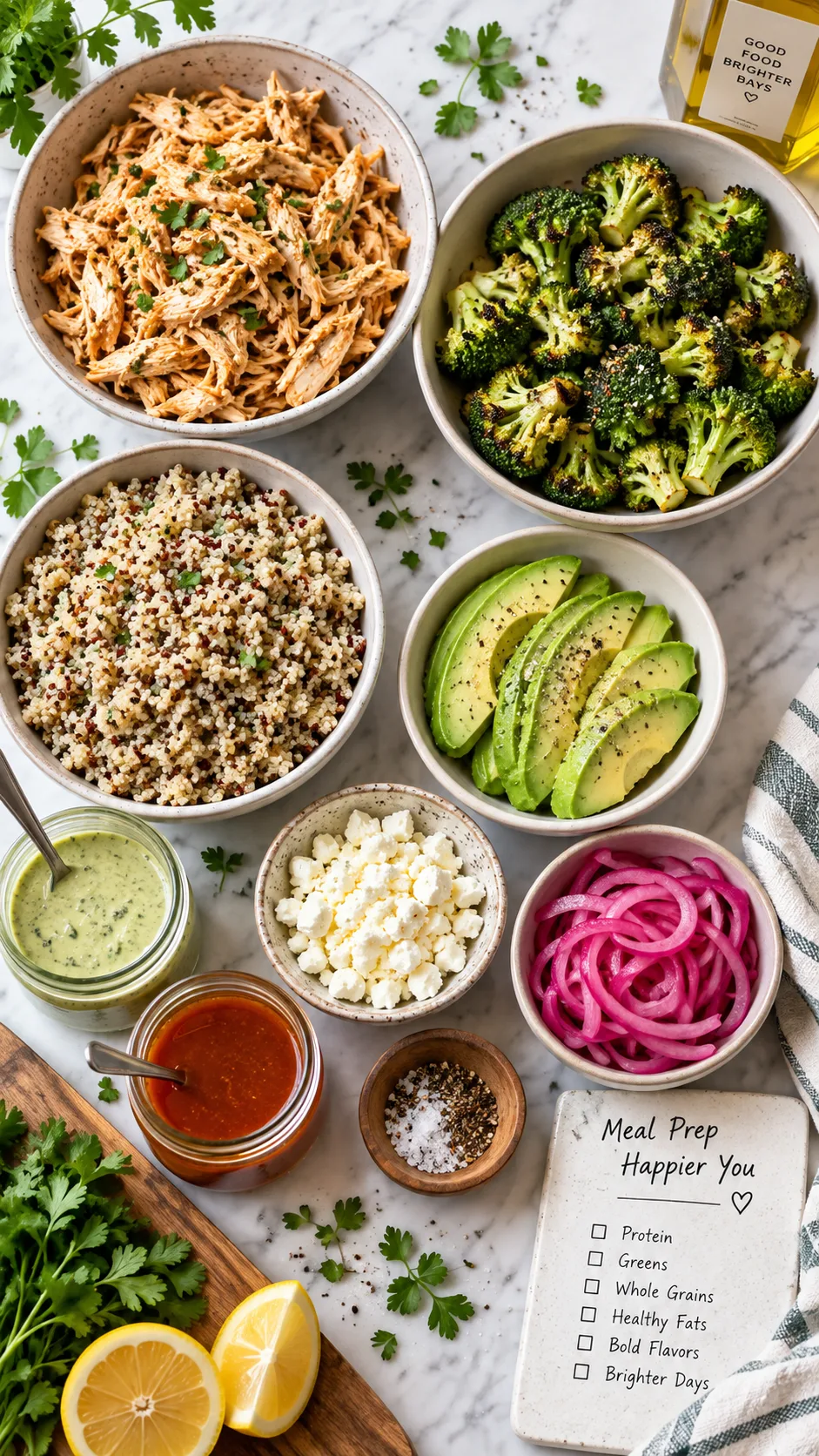
Five real meals I rotate
Enough theory. Here’s what sits in my fridge most weeks, with rough protein counts.
1. The Greek chicken bowl (~42g protein)
Oregano-lemon chicken thighs, couscous, roasted zucchini and red onion, cucumber, feta, garlic yogurt sauce. It tastes better cold than hot, which makes it perfect for a desk lunch when there’s no microwave nearby.
2. Turkey chili with sweet potato (~38g protein)
Ground turkey, black beans, kidney beans, diced sweet potato, crushed tomatoes, cumin and smoked paprika. Massive fiber. Freezes beautifully. It gets better by day three, which is rare and delightful.
3. Korean-ish beef bowl (~40g protein)
Ground beef cooked with soy, sesame oil, garlic, ginger, and a little brown sugar. Rice, steamed broccoli, shredded carrot, gochujang mayo. Twenty minutes start to finish, and my whole family fights over it.
4. Salmon grain bowl (~35g protein)
Baked salmon, farro, roasted Brussels sprouts, avocado, honey mustard tahini. Omega-3s, fiber, and protein in one container. This one keeps me full for a solid five hours.
5. The cottage cheese egg bake (~30g protein per slice)
Twelve eggs, a cup of cottage cheese, spinach, roasted peppers, feta. Bake it in a 9×13, cut it into squares, eat it all week. Breakfast solved. If you want more morning options, these make-ahead breakfast meal prep ideas saved me during a brutal work stretch last year.
The protein numbers nobody explains properly
How much protein do you need? The official RDA sits at 0.8g per kilogram of body weight, but that number is the minimum to prevent deficiency, not the amount that keeps you full and holds onto muscle.
Most research on satiety and body composition points higher. The Academy of Nutrition and Dietetics and the International Society of Sports Nutrition both support intakes well above that baseline for active people, often somewhere between 1.4 and 2.0g per kilogram.
Practically? Aim for 25 to 40g per meal across three or four meals. That puts most people right where they need to be without a spreadsheet.
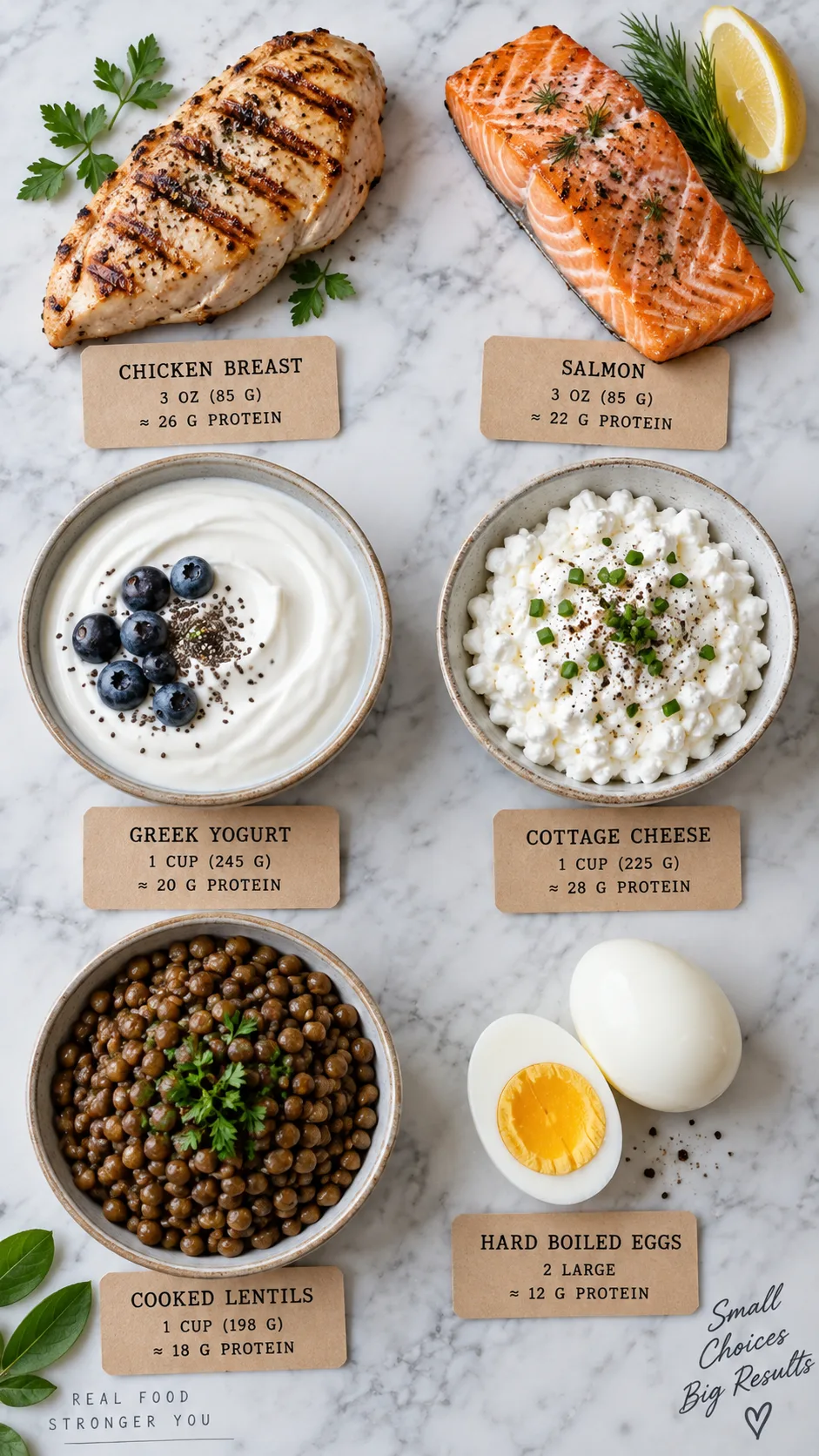
Here’s what 30g looks like in real food:
- 4oz chicken breast: ~35g
- 1 cup Greek yogurt (0%): ~22g
- 5 large eggs: ~30g
- 1 cup cottage cheese: ~25g
- 1.5 cups cooked lentils: ~27g
- 6oz salmon: ~34g
Notice how many lentils you need compared to chicken? I’m not arguing against plants here. You just need the number so you can plan portions honestly. For more recipe-level detail, this guide to high protein meal prep recipes lays out full weekly menus.
Storage rules that keep food safe and edible
Nobody talks about this part, and then they wonder why day-five chicken tastes like regret.
The timing rules
- Cool food before you seal it. Hot food in a closed container creates steam, steam creates sog, sog creates sadness.
- Give cooked proteins 3 to 4 days in the fridge. The USDA Food Safety guidelines are clear about this, so don’t push it to day six because you’re feeling brave.
- Freeze days four and five on Sunday, then pull them out Wednesday night. Fresh-tasting food all week.
- Get food into the fridge within 2 hours of cooking. Bacteria love the 40 to 140°F zone.
Things that do not survive meal prep
- Dressed greens (the sad salad origin story)
- Avocado sliced in advance, unless you soak it in lime
- Crispy anything: fries, breaded chicken, roasted nuts on top
- Fresh herbs mixed in early (add them the day of)
- Fish past day three, at least where texture is concerned
Keep wet things away from dry things. Dressing goes in a tiny container. Crunchy toppings go in a snack bag. It costs you an extra 30 seconds and it saves the whole meal.
Container advice from someone who wasted money
I bought cheap plastic containers three times before I learned. Glass with locking lids wins. No staining, no lingering smell, safe in the microwave, safe in the oven when you reheat. Buy 10 identical ones so the lids interchange. Mismatched lids are a special kind of kitchen hell.
Common mistakes that sabotage everything
You prep seven days of identical food
Nobody wants the same meal seven times. Prep two proteins and two carb bases, then mix and match. Variety costs you almost nothing in extra time.
You under-season everything
Cold food tastes blander than hot food. Salt and acid more aggressively than you would for a meal you’re eating right away. A squeeze of lemon before the first bite revives almost anything.
You skip snacks entirely
Then you’re starving at 4pm and dinner turns into a free-for-all. Prep two snacks: Greek yogurt with berries, and a small bag of nuts with an apple. Done.
You go too low on calories
Extreme restriction backfires. Your body fights back with hunger hormones, and you lose. If you’re eating in a deficit, do it in a way you can sustain. This calorie deficit meal plan with meal prep shortcuts covers how to keep portions reasonable without feeling deprived.
You try to change everything at once
Start with three lunches, not 21 meals. Master that, then expand. I’ve watched more ambitious plans collapse by Tuesday than I can count.
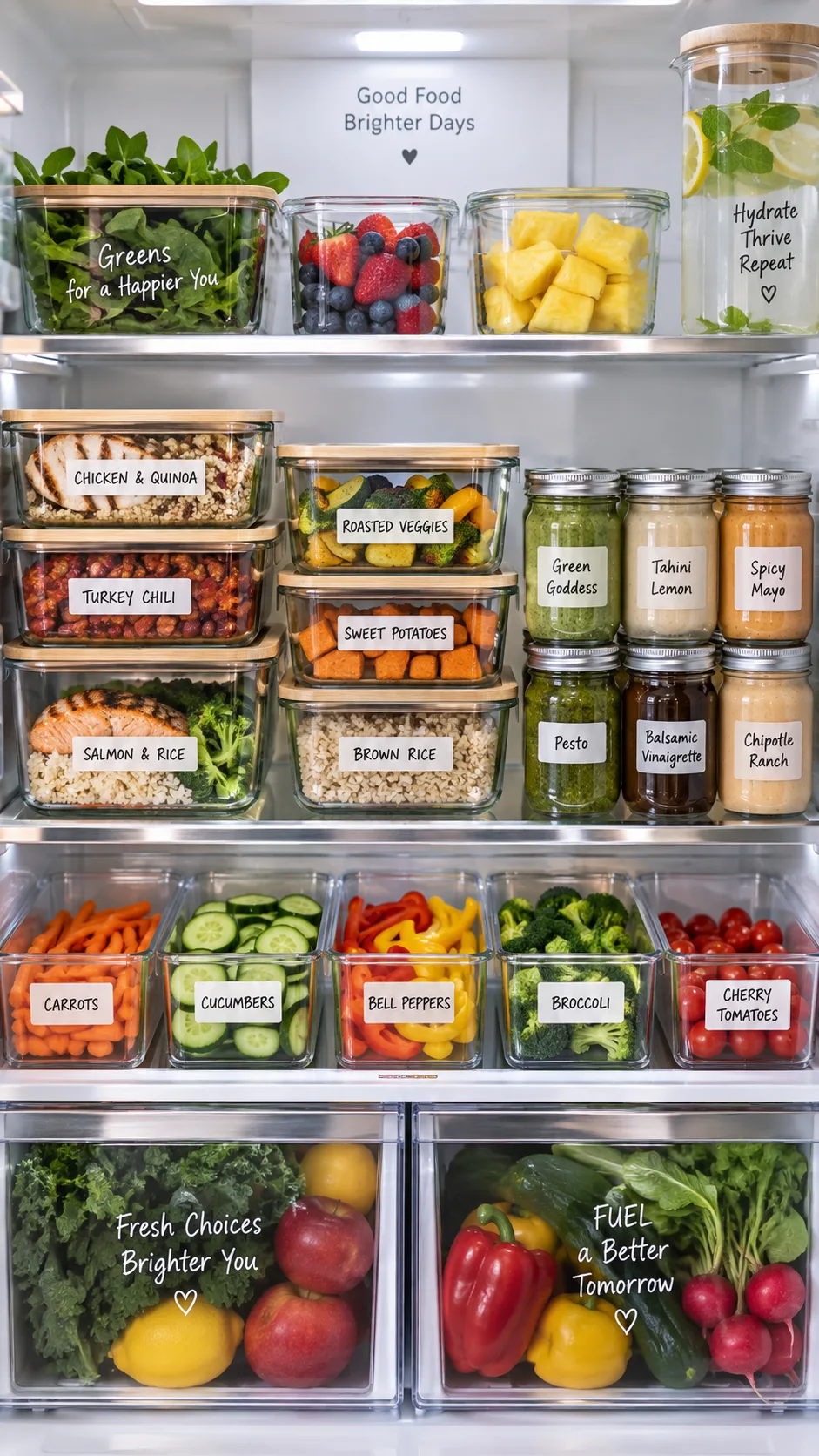
Your first week: a simple starting plan
Want something to copy exactly? Here’s a low-effort starter week.
- Sunday cook: sheet pan chicken thighs, sheet pan broccoli and peppers, a pot of rice, turkey chili, a batch of egg bake, two sauces.
- Breakfast, Monday through Friday: an egg bake square, fruit, coffee. Five minutes total.
- Lunch, Monday through Wednesday: chicken, rice, veg, garlic yogurt sauce. Swap the sauce daily.
- Lunch, Thursday and Friday: turkey chili from the freezer, topped with Greek yogurt and hot sauce.
- Snacks: cottage cheese, mixed nuts, whatever fruit is in season.
- Dinner: cook fresh or reuse components. Don’t over-prep dinner, because that’s where burnout starts.
Notice that dinner stays flexible? I do that on purpose. Prepping every single meal turns eating into a chore, and people abandon chores. For more ideas on keeping midday meals interesting, check out these lunch meal prep ideas that keep you full.
The bottom line
Meal prep works when the food keeps you full. That’s the whole thing. Protein anchors every meal, fiber fills the gaps, and fat makes it taste like something you want to eat.
Prep components instead of finished meals. Make sauces. Freeze the back half of the week. Keep dinner loose. And please, stop making salads you don’t want to eat.
Start this Sunday with three lunches. That’s roughly 45 minutes of work in exchange for a week of not thinking about food at 12:30pm. Your future self, the one who isn’t standing in front of an open fridge at 9pm, will thank you for it.