

No leg press machine? No gym membership? Good. You don’t need a thousand-dollar piece of equipment to build strong, powerful legs and glutes. Your bodyweight and a few simple tools can take your lower body training surprisingly far if you know the right moves.
I used to think home leg workouts were sad substitutes for the real thing. Then I actually tried programming them seriously, and my legs have never felt stronger. Here’s what worked.
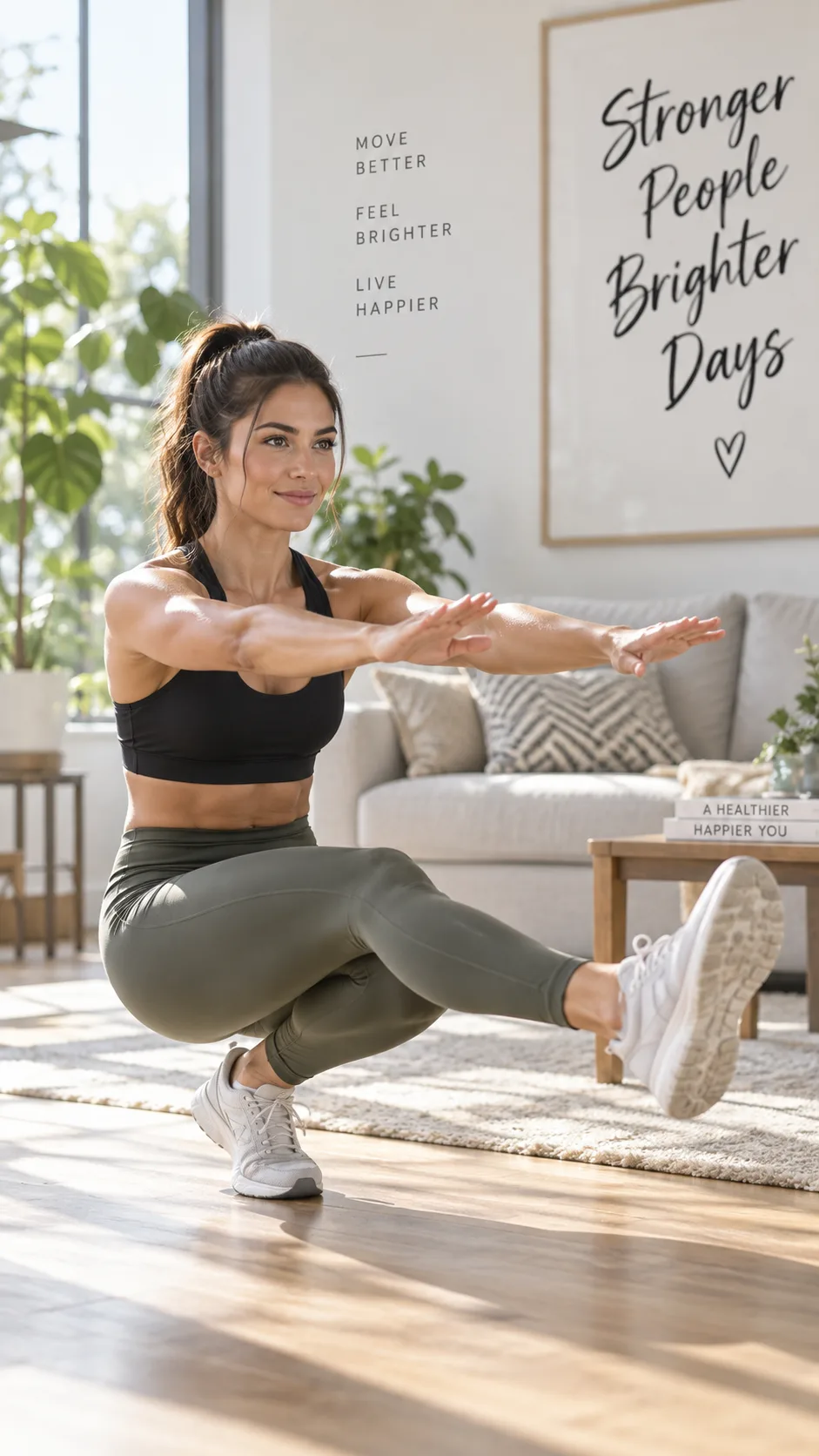
Why the leg press machine isn’t as special as you think
The leg press is popular because it isolates your quads, hamstrings, and glutes under load. But it has a dirty little secret. It removes almost all stabilization work from the equation. Your core, hip stabilizers, and ankle joints barely show up to the party.
Functional leg exercises you can do at home force more muscles to engage at once. That means better overall strength, better balance, and a lower injury risk. Athletes rarely rely solely on machine-based training for exactly this reason.
Research published by the National Institutes of Health found that compound lower body exercises activate multiple muscle groups simultaneously and drive greater hormonal responses than isolated machine movements. The evidence backs this up.
The 9 best leg press alternatives you can do at home
These aren’t random exercises thrown together. Each one targets the same muscle groups as the leg press: quads, glutes, hamstrings, and calves. They also build real-world functional strength that machines won’t give you. Work through these progressively, and you will notice a difference.
1. Wall sit
The wall sit is criminally underrated. Hold your back flat against a wall, lower into a 90-degree seated position, and hold it. Start with 30 seconds and work up to 2 minutes. Your quads will be screaming by the 45-second mark, and that’s exactly the point.
2. Goblet squat (with or without weight)
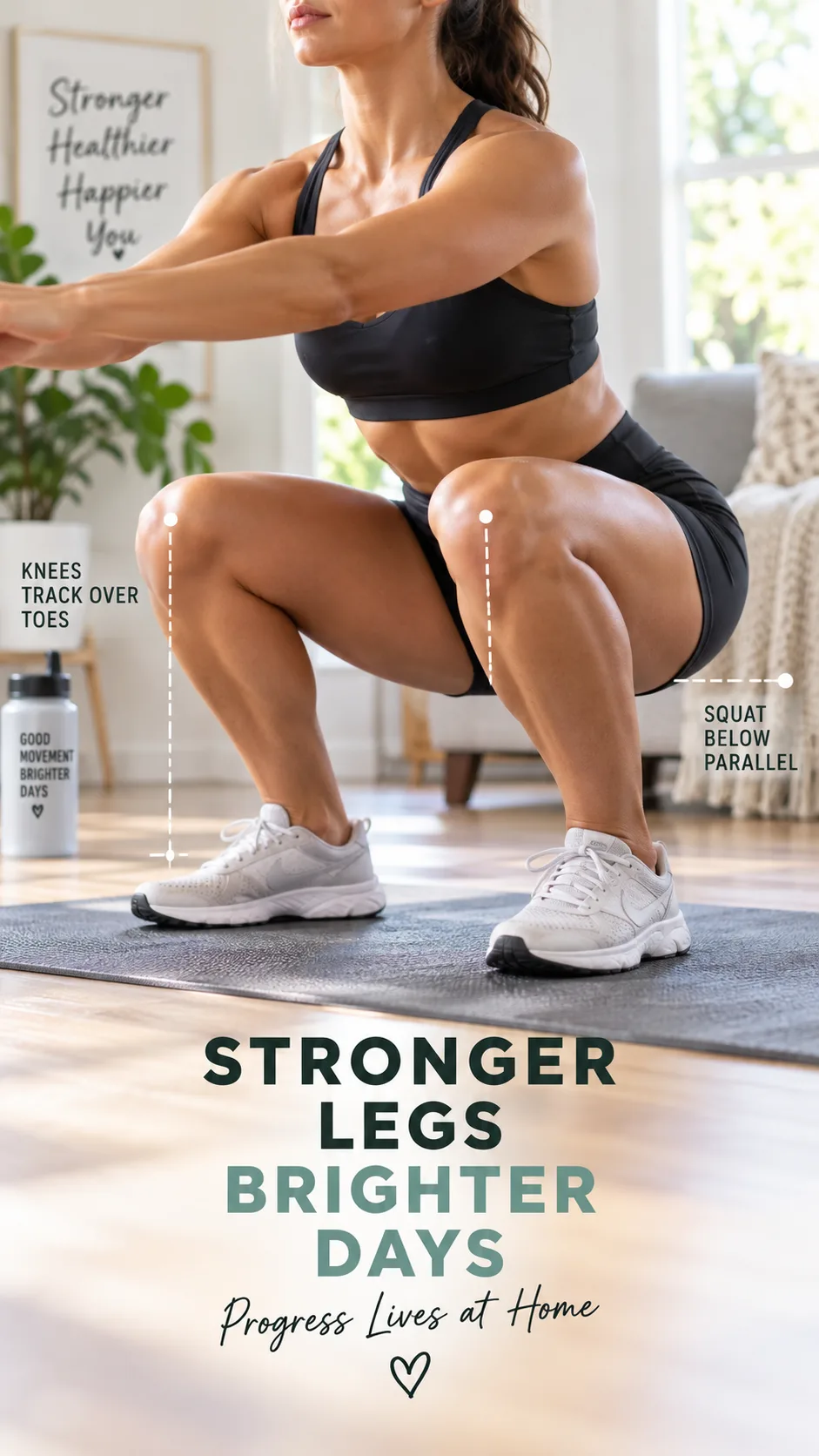
Hold a water jug, a backpack, or a dumbbell at your chest and squat down while keeping your torso upright. The goblet squat mimics the leg press movement pattern more closely than almost any other bodyweight exercise. Focus on sitting deep into your hips and driving through your heels on the way up.
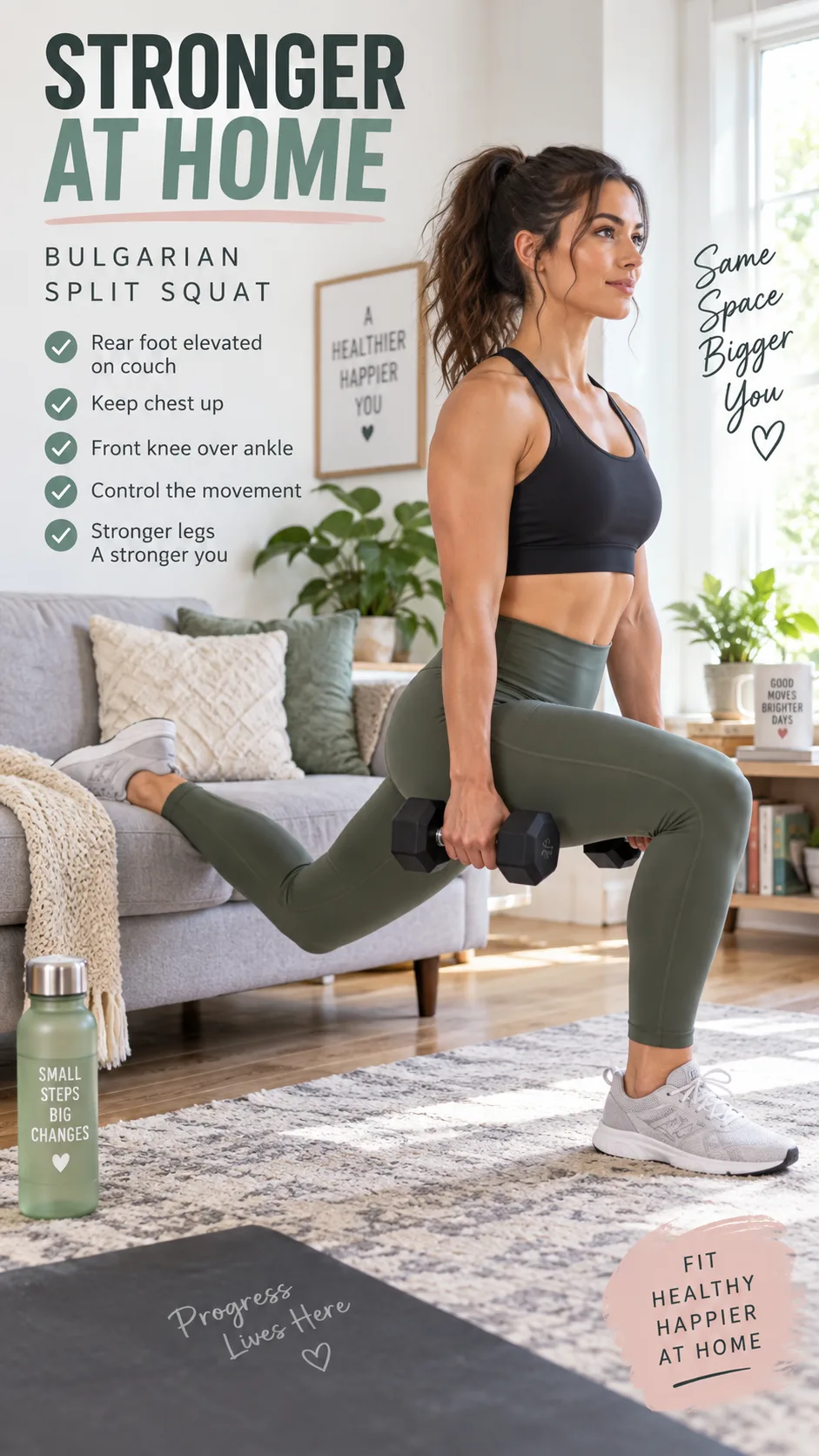
3. Bulgarian split squat
Fair warning: this one is brutal. Elevate your rear foot on a chair or couch, then lower your front knee toward the floor. The Bulgarian split squat is one of the best unilateral leg exercises ever created. It hammers your quads, glutes, and hip flexors all at once, and it exposes and corrects muscle imbalances fast.
4. Step-ups
Use a sturdy chair, a stair, or a low table. Step up with one foot, drive through your heel to stand tall, then lower back down with control. Add a weighted backpack to increase difficulty immediately. Step-ups directly replicate the pressing motion of a leg press, just vertically instead of horizontally.
5. Sumo squat
Take a wide stance with your toes pointed out at 45 degrees, then lower your hips straight down. Sumo squats place extra emphasis on your inner thighs and glutes, muscle groups that a standard leg press often skips. Hold a weight between your legs to make it harder.
6. Glute bridge and hip thrust
Lie on your back, plant your feet flat, and drive your hips toward the ceiling. At the top, squeeze your glutes as hard as you possibly can for a full second. Elevate your shoulders on a couch or bed to turn this into a hip thrust, which is the most effective glute-building exercise you can do without a gym. Healthline confirms that hip thrusts outperform many traditional exercises for glute activation.

7. Resistance band leg press (floor version)
Loop a resistance band around both feet while lying on your back, hold the ends at your chest, and press your legs out straight against the band’s resistance. This mirrors the leg press movement pattern almost exactly, just horizontally. It’s a practical way to get that machine-style push without the machine. A decent resistance band set costs less than $20 and delivers real results.
8. Reverse lunge
Step one foot backward and lower your back knee toward the floor, keeping your front shin vertical. Reverse lunges are gentler on the knees than forward lunges but equally effective for quad and glute development. Slow the descent to 3 to 4 seconds to increase time under tension and make this much harder without adding any extra weight.
9. Squat jump (plyometric squat)
Lower into a squat, then explode upward as high as you can and land softly back into the squat position. Jump squats build explosive power and burn serious calories while developing the same muscles as the leg press. Don’t skip these because they look simple. Three sets of 15 will change your perspective fast.
How to structure these into a real home leg workout
Random exercises don’t build legs. A structured, progressive routine does. Here’s a simple format you can follow three times a week:
- Warm-up (5 mins): Leg swings, hip circles, bodyweight squats
- Strength block (20-25 mins): Choose 4-5 exercises from the list above, 3-4 sets of 8-15 reps each
- Burnout round (5 mins): Wall sit hold or squat jumps to finish
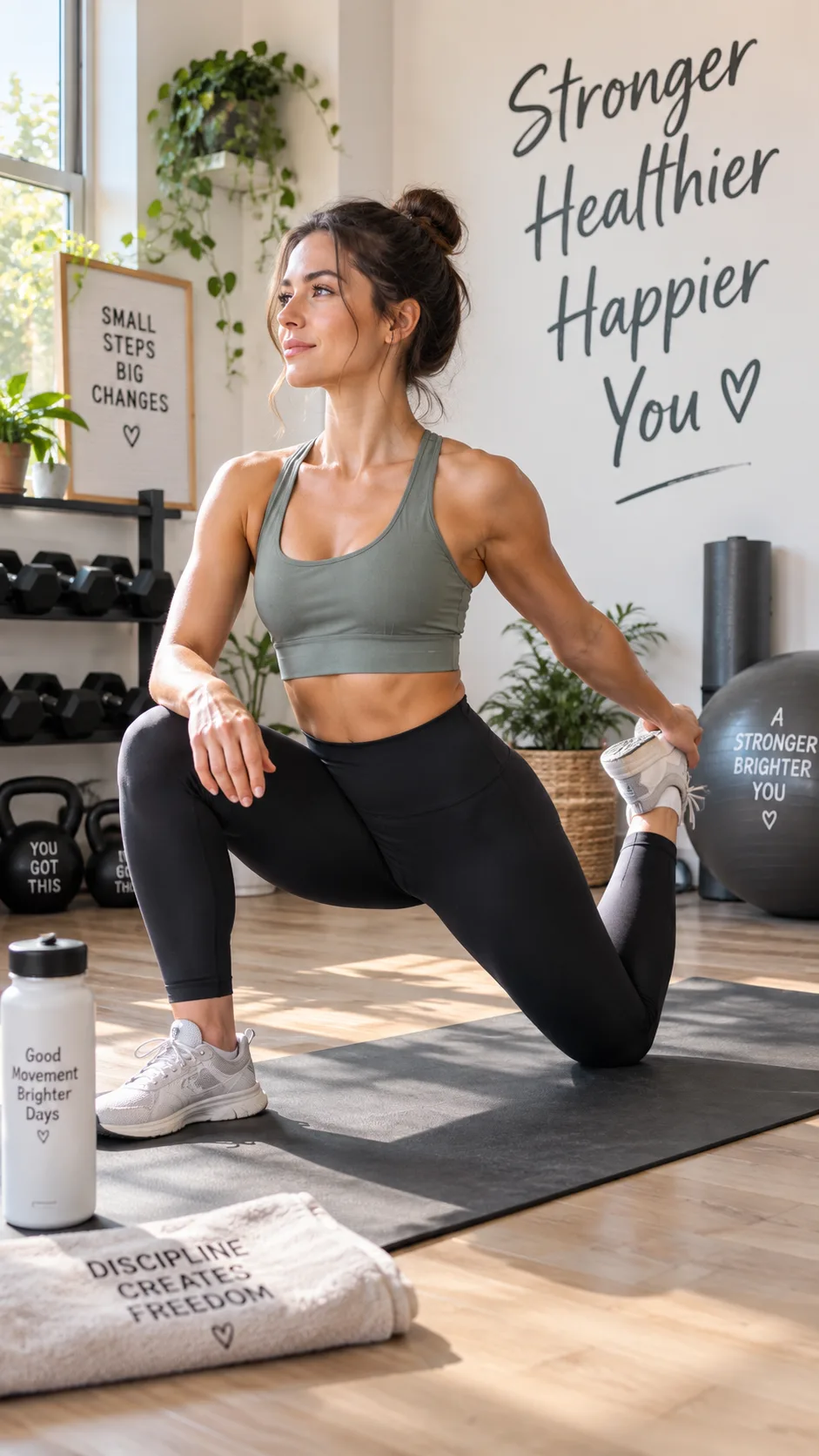
- Cool-down (5 mins): Hip flexor stretch, quad stretch, hamstring fold
If you want to see how this fits into a bigger training picture, check out this full body workout plan that builds real strength in just 3 days a week. It pairs well with this kind of home training approach.
Tips for making home leg training actually progressive
Progressive overload is what builds strength anywhere, whether you train at home, in a gym, or in a parking lot. Here’s how to keep your legs growing without a machine:
- Add reps or sets each week to your current exercises
- Slow down the tempo — a 3-second descent makes everything harder instantly
- Add load with a heavy backpack, water jugs, or resistance bands
- Reduce rest time between sets to increase metabolic demand
- Progress to harder variations, moving from a squat to a Bulgarian split squat to a single-leg squat over time
The American Council on Exercise is clear that progressive overload is non-negotiable for muscle growth. That applies whether you’re using a leg press machine or a coffee table as your step platform.
What about nutrition? (It matters more than you think)
Hard leg training creates demand, and your body needs fuel to respond. Without adequate protein and enough total calories, you won’t build the strength you’re working for. Aim for at least 0.7 to 1g of protein per pound of bodyweight daily.
If you’re also trying to manage your weight while building muscle, understanding why you might be gaining weight unexpectedly can save you a lot of confusion and frustration along the way.
For women, building leg and glute strength carries real hormonal and metabolic benefits beyond how your legs look. The strength training guide for women on this site breaks down exactly how to approach this in a way that holds up long-term.
Common mistakes to avoid
- Skipping the warm-up — cold muscles and explosive movements are a bad combination
- Going too shallow on squats — depth activates the glutes significantly more than quarter squats
- Never training to near-failure — leaving too many reps in the tank limits your progress
- Training only one movement pattern — mix squat, hinge, and lunge movements for full development
- Ignoring single-leg work — bilateral imbalances are real, and single-leg exercises fix them fast
Final thoughts: you really don’t need that machine
Here’s the honest truth. The leg press machine is a convenience, not a necessity. The 9 exercises above cover every muscle the leg press targets, while also building the stabilizer strength and functional capacity that machines simply can’t deliver. The gym isn’t going anywhere, but neither is your living room floor.
Pick 4 or 5 of these moves, train them seriously 2 to 3 times a week, push for progressive overload, and eat enough protein. Give it 8 weeks and your legs will tell you the machine was overrated all along.
Now stop reading and go do your squats. Seriously.