

You pull your plastic container from the office fridge at noon on Thursday. You peel back the lid, take one look at the slimy, graying spinach drowned in lukewarm vinaigrette, and immediately order takeout instead. We have all thrown away soggy meal prep salads that tasted like disappointment and wet cardboard.
Traditional plastic containers ruin salads because they force fragile greens to sit directly in heavy dressing and vegetable juice. Mason jars completely change this dynamic through vertical stacking and airtight glass seals. When you pack your ingredients in the correct order, they stay crisp and fresh for five full days.
I switched to glass jar salads four years ago after tossing out my third wilted lunch of the week. Today, you will learn the exact food engineering behind the crunch, five high-flavor recipes, and my Sunday prep workflow that clocks in under forty minutes.
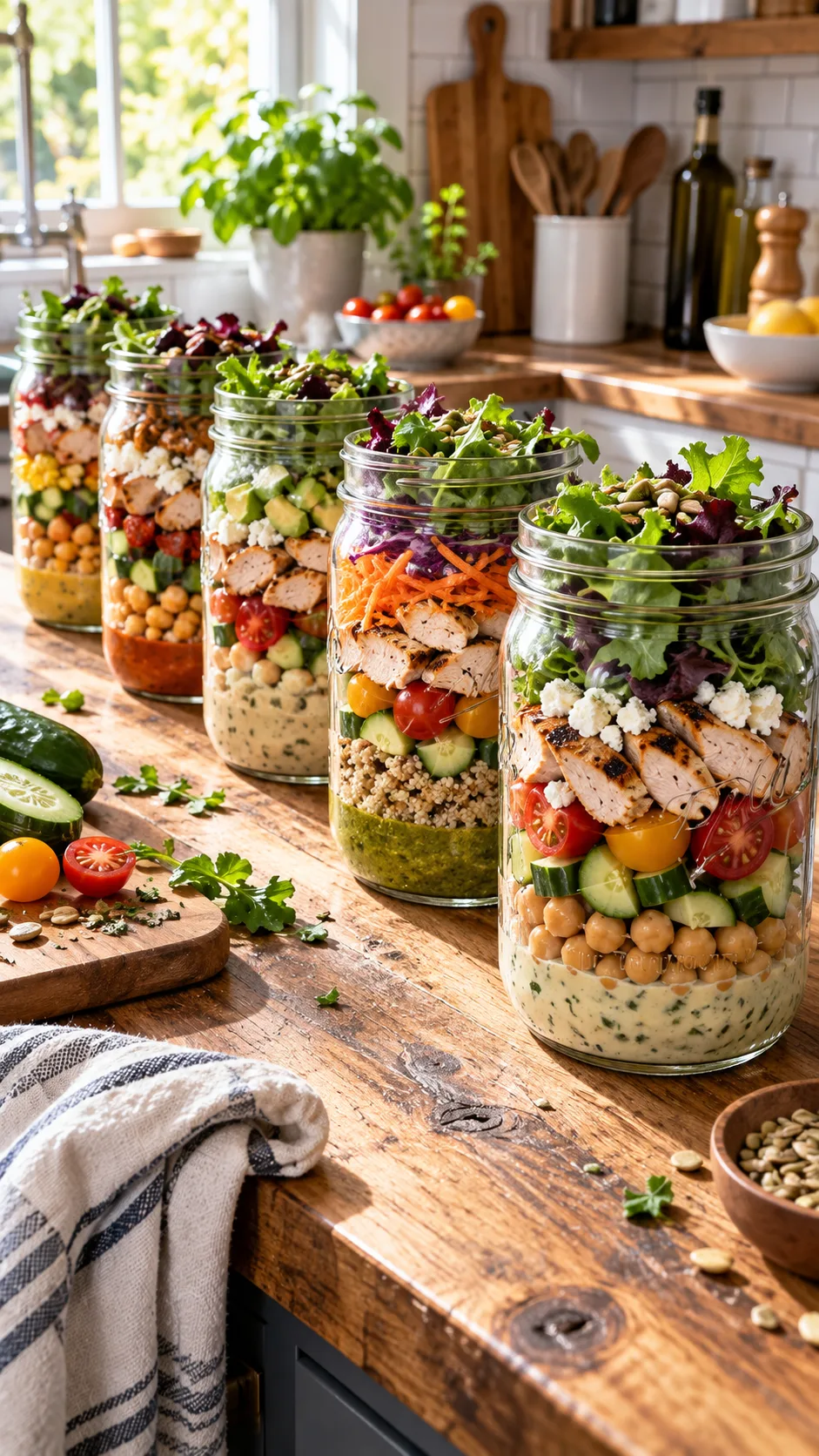
The Science of the Stack: Why Mason Jars Stop Soggy Greens
Why do standard salads wilt so fast in the fridge? Blame moisture migration and oxygen exposure. Leafy greens contain high surface areas with fragile cellular structures that collapse the second they contact salt, acids, or liquid water.
Glass mason jars solve both issues simultaneously. The non-porous glass prevents oxygen from entering, while the vertical column keeps liquid dressings at the bottom, several inches away from delicate greens at the top.
To pull this off without building a sludgy swamp, you must follow the strict Five-Layer Architecture:
- Layer 1: The Dressing (Bottom Floor). Always pour your dressing directly onto the bottom of the jar. Two to three tablespoons provide ample flavor without soaking upper ingredients.
- Layer 2: Hard, Dense Vegetables (The Barrier). Drop chopped carrots, cucumbers, bell peppers, radishes, or celery right into the liquid. These vegetables have tough exterior cell walls that resist acid and take on a bright, quick-pickled flavor.
- Layer 3: Grains, Legumes, and Starches. Add your chickpeas, black beans, quinoa, farro, or lentils here. This tier absorbs excess moisture while staying separate from both the dressing and the delicate greens.
- Layer 4: Cooked Proteins and Cheeses. Place grilled chicken breast, baked tofu, hard-boiled eggs, feta, or goat cheese above the starch layer. Keeping your protein away from direct acid preserves its cooked texture and moisture.
- Layer 5: Soft Greens and Crunch Boosters (The Penthouse). Pack your baby spinach, chopped kale, arugula, or romaine into the very top. Add your toasted seeds, pumpkin seeds, or nuts right on top of the greens, where the dry jar atmosphere protects their crunch.
When you master this vertical assembly, your Friday lunch delivers the exact same crisp texture as your Monday lunch. You can easily adapt these concepts across other styles like healthy meal prep bowls or grain dishes.
Essential Equipment: What You Need Before Sunday
Do you need expensive gear? Absolutely not. However, buying the wrong jar size will frustrate you immediately.
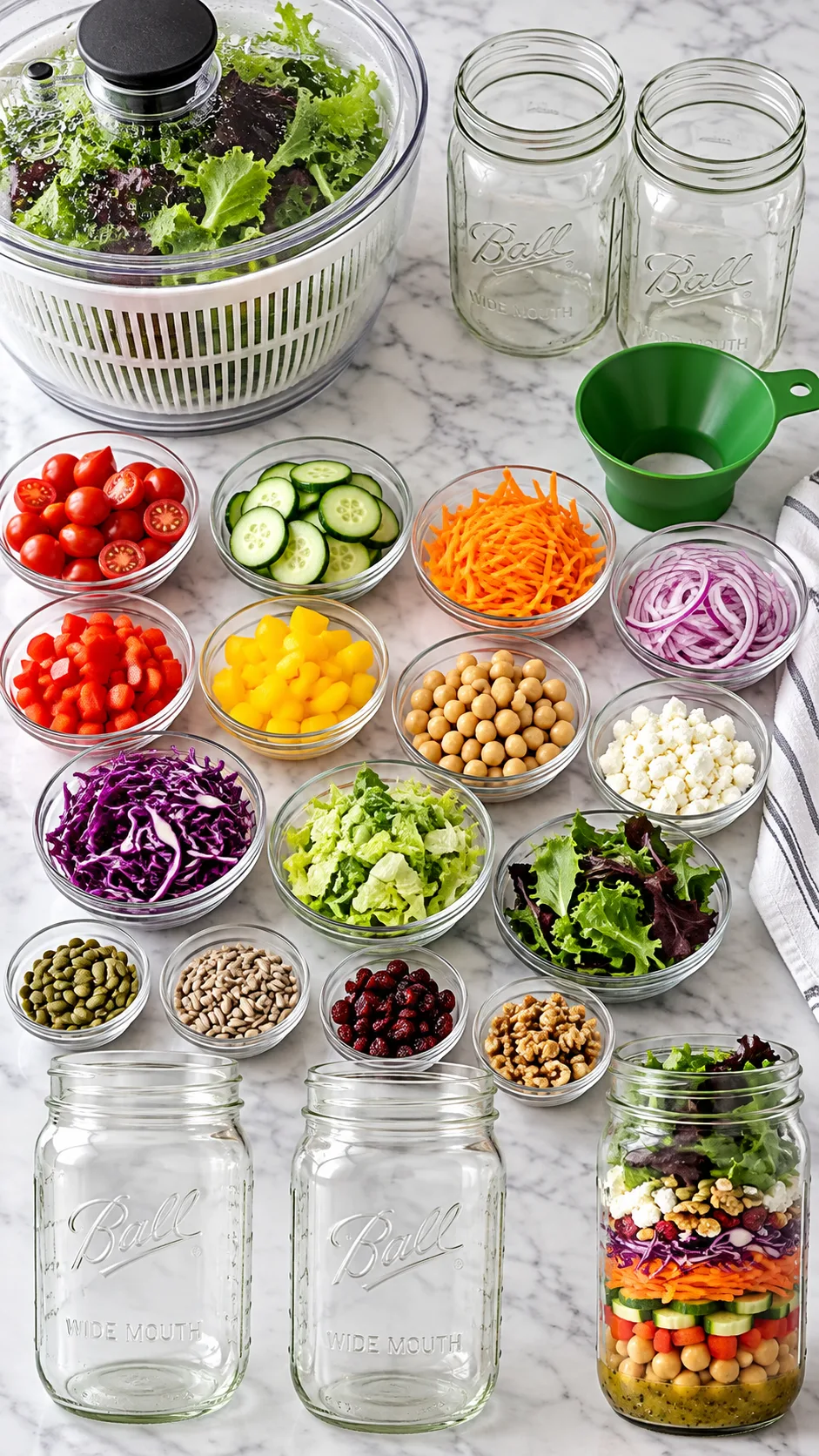
Never buy 16-ounce (pint) jars for lunch salads. A pint jar holds barely enough food to feed a toddler, leaving you starving by 2:00 PM. Always choose 32-ounce (quart) wide-mouth jars. The wide mouth lets you load ingredients quickly and pour the salad out effortlessly into a bowl.
- 32-Oz Wide-Mouth Ball or Kerr Mason Jars: Glass withstands dishwasher heat and will never absorb garlic odors or oil stains.
- Two-Piece Metal Lids or Leak-Proof Plastic Lids: Standard metal lids seal best, but one-piece plastic storage lids simplify daily cleaning.
- A Wide-Mouth Canning Funnel: This five-dollar tool prevents diced peppers and quinoa from bouncing all over your kitchen floor.
- Salad Spinner: A salad spinner acts as your main defense against moisture. Wet greens rot inside glass jars within forty-eight hours, regardless of how you layer them.
Food Safety: How Long Do Jars Really Last in the Fridge?
Can you safely eat a chicken salad on Friday that you assembled on Sunday afternoon? Yes, if you follow strict cold-chain practices and respect ingredient shelf lives.
The USDA Food Safety and Inspection Service recommends storing cooked poultry and meats at 40°F (4°C) or below for no more than three to four days. If you prep on Sunday night, consume meat-based salads by Thursday lunch.
Save your Friday slot for resilient plant proteins like edamame, roasted chickpeas, lentils, or firm tofu. These plant sources stay fresh for up to six days without texture loss or bacterial risk.
Check your refrigerator temperature with an internal appliance thermometer. Store your jars toward the back of the middle shelf where temperatures remain coldest and most stable. Never store meal prep jars on refrigerator door shelves, where warm air hits them every time you open the fridge.
5 Mason Jar Salad Recipes That Stay Crisp All Week
These recipes avoid boring cafeteria flavors. Each jar delivers dense nutrition, complex textures, and distinct dressings that keep your taste buds interested through Friday.
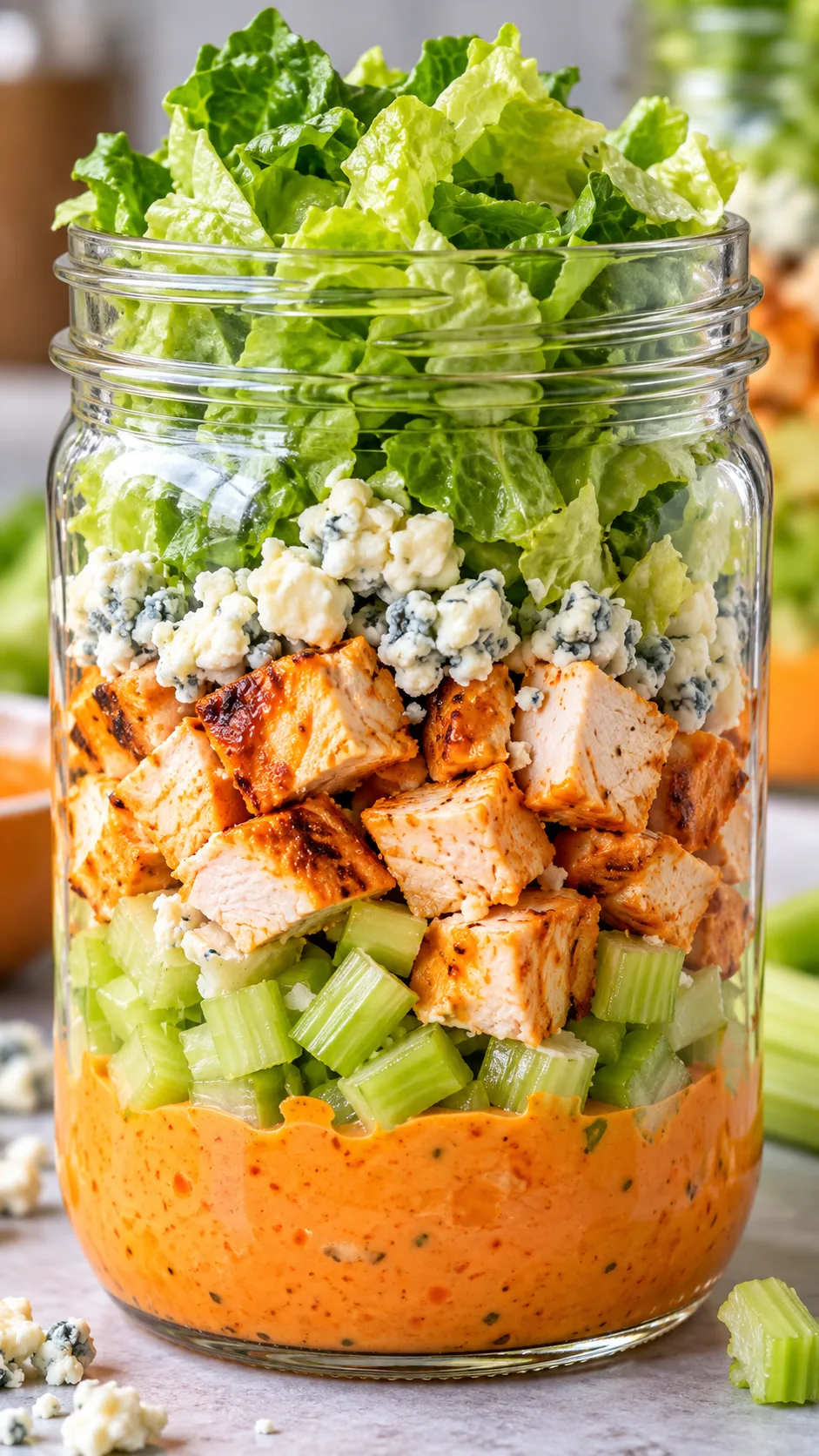
1. Buffalo Chicken & Crisp Romaine Jar
This recipe satisfies sports-bar cravings while delivering serious nutritional stats. It offers an incredible choice when you want high-protein low-calorie meal prep that does not leave you daydreaming about snacks an hour later.
- Prep time: 15 minutes
- Shelf life: 4 days
- Estimated nutrition per jar: 440 calories, 42g protein, 18g carbs, 22g fat
- Layer 1 (Dressing): 2 tablespoons Greek yogurt ranch mixed with 1 tablespoon Frank’s RedHot sauce.
- Layer 2 (Hard Veggies): 1/3 cup diced celery and 1/3 cup diced English cucumbers.
- Layer 3 (Carb/Legume): 1/3 cup cooked brown rice or rinsed canned white beans.
- Layer 4 (Protein & Dairy): 5 ounces grilled chicken breast (cubed) and 2 tablespoons crumbled blue cheese.
- Layer 5 (Greens): 2 cups shredded romaine lettuce (completely dried).
Pro Tip: Grill your chicken with smoked paprika, garlic powder, and onion powder to amplify the buffalo flavor without adding extra sodium.
2. Mediterranean Farro, Chickpea, and Feta Power Jar
Looking for a vegetarian lunch that keeps you full past dinner? The fiber in farro and chickpeas stabilizes blood sugar, while kalamata olives and oregano vinaigrette deliver robust savory flavor.
- Prep time: 15 minutes
- Shelf life: 5 days
- Estimated nutrition per jar: 490 calories, 16g protein, 62g carbs, 21g fat
- Layer 1 (Dressing): 2 tablespoons extra virgin olive oil, 1 tablespoon red wine vinegar, 1/2 teaspoon dried oregano, pinch of salt and black pepper.
- Layer 2 (Hard Veggies): 1/3 cup halved cherry tomatoes, 1/3 cup diced Persian cucumbers, and 2 tablespoons sliced kalamata olives.
- Layer 3 (Grains & Legumes): 1/3 cup cooked farro and 1/3 cup rinsed canned chickpeas.
- Layer 4 (Dairy/Toppings): 3 tablespoons crumbled sheep’s milk feta cheese and 1 tablespoon chopped red onion.
- Layer 5 (Greens): 2 cups baby arugula and chopped flat-leaf parsley.
Research from the Harvard T.H. Chan School of Public Health shows that eating a wide variety of plant foods dramatically improves gut microbiome diversity. This single jar packs six distinct plant sources into one meal.
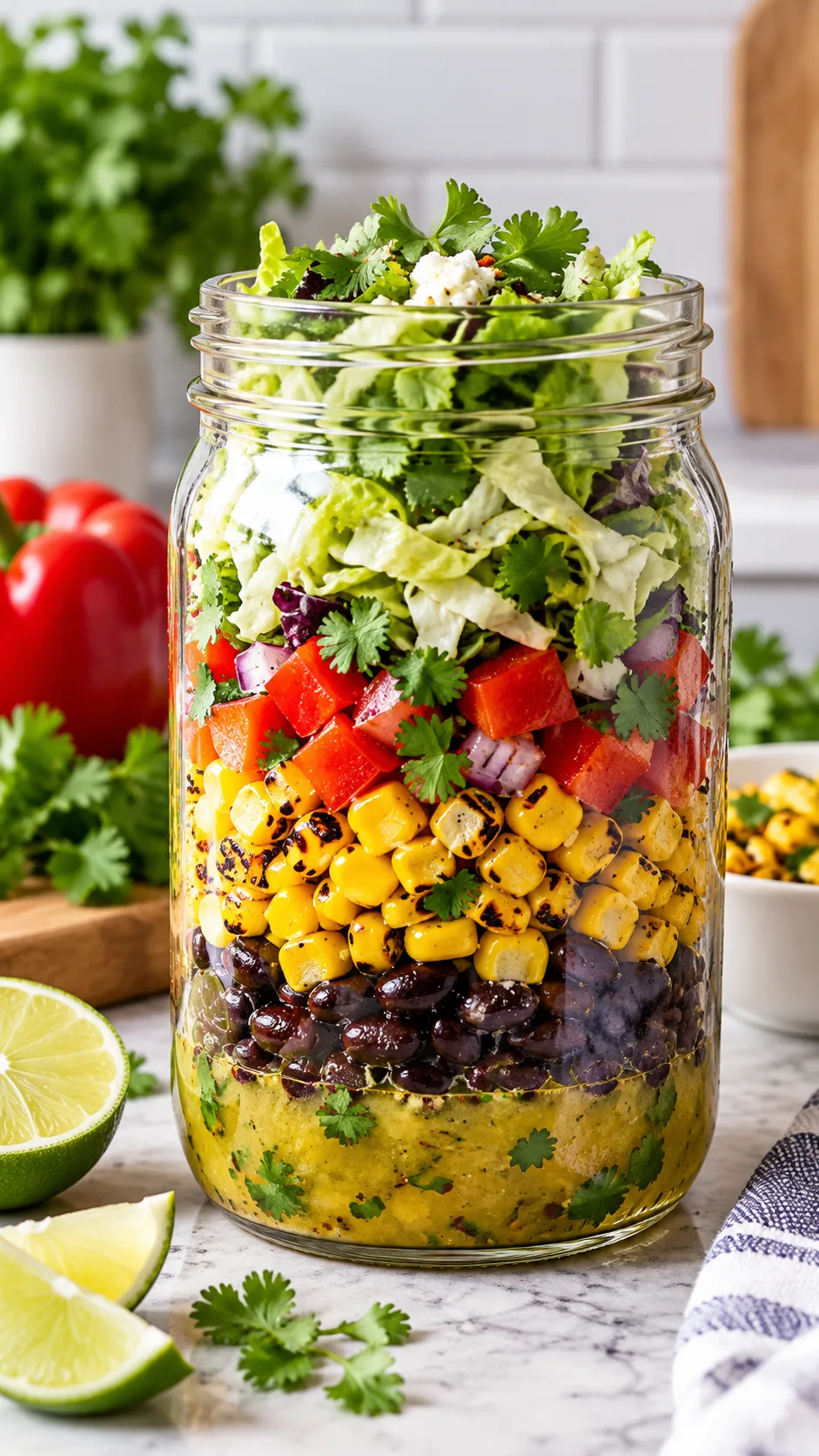
3. Southwest Black Bean and Charred Corn Jar
This salad packs smoky, sweet, and zesty notes into every bite. The chipotle lime dressing infuses the beans and corn with deep flavor by Wednesday.
- Prep time: 20 minutes
- Shelf life: 5 days
- Estimated nutrition per jar: 460 calories, 18g protein, 58g carbs, 19g fat
- Layer 1 (Dressing): 2 tablespoons cilantro-lime vinaigrette (lime juice, olive oil, minced garlic, cumin, honey).
- Layer 2 (Hard Veggies): 1/3 cup diced red bell pepper and 1/4 cup diced red onion.
- Layer 3 (Legumes & Corn): 1/2 cup black beans (rinsed and drained) and 1/3 cup charred sweet corn (pan-seared in a cast iron skillet).
- Layer 4 (Protein & Seeds): 4 ounces shredded adobo turkey breast or spiced tempeh, plus 1 tablespoon raw pumpkin seeds.
- Layer 5 (Greens): 2 cups chopped green leaf lettuce and fresh cilantro sprigs.
Do you love avocado on your Southwest salads? Never pack fresh avocado inside the jar on Sunday; the fruit turns brown and mushy by Tuesday morning. Slice half an avocado fresh right before you eat lunch at work.
4. Sesame Ginger Soba and Edamame Crunch Jar
Tired of typical leafy greens? Buckwheat soba noodles and crunchy purple cabbage turn this jar into a restaurant-worthy cold noodle salad.
- Prep time: 20 minutes
- Shelf life: 5 days
- Estimated nutrition per jar: 430 calories, 21g protein, 51g carbs, 16g fat
- Layer 1 (Dressing): 1.5 tablespoons toasted sesame oil, 1 tablespoon tamari or low-sodium soy sauce, 1 tablespoon rice vinegar, and 1 teaspoon grated fresh ginger.
- Layer 2 (Hard Veggies): 1/3 cup matchstick carrots, 1/3 cup thinly sliced radishes, and 1/3 cup shredded red cabbage.
- Layer 3 (Noodles & Legumes): 1/2 cup cooked and chilled soba noodles and 1/2 cup shelled edamame.
- Layer 4 (Nuts & Aromatics): 1 tablespoon toasted sliced almonds, 1 teaspoon black sesame seeds, and 2 tablespoons sliced scallions.
- Layer 5 (Greens): 2 cups baby spinach or chopped tatsoi.
Rinse your soba noodles under cold running water immediately after boiling to strip away surface starch. This step prevents the noodles from clumping together inside the jar.
5. Steakhouse Blue Cheese and Roasted Sweet Potato Jar
Craving an indulgent weekend dinner on a Tuesday afternoon? This hearty jar combines lean flank steak, roasted sweet potatoes, and tangy blue cheese dressing.
- Prep time: 25 minutes
- Shelf life: 4 days
- Estimated nutrition per jar: 510 calories, 38g protein, 34g carbs, 24g fat
- Layer 1 (Dressing): 2 tablespoons light balsamic vinaigrette or thin blue cheese dressing.
- Layer 2 (Hard Veggies): 1/3 cup shaved red cabbage and 1/3 cup halved grape tomatoes.
- Layer 3 (Starches): 1/2 cup roasted sweet potato cubes (chilled completely before packing).
- Layer 4 (Protein & Dairy): 4 ounces sliced grilled flank steak and 2 tablespoons crumbled blue cheese.
- Layer 5 (Greens & Nuts): 2 cups mixed spring greens topped with 1 tablespoon chopped toasted pecans.
Ensure your roasted sweet potatoes cool to refrigerator temperature before assembly. Warm ingredients create condensation inside sealed glass, which turns your salad greens into mush within hours.
Watch the Method in Action
Visual learners can follow the layering physics through this video tutorial. Notice how the chef packs the ingredients tightly to displace air pockets without bruising the tender leaves at the neck of the jar.
The Dressing Dilemma: Emulsions vs. Vinaigrettes
Can you use any salad dressing in a mason jar? Most commercial dressings work fine, but you should understand how cold temperatures affect fats.
Extra virgin olive oil solidifies into a cloudy gel when kept below 40°F. If you make a homemade olive oil vinaigrette, your dressing will firm up at the bottom of the jar during refrigerator storage. Do not panic; cold temperatures cause this reaction naturally, and your dressing has not spoiled.
To fix solid vinaigrettes, take your jar out of the fridge twenty minutes before lunchtime so the oil liquefies at room temperature. Alternatively, blend your olive oil with a splash of neutral avocado oil, which remains completely fluid in cold environments.
For creamy dressings like ranch or goddess dressing, thin them with a tablespoon of lemon juice, buttermilk, or water. Heavy, thick dressings stay stuck at the bottom of the jar when you pour it out, leaving your greens bone-dry.
The Sunday Prep Sprint: Pack 5 Jars in Under 40 Minutes
Meal prep fails when the process takes three exhausting hours on Sunday afternoon. You can streamline the entire routine by adopting a batch assembly line approach, just like we teach in our lazy meal prep routine guide.
Follow this exact timeline to finish five lunches before your laundry finishes drying:
- Minutes 0 to 10 (Cook and Cool): Start your proteins and grains first. Cook your chicken, bake your tofu, or boil your farro. Spread hot cooked ingredients across a baking sheet and slide them into the freezer for five minutes to drop their temperature rapidly.
- Minutes 10 to 20 (Wash and Spin): Chop your romaine, kale, or spinach. Spin the greens thoroughly in your salad spinner. Empty the water, spin them a second time, and lay them over clean kitchen towels to air-dry. Moisture kills salads; dry greens save them!
- Minutes 20 to 30 (Chop Dense Veggies): Line up your cutting board. Dice your cucumbers, slice your peppers, and halve your cherry tomatoes. Open and rinse your canned chickpeas and black beans.
- Minutes 30 to 40 (The Assembly Line): Line up five clean quart jars on the counter. Pour dressing into all five jars at once. Add your dense veggies to all jars, followed by grains, then proteins, and finally pack the dry greens firmly into the neck. Screw the lids on tightly and transfer the jars directly to the middle shelf of your fridge.
Running an assembly line beats building one jar at a time every day. You wash your cutting board once, wipe your counter once, and lock down your entire workweek in forty minutes.
How to Eat a Mason Jar Salad (Without Looking Ridiculous)
Have you ever tried eating a salad directly out of a narrow mason jar with a standard fork? You stab an un-dressed piece of dry spinach, knock a stray cherry tomato across your desk, and end up with dressing smeared across your knuckles.
You have two reliable options for serving your jar salad:
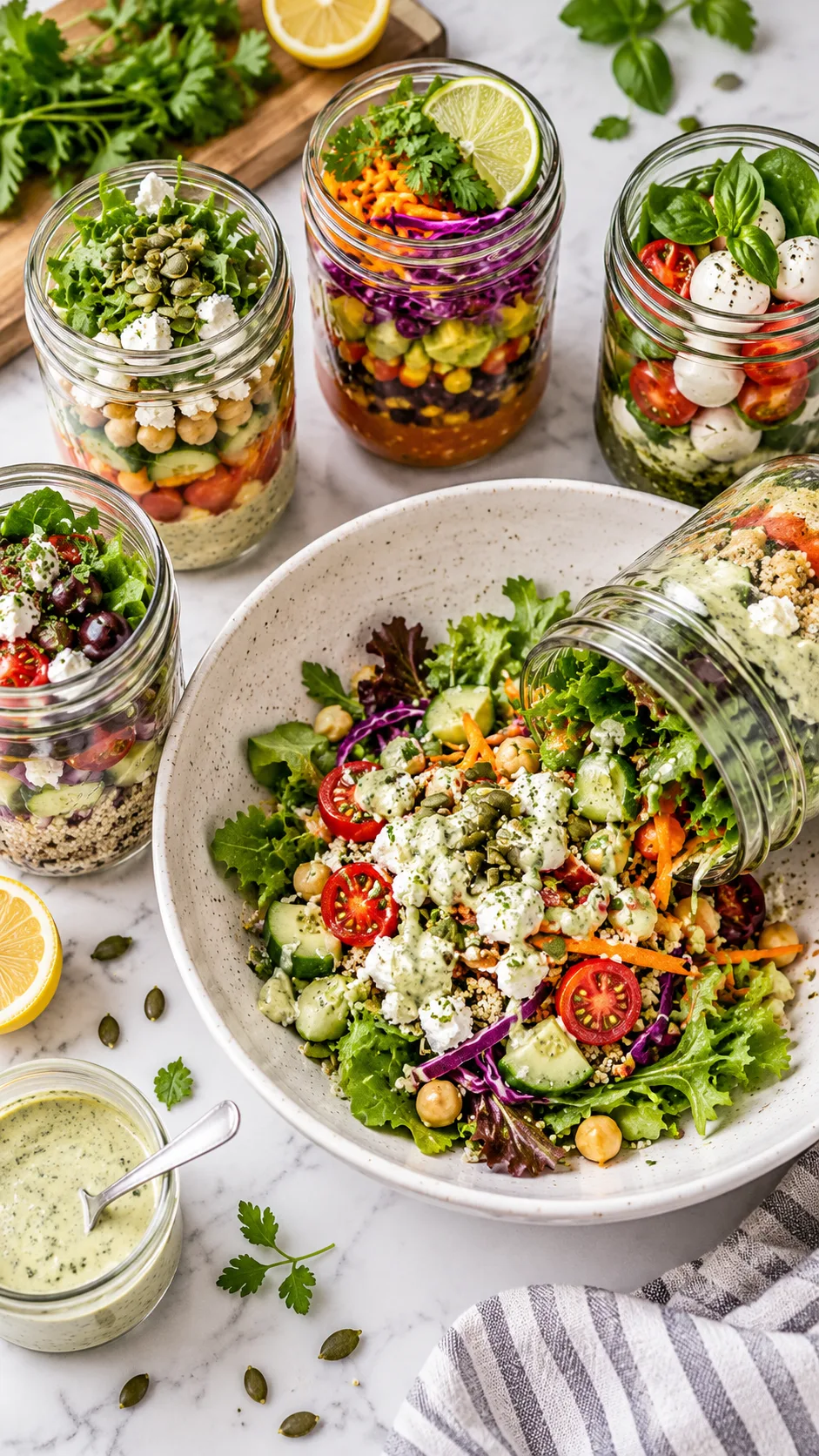
- Method A: The Dump and Toss (Recommended). Keep a wide ceramic salad bowl at your desk. Invert the mason jar directly over the bowl. The greens hit the bottom of the bowl first, followed by your toppings, and the dressing pours evenly over the entire bowl from the top. Toss with a fork and enjoy instantly.
- Method B: The Inversion Shake. If you eat on the go without access to a bowl, leave two inches of empty space at the top of the jar during Sunday prep. At lunchtime, screw the lid on tightly, turn the jar upside down, and shake vigorously for ten seconds. The dressing will coat the ingredients throughout the jar. You can now eat directly from the wide mouth with a long-handled fork.
Troubleshooting: 4 Common Mason Jar Mistakes to Avoid
If your prep attempts end in soggy leaves or bland meals, you probably made one of these simple execution errors:
1. Packing warm grains or meat. Never assemble jars with warm quinoa, roasted vegetables, or chicken fresh off the grill. Warm food releases steam inside the sealed glass, creating condensation that wilts the greens within hours. Chill all cooked components completely in your refrigerator before packing.
2. Leaving water on your greens. Shaking water off lettuce with your hands will never dry it sufficiently. Use a mechanical salad spinner to strip away moisture, or buy pre-washed greens in plastic clamshells that carry minimal surface water.
3. Salting soft vegetables too early. Never sprinkle table salt directly onto sliced cucumbers or tomatoes before putting them into jars. Salt draws water out of plant cells through osmosis within minutes, pooling extra liquid inside your container. Let the salted dressing season the vegetables naturally.
4. Forgetting acid balance. Salads stored for several days demand brighter acid levels than freshly tossed salads. Boost your vinaigrettes with extra lemon juice, apple cider vinegar, or Dijon mustard to keep flavors punchy by Thursday afternoon.
Stop Buying Soggy Takeout Lunches
Healthy eating does not require sad desk lunches or limp cafeteria greens. By harnessing vertical stacking, you protect fragile greens from moisture and lock in restaurant-quality freshness for five consecutive days.
Grab five 32-ounce wide-mouth jars this weekend, run your forty-minute prep assembly line, and enjoy crisp, flavorful lunches every day this week. Your wallet and your body will thank you by Friday!