

You know that 3pm moment when your stomach growls like an angry raccoon and the vending machine starts whispering your name? Yeah. That moment ruins more healthy eating plans than pizza ever will.
Nobody warns you about this part: your snacks matter more than your meals. You plan dinner. You plan lunch. Then you panic-eat three granola bars at 4pm because you forgot snacks exist.
I spent years making this exact mistake. I’d prep gorgeous chicken-and-rice containers, feel like a productivity god, then destroy the office biscuit tin by Wednesday. Sound familiar?
So let’s fix it. This guide covers healthy meal prep snacks that genuinely keep you full, not the sad rice cakes that leave you hungrier than before.
Why most “healthy” snacks leave you starving
Ever wondered why you can eat an entire bag of pretzels and still feel empty? Blame the macros. Most packaged snacks give you fast carbs, zero protein, and almost no fiber.
Your blood sugar spikes, crashes, and then your brain screams for more sugar. It’s a loop. A stupid, expensive, cookie-shaped loop.
The three things every filling snack needs
After testing roughly a thousand snack combos on myself (and my extremely honest partner), I landed on a simple formula. Hit at least two of these three, and hunger backs off.
- Protein (aim for 10g+): Protein triggers satiety hormones like GLP-1 and peptide YY. Translation: your brain gets the “we’re good here” signal.
- Fiber (aim for 3g+): Fiber slows digestion and physically fills your stomach. Research from Harvard’s Nutrition Source consistently links higher fiber intake with better appetite control.
- Healthy fat: Fat slows gastric emptying. Food sits longer. You stay full longer. Simple physics, basically.
Notice what’s missing? The phrase “low-calorie.” A 90-calorie snack that leaves you ravenous costs you 400 calories in damage control later. IMO that math never works out.
The golden rule: prep snacks like you prep meals
Here’s where most people go wrong. They batch-cook Sunday dinners, then treat snacks as an afterthought. Then Tuesday arrives and there’s nothing grab-able in the fridge.
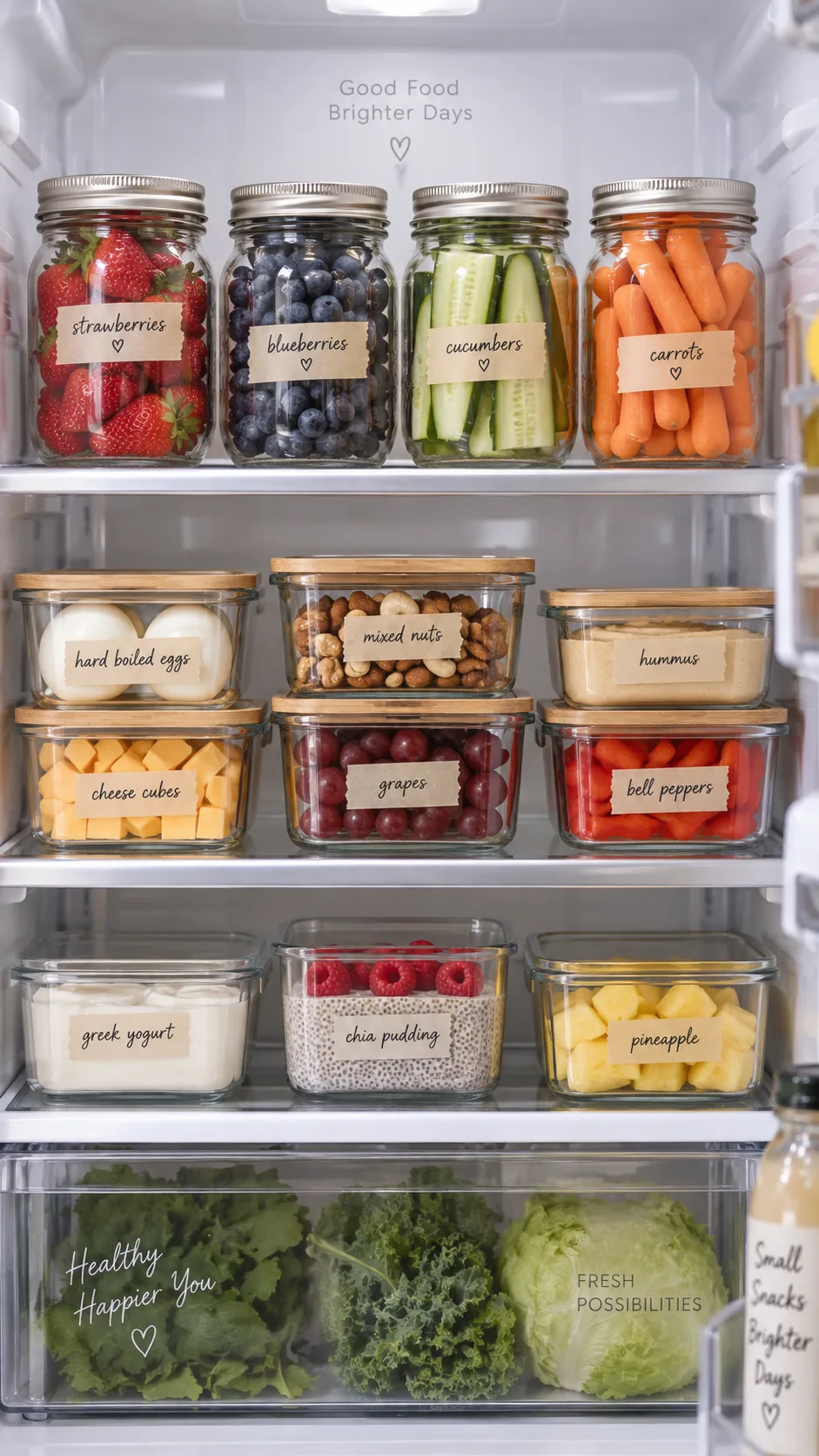
Snacks need the same Sunday treatment as your mains. Portion them. Container them. Make them visible at eye level.
I keep a designated “snack shelf” in my fridge. Everything on it is pre-portioned and ready. My future self, who has approximately zero willpower at 3pm, thanks me every single time.
If you’re building a full weekly system, my lazy cook’s guide to healthy meal prep pairs perfectly with everything below.
12 meal prep snacks that really keep you full
Every single one of these survives at least 3 to 5 days in the fridge. I’ve tested them all. Some more times than I’d like to admit.
1. Cottage cheese protein bowls
Cottage cheese went from “sad diet food from 1987” to TikTok superstar, and honestly? Deserved. One cup packs around 24g of protein, more than most protein bars.
Portion a cup into small jars. Top with berries and a spoon of chia seeds on eating day. That’s 28g protein and 6g fiber for under 250 calories.
Not a cottage cheese person? Neither was I. Then I tried the whipped version blended smooth with a pinch of salt. Game changer 🙂
2. Hard-boiled eggs (done properly)
Boring? Maybe. Effective? Absolutely. Two eggs give you 12g of complete protein plus choline, B12, and healthy fats.
Boil a dozen Sunday. The trick I swear by: ice bath immediately after cooking. The shells slide right off and you skip the rage-peeling that ruins three eggs.
Level up by mixing a few into single-serve egg salad with Greek yogurt instead of mayo. Still creamy, way more protein.
3. Greek yogurt bark
Line a tray with parchment. Spread 500g of full-fat Greek yogurt about 1cm thick. Scatter berries, dark chocolate chips, and chopped almonds on top.
Freeze for four hours, then snap into pieces and store in a freezer bag. It tastes like ice cream and hits roughly 8g of protein per serving.
My kids think it’s dessert. I let them believe that.
4. Roasted chickpeas
The crunchy snack that fights back against crisps. One cup gives you 15g protein and 12g fiber, and that fiber number is genuinely outstanding.
- Drain, rinse, and dry chickpeas thoroughly (this step decides crunch vs. sadness)
- Toss with olive oil, smoked paprika, garlic powder, and salt
- Roast at 200°C / 400°F for 30 to 35 minutes, shaking halfway
- Cool completely before storing in a jar at room temp
Fair warning: they lose crunch after day three. Eat them fast. Not usually a problem in my house.
5. Tuna and cracker snack boxes
Build five small bento boxes Sunday night. Each one gets a tin of tuna, a handful of whole-grain crackers, cherry tomatoes, and a few olives.
This hits 25g protein and feels like a real meal. It rescued me during a brutal deadline week last spring when I genuinely forgot how to cook.
6. Energy bites (the real kind)
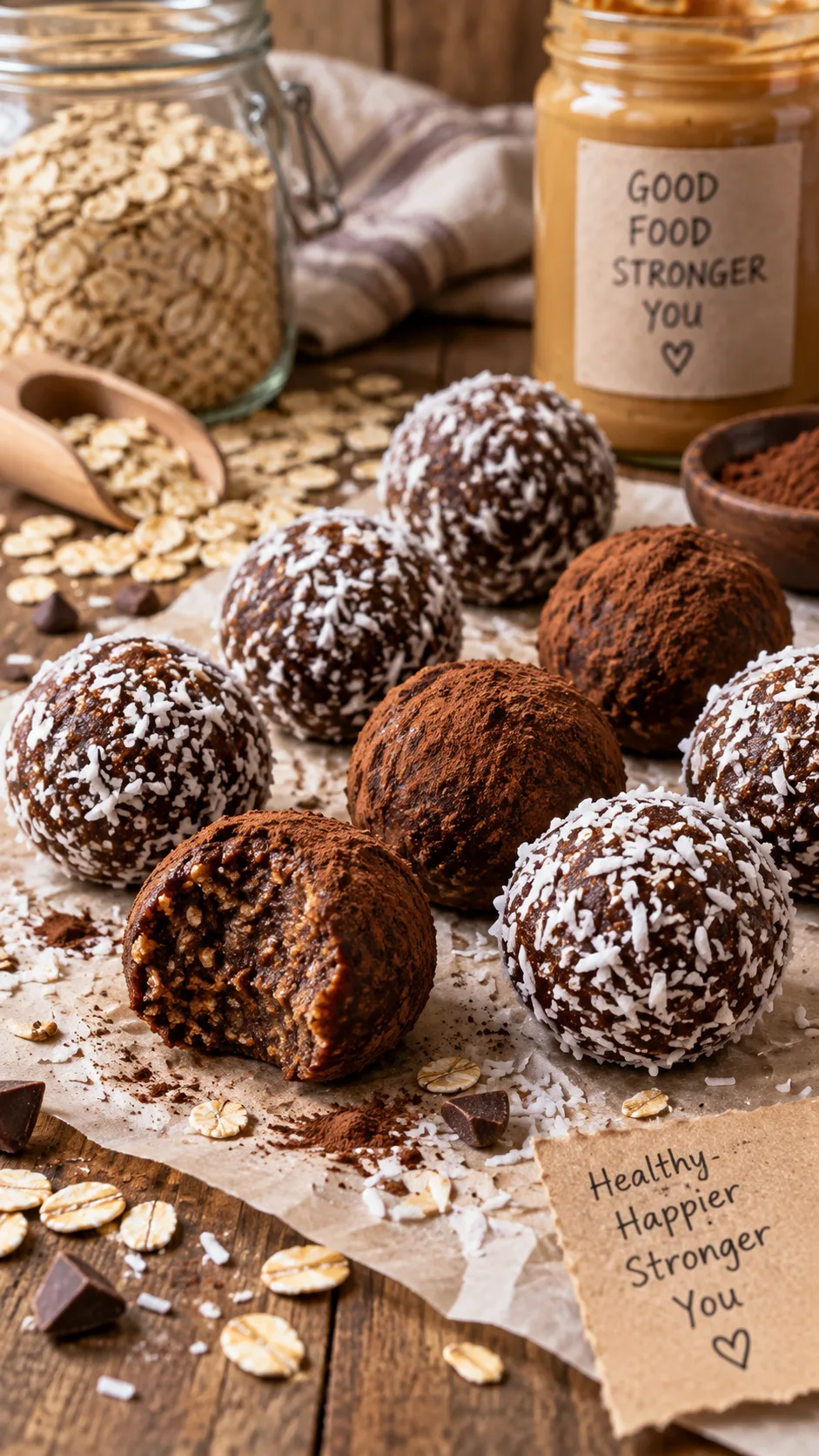
Most no-bake energy balls are date-sugar bombs wearing a health halo. Fix that by adding protein powder and nut butter.
- 1 cup rolled oats
- ½ cup natural peanut butter
- 2 scoops vanilla or chocolate protein powder
- 3 tbsp honey or maple syrup
- 2 tbsp ground flaxseed
- Splash of milk to bind
Roll into 16 balls. Each one gives you about 6g protein and 2g fiber. Two balls genuinely hold me for two hours.
7. Edamame with sea salt
Frozen edamame costs almost nothing and one cup carries 18g of plant protein plus 8g of fiber. Steam a big batch, salt generously, portion into containers.
The shelling slows you down too, which sounds trivial but genuinely matters. Slower eating gives your fullness signals time to catch up.
8. Turkey and cheese roll-ups
Zero cooking. Lay out sliced turkey, add a strip of cheese and a smear of mustard, roll it up. Three roll-ups come in around 20g protein.
Add a pickle spear inside if you’re feeling adventurous. I did this on a whim once and now I can’t go back.
9. Overnight chia pudding
Chia seeds absorb up to 10x their weight in liquid. That gel expands in your stomach and gives you a massive 10g of fiber per ounce.
Mix 3 tbsp chia with 1 cup milk, a scoop of protein powder, and vanilla. Refrigerate overnight. It keeps five days easily.
Texture warning: some people hate it. If frogspawn vibes bother you, blend it smooth instead. :/
10. Hummus and crunchy veg cups
Layer 4 tbsp hummus in the bottom of a jar, then stand carrot, cucumber, and pepper sticks upright. The veg stays dry and crisp for four days.
Chickpea-based hummus brings protein AND fiber together, which is exactly the combo we want.
11. Savoury cottage cheese egg muffins
Whisk 8 eggs with a cup of cottage cheese, spinach, and diced peppers. Pour into a muffin tin, bake at 180°C / 350°F for 22 minutes.
You get 12 muffins. Two muffins = roughly 14g protein for 150 calories. They reheat in 30 seconds and freeze beautifully.
These also double as breakfast, which is why they turn up in my healthy breakfast meal prep rotation almost every week.
12. Portioned nut and jerky mix
Nuts are brilliant and dangerous. Brilliant because of fat, fiber, and protein. Dangerous because “a handful” mysteriously becomes half a bag.
Pre-portion 30g into small bags or containers. Never eat from the big bag. Add beef jerky or biltong for a protein boost that keeps the mix genuinely filling.
Watch: how to batch prep snacks in under an hour
Reading about prep is fine. Watching someone do it is better. This walkthrough shows the batching flow that saves the most time.
The 45-minute Sunday snack prep routine
You don’t need four hours. You need a sequence. Here’s exactly how I run it.
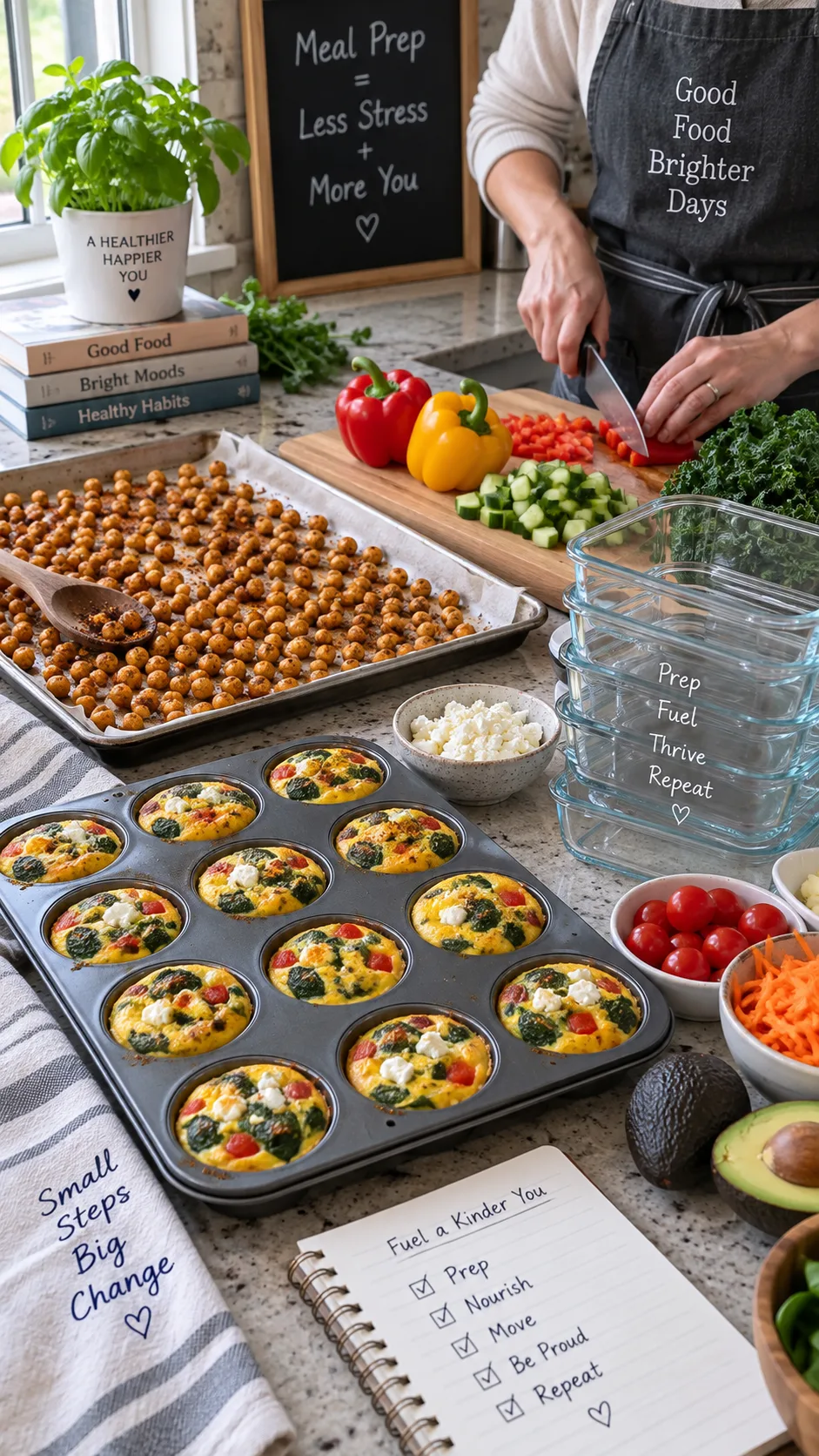
- Minutes 0 to 5: Preheat the oven. Put eggs on to boil. Drain and dry chickpeas.
- Minutes 5 to 15: Season chickpeas, get them in the oven. Whisk the egg muffin mix and slide that in too.
- Minutes 15 to 25: Chop all your veg sticks while things bake. Build hummus jars.
- Minutes 25 to 35: Roll energy bites. Portion nuts into containers.
- Minutes 35 to 45: Pull everything from the oven, cool, portion, label, done.
The move that matters: always run the oven while your hands do knife work. Dead time is the enemy of fast prep.
Food safety: the boring part that really matters
Nothing derails meal prep faster than a dodgy container on day four. So let’s avoid that.
- Cool food completely before sealing. Trapped steam creates condensation, and condensation grows bacteria.
- Keep your fridge at or below 4°C / 40°F. The FDA’s food storage guidance is clear on this one.
- Cooked prepped food lasts 3 to 4 days in the fridge. Freeze anything meant for days five through seven.
- Label with dates. Masking tape and a marker. It takes ten seconds and ends all the guessing games.
- Store cut veg with a dry paper towel in the container to absorb moisture.
How much protein do you really need?
The standard RDA of 0.8g per kg of bodyweight is the bare minimum to avoid deficiency. It’s a floor, not a target.
For real appetite control and muscle maintenance, research supports 1.2 to 1.6g per kg daily, spread across meals. The International Society of Sports Nutrition backs higher intakes for active people.
Snacks make hitting that number ridiculously easier. Two 15g-protein snacks daily adds 30g without touching your main meals. That’s the whole trick.
Want your mains to pull their weight too? My high protein meal prep recipes handle that side of the equation.
Mistakes I made so you don’t have to
Prepping too much variety
My first serious prep Sunday, I made seven different snacks. It took four hours. I never did it again, and half of it went off.
Pick three snacks per week. Rotate monthly. Repetition is a feature, not a bug.
Ignoring texture
Soggy food kills motivation faster than any craving. Keep wet and dry components separate until eating time. Always.
Making everything sweet
Six sweet snacks in a row creates sugar fatigue and, weirdly, more cravings. Balance sweet with savoury. Egg muffins, roasted chickpeas, and roll-ups pull their weight here.
Forgetting portion sizes
Healthy food still contains calories. A jar of trail mix is 800 calories whether it’s organic or not. Portion first, eat second.
Budget reality check
People assume high-protein snacking costs a fortune. It doesn’t, as long as you skip the packaged stuff.
- Eggs: ~20p per 6g of protein
- Dried chickpeas: cheapest fiber source in any supermarket
- Frozen edamame: cheaper than fresh, identical nutrition
- Own-brand Greek yogurt: same macros, half the price of premium tubs
- Protein bars: £2.50 each for what you can make for 40p
FYI, that last one stung when I finally did the maths.
The bottom line
Filling snacks aren’t magic. They’re just protein, fiber, and fat showing up together at the right moment.
Prep three of them on Sunday. Portion them properly. Put them at eye level in your fridge where your tired, hungry, future self will find them.
Start this week with two snacks, not twelve. Hard-boiled eggs and roasted chickpeas take 40 minutes combined and cover most of your cravings.
The vending machine can’t beat you if you’re already full. That’s the whole strategy. Now go boil some eggs.