

You finally have an appetite that behaves itself, and now you’re staring at your fridge wondering what on earth to eat. Welcome to the strangest problem of your life: food stopped nagging you, and you have no clue how to feed a body that only wants three bites.
Nobody warns you about this part. Ozempic (semaglutide) shrinks your hunger, not your nutritional needs. Your muscles, hair, skin, and energy levels still want protein, fiber, vitamins, and water, and they want them from a plate you can barely finish. That’s the whole game right there.
So let’s build the Ozempic diet meal plan that works with your smaller appetite instead of fighting it. No 47-ingredient recipes. No sad steamed broccoli. Just a strategy that keeps you full, protects your muscle, and doesn’t send you sprinting to the bathroom at 9pm. Deal?
Why eating on Ozempic feels so weird at first
Semaglutide mimics a hormone called GLP-1, which your gut releases after you eat. It slows down how fast your stomach empties, tells your brain you’re satisfied, and mutes the “food noise” that used to run your afternoons.
The result? You eat half a sandwich and feel like you swallowed a bowling ball. Ever wondered why that happens even though you barely ate anything? Because your stomach is emptying slower. Food sits there longer, so fullness arrives early and overstays its welcome.
The Mayo Clinic lists nausea, reflux, constipation, and reduced appetite among the most common side effects. Most of those get dramatically better when you fix HOW you eat, not just what.
The real risk: undereating protein and losing muscle
This part matters more than anything else in this article. Studies on GLP-1 medications show that a meaningful chunk of the weight people lose can come from lean mass, not just fat, sometimes up to 25 to 40% depending on the study and how someone eats.
Losing muscle tanks your metabolism, weakens you, and makes regain almost inevitable once you stop the medication. IMO, this is the single biggest mistake people make on Ozempic: they celebrate the scale and ignore the mirror.
Your mission: hit your protein target every single day, even on the days you’d rather eat nothing at all.
The 4 rules that make everything else easy
Before the meal plan, memorize these. They’re the operating system. The recipes are just apps running on top.
- Protein first, always. Physically eat the protein on your plate before anything else. When you get full at bite six, at least bite six was salmon and not garlic bread.
- Aim for 0.6 to 0.8g of protein per pound of your goal body weight. For most women that’s 90 to 120g daily; for most men, 120 to 160g. Talk to your doctor if you have kidney concerns.
- Eat smaller, more often. Three tiny meals plus two protein-focused snacks beats three normal meals you can’t finish.
- Drink water between meals, not during. Liquid takes up precious stomach real estate. Chug it 30 minutes before or after instead.
Simple, right? Annoyingly, simple doesn’t mean easy. But these four rules solve about 80% of the problems people complain about in every Ozempic forum on the internet.
What to eat: the Ozempic food list that earns its space
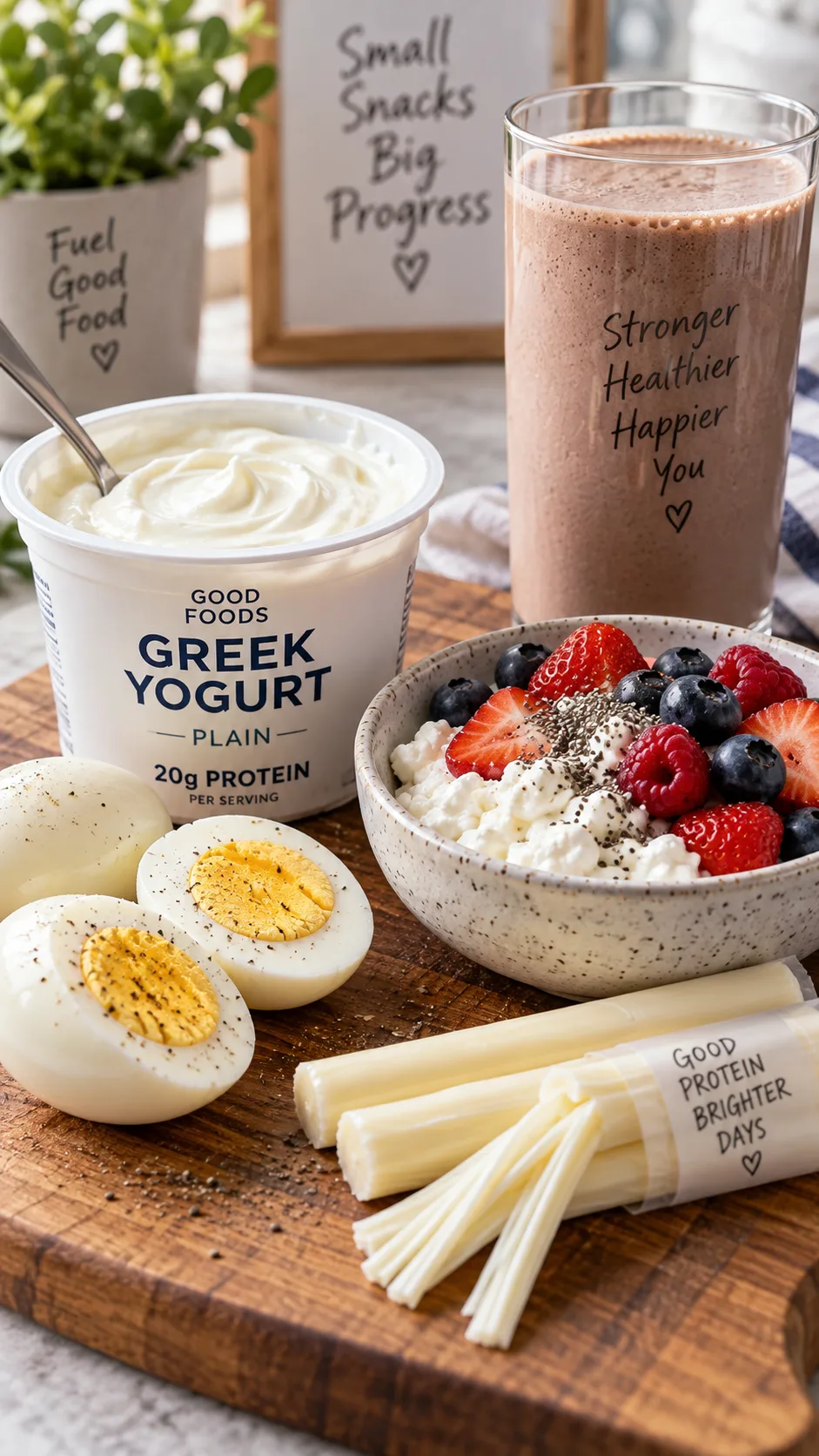
Think of your stomach as tiny luxury real estate. Every bite pays rent. Foods that deliver protein, fiber, and micronutrients get a lease. Foods that deliver nothing but volume get evicted.
Your MVP proteins
- Greek yogurt (15 to 20g per cup): the undisputed champion of low-effort protein
- Cottage cheese (24g per cup): blend it if the texture offends you
- Eggs and egg whites: cheap, fast, gentle on a sensitive stomach
- Chicken breast, turkey, lean beef: slice thin, cook moist, avoid dry leftovers
- Salmon, tuna, shrimp, tilapia: bonus omega-3s for inflammation
- Tofu, tempeh, lentils, beans: plant based and loaded with fiber
- Whey or plant protein powder: your emergency parachute on nausea days
Fiber that doesn’t bloat you into oblivion
- Berries, kiwi, pears (skin on)
- Cooked spinach, zucchini, carrots, green beans
- Oats, quinoa, chia seeds, ground flaxseed
- Black beans and lentils (start small, your gut needs a warm-up)
Foods that will absolutely betray you
I’m not here to tell you to never eat pizza again. But on Ozempic, certain foods hit differently, and by “differently” I mean you’ll regret them within 40 minutes.
- Deep-fried anything: fat slows gastric emptying even further. Double whammy.
- Heavy cream sauces and cheesy casseroles: same problem, fancier packaging
- Carbonated drinks: gas plus a slow stomach equals misery
- Large portions of refined carbs: white bread, pastries, pasta mountains
- Alcohol: hits harder, dehydrates you, and adds zero nutrition
- Very spicy food: reflux city if you’re already prone
Notice a pattern? Fat and fiber both slow digestion. You need fiber, so the fat is where you dial back, especially the fried, greasy kind.
The 7-day Ozempic meal plan (roughly 1,200 to 1,400 calories, 100g+ protein)
Adjust portions up or down based on your dose, appetite, and your doctor’s guidance. Each day lands around 100 to 120g of protein and 25 to 30g of fiber. And yes, you’re allowed to eat the same breakfast seven days straight. Variety is overrated when you’re just trying to survive week three.
Day 1
- Breakfast: ¾ cup Greek yogurt + ½ cup berries + 1 tbsp chia seeds
- Snack: 2 hard-boiled eggs
- Lunch: 4 oz grilled chicken over spinach, cucumber, ¼ avocado, lemon-olive oil
- Snack: String cheese + 10 almonds
- Dinner: 4 oz baked salmon + ½ cup quinoa + roasted green beans
Day 2
- Breakfast: 2-egg omelet with spinach and feta
- Snack: ½ cup cottage cheese + sliced pear
- Lunch: Turkey and hummus lettuce wraps + cherry tomatoes
- Snack: Protein shake (half serving if you’re full)
- Dinner: Lean beef stir-fry with broccoli, peppers, and ⅓ cup brown rice
Day 3
- Breakfast: Overnight oats: ⅓ cup oats, ½ scoop protein powder, milk, cinnamon
- Snack: Boiled egg + a few grapes
- Lunch: Tuna salad (Greek yogurt instead of mayo) on cucumber rounds
- Snack: Edamame, ½ cup
- Dinner: Chicken and lentil soup + side salad
Day 4
- Breakfast: Protein smoothie: 1 scoop protein, ½ banana, spinach, 1 tbsp peanut butter
- Snack: Turkey roll-ups with mustard
- Lunch: Shrimp and quinoa bowl with cucumber, tomato, herbs
- Snack: Greek yogurt, small
- Dinner: Baked cod + mashed cauliflower + roasted carrots
Day 5
- Breakfast: Cottage cheese bowl with berries and flaxseed
- Snack: Beef jerky (low sugar) or a protein bar
- Lunch: Leftover cod flaked into a big green salad
- Snack: Apple slices + 1 tbsp almond butter
- Dinner: Turkey meatballs + zucchini noodles + marinara
Day 6
- Breakfast: Scrambled eggs with black beans and salsa
- Snack: Kefir or drinkable yogurt
- Lunch: Chicken Caesar-ish salad (yogurt dressing, light parmesan)
- Snack: Handful of pistachios
- Dinner: Tofu and vegetable curry with ⅓ cup basmati rice
Day 7
- Breakfast: Protein pancakes (oats + egg + protein powder) with berries
- Snack: Hard-boiled egg
- Lunch: Lentil and chicken soup, small bowl
- Snack: Cottage cheese + cucumber + everything seasoning
- Dinner: Sheet-pan chicken thighs (skin off) + Brussels sprouts + sweet potato
If this structure feels familiar, it’s because it mirrors the principles behind any well-built GLP-1 meal plan: protein forward, full of fiber, and deliberately unfussy.
How to eat when you’re never hungry
Most meal plans fail right here: they assume you WANT to eat. On Ozempic, eating becomes a chore you schedule, like flossing or replying to your group chat.
Set alarms. Seriously.
I know a nurse practitioner who tells every patient the same thing: “Your phone reminds you to take your meds. Let it remind you to eat.” Set three alarms. Eat something with protein when they go off, hungry or not.
Use smaller plates and smaller forks
A full small plate feels like a win. A quarter-full dinner plate feels like failure. Same food, totally different psychology. It sounds silly and it works anyway.
Drink your calories when you have to
On rough days, especially the 24 to 48 hours after your injection, a protein shake counts as a full meal. Liquid protein digests easier and doesn’t require chewing through nausea. Don’t feel bad about it.
Chew like you mean it
A slow stomach plus big chunks of food equals discomfort. Chew until the food is basically a paste. Not glamorous, but your gut will thank you within the hour.
Beating the side effects with food
Nausea
- Eat bland, dry, cool foods: crackers, plain toast, cold chicken, yogurt
- Avoid strong smells, since cold food smells less
- Try ginger tea or peppermint
- Stop eating at 80% full, not 100%
Constipation
- Hit 25 to 30g of fiber daily, increasing slowly
- Drink at least 64 to 80 oz of water, because fiber without water makes things worse
- Walk 10 to 15 minutes after meals
- Ask your doctor about magnesium citrate or a gentle fiber supplement
Fatigue and “Ozempic face”
Both usually trace back to the same culprit: not eating enough total calories or protein. Rapid weight loss plus underfueling drains facial fat and energy fast. Eat more protein, lift some weights, slow the loss down a notch. The Academy of Nutrition and Dietetics is a solid place to find a registered dietitian who specializes in this.

Watch this before your next grocery run
A visual breakdown always lands better than a wall of text. Here’s a solid walkthrough on structuring meals while on GLP-1 medication:
Strength training: the non-negotiable sidekick
You can’t out-eat muscle loss with protein alone. You need a resistance stimulus to tell your body “keep this tissue.” Two or three sessions a week does it.
- 2 to 3 days per week of full-body resistance work
- Focus on compound moves: squats, rows, presses, deadlifts, carries
- Use bands or bodyweight if a gym isn’t happening
- Add a 10-minute walk after meals for blood sugar and digestion
The CDC’s physical activity guidelines recommend muscle-strengthening activity at least twice weekly for adults. On a GLP-1, that recommendation stops being optional and starts being essential.
Meal prep shortcuts for people who hate meal prep
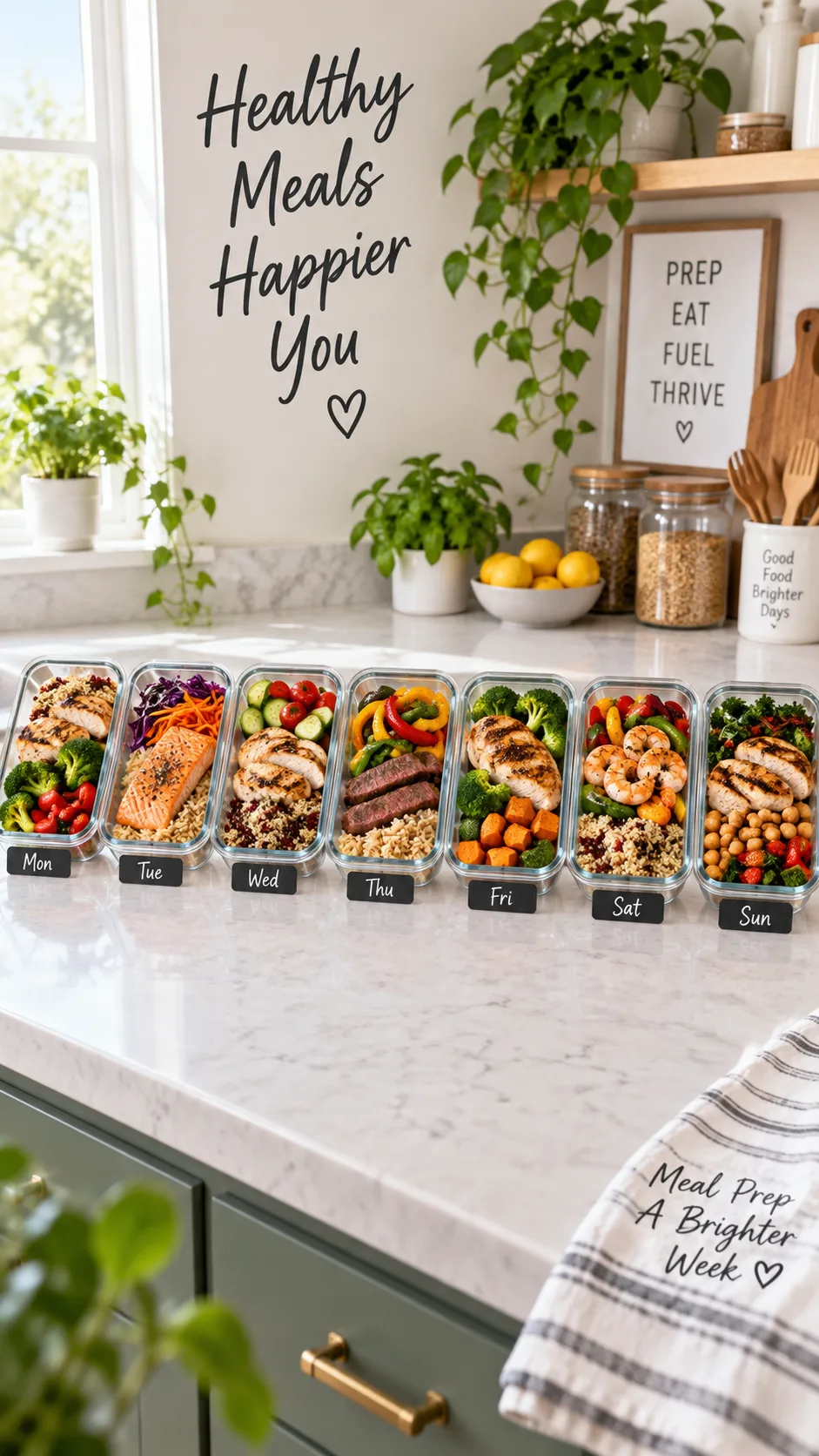
You don’t need Sunday-afternoon container Tetris. You need three or four things ready to grab.
- Batch one protein. Bake 2 lbs of chicken or a tray of turkey meatballs. Done.
- Boil a dozen eggs. Instant snack for five days.
- Buy pre-cut veggies. Yes they cost more. No, you won’t eat the whole cauliflower otherwise.
- Keep shelf-stable backups: tuna pouches, protein shakes, jerky, canned beans.
- Freeze single portions of soup. Perfect for nausea days when cooking feels impossible.
If you like structure with a calorie target attached, the framework in this 1500 calorie meal plan adapts beautifully. Just push the protein higher and shrink the portions.
What happens when you stop Ozempic?
Real talk: the appetite comes back. Research published through the National Library of Medicine found that people regained roughly two-thirds of their lost weight within a year of stopping semaglutide.
Scary? A bit. But the flip side matters more: the habits you build NOW are the only thing that carries over. The medication is training wheels. The protein-first plate, the post-meal walks, the strength training, the water habit: those stay with you.
So treat this period as your apprenticeship, not a vacation. Build the skills while hunger is quiet, so you own them when hunger gets loud again. Makes sense, right?
Quick answers to the questions everyone asks
How many calories should I eat on Ozempic?
Most adults land between 1,200 and 1,800 calories depending on size, sex, and activity. Going far below 1,200 speeds up muscle loss and nutrient gaps. Your doctor should set your number, not a random calculator.
Can I do keto or carnivore on Ozempic?
You can, but be careful. High-fat approaches slow gastric emptying even more, which often makes nausea worse. If you’re set on a low-carb path, read up on a structured carnivore diet meal plan first and discuss it with your provider.
Do I need supplements?
Possibly. When you eat less food overall, you take in fewer micronutrients. Many clinicians suggest a basic multivitamin, vitamin D, and B12. Get labs done rather than guessing.
Why did I stop losing weight?
Usually one of three things: you plateaued between dose increases, you’re undereating protein and lost metabolic tissue, or your portions crept back up on the days you feel normal. Track for a week and the answer shows up fast.
The bottom line
Ozempic hands you something rare: a quiet appetite and a real window to change how you eat. Waste that window on crackers and coffee, and you’ll lose muscle, energy, and eventually the weight loss itself. Use it well, and you’ll come out the other side with a body and a set of habits that last.
Keep it stupid simple: protein first, fiber second, water always, weights twice a week. Eat on a schedule even when your stomach says “meh.” Small plates, slow chewing, no fried food on injection day.
Your appetite got smaller. Your standards for what goes on that plate should get bigger. Start with tomorrow’s breakfast. A cup of Greek yogurt and some berries takes ninety seconds, and it beats any spreadsheet you’ll never open.
Disclaimer: This article shares general nutrition information and does not replace medical advice. Always work with your prescribing physician or a registered dietitian to personalize your plan while taking semaglutide.