

You finish a huge bowl of oatmeal, scrape the bottom clean, and set the spoon down. Twenty minutes later, your stomach growls like you skipped breakfast entirely. Pregnancy hunger hits on its own terms: it strikes without warning, ignores standard meal times, and turns you into a midnight pantry scavenger.
Most standard pregnancy meal plans offer useless advice. They hand you lists of saltines, limp celery sticks, and tiny cups of fat-free yogurt. That strategy triggers blood sugar crashes and leaves you ravenous. You need raw materials for your baby, and you need meals that anchor your appetite for hours.
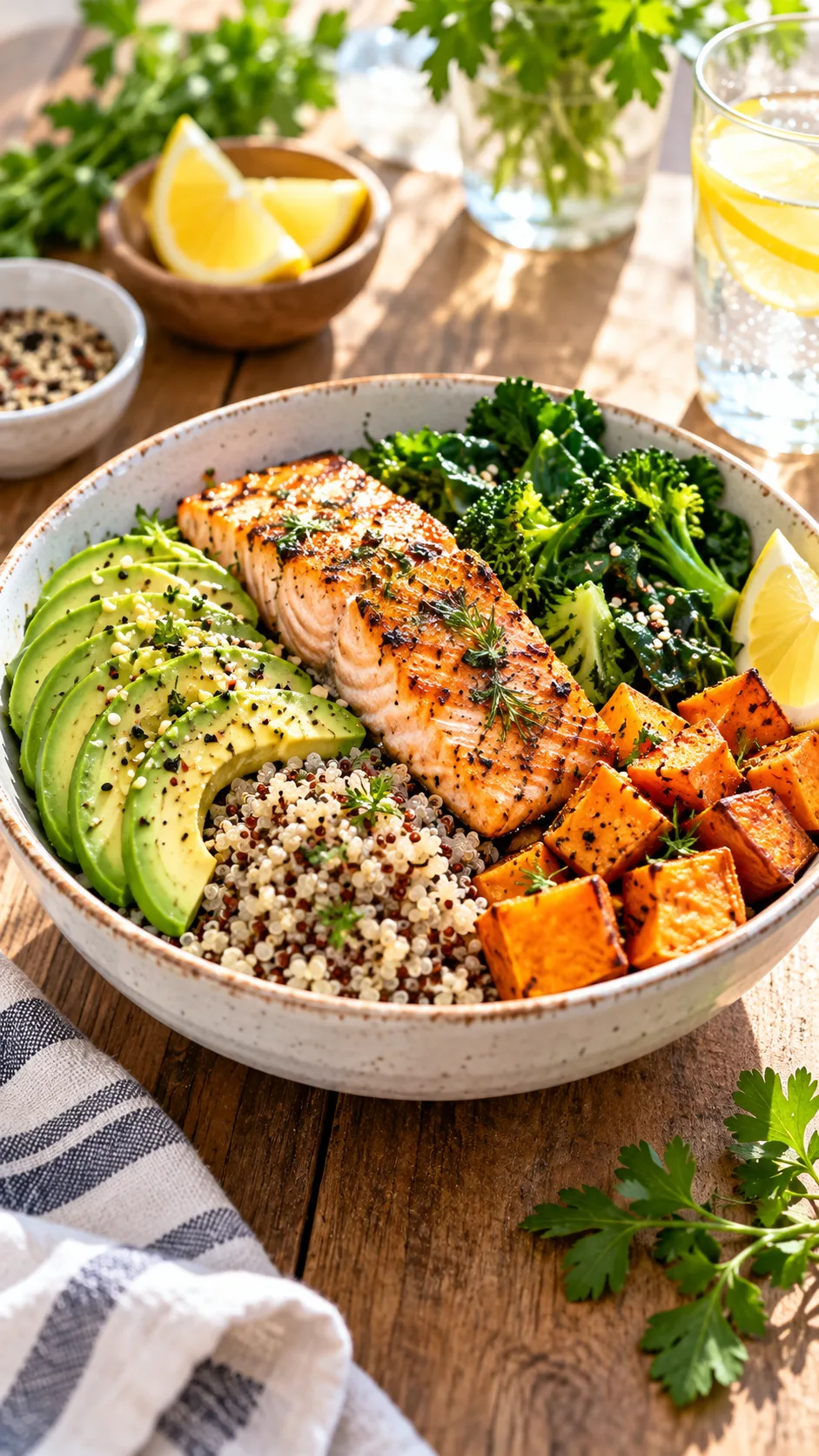
I learned this lesson the hard way during my first pregnancy. I spent weeks chewing dry rice cakes, wondering why my stomach felt empty every sixty minutes. Lasting fullness demands a straightforward balance of protein, slow-burning fats, and viscous plant fiber. Once you align your plate with your changing metabolic needs, you can manage your hunger without starving or feeling overstuffed.
The science of pregnancy satiety: why you feel constantly starved
Why does your usual diet fail you right now? Your body runs a hormonal marathon every single minute. Human chorionic gonadotropin (hCG), progesterone, and placental lactogen shift your insulin sensitivity and rewrite your appetite cues. Progesterone also relaxes the smooth muscles in your gut. That delay slows stomach emptying so your digestive tract can absorb maximum nutrition from every bite.
Slow digestion often triggers sharp blood sugar spikes and sudden drops. When you eat isolated carbohydrates like toast or crackers, your gut floods your bloodstream with glucose. Your pancreas releases an insulin surge, your cells clear the sugar, and your brain demands another snack immediately. You can read more about steadying these spikes in our guide on the insulin resistance diet plan, which shares these blood sugar management principles.
To stay full for three to four hours straight, build your plates around three foundational components:
- Quality protein: Protein prompts the release of peptide YY (PYY) and glucagon-like peptide 1 (GLP-1), two hormones that tell your brain you have had enough.
- Dietary fats: Lipids trigger cholecystokinin (CCK), a hormone that slows stomach emptying and staves off early hunger pangs.
- Soluble and insoluble fiber: Fiber creates physical volume in your stomach and feeds the gut bacteria that support healthy metabolism.
Clinical guidance from the American College of Obstetricians and Gynecologists (ACOG) confirms that you do not need twice as much food, regardless of the common “eating for two” myth. You need nutrient-dense meals that supply fuel for cellular growth while keeping your daily energy steady.
First trimester: fighting nausea while staying satisfied (weeks 1 to 13)
The first trimester often feels like pure survival mode. Waves of nausea disrupt your day, and deep fatigue pins you to the couch. You do not need additional calories yet, but sudden food aversions and sudden hunger swing back and forth unpredictably. How do you stay full when the thought of warm roasted chicken turns your stomach?
The solution comes down to cold, bland proteins and fats with high nutrient density. Hot meals release strong aromas that trigger nausea. Chilled foods carry very little scent, so you can nourish your body without provoking your sense of smell. Room-temperature broths and thick, chilled smoothies help carry you through these opening twelve weeks.
The 5 golden satiety rules for trimester 1
- Never let your stomach sit completely empty: An empty stomach lets stomach acid churn freely, which aggravates nausea and sets off fierce hunger rebound.
- Skip dry, isolated carbohydrates: When you reach for toast or crackers, spread them with butter, full-fat cream cheese, or unsweetened almond butter.
- Turn to liquid protein: Cold smoothies easily hide nutrient-dense ingredients like collagen powder, hemp seeds, and pasteurized kefir without overwhelming your palate.
- Eat modest portions every two to three hours: Smaller meal volumes rest easily in your digestive tract and reduce acid reflux.
- Use ginger and vitamin B6: Both compounds calm the brain’s nausea pathways, making real meals much easier to stomach.
Trimester 1 sample meal plan (approx. 1,800 to 2,000 calories)
Use this daily routine to keep your stomach settled and satisfied. If you like cooking ahead, look through our high protein breakfast meal prep ideas to simplify your morning schedule.
- Early morning anchor (bedside): 2 high-fiber seeded oat crackers with 1 tablespoon of salted almond butter. Eat this before you get out of bed.
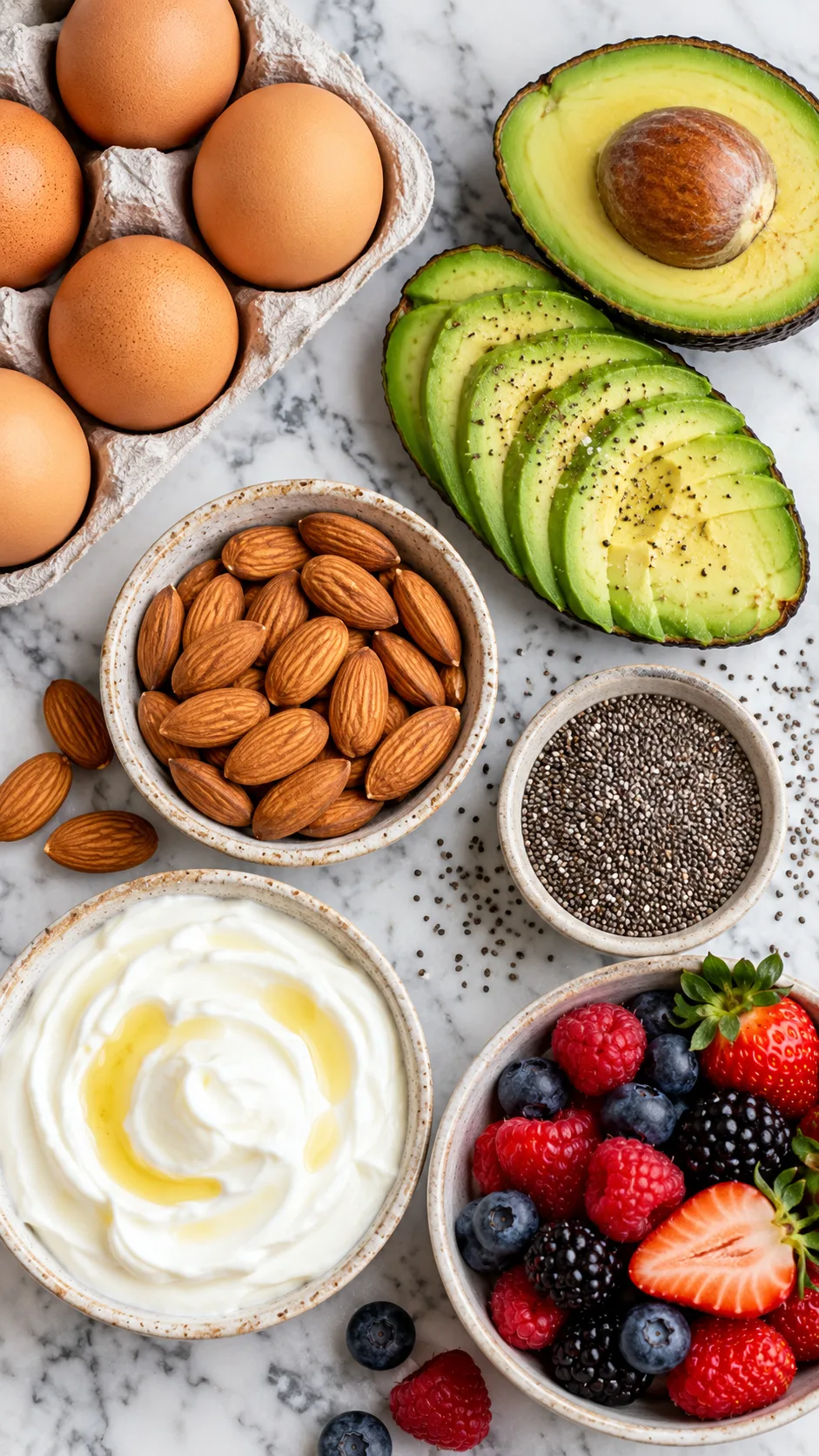
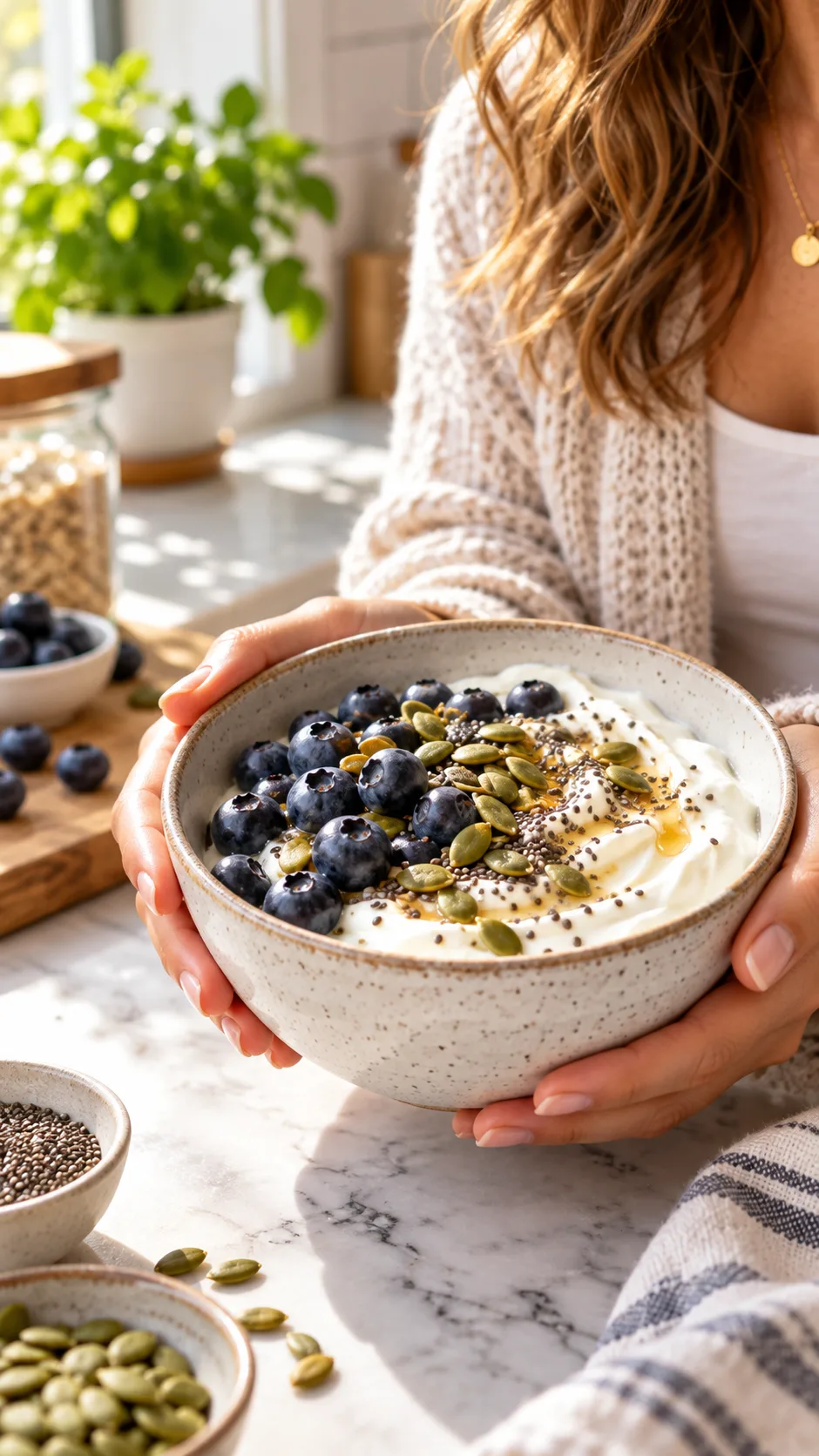
- Breakfast (8:30 AM): 1 cup full-fat plain Greek yogurt, 1/2 cup wild blueberries, 1 tablespoon chia seeds, and a light drizzle of honey. Greek yogurt delivers over 18 grams of protein that calms an unsettled stomach.
- Mid-morning snack (11:00 AM): 1 hard-boiled egg with sea salt and half an avocado drizzled with fresh lemon juice.
- Lunch (1:30 PM): Chilled grain bowl: 1/2 cup cooked quinoa, 3 ounces shredded chilled rotisserie chicken, diced cucumbers, Kalamata olives, and 2 tablespoons crumbled feta cheese tossed in extra virgin olive oil.
- Afternoon snack (4:30 PM): Cold protein smoothie: 1 cup unsweetened almond milk, 1 scoop whey or pea protein powder, 1 frozen banana, and 1 tablespoon ground flaxseed.
- Dinner (7:00 PM): 4 ounces pan-seared cod or haddock, 1 baked sweet potato with 1 tablespoon butter, and steamed green beans with lemon zest.
- Evening snack (9:00 PM): Warm chamomile tea with 1 scoop dissolved collagen peptides and a small handful of raw walnuts.
Second trimester: fueling the growth spurt (weeks 14 to 27)
Morning sickness usually eases around week 14, your appetite returns, and your daily energy picks back up. The placenta now functions at full speed, while your baby forms bone tissue, muscle mass, and internal organs rapidly. At this stage, your body requires extra fuel: roughly 300 to 350 additional calories per day.
Do not spend those calories on sugary treats that leave you hungry sixty minutes later. Developing bones demand calcium and magnesium, while your expanding blood supply pulls heavily on iron stores. A study published by the National Institutes of Health (NIH) shows that maternal protein synthesis increases markedly during this phase, making adequate dietary protein necessary for fetal tissue growth.
Many women crave red meat around week 20 because blood plasma volume expands by nearly 50 percent, demanding substantial amounts of bioavailable iron and zinc. Choosing nutrient-dense foods from an animal-based diet model (such as grass-fed beef, pastured egg yolks, and rich bone broth) protects your ferritin stores and keeps sudden hunger at bay.
Trimester 2 sample meal plan (approx. 2,200 to 2,300 calories)
This sample day provides healthy fats and complex carbohydrates to match your higher energy expenditure:
- Breakfast (8:00 AM): 3 eggs scrambled with baby spinach and cheddar cheese, served with 1 slice of toasted sprouted bread and 1/4 sliced avocado.
- Mid-morning snack (11:00 AM): 1 crisp green apple sliced with 2 tablespoons of peanut butter, paired with a tall glass of water and trace mineral drops.
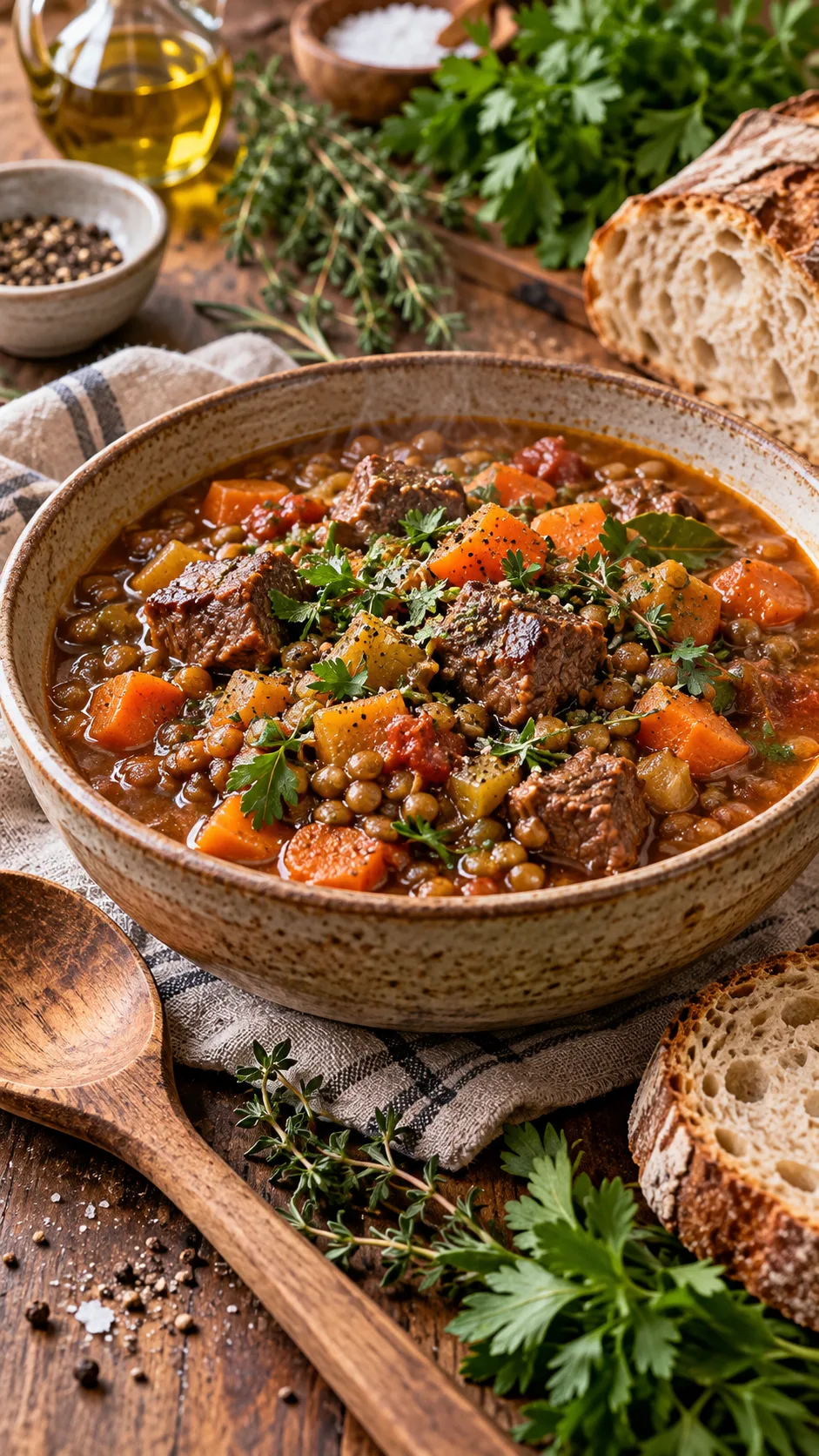
- Lunch (1:30 PM): Beef and lentil stew: 1.5 cups of stew made with beef, brown lentils, carrots, and kale simmered in rich beef broth. This protein and fiber combination sustains energy for hours.
- Afternoon snack (4:30 PM): Half a cup of whole-milk cottage cheese topped with pumpkin seeds and fresh raspberries. Pumpkin seeds supply zinc and plant iron.
- Dinner (7:00 PM): 5 ounces wild sockeye salmon, 3/4 cup roasted red potatoes with rosemary, and roasted broccoli tossed with avocado oil.
- Bedtime snack (9:30 PM): Warm coconut milk whisked with turmeric, a pinch of black pepper, cinnamon, and 1 teaspoon of honey.
Third trimester: the crowded stomach strategy (weeks 28 to 40)
By week 30, your baby measures over 15 inches and weighs several pounds. Your growing uterus presses against your stomach, shrinking its functional capacity down to the size of a teacup. At the same time, your baby puts on roughly half a pound each week, lifting your energy needs by approximately 450 calories above your baseline.
This creates an uncomfortable trade-off: you feel hungry throughout the day, but four bites of food make you uncomfortably full. Large meals trigger reflux almost immediately. You need a different feeding strategy.
Trade the standard three-meal schedule for dense, frequent mini meals. Each plate should pack maximum nutrition into a small physical portion. Swap out raw, leafy salads that crowd your stomach with airy bulk, and focus instead on cooked vegetables, concentrated proteins, and energy-dense fats.
Trimester 3 sample meal plan (approx. 2,400 to 2,500 calories across 5 meals)
Spread these mini meals evenly through the day to avoid heartburn and abdominal discomfort:
- Mini meal 1 (7:30 AM): Protein oatmeal
Cook 1/2 cup rolled oats in 1 cup whole milk. Stir in 1 scoop unflavored egg white or whey protein powder, 1 tablespoon chia seeds, and 1 tablespoon almond butter. Top with sliced banana. - Mini meal 2 (10:30 AM): Baked egg cups
2 egg muffins baked with turkey bacon, bell peppers, and Swiss cheese, eaten with a handful of macadamia nuts. - Mini meal 3 (1:30 PM): Turkey and avocado wrap
1 sprouted tortilla rolled with 4 ounces heated roast turkey breast, half a mashed avocado, sliced tomato, and crisp romaine lettuce. - Mini meal 4 (4:30 PM): Chia seed pudding
3 tablespoons chia seeds soaked in full-fat coconut milk, topped with cacao nibs and fresh strawberries. This provides magnesium to help ease evening leg cramps. - Mini meal 5 (7:00 PM): Steak and sweet potato plate
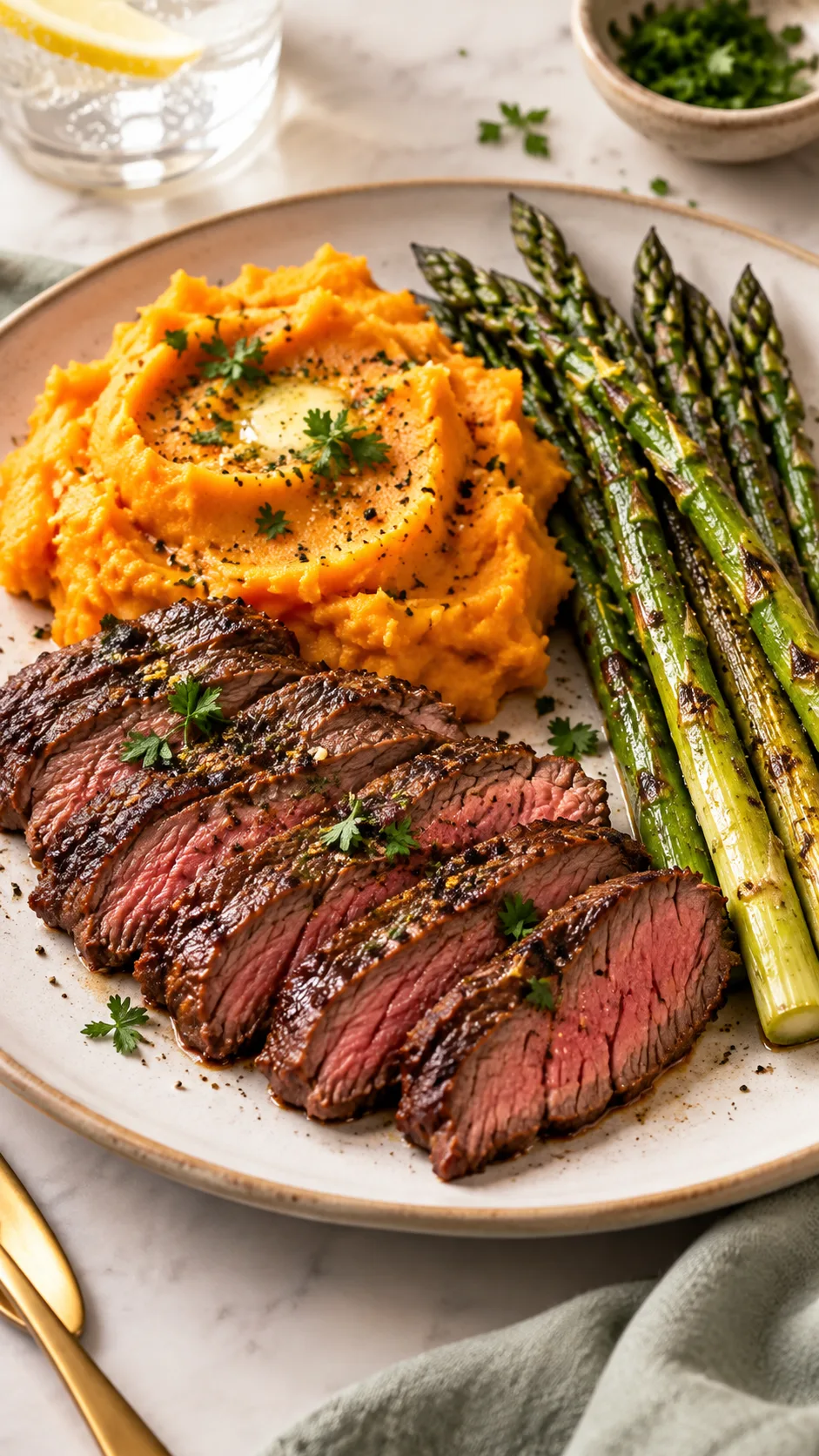
4 ounces sliced flank steak, half a cup of mashed sweet potatoes with butter, and tender grilled asparagus. Finish dinner at least three hours before bed to ward off nighttime reflux.
Smart pregnancy snacking: stop eating naked carbs
Between-meal snacks can either stabilize your energy or destroy it. Reaching for pretzels, potato chips, or gummy snacks sparks a sudden blood sugar surge and a quick crash. That rollercoaster leaves you irritable, tired, and searching for more food within thirty minutes.
Never eat isolated carbohydrates. Coat every carb with protein, dietary fat, or both. Simple adjustments change how your body processes these foods:
| Naked Carb (Hungry in 30 Mins) | Satiety-Engineered Pairing | The Satiety Secret |
|---|---|---|
| Plain Rice Cake | Rice cake + mashed avocado + hemp seeds | Fats delay digestion |
| Medium Banana | Banana slices dipped in cashew butter | Healthy fats blunt the rapid blood sugar spike |
| Pretzel Thins | Pretzels dipped in garlic hummus + feta | Legume fiber and dairy protein stimulate satiety hormones |
| Store-Bought Granola Bar | Handful of raw almonds + 1 piece string cheese | Supplies 14 grams of protein without added syrups |
Hydration, electrolytes, and false hunger alarms
Your brain frequently confuses thirst signals with hunger cues. As cellular hydration drops, your hypothalamus triggers vague cravings. You search the pantry for food when your vascular system simply needs fluid.
During pregnancy, your total blood volume climbs by nearly 50 percent. The Centers for Disease Control and Prevention (CDC) advises consistent fluid intake throughout pregnancy to maintain amniotic volume, support plasma levels, and flush out metabolic waste. Downing gallons of plain water without minerals can dilute electrolytes and worsen cellular dehydration.
Add minerals to your water throughout the day. Squeeze fresh lemon into your glass, add a pinch of gray sea salt, or sip plain coconut water. When you give your cells genuine electrolytes, false sugar cravings usually fade within fifteen minutes.

Core principles for lasting fullness throughout pregnancy
A sustainable pregnancy meal plan cooperates with your changing anatomy instead of fighting it. You do not need restrictive diets or complicated tracking apps. Rely on these baseline habits:
- Front-load your morning protein: Eat 25 to 30 grams of protein during your first meal to stabilize your blood sugar for the rest of the day.
- Match portion sizes to your trimester: Shrink meal volume and eat more frequently as your uterus crowds your stomach.
- Pair every carbohydrate: Never eat carbs by themselves; always anchor them with fats or proteins.
- Hydrate with electrolytes: Drink water with unrefined salt or lemon to stop false hunger signals before they start.
Pay attention to your body’s signals. When true hunger kicks in, answer it with real, nutrient-dense meals. You are building another human life from scratch: fuel yourself like someone doing heavy, important work.