

You clicked because someone in your life won’t shut up about steak, butter, and raw honey. Maybe that someone is you. Either way, the animal based diet has grabbed the internet by the collar, and people keep reporting the same stuff: steadier energy, fewer cravings, and digestion that finally settles down.
So what IS this thing, really? Is it just the carnivore diet wearing a fruit hat? Not quite. Let me walk you through it like we’re sitting at a diner arguing over the breakfast menu.
What exactly is an animal based diet?
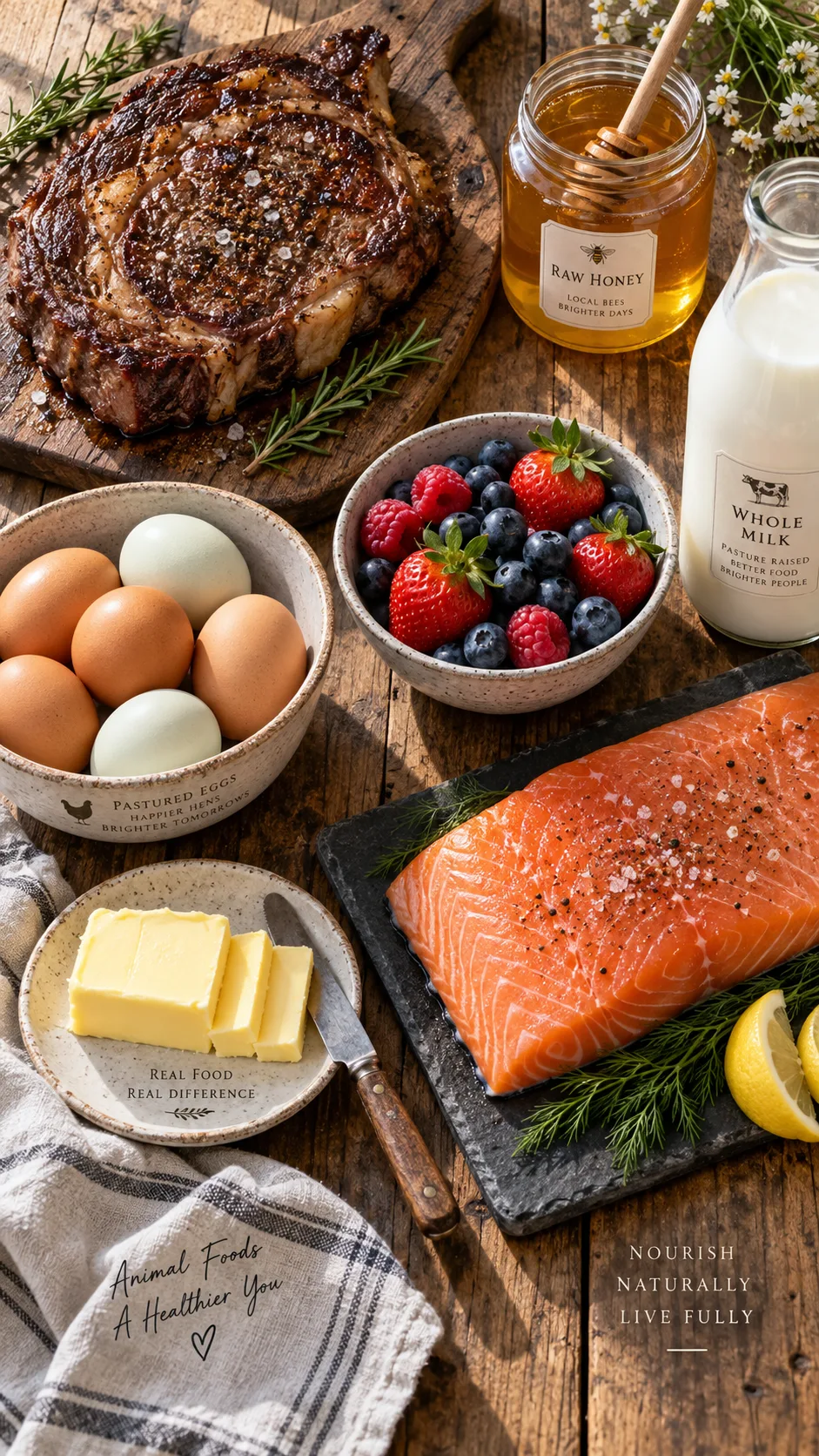
An animal based diet puts animal foods at the center of your plate (meat, eggs, fish, organs, dairy) and then adds a small supporting cast of low-toxin plant foods like fruit, raw honey, and maple syrup. That’s it. No 47-page rulebook.
The core idea? Animal foods give you the most bioavailable nutrients per bite, and your body absorbs them with almost zero effort. Plants get invited, but only the friendly ones.
Think of it as the middle child between two louder siblings. On one side you’ve got the carnivore diet, which bans plants entirely. On the other, the Paleo diet, which loads your plate with vegetables, nuts, and seeds. The animal based approach sits comfortably in between, eating steak and mango without apologizing to anyone.
Where did this even come from?
Paul Saladino, MD popularized the term after he softened his hardline carnivore stance and started adding fruit and honey back in. Ancestral health researchers and the Weston A. Price crowd had already argued for nose-to-tail eating for decades. The internet did what the internet does and turned it into a movement.
FYI, this isn’t some brand-new discovery. Traditional cultures (the Maasai, the Inuit, Mongolian herders) built entire food systems around animals plus whatever fruit or honey they could find. We just gave it a hashtag.
Why does it work? The science bit
Ever wondered why you feel wide awake after steak and eggs but ready for a nap after a bagel? Three things drive most of the results people report.
1. Nutrient density you can’t fake
Animal foods carry nutrients in forms your body grabs instantly. Heme iron from red meat absorbs at roughly 15% to 35%, while non-heme iron from plants limps in at 2% to 20%, and even that drops when phytates show up. Retinol (real vitamin A) beats beta-carotene, which many people convert poorly thanks to BCMO1 gene variants.
- Vitamin B12: exists only in animal foods. Full stop.
- Heme iron: absorbs far better than the plant version.
- Zinc: abundant in beef and oysters, and no phytates block it.
- Preformed vitamin A (retinol): liver gives you a week’s worth in one serving.
- Creatine, carnosine, taurine: found almost exclusively in meat.
- EPA and DHA: the omega-3s your brain uses, straight from fatty fish.
The NIH Office of Dietary Supplements backs up the B12 point plainly: plant foods contain none of it in an active form. That’s not ideology, that’s chemistry.
2. Protein keeps you full
Protein wins the satiety contest every single time. It triggers the release of GLP-1, peptide YY, and cholecystokinin, the hormones that tell your brain to put the fork down. Ever notice how nobody binge-eats lamb chops at 11 p.m.?
Research on higher-protein eating consistently shows people eat fewer total calories without counting a thing. You don’t white-knuckle your way through the day. You just stop being hungry, which honestly feels like cheating.
3. You cut out the junk by default
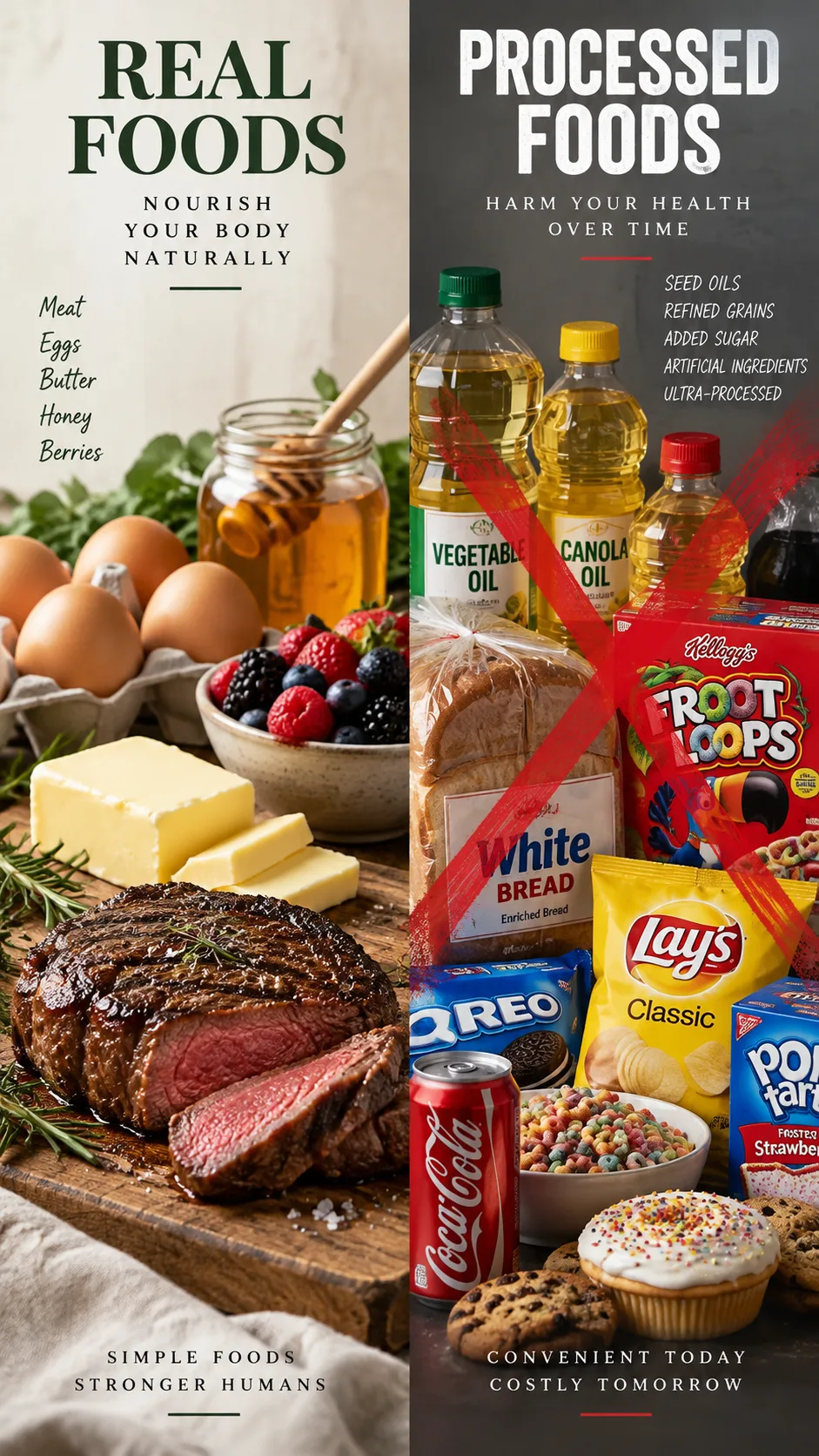
Here’s the unsexy truth I’ll happily admit: a big chunk of the benefit comes from what you DELETE. Seed oils, ultra-processed snacks, industrial flour, and soda vanish from your kitchen automatically.
The Harvard T.H. Chan School of Public Health links ultra-processed food to a long list of bad outcomes. Remove that category and most people improve, regardless of what they replace it with. Animal based eating just makes the removal effortless.
What to eat on an animal based diet
Now the fun part. Your shopping list, ranked roughly by how much of your plate each item should own.
Tier 1: the foundation
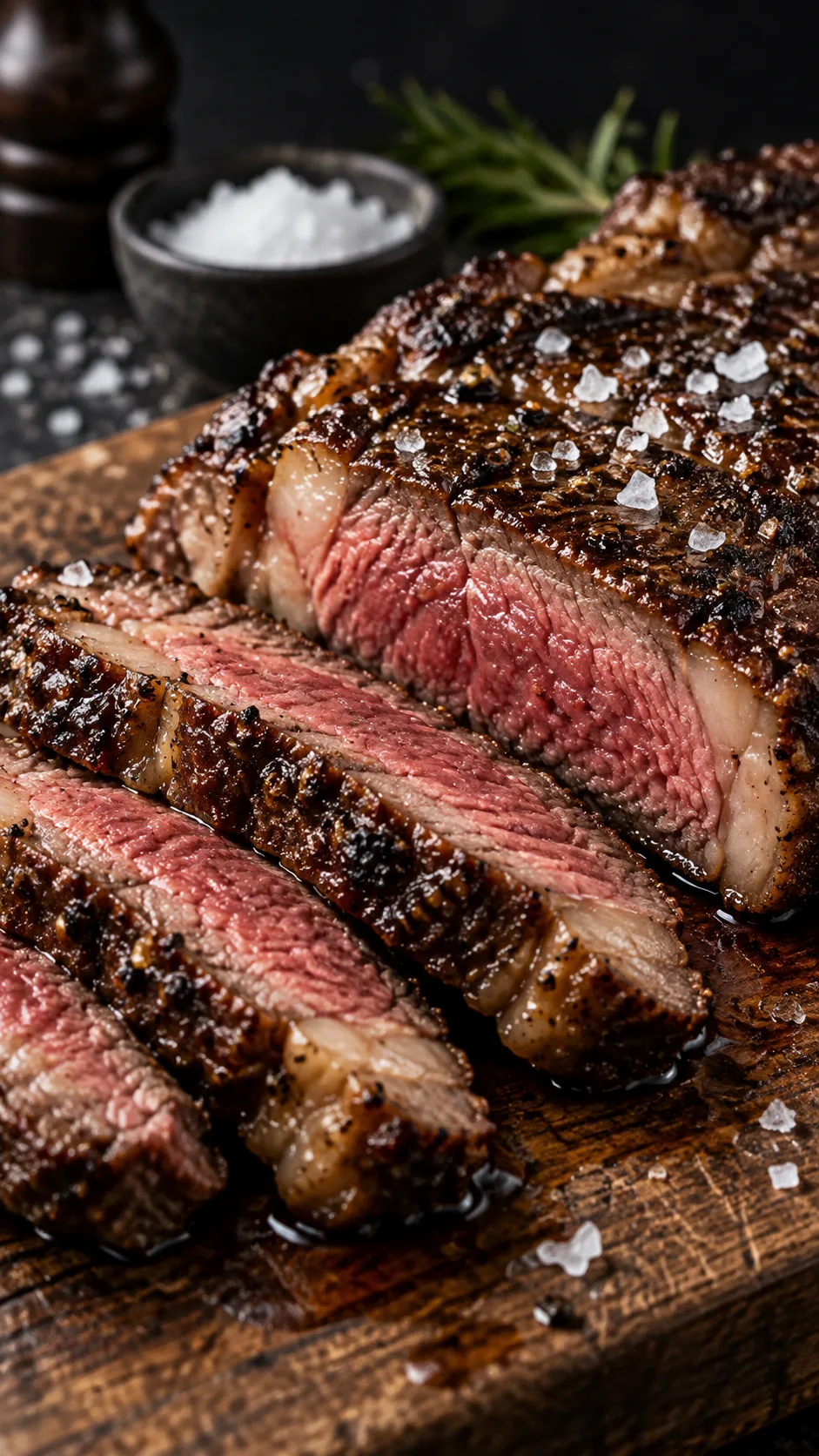
- Ruminant meat: beef, lamb, bison, goat, venison. Fatty cuts beat lean ones here. Ribeye, chuck, ground 80/20.
- Organ meats: liver, heart, kidney. Liver is nature’s multivitamin, and yes, it tastes like liver. Two servings a week does plenty.
- Eggs: pastured if your budget allows. The yolk holds the choline, the vitamin A, and the flavor.
- Wild-caught fish and seafood: salmon, sardines, oysters, mackerel. Oysters are a zinc bomb.
- Animal fats: butter, ghee, tallow, lard, duck fat. Cook with these.
Tier 2: the supporting cast
- Raw or low-temp dairy: whole milk, aged cheese, kefir, heavy cream. Skip it if dairy wrecks you.
- Fresh fruit: berries, mango, oranges, melon, bananas. Your fastest, cleanest carb source.
- Raw honey and maple syrup: real energy, real minerals, zero guilt spirals.
- Bone broth: collagen, glycine, and a mug of comfort on cold mornings.
- Salt: you need more than you think once you drop processed food. Don’t fear the shaker.
Notice what’s missing? Kale. Nobody’s crying about it.
What to skip (and why)
Now the part that gets people typing angry comments. The animal based framework sorts plants by their defense chemicals, the compounds plants make specifically so animals stop eating them.
The definite skips
- Industrial seed oils: soybean, canola, corn, sunflower, cottonseed, grapeseed. High in oxidation-prone linoleic acid and processed with hexane. Hard pass.
- Refined sugar and flour: empty calories that spike and crash you.
- Ultra-processed everything: if the ingredient list reads like a chemistry exam, put it back.
- Alcohol: at minimum, cut way back. Your liver has a job already.
The “reduce or experiment” list
- Grains and legumes: lectins, phytates, and gluten. Phytates bind zinc and iron, which undercuts the whole nutrient-density point.
- Nuts and seeds: high in omega-6 and oxalates. Fine occasionally, rough in fistfuls.
- Nightshades: tomatoes, peppers, eggplant, potatoes. Some people react, most don’t. Test it yourself.
- High-oxalate greens: spinach, chard, beet greens, almonds. Relevant if you form kidney stones.
- Cruciferous veg: broccoli, kale, cabbage. Goitrogens and heavy fiber. Some guts revolt.
Am I saying broccoli is poison? No. I’m saying if you deal with bloating, IBS, or joint aches, pulling these out for 30 days gives you real data. People wrestling with gut symptoms often find overlap with the low FODMAP approach, which restricts many of the same fermentable carbs.
Animal based vs. carnivore vs. paleo vs. keto
People mix these up constantly, so let’s sort them out fast.
- Carnivore: animal foods only. Zero plants, zero carbs. Strictest of the bunch.
- Animal based: animal foods first, plus fruit, honey, and sometimes dairy. Carbs welcome from clean sources.
- Paleo: meat, veg, fruit, nuts, seeds. No dairy, no grains, no legumes.
- Keto: defined by macros, not food quality. You can eat keto on protein bars and seed oils. Please don’t.
The biggest split? Animal based is NOT low carb. Plenty of people on it eat 150 to 250 grams of carbs daily from fruit and honey. Athletes especially. That single detail separates it from carnivore and keto entirely.
A day of eating (real talk)
Here’s what a normal day looks like without turning your kitchen into a laboratory.
- Breakfast: 3 eggs fried in butter, 4 oz ground beef, a bowl of berries with raw honey.
- Lunch: 8 oz ribeye, salted, plus a mango. Takes 12 minutes.
- Snack (if hungry): Cheese, a glass of raw milk, or a spoon of honey.
- Dinner: Wild salmon with ghee, a side of scallops, orange slices.
- Weekly extras: Liver twice, oysters once, bone broth whenever.
Total prep time? Less than you spent scrolling this morning. That’s the underrated perk: the cooking gets dead simple.
The real benefits people report
I switched a big chunk of my own plate toward this style about two years ago, mostly out of curiosity after years of “healthy whole grain” breakfasts that left me foraging by 10 a.m. Three things changed fast.
- Stable energy. No 3 p.m. crash. The afternoon slump just stopped showing up.
- Fewer cravings. When protein and fat fill you up, cookies lose their grip.
- Better digestion. Less fiber sounded wrong to me too. My gut disagreed with my assumptions.
Other commonly reported wins include easier fat loss, clearer skin, steadier mood, and better strength in the gym. I’ll be straight with you though: most of this evidence is anecdotal plus mechanistic reasoning. Large long-term trials on this specific pattern don’t exist yet.
The honest downsides and criticisms
Any article that only sells you the upside deserves suspicion. So here’s the other column.
Fiber and the microbiome
Most gut researchers argue that fiber feeds beneficial bacteria and produces short-chain fatty acids like butyrate. Animal based eating slashes fiber hard. Counterpoint: butter contains butyrate directly, and some people’s guts run better with less fermentable material. The science here remains genuinely unsettled, and anyone claiming certainty is selling something.
Saturated fat and heart health
Mainstream bodies like the American Heart Association recommend limiting saturated fat. Some people see LDL cholesterol climb significantly on this way of eating, especially lean, metabolically healthy folks. Get bloodwork before you start and again at 3 and 6 months. Track ApoB, not just total cholesterol.
Cost and practicality
Grass-fed ribeye isn’t cheap. Neither is raw dairy or wild salmon. Ground beef, eggs, chicken thighs, canned sardines, and liver keep costs sane, and organ meat is genuinely the cheapest nutrition in the store, which still amuses me.
Red meat and cancer headlines
The IARC classified processed meat as a Group 1 carcinogen and red meat as Group 2A (probable). The absolute risk increase is small, the studies are observational, and healthy-user bias muddies everything. Still, be honest with yourself: quality matters, and daily bacon is not the same as grass-fed beef.

How to start without wrecking your week
Please don’t go from cereal to organ meats in one dramatic Monday. Ramp it.
- Week 1: Kill seed oils and ultra-processed food. Cook with butter, tallow, or olive oil. Nothing else changes.
- Week 2: Put 30 to 50 grams of protein at breakfast. Eggs and meat, every morning. This single move kills most cravings.
- Week 3: Drop grains and legumes. Swap those carbs for fruit and honey.
- Week 4: Add organ meats. Start with a small liver portion blended into ground beef. Nobody will notice.
- Week 5 and beyond: Test your tolerance. Reintroduce specific plants one at a time and watch what happens.
Watch out for the adaptation phase
The first 7 to 14 days can feel rough, with headaches, fatigue, and brain fog. Electrolytes fix most of it. Add salt aggressively, and get potassium and magnesium in. If someone tells you that’s a “detox,” roll your eyes politely. It’s sodium loss.
Who should be careful
This approach doesn’t suit everyone, and I’d rather say so than pretend otherwise.
- Chronic kidney disease: high protein loads need medical supervision. Talk to your nephrologist first.
- Familial hypercholesterolemia: monitor lipids closely with a doctor.
- Gallbladder removal: you may need to ramp fat intake slowly.
- Hemochromatosis: extra heme iron creates real problems.
- Pregnancy: go easy on liver, since preformed vitamin A has an upper limit.
- Blood pressure concerns: if your doctor put you on a sodium-restricted plan, something like the DASH diet may fit you better.
Rule of thumb: get labs, involve a professional, and let data beat vibes. Every time.
Quick FAQ
Will I get constipated without fiber?
Some people do at first, most adjust within two weeks. Stool volume drops because there’s less indigestible material, which is normal and not a blockage. Water and salt help.
Can athletes do this?
Absolutely. Fruit and honey supply plenty of glycogen. Many strength athletes perform BETTER once protein climbs.
Is fruit really okay?
Yes. Whole fruit comes packaged with water, potassium, and vitamin C. It isn’t a candy bar, and pretending otherwise is silly.
Do I have to eat liver?
No, but you’d be leaving the single most nutrient-dense food on the shelf. Try desiccated liver capsules if the texture defeats you.
The bottom line
The animal based diet works for a lot of people because it stacks three wins at once: maximum nutrient density, serious satiety from protein, and the automatic removal of processed junk. You don’t count calories. You don’t weigh broccoli. You eat real food and let your appetite do the math.
It isn’t magic, and it isn’t for everyone. Get your bloodwork. Watch your lipids. Buy the best quality you can afford, and pick consistency over perfection.
My honest advice? Run a 30-day experiment. Protein at every meal, zero seed oils, fruit and honey for carbs. Track your energy, your sleep, your cravings, and your waistline. Your body will hand you an answer faster than any study ever will, and that answer belongs to you alone.
Now go cook something that used to have a face.