

You ate breakfast two hours ago. Your stomach is already filing a complaint. Sound familiar?
Nobody mentions this when you start “eating healthy”: hunger isn’t a willpower problem. It’s a chemistry problem. And the biggest lever you can pull on that chemistry is protein.
I spent years logging every almond in a food tracking app like some sort of nutritional accountant. Miserable. Then I stopped counting and rebuilt my plate around protein instead. I ate MORE food, thought about food LESS, and my jeans fit better. Annoying, right? It really was that simple.
So let’s build you a protein diet plan that keeps you genuinely full, with no spreadsheets involved.
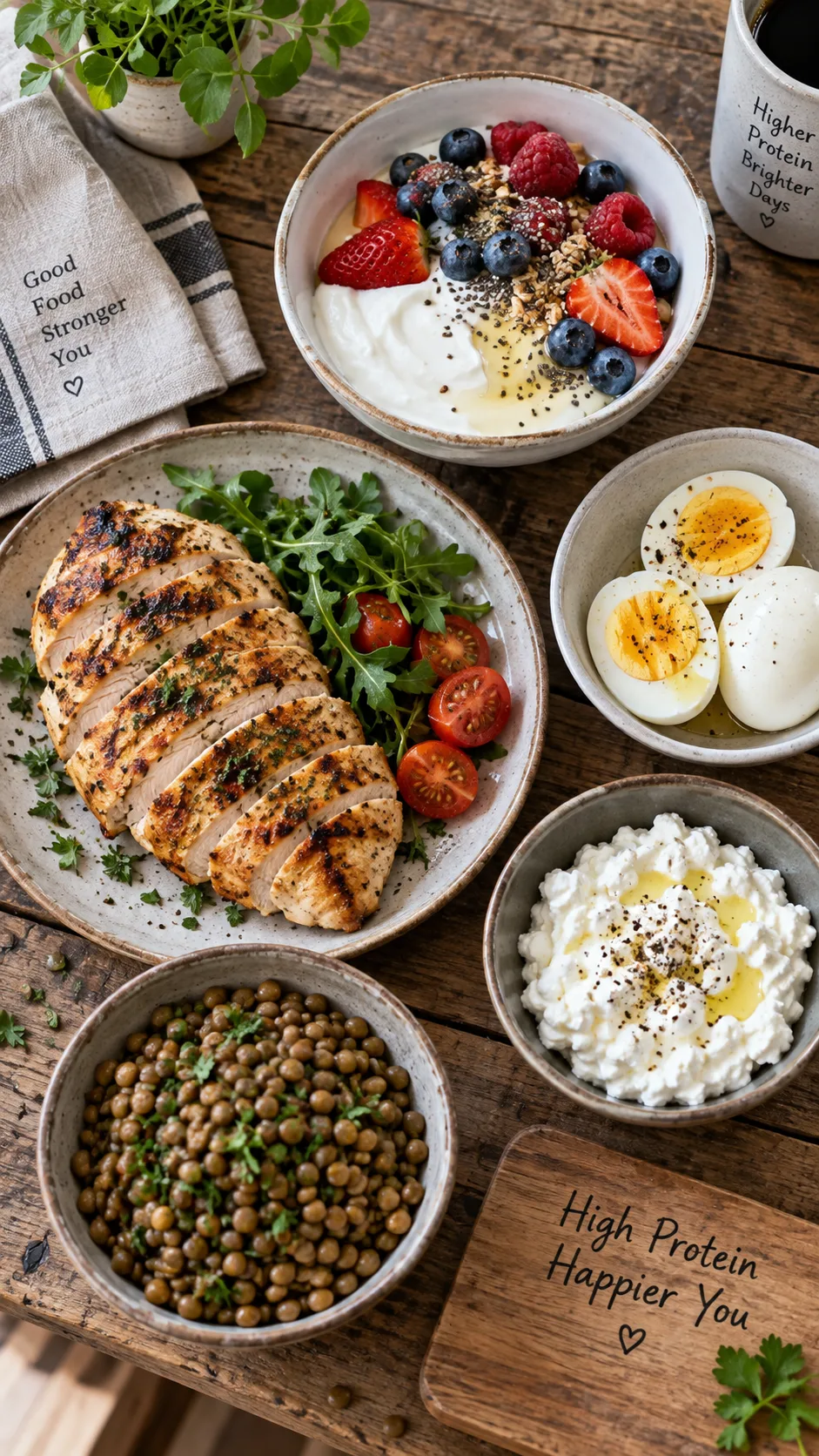
Why protein shuts hunger up (the real science)
Protein isn’t magic. It’s just very good at three specific jobs that make you stop thinking about snacks.
1. It triggers your fullness hormones
When you eat protein, your gut releases hormones with intimidating names: GLP-1, peptide YY, and cholecystokinin (CCK). Those are the same signalling pathways that expensive weight-loss injections mimic. Your body makes them for free when you eat a chicken thigh.
Protein also suppresses ghrelin, the hormone that whispers “cookies” in your ear at 3pm. Carbs and fat barely move the needle by comparison.
2. It costs energy to digest
Your body burns roughly 20 to 30% of protein’s calories just breaking it down. That’s the thermic effect of food. Carbs cost about 5 to 10%. Fat? A lazy 0 to 3%.
Translation: 100 calories of steak nets you fewer usable calories than 100 calories of butter. That’s not a free pass to eat unlimited ribeye, but it stacks in your favour quietly, every single day.
3. It protects your muscle
Lose weight without enough protein and you lose muscle alongside fat. Muscle burns calories at rest. Lose it and your metabolism slows, which is exactly why so many people regain weight after a crash diet.
The Harvard T.H. Chan School of Public Health summarises research that consistently backs higher protein intakes for appetite control and lean mass retention. This isn’t bro-science from a gym forum.
How much protein do you really need?
The official RDA is 0.8g per kg of bodyweight. Let me be blunt: that number prevents deficiency. It optimises nothing. It’s the nutritional equivalent of “the bare minimum to not get scurvy.”
For satiety and body composition, aim higher:
- Sedentary, general health: 1.0 to 1.2g per kg bodyweight
- Fat loss while keeping muscle: 1.6 to 2.0g per kg bodyweight
- Serious strength training: 1.6 to 2.2g per kg bodyweight
- Adults over 60: 1.2 to 1.5g per kg (you resist protein’s muscle-building signal more as you age)
Quick math for a 70kg person chasing fat loss: 112 to 140g of protein daily. That sounds terrifying until you realise it’s roughly four solid protein servings. Very doable.
Worried about your kidneys? If your kidneys are healthy, the evidence says you’re fine. The published research on long-term high-protein intake in healthy adults found no adverse effects on kidney function. If you already have kidney disease, though, talk to your doctor first. Genuinely.
The no-counting system: eat by structure, not numbers
This is the part I promised. You don’t need an app. You need rules of thumb you can apply at a restaurant, at your mum’s house, or at 11pm when you’re standing in front of the fridge in the dark. (No judgment. We’ve all been there.)
Rule 1: the palm rule
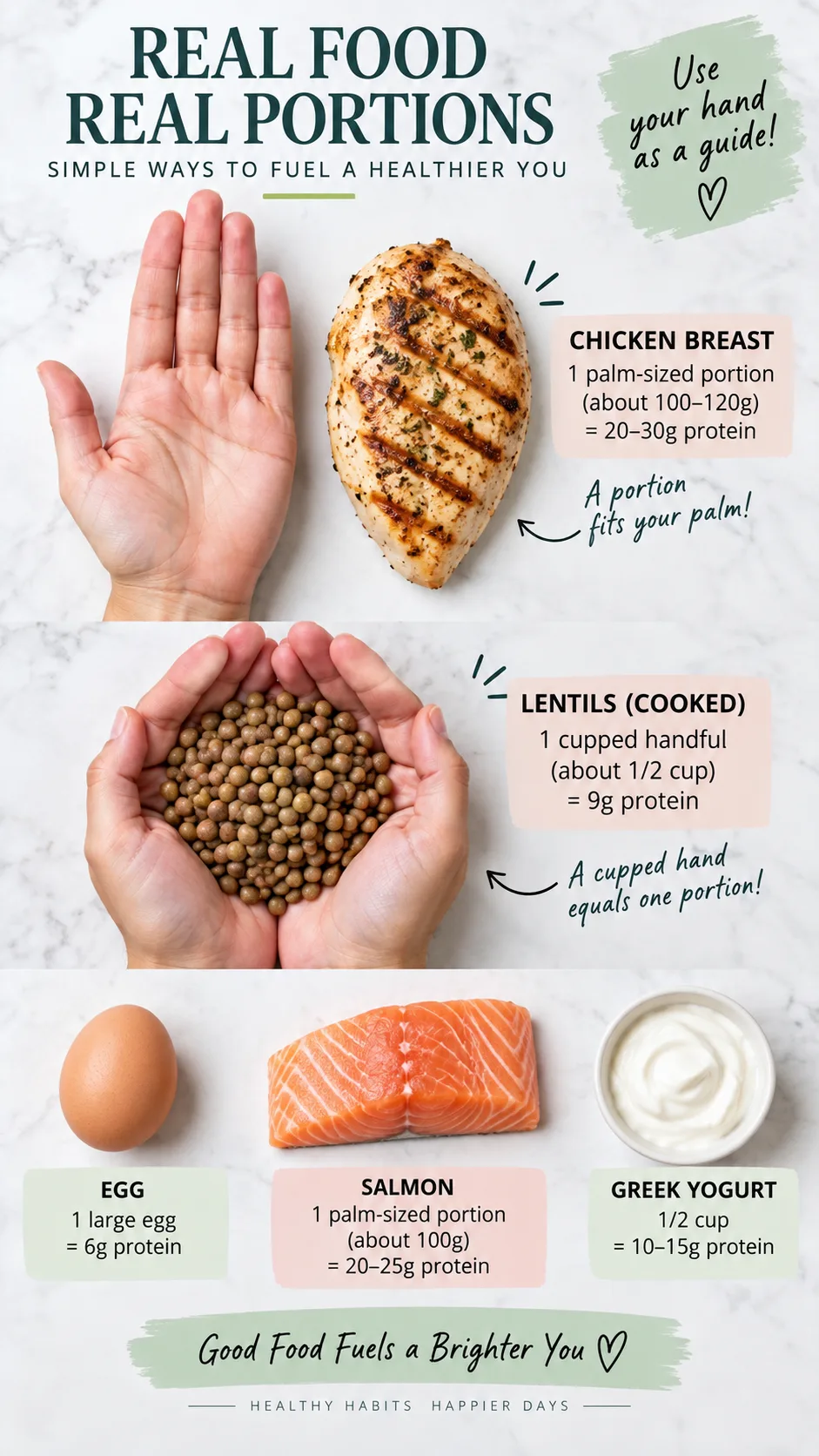
Every meal gets one to two palm-sized portions of protein. Your palm, thickness included, holds roughly 20 to 30g of protein for most people. Three meals with two palms each puts you near 120g without a calculator in sight.
Rule 2: protein first, always
Physically eat the protein on your plate FIRST. Before the rice. Before the bread. This one habit does two things: it front-loads satiety signals, and it blunts your blood sugar spike.
Ever noticed how you can demolish a bread basket and still be hungry for the main? That’s what happens when you lead with refined carbs. Reverse the order.
Rule 3: the 30g breakfast non-negotiable
A carb-only breakfast sets your appetite on fire for the entire day. Get 30g of protein within 90 minutes of waking. Three eggs plus Greek yogurt. A protein shake with milk. Leftover chicken, honestly, because cold chicken for breakfast is criminally underrated.
This is the single change that made the biggest difference for me. My afternoon snack cravings basically evaporated within a week. I’m not exaggerating.
Rule 4: add volume, not just protein
Protein handles hormonal fullness. Fibre and water handle physical fullness. You want both. Pile half your plate with vegetables, since they take up stomach space for almost no calories.
Protein plus fibre together is the real satiety cheat code. Chicken alone is fine. Chicken with a mountain of roasted broccoli and a bean salad? You won’t think about food for five hours.
Rule 5: the hand-check, not the scale
- Protein: 1 to 2 palms per meal
- Vegetables: 1 to 2 fists per meal
- Carbs: 1 cupped hand (2 if you trained hard)
- Fats: 1 thumb (2 if you’re hungrier)
That’s the whole system. Your hand scales with your body size, which is a beautifully lazy piece of built-in personalisation.
The best high-protein foods (ranked by fullness, not just grams)
Not all protein hits the same. Some foods give you protein plus volume plus chew time, which is the combination you want.
Tier 1: the heavy hitters
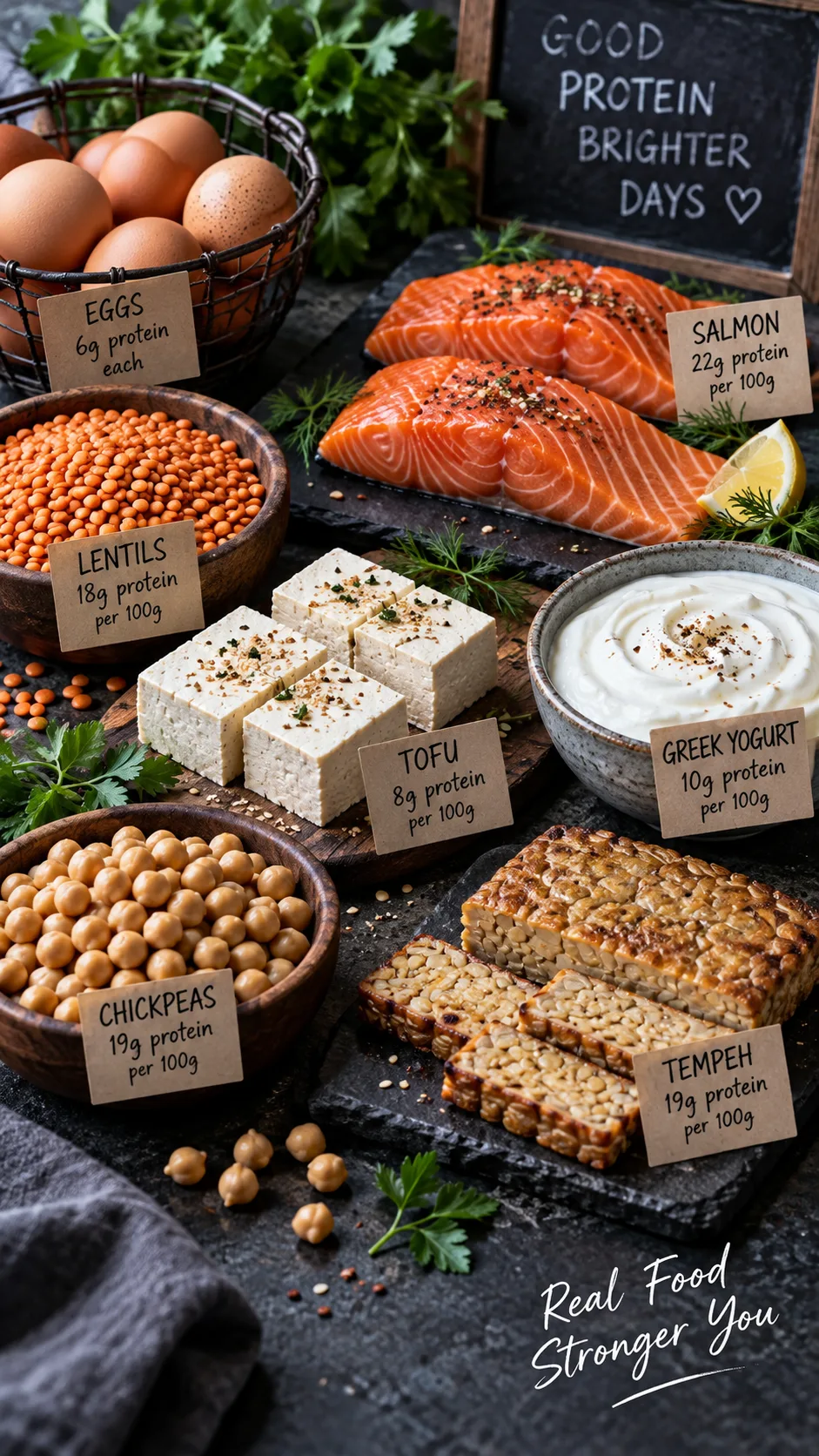
- Eggs: 6g each, ridiculously satiating, cheap. The unbothered king.
- Greek yogurt (0% or 2%): 17 to 20g per cup, plus gut-friendly bacteria
- Cottage cheese: 25g per cup, slow-digesting casein, great before bed
- Chicken breast or thigh: 26 to 31g per 100g cooked
- Lean beef: 26g per 100g, plus iron, zinc and B12
- Tinned tuna and salmon: 25g per tin, zero cooking effort
- Prawns: 24g per 100g and they cook in four minutes
Tier 2: plant-based powerhouses
- Lentils: 18g per cooked cup, PLUS 15g fibre (the satiety combo)
- Tofu (firm): 20g per cup, absorbs whatever flavour you throw at it
- Tempeh: 34g per cup, fermented, nutty, wildly underrated
- Edamame: 18g per cup and genuinely fun to eat
- Black beans and chickpeas: 15g per cup with heaps of fibre
- Seitan: 25g per 100g (skip it if you’re gluten-intolerant, obviously)
Eating plant-based? Combine sources across the day so you cover all essential amino acids. Beans plus grains, lentils plus rice. Your body doesn’t need them in the same mouthful, and that myth died decades ago.
Tier 3: useful, but don’t build your diet on them
- Whey or casein protein powder: convenient, but liquid calories fill you up less
- Protein bars: check the label, because many are candy bars wearing a lab coat
- Cheese: decent protein, but the fat adds up fast
- Nuts: great food, mediocre protein-per-calorie ratio
A real 7-day protein meal framework (not a rigid plan)
I won’t give you a plan that demands 47g of quinoa on a Tuesday. You’d abandon it by Wednesday and feel bad about yourself. Here’s a repeatable framework you can shuffle forever instead.
Breakfast options (aim 30 to 40g)
- 3 eggs scrambled plus 150g Greek yogurt with berries: about 35g
- Cottage cheese bowl with tomato, cucumber, olive oil, black pepper: about 28g
- Protein oats: oats cooked with milk plus a scoop of whey, about 35g
- Tofu scramble with turmeric, spinach and wholegrain toast: about 30g
- Smoked salmon on rye with cream cheese and capers: about 28g
Lunch options (aim 35 to 45g)
- Big chicken salad: 180g chicken, mixed leaves, chickpeas, feta, vinaigrette
- Tuna and white bean bowl with red onion, parsley and lemon
- Lentil soup plus a boiled egg or two on the side
- Leftover dinner: the most sustainable lunch strategy known to humanity
- Turkey and hummus wrap in a high-protein tortilla with loads of salad
Dinner options (aim 40 to 50g)
- Salmon plus roasted vegetables plus potatoes
- Beef and vegetable stir-fry over rice
- Chicken curry with lentils: protein from two sources, brilliant
- Tempeh tacos with black beans, slaw and lime
- Prawn pasta with a huge side salad
Snacks (aim 15 to 25g)
- Greek yogurt with cinnamon
- Two boiled eggs (make six on Sunday, thank yourself all week)
- Edamame with flaky salt
- Cottage cheese with pineapple. Don’t knock it until you try it.
- Beef jerky (watch the sodium)
Want regionally specific ideas that fit your kitchen and your budget? The Nigerian protein diet guide breaks down how to hit high protein targets using local staples like moi moi, egusi, fish and beans, with no imported protein powder required.
Watch: how protein controls appetite
The mistakes that wreck most protein diets
Mistake 1: back-loading all your protein
Toast for breakfast, a sad sandwich for lunch, then a 70g protein dinner. Your total might look fine on paper, but you spent all day hungry and your muscle protein synthesis fired once.
Spread it out. Aim for 30 to 40g per meal, three or four times a day. Your appetite and your muscles both prefer it.
Mistake 2: drinking your protein instead of chewing it
Shakes are convenient. They’re also terrible at making you feel full. Liquid calories bypass a lot of your satiety machinery. Use shakes to top up, never as your main strategy.
Mistake 3: ditching carbs and fat entirely
Pure protein diets are grim and you will quit. Fat makes food taste good. Carbs fuel training and help you sleep. This is a protein-forward plan, not a protein-only prison.
Mistake 4: forgetting fibre
Most people who up their protein slash their fibre at the same time. Then things get uncomfortable. Target 25 to 35g of fibre daily and drink more water. Your digestive system will send a thank-you note.
Mistake 5: assuming every “high protein” label is honest
A yogurt with 8g of protein and 22g of added sugar is not a protein food. It’s dessert with good PR. Flip the package over and read the numbers on the back.

How long until you feel different?
Time for honest expectations, because unrealistic timelines kill more diets than pizza ever has.
- Days 1 to 3: You’ll feel unusually full. Some people struggle to finish meals. That’s normal and it’s the whole point.
- Week 1 to 2: Cravings noticeably drop. Afternoon energy crashes soften. You stop grazing.
- Week 3 to 4: Clothes fit differently, often before the scale moves much. Water and glycogen shifts confuse the scale early on.
- Month 2 to 3: Visible body composition change, especially if you lift weights twice a week.
- Month 6 and beyond: It stops being a diet. It’s just how you eat.
That last point matters most. Every diet “works” for six weeks. The one that works forever is the one you don’t have to think about. Protein-forward eating is one of the very few approaches that becomes automatic.
Pair it with resistance training (please)
Protein without strength training is like buying bricks and never building the wall. You’ll still lose fat. But you won’t get the shape you’re after.
Two to three sessions a week is enough. Squats, hinges, pushes, pulls, carries. The CDC’s adult activity guidelines recommend muscle-strengthening activity on at least two days per week, and that’s the floor, not the ceiling.
If you want a deeper breakdown of how to combine protein targets with a training plan, this complete high protein diet plan covers the muscle-building side in proper detail.
Frequently asked questions
Can I eat too much protein?
Practically speaking, most people struggle to eat too much, because protein is so filling that it self-regulates. Going beyond 2.2g/kg gives the vast majority of people no extra benefit. It just crowds out other useful nutrients.
Do I need protein right after my workout?
The “anabolic window” is much wider than the supplement industry implied. Total daily protein matters far more than timing. Eat within a few hours of training and you’re covered.
Is plant protein worse than animal protein?
Per gram, your body uses animal protein more efficiently. But eat 10 to 20% more total plant protein across varied sources and you close the gap completely. Plant eaters also tend to get way more fibre, which helps satiety enormously.
Will this work if I’m not trying to lose weight?
Absolutely. You get a stable appetite, steadier energy, better recovery, and preserved muscle as you age. Fat loss is one benefit among several.
The bottom line
Forget the tracking app. Forget weighing your broccoli. Build every meal around one to two palms of protein, add a mountain of vegetables, eat the protein first, and start your day with 30g.
That’s four rules. You can remember four rules. You cannot sustainably remember 1,847 daily calories broken into three macronutrient targets, and honestly, why would you want to?
The best diet plan isn’t the most precise one. It’s the one you’re still following next year. Protein-forward eating wins because it stops fighting your biology and starts working with it.
Start tomorrow morning. Thirty grams at breakfast. See how you feel at 3pm. I’d bet money you’ll notice the difference within three days.