

It’s 12:47 PM. You’re starving, your blood sugar has left the building, and the only thing standing between you and a $16 sad desk sandwich is nothing at all. Sound familiar?
I’ve been there more times than I’d like to admit. After years of testing (and failing at) every lunch system on the internet, I finally figured out what holds up. Healthy lunch meal prep isn’t about cooking 20 identical chicken-and-broccoli containers on Sunday. It’s about building a small, flexible system that feeds you well without eating your entire weekend.
So let’s fix your lunches for good.
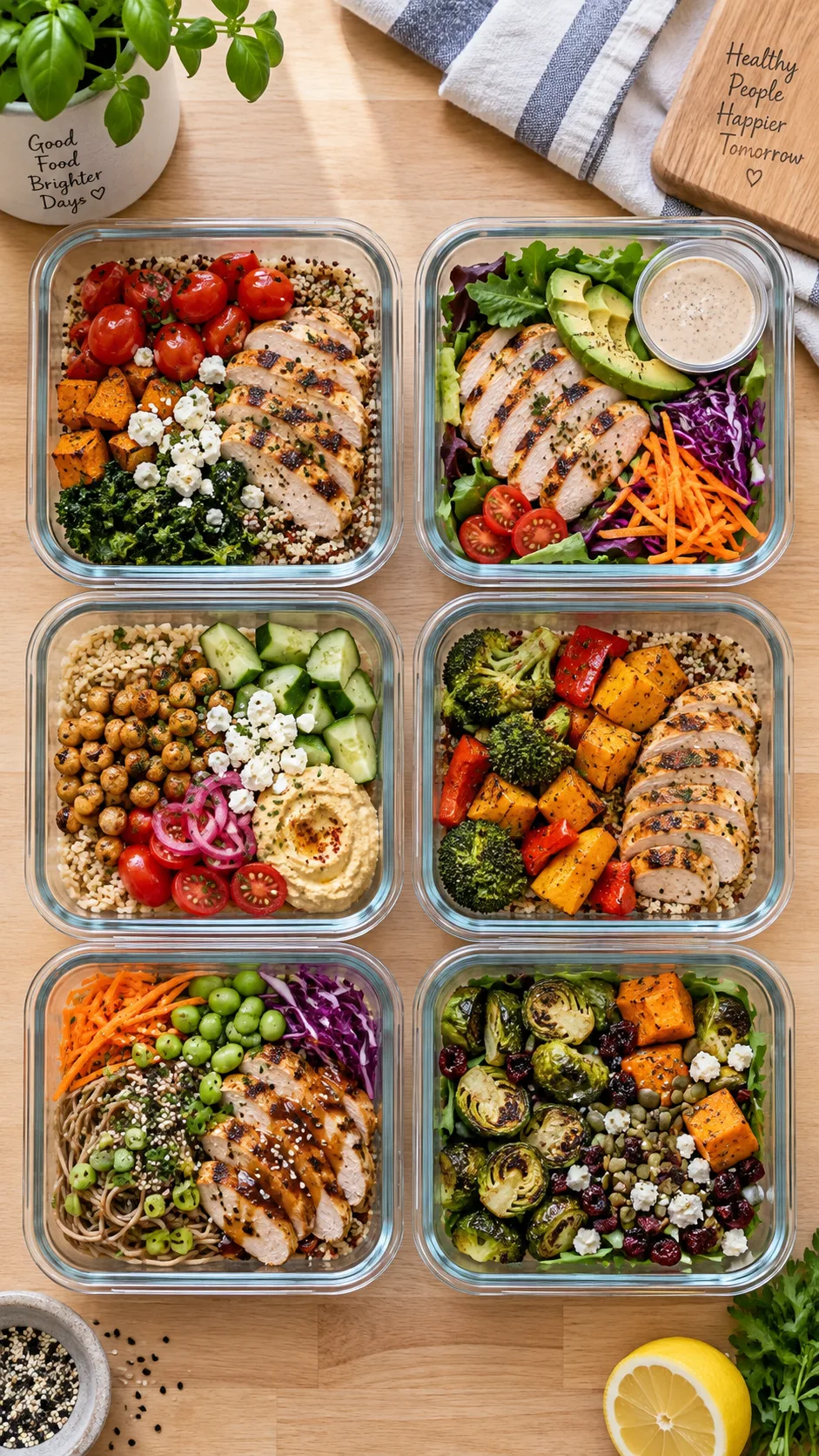
Why most lunch meal prep plans crash and burn by Wednesday
Most people don’t quit meal prep because it’s hard. They quit because they got bored, and boredom beats willpower every single time.
You cook five identical meals on Sunday feeling like a productivity god. By Wednesday, you open that container, smell the same lemon-herb chicken for the third day running, and quietly order Thai food. I’ve done it. You’ve probably done it. No judgment here.
The three real reasons lunch prep fails:
- Repetition fatigue. Your brain craves novelty. Five identical meals ignore basic human psychology.
- Texture collapse. Soggy greens, rubbery chicken, mushy grains. Food that tasted great Sunday tastes like regret Thursday.
- Overambition. You planned a four-hour cook session with 11 recipes. You did it once. You never did it again.
Ever wondered why restaurants can make the same dish taste good every single time? They control texture and temperature. You can steal that trick, and I’ll show you how in a minute.
The component method: the only lunch prep system you need
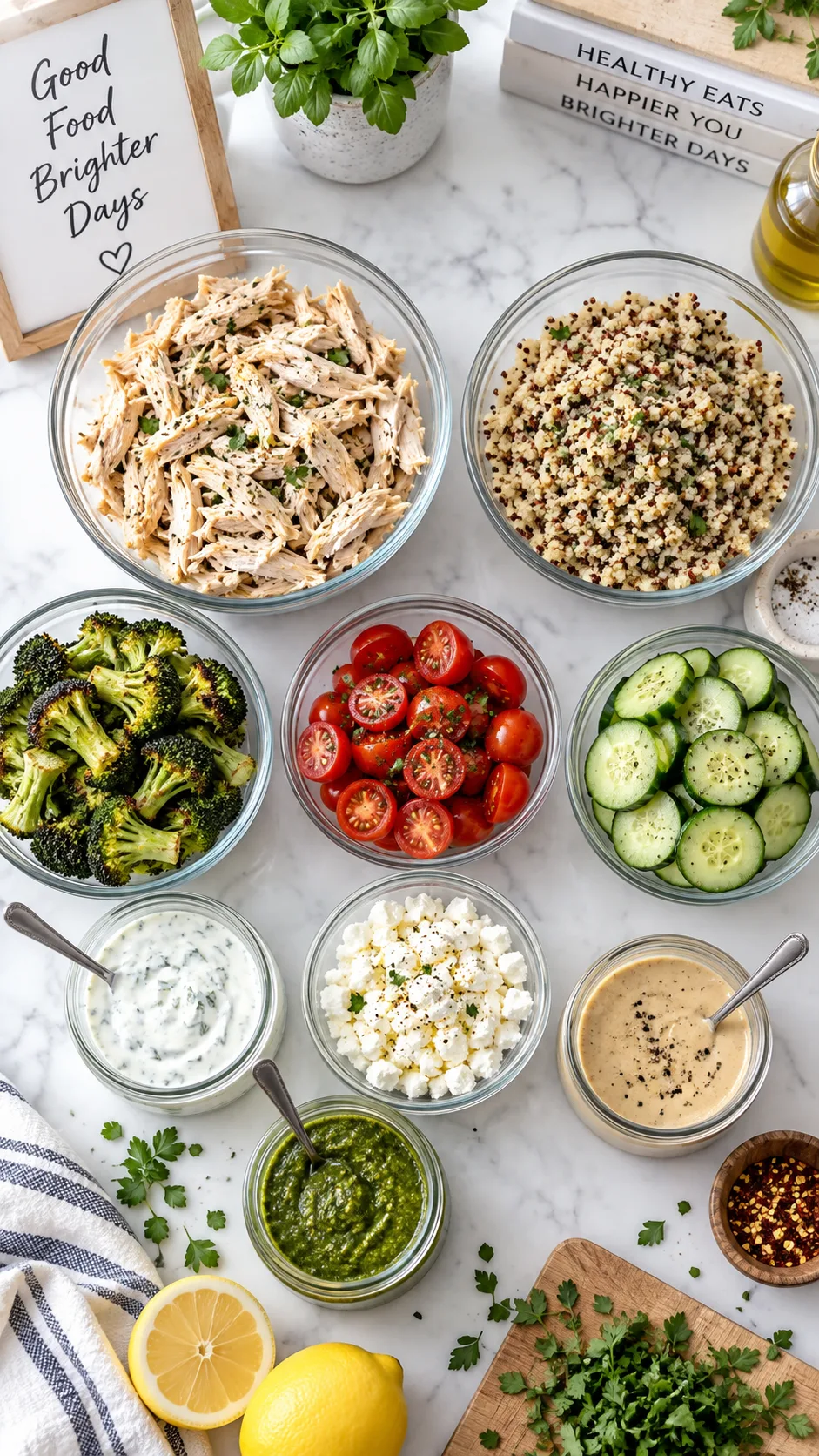
Forget prepping meals. Prep components instead. This one mental shift changed everything for me.
Instead of building five finished lunches, you cook a handful of building blocks and assemble them differently each morning. Takes 90 seconds. Feels like a different meal every day. Your Sunday self does the work, and your Tuesday self gets the variety.
The five component categories
- Protein (pick 2): Shredded chicken thighs, hard-boiled eggs, baked salmon, seasoned ground turkey, marinated tofu, canned tuna, chickpeas, edamame
- Complex carb (pick 1 or 2): Quinoa, farro, brown rice, roasted sweet potato, whole-grain pasta, couscous
- Vegetables (pick 3): Roasted broccoli, shredded cabbage slaw, cherry tomatoes, cucumber, roasted peppers, raw carrots, baby spinach
- Fat and flavor (pick 2): Avocado, feta, tahini, olives, toasted nuts, hummus
- Sauce (pick 2, and this one is non-negotiable): Lemon-tahini, Greek yogurt ranch, peanut-lime, chimichurri, honey mustard vinaigrette
Two proteins x two carbs x three vegetables x two sauces = 24 possible combinations. All from one cook session. That’s the math that keeps boredom out of your lunch bag.
If you want the full walkthrough on structuring a week this way, my guide to meal prep for the week breaks down the exact sequencing I use.
Nail the protein or nothing else matters
This is where most healthy lunch ideas fall apart. You prep a gorgeous rainbow salad, eat it at noon, and you’re raiding the vending machine by 2:15.
Protein is the difference between a lunch that holds you and a lunch that teases you. The research summarized by the Harvard T.H. Chan School of Public Health keeps pointing to protein’s role in satiety and in maintaining lean muscle. You can feel the difference within a week.
My rule: aim for 25 to 35g of protein per lunch. That’s not a scientific mandate, just the range where I personally stop thinking about snacks.
Protein amounts that hit that target
- 4 oz chicken breast: about 35g protein
- 4 oz salmon: about 25g protein, plus omega-3s
- 1 cup Greek yogurt: about 20g protein
- 3 large eggs: about 18g protein
- 1 cup cooked lentils: about 18g protein and 15g fiber
- 1 cup edamame: about 17g protein
- Half a block of firm tofu: about 20g protein
Eating plant-based? Stack two sources. Lentils plus a handful of pumpkin seeds gets you there without touching animal products. If protein is your main goal, I go much deeper in my high protein meal prep recipes guide.
8 healthy lunch meal prep ideas that survive the fridge
These are the ones I rotate constantly. Each holds up 3 to 4 days minimum, and none of them taste like punishment.
1. Mediterranean chicken grain bowls
Quinoa base, oregano-lemon chicken thighs, cucumber, cherry tomatoes, red onion, kalamata olives, feta. Lemon-tahini on the side. This one genuinely improves by day two once the flavors settle in. It’s the closest thing to a meal prep cheat code.
2. Deconstructed burrito bowls
Cilantro-lime brown rice, seasoned black beans, ground turkey or chicken, roasted peppers, corn, shredded cabbage. Add avocado and salsa the morning of. It freezes beautifully too, so make a double batch.
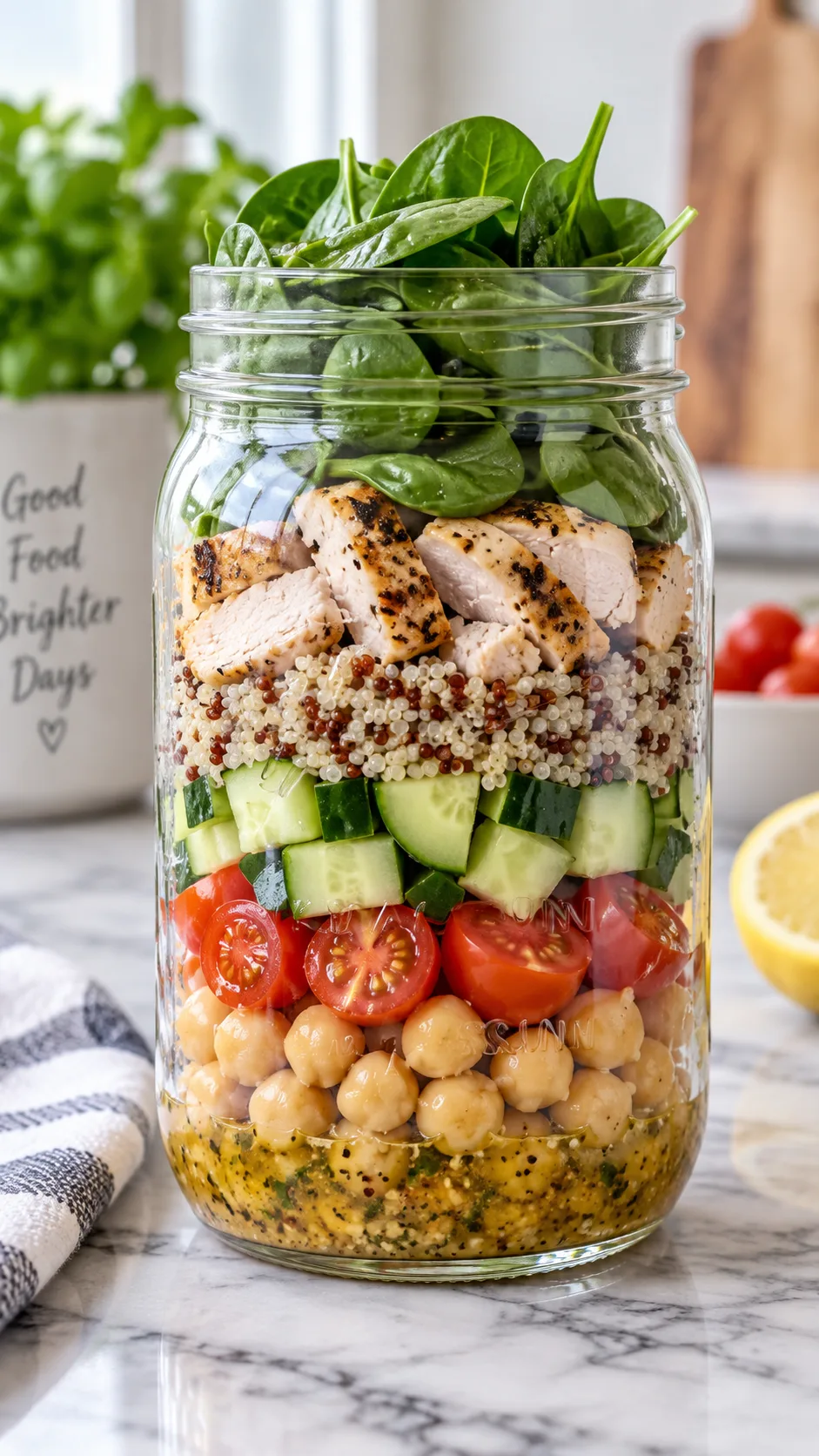
3. Mason jar salads (yes, really)
I resisted these for years because they felt like a Pinterest gimmick. I was wrong. The layering order is everything: dressing on the bottom, then hard vegetables, then grains and protein, then greens on top. Gravity keeps the lettuce dry. Shake it into a bowl at lunch.
4. Sesame peanut noodle bowls
Whole-grain noodles or soba, shredded carrots and cabbage, edamame, scallions, peanut-lime sauce. Eat it cold, because it’s designed to be cold. Add crushed peanuts right before eating for crunch.
5. Egg roll in a bowl
Ground turkey, a full bag of coleslaw mix, garlic, ginger, soy sauce, sesame oil. It cooks in 15 minutes flat. Low in carbs, high in protein, absurdly cheap. Serve it over rice if you want more fuel.
6. Sheet-pan salmon and roasted vegetables
Salmon, broccoli, sweet potato cubes, olive oil, smoked paprika. One pan, 22 minutes at 425°F. Prep three portions max, because salmon is a Monday-to-Wednesday food, not a Friday food.
7. Chickpea tuna smash wraps
Mash chickpeas with canned tuna, Greek yogurt, Dijon, celery, dill. Store the filling separately and wrap it fresh each morning in a whole-grain tortilla. Ten seconds of morning assembly prevents the dreaded soggy wrap.
8. Loaded soup jars
Lentil-vegetable, chicken-orzo, or white bean and kale. Soup is the ultimate meal prep food because it literally gets better as it sits. Portion it into jars, freeze half, done.
The Sunday session: 90 minutes, start to finish
You don’t need four hours. You need a sequence. Here’s exactly how I run mine.
- Minutes 0 to 5: Oven to 425°F. Big pot of water on to boil. Nothing else.
- Minutes 5 to 15: Chop all the vegetables for roasting. Toss them with oil, salt, pepper. Two sheet pans.
- Minutes 15 to 20: Vegetables into the oven. Grains into the boiling water.
- Minutes 20 to 35: Season and cook your proteins on the stovetop or a third sheet pan.
- Minutes 35 to 45: Make two sauces. This is the step everyone skips and everyone regrets.
- Minutes 45 to 60: Wash and dry the raw vegetables and greens. Dry them properly, because moisture is the enemy.
- Minutes 60 to 75: Let everything cool. Do the dishes while you wait. Don’t seal warm food.
- Minutes 75 to 90: Portion into containers. Label with dates. Into the fridge.
The golden rule: never seal warm food. Trapped steam turns into condensation, condensation turns into sogginess, and sogginess turns into you ordering delivery. Let everything cool uncovered for at least 20 minutes.
A video walkthrough worth your time
If you learn better by watching someone do it, this one covers the workflow really well:
Food safety: the boring part that keeps you out of the bathroom
I know, I know. But this matters, and most meal prep articles wave it away in one line.
The USDA’s FoodSafety.gov guidance is clear: cooked leftovers stay safe in the refrigerator for 3 to 4 days. Not seven. Not “it smells fine so probably fine.”
Non-negotiable rules
- Cool food fast. Get it into the fridge within two hours of cooking, or one hour if your kitchen sits above 90°F.
- Prep for 4 days and freeze the rest. Days 5, 6, and 7 belong in the freezer, not the back of the fridge.
- Check your fridge temp. It should sit at or below 40°F. A $6 thermometer settles the argument.
- Reheat to 165°F. This goes double for chicken, rice, and anything with eggs.
- Rice deserves respect. Cooked rice left at room temperature can grow Bacillus cereus. Chill it quickly, always.
Want to stretch your week past day four? My freezer meal prep system covers how to bank meals safely for later.
Gear that earns its shelf space
You don’t need a $300 container set. You need a few things that work.
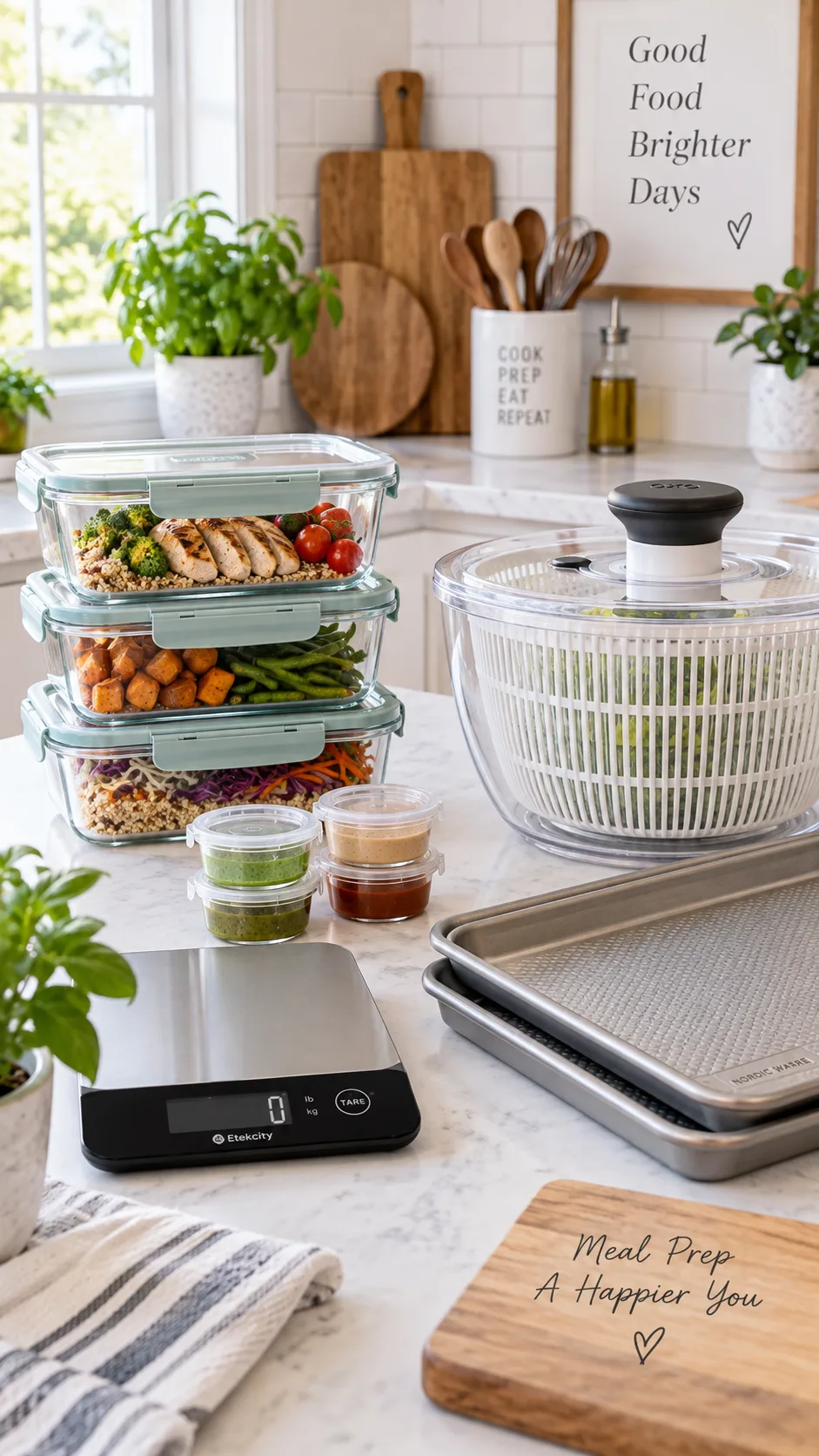
- Glass containers with locking lids. Microwave-safe, no stains, no lingering curry smell. Worth every penny.
- Small 2 oz sauce cups. The highest-impact purchase on this list. Dressing on the side saves every salad.
- A salad spinner. Dry greens last three times longer than damp ones. I’m not exaggerating.
- Two half-sheet pans. Roast more, cook faster, wash less.
- A digital kitchen scale. Only if portion accuracy matters to you. Otherwise skip it.
- Masking tape and a Sharpie. Label everything with the cook date. Your future self will thank you.
Keeping it interesting: the sauce strategy
Want the real secret to eating the same chicken four days in a row without losing your mind? Change the sauce, change the meal.
Same grilled chicken. Monday it goes Mediterranean with tzatziki. Tuesday it goes Mexican with salsa verde. Wednesday it leans Asian with peanut-lime. Thursday it turns Southwest with chipotle yogurt. Your brain registers four different lunches. Your Sunday self cooked once.
Four sauces to master
- Lemon-tahini: Tahini, lemon juice, garlic, water, salt. It goes with literally everything.
- Peanut-lime: Peanut butter, lime, soy sauce, ginger, honey, warm water.
- Greek yogurt herb: Greek yogurt, dill, garlic, lemon, olive oil. Bonus protein.
- Chimichurri: Parsley, garlic, red wine vinegar, olive oil, chili flakes. It brightens anything dull.
Each takes under three minutes and keeps a week in the fridge. In my opinion, sauce prep beats protein prep in importance, and I’ll defend that take.
Common mistakes I made so you don’t have to
- Prepping seven days of food. Days 6 and 7 always went in the trash. Prep four, freeze two, wing one.
- Dressing salads in advance. Acid breaks down greens. Wilted lettuce isn’t a texture, it’s a warning.
- Under-seasoning. Cold food tastes blander than hot food. Season 20% harder than feels right.
- Overcooking proteins. Reheating cooks them a second time. Pull chicken 5°F early.
- Trying 10 new recipes at once. Start with two you already love. Add one new thing per week.
That last one nearly killed my meal prep habit for good. I spent a Sunday attempting six unfamiliar recipes, destroyed my kitchen, and ate cereal for dinner. Start small. The easy meal prep ideas approach exists for exactly this reason.
Budget reality check
Prepping healthy lunches costs less than buying them. Not slightly less. Dramatically less.
A store-bought lunch runs $12 to $18 in most cities. A well-built prepped bowl with quality protein costs roughly $3.50 to $5.00. Across five workdays, you save $40 to $65 a week. That’s over $2,000 a year.
Cheapest high-quality protein sources:
- Dried lentils and beans (pennies per serving)
- Eggs
- Chicken thighs (cheaper and more forgiving than breasts)
- Canned tuna and sardines
- Frozen shrimp on sale
- Tofu and tempeh
Buy frozen vegetables without shame. The USDA’s MyPlate guidance counts them fully toward your vegetable intake, and producers freeze them at peak ripeness. They often beat the sad produce that’s been riding a truck for nine days.
The takeaway
Healthy lunch meal prep works when you stop treating it as a heroic Sunday marathon and start treating it as a simple system. Prep components, not meals. Hit your protein. Make two sauces. Cap it at four days. Label everything.
You won’t get it perfect the first week. You might not get it perfect the fifth week. That’s completely fine, because a decent prepped lunch three days a week beats a flawless plan you abandon after the second Sunday.
So here’s my challenge: this weekend, cook one protein, cook one grain, roast one tray of vegetables, and blend one sauce. That’s it. Four things, under an hour. See how Tuesday feels when lunch is already handled.
Your future self is going to be weirdly grateful. Go make the sauce.